Tag: IMCL

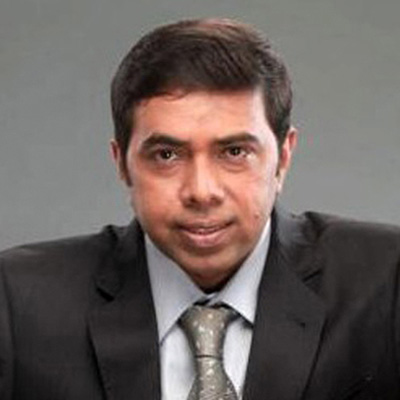
  • Tony D’silva to spearhead Hinduja Group’s media business

    Tony D’silva to spearhead Hinduja Group’s media business

    MUMBAI: Cable TV industry is undergoing major changes and in this wave of change has come a shocker. IndusInd Media & Communications Ltd. (IMCL) managing director Ravi Mansukhani, has stepped down from his position. Mansukhani, who has been associated with IMCL for more than seven years, had earlier expressed the desire to relinquish his services, which was accepted by the board of directors in the board meeting held on 31 January.


    “Yes, I have stepped down,” confirmed Mansukhani without commenting further.


    The board has now appointed Tony D’silva as IMCL MD and CEO with immediate effect and also approved certain other key management changes. D’silva who is currently the president of Hinduja Ventures Limited (HVL) has also been re-designated as Group CEO- media of HVL. As Group CEO –media and MD and CEO of IMCL, D’silva will hold the responsibility to restructure entire media business and value creation.


    It is notable that HVL is restructuring its media vertical in order to enhance synergy across its various media initiatives. And to support this initiative, Rs 300 crore is being invested in the media business.


    D’silva has been associated with HVL for the past one and a half years and comes with more than four decades of rich experience spread across media, FMCG and pharma sectors holding senior positions. He has a creditable track record of setting up and scaling up media ventures. D’silva began his media foray in 1992 as Modi Entertainment CEO and in 1997 helped Zee TV launch its international business in UK. Upon his return to India in 2001, he joined Star as executive VP and consolidated its TV business. He joined the Sun Group in 2007 to set up Sun Direct DTH as CEO, and then took over as the Group CEO, overseeing its entire media business including TV, print and radio.

  • MSOs meet; decide to start gross billing in Mumbai soon

    MSOs meet; decide to start gross billing in Mumbai soon

    MUMBAI: The national multi-system operators (MSOs) don’t want any more delay in starting the gross billing in the phase I cities. While gross billing has already begun in Delhi and Kolkata, the MSOs who have been facing resistance from the last mile operators (LMOs) in Maharashtra, met today in Mumbai to decide on the means to implement billing in the city.

    The four MSOs: Hathway Cable & Datacom, DEN Networks, IMCL and SitiCable have unanimously decided to authorise the LMOs to bill their consumers. “The LMO wants ownership of their consumers, and we have decided to give them that,” informs a MSO present during the meeting.

    The MSOs during the meeting decided that they will generate the bill and hand it over to the LMOs, who can further give it to the subscribers. “We will start the process in the next couple of days. Consumers will receive the bill for the month of December,” he adds.

    While the decision on who collects the entertainment tax is still pending with the Bombay High Court, the MSOs have decided to go ahead and complete the process of gross billing in Mumbai and submit the compliance report to the Telecom Regulatory Authority of India (TRAI), the deadline for which was 31 December. “We will submit the compliance report, once the billing process starts,” says the MSO.

    But what happens if the consumer pays the bill through a cheque? “Well! It is up to the subscriber, they can either sign the cheque in the name of the MSO or the LMO. But considering that the entertainment tax needs to be paid by the LMOs, it will be preferable that the subscriber signs it in the name of the LMO. The LMO will pay us the collection after deducting his revenue share,” he informs.

    The decision has been taking to brings everything on track. “The decision on entertainment tax will come sooner or later. But, that cannot deter us from getting the process rolling,” says the operator.

    At the meeting, the revenue share for the pay and free channels was also discussed. “These are commercial discussions. We have almost reached on an agreement for that as well. And our plan of revenue share is better than the one suggested by the TRAI,” says the MSO.

    But, are the LMOs completely convinced as well? “We will be meeting Hathway and IMCL on 4 January to discuss the fine points. Our concern is that the ownership of consumer should be with the LMOs. We will discuss with them the billing format and also get clarity on whose name the bill is being generated. The heading of the bill should have the name of the LMO and not the MSO. We will not allow that,” says Maharashtra Cable Operators Federation (MCOF) president Arvind Prabhoo.

    However, the MSOs have suggested that the bills generated from the MSO will have the name of the LMO, while that generated from the LMO to the subscriber will have the name of the subscriber. “This is a welcome move. But, we still need to discuss the finer points tomorrow,” adds Prabhoo.

    In the meeting to be held between MCOF and the MSOs on Saturday, finer points like additional cost of bill printing, distribution and collection will also be discussed. “These are additional liabilities of DAS in the absence of the interconnect agreement and also unfair revenue share and hence need to be discussed,” concludes Prabhoo.

  • MSO InCableNet gets Rs 300 crore cash infusion

    MSO InCableNet gets Rs 300 crore cash infusion

    MUMBAI: The folks at the Hinduja group-owned cable TV MSO InCableNet and InDigital must be a happy bunch. The reason:  Grant Investrade Limited (GIL), a wholly owned subsidiary of Hinduja Ventures, has decided to invest Rs 300 crore in the cable distribution business managed by InCableNet and InDigital in India.

    The capital infusion, according to a press note released by the company, is happening to take advantage of opportunities government mandated digitisation of cable TV.

    “Phase I and phase II of the Digital Addressable System (DAS) have already been completed and several consolidation opportunities are coming up. The capital will be used to expand the digital base of IMCL and to improve customer services,” said the release.

    Hinduja Ventures director Ashok Mansukhani when contacted said, “The purpose of promoter infusion through GIL is to help IMCL stabilise phase I and II which has completed set top box installations. It is up to IMCL management to also grow in new geographies for phase III and IV which are due to be digitalised by 31 December, 2014 either organically or inorganically.”

    The investment has come in at a time when there is a lot of buzz on whether the MSO is in the running to acquire or partner the Kolkata-based MSO Manthan Broadband. Unwilling to confirm or deny anything Mansukhani said, “There are of course plans to expand our geographical presence. Kolkata is an interesting city to venture into, but nothing as of now has materialised.”

    He further added, “We already have 22 joint ventures and would obviously like to expand. These things keep happening in the cable TV business.”

    The infusion of cash couldn’t have been more timely. Industry observers have been watching closely waiting for the MSO to get active.

  • TRAI orders MSOs to deliver RIOs; tariff packages

    TRAI orders MSOs to deliver RIOs; tariff packages

    MUMBAI: The fear of Friday the thirteenth seems to be coming true for registered multi system operators (MSOs) as the Telecom Regulatory Authority of India (TRAI) has come out with two different directions for them today. And it has warned them that it is time for the stakeholders to buck up and act fast.

    The first direction issued today gives 118 registered MSOs just 10 days to submit their interconnection agreements entered with the broadcasters for re-transmission of channels on their cable networks in the Digital Addressable System (DAS) notified areas. Another direction, gives them seven days to submit the details of tariff packages along with the terms and conditions for supply and installation of the set top box (STB) to their subscribers.

    Of the 118 MSOs, a few well-known names that feature in the list are: Siti Cable Network, Seven Star Dot Com, Sagar E Technologies, Ortel Communication, Manthan Broadband, JAK Communications, IMCL, Hathway Cable & Datacom and Den Networks amongst others.

    “Every MSO, according to the Telecom Regulatory Authority of India Act, 1997 (24 of 1997) and regulation 5, 8 & 9 of the Telecommunication (Broadcasting and Cable Services) Interconnection (Digital Addressable Cable Television Systems) Regulation, 2012 (No. 9 of 2012), is required to have such interconnection agreement in DAS areas,” states the TRAI direction regarding interconnect agreement.

    According to regulation 5, it is mandatory for pay channel broadcasters to reduce the terms and conditions of the interconnection agreement into writing and deprive MSOs of their TV channel signals if no interconnect agreement is signed. Also, as per regulation 9, MSOs need to submit their interconnect agreement within the specified period to the authority.

    The TRAI direction had earlier said: “Every existing MSO shall submit to the authority by 31 July, 2012, all interconnect agreements entered into and amendments made therein prior to the date of notification of these regulations.”

    Regulation 8 gives power to the authority to intervene, inter alia, to protect the interest of the consumer and service provider. “The authority may, in order to protect the interest of the consumer or service provider or to promote and ensure orderly growth of the broadcasting and cable sector or for monitoring and ensuring compliance of these regulations, by order or direction, intervene, from time to time,” says the TRAI direction.

    With none of the MSOs so far caring to submit the tariff packages along with terms and conditions for supply and installations of STBs to their subscribers despite being ordered to do so under the Telecommunication (Broadcasting and Cable) Services (fifth) (Digital Addressable Cable TV Systems) Tariff Order, 2013 (No. 1 of 2013) issued on 27 May, the regulator has now cracked the whip on them to follow it and submit the packages within seven days from today. 

     
    It is to be noted that clause 5 of the tariff order states that every MSO has to report to the authority by 15 June 2013, the details of all the tariff packages and other terms and conditions for supply and installation of the STBs. According to this order, “Any change in the tariff package reported under sub-clause (1) and the introduction of a new tariff package for supply and installation of STB shall be reported to the authority at least seven days prior to such change or introduction, as the case may be.”

  • Q2-2014: Hindustan Ventures: Indusind media triples capital employed

    Q2-2014: Hindustan Ventures: Indusind media triples capital employed

    BENGALURU: IndusInd Media & Communications Limited’s (IMCL) holding company Hinduja Ventures Limited (HVL) reported profit of Rs 19.68 crore about 0.8 per cent lower as compared to Rs 19.84 crore and five per cent higher than the Rs 18.74 crore profit for Q1-2014.


    Capital employed (segment assets minus segment liabilities) for media and communications segment more than tripled (3.08 times) to Rs 295.31 crore in Q2-2014 as compared to the Rs 95.94 crore for Q2-2013 and 3.03 times the Rs 97.44 crore for the immediate trailing quarter Q1-2014.


    For the current quarter, HVL reported a total income of Rs 26.18 crore, 6.2 per cent more than the Rs 24.65 crore for Q2-2013 but 1.7 per cent lower than the Rs 26.62 crore for Q1-2014.


    However, HVL reported a loss of Rs (-2.60) crore from its media and communications segment for Q2-2014 as compared to small profit of Rs 0.5717 crore for the corresponding quarter of last year and a loss of Rs (-4.40) crore for the immediate trailing quarter. Revenue from this segment in HVL’s financials for Q2-2014 fell by 25.3 per cent to Rs 1.09crore as compared to the Rs 1.46 crore for Q2-2013. For Q1-2014, revenue from media and communications was also Rs 1.09 crore.


    HVL claims that IMCL has an estimated subscriber base of 0.85 crore subscribers in 36 major cities in the country and that IMCL has planned new services for the digital cable foray, apart from the broadband services like HD services, hybrid STBs for cable and internet, and value added services for digital cable. It says that the Digital Addressable System (‘DAS’) that was introduced by the government on 1 November 2012 in phases – offers a unique opportunity to IMCL to make all its subscribers addressable and monetise its subscription revenues manifold.


    Three other segments besides media and communications contribute to HVL’s revenue – real estate; investments and treasury; and others. While all the other segments reported small loss, investments and treasury reported a profit of Rs 24.15 crore for Q2-2014 as compared to the Rs 22.35 crore for Q2-2013 and the Rs 24.43 crore for Q1-2014.

  • Hinduja Ventures investments PAT up for Q1-2014

    Hinduja Ventures investments PAT up for Q1-2014

    BENGALURU: IndusInd Media & Communications Limited’s (IMCL) holding company Hinduja Ventures Limited (HVL) reported Rs 18.74 crore profit for Q1-2014, 10.41 per cent higher as compared to the Rs 16.97 crore for Q1-2013 and 16.43 per cent more as compared to the PAT for Q4-2013. Profit from HVL’s investments and treasury segment was eroded by losses from its media and communications segment, real estate segment and the others segment.


    Let us look at HVL’s results for Q1-2014


    HVL reported a net income from operations for Q1-2014 of Rs 26.62 crore for Q1-2014 which was 25.98 per cent higher than the Rs 21.13 crore for Q1-2013 and 32.72 per cent more than the Rs 20.05 crore for Q4-2013.


    HVL’s total expense for Q1-2014 at Rs 6.92 crore was almost triple (more by 189 per cent) the Rs 2.39 crore for Q1-2013 and 72.09 per cent higher than the Rs 40.22 crore for Q4-2013.


    Revenue from media and communications segment fell by 25 per cent from Rs 1.46 crore in Q1-2013 Rs 1.09 crore. Loss from this segment more than quadrupled (went up by 308.01 per cent) from Rs (-1.08) crore in Q1-2013 to Rs (-4.40) crore in Q1-2014. This segment had reported a profit of Rs 0.6952 crore in Q4-2013.


    Capital employed by this segment increased 1.1 per cent in Q1-2014 to Rs 97.44 crore from Rs 96.36 crore in Q1-2013 and was 1.8 per cent more than the Rs 95.75 crore for Q4-2013.


    Revenue from investment and treasury segment recorded an increase of 29.75 per cent to Rs 25.52 crore in Q-2014 as compared to the Rs 19.67 crore for Q1-2013 and was 27.3 per cent more than the Rs 20.05 crore for Q4-2013.


    HVL’s investment and treasury segment posted a profit of Rs 24.43 crore which was 32.92 per cent more than the Rs 18.38 crore for Q1-2013 and 36.36 per cent more than the Rs 17.92 crore for Q4-2013.


    As mentioned above HVL’s real estate and ‘Others’ segment posted small numbers to erode the profits from the investment and treasury segment as mentioned above.


    HVL estimates that it has 8.5 million subscribers across 36 major cities. The company offers over 350 channels in the digital mode. It claims to have a backbone of over 10,000 kms of hybrid fiber optic network through which it also offers broadband services with its national ISP license. IMCL has gone ahead with the first two phases of the digital revolution being ushered in by government mandated policy of digitising the cable networks. The Digital Addressable System (DAS) was introduced by the government on 1 November, 2012 in phases and offers a unique opportunity to IMCL to make all its subscribers addressable and monetise its subscription revenues manifold. HVL says that IMCL has planned new services for the digital cable foray, apart from the broadband services like HD services, hybrid STBs for cable and internet value added services for digital cable.


    HVL says that its real estate projects are taking off in Bangalore. Its subsidiary M/s IDL Specialty Chemicals has land in Hyderabad.

  • Cable digitisation: IMCL makes third purchase in Kolkata

    Cable digitisation: IMCL makes third purchase in Kolkata

    MUMBAI: IndusInd Media & Communications Ltd (IMCL) has made its third acquisition in Kolkata as it plans to expand in that marketplace where it sees a lot of demand coming from small-sized cable companies who are unable to fund for digital set-top boxes (STBs).

    “We have acquired 51 per cent stake in a small cable TV network in Kolkata. We are looking at seeding 100,000 STBs through this company. This is our third purchase in Kolkata,” IMCL chief executive officer Nagesh Chabria told Indiantelevision.com.

    In 2012, IMCL had picked up 51 per cent stake in two cable networks – Hooghly-based Advance Multisystem Broadband Communications (AMBC) and Skyvision.

    Advance Multisystem Broadband Communications Limited (AMBC) has become a subsidiary of IMCL with effect from 9 November 2012. IMCL had on 18 May acquired AMBC by subscribing to 51 per cent of the paid up equity capital of AMBC by provision of STBs and digital head-end valued at Rs 80.1 million.

    Meanwhile, Hinduja Ventures Limited (HVL) has reported a fall in its third quarter profit before tax from its media and communications segment (IMCL) to Rs 50.81 million from Rs 199.9 million in the trailing quarter.

    The revenue from this segment, which houses the HVL’s cable TV business InCablenet, is Rs 1.52 billion compared to Rs 1.36 billion in the second quarter of the fiscal.

    The media and communications business resides in IMCL, a subsidiary of HVL.

    HVL has exercised the put option to increase its holding in subsidiary IMCL to 61.71 per cent from 61.17 per cent as a result of conversion of seven years, 12 per cent Cumulative Convertible Redeemable Preference shares aggregating to Rs 150 million into 1.03 million equity shares of Rs 10 each, at a premium of Rs 135 per share.

  • HITS can get active in 2nd phase of digitisation

    HITS can get active in 2nd phase of digitisation

    MUMBAI: The second phase of digitisation across 38 cities will offer an opportunity for Headend-In-The-Sky (HITS) operators as the presence of national multi-system operators (MSOs) is not adequate enough to cater to this entire television viewing population, said Digicable Network chief strategy officer Sisir Pillai.

    Tapping into this market will be a few HITS operators. "We will see a couple of big players launching HITS service," said Pillai.

    Hinduja Group, which has interests in cable TV distribution business through IndusInd Media and Communications Ltd, is planning to launch HITS platform for smaller cable TV operators to offer digital service. It has already applied to the Information and Broadcasting ministry for a licence.

    The HITS business will be under Grant Investrade, an investment arm of the Hindujas. Grant Investrade holds 6 per cent stake in IMCL.

    Jain TV Group-owned NSTPL (Noida Software Technology Park Limited) has also got plans to get aggressively active in HITS. It has christened its HITS platform as Jain HITS.

    Earlier, Siticable had started HITS service before the government had mandated digitisation of cable TV networks also the country but the project failed to make much ground and was finally shelved off.

    "HITS can be a cheaper and faster option to grab the market in the second phase. MSOs will need to invest Rs 160-200 million on a digital head-end in each city they want to reach out to as there is a requirement to build a capacity for carrying 500 channels," said Pillai.

    Since in the first phase the national MSOs were having a strong base, there was no need gap for a HITS service, Pillai added.

    Even in the third phase, Pillai expects HITS to have a strong potential to grow.

    Cable operators will be able to also offer broadband services through their fibre optic co-axial cable, despite receiving video signals from the HITS provider via satellite. "The bundling of broadband with video services will also be possible even if cable operators take to HITS for offering digital service. So the advantage over DTH will continue to prevail. Direct-to-home service providers can‘t offer broadband and satellite bandwidth is very costly," said Asianet Satellite Communications Ltd president and COO G Sankaranarayana.

    Building a HITS platform will, however, involve huge investments as it requires transponder space on satellite, encryption systems and digital set-top boxes. NSTPL is planning to invest Rs 15 billion over five years in its HITS project.

  • ‘Digitisation will throw open acquisition opportunities’ : IndusInd Media and Communications chief executive officer Nagesh Chhabria

    ‘Digitisation will throw open acquisition opportunities’ : IndusInd Media and Communications chief executive officer Nagesh Chhabria

    T he Hindujas have started the first round of cable TV digitisation in the three metro cities of Mumbai, Delhi and Kolkata. The second phase will open up 15 more cities where IndusInd Media and Communications Ltd (IMCL), the cable TV company they own, operates. Aggression is being planned to take on 14 more cities through acquisitions, joint ventures or direct entries.


    The ambitious target set is deployment of four million digital set-top boxes (STBs) on top of the 1.5 million IMCL is expecting to achieve in the first phase of digitisation. The company is also planning to own one million last mile connections in two years, up from its current base of 300,000.


    IMCL, which operates its cable TV business under the Incablenet brand, will need Rs 6 billion in the new phase that will see 38 cities go digital by 31 March 2013. The company is in talks with private equity investors to raise $75 million.


    “There is a huge appetite now to invest in cable TV companies. The first phase of digitisation has been successfully implemented in the three metro cities of Mumbai, Delhi and Kolkata. There is also no uncertainty now about India’s digitisation programme across the country. We should see equity deals happening in the sector,” says IndusInd Media and Communications chief executive officer Nagesh Chhabria.


    Chhabria believes the cable TV ARPUs (average revenue per user) would rise to Rs 500 by 2015, while carriage income would see a 10-15 per cent drop in DAS (digital addressable systems) markets.


    “In the first phase, we are looking at a 15 per cent increase and believe our ARPU would settle at Rs 225. If the ARPU is lower than this, the local cable operator will not survive,” he says.


    In an interview with Indiantelevision.com’s Sibabrata Das, Chhabria talks about the changing cable TV environment and the multi-system operator’s (MSO) expansion plans.


    Excerpts:

    Q. Is IMCL in talks with private equity investors to raise capital for funding its cable TV digitisation programme?
    We are looking at raising $75 million and have mandated Ernst & Young for this purpose. There is a huge appetite now to invest in cable TV companies. The first phase of digitisation has been successfully implemented in the three metro cities of Mumbai, Delhi and Kolkata. There is also no uncertainty now about India’s digitisation programme across the country. We should see equity deals happening in the sector.


    Q. Will $75 million meet IMCL’s total funding requirement for the second phase?
    We will need Rs 6 billion as we expect to deploy four million set-top boxes (STBs). We have existing lines of credit from banks for $15 million. We can further raise $10 million of new debt. So along with equity financing, we should be comfortably placed. Of course, there is concern about the weakening of the rupee, which will mean STBs becoming costlier. But we are asking our STB manufacturer to offer us a better rate so that it offsets any rise in dollar value.


    Q. Hasn’t IMCL lined up vendor financing so that the pressure on funding upfront eases?
    We have not gone in for that option. The Cisco set-top boxes are 15-20 per cent more expensive than ours. Our model works out cheaper for us.


    Q. Isn’t your estimate of the STB requirement too high as IMCL operates in only 15 out of the 38 cities that fall under digitisation in the second phase?
    It is easier now to get into new cities because there is less entry cost. You don’t have to pay broadcasters for an assumed number of subscribers as digitisation would reflect your actual subscriber base. Capital expenditure, of course, is going to be higher but there is an assured revenue model.


    We plan to enter into 15 more cities and anticipate a requirement of two million STBs from the new operations. For our existing operational cities, we would need two million STBs.

    ‘Even in the second phase, DTH will hardly be able to make an impact. Since most of the cities that fall in this round of digitisation are carriage markets, the national MSOs have a presence in them. Already 10 per cent of this market is digitised by the MSOs‘
    Q. Will you take the acquisition route for entering into these markets?
    Digitisation will throw open acquisition opportunities. There are many operators who will find it difficult to fund for the STBS. So they will either want somebody to invest in their cable networks or completely sell out. We are in talks with many independent operators. We can also enter on our own through fibre or available bandwidth.
     

    Q. How are valuations getting decided?
    We look at the profits made in the last fiscal and offer four times that value. The other option is to look at future profits (sans STB investment) made from the first six months of digital operations and then fix a value. But this has few takers as nobody wants to take the risk.


    Q. Are you not looking at last mile acquisitions that will give IMCL direct ownership of the consumer homes without having to share a portion of the subscription revenue with the local cable operator?
    We have an aggressive plan to own last mile. Our target is to own one million primary points in two years, up from our current base of 300,000. The acquisition of primary points, however, is much costlier and the price could be in the region of ten times the subscription fee. In Mumbai, this could go up to 20 times. But with digitisation necessitating billing systems, the primary points will be up for grabs.


    Q. Has DTH been able to eat into IMCL’s subscriber base in the first phase?
    We have hardly felt the impact. Even in the second phase, DTH will not be able to win over cable TV consumers in a big way. Since most of the cities that fall in this round of digitisation are carriage markets, the national MSOs have a presence in them. Already 10 per cent of this market is digitised by the MSOs. DTH will stand a better chance in tier III and IV towns. Acquisition of primary points in these smaller places will be a good strategy for MSOs to follow.


    Q. How many STBs has IMCL deployed across three cities in the first phase?
    We have already seeded 1.3 million boxes and our target is to touch 1.5 million. In Mumbai we will do 850,000 million and 0.5 million in Delhi. The progress in Kolkata is slow but it will also pick up.


    ‘We are looking at raising $75 mn and have mandated E&Y. There is a huge appetite now to invest in cable TV companies. The first phase of digitisation has been successfully implemented in the three metro cities of Mumbai, Delhi and Kolkata. There is also no uncertainty now about India’s digitisation programme across the country. We should see equity deals happening in the sector‘
     

    Q. Is the conversion into second TV homes significant?
    The demand for second TV sets is higher in Delhi than in Mumbai. But at a combined level we are talking of a 25-30 per cent conversion rate. We are working out a pricing for second and third TV sets as we have to match the DTH offers. But we are yet to ink deals with broadcasters on this.


    Q. What is the kind of content deals that you have stitched with broadcasters?
    We have done cost-per-subscriber deals. This works out better in the long term and is a more transparent system. We get to know our cost per box and it is easier to work out negotiations later. Our content cost would work out to 33 per cent of our subscription revenue.


    We wanted to do three-year deals with broadcasters but they were not ready for it. Most of our content deals are on a yearly basis.


    Q. What is the revenue share you are giving to local cable operators?
    The value chain will take away 33 per cent of our subscription revenue. We also have operational costs and an investment on the STBs, but we also earn carriage or placement revenue. We are seeing a 10-15 per cent drop in our carriage deals for DAS (digital addressable system).


    Q. Will ARPUs go up?
    In the first phase, we are looking at a 15 per cent increase and believe our ARPU would settle at Rs 225. If the ARPU is lower than this, the local cable operator will not survive.


    ARPUs for MSOs should at least be Rs 300 for them not to be dependent on carriage income. MSOs with ARPUs below Rs 300 will have to be carriage dependent.


    Our forecast is that cable TV ARPUs would rise to Rs 500 by 2015. What will lift up ARPUs is HD and regional packages. Premium packages will also get sold.


    Q. So are we talking of financially healthy MSOs in digitised India?
    A lot on how the market shapes up will be decided over the next six months. We will know the actual seeding of boxes in consumer homes once the subscription collections happen.


    Q. Will IMCL rely only on video services or there is a serious plan to pump up broadband investments?
    We will be investing Rs 1 billion on broadband infrastructure in the next fiscal. We are also going to prepare for IPTV and OTT (over-the-top) services.


    Q. What about launching local cable channels?
    Yes, this is very much a part of the plan. Since there will be no constraints on bandwidth in the digital era, we are planning to put together 10-12 local channels, including local news. We are also looking at ad-free channels.

  • IMCL in talks with PE firms to raise $75 mn

    IMCL in talks with PE firms to raise $75 mn

    MUMBAI: Hinduja-owned IndusInd Media and Communications (IMCL) is in talks with private equity investors to raise $75 million to fund the second phase of cable TV digitisation.

    IMCL has mandated Ernst & Young to find an investor for its funding requirement. "With India mandating digitisation, there is a huge appetite to invest in cable TV companies. We are looking at raising $75 million. E&Y has been given the mandate for this purpose," IndusInd Media & Communications chief executive officer Nagesh Chhabria tells Indiantelevision.com.

    IMCL, which operates its cable TV business under the Incablenet brand, will need Rs 6 billion as it is targeting four million set-top boxes (STBs). "We have existing lines of credit from banks for $15 million. We can raise $10 million of new debt," says Chhabria.

    IMCL has a debt of Rs 3 billion

    The multi-system operator (MSO) operates in 15 out of the 38 cities that fall under digitisation in the second phase. The plan is to also enter into 14 more markets. "We would require two million STBs from our existing cities. We anticipate another two million boxes from the new operations," says Chhabria.

    Will IMCL look at acquiring cable networks for entering these markets? "There are many operators who will find it difficult to fund digitisation. We are in talks with independent operators. We can also enter on our own," says Chhabria.

    IMCL has deployed 1.3 million boxes across three cities in the first phase. "Our target is 1.5 million STBs," Chhabria says.

    The government has mandated digitisation in 38 more cities by 31 March 2013, after switching to digital delivery of cable TV in Mumbai, Delhi and Kolkata from 1 November. The revised deadline for switchover to digital delivery in Chennai is likely to be decided by the Madras High Court.