Tag: IMCL

  • NXT Digital-InCable merger gets shareholder nod; D’Silva bemoans lack of ecosystem support

    NXT Digital-InCable merger gets shareholder nod; D’Silva bemoans lack of ecosystem support

    MUMBAI: Hinduja Ventures Ltd’s (HVL’s) proposal to demerge its NXT Digital headend in the sky (HITS) business from its subsidiary Grant Investrade Ltd (GIL) and merge it into its cable TV MSO offshoot Indusind Media & Communications Ltd (IMCL) got the thumbs up from its shareholders at its AGM yesterday.

    The cable veteran and IMCL MD & CEO Tony D’Silva says that IMCL is now on the road to fully digest NXT Digital. “We are following the legal process and have already applied to the Bombay High Court and we have also informed the Ministry of Information and Broadcasting.”

    What drove the reorganisation? D’Silva explains: “When we launched NXT Digital, it was incorporated under GIL as an independent company. At that time, we thought it’s better to apply for a licence under GIL and we got the licence. We also thought that it’s better we keep GIL as the company away from IMCL so that no operator will feel that this is a backdoor entry to take over IMCL. But now the time has passed. GIL is an established company and so the NXT Digital move.”

    HVL whole time director Ashok Mansukhani adds that work is already on to integrate both NXT Digital and InCable. Says he: “We are starting with the backend. We are already synergising both the services. We have one of the best subscriber management systems (SMS) in HITS – ICC from Hansen Technologies. InCable is using Magnaquest for its SMS it is also migrating towards ICC. They will be kept separate but there will be one front end irrespective of who the operator is. “

    D’Silva says that more than 700 cable operator premise equipment (COPEs) have been installed so far. “An estimated three million cable TV subscribers are watching television through our HITS platform,” he reveals. “The philosophy of NXTDigital is very clearly to encourage the cable operator to grow and develop his/her business and also that we are a pure service provider. We don’t want to own any network and that message has gone to all the operators across the country.”

    NXT Digital is offering four different packages to MSOs and LCOs who opt for its service. The Gold Cope cost about Rs 13.5 lakh and gives a bouquet of 550 channels, the Silver costs Rs 10 lakh (450 channels) and the Bronze Rs nine lakh (350 channels). A new Eco package has been introduced for Phase IV areas with its price point being Rs 4 lakh (250 channels).

    D’Silva points out that almost 60 per cent of the installations are of the Gold Cope Unit in Phase III areas. “Even smaller markets are wanting HD channels,” he says.

    But even so the management at NXT Digital is pretty frustrated, and are especially concerned about the future of cable TV digitization. Says Mansukhani: “The final date of digitization is the bottleneck for us. Some 50 cases are pending in the high court. On Monday some cases will be hear. On 26 September there will be five cases in front of a chief justice and on 5 October 35 cases will be heard by a single bench. The chief justice has received these cases and whether they were issued in the constitutional law and interpretation of legislation – that decision will be taken on Monday.”

    The nuking of the sunset date for digitization in phase III areas by the various court cases has blown up the progress of NXT Digital. “We had earlier agreed between the IBF, MSOs, TRAI and MIB jointly that till 31 December 2015 the sunset date for Phase III broadcasters would not charge the digital rate to facilitate to process of digitisation,” says D’Silva. “That agreement is valid even today. But broadcasters are charging cable operators analogue rates in Phase III areas and they are slapping us with digital tariffs for the same regions. How is this fair? NXT Digital does not own any network…we are providing services. The same principle should apply to phase IV also where 60 million homes need to be digitized.”

    D’Silva exhorts broadcasters and the industry to give it its total support on HITS as it is a step forward in infrastructure sharing (which is a subject of a consultation paper that the Telecom Regulatory Authority of India put up recently).

    “This must be allowed. How will a big MSO in a small area function when the switchoff happens? He has to come to me. The fact is banks are sharing infrastructure in ATMs. Telcos are doing so too. Why spend money on overbuilding infrastructure,” he asks. “Excepting one broadcaster, all of them are permitting us to provide passive services to MSOs who have a DAS licence and have content agreements with them with the proviso that they pay directly to the broadcaster subject to the SMS report filed by our HITS platform. This one broadcast network is hell bent on undermining our effort to provide television to far flung subscribers in the interiors.”

    He further adds” “Then, the subscriber in Phase IV is paying Rs 60-80 for his channels. With a digitized package it could go up to Rs 160 or so. Even otherwise he may have to pay Rs 40 for just a handful of encrypted channels. The beneficiaries are only the broadcasters and they don’t have any digital model for rural India. The BARC ratings shows more and more free to air channel are popular in rural India. Who is going to pay for pay channels?”

    Asks Mansukhani: “Are we going to have a digital divide in our country? Digitisation will only be limited to metropolitan India and benefits will not flow to rural India. And going by the current goings-on there is a great danger of that happening.”

  • Two more DAS cases put off to Oct. in Delhi HC

    Two more DAS cases put off to Oct. in Delhi HC

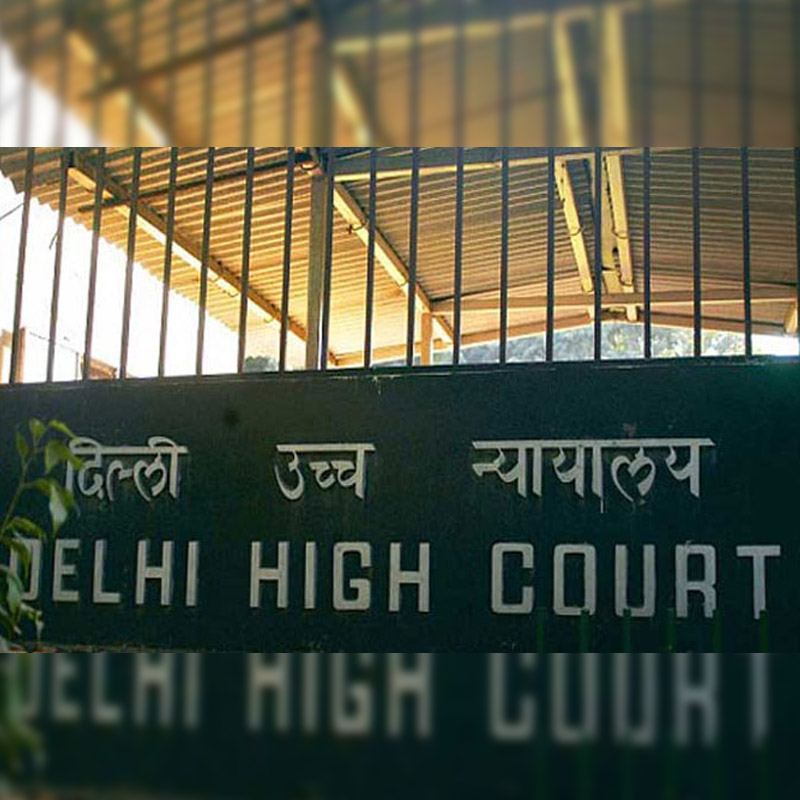
    NEW DELHI: Two more cases related to Phase III of digital addressable systems (DAS) – filed by Om Systems of Mumbai and Digiana – have been moved to be heard on 5 October  2016 by the Delhi High Court.

    Justice Sanjeev Sanchdeva was scheduled to hear these matters on Tuesday but, as
    13 September was a holiday, the two cases were put off to next month and will be heard with other cases slated for that day next month.

    Earlier, on 7 September 2016, the first batch of a large number of cases related to DAS had been put off to 5 October 2016 as the single bench did not assemble after lunch.

    As a result, the application by the Indian Broadcasting Foundation (IBF) for being impleaded in the case also did not come up for hearing.

    The cases that were listed on 7 September included those filed by Rohtak Cable Operators’ Association, Andhra Pradesh MSOs Welfare Federation, Multi System Operators’ Welfare Association, Sai Big Star Welfare Association, Sree Devi Digital Systems, Federation of Telangana MSO, DEN Manoranjan Satellite, Victory Digital, Sri Chowdeshwary Cable Network, Shyam Baba Cable Network, Panchajanya Media, Bharat Digital Cable Network and Yogesh Cable Networks.

    On 8 September, a notice was issued to the Union of India (Ministry of
    Information) on five petitions relating to the stay orders on Phase III of DAS that came before a bench of Chief Justice G Rohini and Justice Ms Sangita Dhingra Sehgal who adjourned the matters to 26 September 2016.

    These related to Radiant Digitek Networks Pvt Ltd, Rajasthan Cable Operators Foundation, Nasik Zilla Cable Operator Association, Indusind Media and Communication Ltd, and Bhima Riddhi Digital Services. While the first two are against Union of India, the other three are against the State of Maharashtra.

    The Supreme Court had, on 1 April, 2016, accepted the plea of the Central Government that “it would be just and proper for this Court to withdraw all those cases  pending in  different High Courts and transfer the same to Delhi  High Court.”

    A total of 62 cases had been filed by multi-system operators (MSOs) in various courts in the country for extension in the deadline of Phase lll that was supposed to have ended on 31 December 2015. Out of these 62 cases, 12 cases had been disposed off by respective courts and three cases had been withdrawn by the petitioners.

    Notice issued to Union of India on five DAS Phase III petitions

    Hearing of DAS cases in Delhi HC put off to Oct


  • Two more DAS cases put off to Oct. in Delhi HC

    Two more DAS cases put off to Oct. in Delhi HC

    NEW DELHI: Two more cases related to Phase III of digital addressable systems (DAS) – filed by Om Systems of Mumbai and Digiana – have been moved to be heard on 5 October  2016 by the Delhi High Court.

    Justice Sanjeev Sanchdeva was scheduled to hear these matters on Tuesday but, as
    13 September was a holiday, the two cases were put off to next month and will be heard with other cases slated for that day next month.

    Earlier, on 7 September 2016, the first batch of a large number of cases related to DAS had been put off to 5 October 2016 as the single bench did not assemble after lunch.

    As a result, the application by the Indian Broadcasting Foundation (IBF) for being impleaded in the case also did not come up for hearing.

    The cases that were listed on 7 September included those filed by Rohtak Cable Operators’ Association, Andhra Pradesh MSOs Welfare Federation, Multi System Operators’ Welfare Association, Sai Big Star Welfare Association, Sree Devi Digital Systems, Federation of Telangana MSO, DEN Manoranjan Satellite, Victory Digital, Sri Chowdeshwary Cable Network, Shyam Baba Cable Network, Panchajanya Media, Bharat Digital Cable Network and Yogesh Cable Networks.

    On 8 September, a notice was issued to the Union of India (Ministry of
    Information) on five petitions relating to the stay orders on Phase III of DAS that came before a bench of Chief Justice G Rohini and Justice Ms Sangita Dhingra Sehgal who adjourned the matters to 26 September 2016.

    These related to Radiant Digitek Networks Pvt Ltd, Rajasthan Cable Operators Foundation, Nasik Zilla Cable Operator Association, Indusind Media and Communication Ltd, and Bhima Riddhi Digital Services. While the first two are against Union of India, the other three are against the State of Maharashtra.

    The Supreme Court had, on 1 April, 2016, accepted the plea of the Central Government that “it would be just and proper for this Court to withdraw all those cases  pending in  different High Courts and transfer the same to Delhi  High Court.”

    A total of 62 cases had been filed by multi-system operators (MSOs) in various courts in the country for extension in the deadline of Phase lll that was supposed to have ended on 31 December 2015. Out of these 62 cases, 12 cases had been disposed off by respective courts and three cases had been withdrawn by the petitioners.

    Notice issued to Union of India on five DAS Phase III petitions

    Hearing of DAS cases in Delhi HC put off to Oct


  • Q1-17: HVL revenue up 129%; to invest Rs 271 crore for carriage subsidiary stake

    Q1-17: HVL revenue up 129%; to invest Rs 271 crore for carriage subsidiary stake

    BENGALURU/MUMBAI: Hinduja Ventures Limited (HVL) reported more than doubling (up 129 percent) of its revenue for the quarter ended June 30, 2016 (Q1-17, current quarter) vis-à-vis revenue for the corresponding year ago quarter.

    HVL revenue for Q1-17 was Rs 60.95 crore, while it was Rs 26.63 crore for the corresponding period previous year.
    However, quarter-over-quarter (q-o-q), revenue for the current quarter declined 35 percent from Rs 93.75 crore in Q4-16. The company attributes the increase in revenue to sale of setup boxes/ broking income/ income from trading of securities.

    The company reported a year-over-year (y-o-y) growth in profit of 1.3 percent for the current quarter at Rs 24.21 crore as compared to Rs 23.90 crore and a 70.8 percent q-o-q growth as compared to Rs 14.18 crore.

    HVL operates across three segments of media and communication, real estate, and investment and treasury. HVL is the holding company of integrated media companies IndusInd Media and Communications Limited (IMCL) and Grant Investrade Limited (GIL), which has launched the headend-in-the-sky (HITS) digital platform under brand name NXT DIGITAL.

    HVL’s media and communications segment

    Revenue from its media and communications segment declined q-o-q to less than a fourth (down 76.6 percent). HVL reported revenue of Rs 14.40 crore in Q1-17 and Rs 61.69 crore in Q4-16. The segment reported an operating loss of Rs 5.61 crore in the current quarter as compared to an operating loss of Rs 0.37 crore in Q1-16 and an operating profit of Rs 2.71 crore in Q4-16. For the year ended March 31, 2016 (FY-16), the segment reported an operating profit of Rs 10.09 crore.

    HVL to invest Rs 271 crore for stake in IMCL

    HVL proposes to purchase 43,03,000 equity shares of Rs 10 each for a premium of Rs 456 per share of its subsidiary IMCL.
    This stake purchase, which constitutes 5.82 percent of IMCL’s paid up equity capital, will cost HVL Rs 200.52 crore. HVL also proposes to buy 7,03,60,0000 IMCL preference shares of Rs 10 each at par from its wholly owned subsidiary shares of GIL. The IMCL stake purchase from GIL constitutes 26.02 percent of paid up preference capital of IMCL and will cost HVL Rs 70.36 crore.

    GIL to de-merge HITS to IMCL

    GIL will de-merge its HITS business undertaking to IMCL, the HVL board has decided. The scheme is subject to consent(s), approval(s) permission(s) of statutory authorities(s) if any, including, in particular, the approval from the Ministry of Information and Broadcasting (MIB), Government of India for transfer and vesting of HITS License held by GIL in favour of IMCL.

    HVL says that India is yet to witness a genuine and significant revolution in the digital delivery in true sense, especially in tier 3 and 4 cities and rural hinterland.

    The digitalization with many upcoming value added services of over 160 million (16 crore) TV homes is still far from over. It is envisaged that the combined strength of fibre based digital cable delivery and the satellite based digital signals for cable industry will enhance and create a new paradigm in the digital content delivery platform in terms of reach, value for money, state of the art technology, quality of services and significant value added digital services.

    The company also feels that this will further enhance shareholders value by consolidating the digital media distribution businesses and will help to rationalize the group structure by optimizing the resources and integrating operational synergies both in revenue and costs.

    The combined entity will also be able to venture and grow in the newer areas and many digital technology-linked value-added services that would be relevant for this business and same set of customers.
    According to HVL, its broadband business has also been restructured for a direct focus and is planned for a manifold technology-based growth.

    The synergy will be able to consolidate HVL’s media investments and would  enhance and maximize the shareholders value, avers the company.

    GIL’s (HITS business) merger into IMCL will be a unique first in the country in digital cable and has a long term positive financial implication by increasing competitive strength, technology synergies, customer service efficiency and high productivity with a genuine all-India reach. HVL says adding that similar models in developed countries have witnessed a prime leadership position in mid to long term.

    The company states that this arrangement will also strengthen HVL’s investment in media business, which will, in turn, unlock the value of HVL’s shareholders.

    Note: (1) The unit of currency in this report is Indian rupee – Rs (also conventionally represented by INR). The Indian numbering system or the Vedic numbering system has been used to denote money values. The basic conversion to the international norm would be:

    (a) 100,00,000 = 100 lakh = 10,000,000 = 10 million = 1 crore.
    (b) 10,000 lakh = 100 crore = 1 arab = 1 billion.

    (2) The numbers in this report are standalone unless stated otherwise

    (3)  1 USD= INR 67


  • Q1-17: HVL revenue up 129%; to invest Rs 271 crore for carriage subsidiary stake

    Q1-17: HVL revenue up 129%; to invest Rs 271 crore for carriage subsidiary stake

    BENGALURU/MUMBAI: Hinduja Ventures Limited (HVL) reported more than doubling (up 129 percent) of its revenue for the quarter ended June 30, 2016 (Q1-17, current quarter) vis-à-vis revenue for the corresponding year ago quarter.

    HVL revenue for Q1-17 was Rs 60.95 crore, while it was Rs 26.63 crore for the corresponding period previous year.
    However, quarter-over-quarter (q-o-q), revenue for the current quarter declined 35 percent from Rs 93.75 crore in Q4-16. The company attributes the increase in revenue to sale of setup boxes/ broking income/ income from trading of securities.

    The company reported a year-over-year (y-o-y) growth in profit of 1.3 percent for the current quarter at Rs 24.21 crore as compared to Rs 23.90 crore and a 70.8 percent q-o-q growth as compared to Rs 14.18 crore.

    HVL operates across three segments of media and communication, real estate, and investment and treasury. HVL is the holding company of integrated media companies IndusInd Media and Communications Limited (IMCL) and Grant Investrade Limited (GIL), which has launched the headend-in-the-sky (HITS) digital platform under brand name NXT DIGITAL.

    HVL’s media and communications segment

    Revenue from its media and communications segment declined q-o-q to less than a fourth (down 76.6 percent). HVL reported revenue of Rs 14.40 crore in Q1-17 and Rs 61.69 crore in Q4-16. The segment reported an operating loss of Rs 5.61 crore in the current quarter as compared to an operating loss of Rs 0.37 crore in Q1-16 and an operating profit of Rs 2.71 crore in Q4-16. For the year ended March 31, 2016 (FY-16), the segment reported an operating profit of Rs 10.09 crore.

    HVL to invest Rs 271 crore for stake in IMCL

    HVL proposes to purchase 43,03,000 equity shares of Rs 10 each for a premium of Rs 456 per share of its subsidiary IMCL.
    This stake purchase, which constitutes 5.82 percent of IMCL’s paid up equity capital, will cost HVL Rs 200.52 crore. HVL also proposes to buy 7,03,60,0000 IMCL preference shares of Rs 10 each at par from its wholly owned subsidiary shares of GIL. The IMCL stake purchase from GIL constitutes 26.02 percent of paid up preference capital of IMCL and will cost HVL Rs 70.36 crore.

    GIL to de-merge HITS to IMCL

    GIL will de-merge its HITS business undertaking to IMCL, the HVL board has decided. The scheme is subject to consent(s), approval(s) permission(s) of statutory authorities(s) if any, including, in particular, the approval from the Ministry of Information and Broadcasting (MIB), Government of India for transfer and vesting of HITS License held by GIL in favour of IMCL.

    HVL says that India is yet to witness a genuine and significant revolution in the digital delivery in true sense, especially in tier 3 and 4 cities and rural hinterland.

    The digitalization with many upcoming value added services of over 160 million (16 crore) TV homes is still far from over. It is envisaged that the combined strength of fibre based digital cable delivery and the satellite based digital signals for cable industry will enhance and create a new paradigm in the digital content delivery platform in terms of reach, value for money, state of the art technology, quality of services and significant value added digital services.

    The company also feels that this will further enhance shareholders value by consolidating the digital media distribution businesses and will help to rationalize the group structure by optimizing the resources and integrating operational synergies both in revenue and costs.

    The combined entity will also be able to venture and grow in the newer areas and many digital technology-linked value-added services that would be relevant for this business and same set of customers.
    According to HVL, its broadband business has also been restructured for a direct focus and is planned for a manifold technology-based growth.

    The synergy will be able to consolidate HVL’s media investments and would  enhance and maximize the shareholders value, avers the company.

    GIL’s (HITS business) merger into IMCL will be a unique first in the country in digital cable and has a long term positive financial implication by increasing competitive strength, technology synergies, customer service efficiency and high productivity with a genuine all-India reach. HVL says adding that similar models in developed countries have witnessed a prime leadership position in mid to long term.

    The company states that this arrangement will also strengthen HVL’s investment in media business, which will, in turn, unlock the value of HVL’s shareholders.

    Note: (1) The unit of currency in this report is Indian rupee – Rs (also conventionally represented by INR). The Indian numbering system or the Vedic numbering system has been used to denote money values. The basic conversion to the international norm would be:

    (a) 100,00,000 = 100 lakh = 10,000,000 = 10 million = 1 crore.
    (b) 10,000 lakh = 100 crore = 1 arab = 1 billion.

    (2) The numbers in this report are standalone unless stated otherwise

    (3)  1 USD= INR 67


  • Hinduja Ventures declares 175 per cent interim dividend for FY-2016

    Hinduja Ventures declares 175 per cent interim dividend for FY-2016

    BENGALURU: Hindustan Ventures Limited (HVL), the holding company of one of India’s largest integrated media companies, – IndusInd Media & Communications Limited (IMCL) and Grant Investrade Limited which has launched the headend in the sky (HITS) platform, announced an interim dividend of 175 per cent (Rs 17.50 per equity share of face value of Rs 10) for the current financial year.  The dividend will result in a pay out of Rs 4329.53 lakh. (100,00,000 = 100 lakh = 10 million = 1 crore)

    HVL had announced a standalone net profit after tax of Rs 86.41 crore for the nine month period ended December 31, 2015 as compared to a PAT of Rs 74.82 crore in the corresponding year ago period. The interim dividend will be paid on or after March 29, 2016.

    HVL’s HITS platform was launched on September 16,2015 by the Union Minister of Finance, Corporate Affairs and Ministry of Information & Broadcasting Arun Jaitley, under the brand name NXT DIGITAL. The Hinduja‐HITS Network will enable seamless transition from analogue to digital in phase III and IV markets.

    At the time of filing of this report, share price of HVL on the Bombay Stock Exchange was up by Rs 12, or 2.88 percent higher than the previous close of Rs 416 with a total turnover of 2.65 lakh. The share had opened today at Rs 425, with a high if Rs 428 and a low of Rs 421.50.

  • Hinduja Ventures declares 175 per cent interim dividend for FY-2016

    Hinduja Ventures declares 175 per cent interim dividend for FY-2016

    BENGALURU: Hindustan Ventures Limited (HVL), the holding company of one of India’s largest integrated media companies, – IndusInd Media & Communications Limited (IMCL) and Grant Investrade Limited which has launched the headend in the sky (HITS) platform, announced an interim dividend of 175 per cent (Rs 17.50 per equity share of face value of Rs 10) for the current financial year.  The dividend will result in a pay out of Rs 4329.53 lakh. (100,00,000 = 100 lakh = 10 million = 1 crore)

    HVL had announced a standalone net profit after tax of Rs 86.41 crore for the nine month period ended December 31, 2015 as compared to a PAT of Rs 74.82 crore in the corresponding year ago period. The interim dividend will be paid on or after March 29, 2016.

    HVL’s HITS platform was launched on September 16,2015 by the Union Minister of Finance, Corporate Affairs and Ministry of Information & Broadcasting Arun Jaitley, under the brand name NXT DIGITAL. The Hinduja‐HITS Network will enable seamless transition from analogue to digital in phase III and IV markets.

    At the time of filing of this report, share price of HVL on the Bombay Stock Exchange was up by Rs 12, or 2.88 percent higher than the previous close of Rs 416 with a total turnover of 2.65 lakh. The share had opened today at Rs 425, with a high if Rs 428 and a low of Rs 421.50.

  • FY-2015: Indian cable industry – long haul work in progress

    FY-2015: Indian cable industry – long haul work in progress

    BENGALURU: The cable industry in India has made a remarkable amount of progress in implementing DAS in phase I and phase II considering the weak balance sheets that most players carry, but all still have a long way to go before they actually start making profits. However, the promise of addressability, greater transparency and higher average revenue per user (ARPU) is yet to be realized by the cable industry.

    Current Status

    As on 31 December, 2014, 138 multi system operators (MSOs) have been granted permanent registration (for 10 years) for providing Cable TV services through Digital Addressable Systems (DAS) by the Ministry of Information and Broadcasting (MIB).

    DAS roll out in phases III and IV is expected to be more challenging on account of larger geographical spread, poor balance sheets of the cable industry players and low potential for ARPUs from the conventional cable carriage and subscription business. Implementation of phases I and II was challenging, tiered packages have yet to be offered to the viewer and billing is still work in progress as MSOs still face resistance from local cable operators (LCOs) in giving up ownership of customers in some cases.

    Cable players in India have started giving broadband services a lot of serious attention in fiscal 2015. A few players such as the medium sized MSO Atria Convergence Technologies Private Limited (ACT) had actually changed strategy since 2012 and started focusing more on broadband services, without losing focus on its MSO operations. Despite being a regional player, ACT is the second largest private wired broadband player in the country with a market share of 3.24 per cent and over 6.11 lakh broadband subscribers as on 31 December, 2104, just after the behemoth Airtel (15 lakh subscribers, 7.95 per cent market share). ACT had 4.25 lakh (includes numbers of Beam Telecom Limited which was merged with ACT on 1 April, 2014) broadband customers as on 31 December, 2013 and hence, its broadband subscriber base has grown by 43.76 per cent in the 12 months until 31 December, 2014. As on April 30, 2015, Atria had a wired broadband subscriber base of 6.8 lakh.

    Public sector companies such as BSNL (the largest wired internet services player in India with 69.83 per cent market share, 1.317 crore subscribers) and MTNL (6.02 per cent market share and 11.3 lakh subscribers) are of course bigger players in the wired broadband services than ACT. Among the major MSOs in the country, Indusind Media & Communications Limited is probably the only player whose broadband subscriber base has not grown much until 31 December, 2014, during which the company reported 29,709 internet subscribers (including 3539 narrowband subscribers) as compared to the 28,337 subscribers (including 4750 narrowband subscribers) as on 31 December, 2013.

    Internet services has turned into a heavy capex exercise for many MSOs where the last mile is owned by LCOs mainly because an MSO may not be allowed access to the customer for sales and service by the LCO, and/or the quality of the cable may not be at par.

    This report takes four MSOs – Den Networks Limited (Den), Siti Cable Network Limited (Siti), Hathway Cable and Datacom Limited (Hathway) and Ortel Communications Limited (Ortel), financials as a sample size.

    Note: 100,00,000 = 100 lakh = 10 million = 1 crore

    Let’s look at FY-2015 numbers reported by these companies:

    (Please refer to Fig 1 below) The sum total of operating revenue (OR) for these companies in FY-2015 grew 9.94 per cent to Rs 3213.27 crore from Rs 2922.86 crore in the previous year. Den, the company with the highest operating revenue numbers and subscriber base amongst the three, showed the lowest operating revenue growth of just 1.16 per cent to Rs 1129.64 crore in FY-2015 from Rs 1116.69 per cent in FY-2014. Siti showed the highest operating revenue growth at 29.93 per cent in FY-2015 at Rs 905.93 crore from Rs 627.24 crore in FY-2014. The minnow – Ortel’s operating revenue grew 20.46 per cent to Rs 158.79 crore in FY-2015 from Rs 128.50 crore in the previous fiscal, while that of the second largest player among the four, Hathway grew 4.33 per cent to Rs 1022.91 crore in the current year from Rs 980.43 crore in FY-2014.

    Cable Subscription Numbers

    Most MSOs’ revenue model is subscription, carriage plus advertising charges for cable services and broadband. Set- top-box (STB) seeding is a one time periodic revenue (maybe once every five years?) for the companies that could later erode the profits – considering the depreciation and the interest cost on the STB subsidy that many MSOs offer to subscribers.

    In its FY-2014 annual report, Den said it serves an estimated 1.3 crore households of which over 64 lakh had opted for digital subscription as on 31 March, 2014. The company has a digital subscriber base of 70 lakh (53.85 per cent of total number of 1.3 crore subscribers) as on 31 March, 2015, of which 51 lakh are in phases I and II of DAS, and Den continues to bill about 80 per cent of these subscribers.

    On the other hand, Siti has reported 1.05 crore subscribers and a digital subscriber base of 53.8 lakh (51.24 per cent of total subscribers) for FY-2015, a conversion of 13.8 lakh subscribers to digital over a 12 month period, from the 40 lakh digital subscribers it had reported at the end of FY-2014. As a matter of fact, in Q4-2015, the company deployed 5.3 lakh STBs, and a big portion of its seeding had taken place then.

    Hathway has a subscriber base of 1.18 crore of which 85 lakh (72 per cent of total subscribers) are digital and 65 lakh are paying subscribers. This makes it the biggest player in the country in terms of digital subscribers.

    Ortel reported a subscriber base of 4.72 lakh in FY-2015 as compared to 4.61 lakh in FY-2014. The company reports 1.07 lakh (22.73 per cent of total subscribers) digital subscribers as on 31 March, 2015.

    Ortel CEO and President Bibhu Prasad Rath said, “Ortel Communications’ direct-to-consumer offering with full control over the ‘last mile’ network has enabled us to emerge as a dominant regional player in the cable TV and broadband business. With increasing penetration in our core and emerging markets along with the inorganic LCO buy out strategy, we believe we are well-positioned to achieve our immediate target of approximately 1 million RGUs by the end of FY-2017.”

    Subscription income for all the four mentioned companies has grown, with Siti showing the highest jump at 56.41 per cent – from Rs 339.5 crore in FY-2014 to Rs 531 crore in FY-2015. (Please refer to figure 2 below) Ortel’s subscription revenue grew the least 4.36 per cent – from Rs 75.7 crore in the previous year to Rs 79 crore in FY-2015.

    Siti Cable executive director and CEO V D Wadhwa said, “Our focus on monetization of existing business in phase I and II cities in FY-2015, led to a strong subscription revenue growth of 57 per cent y-o-y and operating EBITDA margin expansion. Siti Cable is engaged in proactive seeding and well placed to benefit from the ongoing digitization process.”

    Internet Services

    As mentioned above, offering internet service is a part of many of the major MSOs’ business and revenue expansion strategy. Internet services, and more so broadband services of all the four companies mentioned in this report have in general shown higher revenue growth than their cable services revenues.

    Den commenced its broadband services in Q1-2015 and has garnered 23,000 subscribers since then. Den CEO Pradeep Parameswaram said, ”We are laying the foundations of building a powerful consumer franchisee in broadband, cable television and television shopping. Significant investments are being made to bring disruptive consumer offerings to the market. We are augmenting out historical strengths in cable operations with high quality talent in all functions.”

    Siti Cable’s broadband revenue in FY-2015 grew 53.3 per cent to Rs 26.5 crore from Rs 17 crore in FY-2015. The company reported a broadband subscriber base of 70,100 in FY-2015 as compared to 54,000 in FY-2014.

    “We are looking to expand our broadband presence on Docsis technology in our endeavour to diversify our revenue stream and provide the consumer with a compelling experience,” added Wadhwa.

    Hathway’s broadband revenue jumped 47 per cent to Rs 247.5 crore in FY-2015. With the addition of Delhi and Central Mumbai to Docsis 3.0 and upgradation of Surat Network, Hathway is the only MSO to offer high speed 50 mbps broadband services in Delhi, Mumbai, Pune, Bangalore, Hyderabad and Surat.

    Ortel’s broadband revenue increased five per cent to Rs 28.9 crore in FY-2015 from Rs 27.5 crore in FY-2014. The company’s broadband subscribers increased 7.52 per cent in FY-2015 to 58,519 from 54,427 in the previous year.

    “We anticipate further improvement in margins going forward as a result of deeper penetration in the Cable business along with our continued focus on the high-margin Broadband segment,” said Ortel’s Rath.

    EBIDTA

    The financials of three of the four sample players showed an increase in operating profits (simple EBIDTA including other income). (Please refer to Fig 3 below) Den EBIDTA dropped to half at Rs 180.23 crore in FY-2015 from the Rs 360.41 crore in FY-2014. With an increase of 94.17 per cent, Siti’s FY-2015 EBIDTA almost doubled to Rs 168.43 crore from Rs 86.74 crore in FY-2014. Hathway’s EBIDTA in FY-2015 increased 16.13 per cent to Rs 560.9 crore from Rs 483 crore in the previous year. Ortel’s EBIDTA increasd 44.6 per cent to Rs 59.05 crore from Rs 40.84 crore in the previous fiscal.

    Profit/Loss

    (Please refer to figure 4 below) Two of the three large players in this sample – Siti Cable and Hatway have reported higher loss in FY-2015, while Den’s results have turned to the red in FY-2015 from the black in FY-2014. Ortel, which was listed a few months ago on the bourses, is the only one among the four that has reported a small profit of Rs 5.90 crore (3.62 per cent margin) in the current year as compared to a loss of Rs 13.79 crore in the previous year.

    “We have seen the positive results on subscription revenues and collections in Q4 of the current year. The profitability has been impacted because of the new business initiatives of the company including broadband, TV Shop and football as we build Den for future,” said Den’s Parameswaran.

    Last year, Den became the owner of the Hero Indian Super League’s Delhi Team – Delhi Dynamos FC. With the introduction of Delhi Dynamos FC, the company aims to become the default destination for entertainment, information and interactivity for the Indian family.

    End Points

    As the value chain shifts to addressable systems and tiering, growth in cable TV ARPUs will be driven by customized channel packs, premium content channels, HD channels and other value added services. It will not be easy going because cable industry players have to contend with DTH players who have strong balance sheets and are backed by deep pockets – be it Airtel, Tata Sky, Videocon d2h, Sun Direct or Reliance.

    The cable industry players need to sort out the ambiguity about revenue shares between the MSOs and LCOs and between the MSOs and broadcasters. The one positive is that larger MSOs appeared to have stopped poaching LCOs from each other, at least in phases I and II areas. “It’s not because the industry has turned goodie-goodie all of a sudden. Generally, it is just not worth the cost to pay to an LCO to switch loyalties in a phase I and II areas, or any area where digitsation has happened in a major way,” reveals an MSO on condition on anonymity. That attitude has to change for the common good of the industry.

    An industry source cites instances of LCOs still trying to fudge numbers despite deployment of STBs, with the LCOs claiming that a customer has relocated without returning the STB, or fudging with the number of STBs received. On the other hand, some LCOs need help in developing a robust last mile infrastructure.

    The cable industry has to leverage whatever advantages it has – this could be providing local information and relevant local news, local advertisements, etc., on MSOs’ own channels and services.

    A key differentiator could be the service quality and the personal connect that many operators have developed with consumers. Industry players need to change the impression they create right from ground up. This includes approach to customers for bill collection, to how each individual is perceived by anyone and everyone in the value chain, and more so banks and financers. Big as well as multiple middle sized players have already brought in a degree of professionalism across many levels and hence have relatively easier access to funding.

    Long term common purpose unity is what the cable industry needs desperately. Each player has to mature, has to understand and accept that one cannot do without the other. The road is still long and arduous.
  • FY-2015: Hinduja Ventures reports 13% growth in standalone profit

    FY-2015: Hinduja Ventures reports 13% growth in standalone profit

    BENGALURU: Hinduja Ventures Limited (HVL), the holding company of IndusInd Media & Communications Limited (IMCL) reported a 12.9 per cent growth in standalone net profit after tax (PAT) to Rs 92.59 crore in FY-2015 as compared to a PAT of Rs 82.03 crore in FY-2014. 


    The company reported total standalone income of Rs 110.45 crore for the current year ended as against Rs 106.54 crores in FY-2014.


    Note: 100,00,000 = 100 lakh = 10 million = 1 crore


    HVL consolidated total income for the year ended was Rs 786.11 crore as compared to Rs 773.49 crore for the same period in the previous year. Consolidated total income grew by 1.63 per cent y-o-y. Consolidated net profit after tax and minority interest has increased for the year ended 31 March, 2015 from 0.21 crore to 18.25 crore. EBIDTA for the year end stood at Rs 146.75 crore as against Rs 144.11 crore in the previous year.


    Its media segment reported a 15 per cent drop in revenue in FY-2015 to Rs 536.16 crore as compared to the Rs 638.84 crore in the previous year. The loss from this segment widened to Rs 239.71 crore in FY-2015 from Rs 197.33 crore in the previous year.


    During the year, IMCL, has disposed its investment in one of its subsidiary company – Jagsumi Perspectives Pvt. Ltd. and the said company has ceased to be a subsidiary of the company effective 31 December, 2014. IMCL booked a loss of Rs 6.2 crore in the said transaction and the same is disclosed under exceptional item in the Consolidated Profit and Loss Statement.


    During the year, the company entered into a business Transfer Agreement with a Bangalore  based company viz. Mplex Networks Private Limited (Mplex), to acquire their Digitally Addressable Cable Television Network (CATV) rights pertaining to Bangalore and Mysore region together with certain fixed assets pertaining to CATV division for an overall consideration of Rs 35 crore.

  • Reliance Jio Media applies for pan-India license, over 200 others in queue for phase III of DAS

    Reliance Jio Media applies for pan-India license, over 200 others in queue for phase III of DAS

    NEW DELHI: Reliance Jio Media, a subsidiary of Reliance Jio Infocomm, has applied for a pan India cable television multi system operator (MSO) license as part of its step to enter the broadcast distribution sector.
     

    Confirming this to indiantelevision.com, an Information and Broadcasting Ministry official said that around 200 MSOs are in the queue for phase III of digital addressable system (DAS) license at present. Following the recent extension in date for registration of MSOs for phase III, the official said it was expected that this number may go up by another 70-80 MSO applicants.
     

    At least 50 per cent of these applicants including Reliance Jio are expected to get clearances by March 2015.
     

    Reliance Jio, the telecom arm of Mukesh Ambani led Reliance Industries, is the only company to have pan-India Broadband Wireless Access spectrum that can be used for 4G services. Reliance Jio has plans to start 4G services across most of the telecom circles by March 2015.
     

    Reliance Industries has already announced that it will launch commercial 4G telecom service of Reliance Jio in 2015 entailing investment of Rs 70,000 crore. It will initially cover about 5,000 towns and cities accounting for over 90 per cent of urban India, as well as over 215,000 villages in India.
     

    The company is focusing on convergence space and has bagged Broadband Wireless Access spectrum in 2010 and Internet Service Provider license was bagged through acquisition of Infotel Broadband Services in 2010.
     

    The company has also showcased a ‘Jio Television’ that can be delivered through 4G network.
     

    All these services will help Reliance Jio to offer broadband services through wireless media, wireline media and cable TV media thereby focusing on all types of broadband services pan-India.
     

    Reliance Jio in February 2014 acquired airwaves in 1800 MHz band across 14 out of 22 service area in the country. The spectrum in this band can also be used for providing 4G services. The company already holds Unified Licence (UL), which allows it to use any technology to provide telecom services.

    Under UL, sources said, Reliance Jio can offer Fiber-To-The-Home services and high speed broadband services to home and enterprise users.

    An MSO license will help Reliance Jio to offer cable TV services through optical fiber thereby providing triple play service as done by large MSOs in the country say Hathway, Siti Cable, IN cable, DEN and others.