Tag: IMCL

  • IMCL engages  Cloudpoint Technologies to manage key aspects of its B2C segment

    IMCL engages Cloudpoint Technologies to manage key aspects of its B2C segment

    KOLKATA: In keeping with its focus on enhancing its services to its subscribers, IndusInd Media & Communications Ltd (IMCL) has engaged Cloudpoint Technologies to manage key aspects of its B2C segment, in Mumbai initially. Cloudpoint, which has been engaged by IMCL since last year to provide strategic advisory and support services for its direct points, will now take on the mantle of providing key services to IMCL’s direct CATV subscribers in Mumbai – ranging from revenue collection and end-to-end customer lifecycle management to upselling and cross-selling. Cloudpoint will deliver these services through a dedicated team completely focussed on the core objective of consumer satisfaction.

    IMCL chief operating officer NK Rouse said, “It is our constant endeavour to enhance consumer experience through superior service and also foster growth through engagements with specialist firms. This initiative is one such endeavour and is in line with one of the guiding principles of our Hinduja Group – “Partnership for Growth”. It is not only going to unlock opportunities for bringing about desired growth, but also result in superior consumer experience through agile and focussed consumer service for our direct point consumers.”

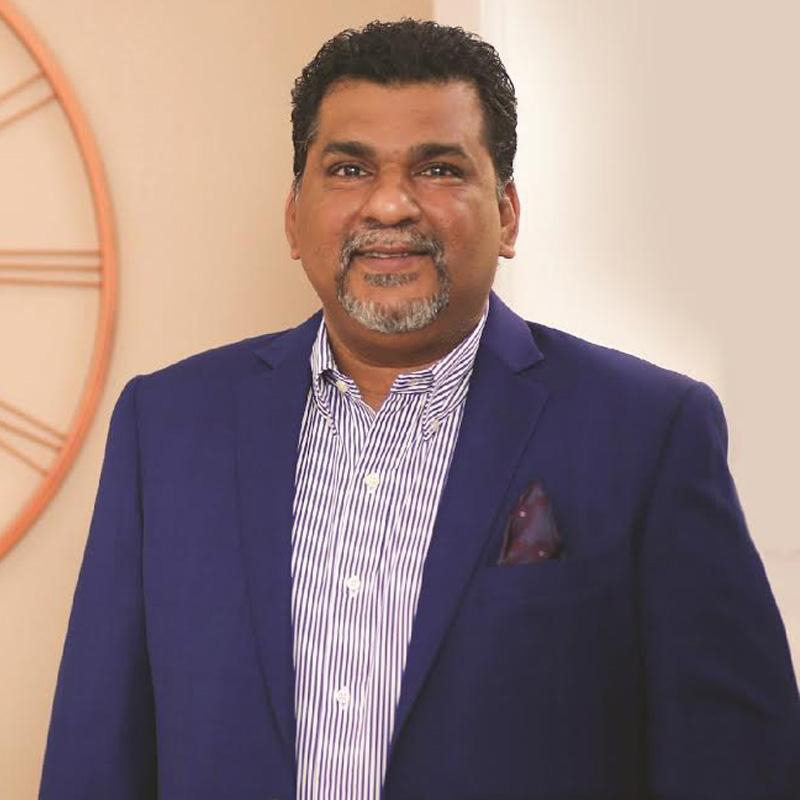
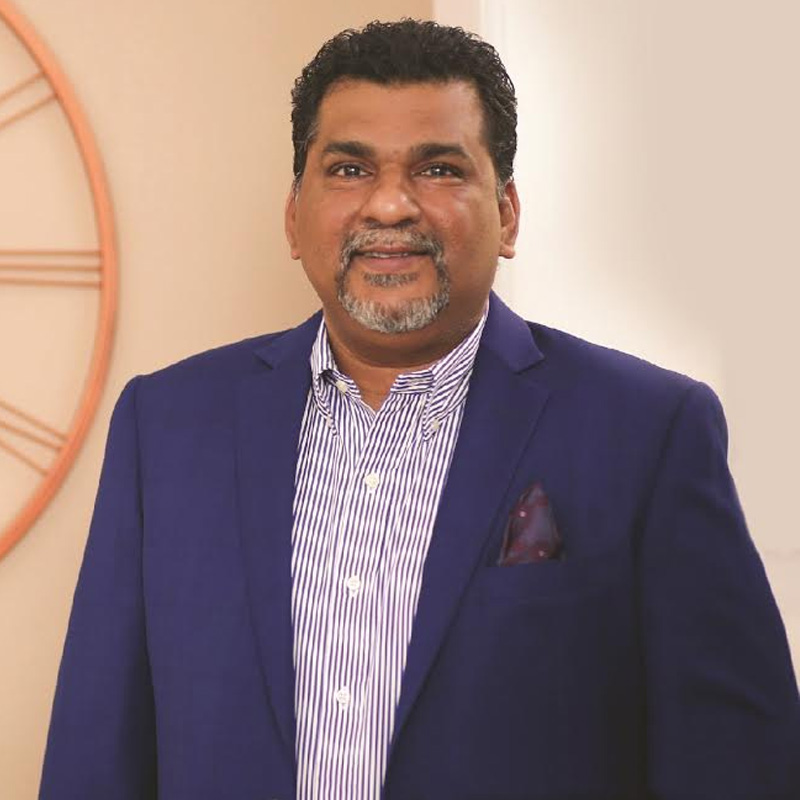
    “We are obviously delighted to be a part of IMCL’s amazing journey, now with a deeper engagement – moving from strategic advisory role to operational execution. Team Cloudpoint will strive to achieve the objectives which the company has set for itself,” Cloudpoint Technologies director and co-founder Himanshu Patil said.

    With ever-changing consumer expectations and requirements, more pronounced during these challenging times; it is imperative to move closer to the consumers and extend world-class service to create the desired consumer delight. This engagement would add significant value to the direct consumer journey by enhancing agility, coupled with an improved support system.

  • TRAI’s consultation: DPOs favour defined CAS/SMS framework; Tata Sky, Airtel, IMCL differ

    TRAI’s consultation: DPOs favour defined CAS/SMS framework; Tata Sky, Airtel, IMCL differ

    MUMBAI: Conditional access system (CAS) and subscriber management systems (SMS) are two key pillars of delivering broadcast services in a secured and encrypted manner to authorised subscribers. However, existing technical requirements for CAS and SMS are generic in nature allowing all type of CAS and SMS systems to exist in the eco-system. Piracy in the distribution of signals occurs due to the deployment of CAS or SMS that do not comply with security protocols as per extant standards. Hence, the Telecom Regulatory Authority of India (TRAI) issued a consultation paper seeking comments on CAS and SMS.

    In response to the consultation paper, most major distribution platform operators (DPOs) have agreed that there is a need to define a framework for CAS/SMS systems to benchmark the minimum requirements of the system before these can be deployed by any DPO.

    Siti Networks has strongly agreed to the need of a framework commenting, “It has been observed that SMS and CAS vendors demand exorbitant amount for upgradation of their CAS/SMS according to the mandatory requirements of the regulations and the service providers does not have any option other than agree to their blackmailing due to the compliance requirement. Any such statutory upgradation in the system should not be burdened on the service providers.”

    Another major MSO, DEN Networks, also thinks that defining the framework for benchmarking the CAS or SMS will help DPOs to choose the right solution. There are various factors in CAS which differs from vendor to vendor as they use proprietary solutions to address the content security.

    GTPL Hathway also reflects the same tone as it says there is certainly an urgent need to define a framework for CAS/SMS systems. It adds that currently all CAS/SMS systems largely vary in terms of both security features and performance features.

    “Under the appliable regulations, DPOs are mandated to grant their customers a free choice to make their own package(s). However, it is pertinent to mention that most CAS available in the market have an upper limit to the number of packages in which the same service/channel can be repeated. Therefore, it is necessary that CAS should be able to be upgraded for offering all services and combinations thereof, available on such platform. Availability of full technical local support in India. Almost all CAS vendors have their experts based out-of-India which may affect DPO’s QoS as the availability of off-shore resources may sometime take time as they help remotely,” it adds.

    Among the DTH platforms, Dish TV also voiced for a comprehensive framework for CAS/SMS system especially for the requirement of end-to-end content protection and transparency in business for the CAS side and an end-to-end business enablement from the SMS side. It has also recommended an operating model wherein the DPO should have direct contract with each stack-holder viz. CAS service provider, SoC/Chipset maker, middleware, security element provider and STB maker wherein the CAS vendor will be as one of stack holder in entire echo system like others. 

    However, Tata Sky holds a different view. According to the operator, it may be premature to assume that the CAS or SMS systems require benchmarking right now. It adds that existing audits could be successful in identifying the systematic gaps which would force those specific DPOs to upgrade their systems to continue to receive signals from the broadcasters. 

    “We would need to be careful that a new and stringent regulation does not get misused to disenfranchise a large number of DPOs thus leading to another round of subscriber shock and dissatisfaction. If it is still concluded that a framework for benchmarking of the system needs to be created, then it should be arrived at by a multi stake holder consensus approach,” it adds.

    Airtel, which also runs a sizable DTH business, states that the basic and minimum requirements of CAS/SMS are well captured in Schedule III of TRAI regulation. It adds that CAS /SMS being a globally deployed technology, innovations are a constant feature. 

    "To start with, Airtel believes that TRAI can continue to use Schedule III requirements for the CAS /SMS while adding more features to it at regular intervals to make it more robust and to accommodate new innovations in the technology. Hence, there is no need for defining or introducing a new CAS /SMS framework. The requirements listed in Schedule III should be benchmarked as the minimum qualifying requirements for all CAS /SMS solutions operating in India as well as for all future deployment of CAS/SMS by a new DPO,” it states.

    While most MSOs are in favour of a framework, IMCL holds same opinion as Tata Sky and Airtel. “We believe that subject to the CAS/SMS/STB meeting the requirements specified in Schedule III, there is no need for any further assessment or benchmarking of products required in order for DPOs to deploy them within their networks. At most the regulator can “recommend” some preferred products, but there should not be any limit to DPOs being able to purchase or even build their own solutions subject to the requirements specified in Schedule III being met,” it comments. 

    IMCL also highlights that migrating to a new SMS platform as selected by TRAI would result in heavy costs being incurred, customisations having to be re-built into any new platform and large migration exercises to move customers to the new platform. Hence, its portals or mobile applications that are built to support LCOs, MSOs, subscribers and engineering staff would all need to be re-built in order to work with a new SMS platform. This change will result in essentially re-building the business from scratch taking away the business from other revenue-generating activities. 

  • We are not a cable TV company but a digital services provider: IMCL’s Vynsley Fernandes

    We are not a cable TV company but a digital services provider: IMCL’s Vynsley Fernandes

    MUMBAI: Innovation is the key to sustain any business. With newer entrants capturing market share, emerging alternatives to traditional TV, the cable operators in the country have focused on creating a diverse portfolio of services. IndusInd Media and Communications Ltd. (IMCL) CEO Vynsley Fernandes, who believes in innovation to stay ahead of the competition, says it is not a cable television company but a digital services provider.

    “We have launched broadband as our combo pack. Today, we are not a cable television company. We are a digital services provider. We provide video broadband and data to consumers’ homes. When we work with cable providers, we groom them to become digital service providers,” Fernandes said during a virtual fireside chat with Indiantelvision.com founder, CEO and editor-in-chief Anil Wanvari.

    He mentioned that all the major cable operators have moved to fibre and provide both broadband and cable because they understand the need to have a diversified portfolio. According to him, the cable operators are ahead of the curve as they have been providing broadband well before the bigger players entered.

    “You have to keep on innovating. There is no other rule book in this business for success other than innovation. Everyone – DTH, cable TV, OTT – has to innovate to stay ahead of the curve. Can you build home security products built into it? Can you create payment gateways? The only way to keep innovating new products,” he stated.

    About the broadband business, he said that they have a subscriber base of 300,000 which is growing very rapidly. “The good part is you need not have one at the cost of the other. Today our product is a combo product. We are offering fibre to the home, a high-value pack: 750 channels on cable television. So consumers are opting for cable, data, and broadband. Will there be a skew? Yes, there will be a skew. But technology will evolve but the ethos and principles will remain fundamental to the business,” he added.

    Fernandes added that they have spent the last year ensuring that the subscriber base is built up again while it was affected during the rollout of new tariff order (NTO). Hence, IMCL closed the year with a large number of subscribers migrating back to IMLC. It also crossed five million-mark in the month of March.

    “Cable continues to work in the highly-dense markets, urban areas like Mumbai, Bangalore, Delhi, and to some extent places like Ahmedabad, Nagpur, etc. But our focus will always be major cities. We don’t have a major presence in Kolkata, but we are building it there. The cable works well because we are able to bundle it with broadband. In all our city markets we have been able to do that. HITS was always designed as a product to reach consumers in tier-3-4 markets and it has lived up to its reputation. Close to sixty-five per cent of our HITS base is from rural markets. Another 35 per cent is probably a mix between tier-2 and tier-3 markets. Our growth has continued in rural markets,” he added.

    The veteran professional in the industry also said that during the last six months, a lot of businesses including competitors have realized that the future lies in collaboration. IMCL has also been working with some large pan-India MSOs to provide managed services through its HITS platform. The MSOs were also facing challenges of fibre cuts in rural India because the subscriber servicing cost (SSC) in rural India is much higher than cities because the density is much more.

    “In our company today, with the WFH in place, everyone is given a new role. How can they innovate and work differently? The challenge is on revenue and margins. Revenues are going to be hit, but margins will be hit harder. The only way to do that is to substantiate the margins by building layers. So you have a cable TV layer, and you build broadband and offer OTT with it; not your own OTT, but partnering with someone to offer it as a hybrid product. You build a digital payment app over. So you build a stack of useful products. It is going to be tough and challenging in the coming days,” Fernandes commented.

  • IMCL launches innovative packages for subscribers to stay connected

    IMCL launches innovative packages for subscribers to stay connected

    MUMBAI:  IndusInd Media and Communications Ltd (IMCL), the media vertical of the global Hinduja Group, has implemented a slew of innovative products and solutions to help its Local Cable Operators (LCOs) and its millions of subscribers across India to ensure access to quality content amid the COVID-19 lockdown.

    IMCL – which owns a digital cable platform (InDigital) and the only HITS platform (NXTDIGITAL) in the country – has rolled out a significantly low-cost package for subscribers called the Vishesh Manoranjan Pack. 

    This pack, which gives subscribers access to over 400 television channels, includes the popular NXT Value Added Services package, comprising up to 20 unique channels for its subscribers. The package can be activated immediately and LCOs can make the payment till16 April 2020. The credit period effectively allows for LCOs to collect the payment after the lockdown is lifted.

    Further, to ensure uninterrupted dissemination of critical information during this challenging period, IMCL has worked with its LCO partners to activate its special InfoPack, at zero cost for customers who are unable to make any payment. This will enable subscribers to stay connected with all Doordarshan channels, including news and entertainment.

    These packages come close on the heels of a slew of initiatives taken by IMCL to ensure safety of its LCOs and subscribers. IMCL has provided critical awareness and education through its national network of LCOs, multiple platforms and portals – in 11 languages, through posters, pamphlets, e-books and video messaging. To help subscribers remain connected, IMCL has extended its online recharge facility through Easebuzz, where subscribers can make their payment directly to their LCOs online, thereby eliminating any level of interaction.

    IMCL CEO Vynsley Fernandes said: “We remain committed towards the well-being of our LCO partners and subscribers. At the time of a global crisis, our endeavour is to consistently create awareness and the dissemination of critical information, to ensure the safety and protection of all our stakeholders. These packages, especially our InfoPack at zero cost, are in line with that philosophy.”

  • Amid uncertainty over NTO 2.0, DPOs start complying with new NCF

    Amid uncertainty over NTO 2.0, DPOs start complying with new NCF

    MUMBAI: The amended new tariff order (NTO 2.0) comes into effect from today (1 March) amid ongoing legal battles. Although most of the broadcasters have not published their updated Reference Interconnect Offers (RIOs), many of the distribution platform operators (DPOs) have started complying with the regulations bringing change in network capacity fee (NCF).

    Along with other amendments, the Telecom Regulatory Authority of India (TRAI) had brought changes in number of channels permitted in Network Capacity Fee (NCF) and applicable NCF for multi TV homes. The authority also reduced the maximum NCF charge to Rs 130 (excluding taxes) for 200 channels. It also added that NCF for more than two hundred SD channels, should not exceed Rs 160.

    “The network capacity fee, per month, for each additional TV connection, beyond the first TV connection in a multi TV home shall, in no case, exceed forty percent of the declared network capacity fee,” it added.

    Tata Sky has also declared its updated NCF. The DTH operator will now charge Rs 153.40 per month for the first 200 SD channels, inclusive of all taxes and Rs 188.80 per month for more than 200 SD channels, inclusive of all taxes. For each secondary connection, it has fixed a NCF of Rs 61.36 per month for the first 200 SD channels, inclusive of all taxes, Rs 75.52 per month for more than 200 SD channels, inclusive of all taxes.

    Airtel Digital TV will charge now the same amount as Tata Sky is charging. However, it is charging Rs 52 ( without taxes) for the primary connection and Additional NCF of Rs 30 (taxes extra) for more than 200 channels.

    “The network capacity fee, per month, payable by a subscriber (each set top box) for 200 SD channels is Rs 130. The NCF, per month, payable by a subscriber (each set top box) for more than 200 SD channels is Rs 160. For determination of channel count 1 HD channel is equivalent to 2 SD channels as per regulations,” Siti Networks stated.

    “The television channels notified by the central government shall be mandatorily available to all the subscribers and shall be in addition to the number of channels available in the network capacity fee. Network capacity fee, per month for each additional TV connection, beyond the first TV connection in a multi TV home shall be forty per cent of the network capacity fee of the Parent STB. The STB with maximum number of channels would be treated as Parent STB,” it added.

    Moreover, IndusInd Media & Communications Ltd (IMCL) has mentioned in its website that pricing of some of its packages will be revised downwards with effect from 1 March. It has also mentioned about the new NCF.

  • IMCL’s Vynsley Fernandes on NTO changes, tech improvements and staying relevant

    IMCL’s Vynsley Fernandes on NTO changes, tech improvements and staying relevant

    MUMBAI: In the last couple of years, streaming services have emerged as a big challenge to traditional cable distributors while the business model has changed too owing to the new tariff order (NTO). Amid the flux, upgrading the existing structure, technology and strategy has become necessity to stay relevant. At the commemoration of the twenty fifth anniversary celebration, IndusInd Media and Communications Ltd (IMCL) unveiled a new mnemonic logo #IamNXT25. As a part of the celebration, the company is launching many new products and solutions to stay relevant in the game.

    As IMCL CEO Vynsley Fernandes summarises, “So everything we do from now is how do we stay relevant and how do we grow and how do we become a brand new generation for the next 25 years.” He adds that a better integration of IMCL’s four products – digital cable, Headend-In-The- Sky (HITS), broadband business and entertainment content will be noticeable. Citing an example, he says IMCL has launched a combination product of HITS and broadband in Hyderabad.

    IMCL’s intra and inter collaborative strategy going forward:

    Talking to Indiantelevision.com, Fernandes also speaks about how IMCL strikes the balance between HITS and digital cable. He says that while the former helps IMCL in remote areas, the latter keeps reigning in high density cities. He cites the example of Andaman and Nicobar Islands, where HITS is a great solution and IMCL has close to 20,000 customers there. Moreover, it is looking at offering customers cable or HITS in their individual terrains coupled with broadband services.

    In a unique model, IMCL has also collaborated with some very large MSOs in India including its competitors who are keen to leverage HITS technology. Under the ‘managed service model’, they will use the technology in the remote areas as a delivery mechanism. While IMCL currently has 5 million subscribers, it has signed managed services agreements for another 5 million customers.

    “We have crossed 50 cities already as we speak. And while broadband has continued to grow and has a significant growth, it will get a renewed thrust in this combo package. Because wherever we go, wherever we have HITS or digital cable, we are bundling our broadband service with it so that will carry more traction. So, while we may not necessarily look at radically growing beyond 50 cities or 50 towns, we are looking at increasing the penetration of our broadband within those 50 cities and towns by bundling it with either with digital cable or HITS,” Fernandes comments on broadband expansion.

    Talking on technological investments, he adds that IMCL has just completed satellite migration moving from Vikon 5 to Intelsat 39. He also adds that IMCL is now on a new technology, 32 APSK. He says that the focus is on ensuring not just investments in new technology, but investments in cutting edge future-proof technology.

    Did IMCL lose consumers during NTO 1.0?

    “I think it would be incorrect to say that our growth in revenues and ARPU is only to do with NTO. We have been building our capabilities and our model year-on-year to meet our promoter’s vision for the future. The group envisaged the need for another cutting-edge platform that could reach phase 3 and 4 markets, and HITS (headend-in-the-sky) was the only way to do this and we launched our HITS services in 2015,” he comments on NTO 1.0’s effect on financial stability.

    “We also were the first MSO to move to prepaid billing of both operators and subscribers. This was a huge challenge in a market used to postpaid transactions, yet we realised that this is where ultimately the industry would have to get to in order to survive. This transition caused us some churn but helped us towards improving our financial stability,” he adds.

    He mentions that IMCL was one of the first MSOs to launch mobile and web applications to help operators and subscribers activate and interact with its platforms more easily. It even migrated to 16APSK modulation on the HITS satellite in order to be able to add more channels within the existing satellite capacity without increasing costs.

    He accepts that IMCL lost subscribers in the new regime like other DPOs but he claims their churn rate was less than that experienced by others. Firstly, he mentions that IMCL engaged with partners, cable operators/distributors, early on, way before implementation of NTO 1.0, in November 2018 – to help them understand what NTO was all about and how it needed to be implemented. IMCL conducted around 150 workshops and training sessions all across India as it felt it was important for all stakeholders to understand and grasp the changes taking place.

    IMCL ensured that everyone was ready and knew how to create packages, bundles, what types of questions subscribers were likely to ask. He says they were, therefore, ready on the ground for handling the shift to the NTO regime.

    “Secondly, the technology we had implemented allowed us to be able to cater to subscribers’ requirements. One important thing about NTO was the whole concept of allowing the customer to choose what he wants to watch and paying only for that. Whilst we did create our own packages to help subscribers, these only have a penetration of around 18 per cent in HITS. The other 82 per cent of our subscribers opted to select their own choice of broadcaster bouquets and ALC. This capability to allow the consumer to effect their choice was one of the key reasons for customer satisfaction and therefore reduced churn,” he states.

    What does IMCL expect from NTO 2.0 and how are they preparing?

    From a DPO perspective, he does not think there'll be significant changes with the implementation of NTO 2.0. Overall, it is effectively tweaks to the NTO 1.0 framework including multi-home TV, right pricing etc, as he says. According to him, there is logic in putting in regulations for multi-homes as this was not included in original regulations. He hopes that it can now use this to help claw back some of the customers it had lost during NTO 1.0 who had relinquished their 2nd and 3rd TVs at home.

    He is also of the view that there will be no significant revenue changes if broadcasters reduce channel prices. He thinks that the more the prices of content drop, the more customers are likely to increase their viewing of content and add their 2nd/3rd TVs to their homes again, many of which were discontinued when transitioning to the NTO regime. He believes that revenues could possibly increase as customers expand their portfolio of channels.

    Fernandes notes that with respect to NTO 2.0, perhaps the key driver is technology-readiness and communications. “Our technology is completely ready if we have to provide new bundles, packaging and pricing. Our systems are effectively already delivering such requirements. We’ve deployed systems from global leaders in pay-TV technology and that are being used by some of the largest platforms in the world. So for us to be able to make a transition, however small or significant, we're ready for it,” he comments.

    “From a communications perspective, we work very closely with our business partners and our local cable operators. They have all played a significant and critical role in helping us to implement NTO 1.0.  Our success has not been because of us directly marketing to subscribers, but because our business partners and LCOs are able to reach and educate customers personally. We would use the same mechanism all over again because we've seen it to be very successful,” he signs off. 

  • NXTDIGITAL reports total income of Rs 938.68 cr for 9 months ended 31 Dec

    NXTDIGITAL reports total income of Rs 938.68 cr for 9 months ended 31 Dec

    MUMBAI: NXTDIGITAL Ltd on Monday reported its financial results for the third quarter and nine months ended 31 December 2019. On a consolidated basis, the company reported a total income of Rs 938.68 crore for the nine months ended 31 December, 2019 as against a total income of Rs 527.36 crore for the corresponding period of the previous year recording a growth of close to 78 per cent.

    For the same period, the company reported a Profit After Tax of Rs 100.10 crore as against a loss of Rs 344.04 crore for the corresponding period of the previous year. The company reported a consolidated net profit after tax of Rs 33.63 crore for the quarter as against a net loss after tax of Rs 122.84 crore for the quarter ended December 31, 2018.

    The company claims that the main growth driver has been the smart turnaround of the media business of the company carried out through its significant subsidiary IndusInd Media & Communications Limited (“IMCL”). IMCL is one of India’s leading digital content distribution companies, delivering digital content via cable as well as through satellite on its Headend-In-The-Sky (HITS) platform – through a vast network of established Local Cable Operators.

    IMCL continues to set the trend for innovation, driven by its superior HITS technology that delivers nearly 700 television services to consumers in the most remote regions across India; irrespective of the weather or terrain.

    “The vision and mission of the government viz. ‘Digital India’, ‘Skill India’ and ‘Make in India’ is embodied in our principles for success. We are proud to partner with over 50,000 individuals comprising Local Cable Operators and their teams across India – who are well trained and skilled in digital service delivery; whilst employing world-class yet native technology at our partners premises. This remains a significant edge in our endeavor to perform.”  IMCL chief executive officer Vynsley Fernandes says.

    Recently, several multi-system operators (MSOs), including one of India’s biggest has signed up for managed services via IMCL’s HITS platform – in semi-urban and rural markets. To support the MSO’s regional requirements, IMCL is augmenting its satellite capacity that will allow it to carry a greater number of regional channels. “Our HITS platform was designed specifically to help MSOs and LCOs deliver services across India seamlessly; with excellent uptimes and a high quality of service, through significant investments in technology. This will encourage infrastructure sharing – to ultimately bring down cost of operations and ensure customers across the country benefit from the quality of service, the choice of channels and the effective delivery pricing,” says Fernandes.

    On the satellite front, IMCL continues to remain the leader in innovation. After being the first satellite platform in the world to adopt and implement 16APSK modulation in 2016 – which ensures a higher throughput and optimal use of satellite capacity; IMCL is currently implementing the next generation 32APSK technology; cementing its leadership position globally, in technology lead.

    IMCL has recorded profits consistently over the last four quarters driven by its focused business strategy of growth in size – in the smaller towns and villages; and growth in ARPU through value added services and other offerings in the metro towns and cities. Consumer viewership experience and quality of service continue to drive IMCL’s business strategy as is evidenced by the very low customer churn ratio and pre-paid collection percentages at close to 100% per cent.

  • TRAI sends directive to 5 major MSOs for non-compliance of NTO provisions

    TRAI sends directive to 5 major MSOs for non-compliance of NTO provisions

    MUMBAI: The Telecom Regulatory Authority of India (TRAI) has directed five major multi system operators to comply with all provisions of its the new tariff order (NTO). After receiving scrutiny of the reply of earlier notice from the MSOs, TRAI found violation of rules of NTO.

    Following issues were found by the regulator for Induslnd Media and Communications Ltd   :

    ·         LCOs are not  providing  the itemised invoices to  the  consumers.  Some LCOs  are providing their  own  Cash memo bills.

    ·         Consumer portal provided by IMCL is not  working

    ·         IVRS facility of IMCL does not  have  any  provision for complaint registration.

    ·         LCOs without GST Registration are collecting tax  amount from  the  subscribers but not  depositing it.

    Following issues were found by the regulator for Hathway Digital:

    • Facility of Bill generation is available in LCO portal, but the customers are  not able  to get itemised billing in most cases even  after the request of the  subscriber,

    •LCOs without GST Registration are collecting tax  amount from  the  subscribers but  not  depositing it.

    Following issues were found by the regulator for GTPL Hathway:

    •IVRS facility of M/s GTPL Hathway Ltd.  does not  have provision for  complaint registration

    •The consumer portal of GTPL KCBPL has very  limited facilities. The facility ofupgradation and modifications in  subscription is  not  available on  consumer portal.

    •LCOs without GST Registration are  collecting tax  amount from  the  subscribers but not  depositing it.

    Following issues were found by the regulator for SITI Networks:

    •LCOs can  provide itemized invoices to consumers but most of the  LCOs are  not providing the  same. Some LCOs are  providing their own  cash memo bills;

    •IVRS facility of Siti  Networks Ltd.  does  not   have any  provision for  complaint registration.

    Following issues were found by the regulator for DEN networks:

    • LCO are  providing their own  cash memo bills  using card system for  payment receipts, while  the  subscribers are  not  able to get itemized bills

    • Facility of  upgradation  and  modification in  subscription is not   available on consumer portal.

    •LCOs without GST registration are  collecting tax  amount from  the  subscribers but  not  depositing it.

    All the MSOs have been directed to report compliance as per the new regulatory framework within seven days from the date of issue of this direction.

  • Hinduja Ventures to become an operating media corporation

    Hinduja Ventures to become an operating media corporation

    MUMBAI: The Board of Directors of Hinduja Ventures Limited (“HVL”) have approved Scheme of Arrangement between IndusInd Media and Communications Limited (Demerged Company) and Hinduja Ventures Limited (Resulting Company) and their respective shareholders subject to all statutory/ regulatory approvals and approval of the shareholders.

    The IndusInd Media & Communications Limited (“IMCL”) business consists of digital content distribution using multiple platforms such as satellite and fibre. It also carries Broadband and internet business carried out through its subsidiary OneOTT Intertainment Limited (“OIL”). IMCL also has a dedicated unit that develops content for various platforms and owns a significant content library and movie negatives.

    HVL believes that this media business has a high growth potential going forward due to a fast maturing industry and recent regulatory reforms like New Tariff Order (“NTO”). These stimuli provide the right opportunity to consolidate media vertical which will propel it to the next level of growth and performance. The exchange ratio for the proposed restructuring exercise shall be 10 equity shares of HVL fully paid up for each 125 equity shares of IMCL fully paid up.

    Benefits of this consolidation into a single group will achieve flexibility, scale and financial strength. Upon segregation of identified business undertaking, post restructuring the Company shall be able to achieve higher long-term financial returns, increased competitive strength, cost reduction and efficiencies, productivity gains, and logistical advantages, thereby significantly contributing to future growth in their respective business verticals.

    The benefits that shall accrue to the shareholders are Consolidation and growth of Media and Communications undertaking which will help to enhance and will show marked improvement in market shares and revenues.; Focused Management, Organization Efficiency and Operational Synergies; Unlock shareholders value; and Efficiency in Fund raising for harnessing future growth

    The appointed date of the scheme of arrangement might be October 01, 2019 after securing all statutory and regulatory approvals.

  • IMCL sees 11% revenue growth in FY19

    IMCL sees 11% revenue growth in FY19

    MUMBAI: IndusInd Media & Communications Ltd (IMCL) is hoping to achieve a positive profit after tax for the financial year 2019-20. In FY 2019, the company’s subscription revenue grew by 11 per cent and subscriber base by 10 per cent over FY 2018.

    Hinduja Venture Chairman Ashok P Hinduja commented in its annual report 2018-19, “IMCL along with its subsidiary companies has an active subscriber base of 5.1 million. This is expected to grow substantially in the coming years. With all these positive developments, IMCL is expected to return a positive profit after tax in the years ahead.”

    During the year gone by in 2018-19, the NXT Digital and IN Digital – distribution platforms of IMCL have taken giant strides not only in terms of the subscriber base but also in terms of its subscription revenue.

    Sharing his view on the TRAI new tariff order, Hinduja said, “Mandating a minimum assured distribution fee to the distribution platforms like IMCL from the broadcasters, NTO brings in a new regime that largely benefits digital platform operators (DPO) like IMCL to retain an operating margin as against the previous model wherein IMCL was effectively subsidising the broadcaster costs to the consumers.”

    He further said that the successful implementation of the new tariff order by IMCL while simultaneously ensuring that there is least disruption to customer service has been very well recognised by the industry and all its stakeholders.

    During the year 2018-19, the company introduced hybrid high definition set top boxes in the market for the first time. It also introduced VAS services channels – branded “NXT Services” across multiple genres and for all age groups – a bouquet which is very popular among consumers.

    IMCL has already signed up half a million subscribers on managed services model whereby small DPOs can operate profitably by using the infrastructure of IMCL on an opex model.  

    During the year under review, IMCL posted a positive operating profit in the last quarter of the year. The company also informed that it has achieved a collection to billing ratio at 99.5 per cent which is highest in the industry.