Tag: IMC

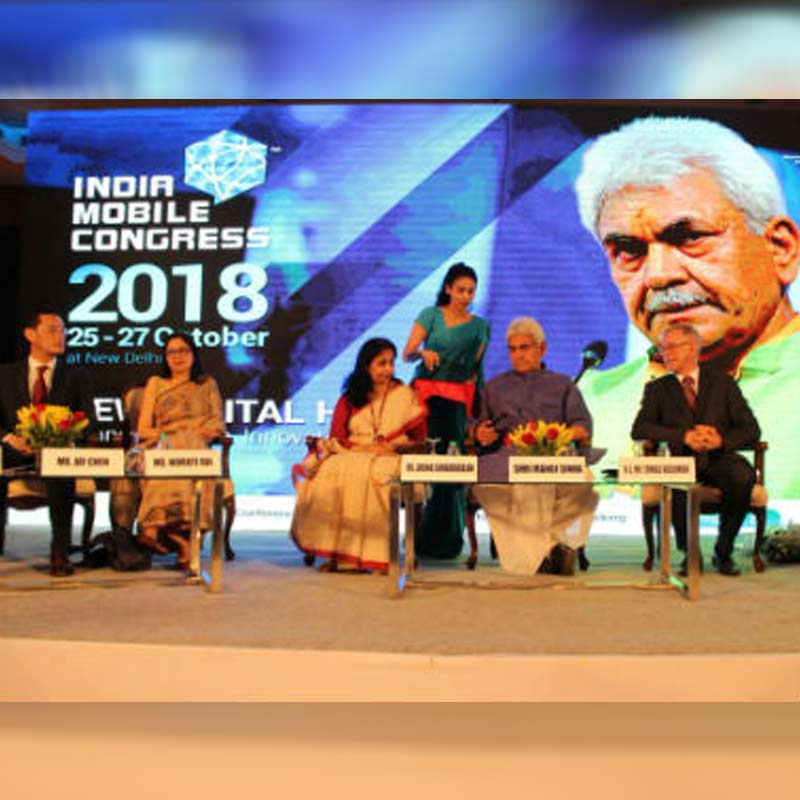
  • Hon’ble Telecom Minister, Shri Manoj Sinha, inaugurates the India Mobile Congress 2018

    Hon’ble Telecom Minister, Shri Manoj Sinha, inaugurates the India Mobile Congress 2018

    MUMBAI: India Mobile Congress (IMC) is one of the biggest marquee Mobile, Internet, and Technology event for South and South-East Asia, with the theme, “New Digital Horizons – Connect. Create. Innovate.”, 

    IMC 2018 began on a grand-scale at Aero City, New Delhi with over 300 companies, 20 countries participating in this prestigious event in the Asia Pacific region. Shri Manoj Sinha, Minister of State (Independent Charge) for Communications and Minister of State for Railways, accompanied by Shri Ravi Shankar Prasad, Hon’ble Minister of Electronics and Information Technology and Law & Justice, Shri Suresh Prabhu, Hon’ble Minister of Commerce & Industry and Civil Aviation, Shri Hardeep Singh Puri, Hon’ble Minister of State (Independent Charge) for Housing & Urban Affairs, Ministers and dignitaries from Cambodia, European Union, Lao-PDR, Myanmar, Mauritius, Nepal, South Africa inaugurated and participated in this 2nd edition of the epoch marking event, which began in 2017 to build a collaboration platform for technologies and services in next generation mobile communications. The inauguration ceremony was attended by over 5000 people from 10 partner countries, and included policy makers, ambassadors, opinion makers, change agents, bureaucrats and investors.

    Hon’ble Minister, Shri Manoj Sinha, announced that the Indian telecom industry will rollout one million WiFi hotspots in the country by December 2019, which is another step towards the digital empowerment of the nation. Bharat Wi-Fi, a country-wide common inter-operable platform of one million Wi-Fi Hotspots, owned and operated by Telecom Service Providers, Internet Service Providers and Virtual Network Operators will be rolled out across the country. This initiative allows consumers to access Wi-Fi Hotspots of any of the partnering operators.  

    The National Frequency Allocation Plan 2018 (NFAP) was unveiled during the inauguration presenting a pioneering roadmap for the Indian digital communications industry. The NFAP released a quantum of 605 MHz license exempt spectrum in 5GHz band for Wireless Access Services and Radio Local Area Networks in outdoor, to meet the ever-growing appetite for data (from a current figure of 50 MHz since 2007). The NFAP also offered over 30 license exempt bands for Short Range Devices (SRDs), Ultra-Wideband Devices (UWDs) and additional spectrum for M2M services, creating opportunities for the public to enjoy benefits from technologies and enabling the industry to build domestic manufacturing ecosystem. India signalled its spectrum plans for 5G services aspiring to adopt the next generation technology as a leading market.

    In a major policy initiative, which will give impetus to small and medium entrepreneurship in Telecom Sector, DoT decided to deduct payments for resources taken by Virtual Network Operators (VNOs) from telecom service providers, thereby reducing levies payable by VNOs. This avoids double taxation at various stages.

    A concrete plan is in making by the DoT to enable homegrown technologies for trials in the field on a large scale to enable the development and the scaling up of the products and services.

    The day 1 has witnessed many rousing announcements by the industry and demos of the state of the art 5G applications by global OEMs. Investments of approximately over INR 2000 crores and over 3 lakh jobs are expected to be created. 

    S. No.    Organization / Company    Announcement    Relevance for India

    1.a.    Samsung & R Jio    5G Live Demo of the Skyship Drone    Applications in public safety & surveillance, agriculture monitoring and disaster response. 
    1.b..    Ericsson & R Jio    Demo of connected car on a 5G network    Environmental quality, reduce traffic collisions and fatality rates. Driver safety and data processing and management.
    2.    Ericsson & Airtel    Drone flying on 5G. Surveillance and logistics
        Autonomous drone applications in  mission-critical applications, disaster management, emergency deliveries, medicine and remote surveillance. 
    3    Nokia    Manufacturing of Nokia 5G NR (New Radio)    Nokia’s state-of-the-art manufacturing unit in Chennai will start large scale manufacturing of 5G New Radio enabling made in India for the World.
    4.    Ericsson    Export of 5G ready equipment from India     Ericsson started exporting 5G ready telecom equipment from its manufacturing facility in Pune, to global markets. Its state-of-the-art facility will cater enabling made in India for the World
    5.    BSNL, Airtel, JIo, Vodafone idea    One Million WiFi Hotspots across India    The telecom industry will install 1 million Wi-Fi hotspots in the next 12 months. Interoperability across different WiFi networks thereby enabling smooth experience for subscribers, as he or she will be able to use the data plan taken from any TSP for all the WiFi Hotspots deployed across India. Besides offering consumer delight, this industry initiative will create additional 3 lakh jobs. 

    Speaking at the inauguration, Shri Manoj Sinha, Hon’ble Minister of State (Independent Charge) for Communications and Minister of State for Railways, said, “Introducing the second edition of the India Mobile Congress is a proud moment for us. Last year, we witnessed an overwhelming response from everyone and we are confident that IMC 2018 will reach to the next level of success. The country is at the cusp of a digital revolution, with disruptions happening in each and every sector and industry. With growing smartphone and internet penetration and with the finalisation of National Digital Communication Policy 2018, these are exciting times for the telecom sector, and the society at large. We are elated to have the support of the Ministry of Electronics and Information Technology (MeitY) and Skill Development and Entrepreneurship in addition to such enthusiastic participation from who’s who of the industry. IMC 2018, will not only attract investors, it will also witness the launch of several innovative products, encourage emerging startups, and promote futuristic technologies, thereby, paving the path to accomplishing Hon’ble Prime Minister’s vision of a Digitally connected India.”

    This edition of India Mobile Congress will comprise of ASEAN and BIMSTEC Ministerial Conclave, Partner Programs in Digital India, Smart Cities, Emerging Technologies, Make in India projects, Skill Harmonisation, Business Innovation and Knowledge Sharing. There will be a technology exhibition, offering a peek into connected villages, virtual and augmented reality, connected cars, m-health, smart wearables, smart home, artificial intelligence, robotics, smart energy, internet of things, block chain, and machine learning among other things. IMC 2018 will also hold a special plenary session on upcoming network technologies such as 5G. 

    IMC 2018 will also host a Global CEO’s Conclave where stalwarts from the global technology arena will come together and deliberate on the future of technology and how it will bring about paradigm shifts in the way we go about our daily lives. Discussions will revolve around the power of content, networks of the future, open source technology and emerging technologies. 

    The event will showcase a Digital Village, complete with live experience zones, exhibits on interactive technology, and live demonstration booths on a variety of interesting concepts, hinged around the Internet of Things, Augmented and Virtual Reality, Artificial Intelligence, Robotics, Smart City Solutions, Fintech, Health-tech, Autonomous Cars, and Cyber Security, amongst others. 
    Luminaries in the inauguration

    The Programme is jointly organised by Ministry of Communications (Department of Telecommunications) and COAI which is graced by the presence of the following Guests of Honour, Shri Ravi Shankar Prasad, Hon’ble Minister of Electronics and Information Technology and Law & Justice, Shri Suresh Prabhu, Hon’ble Minister of Commerce & Industry and Civil Aviation, Shri Hardeep Singh Puri, Hon’ble Minister of State (Independent Charge) for Housing & Urban Affairs, Smt. Aruna Sundararajan, Secretary (T) & Chairperson, Telecom Commission.

    Dr. Youngky Kim, President & Head of Samsung Networks, Principal Sponsor, Mr. Vivek Badrinath, Regional CEO, Africa Middle East Asia Pacific, Vodafone Group, Mr. Sunil Bharti Mittal, Founder & Chairman, Bharti Enterprises, Mr. Mukesh Ambani, Chairman, Reliance Industries Limited, Mr. Kumar Mangalam Birla, Chairman, Aditya Birla Group.

    Ministers from other countries
    Cambodia: H.E. Tram Lv Tek, Minister of Posts & Telecommunications, Myanmar: H.E. U Thant Sin Maung, Union Minister for Transportation & Communications, Lao PDR: H.E. Mr. Bounsaleumsay Khennavong, Nepal: H.E. Gokul Prasad Baskota, Minister for Communications and Information Technology. 

  • No plan for one-stop broadcast authority at present, says Rathore

    NEW DELHI: The Government has said there was no plan to set up a one-stop regulatory authority to receive complaints against broadcasting of programmes on private radio and television channels in violations of the code, thus ending the practice of self regulation.

    Minister of state for information and broadcasting Rajyavardhan Rathore was answering a question in the Parliament where a member had wanted to know if a single body would be set up to end the practice of self-regulation.

    Meanwhile, ruling out pre-censorship of private TV channels, the minister had last week listed the various steps being taken to prevent violation.

    Rathore had said that under the existing regulatory framework, all programmes and advertisements telecast on private satellite TV channels and transmitted/re-transmitted through the Cable TV network are required to adhere to the Programme and Advertising Codes prescribed under the Cable Television Networks (Regulation) Act, 1995 and Cable Television Network Rules, 1994 framed thereunder.

    The Act prescribes that all programmes and advertisements telecast on such TV channels including regional language channels should be in conformity with the prescribed Programme Code and Advertising Code enshrined in the said Act and the rules framed thereunder, which contain a whole range of parameters to regulate programmes and advertisements including the content aimed at instigating communal violence and fear in the minds of common people on TV channels.

    The Ministry has set up Electronic Media Monitoring Centre (EMMC) to monitor the content telecast on private TV channels with reference to the violation of Programme and Advertising Codes.

    An Inter-Ministerial Committee (IMC) has also been set up in the Ministry to look into the specific complaints or suo-motu take cognizance against the violation of Programme and Advertising Codes. The IMC has representatives from the Ministries of Home Affairs, Defence, External Affairs, Law, Women and Child Development, Health & Family Welfare, Consumer Affairs, Information & Broadcasting and a representative from the industry in Advertising Standards Authority of India (ASCI). The IMC meets periodically and recommends action in respect of violation of Programme and Advertising Codes by private TV channels.

    Apart from this, the Ministry has also issued directions to States to set up District level and State level Monitoring Committees to regulate content telecast on cable TV channels. 

    Also Read:

    Punjab govt. studying Arasu & other regulatory models on distribution 

    TRAI can only regulate transmission, not broadcast material: Star tells Mds HC

  • Govt. again rules out IMC reconstitution, says checks adequate

    NEW DELHI: The Government has once again ruled out any reconstitution of the Inter-Ministerial Committee which examines complaints against television channels.

    The minister of state for information and broadcasting Rajyavardhan Rathore told the Parliament this week that the IMC “already includes representatives from various Ministries concerned and the industry.”

    He also said that the existing provisions contained in the Programme & Advertising Codes and the existing mechanism are considered adequate to regulate content of private satellite TV channels. “No shortcomings have been found in the functioning of the IMC”, he added.

    Similar questions have been asked in this and previous sessions and the government has repeatedly said there is no proposal to reconstitute IMC.

    Content telecast on private satellite TV channels and transmitted/re-transmitted through the Cable TV network is regulated in terms of the Programme and Advertising Codes prescribed under the Cable Television Networks (Regulation) Act 1995 and Cable Television Network Rules 1994 framed thereunder.

    The Act does not provide for pre-censorship of any programme or advertisement telecast on such TV channels. However, all programmes and advertisements are required to be in conformity with the said Programme and Advertising Codes.

    The IMC functions under the Chairmanship of Additional Secretary (I&B) and comprises officers drawn from Ministries of Home Affairs, Defence, External Affairs, Law, Women and Child Development, Health & Family Welfare, Consumer Affairs, Information & Broadcasting and a representative from the industry in Advertising Standards Council of India (ASCI) to take cognizance suo-motu or look into specific complaints regarding violation of the Programme and Advertising Codes.

    He said the IMC functions in a ‘recommendatory’ capacity. The final decision regarding penalties and its quantum is taken by the Ministry on the basis of the IMC recommendations.

  • MSO’s net worth should be positive for registration: Govt.

    MSO’s net worth should be positive for registration: Govt.

    NEW DELHI: An inter-ministerial committee (IMC) of the government, grappling with the issue of differentiating between serious and non-serious players, has recommended that net worth of an MSO must be positive for grant of registration, but shied away from stipulating a minimum monetary ceiling.

    The IMC, which met earlier this month, came to the conclusion after feedback from various other ministries, including finance, information and broadcasting and commerce, that in case an existing registered MSO applied for registration for additional areas, the net worth of the company must be positive for those areas too for a green signal from the government.

    For an expenditure of about 25 lakh (Rs. 25,00,000) by a company to establish an MSO business, a loan can be availed of by a new applicant through banks, the IMC said.

    Justifying its stand on the MSO company’s net worth being positive, IMC said it should be so as the government was providing loans without collaterals to small entrepreneurs for starting a business. “Hence the net worth of the entity applying for MSO registration has to be positive,” the government panel observed.

    For the purposes of net worth evaluation, IMC reiterated that immovable/movable assets, generally included in the net worth certificates submitted by the applicants, could continue to be taken into account as per previous practice.

    The panel took into consideration, among other issues, whether for registration purpose an entry level threshold net worth be specified and whether an MSO, already registered for certain areas, may be considered as eligible for registration in extended areas if its net worth was presently negative.

  • MSO’s net worth should be positive for registration: Govt.

    MSO’s net worth should be positive for registration: Govt.

    NEW DELHI: An inter-ministerial committee (IMC) of the government, grappling with the issue of differentiating between serious and non-serious players, has recommended that net worth of an MSO must be positive for grant of registration, but shied away from stipulating a minimum monetary ceiling.

    The IMC, which met earlier this month, came to the conclusion after feedback from various other ministries, including finance, information and broadcasting and commerce, that in case an existing registered MSO applied for registration for additional areas, the net worth of the company must be positive for those areas too for a green signal from the government.

    For an expenditure of about 25 lakh (Rs. 25,00,000) by a company to establish an MSO business, a loan can be availed of by a new applicant through banks, the IMC said.

    Justifying its stand on the MSO company’s net worth being positive, IMC said it should be so as the government was providing loans without collaterals to small entrepreneurs for starting a business. “Hence the net worth of the entity applying for MSO registration has to be positive,” the government panel observed.

    For the purposes of net worth evaluation, IMC reiterated that immovable/movable assets, generally included in the net worth certificates submitted by the applicants, could continue to be taken into account as per previous practice.

    The panel took into consideration, among other issues, whether for registration purpose an entry level threshold net worth be specified and whether an MSO, already registered for certain areas, may be considered as eligible for registration in extended areas if its net worth was presently negative.

  • Govt hands NDTV India 24-hr ban for breach of content code

    Govt hands NDTV India 24-hr ban for breach of content code

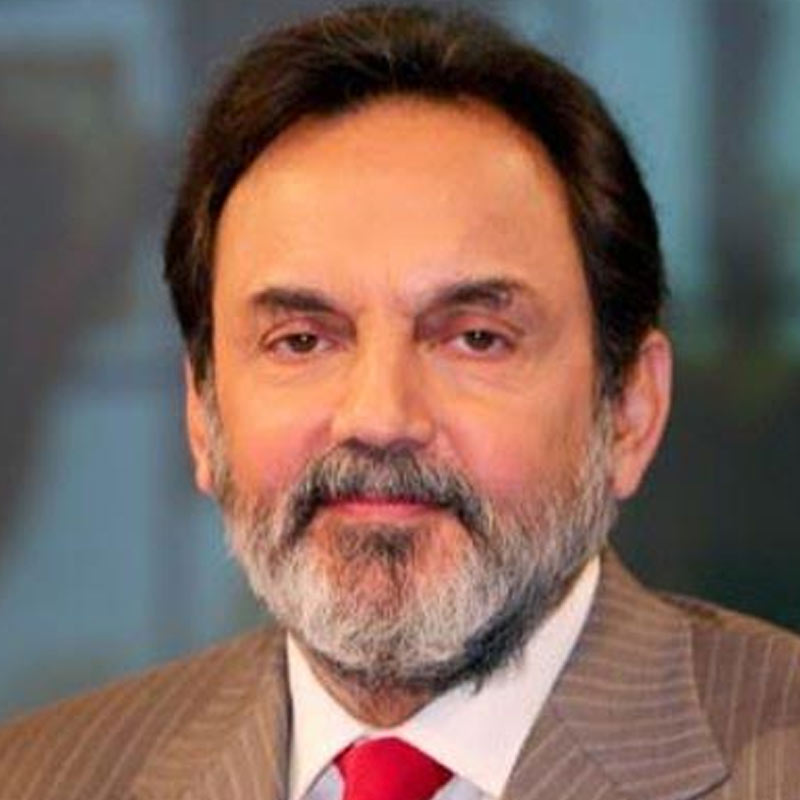
    MUMBAI: In what is being viewed in certain quarters as an assault on media freedom reminiscent of Rajiv Gandhi government’s bid to gag media in late 1980s, the Prannoy Roy and family-controlled NDTV India, has been directed by the government to go off air for 24 hours from 9 November 2016 as a penalty for breaching telecast norms related to security issues.

    NDTV is exploring all options against this 24-hour ban with opinion split on the issue. While a section of views on social media supported the government action, many who part of the Indian media criticised it saying it reminded them of Indira Gandhi-imposed Emergency in India in 1977.

    Confirming the recent development, Ministry of Information and Broadcasting (MIB) sources said that Hindi news channel NDTV India has been accused of airing images and revealing information regarding defence locations while covering the Pathankot terrorist attack a few months back. The sources added that NDTV India was given a chance by an inter-ministerial committee (IMC) of the government to put forth its viewpoint on the allegations and was found wanting.

    Indiantelevision.com made futile attempts to get in touch with NDTV for independent reactions, including newly-anointed group CEO KVL Narayan Rao and his predecessor Vikram Chandra.
    However, in a statement put out by NDTV on its website (http://www.ndtv.com/communication/ndtv-statement-on-order-against-our-hindi-channel-ndtv-india-1621155), the company said, “The order of the MIB has been received. It is shocking that NDTV has been singled out in this manner. Every channel and newspaper had similar coverage. In fact NDTV’s coverage was particularly balanced. After the dark days of the Emergency when the press was fettered, it is extraordinary that NDTV is being proceeded against in this manner. NDTV is examining all options in this matter.”

    The IMC, the government sources said, was earlier in favour of handing out a one-month ban, which was diluted to 24 hours later.
    The matter pertains to the coverage of Pathankot defence areas after a terrorist attack in January this year. The IMC has blamed NDTV India of providing on-air information about ammunition stockpiled in the airbase, fighter-planes, rocket-launchers, fuel-tanks, etc. The committee felt that such crucial information could have been readily picked by up by hostile nations and could have compromised lives of civilians and defence personnel.

    The committee has also mentioned that the channel appeared to give out the exact locations of terrorists on air, thus compromising counter offensives by India.
    In its reply, the channel said that it was a case of subjective interpretation and most of the information they had put out was already in public domain in print, electronic and social media.

    A section of Indian media reacted strongly against such a government move.

    “Govt pulling TV news channels off air is a dangerous trend. Don’t want sarkari babus deciding what content they like and what they don’t,” India Today (TV) and Aaj Tak Managing Editor Rahul Kanwal tweeted.

    A former NDTV star and presently with India Today group, Rajdeep Sardesai, said in a series of tweets, “One of India’s most sober and responsible channels NDTV India to be banned for a day by I and B ministry. NDTV today, who tomorrow? Media should be accountable, scrutinised, but with transparency and not selectively.”


    Shekhar Gupta, former editor of the Indian Express Group and presently anchoring a digital news venture, said in a tweet, “What’s shocking is lack of protest/outrage. Reprehensible, somebody in Ind(ia) having power to ban news channels as in Pak(istan). Tom(orrow), it’ll be print.”


    Meanwhile in an another development, the NBSA (News Broadcasting Standards Authority), the self-regulatory body of news channels under the News Broadcasters’ Association ( NBA) late last month asked NDTV, the English news channel,  to air an apology covering for showing an incorrect map of India

    The letter from NBA to NDTV stated the complaint was studied and the channel was directed to run an apology (full screen) prior to 9 pm on 5 November.

    While  NBA refused to comment on this matter, it is learnt that MIB had forwarded to NBSA complaints received by it from people, especially by one person who had taken up this issue on social media in a big way.

  • Govt hands NDTV India 24-hr ban for breach of content code

    Govt hands NDTV India 24-hr ban for breach of content code

    MUMBAI: In what is being viewed in certain quarters as an assault on media freedom reminiscent of Rajiv Gandhi government’s bid to gag media in late 1980s, the Prannoy Roy and family-controlled NDTV India, has been directed by the government to go off air for 24 hours from 9 November 2016 as a penalty for breaching telecast norms related to security issues.

    NDTV is exploring all options against this 24-hour ban with opinion split on the issue. While a section of views on social media supported the government action, many who part of the Indian media criticised it saying it reminded them of Indira Gandhi-imposed Emergency in India in 1977.

    Confirming the recent development, Ministry of Information and Broadcasting (MIB) sources said that Hindi news channel NDTV India has been accused of airing images and revealing information regarding defence locations while covering the Pathankot terrorist attack a few months back. The sources added that NDTV India was given a chance by an inter-ministerial committee (IMC) of the government to put forth its viewpoint on the allegations and was found wanting.

    Indiantelevision.com made futile attempts to get in touch with NDTV for independent reactions, including newly-anointed group CEO KVL Narayan Rao and his predecessor Vikram Chandra.
    However, in a statement put out by NDTV on its website (http://www.ndtv.com/communication/ndtv-statement-on-order-against-our-hindi-channel-ndtv-india-1621155), the company said, “The order of the MIB has been received. It is shocking that NDTV has been singled out in this manner. Every channel and newspaper had similar coverage. In fact NDTV’s coverage was particularly balanced. After the dark days of the Emergency when the press was fettered, it is extraordinary that NDTV is being proceeded against in this manner. NDTV is examining all options in this matter.”

    The IMC, the government sources said, was earlier in favour of handing out a one-month ban, which was diluted to 24 hours later.
    The matter pertains to the coverage of Pathankot defence areas after a terrorist attack in January this year. The IMC has blamed NDTV India of providing on-air information about ammunition stockpiled in the airbase, fighter-planes, rocket-launchers, fuel-tanks, etc. The committee felt that such crucial information could have been readily picked by up by hostile nations and could have compromised lives of civilians and defence personnel.

    The committee has also mentioned that the channel appeared to give out the exact locations of terrorists on air, thus compromising counter offensives by India.
    In its reply, the channel said that it was a case of subjective interpretation and most of the information they had put out was already in public domain in print, electronic and social media.

    A section of Indian media reacted strongly against such a government move.

    “Govt pulling TV news channels off air is a dangerous trend. Don’t want sarkari babus deciding what content they like and what they don’t,” India Today (TV) and Aaj Tak Managing Editor Rahul Kanwal tweeted.

    A former NDTV star and presently with India Today group, Rajdeep Sardesai, said in a series of tweets, “One of India’s most sober and responsible channels NDTV India to be banned for a day by I and B ministry. NDTV today, who tomorrow? Media should be accountable, scrutinised, but with transparency and not selectively.”


    Shekhar Gupta, former editor of the Indian Express Group and presently anchoring a digital news venture, said in a tweet, “What’s shocking is lack of protest/outrage. Reprehensible, somebody in Ind(ia) having power to ban news channels as in Pak(istan). Tom(orrow), it’ll be print.”


    Meanwhile in an another development, the NBSA (News Broadcasting Standards Authority), the self-regulatory body of news channels under the News Broadcasters’ Association ( NBA) late last month asked NDTV, the English news channel,  to air an apology covering for showing an incorrect map of India

    The letter from NBA to NDTV stated the complaint was studied and the channel was directed to run an apology (full screen) prior to 9 pm on 5 November.

    While  NBA refused to comment on this matter, it is learnt that MIB had forwarded to NBSA complaints received by it from people, especially by one person who had taken up this issue on social media in a big way.

  • 1000+ complaints of misleading ads on DoCA portal in 2015-16

    1000+ complaints of misleading ads on DoCA portal in 2015-16

    NEW DELHI: A total of 1046 complaints have been received in the past one year between March 2015 and 31 March 2016 on the portal Grievances Against Misleading Advertisements (GAMA) set up by the Department of Consumer Affairs (DoCA).

    After preliminary scrutiny of the grievances registered on the portal, the grievances are forwarded to the state government concerned or the respective central regulator as the case may be.

    Of these, complaints relating to 363 were successfully resolved, 234 were rejected, 41 are in process with the Advertising Standards Council of India and 391 have been given to the regulator to intervene. In addition, 17 have been given to the Inter-Ministerial Monitoring Committee of the (DoCA).

    The DoCA last year appointed the Advertising Standards Council of India as its executive arm to process complaints received on the GAMA (Grievance against Misleading Advertisements) portal.

    The Inter-Ministerial Monitoring Committee which is headed by Additional Secretary in DoCA consists of members from Bureau of India Standards; the Information & Broadcasting, and Health Ministries; Press Council of India; ASCI; Food Safety and Standards Authority of India; Centre for Consumer Studies (Indian Institute of Public Administration); two representatives on rotation basis from NGOs/VCOs and Industrial/ Business/ Trade Bodies and Central Consumer Protection Council etc.  

    DoCA sources who told indiantelevision.com that a large number of misleading advertisements appear in various media, said the Consumer Protection Act 1986 is being amended for which the Consumer Protection Bill 2015 has been introduced in Lok Sabha. The Bill seeks to provide for a Central Consumer Protection Authority, the objective of which is to protect and enforce the rights of the consumers, to prevent unfair trade practices and to ensure that no advertisement is made for any goods or services which is misleading or deceiving or contravenes the provisions of the Act and rules made thereunder

    Section 2 (1) (r) of the existing Act provides that the practice of making any statement, whether orally or in writing or by visible representation which falsely represents that the goods are of a particular standard, quality, quantity, grade, composition style or model; falsely represents that the services are of a particular standard, quality or grade, falls under unfair trade practices.

    A consumer can make a complaint against unfair trade practice in a Consumer Forum established under the Act. If the complaint is upheld by a Consumer Forum, it can order for removal of the defect pointed out, replacing the goods with new goods free from any defect, issuance of corrective advertisement to neutralize the effect of misleading advertisement at the cost of the opposite party responsible for issuing such misleading dvertisement, etc.

    Meanwhile, the Information and Broadcasting Ministry received six complaints in 2013 and 2014 and none in 2015 or the current year until April against private satellite television channels.

    In most cases, I and B sources said the matter was referred to ASCI which had the advertisements removed while in two cases the Ministry gave a general directive to all channels.

    All advertisements telecast on TV channels are regulated in accordance with the Advertising Code available on Ministry’s website mib.nic.in. Rule 7 (5) of the Advertising Code provides that no advertisement shall contain references which are likely to lead the public to infer that the product advertised or any of its ingredients has some special or miraculous or super-natural property or quality, which is difficult of being proved.

    The I and B Ministry had constituted an Inter Ministerial Committee (IMC) under the chairmanship of the Additional Secretary and comprising of officers drawn from various ministries such as Consumer Affairs, Home Affairs, Law & Justice, Women & Child Development, Health & Family Welfare, External Affairs, Defence and including a representative from the ASCI, to take cognizance sou-motu or look into specific complaints regarding violation of the Programme Code and Advertising Code. The IMC functions in a recommendatory capacity.

    The final decision regarding penalties and its quantum is taken on the basis of the recommendations of IMC. The Ministry generally issues warnings or advisories to comply with the Programme/Advertising Codes or asks the channels to scroll apologies on their channel. Occasionally, the channels are also taken off air either temporarily for a limited period depending on the gravity of the violation. A list showing details of action taken against TV channels for telecasting advertisements in violation of Rule 7(5) regarding misleading advertisements is at Annexure-II.

    Meanwhile, the ASCI received a total of 525 complaints against misleading advertising content on the electronic media between 2013 and 2016. Rule 7(9) of the Advertising Code provides that no Advertisement which violates the Code for self-regulation in advertising, as adopted by the ASCI Mumbai for public exhibition in India, from time to time, shall be carried in the cable service.

    While 187 complaints were received in 2013-2014, the number went up to 203 in 2014-2015 but fell to 135 in 2015-2016.

  • 1000+ complaints of misleading ads on DoCA portal in 2015-16

    1000+ complaints of misleading ads on DoCA portal in 2015-16

    NEW DELHI: A total of 1046 complaints have been received in the past one year between March 2015 and 31 March 2016 on the portal Grievances Against Misleading Advertisements (GAMA) set up by the Department of Consumer Affairs (DoCA).

    After preliminary scrutiny of the grievances registered on the portal, the grievances are forwarded to the state government concerned or the respective central regulator as the case may be.

    Of these, complaints relating to 363 were successfully resolved, 234 were rejected, 41 are in process with the Advertising Standards Council of India and 391 have been given to the regulator to intervene. In addition, 17 have been given to the Inter-Ministerial Monitoring Committee of the (DoCA).

    The DoCA last year appointed the Advertising Standards Council of India as its executive arm to process complaints received on the GAMA (Grievance against Misleading Advertisements) portal.

    The Inter-Ministerial Monitoring Committee which is headed by Additional Secretary in DoCA consists of members from Bureau of India Standards; the Information & Broadcasting, and Health Ministries; Press Council of India; ASCI; Food Safety and Standards Authority of India; Centre for Consumer Studies (Indian Institute of Public Administration); two representatives on rotation basis from NGOs/VCOs and Industrial/ Business/ Trade Bodies and Central Consumer Protection Council etc.  

    DoCA sources who told indiantelevision.com that a large number of misleading advertisements appear in various media, said the Consumer Protection Act 1986 is being amended for which the Consumer Protection Bill 2015 has been introduced in Lok Sabha. The Bill seeks to provide for a Central Consumer Protection Authority, the objective of which is to protect and enforce the rights of the consumers, to prevent unfair trade practices and to ensure that no advertisement is made for any goods or services which is misleading or deceiving or contravenes the provisions of the Act and rules made thereunder

    Section 2 (1) (r) of the existing Act provides that the practice of making any statement, whether orally or in writing or by visible representation which falsely represents that the goods are of a particular standard, quality, quantity, grade, composition style or model; falsely represents that the services are of a particular standard, quality or grade, falls under unfair trade practices.

    A consumer can make a complaint against unfair trade practice in a Consumer Forum established under the Act. If the complaint is upheld by a Consumer Forum, it can order for removal of the defect pointed out, replacing the goods with new goods free from any defect, issuance of corrective advertisement to neutralize the effect of misleading advertisement at the cost of the opposite party responsible for issuing such misleading dvertisement, etc.

    Meanwhile, the Information and Broadcasting Ministry received six complaints in 2013 and 2014 and none in 2015 or the current year until April against private satellite television channels.

    In most cases, I and B sources said the matter was referred to ASCI which had the advertisements removed while in two cases the Ministry gave a general directive to all channels.

    All advertisements telecast on TV channels are regulated in accordance with the Advertising Code available on Ministry’s website mib.nic.in. Rule 7 (5) of the Advertising Code provides that no advertisement shall contain references which are likely to lead the public to infer that the product advertised or any of its ingredients has some special or miraculous or super-natural property or quality, which is difficult of being proved.

    The I and B Ministry had constituted an Inter Ministerial Committee (IMC) under the chairmanship of the Additional Secretary and comprising of officers drawn from various ministries such as Consumer Affairs, Home Affairs, Law & Justice, Women & Child Development, Health & Family Welfare, External Affairs, Defence and including a representative from the ASCI, to take cognizance sou-motu or look into specific complaints regarding violation of the Programme Code and Advertising Code. The IMC functions in a recommendatory capacity.

    The final decision regarding penalties and its quantum is taken on the basis of the recommendations of IMC. The Ministry generally issues warnings or advisories to comply with the Programme/Advertising Codes or asks the channels to scroll apologies on their channel. Occasionally, the channels are also taken off air either temporarily for a limited period depending on the gravity of the violation. A list showing details of action taken against TV channels for telecasting advertisements in violation of Rule 7(5) regarding misleading advertisements is at Annexure-II.

    Meanwhile, the ASCI received a total of 525 complaints against misleading advertising content on the electronic media between 2013 and 2016. Rule 7(9) of the Advertising Code provides that no Advertisement which violates the Code for self-regulation in advertising, as adopted by the ASCI Mumbai for public exhibition in India, from time to time, shall be carried in the cable service.

    While 187 complaints were received in 2013-2014, the number went up to 203 in 2014-2015 but fell to 135 in 2015-2016.

  • I&B Ministry took action on 91 complaints against TV channels since 2012

    I&B Ministry took action on 91 complaints against TV channels since 2012

    NEW DELHI: The Information and Broadcasting Ministry took action on 91 complaints between 2012 and August 2015 against various private television channels, the Parliament was told today.


    This included warnings, advisories, apology scrolls, and prohibiting transmissions of channels for a fixed period, Minister of State for Information and Broadcasting Rajyavardhan Rathore said.


    A budget of Rs 22.41 crore has been set aside in the budget estimates for the Electronic Media Monitoring Centre (EMMC), which is mandated to look at all private satellite television channels uplinked from and downlinked into India.


    The fund allocation for the same in 2014-15 was Rs 27.46 crore, while in 2013-14 was Rs 20.54 crore.


    The Inter Ministerial Committee (IMC) set up to look into the violations suo-motu or whenever violation of the Programme and Advertising Codes took action on 91 complaints against various TV channels since 2012.


    The IMC has representatives from the Ministry of Home Affairs, Defence, External Affairs, Law, Women and Child Development, Health and Family Welfare, Consumer Affairs and a representative from the industry in Advertising Standards Council of India (ASCI). IMC meets periodically and recommends action in respect of violations.