Tag: ILS

  • Eutelsat 9B satellite soars into space

    Eutelsat 9B satellite soars into space

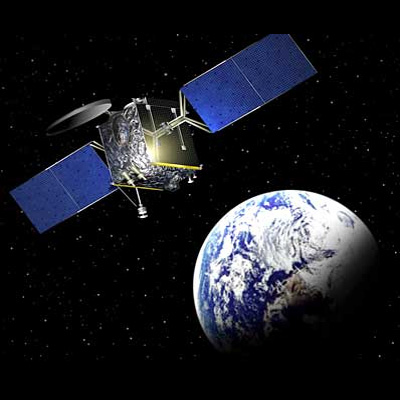
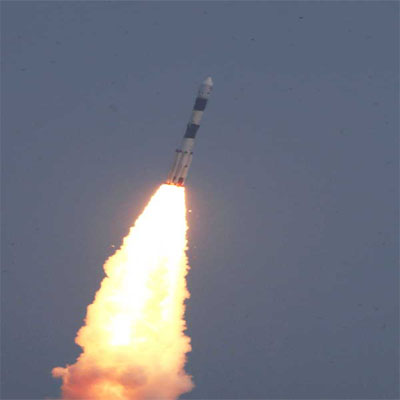
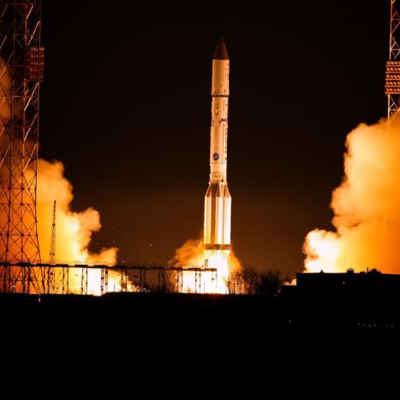
    MUMBAI: Eutelsat Communications’ Eutelsat 9B satellite was successfully launched into geosynchronous transfer orbit by ILS using a Proton rocket that lift off from the Baikonur Cosmodrome.


    Separation of Eutelsat’s new satellite occurred after a 9 hour 12 minute Proton flight. Partial deployment of the satellite’s solar panels, that represents the first critical post-launch operation, took place two hours later. Following further manoeuvres and in-orbit tests, Eutelsat 9B will be positioned at 9 degrees East in March to assume broadcasting of over 350 TV channels currently served at this position by Eutelsat 9A and provide expansion capacity for new services.


    Eutelsat 9B also marks an industry first as the host satellite for the inaugural data relay payload for the European Data Relay System (EDRS) being implemented through a Public Private Partnership (PPP) between ESA and Airbus Defence and Space.


    Commenting on the launch, Eutelsat chairman and CEO Michel de Rosen said, “Our congratulations to ILS and Krunichev for a flawless launch that sees a new Eutelsat satellite propelled on its way to geostationary orbit. This sophisticated satellite programme reflects outstanding collaboration between Eutelsat, ESA, Airbus Defence and Space, ILS and Krunichev. We look forward to putting Eutelsat 9B to work for the benefit of our broadcaster clients and to the inauguration of the ground-breaking European Data Relay System that is a powerful illustration of the complementarity of geostationary and low earth satellites for fast transmission of data flows back to earth.”

  • Eutelsat 9B satellite soars into space

    Eutelsat 9B satellite soars into space

    MUMBAI: Eutelsat Communications’ Eutelsat 9B satellite was successfully launched into geosynchronous transfer orbit by ILS using a Proton rocket that lift off from the Baikonur Cosmodrome.


    Separation of Eutelsat’s new satellite occurred after a 9 hour 12 minute Proton flight. Partial deployment of the satellite’s solar panels, that represents the first critical post-launch operation, took place two hours later. Following further manoeuvres and in-orbit tests, Eutelsat 9B will be positioned at 9 degrees East in March to assume broadcasting of over 350 TV channels currently served at this position by Eutelsat 9A and provide expansion capacity for new services.


    Eutelsat 9B also marks an industry first as the host satellite for the inaugural data relay payload for the European Data Relay System (EDRS) being implemented through a Public Private Partnership (PPP) between ESA and Airbus Defence and Space.


    Commenting on the launch, Eutelsat chairman and CEO Michel de Rosen said, “Our congratulations to ILS and Krunichev for a flawless launch that sees a new Eutelsat satellite propelled on its way to geostationary orbit. This sophisticated satellite programme reflects outstanding collaboration between Eutelsat, ESA, Airbus Defence and Space, ILS and Krunichev. We look forward to putting Eutelsat 9B to work for the benefit of our broadcaster clients and to the inauguration of the ground-breaking European Data Relay System that is a powerful illustration of the complementarity of geostationary and low earth satellites for fast transmission of data flows back to earth.”

  • Eutelsat’s Hot Bird 8 broadcast satellite speeds into orbit

    Eutelsat’s Hot Bird 8 broadcast satellite speeds into orbit

    MUMBAI: The Hot Bird 8 broadcast satellite of Eutelsat Communications was successfully launched today by a Proton Breeze M launch vehicle from the Baikonur Cosmodrome at 03.48 am Baikonur time 5 August. Weighing 4.9 tonnes, Hot Bird 8 is the largest and most powerful European Ku-band broadcast satellite to go into geostationary orbit.

    In less than 10 minutes after lift-off, the three-stage Proton vehicle supplied by International Launch Services (ILS) finished its climb into space, leaving the Breeze M upper stage to continue its mission for the next nine hours. The Breeze M’s engine underwent five burns to place the EADS Space- built satellite into a transfer orbit.

    The satellite was separated this morning from the Proton launch vehicle at 06.59 GMT with signal acquisition established by Eutelsat from its Rambouillet teleport near Paris. Manoeuvres that will be conducted over the next days include full circularisation of the satellite’s orbit and deployment of the solar panels and antenna reflectors, which will be followed by a series of in-orbit tests.

    Eutelsat Communications CEO Giuliano Berretta said, “Equipped with a payload which spans the entire range of frequencies at our 13 degrees East position, Hot Bird 8 takes our inter-satellite back-up to a new level of security. We are looking forward to bringing our new broadcast satellite into commercial service in October, less than six months since Hot Bird 7A went live at 13 degrees East. My particular thanks also go to our industrial partners, EADS Space for completing this important satellite programme and ILS for executing a faultless launch for our company.”

    Hot Bird 8 will assume all broadcast traffic currently carried by the 20-transponder Hot Bird 3, which will subsequently continue commercial service at an alternative location. The new satellite’s additional capacity will contribute to raising in-orbit security at Eutelsat’s Hot Bird video neighbourhood which broadcasts 950 digital channels to over 110 million cable and satellite homes across Europe, North Africa and the Middle East.