Tag: IIT Kanpur

  • Bridgers teams up with IIT Kanpur for Upstart 2025

    Bridgers teams up with IIT Kanpur for Upstart 2025

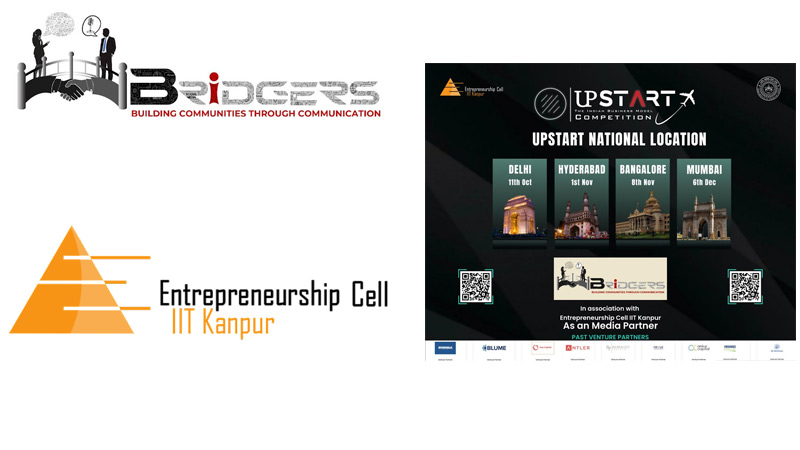
    MUMBAI: From ideas to impact, Bridgers is bridging the gap. India’s leading integrated communications agency has signed a strategic MoU with IIT Kanpur’s Entrepreneurship Cell, becoming the official media partner for Upstart 2025, the flagship pitching event designed to empower India’s budding entrepreneurs.

    The Nationals kick off in Delhi on 11th October, followed by Hyderabad (1st November), Bengaluru (8th November), and Mumbai (6th December), culminating in the finals at IIT Kanpur from 23rd–25th January 2026. Bridgers will provide end-to-end communications solutions, helping amplify the event’s reach and spotlight the most promising startups across India.

    “Startup communication is our forte,” said Bridgers founder Anubhav Singh. “Partnering with IIT Kanpur E-Cell lets us support tomorrow’s founders while contributing to India’s Viksit Bharat vision by 2047.”

    IIT Kanpur E-Cell’s Laksh Bansal added, “Bridgers’ expertise ensures Upstart 2025 gets the attention it deserves, highlighting the impact of this event and empowering our country’s future unicorns.”

    The collaboration spans strategic campaigns, community storytelling, reputation management, and media engagement across cities and national and regional platforms, bringing India’s next generation of entrepreneurs into the spotlight.

  • Prasar Bharati to launch live TV broadcasts on smartphones without internet: Sources

    Prasar Bharati to launch live TV broadcasts on smartphones without internet: Sources

    Mumbai: Prasar Bharati is reportedly working on a new initiative to enable live TV broadcasts on smartphones without requiring an internet connection. The Ministry of Information and Broadcasting (MIB) has confirmed that trials for this project are underway in several cities, in collaboration with IIT Kanpur and Saankhya Labs, a subsidiary of Tejas Networks and a Karnataka-based wireless communication solutions provider. These trials involve the use of both high-power and low-power transmitters.

    According to officials, the trials of Direct-to-Mobile (D2M) technology have been promising so far. However, further advancements will require installing transmitters on cellular towers and integrating specialised chips into mobile phones. The live broadcasting of TV channels on smartphones would function similarly to radio, using broadcast signals. Specific hardware would be needed to receive and decode these signals, but it would allow high-quality video and audio streaming without depending on internet speed.

    In 2019, the MIB signed a memorandum of understanding (MoU) to explore areas like D2M broadcasting, rural broadband, and 5G convergence.

    Prasar Bharati is also reportedly planning to venture into the OTT space. The proposed OTT platform would follow a revenue-sharing model, where content providers would receive 65 per cent of the net revenue generated from subscription or transaction-based content, while Prasar Bharati would retain 35 per cent. Satellite channels that join the platform would follow the same model.

  • “Innovation is the lifeblood of our journey”: Arun Meena

    “Innovation is the lifeblood of our journey”: Arun Meena

    Mumbai: RHA Technologies for the first time in India enables the unique trust dependent  outsourced tech co-founder offering for Start-ups and SMEs. In addition, the  organisation also offers the traditional model of outsourced product  development to MNCs and startups.

    The organisation provides an empathetic and synergistic technology  consulting, digital transformation, and technology services and solutions to  the founders of start-ups and SMEs worldwide. Thus, enabling the client  organisations to realise and strengthen their innovation, differentiation,  valuation and market offering.  

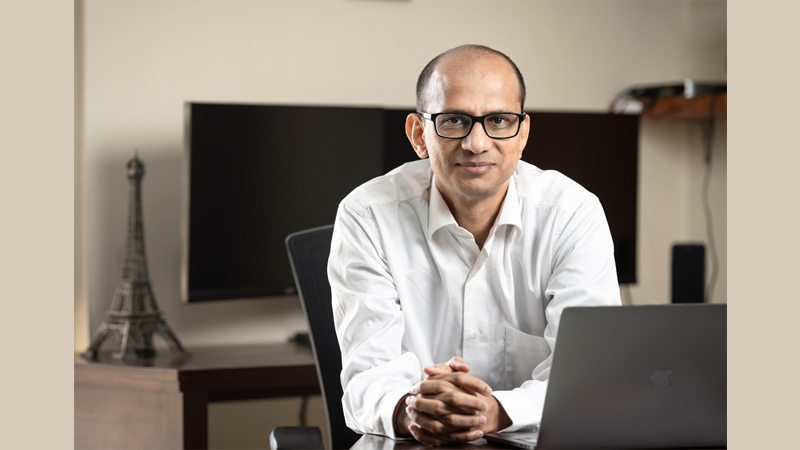
    Arun Meena is an IIT Kanpur graduate from department of Computer Science, and visionary of the unique trust dependent outsourced tech co-founder offering of RHA Technologies Pvt Ltd. He has developed the organisation to provide an empathetic and synergistic  technology consulting, digital transformation, and technology services and solutions to the founders of start-ups and SMEs worldwide. He thus enables the client organisations to realise and strengthen their innovation, differentiation, valuation and market offering.  

    Indiantelevision.com caught up with Meena, during which he delved into his company’s remarkable success, its trajectory of growth, strategic insights, and much more.

    Edited excerpts

    On elaborating the specific technical and vertical domain expertise that RHA Technologies possesses

    Our journey has been defined by our passion for technology and our commitment to empowering businesses across various sectors. Over the years, my team and I have immersed ourselves in the intricacies of digital transformation, leveraging advanced technologies like artificial intelligence, machine learning, blockchain, and IoT.

    Our expertise isn’t just about the tools we use; it’s about understanding the nuances of different industries. From collaborating with global corporations to supporting innovative startups, we’ve developed a deep understanding of sectors such as education, real estate, BFSI, media & entertainment, social media, and more.

    What truly sets us apart is our approach. We don’t just offer cookie-cutter solutions; we immerse ourselves in our client’s challenges, working side by side to co-create strategies that drive real results. Whether it’s developing bespoke SaaS products or providing strategic guidance, our goal is always the same: to empower our clients to thrive in today’s fast-paced digital landscape.

    On collaborating with clients to understand their specific technological needs and challenges

    At RHA Technologies, collaboration is ingrained in our DNA. When it comes to understanding our client’s technological needs and challenges, my team and I believe in a hands-on approach. We establish open and transparent communication channels, ensuring that every client feels heard and valued.

    Our collaboration begins with a deep dive into our client’s unique circumstances. We uncover their pain points, aspirations, and objectives through candid conversations, thorough assessments, and active listening. We view our clients as partners, working together to navigate the complexities of their technological landscape.

    To ensure our solutions hit the mark, we tailor our approach to each client’s specific requirements. We facilitate workshops, conduct interviews, and gather feedback through surveys, all to align our strategies with our clients’ business goals.

    Our commitment to collaboration doesn’t end with the initial engagement. We recognize that needs evolve, so we maintain ongoing communication and flexibility, ready to adjust our approach as circumstances change. Ultimately, our goal is simple: to deliver not just solutions, but successful outcomes that exceed our clients’ expectations. It’s this collaborative ethos that forms the foundation of our long-lasting relationships with our clients.

    On describing RHA Technologies’ approach to innovation and staying ahead in the rapidly evolving tech landscape

    Innovation is the lifeblood of our journey. We understand that to remain competitive and meet the evolving needs of our clients, we must continually explore new ideas, technologies, and methodologies. Our approach to innovation is multifaceted, encompassing several key strategies. Firstly, we invest heavily in research and development, dedicating resources to exploring emerging technologies and trends. This allows us to stay abreast of the latest advancements and leverage them to create innovative solutions for our clients.

    Additionally, we motivate a culture of creativity and experimentation within our organization, encouraging our team members to think outside the box and explore unconventional approaches to problem-solving. We provide opportunities for professional development and continuous learning, enabling our team to expand their skill sets and stay at the forefront of industry trends. We prioritize agility and adaptability in our approach to innovation, recognizing that the tech landscape is constantly evolving. We remain flexible and responsive to changes in market dynamics, shifting customer preferences, and emerging technologies, allowing us to pivot quickly and seize new opportunities.

    Our commitment to innovation enables us to not only meet but exceed the expectations of our clients, delivering cutting-edge solutions that drive tangible business results and position them for success in the digital age.

    On the strategies for accelerating business with core and disruptive technologies

    Some of the strategies that our company adopts ethically that every tech business should start implementing to achieve success are:

    1.Leverage core technologies: Identify key technologies that form the foundation of your business operations, such as cloud computing, data analytics, and cybersecurity. Invest in optimizing and enhancing these core technologies to improve efficiency, scalability, and performance.

    2.Explore disruptive technologies: Stay abreast of emerging technologies that have the potential to disrupt your industry, such as artificial intelligence, blockchain, and the Internet of Things. Evaluate how these technologies can be integrated into your business model to drive innovation, create new revenue streams, and gain a competitive edge.

    3.Scalable Infrastructure: Invest in scalable infrastructure and flexible architectures that adapt to evolving technological landscapes and business requirements. By building robust and resilient IT systems, companies can future-proof their operations, scale seamlessly, and capitalise on emerging opportunities without being constrained by legacy constraints or technical debt.

    4.Continuous Experimentation: Embrace a culture of continuous experimentation and rapid prototyping to test and validate new ideas, concepts, and technologies. By adopting agile methodologies and iterative development approaches, businesses can quickly identify viable opportunities, iterate on solutions based on real-world feedback, and pivot as needed to stay ahead of the curve.

    5.Open Innovation Platforms: Establish open innovation platforms and collaborative ecosystems to co-create and co-innovate with external stakeholders, including customers, suppliers, partners, and even competitors. By crowdsourcing ideas, insights, and expertise from diverse sources, companies can accelerate the pace of innovation, reduce R&D costs, and mitigate technological risks.

    6.Customer-Centric Innovation: Prioritize customer-centric innovation by leveraging core and disruptive technologies to address unmet needs, pain points, and aspirations of target customers. By focusing on delivering exceptional value and personalized experiences, businesses can foster customer loyalty, drive brand advocacy, and gain a competitive edge in the market.

    On highlighting some tech trends that are shaping the future of startups

    Startups are utilizing various tech trends such as ChatGPT, AIML, and automation.

    1.ChatGPT is an OpenAI language model that generates realistic text based on the context and previous dialogue. It can be applied to develop natural language software agents like chatbots and virtual assistants, as well as to create original content such as logos, comic strips, and images.

    2.AIML is an XML-based language that programmers use to build natural language software agents. It provides automated responses to user queries using data-driven and rule-based scripting.

    3.Automation is the use of technology to execute tasks with minimal human input, such as business process automation, IT automation, workflow automation, and more. Automation can improve the efficiency, reliability, and speed of many tasks that were previously performed by humans. It can also provide new insights and solutions using artificial intelligence and machine learning.

    By adopting these tech trends, startups can innovate, optimise, and scale their products and services, while enhancing their customer experience and satisfaction.

    On having any tips for entrepreneurial success in the age of SMAC Technologies

    To succeed as an entrepreneur in the era of SMAC (Social, Mobile, Analytics, and Cloud) technologies, I’ve discovered that embracing digital transformation and prioritizing a customer-centric approach is essential. By harnessing SMAC technologies, we can tailor customer experiences, engage meaningfully on social media platforms, and make informed decisions backed by data analytics. Concomitantly, a steadfast emphasis on cybersecurity and data privacy is imperative, while nurturing collaborative ecosystems and fostering a culture of relentless innovation and perpetual adaptation can position enterprises for prosperity within the swiftly evolving digital terrain. Ensuring the safety and integrity of our digital assets is non-negotiable. Promoting a collaborative ecosystem, and nurturing a culture of innovation and adaptability are vital. By encouraging continuous learning and experimentation, we position ourselves to thrive amidst the rapid evolution of technology. By integrating these fundamental precepts into their entrepreneurial pursuits, enterprises can adeptly navigate and seize the opportunities presented by SMAC technologies.

  • Prasar Bharti collaborates with IIT Kanpur for direct-to-mobile broadcasting project

    Prasar Bharti collaborates with IIT Kanpur for direct-to-mobile broadcasting project

    Mumbai: Today, there is a shift in viewing habits from linear television to OTT and from theatres to OTT. The rise in content creation is leading to more and more jobs for people. With the arrival of 5G, there is the possibility of direct-to-mobile broadcasting. In a collaboration, Prasar Bharti and IIT Kanpur have come up with a proof of concept whereby, with a small attachment, there can be a direct-to-mobile broadcast. So, without purchasing data, there can be 100-200 channels streamed direct to mobile.

    Speaking at Ficci Frames Fasttrack 2022, I&B secretary Apurva Chandra said, “Without data and high-quality internet, users will be able to see high-resolution movies and listen to digital radio on their mobile phones. This change is coming. It will happen.”

    He also announced that a report on the creation of an AVGC task force will be submitted soon. He noted that there were reports on skills, gaming, education, incentives, and other policy aspects within the task force. They are all being combined and will be submitted to the authorities. He added that the report will be adopted during the course of the year.

    “AVGC is the future of this country. The best Hollywood films are being created in Bangalore and other places. AVGC will be the next great revolution like IT was 30 years ago,” he stated. Furthermore, he mentioned changing the cinematography act to include anti-piracy provisions. Also, there will be an age classification within the U/A category. The aim is to bring in amendments to the Act and put it before Parliament during the winter session.

    He further added that the AVGC centre of excellence, which has not seen the light of day over the past six years, aims to do this only in collaboration with the private sector. An in-principle decision has been taken in this regard. A total of 26 per cent of the task force will be owned by the Confederation of Indian Industry (CII), 48 per cent by the ministry of information and broadcasting (I&B), and 26 per cent by the Federation of Indian Chambers of Commerce & Industry (Ficci).

    He also said that the media and entertainment industries should target a combined size of $100 billion by 2030. He noted that during National Cinema Day, theatres were full even in the morning. That, he said, shows that you can get people to view movies in theatres as long as the ticket pricing is right. National Film Development Corporation of India (NFDC) will be the cinematic arm of the I&B ministry. The four film units will be merged into one. The film facilitation office will be revamped, he concluded.

  • Need to revisit licensing framework for broadband, broadcasting & IT sector: Trai’s chairman P D Vaghela

    Need to revisit licensing framework for broadband, broadcasting & IT sector: Trai’s chairman P D Vaghela

    Mumbai: Telecom Regulatory Authority of India (Trai) chairman P D Vaghela recently in a conclave said that there is a need to revisit the licensing framework and governance structure of broadband, broadcasting and IT sector,

    Vaghela was addressing a conclave organised by the Indian Institute of Technology (IIT) Kanpur and Telecommunications Standards Development Society, India (TSDSI).

    He remarked that the boundaries between broadcasting and telecom industries have blurred due to the advent of digital media. The revised licensing framework should be light-touch, formulated and the government should intervene only if required.

    The chairman highlighted that multiple authorities are involved for permission in the broadcast and telecommunications sector leading to the overlapping of functions. For example, internet protocol television (IPTV) permissions are granted by the department of telecommunications (DoT) as well as the ministry of information and broadcasting (MIB). For policy decisions, there are multiple authorities such as DoT, MIB, the ministry of electronics and IT and the department of space.

    Vaghela stated that there was a need for redefining the role of market players such as service providers, infrastructure providers and cable operators in the new market structure.

    He said, “In addition to telecom and broadcasting, the over-the-top (OTT) world may also have to be factored in while carrying out required reforms. A robust and holistic technology-neutral regulatory and policy framework is required to regulate the newly converged environment of broadcasting and broadband services. The policy should also align the corresponding business processes with regard to the issuance of all broadcasting and cable service licences for better synergy and ease of doing business.”

    With technological advancement, it is now possible for broadband networks to offer broadcasting services and vice versa. “With content consumption in India shifting to smartphones and video consumption becoming a key driver of mobile data growth, it becomes imperative to bring direct broadcasting capabilities to mobile phones. It is anticipated that broadcast capable smartphones and mobile phones will be able to stream multiple high-quality video and audio services optimally utilising valuable spectrum and easing the burden on our cellular networks,” he concluded.

  • Prasar Bharati developing next generation broadcast solution

    Prasar Bharati developing next generation broadcast solution

    Mumbai: Prasar Bharati has entered into an MoU with IIT Kanpur to develop next generation broadcast solution/roadmap for digital terrestrial broadcasting consistent with emerging standards such as 5G broadcast.

    “The sanction for the Proof of Concept (PoC) of next generation broadcasting has also been conveyed to IIT Kanpur,” the minister of information and broadcasting Anurag Thakur told the Lok Sabha on Tuesday. “The selection of an appropriate next generation broadcast technology and Digital Terrestrial Transmission (DTT) roadmap of Doordarshan depends upon evaluation of this PoC.”

    Speaking at the CII Big Summit last month Prasar Bharti CEO Shashi Shekhar Vempati had also stressed upon the need for convergence across infrastructure and content creation.

    He said that if the collaboration with IIT Kanpur is successful it will be possible to directly receive broadcast signals on smartphones in future. “In the event of a high-viewership event like the Indian Premier League (IPL), there is no reason why millions of users need to receive that content on a unicast mode through the internet. If this works, all of the content can be delivered directly on broadcast frequencies to people on their smartphones or smart TVs,” he said.

    The public broadcaster is already working on bringing convergence across TV and radio so that a lot of exclusive radio content can be made visually rich and available for TV audiences. PM’s ‘Mann Ki Baat’ was the first such example. Prasar Bharati is following the same format where a camera is put up in the studio all-day long for another show ‘Rangoli’.

  • Manohar Charan joins ShareChat as VP, corporate development and strategic finance

    Manohar Charan joins ShareChat as VP, corporate development and strategic finance

    MUMBAI: ShareChat, India’s own social media platform, has appointed Manohar Charan as vice president, corporate development and strategic finance.

    With over 11 years of experience in investment banking, mergers and acquisition (M&A), investor relations and strategic finance, Manohar has worked with companies like Zomato, Uber, Royal Bank of Scotland, PropTiger-Housing.com and many more. Manohar will lead the investor relations, M&A, strategic finance and legal functions at ShareChat.

    Manohar was the VP at Zomato where he was instrumental in setting up the Financial Planning and Analysis (FP&A) team. Manohar was also in a leadership role at Uber where he was heading strategic finance for India and South Asia.

    He has led a series of M&A transactions when he was with Prop Tiger, including acquisitions like Housing.com and Makaan.com. At ShareChat, he will be reporting to Ankush Sachdeva, co-founder and CEO.

    ShareChat co-founder-CEO Ankush Sachdeva said: "Manohar brings strong expertise in corporate finance, M&A and investor relations. He is a proven business leader with strong strategic acumen, financial expertise and operational focus. He will be a valued member of our leadership team as we continue to execute on our long-term strategy."

    Manohar Charan said: “It gives me immense pleasure to have the opportunity of working with a company that is pioneering the regional narrative in the internet space. Today, ShareChat is building a home-grown social media platform to cater to the next internet wave the nation is yet to witness. I am looking forward to contributing to the company’s growth with respect to my core area of expertise. I am thankful to the founders and the board for their trust and confidence in me, and we will together build ShareChat as India’s first successful social media company.”

    Alumnus of IIM Ahmedabad and IIT Kanpur, Manohar has worked across Hong Kong, Singapore and India. Over the past five years, he has developed the skill-set of building, scaling and efficiently running internet-first businesses with a sharp focus on unit economics and fiscal prudence.

  • FabFurnish.com appoints Nimit Kumar as CTO

    FabFurnish.com appoints Nimit Kumar as CTO

    MUMBAI: FabFurnish.com has appointed Nimit Kumar as the chief technology officer (CTO) of the company.


    With over a decade of experience in enterprise technology products and hands-on knowledge of engineering and sales, Kumar will be responsible for leading technology innovation and expanding company’s service and product portfolio to support key industry trends.


    An IIT-Kanpur graduate, Kumar was the founder & CEO of uniRow Inc, a training cloud company.


    “We are quite excited to have Nimit on board. He brings in an expertise, which is quite diverse and has worked across various industries. His understanding of technology and the market is one of the best in the industry which is going to be a great asset for us. As we desire to grow at an accelerated pace, his thought process will surely give strategic direction to individual functions. We are sure Nimit will help us in evolving our mobile technology for seamless discovery of content and hyperlocal products,” said FabFurnish.com co-founder Ashish Garg.


    Kumar added, “FabFurnish.com is a high-growth company and am thrilled to be part of the team. It’s an exciting time for the e-commerce industry in India. FabFurnish.com is taking a fresh approach beyond the typical discounting models common in the industry and building tech-enabled products and services that will allow a large offline market to transition to the online world. I look forward to this journey and play a key role in strengthening relationships with strategic partners.”