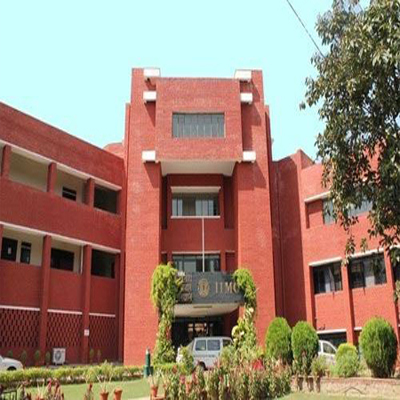
Tag: IIMC

  • Borderless world in context of changing communication paradigm, says Rathore

    Borderless world in context of changing communication paradigm, says Rathore

    New Delhi: Minister of State for Information and Broadcasting Rajyavardhan Rathore today said the global community was living in a borderless world in view of the changing communication paradigm. The advent of internet, online news, social media and satellite communication had completely overhauled the communication and information space.

    Delivering his address at the 65th convocation ceremony of Diploma Course in Development Journalism at the Indian Institute of Mass Communications here, he said communication had been a critical component of the governments outreach strategy through people centric initiatives and innovative approaches.

    Citing the example of Mann ki Baat broadcasts and My Gov Portal, the Minister said that innovative use of such two way communication platforms had helped government solicit the views from people for better Governance and to also understand their communication needs and perspective.

    Earlier, Col. Rathore interacted with Indian Information Service officer trainees currently undergoing training at IIMC. He urged them to develop skills, aptitude and understanding of media landscape in taking forward the Government communication roadmap.

    He also launched the social media platforms of IIMC and a memento as a part of the Golden Jubilee celebrations of the Institute which was established in 1965.

    The Development Journalism Course at IIMC was an endeavour towards promoting international cooperation and understanding, especially among countries of the Developing World, through the exchange of experience, expertise and innovations in the field of harnessing communication as a tool of development.

    IIMC conducts a specific course on development journalism for media personnel from developing countries, sponsored by the External Affairs ministry.

  • Prasar Bharati’s grants-in-aid gets substantial increase, first-time separate allocation for strengthening broadcast services

    Prasar Bharati’s grants-in-aid gets substantial increase, first-time separate allocation for strengthening broadcast services

    NEW DELHI: The grants-in-aid for Prasar Bharati have gone up again for the third time over the last few years from the revised estimates of Rs 2708.29 crore in 2015-16 to Rs 3056.86 for 2016-17.

    In addition, there is a grant-in-aid of Rs 52 crore to Doordarshan’s Kisan Channel, which is double that of aid last year.

    In addition, there is an investment of Rs 200 crore in the pubcaster, which is the same as last year. Though the previous government had stopped investments in the pubcaster, Finance Minister Arun Jaitley had re-introduced this in 2015-16 after a gap of two years. 

    An explanatory note says the grants-in-aid is being provided to cover the gap in resources of Prasar Bharati in meeting its revenue expenditure.

    The grant in aid for Prasar Bharati in 2015-16 was Rs 2824.55 crore for 2015-16, apart from the grant-in-aid of Rs 26.26 crore in the revised estimates (as against the budgetary allocation of Rs 45 crore) on Kisan Channel.

    Expenditure on salaries of Prasar Bharati has fallen on the shoulders of the Government since all Prasar Bharati employees who were in employment as on 5 October, 2007 have been given deemed deputation status.

    The total budget of the Information and Broadcasting Ministry has been raised to Rs 4083.63 crore, which is a small raise in comparison to Rs 3711.11 crore for 2015-16, though the revised estimates for the year show an expenditure of Rs 3588.58 crore. 

    A major effort this year was to reduce the number of heads under which allocations have been made over the years. For example, there are no separate allocation for film certification or Press Information Services as in previous years.

    Interestingly, there is a separate allocation of Rs 30.83 crore for strengthening of broadcasting services, which includes Rs 28.83 on information and publicity and the balance on building and machinery. This provides for Electronic Media Monitoring Centre, contribution to the Asian Institute of Broadcasting Development, Community Radio movement in India, Digitalisation, Building and Machinery and private FM Radio Stations.

    The allocation under ‘Secretariat – Social services’ has been cut down to Rs 70.32 crore as against the budgetary allocation of Rs 235.23 crore in 2015-16 as the revised estimates show an expenditure of just Rs 91.44 crore. The explanatory note says that from 2016-17, this covers the expenditure under Non-Plan activities only which includes provision for Main Secretariat and Principal Accounts office.

    The allocation for the film sector has been raised to Rs 268.53 crore and covers art and culture, information and publicity, which takes the maximum share of Rs 213.64 crore. Subjects under this head include the National Film Heritage Mission, anti-piracy measures, promotion of Indian cinema overseas, production of films and documentaries, and setting up a centre of excellence for animation, gaming and visual effects. The explanatory note adds that Secretariat – Social services also covers expenses on development of community radio, and development support to the north-east as well as Jammu and Kashmir and ‘other identified areas.’

    Thus, there is an allocation of Rs 33.31 crore for Mass Communications, which covers (a) Indian Institute of Mass Communication, an autonomous body, which imparts training in mass media and conducts courses in journalism, and (b) New Media Wing, which collects basic information on subjects of media interest for providing assistance to the Ministry and to its Media Units, Indian Missions abroad and newspapers and media agencies.

    There is another provision of Rs 491.78 crore, which includes expenditure (a) Directorate of Advertising and Visual Publicity – for planning and executing publicity campaigns through advertising and other printed materials, as well as through Radio and Televisions, exhibitions and other outdoor publicity media; (b) Press Information Bureau – which serves as a link between the Government and the Press and attends to the publicity and public relations requirements of various Ministries/Departments, including grants to Press Council of India, a statutory organisations seeking to preserve press; (c) Field Publicity – covering expenditure of Directorate of Field Publicity and its district level field units engaged in inter-personal developmental communications through films shows, live media programmes, photo displays and seminars; (d) Song and Drama Division – for creating awareness amongst the masses, particularly in rural areas, about various activities of national developments of units spread all over the country; (e) Publications – for publishing priced books, journals and other printed material in English, Hindi and regional languages on a wide variety of subjects and ‘Employment News/Rozgar Samachar;’ (f) Information Wing Plan Schemes – for training, international media programme, Policy related studies etc.; and (g) Photo Division.

    For the seventh year in a row, the government has not announced any investment in the National Film Development Corporation (NFDC).

    There is a marginal increase in the lump sum provision for projects/schemes for development of North-eastern areas including Sikkim to Rs 80 crore against Rs 75 crore last year.
  • Prasar Bharati’s grants-in-aid gets substantial increase, first-time separate allocation for strengthening broadcast services

    Prasar Bharati’s grants-in-aid gets substantial increase, first-time separate allocation for strengthening broadcast services

    NEW DELHI: The grants-in-aid for Prasar Bharati have gone up again for the third time over the last few years from the revised estimates of Rs 2708.29 crore in 2015-16 to Rs 3056.86 for 2016-17.

    In addition, there is a grant-in-aid of Rs 52 crore to Doordarshan’s Kisan Channel, which is double that of aid last year.

    In addition, there is an investment of Rs 200 crore in the pubcaster, which is the same as last year. Though the previous government had stopped investments in the pubcaster, Finance Minister Arun Jaitley had re-introduced this in 2015-16 after a gap of two years. 

    An explanatory note says the grants-in-aid is being provided to cover the gap in resources of Prasar Bharati in meeting its revenue expenditure.

    The grant in aid for Prasar Bharati in 2015-16 was Rs 2824.55 crore for 2015-16, apart from the grant-in-aid of Rs 26.26 crore in the revised estimates (as against the budgetary allocation of Rs 45 crore) on Kisan Channel.

    Expenditure on salaries of Prasar Bharati has fallen on the shoulders of the Government since all Prasar Bharati employees who were in employment as on 5 October, 2007 have been given deemed deputation status.

    The total budget of the Information and Broadcasting Ministry has been raised to Rs 4083.63 crore, which is a small raise in comparison to Rs 3711.11 crore for 2015-16, though the revised estimates for the year show an expenditure of Rs 3588.58 crore. 

    A major effort this year was to reduce the number of heads under which allocations have been made over the years. For example, there are no separate allocation for film certification or Press Information Services as in previous years.

    Interestingly, there is a separate allocation of Rs 30.83 crore for strengthening of broadcasting services, which includes Rs 28.83 on information and publicity and the balance on building and machinery. This provides for Electronic Media Monitoring Centre, contribution to the Asian Institute of Broadcasting Development, Community Radio movement in India, Digitalisation, Building and Machinery and private FM Radio Stations.

    The allocation under ‘Secretariat – Social services’ has been cut down to Rs 70.32 crore as against the budgetary allocation of Rs 235.23 crore in 2015-16 as the revised estimates show an expenditure of just Rs 91.44 crore. The explanatory note says that from 2016-17, this covers the expenditure under Non-Plan activities only which includes provision for Main Secretariat and Principal Accounts office.

    The allocation for the film sector has been raised to Rs 268.53 crore and covers art and culture, information and publicity, which takes the maximum share of Rs 213.64 crore. Subjects under this head include the National Film Heritage Mission, anti-piracy measures, promotion of Indian cinema overseas, production of films and documentaries, and setting up a centre of excellence for animation, gaming and visual effects. The explanatory note adds that Secretariat – Social services also covers expenses on development of community radio, and development support to the north-east as well as Jammu and Kashmir and ‘other identified areas.’

    Thus, there is an allocation of Rs 33.31 crore for Mass Communications, which covers (a) Indian Institute of Mass Communication, an autonomous body, which imparts training in mass media and conducts courses in journalism, and (b) New Media Wing, which collects basic information on subjects of media interest for providing assistance to the Ministry and to its Media Units, Indian Missions abroad and newspapers and media agencies.

    There is another provision of Rs 491.78 crore, which includes expenditure (a) Directorate of Advertising and Visual Publicity – for planning and executing publicity campaigns through advertising and other printed materials, as well as through Radio and Televisions, exhibitions and other outdoor publicity media; (b) Press Information Bureau – which serves as a link between the Government and the Press and attends to the publicity and public relations requirements of various Ministries/Departments, including grants to Press Council of India, a statutory organisations seeking to preserve press; (c) Field Publicity – covering expenditure of Directorate of Field Publicity and its district level field units engaged in inter-personal developmental communications through films shows, live media programmes, photo displays and seminars; (d) Song and Drama Division – for creating awareness amongst the masses, particularly in rural areas, about various activities of national developments of units spread all over the country; (e) Publications – for publishing priced books, journals and other printed material in English, Hindi and regional languages on a wide variety of subjects and ‘Employment News/Rozgar Samachar;’ (f) Information Wing Plan Schemes – for training, international media programme, Policy related studies etc.; and (g) Photo Division.

    For the seventh year in a row, the government has not announced any investment in the National Film Development Corporation (NFDC).

    There is a marginal increase in the lump sum provision for projects/schemes for development of North-eastern areas including Sikkim to Rs 80 crore against Rs 75 crore last year.
  • Roadmap soon on converting IIMC into Communication University: Javadekar

    Roadmap soon on converting IIMC into Communication University: Javadekar

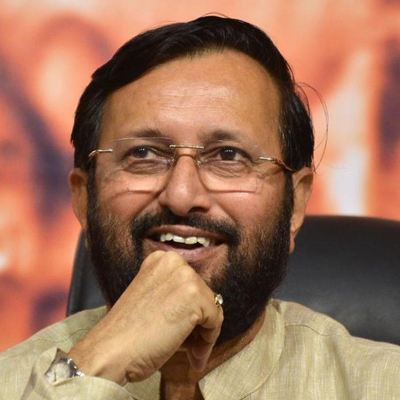
    NEW DELHI: Information and Broadcasting Minister Prakash Javadekar has said steps are being initiated shortly to upgrade the Indian Institute of Mass Communication into a ‘Communication University.’
     
    A roadmap would be prepared soon by the Ministry, he said, inviting suggestions from the public especially the young generation.
     
    Javadekar said a specific corner would be developed on the I&B Ministry’s website for these suggestions to be placed for the perusal of the Ministry. The entire process was part of the Prime Minister’s Communication Vision which laid emphasis on ‘Participative Communication’- a process which linked the key stakeholders including the media fraternity.

     
    The Minister stated this while delivering the address at the 47th Convocation Ceremony of the Indian Institute of Mass Communication and the launch of the Golden Jubilee Celebrations of the Institute in Delhi.

    Javadekar said press freedom came with an element of responsibility. Throughout history, the responsibility of the press had been flagged on different occasions. He exhorted the students who were conferred diplomas to avoid sensationalism at all costs and fight the menace of paid news. A young journalist ought to work with passion, compassion in a mission mode without commission. He called upon the students to balance information taking into account the sourcing of information from different media sources which included new and traditional media streams. These aspects would lay down the architectural framework for ethical journalism in the future.


    He called upon the IIMC to undertake studies to understand the different aspects of elections related to the communication process and the electoral system. The Minister also unveiled the new logo to commemorate the golden jubilee celebrations of IIMC. He inaugurated the new bilingual website of IIMC.

    IIMC has the distinction of being universally recognised as a centre of excellence in the field of journalism, media and mass communication teaching, training and research. A total of 341 students were conferred with their Diplomas at this Convocation which included students from six Centres of IIMC, at New Delhi and Dhenkanal, as well as at the newly opened Regional Centres at Aizawl in Mizoram, Amravati in Maharashtra, Jammu in J&K and Kottayam in Kerala. The PG Diploma courses were conferred in Journalism Hindi and English, Advertising& Public Relations, Oriya Journalism and Urdu Journalism. Special awards were also conferred in different categories to 31 students across all courses. 

  • IIMC and QUT join hands for training and capacity building

    IIMC and QUT join hands for training and capacity building

    NEW DELHI: The Indian Institute of Mass Communication (IIMC), New Delhi, and Queensland University of Technology (QUT), Brisbane, Australia have agreed to collaborate in academic programmes and in frontier areas of research in Media and Communication.


    An International Cooperation Agreement to this effect was signed by Information and Broadcasting Ministry Secretary and IIMC chairman Bimal Julka and Professor Peter Coaldrake, Vice Chancellor of the Queensland University of Technology (QUT).


    The agreement envisages bringing ICT in academic programmes in a significant way. Both the institutes have agreed for the development of joint venture projects and also for opening avenues for developing a collaborative doctoral programme to benefit students and faculty. The bilateral cooperation agreement also envisages organization of joint academic and scientific activities, such as courses, conferences, seminars, symposia or lectures, exchange of staff and students and exchange of materials and publications of common interest.

    One of the core areas of the agreement is to facilitate training of senior and mid-level Indian Information Service officers at the QUT, especially in use of modern technology and social media for providing information about government policies to stakeholders. The objective is to ensure skill development of IIS officers in critical areas of the changing media landscape.


    This is the first agreement signed by IIMC seeking international collaboration and partnership with a foreign university. The agreement aims to facilitate a two-way value added training and capacity building programme in the field of Mass Media and Communication.


    This cooperation agreement will be valid for five years and will be reviewed six months prior to expiry and may be renewed for a further term by mutual agreement.