Tag: IIMC

  • Budget 2022: I&B ministry allocation slashed to Rs 3980.77 crore in FY23

    Budget 2022: I&B ministry allocation slashed to Rs 3980.77 crore in FY23

    Mumbai: The Union Budget 2022 has earmarked a total sum of Rs 3980.77 crore for the ministry of information and broadcasting in the fiscal year 2022-23. This amounts to a decrease of Rs 90 crore from last year.

    With the exception of the Press Council of India that saw an increase of Rs 7 crore, up from Rs 20 crore in FY22 to Rs 27 crore for FY 23, the budgets for all other autonomous bodies under the MIB were slashed.

    Allocation for Prasar Bharati’s declined to Rs 2,555.29 crore from Rs 2,640.11 crore in the last financial year. The same was the case with The Films and Television Institute of India (from Rs 58.48 crore last year to Rs 55.39 crore this year), the Indian Institute of Mass Communication (from Rs 65 crore to Rs 52 crore), Children’s Film Society of India and the Satyajit Ray Film and Television Institute.

    Allocation for broadcasting under the social services head has also gone down from Rs 2,921.11 crore to Rs 2,839.29 crore. There was also a reduction in the budget for ‘information and publicity’ from Rs 971.26 crore to Rs 942.04 crore.

    ‘Information and publicity’ covers establishment expenditure of media units in the country such as the Bureau of Outreach and Communication, Press Information Bureau, Publications Division, New Media Wing, Registrar of Newspapers for India (RNI), Films Division, National Film Archive of India, Electronic Media Monitoring Centre and others.

    Hailing the budget as “beneficial”, information and broadcasting minister Anurag Thakur said that it is a blueprint to fulfil the hopes and aspirations of a new India in the 100th year of its independence.

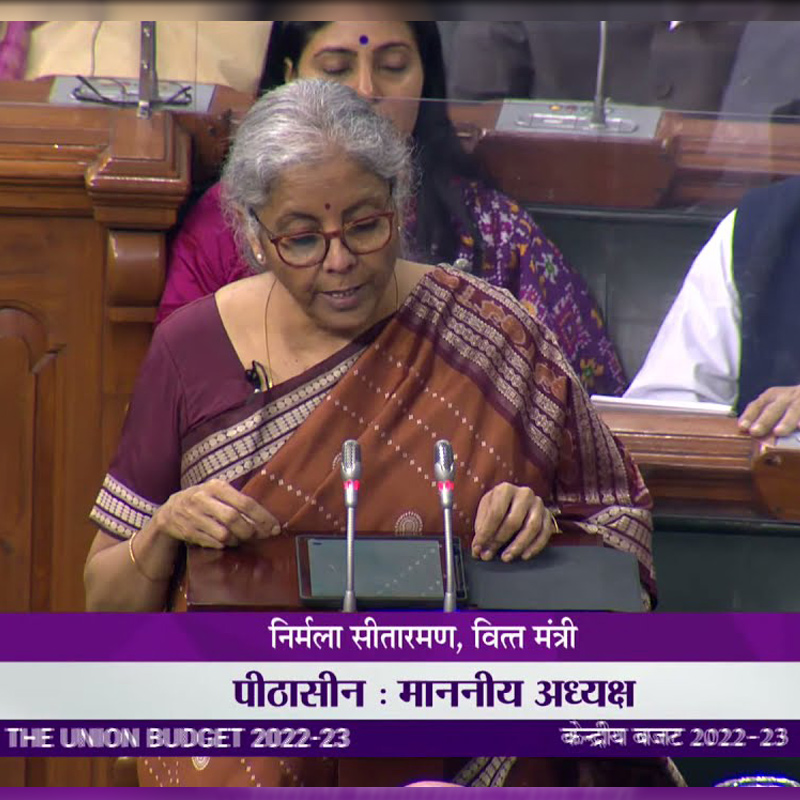
    The annual budget for 2022-23 was presented by finance minister Nirmala Sitharaman in Parliament on Tuesday.

  • IAMCR onboards Surbhi Dahiya as new faculty ambassador

    IAMCR onboards Surbhi Dahiya as new faculty ambassador

    Mumbai: The International Association for Media and Communication Research (IAMCR) has appointed Indian Institute of Mass Communication (IIMC) English journalism course director Surbhi Dahiya as new faculty ambassador for a duration of three years. IAMCR is a worldwide professional organisation in the field of media and communication research.

    With this latest appointment, IAMCR now has three faculty ambassadors in India with Dahiya joining the ranks at the organisation alongside the existing ambassadors Uma Shankar Pandey and Padmakumar K.

    In her role as faculty ambassador, Dahiya will organise various events with university departments, local and regional media, communication research bodies and think tanks, and NGOs involved in media advocacy and research and encourage Indian scholars to have visibility in International conferences.

    Dahiya was the SUSI scholar from India and completed the study of the United States Institute Programme organised by the United States, Department of State, conducted at the Ohio University in 2017. She was elected as liaison chair for Academia and Industry by the newly formed South Asian Communication Association (SACA). She was the convenor of World Journalism Education Council (WJEC)- IIMC- UNESCO Roundtable in India held in August beside representing India on a number of platforms.

    She was also conferred the Women Economic Forum (WEF) award 2019 for ‘Iconic Woman’ as ‘Exceptional Leaders of Excellence’. She won the National Award by Public Relation Society of India (PRSI) for contribution to mass communication education in India and the Lifestyle Journalistic TLJ Jury Award for Excellence in the field of journalism education in 2019.

  • Time to have rules ensuring no one player dominates media: Smriti Irani

    Time to have rules ensuring no one player dominates media: Smriti Irani

    NEW DELHI: Minister for Information & Broadcasting Smriti Zubin Irani yesterday said that the time has come to put laws, ethics and rules into place that will help in balancing the media industry so that no one dominant player can rule the roost. She, however, did not elaborate what those parameters should or could be.

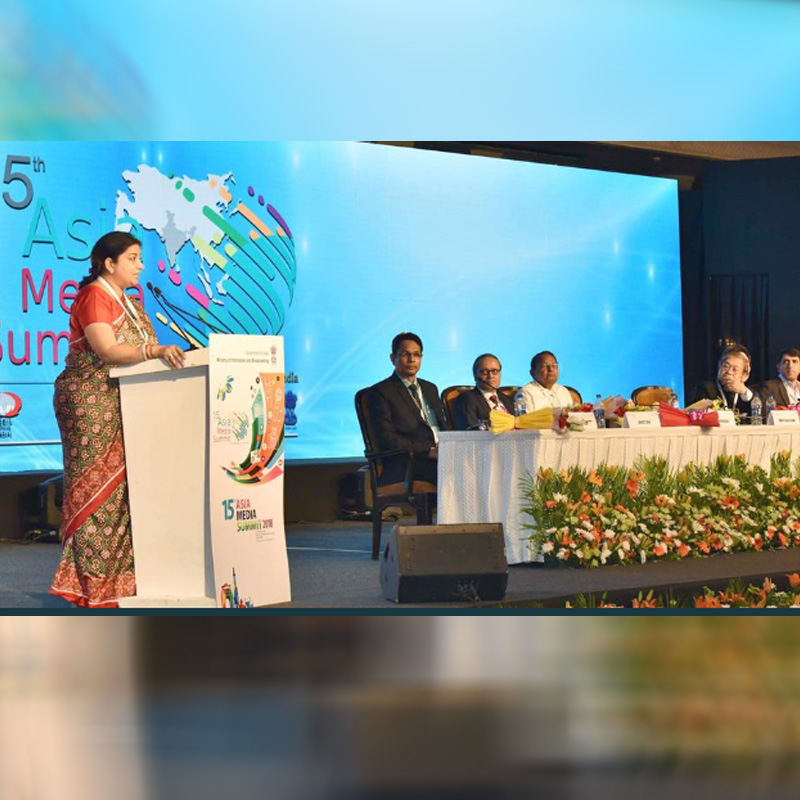
    Speaking at the 15th Asia Media Summit (AMS) 2018 yesterday, she, however, hinted at her version of what good content could be, throwing oblique references to the growing digital-spurred edgy content in Indian media, including television.

    Pointing out that India will have around 969 million internet users by 2021 and that the media industry looks upon the digital world “not only as a challenge but also as an opportunity”, Irani asked, “How do we attract, retain and develop talent, which frees good content from the trappings of revenue needs and brings about a balance in media institutions?” 

    She hoped that the media event would deliberate on ways to “delve and deliberate on Asia values”, and the need for good stories to be told.

    Dwelling on the need for regulations to ensure level playing field for all, the minister referred to an address made by media baron Vineet Jain, group MD of Times Group, before her at the media conference to drive home a point that present laws may be inadequate to deal with the changing landscape of the Indian media.

    Jain, during his address to the delegates at AMS 2018, had said, “But for Indian media to realise its full potential, regulatory reforms are needed across the board – to make it easier to do business, remove anomalies in the system, and above all, ensure a fair marketplace that benefits the consumer.”

    Carrying forward, Irani said the India media is getting more consumer-centric because of the opportunities (and challenges) that the digital ecosystem is offering stakeholders, apart from the overall evolution of the industry.

    Giving a perspective of the expanding Indian media industry, Irani said India was one of the fastest growing advertising market that is expected to touch $10.59 billion by the end of 2018, while the mobile spend was estimated to grow to $1.55 billion in the current year. “We have a vibrant media industry, which has a direct established impact of Rs 1.35 lakh crore and indirect and induced benefits of Rs 4.5 lakh crore, with close to 4 million people associated with it,” she added.

    The three-day 15th Asia Media Summit is being hosted by the Ministry of Information and Broadcasting jointly with the Indian Institute of Mass Communication (IIMC), and Broadcast Engineering Consultants India Limited (BECIL) in New Delhi. The theme of this year’s summit is ‘Telling Our Stories – Asia and More’, which would encourage regional and bilateral dialogue and cooperation to respond to challenges to the broadcasting sector in the region.

    The minster expressed hope that the event will throw up new ideas so that pathways to strengthen media institutions for a better mankind could be explored.

    Addressing the inaugural session, Minister of Information from Bangladesh Hasanul Haq Inu outlined six complex challenges the world faces today: poverty, gender disparity, terrorism, ICT revolution, climate change and uneven globalisation. Expressing concern at cybercrimes, he stressed upon the need to fight a war against cyber-criminals to keep the media safe and expanding.

    This is the first time that the Asia Media Summit is being held in India. Over 220 foreign delegates representing 39 countries (SAARC, ASEAN, East Asia, Africa, Oceania, Europe, Syria, Uzbekistan, USA, China) and senior officials of the government and members of Indian media industry are participating in the event.

    Also Read:

    MIB moves to regulate online media: various organisations join issue   

    Online media professionals write to Smriti Irani expressing regulation concerns

    TRAI seeks to regulate online streaming platforms

  • Budget ’17: Prasar Bharati grant-in-aid down, film sector’s aid up

    Budget ’17: Prasar Bharati grant-in-aid down, film sector’s aid up

    NEW DELHI: The grant-in-aid for Prasar Bharati has come down marginally from the revised estimates from Rs 4500 million in 2016-17 to Rs 4300 million for 2017-18.

    This includes a grants-in-aid to the pubcaster of Rs 3500 million and a separate grant-in-aid to it for the Kisan Channel of Rs 800 million which is higher than last year’s Rs 600 million.

    In addition, there is support of Rs 29,967 million for 2017-18 against Rs 27,168.6 million in 2016-17 in the allocation of support to autonomous bodies. But, there is no investment in the head of public sector undertakings in Prasar Bharati, unlike last year.

    An explanatory note says the grants-in-aid is being provided to cover the gap in resources of Prasar Bharati in meeting its revenue expenditure.

    (Expenditure on salaries of Prasar Bharati has fallen on the shoulders of the government since all Prasar Bharati employees who were in employment as on 5 October 2007 have been given deemed deputation status.)

    The total budget of the information and broadcasting ministry has been raised to Rs 44,090 million against Rs 40836.3 million.

    There is a separate allocation of Rs 230 million for strengthening broadcasting activities which covers community radio (Rs 40 million), Electronic Media Centre (Rs 120 million), Mission Digitisation (Rs 50 million) and automation of broadcasting wing (Rs 20 million).

    This is less than last year’s allocation in this head of Rs 308.3 million.

    The allocation for the film sector has been raised to Rs 2070 million, and covers the National Museum of Cinema, Development communication and Dissemination of filmic content, Infrastructure Development Programme relating to the film sector, and Mission/Special projects which gets a massive increase to Rs 1100.1 million as compared to Rs 170.1 million last year. This allocation is for the Umbrella Programme Missions / Special Project includes the following Schemes:

    National Film Heritage Mission (Main Secretariat), Anti-Piracy Initiatives and Setting up a National Centre of Excellence for Animation, Gaming and Special Effects (coming up in Mumbai).

    There is an allocation of Rs 180 million for mass communication which includes upgradation of the Indian Institute of Mass Communication to international standards and opening regional centres of IIMC.

    The allocation under ‘Secretariat – Social services’ has been raised Rs 795.2 million as compared to Rs 703.2 million, and art and culture to Rs 102.3 million. information and publicity gets Rs 4059.9 million for various programmes which include Directorate of Advertising and Visual Publicity; Press Information Bureau, Field Publicity, Song and Drama Division, Publications Division, Photo Division, Registrar of Newspapers in India and other media units.

    After seven years in a row, the government has announced investment in the National Film Development Corporation to the tune of Rs 125.4 million.

    There is a marginal increase in the lump sum provision for projects/schemes for development of North-eastern areas including Sikkim to Rs 842 million against Rs 800 million last year.

    There is an allocation of Rs 30,732.6 million as support to autonomous bodies which apart from Prasar Bharati, also has allocations for the Film and Television Institute of India, Satyajit Ray FTII, Press Council of India, IIMC, and Children’s Film Society, India.

  • Budget ’17: Prasar Bharati grant-in-aid down, film sector’s aid up

    Budget ’17: Prasar Bharati grant-in-aid down, film sector’s aid up

    NEW DELHI: The grant-in-aid for Prasar Bharati has come down marginally from the revised estimates from Rs 4500 million in 2016-17 to Rs 4300 million for 2017-18.

    This includes a grants-in-aid to the pubcaster of Rs 3500 million and a separate grant-in-aid to it for the Kisan Channel of Rs 800 million which is higher than last year’s Rs 600 million.

    In addition, there is support of Rs 29,967 million for 2017-18 against Rs 27,168.6 million in 2016-17 in the allocation of support to autonomous bodies. But, there is no investment in the head of public sector undertakings in Prasar Bharati, unlike last year.

    An explanatory note says the grants-in-aid is being provided to cover the gap in resources of Prasar Bharati in meeting its revenue expenditure.

    (Expenditure on salaries of Prasar Bharati has fallen on the shoulders of the government since all Prasar Bharati employees who were in employment as on 5 October 2007 have been given deemed deputation status.)

    The total budget of the information and broadcasting ministry has been raised to Rs 44,090 million against Rs 40836.3 million.

    There is a separate allocation of Rs 230 million for strengthening broadcasting activities which covers community radio (Rs 40 million), Electronic Media Centre (Rs 120 million), Mission Digitisation (Rs 50 million) and automation of broadcasting wing (Rs 20 million).

    This is less than last year’s allocation in this head of Rs 308.3 million.

    The allocation for the film sector has been raised to Rs 2070 million, and covers the National Museum of Cinema, Development communication and Dissemination of filmic content, Infrastructure Development Programme relating to the film sector, and Mission/Special projects which gets a massive increase to Rs 1100.1 million as compared to Rs 170.1 million last year. This allocation is for the Umbrella Programme Missions / Special Project includes the following Schemes:

    National Film Heritage Mission (Main Secretariat), Anti-Piracy Initiatives and Setting up a National Centre of Excellence for Animation, Gaming and Special Effects (coming up in Mumbai).

    There is an allocation of Rs 180 million for mass communication which includes upgradation of the Indian Institute of Mass Communication to international standards and opening regional centres of IIMC.

    The allocation under ‘Secretariat – Social services’ has been raised Rs 795.2 million as compared to Rs 703.2 million, and art and culture to Rs 102.3 million. information and publicity gets Rs 4059.9 million for various programmes which include Directorate of Advertising and Visual Publicity; Press Information Bureau, Field Publicity, Song and Drama Division, Publications Division, Photo Division, Registrar of Newspapers in India and other media units.

    After seven years in a row, the government has announced investment in the National Film Development Corporation to the tune of Rs 125.4 million.

    There is a marginal increase in the lump sum provision for projects/schemes for development of North-eastern areas including Sikkim to Rs 842 million against Rs 800 million last year.

    There is an allocation of Rs 30,732.6 million as support to autonomous bodies which apart from Prasar Bharati, also has allocations for the Film and Television Institute of India, Satyajit Ray FTII, Press Council of India, IIMC, and Children’s Film Society, India.

  • Mass Comm courses in regional languages significant: Naidu

    Mass Comm courses in regional languages significant: Naidu

    NEW DELHI: Information and Broadcasting Minister M Venkaiah Naidu has stressed the vast need of skilled personnel in the media and entertainment sector in the country as the sector was expanding rapidly.

    The Minister referred to the prominent role being played by the Government’s Skill India Initiative for upgrading skills under multiple disciplines. He added that the vision of this Government was to bring Transformational changes in all sectors.

    Speaking about the changing paradigm in communication, the Minister said Social Media has broken the boundaries of time and space in communication. It is a pre-requisite for budding journalists to be social media savvy and to have a watchful eye about the public perception on issues of local and international importance.

    He advised students aspiring to become journalists in future to ensure that news and views are not mixed and be objective. Every budding young journalist should have an open mind to acquire maximum knowledge to present the perspective in an objective manner. He urged students to keep abreast with the latest developments, new technology and new modes of communication and should inculcate a habit of reading to remain relevant and effective.

    He also called upon the Indian Institute of Mass Communications to strive for journalism courses in all Indian languages to cater to the communication needs of the citizens all across the country.

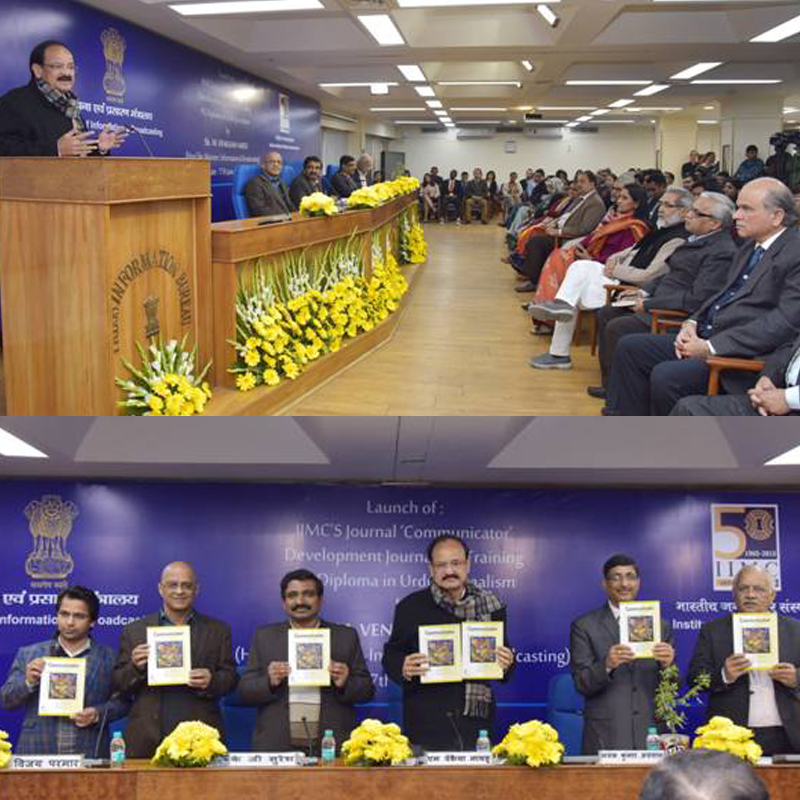
    The Minister was speaking after inaugurating the First PG Diploma course in Urdu Journalism, the 67th Diploma course in Development Journalism, and the launch of the IIMC Journal “Communicator” at Shastri Bhawan.

    Emphasizing on the training methodology, Naidu said it was important in the current scenario to include Case studies and practical exposure as a part of curriculum for learning, practising and applying new concepts. He also stressed the need for imparting an outlook that is rooted in strong ethical values among budding journalists and communicators.

    Naidu said Urdu journalism was an important and integral part of media and communication landscape of our country which had played an important role in the Freedom Struggle.

    Inaugurating the 67th Development Journalism course, the Minister said India is today regaining the lost glory of being the Knowledge hub of the world. The Development Journalism course provided a great opportunity for understanding and appreciating each other’s culture, and developing bonds of friendship.

    He added that journalist scholars from various Developing Countries were unofficial Ambassadors of India who shall provide a link of brotherhood among different cultures through their writings. The 67th batch of Development Journalism course at IIMC has 23 scholars (12 females and 11 males) from 19 different countries.

  • Mass Comm courses in regional languages significant: Naidu

    Mass Comm courses in regional languages significant: Naidu

    NEW DELHI: Information and Broadcasting Minister M Venkaiah Naidu has stressed the vast need of skilled personnel in the media and entertainment sector in the country as the sector was expanding rapidly.

    The Minister referred to the prominent role being played by the Government’s Skill India Initiative for upgrading skills under multiple disciplines. He added that the vision of this Government was to bring Transformational changes in all sectors.

    Speaking about the changing paradigm in communication, the Minister said Social Media has broken the boundaries of time and space in communication. It is a pre-requisite for budding journalists to be social media savvy and to have a watchful eye about the public perception on issues of local and international importance.

    He advised students aspiring to become journalists in future to ensure that news and views are not mixed and be objective. Every budding young journalist should have an open mind to acquire maximum knowledge to present the perspective in an objective manner. He urged students to keep abreast with the latest developments, new technology and new modes of communication and should inculcate a habit of reading to remain relevant and effective.

    He also called upon the Indian Institute of Mass Communications to strive for journalism courses in all Indian languages to cater to the communication needs of the citizens all across the country.

    The Minister was speaking after inaugurating the First PG Diploma course in Urdu Journalism, the 67th Diploma course in Development Journalism, and the launch of the IIMC Journal “Communicator” at Shastri Bhawan.

    Emphasizing on the training methodology, Naidu said it was important in the current scenario to include Case studies and practical exposure as a part of curriculum for learning, practising and applying new concepts. He also stressed the need for imparting an outlook that is rooted in strong ethical values among budding journalists and communicators.

    Naidu said Urdu journalism was an important and integral part of media and communication landscape of our country which had played an important role in the Freedom Struggle.

    Inaugurating the 67th Development Journalism course, the Minister said India is today regaining the lost glory of being the Knowledge hub of the world. The Development Journalism course provided a great opportunity for understanding and appreciating each other’s culture, and developing bonds of friendship.

    He added that journalist scholars from various Developing Countries were unofficial Ambassadors of India who shall provide a link of brotherhood among different cultures through their writings. The 67th batch of Development Journalism course at IIMC has 23 scholars (12 females and 11 males) from 19 different countries.

  • On DD’s b’day, Naidu lauds it for information empowerment

    On DD’s b’day, Naidu lauds it for information empowerment

    NEW DELHI: Information and Broadcasting Minister M Venakaiah Naidu said on Thursday that Doordarshan had truly lived up to its credo of being a public service broadcaster — not caring for competition and sticking to its mandate.

    He also said the DD News remains the most credible news TV channel in the country giving news that were in-depth and complete in every way and that the organisation had resulted in creating information empowerment by spreading information of government programmes.

    Speaking at a cultural programme held in the Doordarshan premises to mark the birthday or foundation day of DD, he said it had a national reach and also a reputation that was far above the private channels’.

    The Minister said the programmes telecast by Doordarshan had kept alive the arts and culture of the country through its vast archives and encouragement to classical artistes.

    In recorded messages, both Minister of State for I and B Rajyavardhan Rathore and Prasar Bharati board chairman Surya Prakash conveyed their gratitude to the millions of people who had always given encouragement to the presenters. Prasar Bharati CEO Jawhar Sircar said DD ran 16 regional stations, had seven national level channels, and several other channels apart from beaming for overseas Indians.

    MIB Minister exhorts journalism students to stay true to profession

    Meanwhile, on a busy day at another event, Naidu said communicators should stay away from sensationalism and present facts as they existed without any biases.

    Addressing students of the Indian Institute of Mass Communication (IIMC) during the 49th convocation, he urged them to preserve age-old values and culture while reporting and use information to fight social evils such as corruption, poverty and illiteracy.

    While referring to the corrupt practice of paid news, the Minister urged them to not succumb to such unethical pressures and that they should maintain high standards of journalism as true soldiers of fourth estate.

    He said the process of converting IIMC into a university was under way and it would have a platform to start many innovative programmes that would aim at providing wider perspective and inter-disciplinary approach to media education. It would also provide the institute with requisite resources to meet the growing demand of manpower in the industry and academia.

    Emphasizing on the increasing role of social and digital media in communications domain, Naidu said social media had changed the way the communication flows. Millions of people across cultures and geographies are interacting in real time turning the world virtually into a ‘global village’.

    He further added that digital media had brought in immense opportunities and challenges because information was shared in real time which generated instant feedback and response.


  • On DD’s b’day, Naidu lauds it for information empowerment

    On DD’s b’day, Naidu lauds it for information empowerment

    NEW DELHI: Information and Broadcasting Minister M Venakaiah Naidu said on Thursday that Doordarshan had truly lived up to its credo of being a public service broadcaster — not caring for competition and sticking to its mandate.

    He also said the DD News remains the most credible news TV channel in the country giving news that were in-depth and complete in every way and that the organisation had resulted in creating information empowerment by spreading information of government programmes.

    Speaking at a cultural programme held in the Doordarshan premises to mark the birthday or foundation day of DD, he said it had a national reach and also a reputation that was far above the private channels’.

    The Minister said the programmes telecast by Doordarshan had kept alive the arts and culture of the country through its vast archives and encouragement to classical artistes.

    In recorded messages, both Minister of State for I and B Rajyavardhan Rathore and Prasar Bharati board chairman Surya Prakash conveyed their gratitude to the millions of people who had always given encouragement to the presenters. Prasar Bharati CEO Jawhar Sircar said DD ran 16 regional stations, had seven national level channels, and several other channels apart from beaming for overseas Indians.

    MIB Minister exhorts journalism students to stay true to profession

    Meanwhile, on a busy day at another event, Naidu said communicators should stay away from sensationalism and present facts as they existed without any biases.

    Addressing students of the Indian Institute of Mass Communication (IIMC) during the 49th convocation, he urged them to preserve age-old values and culture while reporting and use information to fight social evils such as corruption, poverty and illiteracy.

    While referring to the corrupt practice of paid news, the Minister urged them to not succumb to such unethical pressures and that they should maintain high standards of journalism as true soldiers of fourth estate.

    He said the process of converting IIMC into a university was under way and it would have a platform to start many innovative programmes that would aim at providing wider perspective and inter-disciplinary approach to media education. It would also provide the institute with requisite resources to meet the growing demand of manpower in the industry and academia.

    Emphasizing on the increasing role of social and digital media in communications domain, Naidu said social media had changed the way the communication flows. Millions of people across cultures and geographies are interacting in real time turning the world virtually into a ‘global village’.

    He further added that digital media had brought in immense opportunities and challenges because information was shared in real time which generated instant feedback and response.


  • Borderless world in context of changing communication paradigm, says Rathore

    Borderless world in context of changing communication paradigm, says Rathore

    New Delhi: Minister of State for Information and Broadcasting Rajyavardhan Rathore today said the global community was living in a borderless world in view of the changing communication paradigm. The advent of internet, online news, social media and satellite communication had completely overhauled the communication and information space.

    Delivering his address at the 65th convocation ceremony of Diploma Course in Development Journalism at the Indian Institute of Mass Communications here, he said communication had been a critical component of the governments outreach strategy through people centric initiatives and innovative approaches.

    Citing the example of Mann ki Baat broadcasts and My Gov Portal, the Minister said that innovative use of such two way communication platforms had helped government solicit the views from people for better Governance and to also understand their communication needs and perspective.

    Earlier, Col. Rathore interacted with Indian Information Service officer trainees currently undergoing training at IIMC. He urged them to develop skills, aptitude and understanding of media landscape in taking forward the Government communication roadmap.

    He also launched the social media platforms of IIMC and a memento as a part of the Golden Jubilee celebrations of the Institute which was established in 1965.

    The Development Journalism Course at IIMC was an endeavour towards promoting international cooperation and understanding, especially among countries of the Developing World, through the exchange of experience, expertise and innovations in the field of harnessing communication as a tool of development.

    IIMC conducts a specific course on development journalism for media personnel from developing countries, sponsored by the External Affairs ministry.