Tag: IIM Ahmedabad

  • Zee to extend language subtitles on channels to support educational initiative

    Zee to extend language subtitles on channels to support educational initiative

    MUMBAI: Quality education is the right of every child. Keeping this in mind, Zee Entertainment, in association with USAID, PlanetRead and the Indian Institute of Management, Ahmedabad (IIM-A) is planning to extend its Same Language Subtitling (SLS) initiative across more of its regional channels. Two years back, the SLS initiative was launched on Zee Talkies and Zee Marathi with the aim to improve the basic functional reading competency of children in Maharashtra. 


    The initiative is in line with the Ministry of Human Resource Development’s (MHRD) Sarva Shiksha Abhiyan (SSA) – ‘Padhe Bharat Badhe Bharat’.


    Speaking on this initiative Zee Entertainment Enterprises Limited (Zeel) MD & CEO Punit Goenka said, “Television, being an effective medium of mass communication, is an excellent platform for children to improve their reading skills. We, at Zee, had undertaken this pilot project of Same Language Subtitling on our regional channels, Zee Talkies and Zee Marathi with the objective of improving literacy in children in Maharashtra. Over the span of two years, SLS has been activated for songs in over 250 frequently aired movies in our library. Seeing the successful results of this study, we plan to extend this project to our other channels as well.”


    IIM Ahmedabad and co-author of the SLS report Brij Kothari stated, “In the pilot project, for nearly two years, from June 2013 to May 2015, Same Language Subtitling was added on all the songs of 10 weekly Marathi movies telecast in prime time on Zee Talkies. The song-subtitled movies were further repeat-telecast in other slots on Zee Talkies and Zee Marathi. Together, this resulted in an unprecedented scale up of SLS in Maharashtra, far more than the project had even planned for or anticipated. The study has shown tremendous impact on school children’s reading skills, especially in Classes 1-3, with the results showing 10 to 14 per cent more children becoming good readers in each grade.”


    Conceived in 1996, SLS is simply the idea of subtitling mainstream TV content in the “same” language as the audio. What you hear is what you read. Several research studies have found that SLS causes automatic and inescapable reading engagement among viewers. Especially on song-based content, regular SLS exposure is known to contribute to reading skill improvement.

  • Smart packaging, relevant marketing among key factors behind Pro Kabaddi League’s success

    Smart packaging, relevant marketing among key factors behind Pro Kabaddi League’s success

    MUMBAI: A game that was played in the inert Indian villages amidst mud and puddle garnered reach beyond expectations when telecast on television because of the way it was packaged. Quality non-reflecting mats replaced mud and puddle as the outdoor game was hosted in premier indoor stadiums and in turn offered fans a great viewing experience courtesy the Pro Kabbadi League (PKL), which was launched last year.


    Kabaddi being a native sports always had space in the heart of people and hence when clubbed with quality packaging succeeded to make an impact instantaneously in viewers’ mind. Moreover, the organizers in association with federations twisted and turned the rules of the sport to rope in more opportunities of monetization.


    To add to that, the who’s who of Bollywood were spotted cheering for their favourite team during Kabaddi matches in the first edition, which also drove their fan base into the sport. In the second edition, every game will start with a renowned dignitary singing the national anthem, the tournament kick started with Amitabh Bachchan singing Jana Gana Mana.


    To cut a long story short, no stones have been left unturned to popularize and market the game to the viewers.


    After detailed analysis, GroupM’s specialist business wing – GroupM ESP (Entertainment and Sports Partnerships) in association with IIM Ahmedabad released the key factors, which orchestrated the success story of Star Sports’ Pro Kabaddi League. In its debut year, PKL garnered a cumulative reach of 435 million. What’s more, in its second season, which is currently underway, Star and Mashal Sports expect it to be bigger and better.


    Fan Acceptability of League: Kabaddi as a sport didn’t enjoy the huge native fan base to start with but a high decibel marketing campaign ensured relevance and the media push built hype to ensure viewer interest. Top notch game quality, best-in-the world talent pool & crisp program packaging made the league ‘likable’ amongst the audience, finds the research.


    Choice of Sports: Choosing Kabaddi as the sport was a bold decision to start with considering player popularity being low in the country. But at the same time, Indian Kabaddi contingent has been immensely successful at the global stage over the years ensuring early survival of the league.


    Game Format & Scheduling: Instead of aping the successful home and away format of the Indian Premier League (IPL), PKL went for a caravan format keeping the league short and crisp ensuring the league getting over before the initial hype died down.


    Players: Being an indigenous sport, although the players aren’t well known names amongst the audience; the quality of talent pool participating in PKL has been the best in the world.


    Design of The League: In the first season, the right holders managed to keep the expenses from central as well as team perspective under check beautifully making the league commercially viable and ensuring deep pockets for the team to spend on players. This in turn ensured level playing field between the eight teams making the league competitive right till the end and exhilarating for the audience.


    Team Location: City based franchise enabled association with fans of that particular region resulting in captive fan base.


    Fan Experience:


    .   Kabaddi as a sport doesn’t demand major infrastructure making it easy to host the matches in equipped auditoriums/multipurpose stadiums. This makes the on-ground fan experience memorable.

    .   Seek on-air production and packaging with informative commentary in regional languages helps build greater audience connect.  

    .   Live streaming on Hotstar will add to the on the go audience.


    League Federation Relationship: Pro Kabaddi League is a privately owned league, which is controlled and run by the league and the franchise owners bringing in accountability and professionalism. However, the league is sanctioned by international and national sports federation allowing the best talent in the world to participate.


    Celebrity Involvement:  High profile celebrity owners ensuring stickiness to the sport. Celebrity owners also cashed in on their existing audience to build initial loyalty. Broadcaster capitalized on marquee sports properties by introducing Salman Khan and continuously associating with him and his movie Bajraangi Bhaijaan to build the buzz. Additionally, getting icons like Amitabh Bachchan to voice “Le Panga” anthem added to the celebrity fervor.


    GroupM ESP sports and live events national director Vinit Karnik said, “Pro-Kabaddi League is a fine example of how a nation that is largely cricket-hungry can have its fair share of adulation, growth and success in a short span of time. It is heartening and optimistic for the business and growth of a sporting economy like ours. As a front-runner in the business of sports, ESP through this initiative listed all possible parameters that has made Pro-Kabaddi League a success. These findings are backed by the IIM-A and GroupM ESP report, a comprehensive paper that examines identifying factors for successful sporting leagues.”

  • What spells success for Indian sports leagues?

    What spells success for Indian sports leagues?

    MUMBAI: The sports industry in emerging markets is changing rapidly today. Amongst the various changes that is impacting sports and its allied businesses, is the emergence of sports leagues.


    According to a white paper released in collaboration between GroupM ESP and IIM –Ahmedabad, the success of the league is dependent on factors such as the sport and its fan base, the performance of the national team for the sport, design of the league, initiatives to build the fan experience, relationship of the league with relevant sports associations and the involvement of celebrities in the league.


    By studying what worked and what didn’t, the report brings to light best practices in the formation and running of sports leagues in a manner that will make them successful.


    Sports – The game is changing


    Over the past 10 years, the sports firmament has changed fundamentally. There has been an increase in the marketing of sports as well as a rise in the use of sports marketing purposes.


    Research indicates that there has been a sharp increase in the governmental support to sports as it is believed to increase societal and economic welfare of the country as well as promote the nation on the global front.


    Increased economic activity has also contributed to the growth of sports and its following. Today, sports serves two purposes: One, to be a platform to create marketing opportunities for brands and secondly, to actually create value for sports fans.


    These twin purposes go hand in hand, and serve the business and industry as well as the sports fans. For brands and advertisers, it is a win-win situation, in so much as when they pay to sponsor or promote a sport; the sporting event offers them a platform to reach their audience.


    As per an industry study report, sports industry in both mature and emerging economies has been growing at a rate faster than the GDP. As of 2011, the size of the industry was estimated at $620 million, growing at a rate of 6 per cent. While the sports economy has always been strong in North America and Europe; in the recent past, it is experiencing a major push in emerging markets.


    The report further states that all the BRIC nations have shown impressive growth in sports (India – 17 per cent, China – 20 per cent, Brazil – 7 per cent and Russia – 53 per cent).The growth of sporting events in emerging markets has been accompanied with the rise of several sports leagues.


    Professional sports leagues like the Major League Baseball (MLB), National Basketball Association (NBA), National Football League (NFL), English Premier League (EPL) etc have achieved great success in North America (US and Canada) and Europe.


    The report states that these leagues have gained worldwide popularity and fan following and in turn has inspired the setting up of similar sport leagues in emerging countries such as India, South Africa, and Sri Lanka.


    With a number of new sports leagues being formed in the recent past, the report highlights interesting set of differences.  Some of these leagues are in infancy, a few others are already defunct, and there are a few which seem to have attained some degree of maturity.


    As per an industry study, it is estimated that in India, the proportion of spending by average household on education and recreation will rise from 5 per cent in 2005 to 9 per cent in 2025. This, coupled with the rise in middle-class segment (from 4 per cent to 41 per cent from 2005 to 2025) will present a huge opportunity for business of sports to cater to recreational needs of such a large population.


    Interest in sports has increased with economic, educational and social advancement of the society. These trends underlie the development and popularity of sports leagues. A brief overview of the various leagues operating within sports in India was analysed as follows:


    Hockey – Federation rivalry stymies the initial leagues


    There have been several attempts to set up Hockey Leagues in India. The first such attempt was with The Premier Hockey League which started in 2005, but folded up by 2008. Then came the World Series Hockey in 2012. These leagues have been able to attract fans as they presented a more exciting format of the game through minor modification of the rules. However, they failed to sustain interest in the game. Reason: existence of two rival national hockey federations which were involved in disputes. This impacted the participation of players in the leagues.


    The country currently has Hockey India, a national federation, which has started the Hockey India League (HIL) that has run two seasons and has performed better than the two earlier avatars.


    Cricket – Success after a false start


    The professional league trend in cricket began with the launch of the Indian Cricket League (ICL), which was started by Zee Group, a television broadcast company. The BCCI in its wisdom did not endorse ICL and banned players contracted with BCCI from playing in ICL matches. It also exerted pressure on the International Cricket Council, the international cricket federation to stop other national federations from supporting ICL.  With this concerted denial of support, ICL folded up in 2008, three years after it opened shop.


    BCCI then launched Indian Premier League (IPL) in 2008, which forever changed the face of professional leagues in the country. IPL has attracted the best of the international players from across the globe.


    Kabaddi – The Indian contact sport that has touched the heart of millions


    The Pro Kabaddi League (PKL) was started in 2014 with eight teams from different cities. The league is supported by the national and international Kabaddi federations. The teams follow the system of salary caps and its owners are personages from the industry, movies, and sports business. The first season of PKL enjoyed unprecedented viewership and fan following. Another league – The World Kabaddi League which began at around the same time as PKL could not duplicate the success of the latter, even though it had a number of film stars as owners of teams in their league.


    Badminton – Shuttling towards increased popularity


    Badminton started becoming increasingly popular in India and attracted huge following with the emergence of some world-class players. The Indian Badminton League (IBL) is managed commercially by a sports management firm and has the backing and support of the Badminton Association of India. It started the competitive games in 2013, and was fairly popular as it was able to attract some foreign players, including the world’s number one. It failed though to get some of the best Chinese players. Indian Badminton League has recently been facing issues related to scheduling due to other international tournaments.


    Findings

    • Fan acceptability of Leagues – Rather than financial viability, fan acceptability seems to be a better measure of predicting future success of leagues.  To sports leagues and businesses, sportsmen and others who are investing their time, effort and money in sports leagues, this is an important parameter to track and follow-up with concerted action to improve the chances of success.
    • Choice of Sports – The choice of sports can impact the success of a league. Higher the fan base of a sport, the more the fan base of the leagues in that sport. Also, better the performance of the national team, in a particular sport, the higher is the acceptability of the league in that sport. Managers, sports persons and sponsors investing in a league will benefit from analysing the two factors mentioned above, even as they analyse the probable future of the sporting league. Starting a league for a sport that has a large fan following and a national team that is performing at par may be a way to ensure its early survival and growth.
    • Design of the League – The design of the league, more specifically the salary structure can impact the success of the league. Salary caps tend to distribute talent across teams, and lead to more intense competition which has a positive effect on the success.
    • Team Location – Regional teams can help in building team character. Thus, regional team locations enable association with fans of that particular region resulting in a captive fan base, while providing a competitive spark with respect to other regional teams.
    • Game Format and Scheduling – Fans respond positively to minor changes in the game format, but are alienated by major changes. The timing and scheduling of games can impact the success of the league.
    • Fan Experience – The more the social media initiatives by the league, the more the fan acceptability.  Improve the TV viewing experience through engaging broadcast and improve fan acceptability. Employ greater in-stadia engagement for higher fan acceptability of the league.
    • Players – When top regional players, famous foreign players and world class sportsmen participate in the league games, what happens is a cascading of their respective following into the league following. So each of these people are stakeholders in enhancing fan engagement and acceptance.
    • League – Federation Leadership -The relationship between the league and the federation can impact the success of the league. Starting a league in harmony and full cooperation with the federation that controls the game is almost a hygiene factor for the success of the league.
    •  

    Celebrity involvement


    Celebrity involvement is a key factor in increasing acceptability and marketability of the league. Stars in the game and stars outside the game are a good combination for league success.


     

  • Dr. Subhash Chandra to inspire students at IIM Ahmedabad

    Dr. Subhash Chandra to inspire students at IIM Ahmedabad

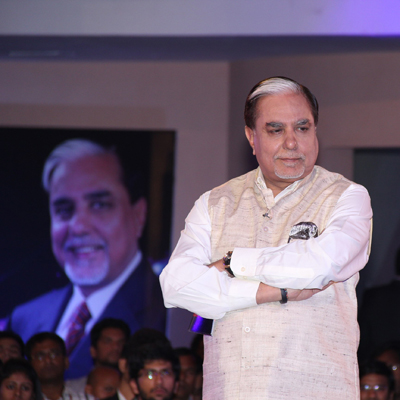
    MUMBAI: Continuing with its on-going effort of encouraging younger generations to take up challenging paths in the corporate world, Zee Media Corporation’s flagship show, Dr. Subhash Chandra Show, will be held at the sprawling campus of India’s premier institute, IIM Ahmedabad on 26 December 2014. The show will be hosted by the Chairman of Essel Group and ZEE, Dr Subhash Chandra.

    The show will focus on the importance of Talent Management – it being the most important pillar in the corporate world. In today’s competitive environment, it is coherent for organizations to effectively attract, identify, develop and retain people.

    During the one-hour show, Dr. Chandra will share his valuable thoughts towards managing talent. The show will be aired on Saturday at 10 pm on Zee News and 7pm on Zee Business and on Sundays at 11 am on both Zee News & Zee Business.  This show will also be aired on other channels of Zee Media.

    A self-made man, Dr. Chandra has consistently demonstrated his ability to identify new businesses and lead them on the path to success. It takes immense courage and motivation to shape ideas into reality. From trading goods, setting up a packaging industry to opening up theme parks and multiplexes, and creating India’s largest and most profitable TV media group and launching an English newspaper, Dr. Chandra has travelled a long way. It was Dr. Subhash Chandra’s vision that helped give birth to the satellite TV industry in India in the year 1992.

    Dr. Subhash Chandra Show Timings:Learn how to innovate, set up and make your business flourish from the expert himself, a man of a thousand ideas, Dr. Subhash Chandra. Don’t miss the Dr. Subhash Chandra Show for an enterprising and entertaining weekend!
  • Bloomberg UTV announces The Assignment 2

    Bloomberg UTV announces The Assignment 2

    MUMBAI: Bloomberg UTV, the English business news channel, has announced the second season of its business reality show, The Assignment.

    The show, which is to be launched in early July, will see model Nethra Raghuraman as the anchor.

    Season 2 of show will see 13 professionals, taking on untried and untested assignments outside their comfort zones. The show is being presented by okia.

    Continuing its core philosophy of bridging the gap between the two significantly distinct sectors of the Indian landscape, this season of The Assignment will see participants from a diverse range of professions stepping into unchartered markets, catering to unlikely audiences.

    The weekly show will not only put to task the participant’s presence of mind and decision making abilities, but will also capture the individual’s ability to pull off the task most effectively, the channel said.   
        
      Bloomberg UTV business head Deepak Lamba stated, “Inspired by an overwhelming response from our viewers and advertisers, we are back with the second season of The Assignment. Our objective is to delight our viewers with an exciting format which combines the best of education with entertainment. In keeping with our promise of being the blunt and sharp business news channel, our efforts like The Assignment will continue to strive towards strengthening our innovative programming, while fulfilling the business news needs of our viewers.”

    Also, IIM Ahmedabad will bring alive the core fundamental behind the experience of The Assignment to students, the company said.

    Lamba added that the channel will have more such shows in the fiscal as he is looking to expand the base of the channel and eyeing a 70 per cent topline growth in the fiscal.