Tag: IIM

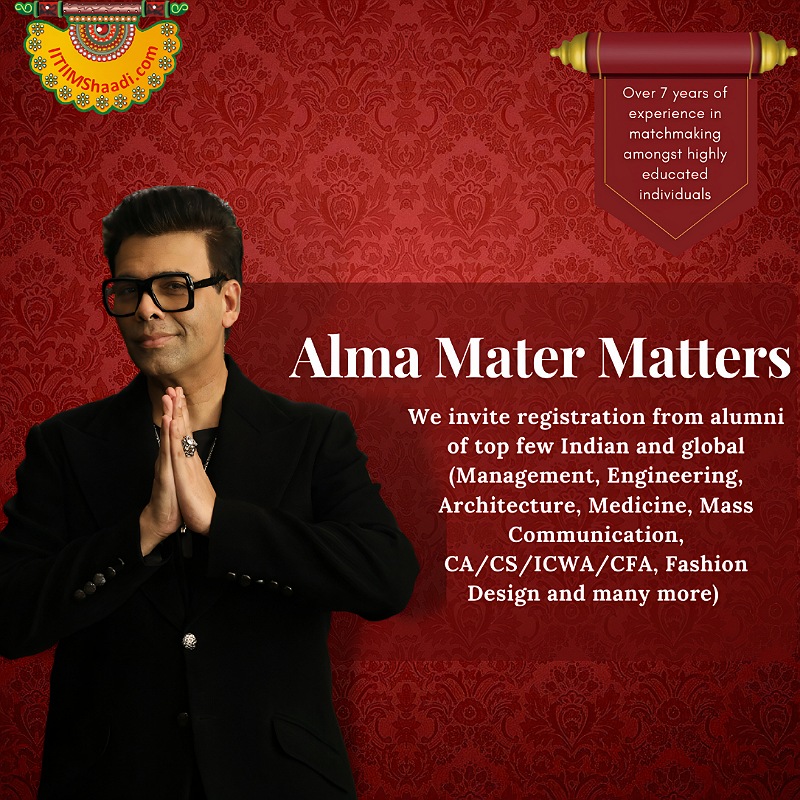
  • IITIIMShaadi.com onboards Karan Johar as brand ambassador

    IITIIMShaadi.com onboards Karan Johar as brand ambassador

    Mumbai: Matrimonial platform IITIIMShaadi.com has announced Indian filmmaker Karan Johar as its brand ambassador. As a part of the association, the portal will release a series of digital campaigns starring the filmmaker across the digital platforms in the coming months, fuelling its messaging around finding someone with the same mental wavelength.

    IITIIMShaadi.com founder and CEO Taksh Gupta said the platform caters to the highly educated community when it comes to finding matrimonial matches. “Understanding the niche that we are trying to serve, we see the filmmaker Karan Johar as the perfect face to promote the brand,” Gupta added.

    The portal has already registered over 1.5 lakh members since it launched in 2014, according to the statement. “The matrimonial platform aspires to cross a mark of 2.5 lakh members in the next two quarters following the new marketing initiatives,” it added.

    One the association, Karan Johar affirmed, “It is a matter of pleasure to be associating and promoting such a brand that has introduced a whole new concept in society. It is not just about finding potential life partners from any particular set of institutions, but about connecting with someone with whom you share a similar background and mental compatibility.”

  • Catvision reappoints SA Abbas as managing director

    Catvision reappoints SA Abbas as managing director

    MUMBAI: Catvision Ltd has re-appointed S A Abbas as the managing director of the company for an additional period of three years with the effect from 1 October, 2015.


    Abbas, who is also a director in the company, has been with Catvision since 8 June, 1985.  He has 30 years of experience including more than 25 years in the cable TV industry.


    Before joining Catvision, he worked with Network Ltd. in its marketing department, where he was closely associated with the sales and marketing of electronic typewriters and subscriber-use telecom equipment from 1980 -1985.


    He is professionally qualified technocrat and holds B.Tech from IIT Kanpur and MBA from IIM, Calcutta.

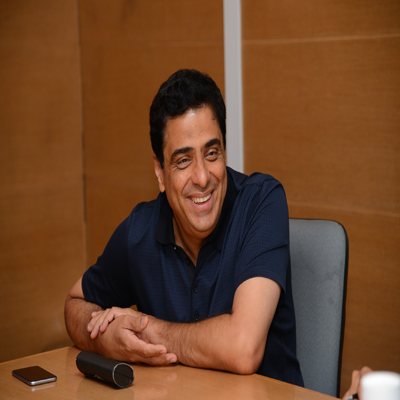
  • “Good ideas always find an investor, so there is no point compromising with the idea:” Ronnie Screwvala

    “Good ideas always find an investor, so there is no point compromising with the idea:” Ronnie Screwvala

    20 years back when the word entrepreneur was rarely pronounced correctly, a 19 year old man in the midst of great legacy businesses turned out to be a stand-out first generation entrepreneur, who fearlessly kept invading into undiscovered territories.


    After starting as a local cable operator, he went on to finding United Television Group (UTV), ventured into sports with Kabaddi and funded e-commerce enterprises like Lenskart and Zivame. While the world was witnessing catastrophes, he decided to turn philanthropist with the Swadesh Foundation. From Shanti on Doordarshan to Swadesh on the big screen, from Rang de Basanti to Dev Dhe has enumerable number of trophies in his cabinet.  


    The distinguished voyage that ignites million minds, the role model for aspiring entrepreneurs in India – Ronnie Screwvala in conversation with Indiantelevision.com’s Anirban Roy Choudhury, shares his priceless guidelines for young aspirants.         


    Excerpts:  


    What triggered you to pen Dream with Your Eyes Open?


    Entrepreneurship is a challenge and the perception that only people with huge initial capital can become an entrepreneur is a myth and that’s the message I wanted to convey and that’s where the book came into picture.


    Dream With Your Eyes Open is not an autobiography but a voyage that has both highs and lows, failures and success, encouragement and demotivation. Another reason behind penning down the book is to encourage aspirants to go for entrepreneurship passionately and not take it as a second option.


    What do you think is stopping India from becoming a global leader when it comes to entrepreneurship?


    20 years back when I started, people could hardly pronounce the word entrepreneurship. Even today, while on the one side, there are a fair amount of businesses, on the other, there is huge parental pressure of going and getting a good job. Entrepreneurship has always been plan B. But that doesn’t stand true.


    One can either go and get a good job or turn an entrepreneur – both are equally respectable. The most important reason for less growth is the fear of failure. In India, people don’t talk about this fear and if they do, they can’t handle it. For most people, failure means the end of the game… the fear that everything is over is what acts as an obstacle.


    The thought process needs to be that if you failed yesterday, you should see today as another day and move forward. When you have such a fear about failure, you don’t start. That is one of the reasons why India is ranked between 140 to 150 when it comes to entrepreneuring nations.


    How does an aspiring entrepreneur deal with the intriguing question of ‘How do I get funded’? Do you think in order to find that answer, the basic idea gets feeble or compromised?


    Everyone in India thinks that you need an investor to start a business and finding one is the biggest challenge. In my opinion, that’s not the procedure that you need to follow always. If we look at the entrepreneurs who are prospering today, all of them bootstrapped themselves on their own. Bootstrapping is a must when it comes to entrepreneurship. You have your idea and you should start executing it and only after you reach a particular level, should you go for an investor.


    Your success ratio goes up if you bootstrap first and then go for an investor. If you get an investor early on, you get spoilt. The entire work culture changes and half the time the investor runs the business that you are supposed to run. The hunger is much more when you are doing it on your own and hence if you have an idea, you should start executing it and after you have concept proofed it to yourself, you go for the investor. A good idea will always find an investor therefore there is no point compromising with the idea.


    Is stagnancy another reason behind the low rate of entrepreneurship growth in India? Do you think one should have the hunger of invading into new territories?


    It’s good that these questions are coming now because a few years back, no one thought about what happens after the substantial establishment of a business. In India, after a certain level we refrain from moving forward, get stagnant and eventually start downscaling.


    In business, downscaling begins the moment stagnancy sets in. So, one should always be open to venturing into new territories as entrepreneurship doesn’t mean earning a livelihood but generating employment. The more we explore, the more are our chances of succeeding.


    Do you think digital can give birth to a non-advertiser source of revenue model, which will be subscription based?


    If we see globally Google, which is the world’s number one company, has taken its platform YouTube and left it free. It runs on advertising. Facebook is also on advertising. If we look at it from that perspective, that’s where it’s going.


    Let’s face it, in two weeks’ time, a newly released movie is available on Tata Sky for Rs 75 but people are refraining from opting for that as there are pirated DVDs available for Rs 35. Piracy is a huge barrier of subscription based model and to counter piracy we need consumer behaviour to change, which is a slow process and will take time.


    Digital media is cost efficient. The capital investment is less when compared to the other mass medium platforms and hence there is a slim chance of having a subscription based revenue model. However, it will take time as there are bandwidth and technological issues that need to be sorted first. For now, I think advertising is going to be a long-term stay.


    Don’t you think an investor, after financing the concept, at some point of time starts regulating the strategic affairs?


    If you are a strong entrepreneur, you will never let anyone regulate you. I think there is a misconception that an investor comes in to regulate. Investors have two aspects: firstly, his risk capital is higher than most entrepreneurs because he is choosing one out of 999 and secondly, all investors get into a portfolio investment mode where they know out of 10, five will fail, three will somehow sustain and two will succeed. Who else in the entire cycle has got a risk of five failures out of 10? So, investors are seasoned veterans, who take their decision after enormous number of research and knowledge so that they put their money in right place. 


    Investors’ key is to back entrepreneurs with whatever they are doing and not regulate them. So it’s a misconception that an investor regulates. Yes, if things go wrong, an investor may get hyper and interfere with a perception that he can add value. It’s a myth that investors regulate a company.


    What’s your opinion on the Indian eco-system? Is there enough encouragement and support from the Government’s side for an aspiring entrepreneur?


    I don’t think it’s the government’s job to support. The thing that everyone is looking at is ease to do business. So the business environment has to be simplified by the government. When it comes to taxation, with 30 per cent tax we are one of the least taxed nations of the world. The tax structure in the UK and the US is higher than India. With the Goods and Service Tax (GST), it will come down to 16 per cent, which solves many problems. In the UK, value added tax (VAT) is at 17 per cent so there is no room for blaming the government.


    The reason why service tax was increased is to bring it closer to GST. The complication lies in the number of regulations and multiple-window clearances. The media is the least controlled in India. In the US, you have to be a citizen of the United States to be able to operate any digital or broadcast media, whereas in India anyone can operate an entertainment venture and hence when it comes to democracy and freedom, India beyond question beats the rest.


    Regulations make doing business complicated in India as there is no single body that deals with all the regulatory issues, which makes opening a business in 10 days impossible.


    Do you think it’s important to add entrepreneurship as one of the major aspect when it comes to academic upbringing of the youth in India?


    There are 10 million graduates coming out of college every year. Do we have jobs for all of them? The answer is a big no. The only way of tackling that problem is adding entrepreneurship in the curriculum as early as possible. I started at 19, so an early start is possible provided you think about it at an early stage. The manifestation should be there. The target should not be to get a job and then become an entrepreneur.


    Managers and presidents of big companies should think about where they will stand ten years down the line when there will be a hundred million skilled youth looking for jobs. Hence they should devote time into entrepreneurship, which will provide job to those skilled people.


    You are venturing in motorsport now. Can you throw some light on it?


    Well, yes I am venturing into motorsport. However, the report stating an investment of Rs 300 crore is incorrect. Nowadays, whatever you do, a zero gets added automatically. Here motor sports doesn’t mean cars. It caters to bikers in India, which is the largest bike selling nation of the world. The over 250cc category has grown at an incredibly high rate in last five years and we are looking at a tourism based sport. Currently, we are researching on the ten most exotic places in India, where on television one will enjoy India’s natural beauty along with skilled bikers. The plan is to make it a tourism cum sporting event.


    In the beginning, we will get a mix of Indian and international bikers, as the aim is to make it world class. Each team will have one Indian and one foreign biker for the first two years and after that we would look at making it a 100 per cent Indian event.


    From the first super-flop Dil Ke Jharoke Mein to the blockbuster entrepreneur writing his book, how will you describe the versatile voyage of yours?


    The opening four lines in my book is about the biggest failure of my life Dil Ke Jharoke Mein, which is what I started with. The concept behind starting the book with that was to convey that failure is just a part of life and not the end of the world.


    My journey so far has been to not stop after a failure but to keep moving on. Cable was different, UTV was different and sports is different. I have always rediscovered myself and for me that’s the way forward.


  • Indian retail market to grow at 6% CAGR to USD 865 bn by 2023, says Technopak at ET Edge International Retail Leaders Summit

    Indian retail market to grow at 6% CAGR to USD 865 bn by 2023, says Technopak at ET Edge International Retail Leaders Summit

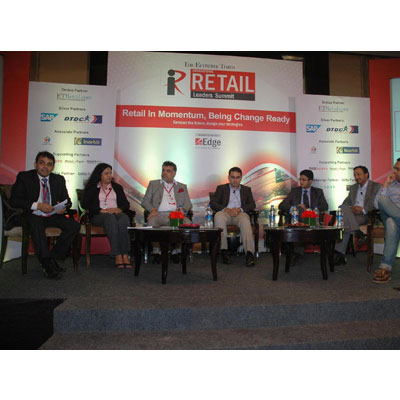
    Mumbai, August 23, 2013: The Indian retail market, currently estimated at USD 490 billion, is project to grow at a CAGR of 6% to reach USD 865 billion by 2023. E-tailing will emerge as a key retail channel, which will drive the growth of corporatized retail. The size of e-tailing is estimated to grow from the current USD 1 billion at 0.2% of the retail market to USD 56 billion (in real terms) at 6.5% of the total market by 2023, driven by an ecosystem favouring the e-tailing market. The share of corporatized brick & mortar retail in total merchandise retail will at best grow from the current 7% to 17% by 2023. These were the key takeaways from Technopak’s “Vision 2020 Emerging Consumer Trends & Retailer Responses” presented at ET Edge International Retail Leaders Summit on “Retail in Momentum, Being Change Ready” held in Mumbai.

    While making his presentation, Ankur Bisen, Vice President, Technopak, said, “Despite the persistent economic pressures and slowdown in India’s economy, merchandise retail will continue to witness sustained growth. An increasing share of incremental merchandise retail will come from urban and semi-urban centers, which in turn, is an outcome of rapid urbanization experienced in India. Apart from these urban centers, demand will also come from the emerging towns and clusters where primary source of livelihood has moves from agriculture to other professions. The retail chain will continue to face structural issues encompassing real estate, labour, sourcing and supply chain that will not allow corporatized brick & mortar retail to grow beyond the stated estimate.”

    In his opening remarks, Deepak Lamba, President, TCL-BCCL, said, “The Indian retail business is a unique industry with multiple challenges as the retail industry is undergoing a major transformation with many opportunities accompanied by complexity. The Government has initiated a series of fiscal and economic reforms bringing back a sense of optimism within the retail business fraternity and this needs to be capitalized by the industry leaders through deliberation and discussion at such platform.”

    The panelists at ET Edge International Retail Leaders Summit on “Retail in Momentum, Being Change Ready” included: Manish Tiwari, ED, Hindustan Unilever Ltd.; Avani Davda, CEO, Starbucks India; Tim Eynon, Business Head, Provogue; Govind Srikhande, Customer Care Associate & MD, Shoppers Stop; Sandeep Dhar, CEO, Tesco HSC; Romie Dutt, Executive Director & CE, Sahara Q Shop; Himanshu Chakrawarti, CEO, The MobileStore; Devendra Chawla, President – Food Bazaar, Future Group; Rahul Mehta, President, CMAI; Prof. P K Sinha, Prof. of Retailing, IIM A; Dinanath Dubhashi, MD & CEO, L&T Finance; Mahesh Murty, Founder, Seedfund; Harish Bijoor, Brand-expert & CEO, Harish Bijoor Consults Inc.; Deepa Thomas, eCommerce Evangelist, eBay – India; Laurent Dhaeyer, President, EBS; and John Goldrick, Global Sales Director, SAP amongst others.

    The strategic discussions amongst leaders and visionaries presented India and global industry barons & visionaries on a single platform to put across their concerns to the policy makers, discover new opportunities, create and expand into untapped markets and understand the existing lacunae and loop-holes that impact profits and market share, thus enriching the industry at large. This conference will see participation from c+ level executives, business & functional heads from established as well as upcoming retail chains, and will focus on bringing the greatest international minds and the industry on the same platform to discuss challenges, exchange ideas and network.

    “A visible conversion from saving to spending economy is taking place in India in recent times following emergence of a sizeable young generation in the society, said Prof. P K Sinha from IIM, Ahmedabad. “Even in low income category, people are going for buying in format of retail outlets though majority of such format is dominated by Food and Grocery category. The demography in the retail consumer space is changing fast in India due to induction of technology mainly to online sales and mobile based transaction. The growing competition and expansion of retail network, there would soon be tapering on profitability among the large players.” In this context, Prof Sinha suggested four ‘A’ —Ambience, Accessibility, Availability, Affordability—for managing the customer expectation.

    Govind Shrikhande, MD, Shoppers Stop, said, “In light of the challenging economic scenario, most retailers need to change their business practices for survival. What can international retailers contribute to Indian entrepreneurs? We need an Anand-type cooperative structure for retail sector in India to sustain growth.”

    CP Toshniwal, Group CFO, Future Group, said,” The real challenge on retail industry is largely dependent on the categories of retail such as grocery. Retail business has low margin and high volume whereas lifestyle retail has high margin and low volume business. FDI will not help the fortune of Indian retail business.”

    Rahul Mehta, President of CMAI, said, “Indian retailers would evolve their own strategy and any amount of FDI will not have any impact on the domestic industry. In fact, Rahul Vira, Business Head, Gitanjali Group, said, foreign jewellery design and brand are not viable in India since Indians prefer to have their own products mainly during marriages and any festivals. “Foreign products cannot meet the aspiration of Indian customers,” Vira added.

    “In slowdown, do what is right for the consumers. When the cycle turns, we shall be a far more consumer-centric company than what we are today,” Manish Tiwari, ED – Sales & Customer Development at Hindustan Unilever Ltd. All ET Edge Summit Leaders said continuing with planned investments is important for a long-term growth.

    Devendra Chawla, President – Food Bazaar – Future Group said when it clubbed several products of cleaners from toilets to floor and glass into a single pack, it was an instant hit during the recent Independence Day week sales. “It’s akin to the Indian thali versus a la carte menu in a restaurant – Sometimes you want to order all dishes separately or you want it like a thali with some dishes together. This saves consumer time and due to great value, any one of the cleaner which otherwise would not have been picked gets into the home helping, increase penetration and consumption.”

    Marketing consultant Harish Bijoor said that when he recently conducted a survey covering over 18,000 kirana stores that don’t offer discounts and over 220 modern trade outlets that thrived on price-offs, he found out that 90% of the customers were loyal to smaller shops compared to around 40% for modern stores. Yet, discounting merchandise contributed over 35% of leading food and grocery retailers’ sales during the year ended March. For global players such as Starbucks, its value for money is what consumers are really seeking out. “We don’t see any pessimism and Indian consumers spend when they see value in the brand,” said Avani Davda, CEO, Starbucks India, the 50:50 joint venture between Starbucks Corporation and Tata Global Beverages that operates Starbucks cafes in the country.

    ET Edge has been founded to empower multiple sector, industries and segments through the dispersion of critical business knowledge through strategically developed conference and summits. Foreseeing the tremendous potential, which India has in store, especially in sectors such as Retail, Infrastructure, Healthcare, education, Technology and BFSI, ET Edge strives to bring together visionaries and key global leaders through its enriched knowledge through strategically developed conferences and summits. Foreseeing the tremendous potential, which India has in store, ET Edge strives to bring together visionaries and key global leaders through it enriched knowledge platforms to aid the symbiotic relationship societies and businesses share. Extensive market research with core practitioners, experts, leading trend setters and policy makers is conducted to ensure that these platforms are unparalleled in the vertical they cater to. Visionaries and industry leaders contributing as speakers will only ensure that these platforms set themselves apart.

    Deepak Lamba, President, TCL-BCCL, said, “We aim to develop knowledge destinations by channelizing global intelligence vide summits and conferences through fortifying lectures, workshops, panel discussions, roundtables and case studies. The forums would ensure that the senior decision makers are equipped with information to respond to challenges being faced from a global perspective. We have substantial expedients for the business and visualize it taking mammoth proportions while developing into a one-stop destination for the stalwarts of the industry. The plan is to formulate a focused holistic solution for key sectors, which contributes largely towards the GDP of the nation.”

    Times Conferences Ltd. (TCL) specializes in building B2B communities through the creation of high octane content with a long term objective of becoming a holistic destination for industry segments. TCL will deploy unique B2B initiatives to attain high levels of saliency and attract the brightest minds across industry sectors. These initiatives leave back a footprint on the industry and over the years become a focal point of deliberation on key industry issues, and disseminating critical industry information.

    For more information: Tabassum Mukadam, Adfactors PR Mob: 09930040970, 09820531932