Tag: IFW

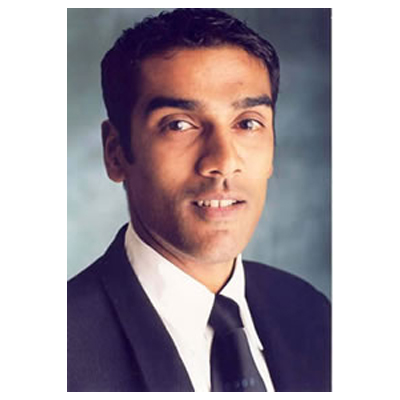
  • ‘There are several properties, both on the events and TV side, in the pipeline’ : Ravi Krishnan – IMG/TWI – South Asia managing director

    ‘There are several properties, both on the events and TV side, in the pipeline’ : Ravi Krishnan – IMG/TWI – South Asia managing director

    For many in the industry, the demise of the Lakme India Fashion Week (IFW), the event that marks the high point of India’s fashion calendar, from IMG’s roster signals the end of the IMG decade as the dominant force in the sports and events management arena in country. Comment.

    It is certainly incorrect to say “the demise of the event also signals the end of the IMG decade as the dominant force in the sports and events management arena in the country.” Over the 10 years that we have been in India, we have been involved in many successful projects, which for a variety of reasons have either evolved or been discontinued e.g. Sahara Cup was the highest profile event at its time but was discontinued for political reasons. At that time, events such as LIFW were created to tap the opportunities that existed in the marketplace.


    It’s also important that I clarify that whilst LIFW was the highest profile event that IMG conducted, in does not nor ever has represented the most significant income stream for us. IMG is proud of the success that LIFW has attained, and the role played by IMG in taking it this far. It has clearly established us as the commercial force in the fashion and lifestyle space in India. As our competitors attempt to enter this space by undercutting margins and therefore profitability, we will continue to achieve firsts with a focus on bottomlines. We are very clear that we are in business and will therefore make decisions on sound business principles, and will not make emotional decisions related to properties / projects / federations. We will clearly not be exiting this space and have several ideas that we feel will be commercially viable to implement in this increasingly evolving and fragmented market place.


    It is necessary for rights-holders to be careful about accepting offers from organizations which may not have the requisite expertise to deliver. We have always been a company that focuses on over delivering rather than over promising. A wrong decision by a rights holder in choosing a marketing partner could set it and its event back many years if the terms upon which the representative are hired are not adhered to or surpassed.


    IMG is in the business of sports, lifestyle and entertainment and had a profitable business right from its entry in India over a decade ago. As the market evolves, our approach to the business, as always, will evolve with reference to the opportunities in an ever-changing world. This dynamism will be exhibited by announcements in the future.

    One reason for the decline in IMG has been ascribed to a succession of departures of key personnel in the last few years, particularly on the television side. What course corrections are being done to arrest the slide as far as talent is concerned.

    Personnel movements have become a feature in many industries as the Indian economy continues to grow. Even in times when IMG was adding new properties to its portfolio, personnel changes were happening behind the scenes. It’s simply a business reality in all industries.


    We have never been more confident in the capabilities of our personnel than we are with our existing team and will be adding to this team based on the forthcoming needs as we see appropriate.

    One would expect that after the death of Mark McCormack and the takeover of IMG by investment company Forstmann Little & Co, some tough questions will be asked from top management on these issues. What is the new parent company’s thinking on the India story?

    The Forstmann Little management has brought new thinking to our business and are very focused on India. They see much potential in a variety of our core businesses and in a variety of new areas where we can leverage our global strengths. Plans are afoot, but none that we can talk about right now.

    What are the key properties in India currently on the IMG roster and are there any new deals expected in the near term that might make up for the loss of fashion Week.

    IMG/TWI has proven its resilience in this space through the effects of the Asian crisis and 9/11 and their resultant effects on the Indian economy. Further IMG shone through the effects of the tobacco self-regulation e.g. when ITC decided to pull out of the sponsorships, it meant that 3 major properties were left without the presenting sponsor e.g. the Indian Cricket Team, the Indian Open Golf tournament and the ATP event in Chennai. It was IMG that successfully found new sponsors in such a crisis i.e. Indian Cricket Team (Sahara – please note that contrary to what is widely written about, it was IMG that bought the rights of the Indian Cricket team from the BCCI and sold them to Sahara via their agency), Indian Open Golf (Royal Challenge) and ATP event in the Chennai (Tata). With time, these properties have also evolved in their terms with the evolving market scenario.


    Currently, two of the key properties in India are the Chennai Open and Scorpio Speedster as well as various TV productions such as the recent Sunfeast Open, the historic Indo-Pakistan series among others. There are several large-scale properties both, on the events and on the television side that have been in the pipeline, most of which will come to fruition in 2006. These will more than compensate for any revenue loss from LIFW.

    While Fashion Week was a big event, it is our belief that it is in television sports properties where the real money lies. What is being done to ramp up on that front?

    You are certainly right that television represents a key area of growth in the sports and entertainment industry. We too recognize this. In this context, one thing we have seen in the West is the demise of several companies in our business e.g. ISL, Sports World, and several others who paid exorbitant guarantees to compete in the sports and entertainment space and then realized both to their own detriment and to those that unwisely accepted these unsustainable sums, that they were indeed, unsustainable. It’s a lesson for all rights holders that sometimes the too-good-to-be-true deal is indeed too good to be true.

    What are the key positives in the IMG story at the moment?

    In the 10 years that IMG has been in India, we have been responsible for many firsts and path-breaking deals in the country. Some of these milestones are:


    Cricket:
    1. Sahara Indian cricket team sponsorship – Rs. 100-crore team sponsorship deal for the BCCI, the largest cricketing deal in the history of the game

    2. Sahara Cup – hugely popular cricket tournament between India and Pakistan; the only official One-Day Internationals ever to have been played in North America

    3. Samsung Cup – IMG secured the deal last year for Samsung during this historic tour, which was a great marketing success by all standards

    4. Scorpio Speedster – India’s largest non-match cricket activity, the hunt for India’s fastest bowler


    Tennis:
    1. Chennai Open ATP event – is India and South Asia’s only ATP International Series event, and one of only seven in all of Asia.

    2. ABN Amro Tennis Challenge 2004 – which gives India’s leading singles tennis players a golden chance to play in the qualifying round of the high profile ABN AMRO World Tennis Tournament at Rotterdam.


    Golf:
    1. The Indian Open – South Asia’s largest and most prestigious golf event

    2. BILT Skins with Vijay Singh – a unique event developed for BILT, the event saw the World No.1 golfer play in India for the first time.

    3. Other High Profile Corporate Events – these include the Standard Chartered Golf Day with Nick Faldo, HSBC Golf Day with Colin Montgomerie, and Deutsche Bank Golf Day with the Australian cricket team


    Fashion/Lifestyle:
    1. LIFW – A case study by itself, LIFW, conceived and created by IMG along with the Fashion Design Council of India (FDCI)


    What is evidenced by the above is that the space is dynamic and notwithstanding the fact that certain income streams come and go, which is a fact of life in our business, IMG and TWI have stayed ahead of the curve. This will continue to be the case in the future in the sports and entertainment business. Our depth and breadth of understanding of the local market and continued good relationships with key stakeholders and the buoyant Indian economy means we are very excited about future prospects. Our combination of global knowledge and our local experience will lead to several exciting projects in the future.

  • IMG at crossroads after IFW loss to Percept?

    IMG at crossroads after IFW loss to Percept?

    The Indian arm of International Management Group (IMG), the global sports management conglomerate founded by the late Mark McCormack, seemingly stands at the crossroads today.This has been brought to bear even more starkly with the totally unexpected loss of the Lakme India Fashion Week (LIFW) to Shailendra Singh’s Percept D‘Mark.

    For many in the industry, the demise of the event that marks the high point of India’s fashion calendar from IMG‘s roster also signals the end of the IMG decade as the dominant force in the sports and events management arena in country. That is an argument that IMG/TWI – South Asia managing director Ravi Krishnan dismisses outright though. Says Krishnan, “It is certainly incorrect to say ‘the demise of the event also signals the end of the IMG decade as the dominant force in the sports and events management arena in the country.‘ It‘s also important that I clarify that whilst LIFW was the highest profile event that IMG conducted, it does not, nor ever has, represented the most significant income stream for us.”

    Still, there is no gainsaying that the last decade has witnessed a number of highs and the road the company has traversed in the country illustrates that well. IMG TWI were already the world‘s leading sports marketing company when they arrived in India with the Hero Cup cricket – where television arm TWI broke national broadcaster Doordarshan‘s monopoly of cricket coverage.

    In 1994,TWI negotiated on behalf of the Board of Control for Cricket in India (BCCI) a ground breaking exclusive contract with ESPN Star Sports for all Indian cricket for the next five years. They took the chance to establish an office in India, with an English football producer Peter Hutton moving to India to organize first domestic then international cricket coverage for ESPN.

    Parent company IMG arrived in 1995, with American Dick Alford – an IMG veteran – in charge alongside Krishnan and an English lawyer Malcolm Thorpe. The next years saw an amazing growth, with TWI dominating the television sports market – producing live football and hockey coverage for Star Sports as well as the cricket for ESPN and IMG setting up a series of international events including the The Sahara Cup cricket, the Gold Flake ATP Open Tennis and the Wills Indian Open golf. The relationship with the BCCI continued to bear fruit as IMG-TWI negotiated the contract for Sahara to take over the team sponsorship of the Indian cricket team, while it found sponsors in Tata for the Indian Tennis Open in Chennai and Royal Challenge for Indian golf to take over the mantle when ITC moved out of sports sponsorship. The company diversified with TWI beginning daily news coverage for Doordarshan Sports and producing music events such as the Zee Cine awards, whilst IMG moved into the Lakme Indian Fashion Week and the Four Square Challenge Rafting. At its peak, IMG TWI employed close to 150 staff with offices in Delhi, Bombay, Bangalore and Chennai.

    However, the rollercoaster lost quite a bit of momentum following a succession of departures in the last few years. Alford left for IMG Japan, Thorpe for IMG Hong Kong and Hutton for Ten Sports in Dubai. Incidentally, Thorpe left IMG Hong Kong and moved to Dubai where he joined up again with Hutton working on the Dubai Sports City project as well as his role at Ten Sports.

    Golf head Rishi Narain left to set up his own company. Among the other top Indian executives who took the exit route were Navneet Sharma (he went on to set up Total Sports in India), Rahul Johri left to become head of sales at Discovery, while Rukin Kizilbash joined Ten Sports as its head of sales. There was also Jamie Stewart who left with Dhiraj Malhotra to set up the ICC’s commercial office in Delhi as too number of the TWI production staff who joined Hutton in Dubai.

    Krishnan, is however, at pains to stress that the exits should not be seen as a problem unique to IMG but rather as a feature that many industries are experiencing as the Indian economy continues its explosive rate of growth. Says Krishnan, “Personnel movements have become a feature in many industries as the Indian economy continues to grow. Even in times when IMG was adding new properties to its portfolio, personnel changes were happening behind the scenes. It‘s simply a business reality in all industries.

    “We have never been more confident in the capabilities of our personnel than we are with our existing team and will be adding to this team based on the forthcoming needs as we see appropriate.”

    Be that as it may, this period has certainly been less than smooth for IMG. The Indian team sponsorship contract ended as did the representation of the BCCI’s television rights to follow the Sahara Cup cricket being cancelled on an annual basis. The Indian Open Golf has been taken over by Nimbus and the Indian Open Tennis in Chennai lost Tata as a sponsor – with the Tamil Nadu government taking a leading role in the event.

    What is the current status? Krishnan points out, “Two of the key properties in India are the Chennai Open and Scorpio Speedster search for a fast bowler (where Channel 7 have recently taken over from ESPN as the broadcaster) as well as various TV productions such as the ongoing Sunfeast Open, the historic Indo-Pakistan series among others. There are several large-scale properties both, on the events and on the television side that have been in the pipeline, most of which will come to fruition in 2006. These will more than compensate for any revenue loss from LIFW.”

    Indiantelevision.com also raised the issue of how the new management that is running IMG globally is viewing these recent developments in India. It needs noting that it was in early October 2004 that investment company Forstmann Little & Co bought IMG in a $750 million purchase that was completed this year. The buyout followed the
    the death of the legendary Mark McCormack in mid-2004. Krishnan opined, “The Forstmann Little management has brought new thinking to our business and are very focused on India. They see much potential in a variety of our core businesses and in a variety of new areas where we can leverage our global strengths. Plans are afoot, but none that we can talk about right now.”

    Basically though, while LIFW was a big event, it is in television sports properties where the real money lies. Queried over what is being done to ramp up on that front, Krishnan says, “You are certainly right that television represents a key area of growth in the sports and entertainment industry. We too recognize this. In this context, one thing we have seen in the West is the demise of several companies in our business e.g. ISL, Sports World, and several others who paid exorbitant guarantees to compete in the sports and entertainment space and then realized both to their own detriment and to those that unwisely accepted these unsustainable sums, that they were indeed, unsustainable. It’s a lesson for all rights holders that sometimes the too-good-to-be-true deal is indeed too good to be true.”

    Point taken. But that still begs the question. How is IMG going to get back up on the radar in the television scheme of things without drawing back some of the professional expertise that has gradually seeped out of the IMG system in India?

  • IFW, Skin Sin to match steps with leading designers

    MUMBAI: Skin Sin, the brand of ladies fashion footwear by designer Arvind Bajaj, today announced that seven leading designers will be coordinating Skin Sin spring summer compilation 2005 for their collections on the ramp at Lakme India Fashion Week (LIFW).

    On the ramp will be Skin Sin’s collections inspired by nature with themes of flowers, fruits, fish and hearts and the evening formal collections.


    The designers include internationally acclaimed names of Suneet Varma, Rohit Gandhi, Rahul Khanna, Manish Arora, Rajesh Pratap Singh, Malini Ramani and Ashima and Leena from the fashion fraternity. Designer JJ Valaya, who has recently tied with Skin Sin, will showcase the first designs of the newly-launched label ‘Valaya by Skin Sin’ at the mega fashion omnibus.
     
     
    Said Bajaj, “It is sad to see a season old design in footwear adorn the feet of Indian women, for being in vogue is all about timing. Skin Sin will pioneer the domination of footwear as a statement of style in the wardrobe of the fashion conscious Indian women. The interest shown by designers for LIFW reaffirms our mission.”
     
     
    Speaking on the tie up Skin Sin shoes executive director Vinod Kaul said, “The enthusiasm shown by the designers is heartening and reiterates Skin Sin as a designer wear brand that brings Indian consumers the latest international fashion trends.”
    The collections that will be seen at LIFW will also be made available at the exclusive Skin Sin showroom at Delhi’s N-Block market in Greater Kailash I.

    Skin Sin will also open a second showroom next month at Mumbai’s Grand Hyatt Mall. The company plans to open eight showrooms by next fiscal to adorn the feet of the fashion cognoscenti.

    Also read:
    Valaya, Skin Sin to launch new fashion footwear