Tag: IDOS 2014

  • IDOS 2014: Niche content to play a critical role in digitised era

    IDOS 2014: Niche content to play a critical role in digitised era

    KOLKATA: With more consumers looking at content tailor-made for them and with TV consumption growing on multiple screens, niche content is likely to work as a pivotal differentiator in a digital universe. The viewership for special content has grown substantially, and with digitisation at a growing trajectory in the country, broadcasters with niche channels bet on the growth.


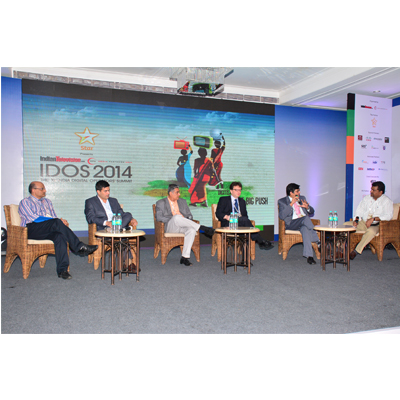
    Speaking at a session titled ‘Specialised content and channels in the digital ecosystem’, at IDOS 2014, FoodFood CEO SK Raj Barua said, “TV penetration has reached the masses and the lifestyle category is improving. I think there is a lot of opportunity in terms of capacity in the next phases of digitisation. We see a great opportunity for us. With new media on the rise, demand for food content has gone up by more than 200 per cent.”


    On the other hand Insync founder and managing director Ratish Tagde, a classical music channel, said: “There is a huge demand for classical music and the audience is looking for Sufi music. When we talk about niche channel, it is all about content. The digital era is likely to monetise content. There are many new platforms and niche content has a good future.”


    Apart from FoodFood and Insync, A+E Networks is also slowly growing its footprint in the country. A+E Networks APAC VP sales and operations Saugato Banerjee said that the ability to create local content is main for niche channels. He added that A+E Networks, that operates with Network 18 in India, can’t depend on advertising and sales for everything it does. “Growing audience share is our target and there is a lot of optimism here,” he said.


    While Videocon d2h deputy CEO Rohit Jain said that one needs to look at niche channels from an economic point of view. “If any new channel is launched in the market, we have to have the whole push model so that the customer gets a chance to see the content first. Every channel has its own audience base,” he said.


    While AsiaSat, that leads in the satellite broadcasting and telecommunications sector in Asia Pacific region, believes the same what Indian broadcasters feel about niche channels. AsiaSat senior regional manager Paulus Chau said that the broadcasters are looking at launching more channels. “We are also looking at the opportunity because regulation is India is not simple,” he said.


    Scripps Networks, a US-based media company, specialising in lifestyle content like food, home and travel categories, is evaluating its strategy in Asia and India. Scripps managing director APAC Derek Chang said that India is a huge market for the company as compared to other markets. He hinted that Scripps might look at the Indian market for launching its niche content related to lifestyle. “It could translate into partnerships. It depends on how we see the potential market. It has its own characteristics and challenges,” he said.

     
    All the panelists agreed that niche content providers have to invest in the content and said the broadcasters have to understand that niche in India has various definitions considering the national and regional clients.


    While talking about the challenges faced by the channels, Barua said that carriage fees have gone up. “In the process, the business model has to be slightly different. We do research for content creation for particular people,” he said.


    Tagde however felt that the niche channels involve too much of research and investment. “We are struggling with the issues of technology like reaching out to people overseas. The content is owned by us and we have to invest in marketing too. There is a hope that we will get support from distributors,” Tagde said.


    Niche channels are not cheap to create: tremendous funds are needed to do research, and programming teams to implement concepts for informative channels.


    While the digital world is changing phenomenally, a bouquet of channels, with some mainstream entertainment channels and other niche channels, will soon adapt to the change.
    Viewership will be segmented leading to an increase in the number of niche channels.


    Going niche is the future of television as it helps to target specific viewers and in terms of revenue generation from advertisers, it is much more focused.


  • Doordarshan to monetise content archive through digital platforms

    Doordarshan to monetise content archive through digital platforms

    KOLKATA: Public broadcaster Doordarshan has finally decided to make some money out of its huge treasure of content. It is currently involved in converting its entire archive into digital format which it is also keen to monetise. On the other hand, the broadcaster is also looking at creating its own web portal to disseminate content of national importance, free of cost.


    Two media agencies are being identified that will assist it in marketing this treasure trove. Recently, an expression of interest (EoI) was floated by Doordarshan and in the RFP (request for proposal) process, the names will be announced, said Doordarshan deputy general CK Jain while speaking exclusively to indiantelevision.com on the sidelines of IDOS 2014 in Goa .The tender process will take nearly six months, by the end of which, Jain hopes that it will have a longer list of digital content.


     “We have around two lakh hours of content yet to be converted. In fact we have converted 2,500 hours of content already which is being sold via physical media such as DVDs and CDs,” he said.  The programmes include Nirmala, Discovery of India and other classical programmes.


    The aim is to make the content available online and then monetise it by identifying its worth.  “We will convert the legacy tapes into digital formats,” Jain said adding that the pubcaster has content going back to pre-independence era.


    A national archive committee has been formed for identifying free and monetary content. Doordarshan is also exploring new revenue schemes for content syndication. Through this, it aims at getting a steady revenue stream.


    On the yet unnamed web portal, viewers will be treated to rare recordings of Mahatma Gandhi, Jawaharlal Nehru etc that will be available free of cost to digital audiences. It is further learnt that Doordarshan would make the matter available on platforms such as Bloomberg, Sa Re Ga Ma India, iTunes, Prasar Bharti and other telecom operators in the country.

  • IDOS 2014: Are STBs high on QC?

    IDOS 2014: Are STBs high on QC?

    GOA: As high as 38 million set top boxes (STBs) have been rolled out in phase I and II of digitisation, but as for the quality, a lot of these boxes were described as ‘dabbas’. Of the total number of boxes, a tiny percentage was high definition boxes and even of those, several were found faulty. The session on ‘Technology Shifts in Indian Pay TV’ during the recently concluded India Digital Operators’ Summit (IDOS) 2014 at Goa, started with these crucial facts.


    The government has decided to push digitisation of phase III and phase IV to December 2015 and December 2016 respectively, citing indigenous manufacturing of boxes as the main reason for the extension. The big question now is, ‘Are the Indian manufactures ready for the 100 million boxes needed in the next 24-30 months?’


    “Contrary to the expectations of many, yes, we are ready,” said Mybox executive director Amit Kharbanda.


    With the ‘Make in India’ concept, the government is not just promoting the Indian manufactures, but is asking the international manufacturers to come to India and create hardware here. “When you talk of manufacturing of STBs, the basic requirement, after the components, is the capacity for big production. According to our calculation, if there is a requirement for 100 million boxes, and we break it to 40-45 million boxes per year, the SMT capacity required is 26 machines, and if we remove all the big international manufactures, India will still have SMT capacity with an availability of 46 machines,” informed Kharbanda.


    The next question which many have been asking is how has the extension benefited the STB manufacturers? “We have been growing from the time we entered the manufacturing space. After digitisation, we knew we had to supplement the market and so we increased our capacity by about 30-40 per cent. Right now we have the capacity of 5 million boxes per annum, of which 60 per cent is utilised by our captive customers and 40 per cent is for other consumers. But considering the experience we have, we can easily expand our capacity,” said Videocon Group head trend electronics Jagdish Bangad.


    The question, according to Kharbanda is not about if we can manufacture 45 million STBs in one year, the question is, considering there are 300 components in a STB, “will we have those many Broadcom or other chips makers in India, and this, keeping in mind that we are not the only country buying it?” Kharbanda questioned.   


    For Broadcom MD Rajiv Kapur, the chip output is extremely high. “We produce more than two billion chips annually. The issue is not production of chips, neither is capacity an issue. The main thing now is that we should be a little careful about our expectations. One doesn’t want to go down the path of over preparing and over- producing and compromising on the maturity which is needed to develop quality in a supply chain,” said Kapur.


    He also cautioned the industry, that in order to achieve the target of the 100 million boxes in the given time frame, one should not start cutting the corners on quality.  


    Cisco, which works closely with a number of multisystem operators (MSOs) in the country and also the STB manufacturers, is agnostic to whether the boxes are made in India, China or Korea. “We welcome the move that the Indian government is keen to promote manufacturing locally,” said Cisco director John McCorkindale adding that they haven’t changed their strategy for the country with delayed digitisation.  


     According to Logic Eastern CTO Vineet Wadhwa, one needs to keep the backend support ready. “One of the key points is that most of us are just concentrating on the manufacturing skills or strengths. But, this is just a part. More thoughts need to go when one plans on scaling,” he said adding that the industry needs funding.


    “We are dealing with tier II and tier III markets. The amount of support needed for tier II and III markets don’t help me when I go to tier IV MSOs. For every three or four tier III MSOs, one needs at least one or two support personnel and for every five support personnel, you need one support manager,” informed Wadhwa.


    He also highlighted that with the different types of CAS, boxes, networks etc, the complexity of managing a network 500-2000 km away over mobile phone is difficult. This means that the manufacturers will also need to set up a support team. “They will have to have deep pockets,” he added.


    A very crucial point that came out during the session moderated by Castle Media director Vynsley Fernandes was that while the capability and technology exists in India, the fundamental challenge is that tier III and IV markets have huge pricing issues. One needs to understand from the LMOs, how much their subscribers will be ready to pay.


    Kharbanda pointed out that the industry which has a target of manufacturing 100 million boxes, if it could even produce 50-60 million boxes, will start a cycle that will help them in the long run. “The fact is that we have to come together as an industry and we need support from the MSOs as well,” said he.


    According to McCorkindale tier III and IV MSOs want to control everything on their own. “They want good quality and want more power to increase their ARPU,” he said.


    For Kapur, delayed digitisiation is actually good. “I feel we were going too fast. The benefit of this delay is that now we can look at the experience of the first 20-30 million boxes which have been deployed. The common approach from vendors in the first two phases was of cutting corners, while only thinking of price and compromising on the quality,” he said.


    MSOs, according to Kapur, have learnt a lot from the first two phases and are now upping their specs. “The difference in pricing of high quality and low quality boxes is not a very big dollar amount. One only needs to know what specs are needed for its STBs,” he added.  


    Another point which was highlighted during the session was that in the rush to seed boxes, no field trials were done in the first two phases. “This led to bad quality boxes being rolled out. Now we have the time to do all this and control the quality,” opined Kharbanda.


    A very important component of the STB cost is the warranty and the support charge per hour from the box company, CAS company and SMS company etc. “And my belief is that the MSOs of tier II and tier III will not compromise on the quality of the box. But they might not be able to afford the dollar per hour charges for support,” said Wadhwa.


    Kapur, is a firm believer that the STBs should have a long lifecycle. “India is a nation where TV moves from house to house but is never thrown, so we can’t be producing 100 million boxes, which are bad quality ones, with no support and element of future proof for different markets,” he said.

    The session concluded with the remark: It is time we move away from speed and cost. 

  • IDOS 2014: Alternative platforms eye growth in phase III and IV of digitisation

    IDOS 2014: Alternative platforms eye growth in phase III and IV of digitisation

    MUMBAI: With digitisation being delayed for phase III and IV of digitisation, alternative platforms such as HITS and OTT will see their importance rising. Speaking on the growth of alternative video platforms were Doordarshan deputy director general CK Jain, IMCL MD and CEO Tony D’silva, JAINHITS MD Ankur Jain and Zenga TV MD and CTO Shabir Momin moderated by indiantelevision.com founder, CEO and editor in chief Anil Wanvari and Media Partners Asia executive director Vivek Couto.


    Couto started off by asking how the digitisation delay will impact DD’s DTH service Freedish to which CK Jain responded by saying that it won’t hurt Freedish or DD much because most of DD’s audience is in phase III and IV markets. “There are still many households that don’t yet have a TV set but I’m sure that the new households are likely to have DD Freedish as the connection or our upcoming DVB T2 service. So even if we lose out on some numbers, we will most likely make them up with the new ones,” he said.


    Ankur Jain was then asked to explain a bit about his HITS model to which he highlighted that JAINHITS has 253 services out of which 140 are free to air (FTA) for which no subscription is charged. However, the road wasn’t easy for them. He said that most broadcasters refused to give content on the pretext of geo fencing and piracy. “It took six months of TDSAT and High Court. But we still have one of the highest content rates in the industry as most of them are on RIO which we subsidise for our partners,” he said.


    JAINHITS has signed up with nearly 300 partners in 240 districts that have an analogue base of 2.7 million customers. As far as digitisation delay is concerned, Ankur Jain said, “The Minister had started making noise around the delay a while before it was announced and indiantelevision.com wrote the first story on it and it spread like wildfire. But we haven’t seen any real change in business volumes, demand for STBs, headends etc.”


    According to him, this model acts like an aggregator for the smaller operator and for bigger ones, an opportunity to reach smaller markets where they don’t have fibre or reach. When questioned about the challenges a HITS operator has to face, Ankur Jain said that it was the pressure to keep STB cost low. But eventually, it was seen that the STB that was sold to the LCO at Rs 2300 was being sold by the LCO to the customer either at Rs 2300 or Rs 2500. “The cable guy was cribbing that we would make him bankrupt. But they have the money and ability to talk to consumers and in most cases, they market the price up and sell it,” he pointed out.


    Mindset is also an issue while dealing with content companies because some of them want average revenue per user (ARPU) to go up while some want to selectively distribute and keep ARPU low and charge good rates.


    On the other hand, D’silva feels that the Hinduja ideology for launching HITS is different. “One of the major issues of phase I and II was that we aren’t getting fair share. The reason why we are looking at HITS is to bring order in disorder and we are spending considerable money to upgrade and take this network itself up,” he said. Content, however, remains an issue but according to him the way forward is to take content and make universal bundles.


    D’silva claims that for cable operators nearly 60 to 65 per cent of revenue comes from phase I and II, which is about 30 million with another 100 million lying in phase III and IV. With this, bundling dynamics will have to change. The Hinduja HITS model is looking at launching prepaid from the first day along with services such as VAS, TV Everywhere etc.  “It is not about delaying or advancing digitisation. It is whether we make the same mistakes or learn from it,” he said.


    He also said that he isn’t convinced about digitisation being mandated solely to increase ARPU as according to him ARPU is a function of the derivatives that are put in.


    Addressing Momin, Couto asked him to highlight a bit about the digital model. Momin started off by saying that digital has always been taken either as a threat or as inconsequential.  “We are building for a leapfrog future. I have to worry about 19 formats (devices). Our advantage is lack of hierarchy leading to more growth,” he said.


    The dynamics of digital is different where success is measured by minutes watched. Momin says that for digital platform, the important thing is to establish reach through good content. “I run two companies, Zenga TV and One Digital, both of them PAT positive. Sitting in India, we have a global platform with about 40 per cent revenue coming from international which has only 10 per cent viewership because their CPM rates are higher,” he said.


    Couto asked whether advertising revenue from India was sufficient and if it was coming out of TV and whether this will lead to a subscription based model for OTT anytime soon. Momin feels that the last few years have seen content makers rip people off by giving low quality product, thereby losing trust. “Very few people will say that I don’t want to look at an ad, I want to pay for quality content,” he said while stating that brand integration was an important means of revenue.


    Momin said that brands that were spending about Rs 50 lakh last year are now spending Rs 3 crore to Rs 3.5 crore but the important thing is brands mandating agencies to look at digital more. As far as ad rates are concerned, they aren’t the best in the world because of lack of good ad formats.


    Coming to an end to the session, Couto asked the HITS players to highlight their value in the ecosystem. Ankur Jain said that JAINHITS is helping digital India plan, DOCSIS and two way cable be a reality while D’silva said that broadband would be a success when entertainment is added as an important quotient to ‘roti, kapda aur makaan’. 

  • IDOS 2014: ‘Customer is the King and not the Content’

    IDOS 2014: ‘Customer is the King and not the Content’

    GOA: Content is the king is a passé; in today’s world it is the customer which rules.


    Businesses across the world understand that involving their customers will help them innovate and provide better products and services. The same goes for the Indian cable television industry. The players believe that the core intention of digitisation was not just converting the analogue signal into digital one, but to offer choice to the customers.


     “One key element, which we all missed out in the phase I and II of digitisation is the customer, itself. Customer is the king and not the content. Customer decides whether ARPUs will go up or not. Hence, a methodology needs to be found by all the stakeholders,” said Hinduja Group MD and IMCL CEO Tony D’silva while adding that if  a customer wants broadband, VAS or cable, we have to give it to him/her as per the need.


    He was speaking at a panel discussion on ‘Digitisation: The phase III and phase IV Challenge’ held at IDOS 2014.


    Ortel Communication CEO BP Rath said that the core intention of digitisation was not to decrease the carriage fee but to increase the ARPUs. “The aim was to offer choice to the customers; those who want more services, will pay more or otherwise,” he said and added that he is happy with the delay in dates for digitisation in phase III and IV as the players would get more time to understand the needs of their clients.


    “It was inevitable. Most of the people sitting here don’t know what India is. The lessons are simple. Except for seeding boxes in phase I and II, nothing much has been done. Customers’ choice was not taken into consideration in earlier phases,” he said.


    Instead of taking the top-down approach, we should work from customers’ perspective and integrate those into our plans, suggested Rath.


    Speaking in the same tone, CSG International south Asia vice president Letchu Narayanan said that customer experience matters the most. The industry should shift focus to customer as it is a customer-driven industry.


    Essel Group’s Dish TV CEO RC Venkateish feels that in phase III and IV there is a need for regional and low price offerings in around 70-80 million cable TV homes, which are yet to be digitized. He said that even though the players have different models, customer addressability is the need of the hour.


    On the content and the challenges to be handled in phase III and IV, Venkateish said the DTH players are working on different packages as per the customers need. “The road for better revenue can be achieved if all solve the problem together,” he said.


    Talking about the Dish TV business model, he said India is a big market and there are different needs. The company reports around 55 per cent of its revenue from the mass as only 15-20 per cent customers go for HD channels. “It all depends on the purchasing power,” he said.


    Maharashtra Cable Operators Foundation (MCOF) president Arvind Prabhoo said the players are mulling to offer choices to customers by not only providing network, Wi-Fi but also ensuring that the up-gradation is done before the next rollout.


    Agreeing with others Sagar E-Technologies executive director Sudish Kumar further elaborated that by understanding the needs of the customers, the industry players can establish the market well. “Every cable TV home in our network will connected with internet. If a customer will get a taste of it then it will contribute to the ARPU. We might not charge for cable, at all,” he proposed.


    The public broadcaster, Doordarshan, also has the same opinion that customer has to play a key role in digitisation. Doordarshan deputy director general CK Jain said, “Doordarshan is trying to ensure that people, who can’t afford the subscription of cable and DTH, we will provide value to them.”


    Cable TV Operators Association (COA) president Nassir Hassan Anwar talking about the preference of the customers in the southern region of the country said the demand for Hindi channels among the customers is comparatively less hence, the packages are designed keeping that in mind.


    So, going forward if customers’ needs are addressed, cable digitisation in India offers huge opportunity for all the stakeholders.


  • IDOS 2014: How can the pay TV industry be made better?

    IDOS 2014: How can the pay TV industry be made better?

    GOA: India Digital Operators’ Summit 2014 kicked off at The Leela in Goa on 25 September. Opening the conference, Indiantelevision.com CEO and editor in chief Anil Wanvari and Media Partners Asia (MPA) executive director Vivek Couto gave a brief on the state of the TV nation and transition to the broadband digital economy.


    Wanvari highlights how the state of the industry was a few years ago and what it has become now after the advent of conditional access system (CAS) and digital addressable system (DAS). Content makers aka broadcasters have been demanding more revenue from the pay TV industry. While the capex and opex for them has been high, the return continues to be low. The MSOs and DTH operators have been investing to expand their headends and build subscriber base respectively. “While it is a good business now, the real question is if each one of us is willing to make it a great business?” he asks.


    In order to strengthen the business, Wanvari recommends a few suggestions that could help grow the industry. The first thing is to look at digitisation and pay TV with a changed mindset that it will be beneficial to all. The government could look at setting up a digitisation transition fund that will help educate, train, seed capital and reward people who follow the rules and ensure strict penalties for those who don’t.


    Subscriber management system (SMS) should be set up with correct details and billing of the services provided to customers. The government could also look at laying down minimum standard rules for set top boxes (STBs) to ensure quality control. His final suggestion is to leave pricing to the market rather than initiate 10 to 15 per cent price rise every now and then.


    Providing a glimpse into MPA’s study on the pay TV industry in India, Couto says that out of the 262 million households in the country only 162 million houses have a TV. In this, 27 million is taken up by the free to air service providers such as Doordarshan and Freedish while the rest comes under cable and satellite.


    Couto highlights that over Rs 32000 crore has been invested in digitisation since 2005 with a bulk of the investment coming from the DTH operators followed by the MSOs and LCOs since 2011. Out of this, over Rs 11000 crore in the last 24 to 30 months has been invested by MSOs and LCOs. “India offers scale but limited monetisation,” he says. What digitisation will do primarily is increase transparency, addressability, tax collection and employment. Over 120 million STBs are needed over 10 years and nearly 47 per cent share of the total market will come through broadband.


    The tiff between the three stakeholders continues with the LCOs fighting for revenue share, MSOs facing crash crunch and broadcasters worried about increasing carriage fees which the MPA report stated as having increased by nearly 14 per cent in Q1 FY2015.


    In terms of scale, India struggles as the country with the lowest average revenue per user (ARPU) but it has one of the best channel services. Couto says that it is time for the industry to move to retail pricing than stick to wholesale tariff because the competition will keep the prices low. The need of the hour is for MSOs and broadcasters to come together and design packages, incentivise upselling, indentify opportunities for sub segmenting and create new genres. The key to which lies in raising prices to consumers.

  • IDOS 2014: HBO opening night party a grand success

    IDOS 2014: HBO opening night party a grand success

    GOA: Glitz, glamour and everything else. The most awaited opening night party of the India Digital Operators Summit (IDOS) 2014 at The Leela in Goa organised by HBO Hits and Defined premium channels has set the right tune for the next two days of the confab which will be attended by the leaders of pay TV, distribution,  cable TV and DTH industry. 


    Through the opening night party, the premium network has sent out a clear message: ‘It’s not TV, its HBO’.


    The party entertained those attending, with fabulous dances, stand-up comedy by Atul Khatri, some of the all time hits sung by the melodious Aditi Singh Sharma who has lent her voice for some of the hit songs including ‘Raabta’, ‘Dhoom Machale’, ‘Offo’ and great bollywood music, which forced everyone to shake their legs.


    The evening was well attended by the who’s who of the broadcast, cable TV and DTH industry.  


    Says HBO South Asia MD Monica Tata on the success of the party, “We are very excited to have partnered with IDOS 2014. This has helped us showcase our proposition to our consumers.”


    “The partnership has been fantastic. Through this, the HBO premium channels will connect with its key consumers, which are the platform owners. We expect them to push our channels further,” she adds.

    “More power to HBO channels and if you haven’t subscribed to it so far, do it now,” she concludes. 


  • IDOS 2014: India’s broadcast, DTH & cable television industry’s captain congregate

    IDOS 2014: India’s broadcast, DTH & cable television industry’s captain congregate

    MUMBAI: Heads of India’s pay TV, distribution and broadcast sector are headed for Goa between 25 and 27 September 2014 for the industry’s annual confab – The India Digital Operators Summit (IDOS) – 2014. In its third edition, IDOS 2014’s theme is ‘Digitisation: The Next Big Push.’ 

     
    Organised by IndianTelevision.com and Media Partners Asia (MPA), it unites stakeholders across the value chain to drive meaningful dialogue and facilitate practical solutions to drive the content and distribution markets forward.


    The three day summit will kickstart with HBO hosting the most awaited party of the season on 25 September at The Leela in south Goa. 


    The highlight for the three day conference is TRAI chairman Rahul Khullar who will address the gathering on ‘Policy, practices and the way forward – The Next Five Years for Indian Television.’

    Day two of the summit will commence with a keynote on the ‘State of the TV Nation’ by Indiantelevision.com founder, CEO and editor in chief Anil Wanvari and MPA executive director Vivek Couto. 


    A panel comprising leading investment analysts and investors will next discuss the key drivers of industry economics and value creation and if digitisation extension dates will cause concerns for investors and ROI.


    ‘Unity and The Way Forward for the Next Five Years’ will be another topic for discussion at the upcoming summit. During the session, industry leaders will be seen discussing on how there is a need to converge upon and the urgency of proper execution in the coming months. The other sessions will see brainstorming on ‘Specialized content and channels in the digital ecosystem’, ‘Broadband and the digital economy – A focus on ground deployments’, ‘In focus: The growth of alternative video platforms’ and ‘Technology shifts in Indian Pay-TV’ among others.


    Amongst the headline names who are slated to attend and speak include: Star India CEO Uday Shankar, Zee TV CEO Punit Goenka, TRAI principal advisor N Parmeswaran, FoodFood promoter Sanjiv Kapoor, Dish TV CEO RC Venkateish, Videocon d2H CEO Anil Khera, Hathway Cable & Datacom MD and CEO Jagdish Kumar, Siti Cable CEO VD Wadhwa, DEN Networks CEO SN Sharma, Mybox CEO Amit Kharbanda, Scripps Networks Asia Pacific head Derek Chang,  Ortel CEO BP Rath, among others. 


    Says Indiantelevision.com founder, CEO, and editor in chief Anil Wanvari: “For decades, it has been seen as a land of promise. But India’s $7.5 billion television industry has somehow or the other belied that potential. Forced by the government to digitise, India’s TV distribution ecosystem has been struggling to get its act together. While set top boxes (STBs) have been rolled out, transparent customer billing, pricing deals between content owners and distributors, and conditional access have yet to occur seamlessly. This has left industry precisely at the same spot it was at before digitisation was mandated.”


    Adds Media Partners Asia executive director Vivek Couto:  “Revenue leakages continue, and industry discord has only heightened, amongst broadcasters, cable and DTH satellite operators. Clearly, key changes are required with the Government recently calling for an extension to the digitisation deadline to December 2015 for phase III and December 2016 for phase IV. It is in this perspective we expect IDOS to play a key role in getting likeminded  professionals from industry to come together to analyse the just completed phase I and phase II of digitisation and brainstorm for a better phase III and phase IV.”


    The title partner for the event executed by ITV 2.0 Productions is Star India. The summit partners are BBC World News, Cisco, Discovery Channel, HBO Defined HBO Hits, SES, Surewaves and Videocon D2H. The associate partners are Akamai, Asiasat, CSG International, DEN, Hathway and Scripps Network. Broadband India Forum is the support partner, while 24 Frames Digital is the webcast partner. The media partners for the event are Avishkar, Cable Quest, Radioandmusic.com, Satellite @ Internet India and Tellychakkar.com


    IDOS is to be held at the Hotel Leela in south Goa between 25-27 September 2014.