Tag: IDFC

  • Boutique agency Infectious Advertising hires Akshay Kapnadak as chief creative officer

    Boutique agency Infectious Advertising hires Akshay Kapnadak as chief creative officer

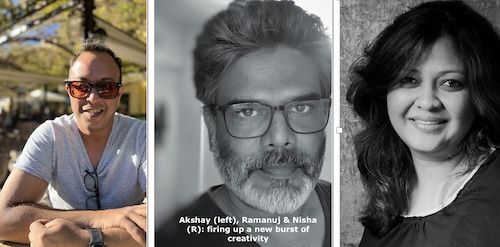
    MUMBAI: It’s the coming together of two creative guys to build something bigger than the sum of both. Infectious Advertising  creative chairman & founder Ramanuj Shastry has roped in veteran Akshay Kapnadak as the boutique agency’s chief creative officer. In his new role, Akshay will work together with Ramanuj  to elevate the agency’s creative product to the next level.

    An alumnus of the JJ Institute of Applied Arts, Akshay has been building brands and winning awards for close to 27 years. He spent the first 16 years of his career at McCann Erickson Mumbai, starting as a trainee and rising to the rank of executive creative director. 

    During this time, Akshay built strong teams and developed campaigns for a diverse range of clients, including global brands like Coca-Cola and L’Oréal, and leading Indian brands like Parachute, Pears, Radio Mirchi, and NDTV.

    His work has earned both local and international accolades, including Gold at Cannes Lions and The One Show. He has served on juries at Cannes Lions, Clio Awards, AdFest Asia, and Goafest. After McCann, Akshay ventured into independent consulting, mentoring start-ups, and leading design and communication projects across South and Southeast Asia.

    Ramanuj and Infectious Advertising CEO & co-founder Nisha Singhani are infectiously excited to have Akshay on board, if you read on and hear what they have to say about Akshay’s joining the agency. 

    “I worked very closely with Akshay for nearly half a decade at McCann,” says Ramanuj. “He is a fab guy with a brilliant mind and boundless energy. It will be lovely to work together again. Can’t wait for him to join.”

    Adds Nisha: “We are thrilled that Akshay has chosen to join us. He is an exciting mind, a lovely person, and aligns perfectly with our values and our mission to deliver impactful ideas for our clients. I’m confident that he will lead us to new creative heights.”

    Akshay, on his part , is over the moon on being on-boarded at the agency. Says he: “Infectious has built a reputation for strategic solidity and authentic storytelling. I’m excited to join this passionate team and eager to contribute to Infectious’ vision to build brands with purpose, ingenuity, and integrity,”

    The 11 year old Infectious’ leitmotif is: creating work that solves problems facing brands and businesses. Among their clients figure National Geographic, ALD Automotive, Bayer Crop Sciences, UltraTech Cement, Inorbit Malls, IDFC, and TBZ – The Original, and many more.  It recently  launched its content arm-Epidemik Content, delivering content with best-in-class production that’s value for money, embracing AI and new-age storytelling.

    With Akshay being signed on the three are expecting an epidemic of creativity to hit Infectious

  • IDFC FIRST makes banking all about you

    IDFC FIRST makes banking all about you

    MUMBAI: Following the merger of IDFC Bank and Capital First, the financial institution created a new entity – IDFC FIRST Bank and a new brand proposition – #AlwaysYouFirst. To promote this new customer-first approach and its 7 per cent pa savings account, Interactive Avenues – a Reprise Network Company, which is the digital arm of IPG Mediabrands, took to Facebook, Twitter, Instagram & YouTube to create an influencer marketing campaign.

    In partnership with Mastra Media (influencer agency), Interactive Avenues roped in social influencers like Soha Ali Khan, Karan Kundrra, Anusha Dandekar, Mohsin Khan, Siddharth Nigam, Prince Narula and Harsha Bhogle to ensure the brand was always first in consumers’ minds. The agency supported several social conversations through interesting content around Game of Thrones (GoT), Avengers: Endgame & ICC World Cup 2019. The best traction was however received around the conversations on GoT.

    A deep dive into our audience’s content consumption habits revealed a preference for entertainment/celebrity content. Capitalising on the growing trend of celeb reaction videos, #AlwaysYouFirst was promoted through India’s first-ever Television commercial (TVC)-reaction video series, featuring the influencers. The TVCs showed people putting the needs of others first and the influencers shared similar moments from their lives in the films. The series created a huge impact and consumers started sharing their own #AlwaysYouFirst stories.

    In a bid to connect with the fans directly, Prince Narula took to the streets of Mumbai to do a vox pop that captured heart-warming stories of people in the maximum city.

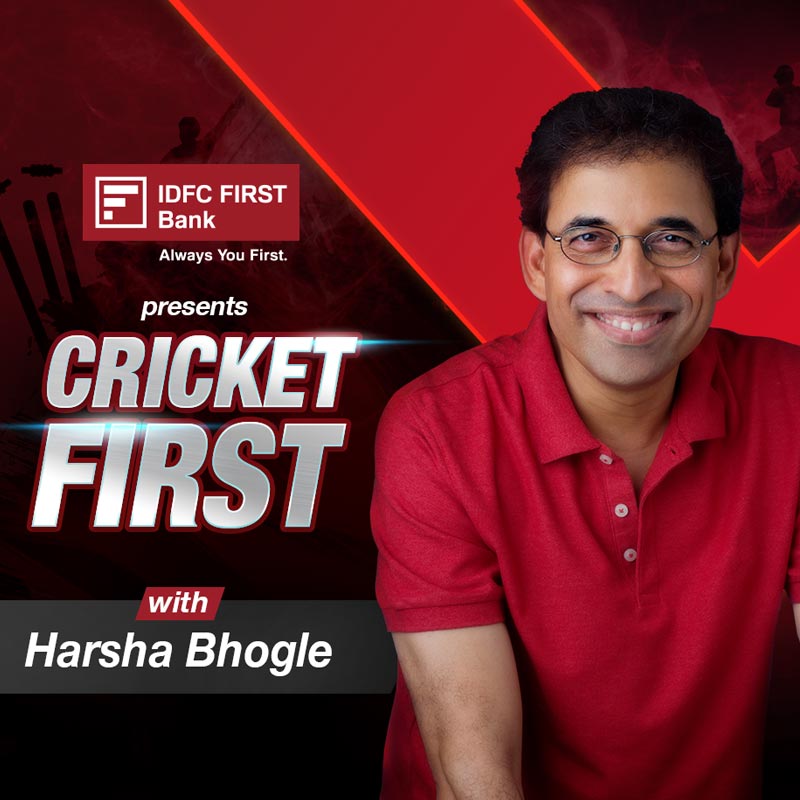
    In addition to this an intellectual property (IP) was created, a micro series called ‘Cricket First with Harsha Bhogle’, to leverage the conversations around ICC World Cup 2019. Through the micro series, hosted on YouTube, Facebook, Instagram and Twitter, fans got first-hand predictions and analysis of India matches. Harsha’s on-time and on-point predictions about Indian #GameChangers like Rohit Sharma and Yuzvendra Chahal led to more fans tuning in. IA also ran a teaser poll called #HarshaAsks on social media to gauge fan opinions.

    Talking about the campaign, Interactive Avenues (A Reprise Network Company) COO Shantanu Sirohi said, “IDFC FIRST Bank’s new brand ethos #AlwaysYouFirst is all about people. That’s why we created a people-powered approach in the campaign, that included influencer marketing & user generated content. It was the best way to amplify this message on social media. Getting celebrities and fans to share their #AlwaysYouFirst stories also helped create maximum impact around the brand message.”

    Keeping customer experience at the heart of the campaign, IDFC FIRST Bank & Interactive Avenues was successful in making an impact with the #AlwaysYouFirst campaign.

  • ‘Cable ARPUs in Cas areas to touch Rs 400 in five years’ : Jagjit Singh Kohli

    ‘Cable ARPUs in Cas areas to touch Rs 400 in five years’ : Jagjit Singh Kohli

    Subhash Chandra is betting big on his cable TV business. Wire & Wireless Ltd (WWIL), the demerged entity of Zee Group, plans to invest Rs 7.14 billion over two years. A major chunk of this will be consumed by set-top boxes (Rs 3.28 billion) and customer acquisition (Rs 1.14 billion) as he attempts to hold grip in the distribution business.


    When WWIL gets listed sometime in January-February, investors will have a touch and feel of the valuation that cable business will enjoy in the digital era.


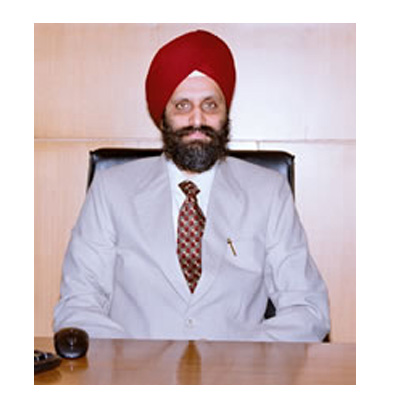
    Launching the aggressive drive, WWIL CEO Jagjit Singh Kohli says he has ramped up 250,000 customers at an average valuation pegged at Rs 2000 per subscriber. The ambitious target in year five: 9.6 million.


    In an interview with Indiantelevision.com’s Sibabrata Das, Kohli elaborates on the steps WWIL is taking to emerge as a leading multi-system operator (MSO) with plans to launch Headend-In-The-Sky (HITS) and STBs that have internet and VoIP (Voice over Internet Protocol) capabilities.


    Excerpts:

    Is WWIL close to roping in a strategic investor?

    We are in talks with both strategic as well as financial investors. They have shown interest in our business. We would go with anybody who gives us the maximum valuation.

    What is the valuation WWIL is now getting?

    The investors are discussing of valuations in the range beyond $600 million. Our expectations are higher. We are likely to get listed by mid-January or early February. The true valuations will come out then.

    Are investors valuing the cable TV business based on the number of subscribers or future revenues?

    In India, it is too early for a subscriber-based valuation. Investors are using the discounted cash flow method. The valuations are obviously based on our future target of touching 9.6 million subscribers. There are two reasons why we will get valued more: we are doing Headend-In-The-Sky (HITS) and we are using set-top boxes (STBs) designed by Pacenet which will offer multiple usages like internet and VoIP (Voice over Internet Protocol).

    MSOs will have to make major investments on STBs. Is it going to comprise as high as 46 per cent of your overall investments?

    We are planning to invest Rs 7.14 billion in the business over two years. For STBs, our fund requirement could be Rs 3.28 billion. We are planning to pump in Rs 2.21 billion towards hardware. Another area where we will be aggressive is customer acquisition. We plan to put in Rs 1.14 billion for this.

    What is the debt to equity ratio and how are you meeting the initial fund requirement?

    The ratio will be firmed up once we know the price WWIL quotes after getting listed in the exchange. That in a way will determine how much debt component we would require to raise. Our initial fund requirement is Rs 5 billion. We have lined up a debt of Rs 2.15 billion. We have already got Rs 500 million from Infrastructure Development Finance Corporation (IDFC).

    WWIL is on a drive to acquire customers. What is the price of acquisition?

    We are offering to cable operators a valuation of Rs 2000-3000 per subscriber. While WWIL will be a 51 per cent partner, the balance 49 per cent will be with the operators. We have already ramped up 250,000 subscribers in recent months through aggressive acquisitions.

    What is the average valuation for acquiring 250,000 subscribers?

    The average valuation works out to Rs 2000 per subscriber.

    Won’t you have to handle too many operators by doing JVs with them?

    We are making proposals to networks with decent size. In Mumbai, for instance, 12 local operators are creating a company and entering into a JV with us. We want to reduce the number of JVs. Otherwise, it will be impossible to manage.


    In some of our acquisition models, we make MSOs buy out the local cable operators.


    We have set a target of ramping up our direct subsciber base to 9.6 million within five years. We expect 7.6 million to receive digital cable. Our aim is to have 4.4 million through our own digital cable service and an additional 3.2 million through our HITS platform. We will have two million through analogue acquisitions. We have expanded operations from 35 to 43 cities. We plan to be in 66 cities in three years.

    WWIL has a thin presence in Mumbai. Even in the lucrative market of South Mumbai, which is a Cas notified area, you have a negligible presence. What are you doing to correct this?

    We have linked up optic fibre and have commissioned a digital headend a few days back at Worli. We will be in the Cas notified area of south Mumbai and several operators from rival MSOs are joining us. We have acquired control over 5 Star which operates in Andheri, a western suburb of Mumbai. We have also poached a few operators from Incablenet in Andheri East and others from rival MSOs are joining us.

    The average valuation of acquiring 250,000 customers works out to Rs 2000 per subscriber.

    How are you expanding your footprint in Delhi?

    In Delhi, we have acquired a 51 per cent stake in Satellite Channels. We have also signed up with Spectranet and Sanjay Cable Network. All these MSOs were disqualified for Cas as they were found not ready by the Telecom Regulatory Authority of India (Trai) for making the switchover to addressable system by 31 December. As for Kolkata, we are very much a dominant player after buying out Indian Cable Net (formerly RPG Netcom), a leading MSO, in May 2005.

    What is the price of the STBs?

    While the cost of the basic box is Rs 2000, the one with internet is Rs 2500 and internet plus VoIP Rs 3000. Customers can enjoy interactive games and online share trading through this. We are looking at a monthly fee of Rs 70 for internet and Rs 75-100 for movie-on-demand. Subscribers will have to pay Rs 1499 as deposit and Rs 45 as monthly rent. We haven’t, though, arrived at the final pricing. We plan to introduce the internet-enabled boxes after two months and those with VoIP sometime in April.

    Who are your STB vendors?

    We have Korean and Chinese vendors who will be supplying us the boxes. We have also ordered 200000 STBs from Bharat Electronics Limited (BEL).

    Earlier, in 2003 when Cas was to be introduced, Pacenet had ordered STBs from TVS Electronics. Why haven’t you included them in the list?

    We are also considering them. But at this stage it makes more business sense to import the boxes.

    Were you doing some tests with BSNL for VoIP?

    We were testing out whether our technology would work on BSNL’s network. The tests were successful.

    Is WWIL serious on launching a HITS platform or is it a mere hype?

    We are going to do HITS and have expressed our intent to broadcasters. This will provide us a national footprint and hasten the pace for digitisation in the country. We can tap cable operators even in places where WWIL has no presence. We have booked four transponders on Thaicom satellite with effect from 1 January, with the option of taking three more. We plan to launch HITS before the end of February.

    Do you see ARPUs (average revenue per user) falling in a Cas regime?

    For one year, it may come down. Let us not forget that cable TV rates have been suppressed for artificial reasons for too long. But by deploying STBs, this scenario is going to change. We may start off with an ARPU of Rs 250 per month, but like in case of cinema theatres with the launch of multiplexes, this will go up. By year five, we may be looking at ARPUs in the region of Rs 400.

    Hathway Cable & Datacom has come out with bouquet packages along with the a la carte choices. Will you offer something similar?

    We will be introducing a combo package where consumers who buy STBs on outright purchase and take annual subscription will be offered an attractive subsidy. This scheme will make available 100 TV channels. We will be offering under this at least 20 pay channels. We will be subsiding the boxes.

    Unlike DTH, broadcasters will have to make their pay channels available on an a la carte basis at a maximum rate of Rs 5 on cable networks in Cas areas. Will this mean that they will do content deals where they give their bouquets to MSOs at lower cost than to DTH service providers? Otherwise, MSOs can create bouquets picking and choosing the best channels and dumping the weaker ones in the bouquet.

    Yes. If broadcasters don’t do that, they will always be faced with the dilemma that the MSOs can pick and choose the stronger channels in their bouquet while ignoring the rest. The other reason why we should get better costs than DTH is because we have to share the revenue with the distributors and local cable operators across the value chain.

    How does cable compare with telecom operators in triple play service?

    Indian cable systems are ready to do telephony. They have pipes already laid including ethernet. The cable architecture throughout the country is in a position to provide triple play. All that is required is the box and IP can provide the return path for voice, data and interactive services.


    The public sector telcos, on the other hand, require strong compression technologies and ADSL2+ signals are good only for distances up to 1.5 km. The private sector telcos do not have a system suitable for large scale deployment and will require a high capital cost of $300 per line, even if we take the fact that their network is ready for IPTV (which is not the case). IPTV could have happened in markets where ARPUs are high. But India is not a high ARPU market.

  • WWIL lines up Rs 2 billion debt, rebrands digital cable as Galaxzee

    WWIL lines up Rs 2 billion debt, rebrands digital cable as Galaxzee

    MUMBAI: Zee Network’s Wire & Wireless India Ltd. (WWIL) is in the process of lining up a debt of Rs 2 billion for funding its digital initiatives and acquisition of cable operators.

    “We have already got Rs 500 million from Infrastructure Development Finance Corporation (IDFC). We are already in the process of tieing up a debt of Rs 2 billion,” WWIL CEO Jagjit Singh Kohli tells Indiantelevision.com.

    The company plans to invest Rs 7.40 billion over two years and Rs 8.50 billion within five years. “The debt to equity ratio will be firmed up once we know the price it quotes after getting listed in the exchange by February-March 2007. That in a way will determine how much debt component we will require to raise,” Kohli says.

    The company is in talks with strategic and financial investors but conclusive agreement will take place only after the listing. “We are not necessarily looking at a strategic investor. We want somebody who will give us the maximum valuation,” Kohli says.

    WWIL, the de-merged entity of Zee Telefilms’ cable TV business, has set an ambitious target of ramping up its direct subsciber base to 9.6 million within five years. “We expect 7.6 million to receive digital cable. Our aim is to have 4.4 million through our own digital cable service and an additional 3.2 million through our Headend-In-The-Sky (HITS) platform. We will have two million through analogue acquisitions,” says Kohli.

    WWIL claims to have added 250,000 subscribers in recent months through aggressive acquisitions. The multi-system operator (MSO) has also expanded operations from 35 to 43 cities. “We plan to be in 66 cities in three years,” Kohli says.

    WWIL will deploy several models of set-top boxes (STBs) aimed at various subscribers. Apart from the basic box, it plans to introduce a STB which will enable internet facilities on TV. “Customers can enjoy interactive games and online share trading through this. We are looking at a monthly fee of Rs 70 for internet and Rs 75-100 for movie-on-demand. Subscribers will have to pay Rs 1499 as deposit and Rs 45 as monthly rent. We haven’t, though, arrived at the final pricing. We plan to introduce these boxes after two months,” says Kohli.

    The basic STB is available on a refundable deposit of Rs 250 and rent of Rs 45 per month or a refundable deposit of Rs 999 with a monthly rent of Rs 30.

    WWIL will also deploy a STB through which it can offer VoIP (Voice over Internet Protocol) sometime in April, according to Kohli. The MSO is also poised to offer HITS which will enable it to tap cable operators at a national level even in places where WWIL has no presence, he adds.

    GalaxZee will be the brand under which WWIL will offer its digital cable service. “We have commissioned a digital headend two days back at Worli. We will be in the Cas (conditional access system) notified area of south Mumbai and several operators from rival MSOs are joining us,” Kohli says.