Tag: ICT

  • TRAI bats for converged regulator & renaming of NTP’18

    TRAI bats for converged regulator & renaming of NTP’18

    NEW DELHI: The Telecom Regulatory Authority of India (TRAI) has not only suggested that the National Telecom Policy 2018 should be renamed as the Information and Communication Technologies Technology Policy – 2018 but also the regulator’s own restructuring so it can function as a converged regulator for the ICT (information and communications technology) and broadcasting sector.

    TRAI has batted for an “integrated regulation of ICT and broadcasting sector led by economic and social policy goals of the country” suggesting delivery of broadcast services using converged wire line and wireless networks be allowed.

    The regulator, in its inputs to the National Telecom Policy 2018 formulation, has also suggested “review of [the] satellite communications (SATCOM) policy” for communication services “keeping in view the international developments” and social and economic needs of the country.

    It has advocated simplification of telecom licensing and regulatory frameworks and rationalisation of high taxes and levies by 2019 to attract a whopping USD100 billion in investments into the financially beleaguered telecom industry by calendar year 2022 and as much as USD 60 billion in the next two years itself.

    “Digital communication has presented India an opportunity to overcome the impediments posed by deficiencies in its brick and mortar based physical infrastructure and opened doors to new paradigms in all sectors of economy whereby the common man at the bottom of the pyramid is being served much more efficiently and at a fraction of the cost as compared to earlier days,” TRAI stated explaining the rationale behind its suggestion to rename the National telecom Policy 2018 (NTP2018) as the ‘Information and Communication Technology Policy 2018’.

    The lengthy submission to the government for consideration, which some broadcast industry observers felt was an attempt to gain more regulatory control over the sector even though a parliamentary panel had suggested a separate broadcast regulator, encompasses a wide range of inputs to NTP 2018.

    What’s TRAI’s vision while submitting the inputs to NTP 2018? To develop a competitive, sustainable and investor-friendly ICT market for rollout of state-of-the-art ubiquitous digital communication infrastructure to provide resilient, reliable, affordable, and consumer-friendly products and services to meet local as well as global needs that will transform India’s knowledge economy, support inclusive development, foster innovation and stimulate job creation.

    TRAI’s recommendations on the vision, mission and objectives for NTP 2018 include the following:

    — Leveraging the cable TV sector and power sector assets (for broadband and related services)

    — Upgrade of cable TV networks for delivery of converged broadcast and broadband services

    — Facilitating development of content delivery networks for improved quality of experience

    — Prescription of a simple and enabling regulatory framework for application service providers in order to promote innovation in application services

    — To fulfill the information and communication needs of individuals, including persons with disabilities, governments, enterprises, and industries with high quality of experience at affordable prices on a sustainable basis

    — To facilitate growth of state-of-the-art, secure and energy-efficient digital communication infrastructure for delivering ubiquitous, resilient, reliable and ultra-high speed connectivity with extremely low latency for objects, machines and devices

    — To stimulate the environment for innovation and entrepreneurial opportunities making India a global centre for research and development, patent-creation, and standardisation in ICT and services

    — To develop indigenous technologies, equipment, platforms and applications ecosystem for providing digital services to local and global markets

    — To establish India as a global hub for cloud computing, content hosting and delivery and data communication systems and services in a net-neutral environment

    — To protect consumers’ interests by increasing awareness and putting in place an effective grievance redressal mechanism, improving quality of experience, ensuring network, communication and data security, encouraging adoption of environment and safety standards for ICT and modernising public safety and emergency communications  networks

    — To attract investments by enhancing ease of doing business through simplification of licensing and regulatory frameworks, rationalisation of taxes, levies and related compliances and facilitating availability of resources including spectrum

    — To enable access at affordable prices for wireless broadband services, including through satellite to 90 per cent population by 2022

    — To ensure availability of bandwidth on demand through wire line, including cable TV and optical fibre networks to 30 per cent households by 2020 and 50 per cent households by 2022

    —  To provide at least 1 gbps data connectivity to all gram panchayats (village administrations) to enable wireless broadband services to inhabitants by 2022

    —  To achieve 900 million broadband subscriptions supporting download speed of 2 mbps, out of that at-least 150 million broadband subscriptions supporting download speed of 20 mbps and 25 million at a download speed of 50 mbps by 2022

    —  To achieve ‘unique mobile subscriber density’ of 55 by 2020 and 65 by 2022 by enhancing mobile network coverage to 95 per cent of inhabitants by 2020 and 100 per cent by 2022

     — To deploy 2 million public WLAN, including Wi-Fi hotspots in the country by 2020 and 5 million by 2022

    — To leapfrog India into the top-50 nations in the ICT Development Index (IDI), released by ITU every year, by 2022

    — To enable access for connecting to 1 billion IoT/ M2M sensors/ devices by 2020 and 5 billion by 2022

    — To attract an investment equivalent to USD 60 billion in the communication sector by 2020 and USD 100 billion by 2022

    — To become net positive in international trade of communication systems and services by 2022

    — To put in place an online platform for all government to business (G2B) activities, including spectrum and licence-related information, applications, clearances, compliances and payments by 2019

    — To simplify licencing and regulatory frameworks and rationalise taxes, levies and related compliances by 2019

    — To put in place a flexible, robust data protection regime powered by a strong encryption policy by 2019

    — To establish a policy framework for facilitating setting up of data centers by 2019

    ALSO READ:

    Zee, Star, NBA oppose converged regulator for broadcast and telecoms

    TRAI seeks to regulate online streaming platforms

    Parliamentary panel pushes for TRAI’s empowerment

    MIB reverts to earlier norms of seeking nod from ISRO on uplink/downlink of TV channels

  • TRAI seeks better accessibility for persons with disabilities

    TRAI seeks better accessibility for persons with disabilities

    MUMBAI: The Telecom Regulatory Authority of India (TRAI) has turned the spotlight on one of India’s ignored sections of the society–persons with disabilities (PwD). The regulator is prodding companies to make information and communication technology more accessible to differently abled people. It notes that such people are unable to use the services either because they lack the necessary accessibility features or are incompatible for usage by them.

    The TRAI has released a consultation paper seeking the broadcast sector’s views on identifying and eradicating areas that are pain points for them and where policies are required to be frame so that PwDs don’t feel discriminated. Aids and assistive devices have been made for them but a similar change in services and content is yet to take place. The TRAI states that the law must also consider the various segments within PwDs.

    From 2.13 per cent of the population in 2001, the number of PwDs in India grew to 2.21 per cent, which is 2.68 crore of the total. The consultation paper points out that though set-top boxes (STBs) have been made accessible to them, there is a lack of content that can justify its usage. Certain additions need to be made for the visually impaired such that they can access STBs via audio. The functions they need to access without vision include channel/programme selection, display of programme information, setup options, closed captioning control and display options, video description control, current configuration information, playback controls, and input source selection.

    Similarly, people with visual impairment cannot see screens and find it difficult to navigate the keypad and menu of a TV remote. Buttons on a remote are also not designed while keeping in mind people who are unable to use their limbs or flex their fingers. Special measures, such as giving captions for those who can’t hear and audio descriptions for the blind, need to be taken.

    One section of the Rights of Persons with Disabilities (RPWD) Act 2016 states that government and local authorities must work to ensure that those with hearing impairment can enjoy TV content via subtitles or sign language. The Accessible India campaign aims to ensure that at least 25 per cent of TV shows on government channels are suited for PwDs.

    The TRAI suggests actions such as creating well-designed remote controls with legible buttons, a wireless connection between a television and the viewer’s hearing aid as ways to help them.

    India’s corporate social responsibility (CSR) laws have a provision to help PwDs. Broadcast companies that are required to undertake CSR have a fine way to spend the minimum requirement of at least 2 per cent of the average net profits in the immediate three preceding financial years. This can include developing applications, devices and services for their benefit.

    The US FCC mandates that devices used for watching TV must be accessible to PwDs and a similar case is for the UK as well.

    Also read:

    Trai paper seeks to streamline uplinking, downlinking norms

    TRAI’s final recommendations on net neutrality likely by September

    TRAI open house to discuss ease of doing broadcast biz

  • Convergence ’17: Planetcast plans virtualised broadcast, Cyient lauds JAM

    MUMBAI: Convergence India 2017 presented a complete picture of the current industry landscape and emerging technologies in the ICT, broadcast and digital media sectors. The inspiring keynotes and tech workshops on timely topics, led by industry experts encourage innovative thinking.

    Every year technology czars and startups alike descend on New Delhi to either showcase the amazing products and solutions or to clinch deals behind the scene at Convergence India. Planetcast, a leading provider of technical services and solutions in the Indian broadcasting sector, will soon roll out virtualised broadcast services to provide seamless and secure remote access to customers so that they can monitor and control processes wherever they are.

    Covering a broad set of topics, starting from ‘Digital India campaign’ to ‘How Internet of Things is Transforming Business for Enterprises’ to ‘Why Adoption of Cloud Technology is Important’ to ‘5G-The Next Big Step in Mobile Communication Technologies and How It will Revolutionise the Customer Experience’ to ‘Digitisation Challenges in India’ to ‘Next Gen TV’, the sessions engage in discussions crucial to the advancement of the ICT, broadcast and digital media sectors.

    ‘Digital India’ discussions focused on the Digital India 2020 priorities and building a successful digital service ecosystem.

    Cyient India founder & executive chairman BVR Mohan Reddy said, “One of the biggest examples of Digital India is JAM, i.e. Jandhan , Adhaar and Mobile connectivity. With such initiatives, we can see direct benefit being transferred to the end user. The biggest challenge in India is a lack of quality education and therefore many people still cannot use any of the digital platforms. Additionally, there is an urgent need to address cyber security issues.”

    Stating that the three pillars of the Digital India campaign include vision of the government, policy matters, and user behaviour, CISCO India & SAARC MD Sanjay Kaul said, “Digitisation will impact all industries and it may seem as a disruption in the beginning, but at the end it will be valuable for the progress of the country.”

    The session, ‘Mobile Phone Industry – Torch bearer of the Make in India and the Digital India initiatives,’ witnessed discussions aimed at strengthening the Indian mobile phone manufacturing ecosystem in sync with Prime Minister Narendra Modi’s ‘Make in India’ and ‘Digital India’ initiatives.

    Intex India senior advisor Ramesh Vasvani said, “Mobile phones have created a great success story in India and are a boon to our economy. The mobile handset manufacturing industry has emerged as a platform for schemes like Make in India and Digital India, which has helped in increased transactions through e-wallets.”

    Xolo India business head Sunil Raina added, “One of the greatest advantages is that most of the software for mobile phones is created in India.”

    Elemental, an Amazon Web Services Company, empowers media companies to deliver premium video experiences to consumers. At the booth, visitors learned about how the company provides media organisations with a family of on-premises, hybrid, and cloud-based solutions for Internet-based video delivery.

    The ‘open’ part of the new platform will allow data owners, developers and others to add, mix, and manipulate data for themselves. Content providers to the platform might be car manufacturers, business owners, transit authorities, government agencies, and more.

    The latest innovative and ground-breaking release of Skyline Communications’ global leading end-to-end network management platform DataMiner makes it possible to manage operations more easily and efficiently. DataMiner 9.5 provides unprecedented visibility on user experience, and enables unrivaled orchestration in the most complex and versatile technology ecosystems.

    At the Centre for Development of Telematics (C-DOT) booth, see how C-DOT’s GPON (Gigabit Passive Optical Network) solution is fueling the backbone of BharatNet, the prestigious nationwide optical fibre based network connecting 2.5 lakh Panchayats in the nation with high speed broadband. C-DOT’s unflinching determination towards promotion of “Digital Literacy” is well reflected in its unique innovation, GyanSetu, that is capable of extending the benefits of Internet to the illiterate populace of India including the specially abled in an easy and convenient manner thus spurring the socio-economic growth.

    Verimatrix, which specialises in securing and enhancing revenue for multi-network, multi-screen digital TV services around the globe, showcases the Verimatrix Verspective™ Intelligence Center that offers a cloud-based security platform.

    UNLIMIT, the first dedicated business unit, is completely focused on providing Internet of Things (IoT) services to enterprise customers throughout India. The company is working on some very interesting new products which will be rolled out as services.

    LaCie, the premium brand from Seagate Technology plc, announced the LaCie® 12big Thunderbolt 3 and 6big Thunderbolt 3, aimed at helping video professionals excel with ultra high-resolution footage. With up to 120TB of massive capacity, the breakthrough performance of Thunderbolt 3 and RAID 5/6, the LaCie 12big and the LaCie 6big help video professionals meet the data demands of 4/5/6K cameras.

    AJA Video Systems introduced the Ki Pro Ultra – a next generation file-based 4K/UltraHD and 2K/HD video recorder and player with a built-in HD LCD monitor. Ki Pro Ultra is capable of capturing edit-ready 4K (4096 x 2160), UltraHD (3840 x 2160), 2K (2048 x 1080) and HD (1920 x 1080) Apple ProRes files. Ki Pro Ultra also supports a range of video formats and frame rates up to 4K 60p, and offers flexible input and output connectivity.

  • TRAI to play peacemaker on telecoms interconnect issues

    NEW DELHI: Telecom Regulatory Authority of India (TRAI) chairman R S Sharma yesterday said it will facilitate a meeting of telecoms companies soon with an aim to resolve the raging debate regarding interconnection issues between operators.

    Addressing an inter-active meeting of the FICCI-ICT and Digital Economy Committee here on Tuesday, Sharma said that issues can be resolved through an across-the-table discussion with the CEOs of telecom companies.

    It is learnt that the meeting was held in the backdrop of recent changes in different telecom plans after Reliance Jio unveiled a slew of disruptive marketing initiatives. The new entrant has also been claiming its subscribers were experiencing massive call-drops as incumbents were not providing adequate points of interconnect.

    As to why the industry finds itself in this position, and whether it was due to lack of proper regulation and certain licensing issues, the chief regulator refused to comment. However, he added regulations do not leave scope for ambiguity.

    Sharma spoke on a range of issues, including the 20 consultation papers released in the last 18 months, and that were in various stages of study. These, according to Sharma, were necessary for removing ambiguity in the telecoms sector, and allowing stakeholders to function in harmony.

    TRAI felt the need for consultation papers in order to bring about a comprehensive regulatory framework that will plug gaps in the system and facilitate the industry to grow seamlessly.

    Sharma told the members that, with the advent of technology such as cloud computing and internet of things (IOT), ICT was transforming every sector and telecoms players should leverage the opportunities. Earlier, technology was on the periphery, but, in the last decade, with disruptive technologies coming in, it had become a central tool, Sharma said, adding that ICT also brough with it efficiency and cost-effectiveness.

    Speaking on competition issues in general in the telecoms sector, Sharma said TRAI promoted healthy competition while safeguarding interest of the consumers as it was “paramount”.

    India, he said, already had a world-class telecom network, and with new technologies coming in, services too should become world class. India should strive for next-generation network by employing new technologies such as Loons, Solar Planes and White Spaces, he said emphasising that there was a need to harmonize issues of business interest with disruptive technologies.

    To achieve this, it was necessary to put down licensing rules, norms and quality aspects through regulation, Sharma asserted.

    Responding to queries raised by industry regarding restrictions on experimentation, innovations and use of new technologies, Sharma said TRAI was in favour of new technologies with appropriate permissions. However, he added that these technologies should be interoperable without being in silos.

  • TRAI to play peacemaker on telecoms interconnect issues

    NEW DELHI: Telecom Regulatory Authority of India (TRAI) chairman R S Sharma yesterday said it will facilitate a meeting of telecoms companies soon with an aim to resolve the raging debate regarding interconnection issues between operators.

    Addressing an inter-active meeting of the FICCI-ICT and Digital Economy Committee here on Tuesday, Sharma said that issues can be resolved through an across-the-table discussion with the CEOs of telecom companies.

    It is learnt that the meeting was held in the backdrop of recent changes in different telecom plans after Reliance Jio unveiled a slew of disruptive marketing initiatives. The new entrant has also been claiming its subscribers were experiencing massive call-drops as incumbents were not providing adequate points of interconnect.

    As to why the industry finds itself in this position, and whether it was due to lack of proper regulation and certain licensing issues, the chief regulator refused to comment. However, he added regulations do not leave scope for ambiguity.

    Sharma spoke on a range of issues, including the 20 consultation papers released in the last 18 months, and that were in various stages of study. These, according to Sharma, were necessary for removing ambiguity in the telecoms sector, and allowing stakeholders to function in harmony.

    TRAI felt the need for consultation papers in order to bring about a comprehensive regulatory framework that will plug gaps in the system and facilitate the industry to grow seamlessly.

    Sharma told the members that, with the advent of technology such as cloud computing and internet of things (IOT), ICT was transforming every sector and telecoms players should leverage the opportunities. Earlier, technology was on the periphery, but, in the last decade, with disruptive technologies coming in, it had become a central tool, Sharma said, adding that ICT also brough with it efficiency and cost-effectiveness.

    Speaking on competition issues in general in the telecoms sector, Sharma said TRAI promoted healthy competition while safeguarding interest of the consumers as it was “paramount”.

    India, he said, already had a world-class telecom network, and with new technologies coming in, services too should become world class. India should strive for next-generation network by employing new technologies such as Loons, Solar Planes and White Spaces, he said emphasising that there was a need to harmonize issues of business interest with disruptive technologies.

    To achieve this, it was necessary to put down licensing rules, norms and quality aspects through regulation, Sharma asserted.

    Responding to queries raised by industry regarding restrictions on experimentation, innovations and use of new technologies, Sharma said TRAI was in favour of new technologies with appropriate permissions. However, he added that these technologies should be interoperable without being in silos.

  • India stresses need for Indo-African ICT cooperation

    India stresses need for Indo-African ICT cooperation

    NEW DELHI: Sharing expertise and growing businesses. India has a vast experience in setting up of ICT infrastructure and the experience can be leveraged by the government as well as private sectors in African nations, Communications Minister Manoj Sinha said.

    The minister was inaugurating the 2nd edition of the Indo-Africa ICT Expo at KICC, Nairobi, from 1 to 3 September, with the help of India’s Telecommunication Equipment and Services Export promotion Council (TEPC) in conjunction with NASSCOM, and ICT Authority of Kenya last weekend.

    He said: “To explore synergies on the ground, I have with me about 100 ICT companies from India participating in this event that will facilitate growth of business opportunities in our nations.” This event is supported by India and Kenya. Kenya ICT Minister Joe Mucheru was also present on the occasion.

    The event, aimed at enhancing cooperation between African countries and India in the ICT sector, also saw attendance of various senior government officials from neighbouring countries such as South Sudan ICT & Postal Services Deputy Minister Akol Paul Kordit with a big delegation, Uganda ICT Principal Secretary Jimmy Pat Saamanya, and Malawi ICT and Civic Education Secretary Justin Adack K Saidi. Business leaders from India, Kenya, Tanzania, Uganda, the UK, Israel, South Sudan, Rwanda, Mauritius and Commonwealth Telecom Organization were also present.

    Sinha stressed that India had conditions similar to those in the African nations. The country also had special ties with East African countries. Together, India saw many opportunities for cooperation and transfer of expertise in the areas of setting up ICT infrastructure, solutions and application development, skill development and innovation that could be leveraged by the governments as well as the private sector in the continent. India was keen to find ways to increase business between India and Africa in ICT sector, he said.

    Kenya minister Mucheru called upon the local businesses to tap into the huge reservoir of knowledge their Indian counterparts had and develop technology-based solutions for Kenyan, African and the global market. He also noted that there were numerous opportunities for partnerships between both, public and private, sectors of Kenya and India. He said India and Africa continued to witness exponential growth in the telecommunication and information technology segments. It is thus essential to evaluate the areas where the two regions could cooperate so as to further enhance lives of the people through technology.

    The second edition of the expo-cum-conference saw over ICT companies participating from India showcasing their latest products and solutions to explore synergies on the ground.

    A key highlight of the event on 1 September 2016 was the ICT Ministers Round Table Meeting on ‘Digital Dreams of the Developing Nations’, wherein ICT Ministers/Secretaries leading high-level government and business delegations from India, Kenya, South Sudan, Uganda and Malawi participated. Government-to-Government bilateral talks were also held between the Indian Government officials and government delegations from Kenya, Uganda, Malawi and South Sudan.

    A NASSCOM statement said, “Africa is turning into one of the fastest growing regions in the world, offering huge domestic market potential and growing economically at more than 5% per year. This event only reiterates the fact that India and Africa are well on their way to collaborate and become the next global leaders in technology. Africa is turning into one of the fastest growing regions in the world, offering huge domestic market potential and growing economically at more than 5% per year. During the last two years, the focus has been on the SME sector engagement and a number of the participating delegate companies have achieved their biggest success in Africa.”

    The sessions at the conference were aligned with theme “Digital Dreams of Nation”. The event was attended by over 2500 visitors and over 300 conference delegates with a world-class speaker panel. The expo was designed to bring together thought leaders across the entire ICT value chain to discuss solutions to regulatory and business issues.

    The event also had more than 400 Business-to-Business meetings between Indian and African countries. Over 10 MoUs worth Rs. 40 crore business were signed. In addition, there was a demand for setting up of training centre and technology transfer.

    TEPC is also organizing Buyer-Seller business meets in New Delhi where potential buyers from across the globe are invited to meet the telecom equipment and services suppliers of India to develop long-term business relations. The event for 2016 has been planned from 3 to 5 October 2016 in New Delhi and Bangalore. Sinha invited business delegations from participating countries to join the event in India.

  • India stresses need for Indo-African ICT cooperation

    India stresses need for Indo-African ICT cooperation

    NEW DELHI: Sharing expertise and growing businesses. India has a vast experience in setting up of ICT infrastructure and the experience can be leveraged by the government as well as private sectors in African nations, Communications Minister Manoj Sinha said.

    The minister was inaugurating the 2nd edition of the Indo-Africa ICT Expo at KICC, Nairobi, from 1 to 3 September, with the help of India’s Telecommunication Equipment and Services Export promotion Council (TEPC) in conjunction with NASSCOM, and ICT Authority of Kenya last weekend.

    He said: “To explore synergies on the ground, I have with me about 100 ICT companies from India participating in this event that will facilitate growth of business opportunities in our nations.” This event is supported by India and Kenya. Kenya ICT Minister Joe Mucheru was also present on the occasion.

    The event, aimed at enhancing cooperation between African countries and India in the ICT sector, also saw attendance of various senior government officials from neighbouring countries such as South Sudan ICT & Postal Services Deputy Minister Akol Paul Kordit with a big delegation, Uganda ICT Principal Secretary Jimmy Pat Saamanya, and Malawi ICT and Civic Education Secretary Justin Adack K Saidi. Business leaders from India, Kenya, Tanzania, Uganda, the UK, Israel, South Sudan, Rwanda, Mauritius and Commonwealth Telecom Organization were also present.

    Sinha stressed that India had conditions similar to those in the African nations. The country also had special ties with East African countries. Together, India saw many opportunities for cooperation and transfer of expertise in the areas of setting up ICT infrastructure, solutions and application development, skill development and innovation that could be leveraged by the governments as well as the private sector in the continent. India was keen to find ways to increase business between India and Africa in ICT sector, he said.

    Kenya minister Mucheru called upon the local businesses to tap into the huge reservoir of knowledge their Indian counterparts had and develop technology-based solutions for Kenyan, African and the global market. He also noted that there were numerous opportunities for partnerships between both, public and private, sectors of Kenya and India. He said India and Africa continued to witness exponential growth in the telecommunication and information technology segments. It is thus essential to evaluate the areas where the two regions could cooperate so as to further enhance lives of the people through technology.

    The second edition of the expo-cum-conference saw over ICT companies participating from India showcasing their latest products and solutions to explore synergies on the ground.

    A key highlight of the event on 1 September 2016 was the ICT Ministers Round Table Meeting on ‘Digital Dreams of the Developing Nations’, wherein ICT Ministers/Secretaries leading high-level government and business delegations from India, Kenya, South Sudan, Uganda and Malawi participated. Government-to-Government bilateral talks were also held between the Indian Government officials and government delegations from Kenya, Uganda, Malawi and South Sudan.

    A NASSCOM statement said, “Africa is turning into one of the fastest growing regions in the world, offering huge domestic market potential and growing economically at more than 5% per year. This event only reiterates the fact that India and Africa are well on their way to collaborate and become the next global leaders in technology. Africa is turning into one of the fastest growing regions in the world, offering huge domestic market potential and growing economically at more than 5% per year. During the last two years, the focus has been on the SME sector engagement and a number of the participating delegate companies have achieved their biggest success in Africa.”

    The sessions at the conference were aligned with theme “Digital Dreams of Nation”. The event was attended by over 2500 visitors and over 300 conference delegates with a world-class speaker panel. The expo was designed to bring together thought leaders across the entire ICT value chain to discuss solutions to regulatory and business issues.

    The event also had more than 400 Business-to-Business meetings between Indian and African countries. Over 10 MoUs worth Rs. 40 crore business were signed. In addition, there was a demand for setting up of training centre and technology transfer.

    TEPC is also organizing Buyer-Seller business meets in New Delhi where potential buyers from across the globe are invited to meet the telecom equipment and services suppliers of India to develop long-term business relations. The event for 2016 has been planned from 3 to 5 October 2016 in New Delhi and Bangalore. Sinha invited business delegations from participating countries to join the event in India.

  • India and US working on a joint Cyber Relationship document

    India and US working on a joint Cyber Relationship document

    NEW DELHI: India and the United States have agreed to ensure shared understanding of technology access policy, including dual use technologies sought to be controlled by either country, including through such mechanisms as the bilateral High Technology Cooperation Group.

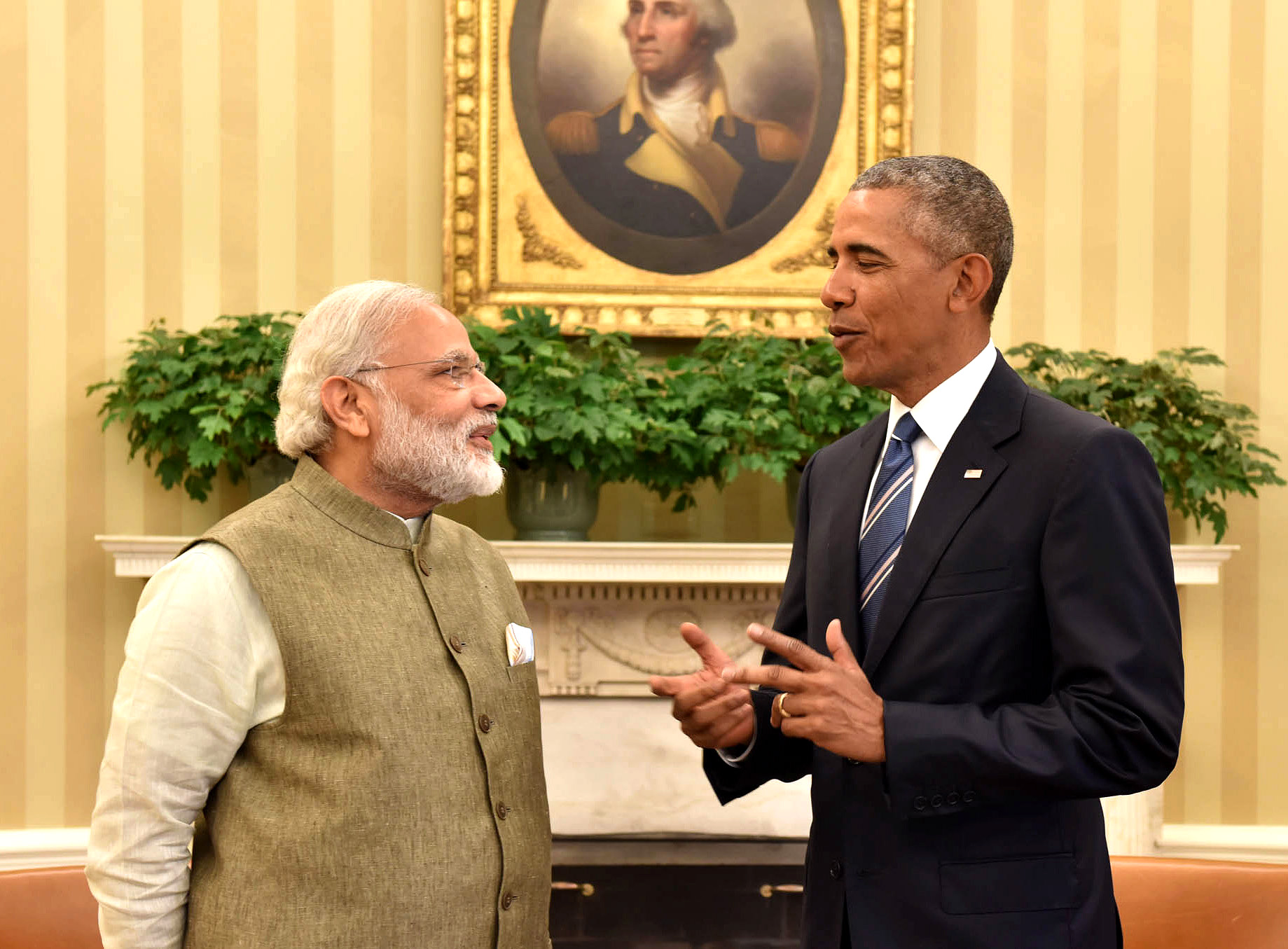
    It was decided during the current visit of Prime Minister Narendra Modi to the United states that the complete Framework for the U.S.-India Cyber Relationship will be signed within 60 days.

    According to a government release, reiterating a commitment to promote the free flow of information, the two countries will work towards an open, interoperable, secure, and reliable cyberspace environment; and a commitment to promote the Internet as an engine for innovation, economic growth, and trade and commerce.

    It was announced after a meeting between Modi and President Barrack Obama that cooperation on cyber issues is a key component of the bilateral relationship between India and the United States.

    The two countries have a strategic cyber relationship that reflects their shared values, common vision, and shared principles for cyberspace. Both sides recognize the value of enhancing and further institutionalizing their broad-based cooperation on cyber issues.

    The two countries intend to complete a framework that will include a commitment to promote cooperation between and among the private sector and government authorities on cybercrime and cybersecurity.

    There will be recognition of the importance of bilateral and international cooperation for combating cyber threats and promoting cybersecurity, and a commitment to respect cultural and linguistic diversity, and promote international security and stability in cyberspace through a framework that recognizes the applicability of international law, in particular the UN Charter, to state conduct in cyberspace and the promotion of voluntary norms of responsible state behaviour in cyberspace.

    There will be a commitment to the multistakeholder model of Internet governance that is transparent and accountable to its stakeholders, including governments, civil society and the private sector, and promotes cooperation among them.

    There will be recognition of the leading role for governments in cyber security matters relating to national security, of the importance of and a shared commitment to cooperate in capacity building in cyber security and cyber security research and development, and a ommitment to promote closer cooperation among law enforcement agencies to combat cybercrime between the two countries.

    Other subjects relate to strengthening the security and resilience of critical information infrastructure; Identifying, coordinating, sharing, and implementing cybersecurity best practices; sharing information on a real time or near real time basis, when practical and consistent with existing bilateral arrangements, about malicious cybersecurity threats, attacks and activities, and establishing appropriate mechanisms to improve such information sharing; and developing joint mechanisms for practical cooperation to mitigate cyber threats to the security of ICT infrastructure and information contained therein consistent with their respective obligations under domestic and international law.

  • India and US working on a joint Cyber Relationship document

    India and US working on a joint Cyber Relationship document

    NEW DELHI: India and the United States have agreed to ensure shared understanding of technology access policy, including dual use technologies sought to be controlled by either country, including through such mechanisms as the bilateral High Technology Cooperation Group.

    It was decided during the current visit of Prime Minister Narendra Modi to the United states that the complete Framework for the U.S.-India Cyber Relationship will be signed within 60 days.

    According to a government release, reiterating a commitment to promote the free flow of information, the two countries will work towards an open, interoperable, secure, and reliable cyberspace environment; and a commitment to promote the Internet as an engine for innovation, economic growth, and trade and commerce.

    It was announced after a meeting between Modi and President Barrack Obama that cooperation on cyber issues is a key component of the bilateral relationship between India and the United States.

    The two countries have a strategic cyber relationship that reflects their shared values, common vision, and shared principles for cyberspace. Both sides recognize the value of enhancing and further institutionalizing their broad-based cooperation on cyber issues.

    The two countries intend to complete a framework that will include a commitment to promote cooperation between and among the private sector and government authorities on cybercrime and cybersecurity.

    There will be recognition of the importance of bilateral and international cooperation for combating cyber threats and promoting cybersecurity, and a commitment to respect cultural and linguistic diversity, and promote international security and stability in cyberspace through a framework that recognizes the applicability of international law, in particular the UN Charter, to state conduct in cyberspace and the promotion of voluntary norms of responsible state behaviour in cyberspace.

    There will be a commitment to the multistakeholder model of Internet governance that is transparent and accountable to its stakeholders, including governments, civil society and the private sector, and promotes cooperation among them.

    There will be recognition of the leading role for governments in cyber security matters relating to national security, of the importance of and a shared commitment to cooperate in capacity building in cyber security and cyber security research and development, and a ommitment to promote closer cooperation among law enforcement agencies to combat cybercrime between the two countries.

    Other subjects relate to strengthening the security and resilience of critical information infrastructure; Identifying, coordinating, sharing, and implementing cybersecurity best practices; sharing information on a real time or near real time basis, when practical and consistent with existing bilateral arrangements, about malicious cybersecurity threats, attacks and activities, and establishing appropriate mechanisms to improve such information sharing; and developing joint mechanisms for practical cooperation to mitigate cyber threats to the security of ICT infrastructure and information contained therein consistent with their respective obligations under domestic and international law.

  • India has failed to move up the GCI index, despite the Digitization push and increase in broadband base

    India has failed to move up the GCI index, despite the Digitization push and increase in broadband base

    NEW DELHI: Despite the stress on Digital India, India retains its rank at the 44th position in GCI 2016 – the same as last year. India has a huge consumer base that’s connected to the globe mainly by submarine cables..

    Huawei’s 2016 Global Connectivity Index (GCI) released today.says India can focus on speeding up its optical fiber Bharat Broadband Networks to bring high-speed Internet connectivity to rural areas. Strategies for increasing mobile broadband supply will increase demand in the nation.

    Both the public and private sectors need to invest in their networks to serve the growing subscriber base, and provide universal broadband access with digital literacy programs to close the rural-urban divide. The government plans to train an additional 10 million people in ICT from towns and villages to help digitize rural communities.

    Global improvements have been seen in overall levels of national and economic digitization.

    In its third year, the report measures the progress of 50 nations in investing in and deploying Information and Communications Technology (ICT) to achieve economic digitization.

    The greatest improvements across the globe have been seen in broadband coverage and speed, but nations are also making headway with cloud, big data, and Internet of Things (IoT) technologies.

    GCI 2016, Connect where it counts, measures how nations are progressing with digital transformation based on 40 indicators that cover the supply, demand, experience, and potential of five technology enablers: broadband, data centers, cloud, big data, and IoT. Investing in these five technologies enables nations to digitize their economies.

    Average national connectivity levels are 5 percent higher than they were in 2015.

    Twelve countries improved their positions, while four experienced a drop. The top three developed economies are the United States, Singapore, and Sweden. The leading developing economies are the United Arab Emirates in 19th place, Qatar in 21st, and China in 23rd.

    Examples of countries that moved up the index include the UK in 5th, up one place from last year; Malaysia, which jumped four places to 25th; and Indonesia, which moved up two places to 41st. Malaysia and Indonesia’s gains are attributable to broadband rollout, which in turn influences data center development. These two basic technologies lay the foundation for the three advanced technology enablers: cloud, big data, and IoT.

    GCI scores continue to show a positive correlation with GDP, similar to last year’s findings. However, the extent to which GCI influences GDP varies with the stage of digital transformation in each country.

    GCI 2016 identifies three groups of nations: Starters are beginning their digital journey and score between 20 and 34. At the moment, their digital infrastructure is not developed enough to strongly influence GDP. Adopters in the middle range have a stronger digital infrastructure and score between 35 and 55. They experience the greatest GDP gains per GCI point increase. Frontrunners show the greatest digital development with scores above 55, although GDP gains per GCI point are slightly less than Adopters.  However, Frontrunners show more mature cloud, big data, and IoT in readiness for more extensive economic digitization.

    GCI 2016 finds that investing in digital infrastructure correlates to GDP gains because it increases economic dynamism, efficiency, and productivity. To drive further GDP gains, countries need to move up the technology stack by investing in new technologies and ensuring they are adopted by governments, industry, and people.

    According to the report, nations with high GCI scores are also more competitive and innovative, with a close correlation found between GCI scores and ratings in the WEF Global Competitiveness Index and the Global Innovation Index, jointly published by Cornell University, INSEAD, and the UN’s World Intellectual Property Organization.

    “A revolutionary shift is occurring in the way the world works, with economies across the planet going digital fast. Nations that are in the early stages of economic digitization should develop long-term technology plans that include broadband and data centers to reap the benefits of enhanced growth,” said Kevin Zhang, president of Huawei Corporate Marketing. “Developed economies wanting to capitalize on their frontrunner ICT status should invest more in cloud, big data, and IoT technologies and solutions to experience the full benefits of a digital economy.”

    The 50 countries assessed by GCI 2016 account for 90 percent of global GDP and 78 percent of the world’s population.
    For information about Huawei Connectivity Index, visit: www.huawei.com/gci