Tag: ICL

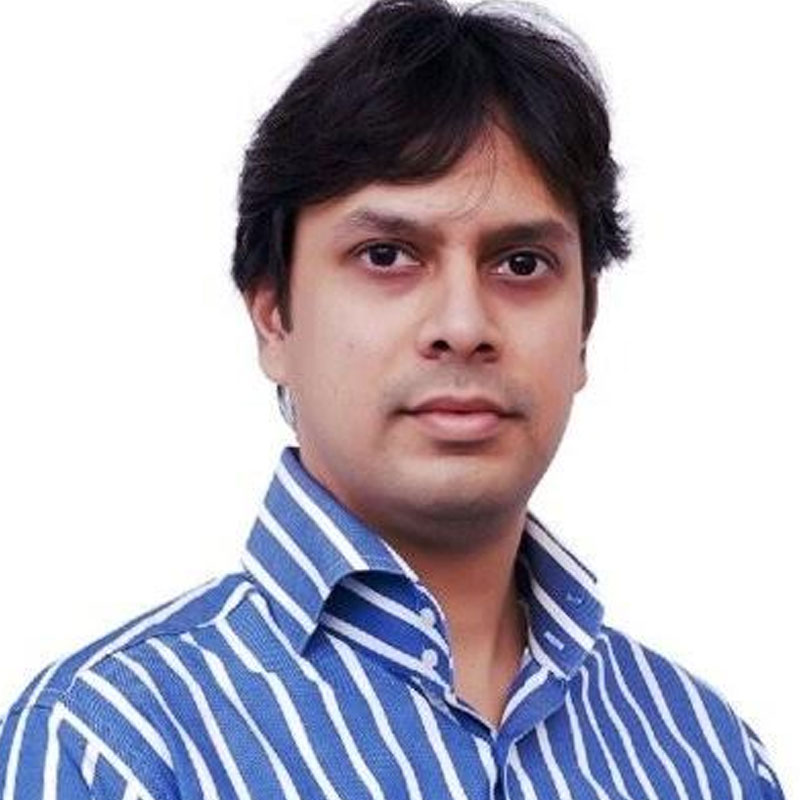
  • Shishir Gupta elevated as head content acquisition sports at SPNI

    Shishir Gupta elevated as head content acquisition sports at SPNI

    MUMBAI: It’s that time of the year when executives in media get their promotions. And it’s time for Shishir Gupta to celebrate as well. Gupta has been has been elevated as head of content acquisition and licencing – sports at Sony Pictures Networks India. Gupta was hitherto AVP content acquisition and syndication – sports at the company

    Prior to that he was Ten Sports as a content acquisition and syndication lead when it was acquired from Zee Entertainment Enterprises by Sony Pictures Networks India. Since then Sony Pictures has been digesting the acquisition and placing executives from Ten Sports in key positions in the Sony network in India.  The sports business for SPNI is headed by Rajesh Kaul. 

    Gutpa has over 13 years of extensive experience in varied roles in broadcast media and sports. With an in-depth knowledge of sports broadcasting, his expertise lies in content acquisition and syndication, strategic partnerships, business planning and forecasting and contracts. 

    He started his carrier with Zee Sports as an executive- content acquisition and then moved onto Essel Sports as part of the team that was setting up the India Cricket League. He then moved back to Ten Sports rising up the ranks until the acquisition by SPNI. 

    He holds a Masters in Commerce degree from Mumbai University and later pursued an MBA in marketing.  

    Also Read:

    ESPN’s “The Last Train to Russia” to premier on SONY TEN 2 channels

    SPN launches first campaign for FIFA WC 2018 Russia

  • Subhash Chandra to adopt ‘glocal’ strategy for second innings in cricket

    Subhash Chandra to adopt ‘glocal’ strategy for second innings in cricket

    MUMBAI: For every Sachin Tendulkar there are more than a 1000 deserving cricketers who were denied an opportunity due to various reasons, for every MS Dhoni there is a Amol Muzumdar, for every Ishant Sharma there is a Ranadeb Bose. Indian cricket is not a story full of fortunes, there are many such unfortunate incidences, which cannot have a cricketing justification. Targeting such unfortunates, Essel Group chairman Subhash Chandra is all set to start his second innings in the field.


    Pertinent to note here is that Chandra was viciously defeated in his first stint against the Board of Control for Cricket in India (BCCI) and his rebel cricket venture Indian Cricket League (ICL) was abruptly shut. Players were accused of being under-paid, various match fixing allegations cropped up against teams and the ICL was wiped out. BCCI suspended all the players associated with ICL, Kapil Dev was sacked as chief of National Cricket Academy and no ground was allowed to host a ICL match with a notice that grounds hosting ICL matches will never get an international or Ranji match. However, Essel Group’s effort aroused BCCI’s thoughts of expanding cricket and a similar cricket league was launched eight years back, which is today known as the Indian Premier League (IPL) – BCCI’s biggest revenue generating entity.


    Years later Dr. Chandra rose from the ashes like a phoenix and became a nightmare for cricket boards across the world as he made his interest to venture into cricket official. Various meetings were held across boards to figure out his strategy. “India is a country where youth are passionate about three things Cricket, Sachin Tendulkar and television. Well one who loves cricket and is passionate about it will play domestic cricket, then IPL and eventually make his way through to the Indian cricket team. But again the number that successfully manage to do that is very less compared to the number of youth who play cricket passionately. So if you can start a platform where you give money for playing cricket and feature them on television, you will obviously get huge representatives besides the presence of IPL and other BCCI organised tournament,” says a renowned cricket historian and writer.


    Reportedly the Essel Group has registered various cricket leagues in India and has aspirations of holding inter-city cricket leagues, a Times of India report quoted Essel Group head of finance and strategy Himanshu Modi as saying, “The format we are building will be a T20 format, home and away games, across 10 – 12 cities, we are not looking at a short time frame. It could be a year away or even a little more. We know the timing is right but we are equally aware of the pitfalls where BCCI can hit us and are much wiser today. We had four grounds in India during ICL and we got players even from Pakistan, so I do not see both as a problem at all. On the grounds front, during ICL, we fell short with just four grounds in four cities. Also, we learned we needed eight to 10 teams. So, this time round, we will have to ensure we have more grounds.”


    Commenting on Essel Group’s vision, the cricket historian said, “To drive Indian crowds to cricket, you need quality players, idols and close finishes. On the grounds front, being one of the richest group if Essel is not allowed, they can create a ground but the problem will be with players. BCCI pays a hefty amount to retired players too and hence having idols playing will be a concern and if they can manage that they will have a good future and the avenue will help many families financially too.”


    A marketing expert, who manages many on-ground and television sponsorship, added, “Broadcasters creating leagues in India is becoming a trend. We saw Star and Sony doing it in the recent past and there is nothing surprising about Essel also venturing into something similar. There are many sponsors who fail to use the IPL or World Cup as a platform for promotion due to premium rates. They will use the new league. So sponsorship won’t be a problem for them provided they organize when team India is actively playing.”


    Essel has already registered entities in Australia, New Zealand, Scotland and with this revelation of inter-city cricket league, the group made it clear that while they are thinking global they are acting local too. It remains to be seen if the ‘glocal’ strategy becomes a substantial challenge to rattle BCCI and reduce the pitch of the IPL.

  • ‘Fragmentation has actually helped the Hindi GEC ad market to grow’ : ZEEL Chief Revenue Officer Joy Chakraborthy

    ‘Fragmentation has actually helped the Hindi GEC ad market to grow’ : ZEEL Chief Revenue Officer Joy Chakraborthy

    Zee Entertainment Enterprises Ltd (Zeel) has a pool of channels that would drive its topline. The transfer of the six regional entertainment channels from Zee News Ltd (ZNL) would reduce Zeel‘s dependence on Zee TV as Zee Marathi, Zee Bangla and Zee Telugu write good revenues. The gain could be to the tune of Rs 4.4 billion on an annualised basis.


    Zeel went through a second wave of consolidation when it decided to bring under it ETC‘s broadcasting business. while ETC Music will complement Zing, ETC Punjabi stays as a strong force in the Punjabi market.


    Zeel‘s south story is set to bloom. With market leader Sun TV deciding to up ad rates across its network channels after a gap of two years, Zee Telugu is in a strong position to shore up its revenues on the back of soaps, movies and a dance-based reality property in Aata. Zee Kannada is also on the growth track.


    Competition from the two Star regional channels could hurt Zee Bangla and Zee Marathi in the long run. Star Jalsha has become a clear No. 1, but Zee Bangla is currently holding on to its revenues due to unduplicated viewership and a smart utilsation of inventory and ad pricing. The Bengali general entertainment channel (GEC) ad market could, however, expand.


    Despite Star Pravah‘s rise, Zee Marathi continues to be in leadership position and is aided by Zee Talkies.


    Bruised by a weak property in Indian Cricket League (ICL) that ran out of action last year, Zee has plans to launch a few sports channels.


    Maximising the company‘s value share is Zeel chief revenue officer Joy Chakraborthy. His academic armoury includes graduation from National Defence Academy, masters in marketing management from NMIMS and, more recently, the Advanced Management Program from Harvard Business School.


    In an interview with Indiantelevision.com‘s Sibabrata Das, Chakraborthy talks about the company‘s focus on revenues, profitability and monetisable GRPs.


    Excerpts:


    How much topline growth would come to Zeel due to the transfer of six regional entertainment channels from Zee News Ltd?
    Zeel would be a big beneficiary as the six regional entertainment channels are riding good revenues. They will also help us offer complementary media propositions to our advertisers. We expect Zeel to add about Rs 4.4 billion on a full year basis due to this transfer.

     
    So Zeel‘s dependence on Zee TV will reduce?

    One can‘t undermine the contribution of our flagship brand in our bouquet of channels. With the regional GECs, we will, of course, have more driver channels in the bouquet such as Zee Marathi, Zee Bangla and Zee Telugu. Nonetheless, Zee TV’s contribution to the overall ad pie of Zeel will be in the region of 35-37 per cent.
     

    Doesn’t that spread out Zeel’s risks at the right time when we are seeing the emergence of a new star in Colors and further fragmentation in the Hindi general entertainment channel (GEC) space?
    With the industry maturing, fragmentation is obvious. In fact, fragmentation has actually helped the Hindi GEC ad market to grow. The introduction of Colors has transformed the GEC space from a bi-polar into a tri-polar segment with each of the three players creating their own relevance. As such, we expect the Hindi GECs would take away Rs 24 billion in ad revenues during FY’10 (i.e. up from Rs 19 bn in PY). And going forward, this space is bound to grow if all players get their pricing strategy right. 
     

    But hasn’t the 3-horse race for the top slot in the GEC space damaged the pricing power and impacted Zee TV?
    Zee TV is the No. 1 revenue channel. It gets maximum campaigns and advertisers spend due to two key reasons: consistency in ratings and effective leverage of a huge network. Also, we sell more on plain vanilla FCT (free commercial time) with few but quality innovations.


    While our rival networks have taken to very expensive programming, we have delivered with soaps and reality content without flashing Bollywood stars. We have developed Dance India Dance and Saregamapa into our strong reality properties. We have also stayed away from buying GRPs through movies. Our focus is profitability – and not just simply becoming a No 1 GRP channel.


    Also, advertisers don’t buy GRPs; they want relevant ratings. A lot of channels are running break-free content. What is the use? An afternoon GRP is not the same in value as a primetime GRP. And Zee TV has been leading consistently in primetime. So, the point is to develop “monetisable GRPs”. 
     

    What about the economic downturn?
    There is no doubt that broadcasters have experienced a tightening of their revenues. But the slowdown has resulted in a host of positives (especially for television – as a medium).


    Clients and agencies have intensely evaluated their ad-spends and experimented with mediums. They have invested in value-for-money genres where risks were low like GECs and movies. High value flashy investments were curtailed. They have looked at TV a lot more optimistically than print. While ad spends on TV will end at Rs 91 bn for the year, (up from Rs 83 bn in PY), print will grow only marginally from Rs 98.20 bn to Rs 99.30 bn.


    In fact, the last four months have been particularly good for us. Being the largest network has helped us in attracting advertisers. Though we saw a slump in ad spends from real estate, banking & finance sectors, it has been compensated by FMCG, telecom and auto, which have been high spenders on GECs. 
     

    ‘A lot of channels are running break-free content. What is the use? An afternoon GRP is not the same in value as a primetime GRP. The point is to develop monetisable GRPs‘ 
     

    Has cricket eaten into the GEC space?
    We had expected that our biggest threat would come from cricket. But it has under-delivered. Cricket has taken a severe beating, resulting in some channels offering guaranteed CPRP deals. As such, advertiser confidence on GECs has been high.


    On the whole, with Tam expanding its panel this year and the economy improving, GECs will stand to gain. 
     

    Have the movie channels also been hit by recession?
    Advertisers in this downturn have realised the true potential of television in terms of reach. With consumption expected from every nook and corner, the Hindi Cinema genre, which is high on reach, played a very crucial role in the marketer‘s overall communication scheme. This has led to the Hindi Cinema genre witnessing significant growth in revenues despite a marginal fall in GRPs. This growth has come from rate increase as inventory has always been 100 per cent utilised.. Though GECs have been the first to air big ticket movies, movie channels, being well penetrated, go beyond Tam markets, and are value-for-money proposition for advertisers. Zee Cinema’s consistent performance is due to its strong presence not only in the metros but also in the smaller towns and rural markets. 
     

    Sun TV network has increased its ad rates after two years. Will this augment Zeel‘s revenues from its south-language regional channels?
    Despite being a leader, Sun TV’s pricing has always been highly cost-effective. For any market to expand, the leader has to take a leap in pricing. Hence this initiative by Sun TV will only help the entire Southern market grow further. We are doing particularly well in the Telugu space and are highly optimistic on Zee Kannada as well. South will be the big story for us in the years to come. The transfer of the southern channels to Zeel will help our regional sales team as they can offer a complete regional package.
     

    Will the rise of the two Star regional channels hurt Zee Bangla and Zee Marathi?
    In the Bengali GEC space, Zee Bangla has lost its leadership position to Star Jalsha, but, over the last couple of months, we have undertaken new initiatives and the channel is looking up again. More importantly, our focus has been to ensure profitability and towards that end we are, even today, writing much more revenues than Star Jalsha. This is primarily because of our two-pronged strategy: optimal inventory utilisation and appropriate pricing. One of the noteworthy propositions of Zee Bangla is its high unduplicated viewership. All of this has helped us ensure against loss of any campaign. Having grown, we now hope that Star Jalsha increases its rates to sustain the market expansion.


    In Marathi, we are almost three times that of our nearest competitor. Zee Marathi is a clear leader and is well complemented by Zee Talkies, both in terms of revenues and viewership. 


    Zee‘s sports business falls under your ambit. Are there plans to launch more channels?
    The various sports-led initiatives of Zee that straddle not only on-air (Ten Sports & Zee Sports) but also on-ground properties like Mumbai FC, AIFF (All India Football Federation) and cricket (Zimbabwe & Sri Lanka) are a part of my Sales responsibility. Print properties like All Sport Magazine also come under me.


    In our sports business, our focus has always been to look beyond cricket. So, our sales approach will also be one that is inclusive of all sports genres wherein we shall bundle various properties. And, yes, given the potential that we foresee in the near future, we are in the process of evaluating new channels.


    With the producers going on strike and Bollywood having less releases and hits this year, what has been the impact on music channels ETC and Zing?
    For the film-based trade genre, ETC is a must-have. Moreover, in this genre the buying parameter is not GRP-led; instead, the trade evaluates the channel‘s brand equity. Being the undisputed leader in this space, ETC has performed exceedingly well.


    Post relaunch, Zing has aggressively followed an approach of co-creating value propositions that are customised to its business constituents’ communication objective. This approach has helped showcase a much greater value proposition to our advertisers, insulating us from the vagaries of hits and flops. The channel has posted higher revenues.
     

  • ‘With IPL you have the power of 10’ : Kunal Dasgupta – Set India CEO

    ‘With IPL you have the power of 10’ : Kunal Dasgupta – Set India CEO

    The Indian Premier League (IPL) has got off to a solid start. The ratings have been positive and crowds have thronged the stadiums. For Sony the IPL marks their return to cricket. Set India CEO Kunal Dasgupta offers Thomas Abraham and Ashwin Pinto his views on what he expects IPL to do for the game, telecast channel Max, as well as the importance of sustaining the brand.

    Excerpts:

    As a broadcaster what do you expect?
    T20 is a made for television format. When India played a T20 match against Australia at the Wankhede stadium, ratings touched 20. I am looking for a rating of 4 or 5, which is possible, given that ICL, which has retired players, got 2.5. This is a good base for us to take off from.

    The format will mean that besides country against country, one will also view it as being team versus team. This is what exists in other sports like soccer, hockey, and baseball.

    IPL is being pushed as being the ultimate in reality television. In that case how do you get that competitive environment?
    The prize money (Rs 48 million goes to the winner) will ensure this. This is much more than you get for playing for the country and so the players will go all out. The matches will be hard fought. Here all the teams are evenly balanced and so you do not know the result. It will be unpredictable and matches will go down the wire. All teams have a good mix of batsmen, bowlers and youth.

    What are you hoping for in the first year as the telecast partner?
    Ideally I would want the IPL to be a successful brand that has a long term play. After June, I will continue to do promotions to keep the team brands alive. This was one of the conditions on which we bid.

    We will do shows around the IPL. You could see teams (franchises) practicing and discussing strategies for the next season.

    The trick for us is not getting ratings for the first season. The challenge is to sustain the excitement after that

    But wouldn’t an ideal situation be for a franchise to build a brand without the big names who might be on national duty?
    This might happen. Apart from April-May, you cannot have another period where all the stars are available. What will happen is that once the league is built the new players who are playing will become the core. You can then have matches in different parts of the world to popularise the game there using these new players.

    The trick for us is not getting ratings for the first season. This will happen as a matter of course because of the way the IPL has been hyped. The challenge is to sustain the excitement after that and it is here where we will have to take a leaf out of the book of the EPL. Teams have marketed themselves and have thus become iconic brands.


    So Mallya for instance, will use the Royal Challenger brand name to go out there and create opportunities for exhibition matches. They can do charity work in Bangalore and build a fan base. Each franchise will have its own website where clips will be available. They can create merchandise.

    Sony will pitch in through magazine shows. Otherwise it will just be a flash in the pan. As we come closer to the next season you will see transfers and there will be speculation.

    New heroes will be born. It is possible that the likes of current heroes like Glenn McGrath, Kumble, and Saurav will not play beyond two seasons. Once that happens, then the brand will live outside the big names.

    One of the aims is to broaden the viewer base is to get in more children, women, But for that you have to create marketing that speaks to those demographics. What is Sony planning?
    One of the major attractions will be the presence of big Bollywood stars. Akshay Kumar will perform for Delhi. SRK will perform for Kolkata You will see proper Bollywood entertainment.

    We have even tweaked the timings of some of the matches to accommodate our entertainment specials. One match was supposed to start at 4 pm but we have pushed it back to 5:30 pm. We will even have stand up comedy for Extraaa Innings. On air we have gone in for fresh faces. We did not want Mandira (Bedi) for this. She is more suited for ODI cricket. I want 20-year-olds in T20. We also did not want Kapil Dev, Gavaskar. We wanted anchors who represent today’s kids. With the ICC World Cup we broke the mould and brought in females. Now we are breaking the mould back

    What is the distribution upside from IPL?
    This is a question mark. We are supposed to have a dip but we will retain the same level. There is no minimum guarantee now. Had Ten Sports still been present it would have been difficult to determine the value of IPL. Our team is happy as they are closing deals for the year and it is one of the distribution cornerstones.

    At $ 59 million in Year 1 and an average of $ 61 million over five years, IPL was literally sold at floor price. Wasn’t that a great deal?
    It was. Most of the payout ($ 612 million) is from the next five years. ESPN’s bid was $150 million for the first five years. They had put in conditions that the top players should be there. We did not put in any conditions.

    Anyway, the way it has turned out, all the top players are taking part.

  • ‘We expect ICL to break even in two and a half years’ : Himanshu Mody – Zee Sports business head

    ‘We expect ICL to break even in two and a half years’ : Himanshu Mody – Zee Sports business head

     When Zee launched the Indian Cricket League in the face of a take-no-prisoners campaign of opposition from the Board of Control for Cricket in India last year, there was scepticism galore on whether the Subhash Chandra-backed league would bat it out. Particularly after the the BCCI announced plans for its own league shortly thereafter.


    ICL, however, successfully staged two events despite all the hurdles thrown in its way. The Indian Premier League kicking off on 18 April notwithstanding, Zee Sports business head Himanshu Mody is confident that his cricket endeavour will hold its own.


    Indiantelevision.com’s Ashwin Pinto caught up with Mody to ascertain his views on the progress made and future plans.


    Excerpts:

    Firstly, congratulations on having been able to deliver the second edition of the ICL despite the best efforts of the BCCI to skewer you. How has the experience been different from the first edition?
    It was much better. The first one was with six teams in one venue. There were 20 games. For the next event we added two more teams and had three venues. Lahore came from across the border. The event was held on a larger scale.

    What were the learnings from the event that you will take, going forward?
    We learn every day. Despite the pressure and resistance that we face, I think that we are set on a path to success. We have good players and have built on the ground infrastructure. We have 250 members, 80 of whom are Indian players. The rest are foreigners – coaches, players support staff, etc.

    How is the event being expanded upon this year?
    From April to September it is summer and then the monsoon season. There is not we can do in this period. We will hold an event later this year. We could include ODIs as well. We had a non televised ODI tournament in January which was played in Chennai and Hyderabad. What we come out with will depend on the commercial viability.

    How succesful have you been thus far in infrastructure and grassroot talent development?
    The Indian players come from various small towns and cities like Jammu, Srinagar, Assam, Indore and Bhopal. The Indian players come from 58 cities. We have a diverse mix in this sense. We also have talent scouts in each Zone where they have gone out to find emerging talent. We will now be setting up a central Academy for our boys.

    A notable feature this time round was that there was an increase in spectators in the stadia. Has some sort of a spectator/viewer connect with the state teams happened?
    This is starting to happen. The event is a family viewing experience. People are supporting the local team. In the final, Hyderabad Heroes had a lot of local support. At the same time support depends on performance as well, which is what has hampered Mumbai.

    Simulcasting the event on Ten Sports and Zee Sports has ramped up viewership quite significantly. What have been the average combined ratings? Have they been up to expectations or have they exceeded your brand partners’ expectations?
    The ratings have exceeded our expectations. We managed an average of 1.5. Ratings peaked at 3.5, which is more than India Test cricket and some ODI ratings.

    Was it a challenge to get sponsors on board given the BCCI stance?
    The establishment tried everything they could to prevent us from getting a start. They tried to resist sponsors from coming on. Also, to be fair, for the first event sponsors were reluctant as they did not know what to expect. The first event was a solid start.


    The second event has been a big hit and on the back of that we launched a tri series between an Indian XI and a World XI. We sold most of our inventory for this. The likes of Pepsi, HUL and Vodafone have come on board.

    And what of the other cricket boards? Do you see a softening of their stances vis-a-vis the ICL and what could be the catalyst for it?
    The other cricket boards have to realise that more than ICL, it is the IPL that presents the biggest threat to them. I think that they are starting to realise this. We do not ask any existing players to break their contract. At the moment the IPL presents that dilemma to current players as to whether they should play for their country or IPL club. We have taken players who are on the fringe or who do not have a central contract with their respective boards.


    The international governing body needs to take a call on what is more important. In soccer for instance, club soccer contributes more revenue as opposed to countries playing against each other. Cricket must decide if it wants to go down this route. If that happens, then country versus country matches will have to come down. If, however, it decides that the country format is more important, then the IPL could be limited in terms of matches played.

    How has ICL fared businesswise? Could you offer any idea of the kind of investments that have been pumped in?
    I cannot talk about numbers. However the business is robust. Earlier when we started this last year, we had given ourselves a breakeven period of three years. Now we expect that to happen in two and a half years.

    The other cricket boards have to realise that more than ICL, it is the IPL that presents the biggest threat to them

    Where have the revenues come from and how does it compare with the inaugural edition?
    We have several revenue sources. We have ground sponsorship, associate sponsorship, ticket sales sponsor, advertising on television, broadband rights.


    ICL was aired in several countries including UK, US, Pakistan, the Middle East, Africa, Southeast Asia, Australia and New Zealand. We did deals with international broadcasters for ICL including Showtime in the Middle East, Starhub in Singapore and Astro in
    Malaysia.

    The ICL is unique in that everything – whether it be telecast rights, teams, stadia – is owned by the promoters. Therefore, by extension, it’s Essel that has to spend on development, promotion and marketing of every aspect of the event. With IPL as a rival, in effect you’re confronting the power of 10 – not just a powerful cricket board but eight strong franchises as well as an established television network for share of mind. Doesn’t that become a huge challenge?
    We took satisfaction from the fact that the IPL format has duplicated ICL. The economics of the whole thing differs from product to product. We knew what the marketing plan would be and what would be enough to cover the country. We are on track. If we incur all costs and do it ourselves, then all revenues belong to us. We do not have to share them with anybody on a
    80:20 or 60:40 basis.


    If there is no India cricket in a certain period, then the ICL becomes a strong proposition. If you can have many news channels, I don’t see why two leagues cannot co-exist. We can have as many events as we like with all our players.

    Actor Mithun Chakraborty has picked up a stake in the Kolkata ICL team. What are the future opportunities for stakes in teams?
    We are talking with a few corporates. We chose not to sell teams initially as we wanted to show people the value that we bring to the table and what our delivery is. Having done this, we can now command a premium for our teams for strategic partners. It is not just a question of money. We are looking for partners who share our vision and who can bring synergies to the table that will help the ICL grow.


    We will, therefore, be selective about whom we choose to partner. We need to know the drive they have and what their objective to invest is.

    With the BCCI’s league being launched next week, what impact will this have on ICL in terms of retaining both local and international talent and viewer interest? In the present context, the ICL has a shelf life as a low-cost, lower value alternative to the IPL. But if these eight franchisees are going to expand in a big way, what will be left over for the ICL to pick up might just be the crumbs. Are some of these fears being expressed?
    I don’t think that it is a fair comment. There is enough local and international talent to go around. We have contracts with our players and I know that the satisfaction level they have is high. We are a closely-knit family. I don’t see substantial movements happening.


    A mature sports market allows for trading, though. The players have contracts with us and if somebody wants them, then they will have to pay us accordingly. That is how sports clubs operate globally. A player cannot simply break his contract. Our stated objective has been to have talent at the grassroots level. So we did not go out and try to get the likes of Sachin, Dravid.


    What we do is in line with what Zee does if you look at shows like Sa Re Ga Ma or India’s Best (Cinestar Ki Khoj). We short-listed 15 Indian players who we felt were the best. They played in the tri series. The fight they showed was commendable against a global bowling attack.

    The flip side to ICL is that many cricket boards, including Pakistan, are peeved that cricketers were taken. Do you feel that this will negatively affect your ability to go after their TV rights?
    I do not think that there is a conflict over here. The businesses are separate. If our bid is the highest, then it will come to us. A good price is what any board would look for. The best man wins. I don’t think that the board will be concerned about who offers the highest.

    How is the relationship with Ten Sports working out?
    We have been partners for a year and a half. It is working well. There is content sharing. We distribute Ten Sports. They handle our ad sales. The FPC is made by a central team. If there are clashes, then the programmes get split between the two channels.


    The Uefa Champions League sometimes has two games at the same time. So we air one match. In fact, we started doing this before we partnered with them. This offers the power of two.

    You are also doing an initiative Goal 2010. How did this idea come about and what progress has been made?
    This came about when Fifa president Sepp Blatter came down to India. This sport has a huge potential. We are putting money into this sport and in a couple of years, we will start seeing the results. We do a lot of school soccer tournaments.


    Our focus is at the grassroots level. We need to emerge as champions at the Asia level by 2010. We should be among the top five teams in Asia. Ten Sports airs domestic football in the Middle East. We are also working with the AIFF at tweaking the format of domestic football.

    Is the appeal of soccer moving beyond the three states of Goa, Kerala and West Bengal?
    Yes. It is getting popular in parts of states like Gujarat and Maharashtra.
    Do you think corporatisation will help sports like soccer and hockey to move forward?
    It can certainly help soccer. Hockey, however, is on a downturn not just in India but also abroad. In soccer, you have 32 teams playing the World Cup. In hockey just seven or eight teams play the event. Even in those countries the popularity is not as high as it should be.
    How is Zee Sports faring on the distribution front?
    The ICL has done us a lot of good. We have achieved 50 per cent connectivity. This rose from 25 per cent over the last three months.

    What property acquisitions were recently made?
    Zee and Ten Sports acquire things together. We renewed the West Indies cricket rights. We have the US Open tennis event for the long term.


    India is a unique country in that there are several sports channels but only one sport dominates. In other countries there are only two sports channels but multiple sports are followed. This is why the price of rights are going up dramatcially in India due to
    competition.

    Finally on the advertising front brands at the moment are not sure about how to use sport beyond cricket. Do you see this changing in the near future?
    It is changing already. A lot of advertisers are going to Golf. Once the Indian advertisers start to understand the true value of sponsorship that goes beyond just TRP, things will change. The best example is what the EPL has done for Barclays.


    This, though, has been built over several years. Indian companies are realising that they should invest in sport over a long term. The advertiser has to invest with the sports federation.

  • We expect ICL to break even in two and a half years


    We expect ICL to break even in two and a half years

    When Zee launched the Indian Cricket League in the face of a take-no-prisoners campaign of opposition from the Board of Control for Cricket in India last year, there was scepticism galore on whether the Subhash Chandra-backed league would bat it out. Particularly after the the BCCI announced plans for its own league shortly thereafter.

    ICL, however, successfully staged two events despite all the hurdles thrown in its way. The Indian Premier League kicking off on 18 April notwithstanding, Zee Sports business head Himanshu Mody is confident that his cricket endeavour will hold its own.

    Indiantelevision.com‘s Ashwin Pinto caught up with Mody to ascertain his views on the progress made and future plans.

    Excerpts:


    Firstly, congratulations on having been able to deliver the second edition of the ICL despite the best efforts of the BCCI to skewer you. How has the experience been different from the first edition?
    It was much better. The first one was with six teams in one venue. There were 20 games. For the next event we added two more teams and had three venues. Lahore came from across the border. The event was held on a larger scale.


    What were the learnings from the event that you will take, going forward?
    We learn every day. Despite the pressure and resistance that we face, I think that we are set on a path to success. We have good players and have built on the ground infrastructure. We have 250 members, 80 of whom are Indian players. The rest are foreigners – coaches, players support staff, etc.


    How is the event being expanded upon this year?
    From April to September it is summer and then the monsoon season. There is not we can do in this period. We will hold an event later this year. We could include ODIs as well. We had a non televised ODI tournament in January which was played in Chennai and Hyderabad. What we come out with will depend on the commercial viability.


    How succesful have you been thus far in infrastructure and grassroot talent development?
    The Indian players come from various small towns and cities like Jammu, Srinagar, Assam, Indore and Bhopal. The Indian players come from 58 cities. We have a diverse mix in this sense. We also have talent scouts in each Zone where they have gone out to find emerging talent. We will now be setting up a central Academy for our boys.


    A notable feature this time round was that there was an increase in spectators in the stadia. Has some sort of a spectator/viewer connect with the state teams happened?
    This is starting to happen. The event is a family viewing experience. People are supporting the local team. In the final, Hyderabad Heroes had a lot of local support. At the same time support depends on performance as well, which is what has hampered Mumbai.


    Simulcasting the event on Ten Sports and Zee Sports has ramped up viewership quite significantly. What have been the average combined ratings? Have they been up to expectations or have they exceeded your brand partners‘ expectations?
    The ratings have exceeded our expectations. We managed an average of 1.5. Ratings peaked at 3.5, which is more than India Test cricket and some ODI ratings.


    Was it a challenge to get sponsors on board given the BCCI stance?
    The establishment tried everything they could to prevent us from getting a start. They tried to resist sponsors from coming on. Also, to be fair, for the first event sponsors were reluctant as they did not know what to expect. The first event was a solid start.

    The second event has been a big hit and on the back of that we launched a tri series between an Indian XI and a World XI. We sold most of our inventory for this. The likes of Pepsi, HUL and Vodafone have come on board.


    And what of the other cricket boards? Do you see a softening of their stances vis-a-vis the ICL and what could be the catalyst for it?
    The other cricket boards have to realise that more than ICL, it is the IPL that presents the biggest threat to them. I think that they are starting to realise this. We do not ask any existing players to break their contract. At the moment the IPL presents that dilemma to current players as to whether they should play for their country or IPL club. We have taken players who are on the fringe or who do not have a central contract with their respective boards.

    The international governing body needs to take a call on what is more important. In soccer for instance, club soccer contributes more revenue as opposed to countries playing against each other. Cricket must decide if it wants to go down this route. If that happens, then country versus country matches will have to come down. If, however, it decides that the country format is more important, then the IPL could be limited in terms of matches played.


    How has ICL fared businesswise? Could you offer any idea of the kind of investments that have been pumped in?
    I cannot talk about numbers. However the business is robust. Earlier when we started this last year, we had given ourselves a breakeven period of three years. Now we expect that to happen in two and a half years.

     
    The other cricket boards have to realise that more than ICL, it is the IPL that presents the biggest threat to them
     

    Where have the revenues come from and how does it compare with the inaugural edition?
    We have several revenue sources. We have ground sponsorship, associate sponsorship, ticket sales sponsor, advertising on television, broadband rights.

    ICL was aired in several countries including UK, US, Pakistan, the Middle East, Africa, Southeast Asia, Australia and New Zealand. We did deals with international broadcasters for ICL including Showtime in the Middle East, Starhub in Singapore and Astro in
    Malaysia.


    The ICL is unique in that everything – whether it be telecast rights, teams, stadia – is owned by the promoters. Therefore, by extension, it‘s Essel that has to spend on development, promotion and marketing of every aspect of the event. With IPL as a rival, in effect you‘re confronting the power of 10 – not just a powerful cricket board but eight strong franchises as well as an established television network for share of mind. Doesn‘t that become a huge challenge?
    We took satisfaction from the fact that the IPL format has duplicated ICL. The economics of the whole thing differs from product to product. We knew what the marketing plan would be and what would be enough to cover the country. We are on track. If we incur all costs and do it ourselves, then all revenues belong to us. We do not have to share them with anybody on a
    80:20 or 60:40 basis.

    If there is no India cricket in a certain period, then the ICL becomes a strong proposition. If you can have many news channels, I don‘t see why two leagues cannot co-exist. We can have as many events as we like with all our players.


    Actor Mithun Chakraborty has picked up a stake in the Kolkata ICL team. What are the future opportunities for stakes in teams?
    We are talking with a few corporates. We chose not to sell teams initially as we wanted to show people the value that we bring to the table and what our delivery is. Having done this, we can now command a premium for our teams for strategic partners. It is not just a question of money. We are looking for partners who share our vision and who can bring synergies to the table that will help the ICL grow.

    We will, therefore, be selective about whom we choose to partner. We need to know the drive they have and what their objective to invest is.

     
    With the BCCI‘s league being launched next week, what impact will this have on ICL in terms of retaining both local and international talent and viewer interest? In the present context, the ICL has a shelf life as a low-cost, lower value alternative to the IPL. But if these eight franchisees are going to expand in a big way, what will be left over for the ICL to pick up might just be the crumbs. Are some of these fears being expressed?
    I don‘t think that it is a fair comment. There is enough local and international talent to go around. We have contracts with our players and I know that the satisfaction level they have is high. We are a closely-knit family. I don‘t see substantial movements
    happening.

    A mature sports market allows for trading, though. The players have contracts with us and if somebody wants them, then they will have to pay us accordingly. That is how sports clubs operate globally. A player cannot simply break his contract. Our stated objective has been to have talent at the grassroots level. So we did not go out and try to get the likes of Sachin, Dravid.

    What we do is in line with what Zee does if you look at shows like Sa Re Ga Ma or India‘s Best (Cinestar Ki Khoj). We short-listed 15 Indian players who we felt were the best. They played in the tri series. The fight they showed was commendable against a global bowling attack.

     
    The flip side to ICL is that many cricket boards, including Pakistan, are peeved that cricketers were taken. Do you feel that this will negatively affect your ability to go after their TV rights?
    I do not think that there is a conflict over here. The businesses are separate. If our bid is the highest, then it will come to us. A good price is what any board would look for. The best man wins. I don‘t think that the board will be concerned about who offers the
    highest.
     
    How is the relationship with Ten Sports working out?
    We have been partners for a year and a half. It is working well. There is content sharing. We distribute Ten Sports. They handle our ad sales. The FPC is made by a central team. If there are clashes, then the programmes get split between the two channels.

    The Uefa Champions League sometimes has two games at the same time. So we air one match. In fact, we started doing this before we partnered with them. This offers the power of two.

     
    You are also doing an initiative Goal 2010. How did this idea come about and what progress has been made?
    This came about when Fifa president Sepp Blatter came down to India. This sport has a huge potential. We are putting money into this sport and in a couple of years, we will start seeing the results. We do a lot of school soccer tournaments.

    Our focus is at the grassroots level. We need to emerge as champions at the Asia level by 2010. We should be among the top five teams in Asia. Ten Sports airs domestic football in the Middle East. We are also working with the AIFF at tweaking the format of domestic football.

     
    Is the appeal of soccer moving beyond the three states of Goa, Kerala and West Bengal?
    Yes. It is getting popular in parts of states like Gujarat and Maharashtra.
     
    Do you think corporatisation will help sports like soccer and hockey to move forward?
    It can certainly help soccer. Hockey, however, is on a downturn not just in India but also abroad. In soccer, you have 32 teams playing the World Cup. In hockey just seven or eight teams play the event. Even in those countries the popularity is not as high as it should be.
     
    How is Zee Sports faring on the distribution front?
    The ICL has done us a lot of good. We have achieved 50 per cent connectivity. This rose from 25 per cent over the last three months.
     
    What property acquisitions were recently made?
    Zee and Ten Sports acquire things together. We renewed the West Indies cricket rights. We have the US Open tennis event for the long term.

    India is a unique country in that there are several sports channels but only one sport dominates. In other countries there are only two sports channels but multiple sports are followed.

    This is why the price of rights are going up dramatcially in India due to
    competition.

     
    Finally on the advertising front brands at the moment are not sure about how to use sport beyond cricket. Do you see this changing in the near future?
    It is changing already. A lot of advertisers are going to Golf. Once the Indian advertisers start to understand the true value of sponsorship that goes beyond just TRP, things will change. The best example is what the EPL has done for Barclays.

    This, though, has been built over several years. Indian companies are realising that they should invest in sport over a long term. The advertiser has to invest with the sports federation.

    should invest in sport over a long term. The advertiser has to invest with the sports federation.

    competition.

     
    Finally on the advertising front brands at the moment are not sure about how to use sport beyond cricket. Do you see this changing in the near future?
    It is changing already. A lot of advertisers are going to Golf. Once the Indian advertisers start to understand the true value of sponsorship that goes beyond just TRP, things will change. The best example is what the EPL has done for Barclays.

    This, though, has been built over several years. Indian companies are realising that they should invest in sport over a long term. The advertiser has to invest with the sports federation.

  • ‘Once digitalisation happens, let a thousand channels come’

    ‘Once digitalisation happens, let a thousand channels come’

    It is not looking so high-priced now because T-20 was not a factor in that purchase and now it’s there as a very high value part of that.
    T-20 is the best thing that happened to Indian cricket.

    It completely re-energised sport and completely reignited interest in it. Now between ICL and IPL, it has really brought the sport back. But the price points, because there is no distribution revenue in this model of note, it’s not robust at all.

    The lament is that distribution channels are clogged and yet we have all these channels launching? Isn’t that a big contradiction?
    Well distribution and then everything that will happen as a result. Some people look at this business and they say that, ‘Oh so many new players are launching there is no space.’ On the one hand we talk about how the market is growing, the media sector is growing. The other version is that it is growing but there is no space for new players, which is actually the exact opposite of growth. You know its like saying that the movie industry is growing but let’s any not make any more movies.

    They are completely contradictory terms. So once digitalisation happens, whichever version they choose to refer it by, I’d say let a thousand channels come. Because water finds it own level, and people decide what they want to see, when they want to see, how they want to see and what they want to pay for and it all sorts out in the end.

    But saying let not a thousand channels come, is not progress at all. It does not mark progress for consumers, or for operators. or for anyone as a matter of fact.

    The TV business needs is one nice kick in the butt, like the telecom business got. This is what will help it really surge forward. So far it has been sort of ambling along.

    Everybody is expecting that Reliance will give that kick. Reliance is launching DTH this year, Bharti is launching.
    This is why 2008 will be a year to write home about. We hope that 2008 will be the year for the industry to really surge forward and make that big leap forward. That the big leap forward had much been spoken about but has not actually occurred for many years.

    Each year we talk of the big leap forward, but it’s not happened. 2004, 2005, 2006. You know few things occurred here and there, like suddenly in 2006 the cricket purchase was big. But the rest of the industry didn’t keep up. The whole $ 612 million price point was based on some assumptions, and those assumptions didn’t really come through.

    The fact is that all of business is predicated over some basic parameters, which is that people will go to movies, people will buy movie tickets. People will pay their cable bills. Advertisers do need to reach to consumers and they will buy advertising. That’s basic, and our problem is that we don’t have this in the TV part of the business. We don’t have this one little basic matter about people will pay their cable bills which will then be passed on.

    So it leaves a lot of things in the air when you talk about the television business.

    You are talking about pricing, subscription?
    It is already priced. Subscription is priced. But when you try and compare talk time, in the telecom context to TV, that doesn’t really work. Because the input cost on TV for example is not talk, it is real cash. If people play cricket, make movies, shows, that is like a real cost. It is not talk time. So when you say that every home will pay Rs 5 per month for a channel to see movies and serials, at some point the mathematics are not going to add up.

    So it is just that these things will get sorted out as it goes along. As more players get into it I think that the industry itself will sort it out.

    But there is also the theory that the government will not allow the market to determine costs of TV (and cricket) because other forms of entertainment are becoming too expensive for too many. Multiplexes for example are out of reach for many. So there is only TV. This would mean that tomorrow the IPL will be termed as being of national importance and will become free to view?

    You must note that there is no such thing as a free lunch ever, so somebody has to pay the bill. What’s been happening in the last so many years is that the advertisers have been paying the bill. The advertiser is the ultimate God who is paying for everybody’s lunch.

    Currently there is a combination of private equity money and advertisers who are footing the bill. But eventually, the bill will have to be paid by the consumers, who consume content in whatever manner or the price points will have to come down. So either all the price points return to normalcy by which market settles and everything will sort, or you will have to pay the bill.

    Anywhere in the world in a mature TV / entertainment business, you have the twin model (advertising / subscription). That’s the way the business works. For us, it’s always been immature, fully lopsided towards the one side. Do you know any other market which boasts of 300-400 channels which are all essentially ad supported because distribution as a model is all over the place.

    You go to any other country where it is supported this way, you will find 5-10-15 channels. So that’s something which has to be sorted. It is not like players have to think that India is unique. And I think this has to happen.

    It is just a functional evaluation. This is what it needs, that leap forward. The input cost is going through the roof, return is coming down, and for the majors it is flattening their margins.

    For others what would be the plan be then? So that, I think that has to happen and as they see that as the defining moment. Whether you define a moment or the moment defines you, in any case the industry will have to define the way forward. Whether it is collective or individual something has to happen.

    That is exactly the contradiction in this. That it is true. But it needs resolution. Otherwise a lot of these contradictions can co-exist for a long time. Things can go round and round and circle and circle without imploding or exploding.

    Something has to give?

    Over the last 6-8 months, and with the spate of these new announcements in the last 2-3 weeks, there has been more addition into the TV space. This is obviously going to create enormous amount of pressure on the current infrastructure, obviously we are all new, we wish to make a mark for ourselves, so everyone will do things to try and make a good impression. There will be the existing players, who will obviously look to protect their turf.

    But it is at an interesting point because there is pressure on the system. Now this has never happened before, that there have suddenly been so much, forget new channels, so many new platforms that are all coming at the same time. There is this huge interest in the movie business all of a sudden. In the last year and a half all that has happened.

    Screens are opening up…

    Screens are opening up, It’s happening. So, as the pressure increases, obviously people will find newer and newer ways to do things. New minds enter into it, lots of different people, younger people, coming out with even cleverer ideas. It has to go through a change.

    So 2008 has a lot of potential?

    We hope, though these predictions have been made many times in the past and have sorely let you down. But 2008 seems to have a chance than most years to make a real impact.

  • Disney unveils its first branded apparel store ‘Disney Jeans’ in Mumbai

    Disney unveils its first branded apparel store ‘Disney Jeans’ in Mumbai

    MUMBAI: Disney India has the launched the first of its non-character franchise stores ‘Disney Jeans’ in Mumbai.

    This is the first of 20 exclusive ‘Disney Jeans’ stores that Disney, along with Indus Clothing plan to set up between now and end-2007

    As reported earlier, Disney and Indus Clothing have inked a licensing agreement wherein the latter would be pumping in approximately Rs 210 million towards the setting up of the stores.
    The Disney Jeans concept will soon be followed by three more stores to be launched in Delhi with another two more opening in Mumbai. next on the list are Pune, Chandigarh, Dehradun and Kanpur.

    The first phase of expansion will target the Northern and Western regions while the Southern and Eastern markets will see Disney Jeans stores by spring next year.

    The core denim range is complimented with tees, fleece, jackets, woven shirts, woven bottoms and accessories in for kids between the age of 4-14 years. Elements such as adjustable waist bands which loosen and tighten according to the child’s growth, hook buttons that are easy for children to manage, offer a casual and fun option. T-shirts and tops will be priced from Rs 99 onwards while the range of jeans will be priced between Rs 800 – 1300.

    Explaining the rationale for introducing non-character merchandise as opposed to the much loved Disney characters, Softlines – Disney Consumer Products (DCP) Regional Director Lester W Lee said, “The non character market is seven to eight times larger than the character market, comprising almost 85 per cent and therefore we see this as a big opportunity for us. From packaging, labels and tags the range will bear the Disney identification.”

    The Disney Jeans product range will however, have cartoon strips and comics on the inner pockets and undercuffs of jeans. This range will also extend to accessories lie bags, hats, socks and footware.

    “We wanted to create a non-character apparel brand that kids like. Ultimately the range will evolve, to provide a total head-to-toe fashion experience for kids through diversification into footwear, eyewear, watches and innerwear,” added Lee.

    “The launch of Disney Jeans is an exciting milestone as we continue to build the depth and breadth of Disney brand among new consumers in India,” said The Walt Disney Company (India) MD Rajat Jain. “We are focused on delivering internationally successful products that appeal and offer great quality, “fashionability” and functionality and are appropriately customized for the local consumers.”

    Eyeing the ‘tween’ market as having great potential, Lee added, “Tween consumers are a key segment, they will be the new generation of spenders as they determine the trends in the market.”

    The Kids branded Apparel and Accessories market in India was at $ 600mn in FY’05 and is estimated to grow to $ 850mn by 2010. The Softlines revenue generated from Asia is pegged at 300 million, China making up for 40 per cent and India 10 per cent of overall revenues.

    “Indus Clothing continues to be the front-runner in the organized Indian fashion business. Our mission is to lead the apparel industry through a superior product portfolio, innovative technology and an unrivalled commitment to customer driven excellence. We have aggressive marketing and promotional plans to build and strengthen our portfolio of brands in India,” said Indus Clothing managing director HP Singh.

    In addition to an extensive retail push, ICL plans innovative marketing initiatives to drive optimum product visibility for the consumers. ICL also plans to invest around 210 million rupees to set up the exclusive ‘Disney Jeans Stores’ by the end of 2007. The number of Disney Jeans Stores is expected to be increased to 50 by year 2008.

    The brand is already present in France, Italy, Spain and Belgium. The range will be launched shortly in North America and other parts of Europe. In Asia, the brand is currently available in Taiwan, Thailand, China and in Hong Kong the store as even been extended to include adult merchandise.