Tag: ICICI Securities

  • Shadowfax files for IPO via confidential route, aims Rs 2,000-2,500 crore fundraise

    Shadowfax files for IPO via confidential route, aims Rs 2,000-2,500 crore fundraise

    MUMBAI: Bengaluru-based logistics firm Shadowfax Technologies Ltd has filed its draft red herring prospectus (DRHP) with the Securities and Exchange Board of India (SEBI) through the confidential route, signalling its plans to go public. The move comes roughly three months after the company transitioned into a public entity.

    Shadowfax is aiming to raise between Rs 2,000 crore and Rs 2,500 crore through the initial public offering, which will comprise a fresh issue of shares and an offer for sale (OFS) by existing investors. Key backers including Flipkart, Eight Roads Ventures, and NGP Capital are expected to dilute part of their holdings through the OFS component.

    ICICI Securities, JM Financial, and Morgan Stanley are acting as lead advisors to the issue. The company is targeting a post-listing valuation in the range of Rs 5,500–6,000 crore, according to individuals familiar with the development. As per TheKredible, Shadowfax was last valued at approximately Rs 5,981 crore ($712 million) during the first tranche of its Series F funding round earlier this year.

    Founded in 2015 by Abhishek Bansal, Vaibhav Khandelwal, Praharsh Chandra, and Gaurav Jaithliya, Shadowfax operates in the last-mile logistics segment, serving e-commerce and hyperlocal categories such as grocery, food, and pharmaceuticals. The company claims a network of over 1.25 lakh monthly active delivery partners across India.

    To date, Shadowfax has raised around $246 million in equity funding. Eight Roads Ventures remains the largest external investor, followed by Flipkart, NewQuest Asia, and Nokia Growth Partners.

    Financially, the company reported revenues of Rs 1,885 crore in FY24, marking a 33.2 per cent year-on-year growth. It also significantly narrowed losses—from Rs 142 crore in FY23 to Rs 11.8 crore in FY24, representing a 91 per cent reduction.

    Shadowfax now joins a growing list of Indian startups eyeing public listings. Recent confidential DRHP filers include PhysicsWallah, boAt, Urban Company, Shiprocket, Groww, Pine Labs, Capillary Technologies, Wakefit, and Curefoods, underlining a renewed momentum in India’s startup IPO pipeline.

    (If you are an Anime fan and love Anime like Demon Slayer, Spy X Family, Hunter X Hunter, Tokyo Revengers, Dan Da Dan and Slime, Buy your favourite Anime merchandise on AnimeOriginals.com.)
     

  • Vijay Chandok takes over NSDL chairman & managing director

    Vijay Chandok takes over NSDL chairman & managing director

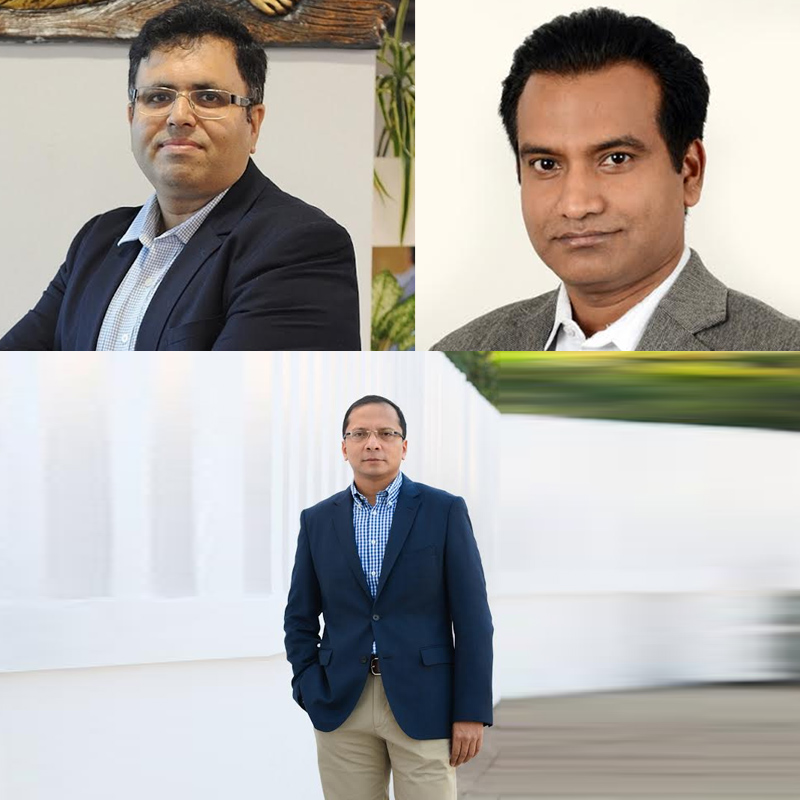
    MUMBAI: His appointment was cleared by the Securities Exchange Board of India  (Sebi) in end August  when he was MD & CEO of ICICI Securities.  The National Securities Depository Ltd (NSDL), however,  announced on 29 November  that financial market veteran Vijay Chandok has joined the organisation as MD & CEO.

    Chandok’s  appointment is set for five years or until he turns 65, earlier reports had suggested. These  had also suggested that Chandok would join at a time when NSDL was looking at unlocking value through an initial public offering. But today, the depositories body said that he “set to lead the organisation through a transformative phase, focusing on enhancing market operations and ensuring secure, efficient, and innovative solutions for stakeholders.”

    Chandok has  a master’s in management studies from NMIMs and an engineering degree from ITT Bubaneshwar.


  • Havas Media Mumbai reports growth of 150 per cent in 2020-21

    Havas Media Mumbai reports growth of 150 per cent in 2020-21

    Mumbai: Following the strategic restructuring of Havas Media Group India’s senior management a few months ago, the agency’s Mumbai office has reported a growth of 150 per cent in 2020-21, on the back of over 15 new account wins.

    This includes ACC Cement, Ambuja Cement, ICICI Securities, De Beers Forevermark, Wai Wai, GITAM University, Dr Reddy’s, OZiva, and several others. In addition, the agency has seen tremendous growth on the back of marquee clients like Tata Motors and TVS Eurogrip and their increased media spends even in 2020. In total, Havas Media Mumbai has added a total billing of over Rs 500 crore in 2020-21, the agency shared.

    In the last fifteen months, Havas Media bolstered its senior leadership team in Mumbai. Uday Mohan took over as president & head – North & West India, which includes the Mumbai operations. In addition, Manish Sharma was elevated as executive vice president and head of the Mumbai operations. To further strengthen the strategy teams, Sanchita Roy was named Havas Media Group India strategy head.

    “Despite the market challenges, in the last 15 months we stuck to our task, defined our vision and kept investing in both our talent and product,” said Havas Group India Group CEO Rana Barua. “In 2020, Havas Media Group India has garnered a growth rate of 35 per cent (RECMA June 2020) – the highest among all media agency networks in India.”

    “Our North operations have always been extremely strong, and now it’s heartening to see the same being replicated in other markets,” said Havas Media Group India CEO Mohit Joshi. “We have seen both organic growth and won some fabulous new client wins in the West in the last 15 months resulting in unprecedented growth.”

    “We are firmly aligned to the network’s global philosophy of creating meaningful media and brands. Havas Media Group is growing the business on four pillars – product, people, pitches, and partnerships,” said Uday Mohan, who has led this unprecedented resurgence story of Havas Media in the West. “Built on the media experience [Mx] operating structure, each phase of the Mx process is powered by converged, an identity–based planning platform, which places the audience at the heart of the media planning process and capitalises on media that matters.”

  • IPL ownership, key BCCI rights put Star India in position of advantage: ICICI Securities Media Content Meter

    IPL ownership, key BCCI rights put Star India in position of advantage: ICICI Securities Media Content Meter

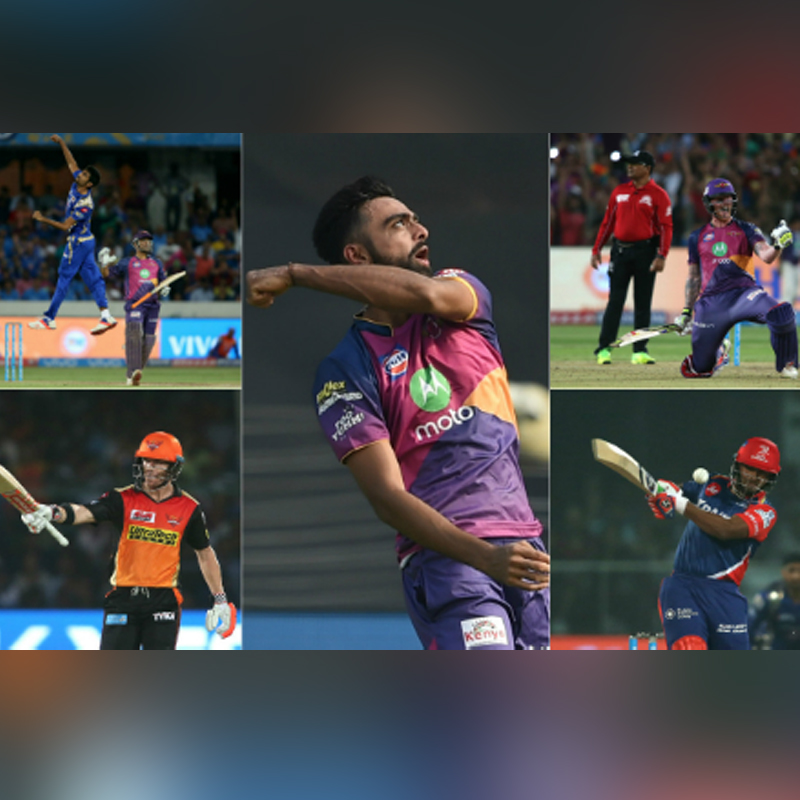
    BENGALURU: ICICI Securities released a Media Content Meter report today. The report titled Sports – Battle heats up commenced saying that this month was marked by two significant events in Indian sport broadcasting industry: 1) The Supreme Court restrained Prasar Bharti from giving live feed of sport events of national importance to cable TV and private DTH platforms; and 2) Star India won TV and digital broadcasting rights for IPL for Rs 163.5 billion. With sport viewership in India largely dependent on cricket, ICICI Securities believes the ownership of IPL and key BCCI rights puts Star India in position of advantage.

    The report mentions the rise in the value of the Indian Premier League (cricket, IPL). The payout per season for the broadcast and the digital rights rose by two and a half times and thirteen times respectively. Even the payout for the title sponsorship of the IPL had increased by 1.8 times- Vivo paid Rs 4.4 billion for the title sponsorship for a period of five years (2018 to 2022) against the Rs 1 billion paid for a period of two years (2016 and 2017).

    Sports leagues, including homegrown leagues, other than cricket were also gaining traction in India. Among the homegrown leagues, Star Sports has the rights to a majority of successful leagues such as Indian Super League- Football (ISL), the Premier Badminton League (PBL) and the Pro Kabbadi League (PKL). Sony has the rights to the Premier Futsal League – Football and Pro Wrestling League.

    The report says that the Supreme Court decision will help boost up viewership of Star Sports channels and its ability to price channels as pay-TV subscribers will no longer have access to free cricket. With control over so many sports, Star India should be able to command higher ad rates and this was evident from Star India’s exorbitant ad rates during the recent India Australia series.

    In the content space, the report highlights some key developments. These include Zeel’s launch of premium English movie channels &Prive HD, which was fourth channel in the English premium movie genre. Sony Entertainment Television (SET) plans to launch a sub-brand – SET-Originals by the end of 2017. SET-Originals will focus on premium audience-featuring premium content such as concerts, finite series and home grown shows. Further, Sony is also planning to launch a number of new shows in the near future. Colors was also strengthening its weekend programming. Also, Star Plus after re-launching afternoon slots about six months back has decided to shut it down.

    The report says that in the Hindi GEC market, Sony has been gaining market share on the back of the ninth season of Kaun Banega Crorepati (KBC), while Zee TV and &TV were gaining in Hindi GEC all day viewership. Star India’s rebranded Hindi GEC channel Star Bharat gained marketshare with new shows.

    Among the non-South regional channels, in the Marathi space, Zee Marathi was the unchallenged leader, while Star Jalsha led in the largely two-player Bangla space, the other contender being Zee Bangla.

    In the South Indian regional space, Star Vijay and Star Maa gained in the Tamil and the Telugu spaces respectively on the back of Bigg Boss. While Sun TV was the absolute leader in terms of viewership in the Tamil market, Bigg Boss helped Star Vijay bag additional viewers in the primetime band.

    In the Telugu GEC regional space, Gemini TV had slipped to third place in terms of all day viewership. During primetime, Zee Telugu and Star Maa were neck-to-neck. In the Kannada GEC space, Zee Kannada was closing in on leader Colors Kannada, in terms of all-day viewership, though Colors Kannada was a leader during primetime. In the Malayalam GEC space Asianet ruled the all-day and primetime viewership.

    In the annexure to the report, ICICI shared some interesting numbers on viewership share of the Hindi GEC space during primetime starting 1930 hours until 2330 hours. For every half hour from 1730 hours to 2000 hours, Star Plus had the highest viewership share. Colors programmes led the viewership game in the 2000 hours to 2030 hours slot, while Sony SAB led in the 2030 to 2100 time slot. The 2100 to 2130 slot belongs to Zee TV in terms of viewership. Star Plus programmes had led in the 2130 hours to 2200 hours earlier, but in the recent past, it is Zee TV programmes that had the highest viewership share.

    Star Plus programmes have the highest viewership share in the 2200 to 2230 time slot. Over the past few weeks, Colors programmes have had the highest viewership share in the 2230 to 2300 hours, while Sony programmes leads in terms of viewership share during the 2300 hours to 2330 hours time slot.

    On the OTT front, Amazon Prime announced six new comedy series created by some of India’s top comedians. The report says that Amazon is after regional content also, including exclusive digital rights as well as streaming rights before the television premiere of a few Telugu films. Pan-regional OTT service Viu was also planning to launch four new original shows by the end of December 2017 in Hindi and Telugu languages.

    Note: (1) In the specific case of KBC, the ICICI Securities report generally refers to weeks 26 to 38 of 2017, while in the case of primetime and all-day viewership, the charts in the report cover quarterly periods starting from Q3-15 until Q2-18. The report states that the numbers for Q2-18 are estimates.

    (2) This article does not reflect the opinion of The Indian Television Dot Com Pvt Ltd. Group or any of its constituent people, employees, consultants and associates.

  • Videocon d2h files for IPO to raise Rs 700 crore

    Videocon d2h files for IPO to raise Rs 700 crore

    MUMBAI: For the past couple of years, the stockmarkets have been going through rough weather dampening an entrepreneur’s desire to raise funds through the initial public offering (IPO) route. With a new government in place, and optimism returning, the queue has once again started being formed outside the Securities Exchange Board of India (Sebi) of those going in for IPOs. Shemaroo Entertainment earlier this month approached the public and now it is the turn of the  direct to home (DTH) service provider Videocon d2h which has finally made its filing with Sebi to raise Rs 700 crore.


    This is the second time the firm has proposed to go public. It had previously filed documents in December 2012 and had received a go ahead from SEBI but did not go ahead with the public float.


    Seven banks – including UBS, Axis Capital, ICICI Securities, SBI Capital Markets, Yes Bank, IDBI Capital will manage the share sale.


    As per the statement issued by the company, “The price band and the minimum bid lot will be decided by our company in consultation with the joint global coordinators and book running lead managers.”


    The company is also considering a preferential issue of up to 5,000,000 Equity Shares, aggregating up to Rs 50 crore with certain investors.


    “Our Company will complete the issuance and allotment of Equity Shares pursuant to the Pre-IPO Placement, if any, prior to the filing of the Red Herring Prospectus with the RoC. If the Pre-IPO Placement is completed, the Issue size will be reduced to the extent of such Pre-IPO Placement, subject to the issue size constituting at least 10 per cent of the post-Issue paid-up Equity Share capital of our Company,” the notice also stated.


    The company plans to spend a portion of the Net Proceeds of the issue towards acquisition of set-top boxes, outdoor units and accessories thereof from TEL, a Videocon Group entity.


    “We propose to utilise Rs 350.83 crore of the Net Proceeds towards acquisition of set-top boxes and outdoor units from TEL,” the statement added.


    The company is also looking to spend Rs 175 crore of the net proceeds to repay loans. “We may utilise a part of the Net Proceeds to repay/prepay certain term loan facilities availed from IDBI Bank Limited and ICICI Bank Limited, which are associates of the JGCBRLMs, IDBI Capital and I-Sec, respectively, and YES Bank, one of our JGCBRLMs.”  The amount left will be used for other general corporate purposes.


    The company commenced DTH operations in July 2009 and has grown its subscriber base from 0.44 million gross subscribers as of 31 March 2010, to 11.21 million gross subscribers, as of 30 June 2014, which represents approximately 16.2 per cent of the total DTH subscriber base in India.


    For the first quarter of 2015 the company has approximately 27 per cent incremental market share of the DTH subscriber base in India.


    The total income of the organisation for the three months ended 30 June 2014 was Rs 537.7 crore, during which time it generated net loss of Rs 78.15 crore. The firm has clocked a net loss of Rs 2,126 crore over the last five years.

  • Reliance MediaWorks delisting process starts

    Reliance MediaWorks delisting process starts

    MUMBAI: The process for delisting the shares of Reliance MediaWorks started today with Reliance Capital and Reliance Land issuing a public announcement of an offer to acquire shares from public shareholders.


    Reliance Capital and Reliance Land, the acquirers, are part of the promoter group which collectively owns 73.30 per cent of Reliance MediaWorks.


    At 1450 hours, Shares of Reliance MediaWorks were at Rs 56.65, up 0.65 per cent on the BSE.


    The acquirers have made the offer to acquire 26.70 per cent of Reliance MediaWorks that is not already owned by the promoter group, at a floor price of Rs 48.65 per share.


    Reliance MediaWorks is a leading media & entertainment company with presence in theatrical exhibition of films, film and media services and television content production and distribution. It is part of Anil Ambani’s Reliance Group.


    The company will dispatch bid forms to public shareholders tomorrow. The bids submitted by shareholders will be opened on 20 March and the last date for upward revision or withdrawal of bids is 25 March.


    The company will make a public announcement of discovered price/exit price and the acquirer’s acceptance or rejection of the discovered or exit price by 9 April.


    A special resolution for delisting of the company’s shares was earlier approved by the shareholders through a postal ballot.


    Reliance MediaWorks has been reporting losses for five years now. The company last reported a profit (Rs 48 crore) in 2007-08.


    The company will proceed with voluntary delisting of shares from the National Stock Exchange and the BSE on promoter shareholding reaching a minimum of 90 per cent and on fulfilment of other conditions stipulated in the delisting regulations.


    ICICI Securities is the manager to the delisting offer by Reliance MediaWorks.