Tag: ICICI Bank

  • Ogilvy Mumbai creates campaign for Mumbai Police

    Ogilvy Mumbai creates campaign for Mumbai Police

    MUMBAI: Ogilvy has conceptualised a campaign for Mumbai Police. The campaign marks the launch of ‘Mumbai Ke Liye 1 Minute’ drive by the police.

    The main aim of the campaign is to urge Mumbaikars to support Mumbai Police in tackling terrorism.  Launching the campaign, Maharashtra home minister RR Patil: “The government and police are doing their best to ensure security in the city. However, we also appeal to the citizens to be alert.”

    Ogilvy Mumbai has developed a three-film campaign to start this drive. On the campaign, Ogilvy India national creative director Abhijit Avasthi, said: “How the campaign is pitched is extremely crucial when it involves Mumbai Police. We try to keep it interesting, simple and honest. It worked for us in our earlier campaign for Mumbai Police. Nobody likes to take down a set of instructions but everyone is open to receive a good message at the end of a sweet story.”

    Elaborating more on it, Ogilvy Mumbai group creative director Harshad Rajadhyaksha said: “Mumbaikars are always on the run; forever racing against time. To make them pay heed, let alone act on safety measures, is a task easier said than done. Born out of that very insight was ‘Mumbai ke Liye 1 Minute’. It’s a callout to the citizens, reminding them that it doesn’t take much to make Mumbai a safer place.”

    Ogilvy Mumbai group creative director Kainaz Karmakar added: “All it takes is a minute to look around. To make this point more dramatic we chose to weave stories around characters, who despite their physical challenges, manage to take a minute to look around, leaving viewers with a question in their minds – ‘If they can, why can’t I?’  A blind man, an old lady, and a pregnant woman play the part of good Samaritans.”

    Many more activities are a part of this program across media. It promises to be a long-term initiative.

    The films are directed by Gajraj Rao of Code Red Films. ICICI Bank has stepped forward to support this initiative.

  • Banking sector spends Rs 20 bn on outdoor advertising

    Banking sector spends Rs 20 bn on outdoor advertising

    MUMBAI: The banking sector spends Rs 20 billion on outdoor advertising medium and it is more effective than television but less than print, according to ICICI Bank corporate brand group head Ronita Mitra.

    Lack of measurability in the outdoor advertising medium, however, is one of the most contentious challenges the sector currently faces, Mitra said.

    While speaking at the seventh edition of Outdoor Advertising Convention, Mitra said that hindrances such as changing traffic trends, delivery scale versus credibility and complexity with the spread of commercials hamper the scope of measurability.

    Mitra underlined, “Having to send out teams to analyse the ads is another impediment.”

    Talking about drawbacks, there are several high-points in this medium as well.

    “We communicate with all the socio-economic groups and our target audience is male, aged between 25-55 years. The outdoor message delivers undiluted and localised messages, in terms of look and feel. Moreover, messages are clear and call to action or how to get in touch becomes simpler with this medium,” Mitra stated.

    While public sector banks use this medium the most, multinational banks adapt a much focused geographic approach. “In most cases outdoor media is used to reinforce a multimedia campaign – in some cases, to create an impact on city or national scale; and in very few cases as a standalone medium,” Mitra revealed.

    Talking about various forms of outdoor advertisement, Mitra cited the example of ICICI’s ‘khayaal aapka’ campaign, which she termed as thematic propositions, under which various new products were promoted.“‘khayaal aapka’ is the master brand, within which there can be various individual product brands such as privilege banking and home loans.” Mitra noted.

    Mitra spoke about the ‘three creative’ the bank experimented with: bill transfer, fund transfer and book movie tickets. “We put up ads of bill payment and fund transfers on bus shelters, while booking movie tickets was promoted next to ticket counters at various cinema halls. And after analysing the pre- and post-activity results, we found that the awareness about the three features has gone up by 50 per cent.”

    This activity not only created awareness but also reinforced an image of innovation for the bank, Mitra concluded.

  • Apple is world’s top value brand, says WPP’s BrandZ

    Apple is world’s top value brand, says WPP’s BrandZ

    MUMBAI: Apple has emerged as the most valuable brand in the world, ending the four-year reign of Google at the top of the table, says the sixth edition of BrandZ Top 100 Most Valuable Global Brands study.

    With an 84 per cent increase in value over the past year and 859 per cent since 2006, Apple now stands at $153.3 billion, according to estimates by WPP‘s brand research company, Millward Brown Optimor. 
     
    Also, emerging markets account for 19 of the top 100 brands.

    During last year‘s economic recovery, the combined value of all the brands in the top 100 has risen by 17 per cent and is now worth $2.4 trillion.

    In terms of geography, according to BrandZ study 2011, 19 of the Top 100 brands now originate in “BRICs” markets, versus only two in 2006.

    The study claims that the growing presence of brands from BRICs in this global ranking highlights the expanding purchasing power of people in these countries. While many of these brands are buoyed by the size of their local customer base, many more now have international ambition including Petrobras in Brazil (No. 61 in the ranking with a brand value of $13.4 billion); ICICI Bank in India (No. 53 and worth $14.9 billion) and China‘s largest search engine Baidu (No. 29, up 46 places, and valued at $22.5 billion). 
      
    Despite these successes, however, consumers in the BRIC regions continue to favor Western brands. Louis Vuitton, for example, (for which Brazil is its second-largest market) benefited from the new energy and confidence in the BRICs region. Its 23 per cent growth in brand value to $24.3 billion has helped this luxury retailer achieve 26th place in the ranking, a three-spot increase from 2010.

    Said David Roth at WPP, “In the last year, the global economy shifted from recovery to real growth, the combined value of all brands in the Top 100 ranking has risen by 64 percent since 2006 and is now worth $2.4 trillion. Strong brands, while not immune to the vicissitudes of the market, are more protected, prepared, resourceful and resilient.”

    The BrandZ Top 100 Most Valuable Global Brands study, commissioned by WPP and conducted by Millward Brown Optimor, identifies and ranks the world‘s most valuable 100 brands by their dollar value, an analysis based on financial data combined with consumer measures of brand equity.

    The Most Valuable Global Brands 2011 :

    Rank Brand Value in $ million Brand value change from 2010
    1
    Apple 153,285 + 84 per cent
    2
    Google 111,498 – 2 per cent
    3
    IBM 100,849 + 17 per cent
    4
    McDonald‘s* 81,016 + 23 per cent
    5
    Microsoft 78,243 +2 per cent
    6
    Coca-Cola 73,752 +8 per cent
    7
    at&t 69,916
    8
    Marlboro 67,522 +18 per cent
    9
    China Mobile 57,326 +9 per cent
    10
    GE 50,318 +12 per cent


    The Brand Value of Coca-Cola includes Lites, Diets and Zero

    Adds Millward Brown CEO Eileen Campbell, “Business leaders can embrace brand management as a critical competency for building long-term financial value. Compared with an overall improvement of 13 per cent in the world‘s equity markets during 2010, the best brands grew their value 30 per cent faster.”

    The study also says that heritage brands stayed relevant in a technology age.

    Brands such as Coca-Cola (No. 6), GE (No. 10), IBM (No. 3) and McDonald‘s (No. 4), stand out in this study of global brand strength as brands that have survived for more than 50 years. Leadership, strategy and tactics aside, what all of these companies have in common is their use of brand to remain relevant to consumers and drive global business success.

    Technology and telecom brands have dominated the ranking:

    Technology brands, which make up one-third of the Top 100 brands, continue to demonstrate their relevance in our daily lives.

    While Apple leads the ranking, it is followed in second place by Google, with a brand value of $111.5 billion, and IBM in third place with a brand value of $100.9 billion.

    Facebook makes its debut in the Top 100 ranking this year at No. 35 with the highest increase in brand value, 246 per cent, making the brand worth $19.1 billion. Online retailer Amazon also edged past Walmart to become the No. 1 retail brand and 14th overall, with a 37 per cent rise in brand value to $37.6 billion.

    Fast food, luxury and technology brands led brand value appreciation: Each of the 13 market sectors covered in this study grew in value over the last year. Fast food led the sector growth (22 per cent) followed by luxury (19 per cent) and technology (18 per cent). The oil and gas sector experienced the slowest rate of growth (1 per cent).

    BrandZ Top 100 also says that brands are ever more dependent on their use of technology to win consumers‘ hearts and minds.

    The brand values of Burberry, Chanel, Louis Vuitton and Coca-Cola all benefited from their use of technology, for example, by harnessing social media and apps. At the same time, the dependencies demonstrated in the physical world between applications, devices and operating platforms are creating similar branded interdependencies.

    Brands that are aware of the risks can leverage these associations to drive value and growth, the study advises.

    Also, Toyota has reclaimed the position as most valuable car brand demonstrating the power of strong brands to recover from the most fundamental challenges to product efficacy and reputation. Toyota‘s brand, which is rated by consumers as “great value,” rose 11 per cent to $24.1 billion.

     

  • Govt under pressure to finalise Content Code: Sushma

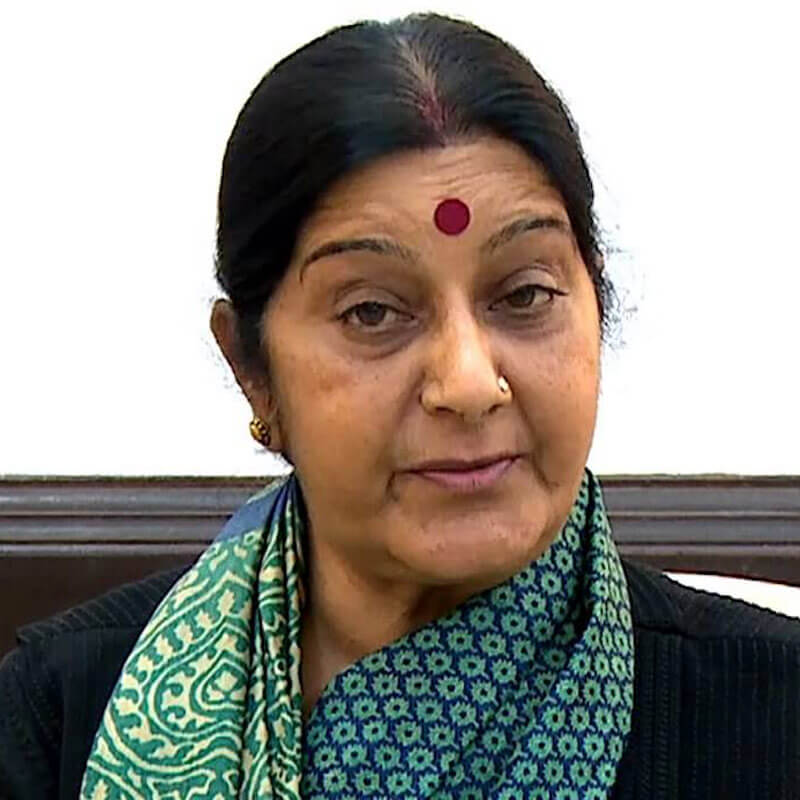
    Govt under pressure to finalise Content Code: Sushma

    NEW DELHI: Information and Broadcasting Ministry Secretary Sushma Singh said today that while the government did not want to interfere with the freedom of the media, the latter should show a sense of responsibility and observe journalistic ethics.

    Speaking at the inaugural session of the Second Indian News Television Summit organized by indiantelevision.com, she said channels should introspect as to whether what they were showing in the name of news was really news.

    She noted sensationalism in the content of news channels often resulted in creating alarm and this was the reason for the government having issued as many as 241 show-cause notices to news and other channels over the past few years.

    She said the Ministry was under pressure from various sources including courts to act faster on creating a suitable Content Code. The Ministry had, therefore, been working with the News Broadcasters Association and the Indian Broadcasting Foundation to finalise a Code as early as possible. She gave examples of the Andhra Pradesh and Delhi High Courts which had been demanding speedier action from the government in this regard. She said the inability of the Ministry in promulgating a Code was being looked at seriously.

    She said that the government had presently given uplinking permission to as many as 191 news channels and had only recently given 33 new licences for news and current affairs channels. This showed the liberal attitude the government had towards encouraging plurality of thought and divergence of opinion. This was one of the reasons for more regional channels coming up in the recent past.

    But the government had a duty to look at the content of the news channels that was being passed off as news. The news channels must also realize that the viewers included children and sensitive audiences.

    Furthermore, maintenance of public order and national interest must take precedence over the content of news.

    She said that technological breakthroughs were creating rapid advances and this made it more imperative that national objectives should be kept in mind. The attitude of the news channels whenever the government approached them should be one of discussion and not confrontation.

    Singh also released on the occasion The NT Magazine, brought out by indiantelevision.com.

    In his keynote address, India TV head Rajat Sharma made a passionate case to say that most channels worked in a very responsible manner and often helped in exposing the ills in society.

    Sharma regretted that news channels were under attack when even the print media was doing the same kind of reporting.

    He said that people had faith in the news channels and this was the reason why many first came to them even before approaching the police or courts of law. He said it could not be denied that news channels had empowered the people, but this responsible behaviour of the channels had gone unnoticed.

    Television channels were now receiving threats from the underworld or terrorist groups for correct reporting, and this was now a major threat facing the news media.

    Admitting there had been some lapses like the recent case of a false sting, he said the entire community of news broadcasters had criticized such things.

    Self-introspection was being done on the Content Code and he said the News Broadcasters Association along with the Ministry was now involving judges to help in drafting the Code.

    He said that it could not be denied that news channels had shown a lot of restraint in cases of violence or wherever social responsibility was required to be shown. Furthermore, he maintained that even as news channels showed astrology or other news in an interesting manner to win eyeballs, 50 per cent was hard news.

    He also said that news channels had become the true ambassadors of the country by beaming overseas, and also functioned as a bridge between the government and the people.

    Giving an alternative viewpoint, ICICI Bank Executive Director V Vaidyanathan said presentation of news should be treated as a corporate responsibility just as some corporate houses put aside some part of their revenues for social good.

    He also said news channels had to be relevant to hold the attention of the viewers, pointing out that most viewers now kept flipping channels instead of sticking to one channel.

    He said most news channels seemed to be suffering from the prisoner’s dilemma: if they did not sensationalise the news, someone else would. But this did not always mean negative news.

    He urged the media to take up its social responsibility more seriously and said it could do things like exposing the parallel economy which was harming the country. At least ten per cent of the news time should be devoted to consumer education, which could be turned into a viable business. ‘So be viable and socially responsible’, he said.

    arlier welcoming the delegates, indiantelevision.com founder and Editor-in-Chief Anil Wanvari said people were now spending an average of two hours and 38 minutes per day in front of their TV sets and so it was necessary for the channels to look towards finding the right balance, which is the theme of the Summit.

  • Bloomberg TV to look ‘Inside India’ tomorrow

    MUMBAI: European news broadcaster Bloomberg Television will air a special Inside India on 25 September . Bloomberg’s Haslinda Amin gives viewers an in-depth look at the challenges confronting India’s expanding economy 60 years after its independence.

    Reporting from India, Bloomberg will examine investment opportunities,the debate surrounding India’s special economic zones, India’s retail revolution, the country’s developing infrastructure and the trend of “reverse outsourcing” jobs to the West.

    India’s Financial Minister Palaniappan Chidambaram tells Bloomberg’s Amin “India is attracting foreign investors now. Better infrastructure will attract more investors and more foreign investments. This process of economic reforms and economic growth has to continue for at least another 20-25 years before many of our objectives are achieved,” .

    In addition to Financial Minister Palaniappan Chidambaram , the programme features interviews with Minister of Commerce and Industry Kamal Nath Wipro chairman Azim Premji, Bharti chairman Sunil Mittal, Suzlon Energy chairman Tulsi Tanti, ICICI Bank’s Nilesh Shah and Citigroup India CEO Sanjay Nayar.

  • CNBCTV 18 ‘Emerging India Awards’ enters Limca Book of Records

    CNBCTV 18 ‘Emerging India Awards’ enters Limca Book of Records

    Mumbai: The Emerging India Awards on CNBC-TV18 partnered by ICICI Bank and Crisil awards the performance by Indian SMEs. This year the event received over 35, 000 SME applications to power the Emerging India Awards into the Limca Book of Records as the biggest business awards in India.

    The Emerging India initiative was launched in 2004 to understand the dynamics of India’s small and medium enterprises. The awards have grown from 5000 applications in its first year to over 35, 000 applications this year.

    Speaking on the landmark occasion CEO & MD, ICICI Bank K V Kamath said, “This achievement is a reconfirmation that the growth in India is broad based. It is indeed a far more wide platform that what we all had thought of earlier and that is what took it from 5000 to 35,000 companies standing up to be counted.

    I think this process of recognition provides them the stimulus to grow. I wish this event a great success for this year and I think it’s a great recognition to be counted in the Limca Book of Records for the event.”

    A spokesperson for CNBC-TV18 also said, “The Emerging India Awards are designed to recognize the most sustainable Value Creators among SMEs in the country.

    With the tremendous response of over 35,000 entries received from all across the country this year, The Emerging India initiative is a true testimony to the power of the SME story. It is also extremely heartening that the future for Indian SMEs looks bright across all Industry sectors. We will continue to take up the SME cause at the TV18 network”

  • CNBC-TV18, ICICI Bank to present Emerging India 2007

    MUMBAI: CNBC TV 18 will present The Emerging India Series 2007 at an interactive panel discussion in Bangalore.

    The awards instituted to recognize excellence in the Small and Medium Enterprises (SME awards) is in its third year. The discussion will address ‘Keys to success for Indian Software SME’s at a global level.’

    The Emerging India forum will bring together experts from the IT and ITES field and leaders like ICICI bank chief technology officer Praveen Vohra, Crisil corporate ratings head Sudip Sural, Mindtree Consultancy president and CEO Krishna Kumar Natrajan, RSM company partner Rajesh Gupta to help SMEs leverage market knowledge, learn through internal and external networks and utilize relationships appropriately to keep themselves alive in this competitive sector. The discussion will be moderated by Vivek Law, Consumer Affairs Editor, CNBC-TV18.

    ‘Emerging India Forum 2007’ in Bangalore

    Date: 23rd January 2007

    Time: 7pm

    Venue: Regency 1, ITC Hotel Windsor Sheraton & Towers, Bangalore

  • Cartoon Network’s Tom & Jerry to promote ICICI Bank’s ‘Young Stars Account’

    Cartoon Network’s Tom & Jerry to promote ICICI Bank’s ‘Young Stars Account’

    MUMBAI: ICICI Bank is now wooing kids via the cat and mouse pair – Tom & Jerry. The bank has tied up with Cartoon Network wherein the toons will be the brand ambassadors for its special and innovative ‘Young Stars’ account.

    Young Stars is a unique savings account tailored to suit the banking requirements of children. The Young Stars account allows children, upto the age of 18 years, to learn and manage their finances; while the account is operated and monitored completely by the parents.

    Children above the age of seven years will get a personalised international debit card with the Young Stars account. This is an innovative attempt to guide children through the world of banking.

    ICICI Bank has made the banking experience exciting by offering interesting facilities including a special recurring deposit, free international debit card and free internet banking. There are also facilities that only parents can access such as – online opening of fixed deposit, recurring deposit and funds transfer from parent to child’s account.

    ICICI Bank executive director Chanda Kochhar said, “The Young Stars account is another pioneering product from ICICI Bank that initiates children to world of banking and finances. With this innovative product, the entire family is involved with the bank and while parents can monitor their child’s expenses, children learn to manage their expenses themselves. This product will inculcate the habit of saving money amongst kids, while making it a fun filled and exciting experience. We are delighted to be associated with Cartoon Network’s toon stars, Tom & Jerry and with their support are sure that Young Stars will be become a popular product among children.”

    Cartoon Network Enterprises – India and South Asia director Jiggy George said, “The exciting and innovative promotional licensing deal with ICICI Bank for their ‘Young Stars’ account yet again proves the power of Cartoon Network and the mass appeal of the Network’s toon stars. I am positive that Tom & Jerry, who continue to rule the hearts of Indian kids and adults, will help make this innovative initiative from ICICI Bank even more attractive. We are delighted to be partnering with ICICI Bank, one of the most respectable brands in the finance sector and look forward to our mutual success.”