Tag: ICE

  • Ekta Kapoor sets up Delhi campus of ICE

    Ekta Kapoor sets up Delhi campus of ICE

    MUMBAI: Ekta Kapoor has launched the campus of her media school Institute of Creative Excellence (ICE) at South Extension Delhi today. The school is headquartered in Mumbai.

    Setting up an institute in the national capital stems from the belief of Kapoor for creating a benchmark in the field of education and to bequeath power to the dreams of young aspirants whilst imparting the right kind of knowledge.

    Nestled in the heart of Delhi, the Institute promises to give to its student’s world-class education accumulated with wisdom to shine as the future stars of the industry. The ICE Delhi facility initially will conduct training of acting, modeling, animation and VFX, dance and young filmmaker program for Kids in the South Extension area.

    In addition, the Delhi unit of ICE, which happens to be the Regional office of the media school for North Zone, will continue to market and send shortlisted students for other major specialisations such as cinematography, direction, editing, production, scriptwriting, sound recording etc to Mumbai. Students of ICE will have the flexibility of learning as per their convenience as various courses would be available in two modes (full time and part time).

    Talking about expanding in Delhi, joint managing director of Balaji Telefilms and Member of ICE Academic Council Kapoor said: “There is plenty of talent in our country today and it just needs to handpicked and channelised correctly. I want to reach out to masses from all over our country and provide them with the right kind of expertise that will help them go a long way. Looking at the kind and amount of talent that comes from Delhi, we felt it was best we set up an institute in their home city. All doors are open at ICE Delhi for those with the right kind of grit, eagerness and enthusiasm.”

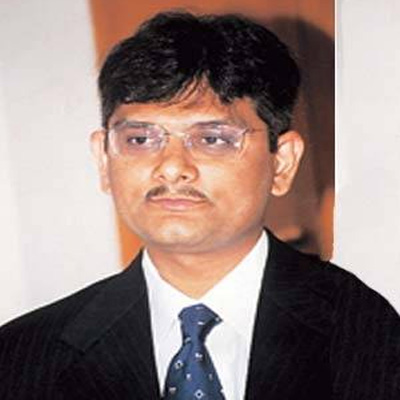
    ICE CEO Anurag Gupta averred, “Setting up a campus in Delhi is just the beginning and have many more in the offing in the national arena. To cater to the industry’s growing demands for trained actors; ICE will ensure that they take those extra measures to make certain that they churn out the most superior quality talent in the country.”

    After having trained over 700 students in Mumbai, ICE is finally set to kick start its power-packed curriculum for its Delhi Audience.

    Earlier this month, an ICE wing was set up in Bangalore on 9 June.

  • Govt targets 20 million broadband subscribers by 2010

    Govt targets 20 million broadband subscribers by 2010

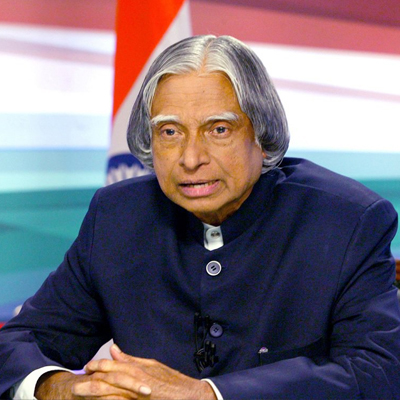
    NEW DELHI: Even as President A P J Abdul Kalam declared that the year 2007 will be the ‘Year of Broadband’, there are plans to increase to more than two-fold the broadband and internet users in the country over the next three years.

    In his address to the joint sitting of both Houses of Parliament on the opening day of the Budget session, Dr Kalam had said yesterday the government was committed to bridging the digital divide by providing broadband coverage throughout the country. ‘Our information technology sector continues to develop and remain globally competitive’.

    According to the Broadband Policy 2004, there were approximately six million internet and three million broadband subscribers in 2005, and this figure is estimated to rise to 18 million and nine million respectively this year. By the year 2010, India hopes to have 40 million internet and 20 million broadband subscribers.

    Plans are on the anvil to provide broadband services in 400 cities and service providers have plans to reach 1000 cities by the end of 2007. These cities include the 63 cities identified under the National Urban Renewal Mission. The real challenge is to connect the remote villages unconnected so far due to various reasons. One of the viable options for providing connectivity is through wireless mode.

    According to the Sub-Group on ‘Going Digital’ set up by the Planning Commission and headed by Rajeeva Ratna Shah, Member Secretary in the Planning Commission and a former Prasar Bharati CEO, introduction of broadband connectivity opens up new market for providing value added services which can be derived from the digitization.

    The Sub-Group noted that penetration of TV is much higher than PC in the industrialized countries, and provides interactive services including internet on TV and TV on internet. These services can potentially benefit especially the ‘information poor’ and thus reduce the information gap in the society, which is an important implication of the convergence.

    Internet on TV can be provided using Out Of Band (OOB) and In Band (IB) structures. In the IB structure the internet is transmitted alongside with the broadcasting signal. Here the characteristics of the broadcasting infrastructures will have a decisive role on the available services.

    It noted that TV on internet which is also known as WEB TV/Cyber TV will be the future of broadcasting. A precondition for the WEB TV to be able to replace digital TV is the transmission capacity at the end users site increases to such level that it can be possible to provide digital TV services. WEB TV needs to be co-evolved with digital TV and act as complementary for delivery of services.

    The Sub-group has accordingly drawn up a roadmap of digitalization through a a phased approach should be taken for going digital covering all the seven mega cities by 2011 in the first phase and the rest of the country by 2013.

    The Sub-Group comprising seventeen members was set up by the Committee on Information, Communication and Entertainment (ICE) that has been examining the larger issue of convergence and advent of modern technology. Members include the secretaries in Information and Broadcasting and Department of Telecommunications, the Prasar Bharati CEO, the Presidents of CETMA, MAIT, NASSCOM, and ISP Association of India, Co-chairman of the FICCI Entertainment Committee, Chairman of the CII Entertainment Committee, Chairman of the Film & Television Producers Guild of India, President of the Cable TV Operators Association, Mr Rajiv Mehrotra who is the Managing Trustee of the Public Service Broadcasting Trust, Mr Virat Bhatia from AT&T Communications Services, Zee Telefilms President Abhijit Saxena, Mr Sameer Rao who is Vice-President in charge of Strategy, Planning & Regulatory in STAR India, and a representative of the Prime Minister’s Office.

    It was also agreed that a group chaired by Mr B S Lalli, the CEO of Prasar Bharati who is also Chairman of the Indian Broadcasting Foundation, and some private broadcasters like Star, Zee, Sony, Eenadu etc. and their major MSOs will examine an eleven-stage process and firm up their sequencing and put the entire process on a “digital upgrade timeline”.

    The Sub-group has accepted a recommendation for an eleven-stage process for laying down the migration path for migration from analogue transmission to digital domain:

    i. Testing, publication and adoption of technical standard for digital terrestrial transmission.

    ii. Publication and adoption of national standards for digital cable television.

    iii. Prasar Bharati’s roll out of transmission conversion from analogue terrestrial to digital terrestrial both for radio (AIR) and Doordarshan (DD).

    iv. Introduction of addressability and conditional access system in cable and satellite TV environment.

    v. Road map and commencement of indigenous production of STBs containing features such as (a) digital analogue convertors for delivery of digital signal at subscribers’ end and (b) conditional access and addressability features.

    vi. Publication and adoption of national digital television standards for manufacture of digital receivers.

    vii. Commencement of indigenous production of digital receivers.

    viii. Commencement of digital terrestrial broadcast in selected cities by Prasar Bharati staring with Delhi by 2010 and covering all areas by 2013 in four steps.

    ix. Commencement of HDTV broadcast for Commonwealth Games 2010 by Prasar Bharati.

    x. Commencements of digital signal delivery at subscribers end in Cable and Satellite (C & S) homes.

    xi. Nationwide switch off of analogue broadcast both for terrestrial and C & S homes (2015).

  • DTT should be completed in Delhi by 2010

    DTT should be completed in Delhi by 2010

     NEW DELHI: A sub-group on ‘Going Digital’, set up by the Planning Commission, has recommended that digital terrestrial transmission by Doordarshan should be launched with a slogan Digital Delhi by 2010 to coincide with the Commonwealth Games in that year.

    The Sub-Group headed by Rajeev Ratna Shah, Member Secretary in the Planning Commission and a former CEO of Prasar Bharati, said a phased approach should be taken for going digital covering all the seven mega cities by 2011 in the first phase and the rest of the country by 2013.

    The sub-group, comprising 17 members, was set up by the Committee on Information, Communication and Entertainment (ICE) that has been examining the larger issue of convergence and advent of modern technology. Members include the secretaries in Information and Broadcasting and Department of Telecommunications, the Prasar Bharati CEO, the presidents of Cetma, Mait, Nasscom, and ISP Association of India, co-chairman of the Ficci entertainment committee Kunal Dasgupta, chairman of the CII entertainment committee, chairman of the Film & Television Producers Guild of India, president of the Cable TV Operators Association, Rajiv Mehrotra who is the managing trustee of the Public Service Broadcasting Trust, Virat Bhatia from AT&T Communications Services, Zee Telefilms President Abhijit Saxena, Sameer Rao who is vice-president in charge of strategy, planning & regulatory in STAR India, and a representative of the Prime Minister’s Office.
     

    It was also agreed that a group chaired by BS Lalli, the CEO of Prasar Bharati who is also chairman of the Indian Broadcasting Foundation, and some private broadcasters like Star, Zee, Sony, Eenadu etc. and their major MSOs will examine an 11-stage process and firm up their sequencing and put the entire process on a “digital upgrade timeline”.

    Digital migration process

    Ideally, the Sub-Group said the migration process must commence from Delhi in 2010, coinciding with the Commonwealth Games, and proceed to other mega cities by 2011 and Tier II and Tier III cities by 2012. In non-urban areas simulcast can continue for a few more years. Analogue transmission should be completely phased out by 2015 as the outer limit. It was decided that to keep the transition costs to the minimum, the switching over time as well as the simulcasting period should be kept to the minimum.

    There is need for convergence in regulation in the light of developments in technology and the I&B Ministry was requested by the sub-group to take a fresh look at the proposal for having a common communications convergence regulator with separate bureaus under it for dealing with content and carriage. A supplementary report will be submitted with regard to regulatory issues relating to going digital.

    All the content producers – Prasar Bharati as well as private operators – should provide agreed and identified channels in the digital / HDTV format to MSO / cable operators under “Must Carry” clause.

    High Definition TV should be introduced in a phased manner starting from Delhi (2008-09), extending it to all the six mega cities. Commonwealth Games should be covered in HDTV format in 2010.
     
    Spectrum planning

    The I&B Ministry, private broadcasters and service providers along with the Department of Telecommunications (WPC cell) should work in a coordinated manner to identify spectrum requirements keeping their rollout plans so that spectrum planning could be proactively made. A Spectrum Management Group could be set up to achieve this.

    Prasar Bharati should work out the financial implications of going digital, covering AIR and Doordarshan operations and submit the same to the Planning Commission.

    Prasar Bharati should digitally archive all its contents including educational contents for providing them for distribution streaming audio-video technologies. Prasar Bharati may also work out a mechanism to leverage the rich content available by appropriately pricing them and retailing them. All Prasar Bharati content of Classics or Fiction should be made web accessible with premium content accessible through payment gateway. Public service broadcasting content should be freely accessible on the web.

    Digital cinema

    The Sub-Group has also recommended amending the Cinematograph Act 1952 for inclusion of digital cinema. It said digital cinema should be seen as a means of securing the Intellectual Property Rights of the producer. Digitally recorded content taken from satellite in an encrypted conduit provides a failsafe method of delivering films to exhibitors directly, without intermediary or distributor’s interface at multiple locations simultaneously, in streaming audio-video-mode. It said this was the best guarantee against piracy. Digital cinema should, therefore, be encouraged by recourse to various fiscal and non-fiscal incentives.

    Production of cinema in digital format could be on lower tax regime and the theaters that have installed digital cinema exhibition facilities can be subjected to say lower entertainment tax. This would need to be taken up with State Governments, the Sub-Group said.

    It said all conditional access devices (and Set Top Boxes) should be built on common standards for inter-operability, so that customers are not put to inconvenience. This will also help in better absorption, acceptability of digital technology. The plain-vanilla-STB should lend itself to modular insertion of proprietary data to include value-added services.

    Content providers should be encouraged to work on creation of domain specific server farms and data depositories. The concept of digital libraries promoted by the Department of Information & Technology should also be publicly made available. Create open access platforms like Google libraries and others should also be encouraged. Memory modules could specially be created for lawyers, doctors, accountants and other professionals for instant data mining and retrieval in respect of their domain.

    Triple play services

    Triple play services riding on entertainment related applications would be able to create the most viable business models for spread of rural connectivity. Applications of Wi Max technology will allow entertainment to rural areas and this will provide ubiquitous Broadband experience to rural areas. Just as Wi Fi band has been delicensed, we need to move to the next step in encouraging proliferation of Wi Max technology for which the Wi Max band (2.5 GHz / 3.5 GHz / 700 MHz or existing Wi Fi band 2.4 – 2.48 GHz) could be delicensed for rural connectivity.

    Content creation would be a specialised area requiring thorough understanding of the local requirements and language that can only be done through local entrepreneurs. The Rural Content Provider (RCP) would provide content and other facilities, including entertainment, which will be of interest to the rural population. Delivery of services could be through home TV or Mobile telephone. The business model of such an RCP would vary from region to region and would be driven by the market. The department of IT and the Department of Telecommunications need to evolve a suitable policy framework that would encourage such RCPs.

    The Deparment of Information & Technology/National Informatics Centre should work out a comprehensive plan for rollout of statewise, regionwise and citywise GIS database and encourage private enterprise to do customized applications and value addition for various public sector as well as private sector applications.