Tag: ICC

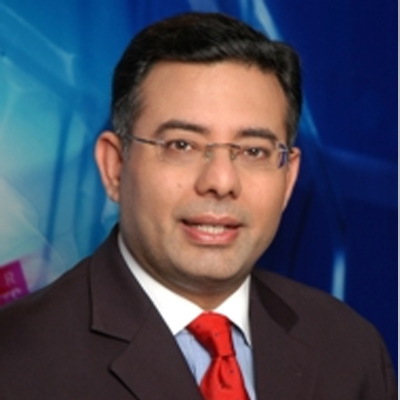
  • ‘We are the biggest investor in the game of cricket’ : Manu Sawhney – ESPN Star Sports managing director

    ‘We are the biggest investor in the game of cricket’ : Manu Sawhney – ESPN Star Sports managing director

     ESPN Star Sports has pumped in a whopping $2.25 billion to acquire the rights for ICC including the two World Cups, the Champions League T20, Cricket Australia and England and Wales Cricket board. The mix includes cricket across the three formats of T20, ODIs and Test matches.


    The mark of aggression has spread to other sports including the Fifa World Cup soccer rights and the Olympics.


    For over a year, Manu Sawhney has been shepherding this drive to crush competition and establish leadership position as a sports broadcaster by acquiring driver content rights over a longer period of time.


    “This is the best in cricket that could be there in the market and places us in the position of matchless leadership not only in Asia but on a global scale,” he says.


    In an exclusive interview with Indiantelevision.com’s Sibabrata Das, ESS managing director Sawhney elaborates on how the ESPN-Star joint venture company is gearing up to be not just a TV brand but also dominate in the digital new media space with its comprehensive content across sports, platforms and markets.


    Excerpts:


    The Indian Premier League was touted as the biggest prime time reality show on Indian television. Why didn’t ESPN Star Sports buy into that hype?
    We wanted to first evaluate how the T20 format of the game would evolve as a product cycle. Remember, we were the first to recognise the power of this new format at the international level when we acquired the ICC rights which include the two World Cups.


    With the IPL doing well, we have now bagged the Champions League T20. It will involve the best of the best where the top teams from various domestic leagues including the IPL, Australia, South Africa, England and others compete to win the title of Champions of Champions. The IPL also becomes a feeder league for this global tournament.


    We recognise that various formats continue to get developed and broaden the appeal of the game across new markets and demographics, providing increasing number of platforms for leverage and exploitation.

    Was the IPL miss a reason why ESS paid higher ($975 million) for the Champions League T20 when it could have got it at a much lower price with DIC’s $751.3 million bid being the second in race?
    When we are in a bidding environment, we do not punt but go ahead with an amount which we believe adds value to our business. We thought $612 million for the BCCI rights was too high for us, but somebody else thought it made business sense. We make a bid thinking what value the property can bring to us, how prepared we are today to leverage it, and how well placed are we for the future to fully realise the potential.


    Our investment in content follows this strategy and allows us to present a sound proposition to our partners. The acquisition of Champions League T20 has been done with this focused, planned and future oriented approach backed by a solid business plan, ensuring our profitability and long term growth.


    As a property, CL T20 has all the necessary ingredients of a blockbuster property, not only on the national level but on a global scale.


    After the inaugural edition this year in December, the tournament is to be scheduled right before the festive period featuring more top quality international teams and increased number of matches spread over a longer duration. This amplifies the opportunities around the property.

    But aren’t you also risking on the most expensive cricket property (calculated on a per game basis)?
    Tell me one property today which is available across the globe with all commercial rights – and that, too, for a period of 10 years! CL T20 is the only such property. This allows us multitude of opportunities to build, develop, customise, and fully realise immense value around the property. And it makes CL T20 most unique and premium as compared to any other domestic or international property currently around from the business perspective.


    Even if we were to compare it with a property like IPL, we have tremendous advantages. The rights around IPL do not include title sponsorship, umpire sponsorship, stadium advertising, official sponsor, ticketing and licensing. These rights amount to sizeable contribution and are expected to grow manifold over the next 10 years as the CL T20 further develops as the most premium tournament.


    The domestic nature of the tournament also limits IPL’s appeal internationally. This affects international syndication and other related rights. On the other hand, we have had significant success with the ICC on the international syndication front and today are better placed than anybody else to fully realise the value of this premium property in the global market.


    Unlike others, we are not just a broadcast brand but today the most comprehensive sports content provider in the region and the biggest cricket content provider in the world. With our three strong TV brands (ESPN, Star Sports and Star Cricket), two robust mobile brands (mobileESPN and Star Sports Mobile) and the most comprehensive online offering in form of www.espnstar.com, we are better placed than anyone else to fully leverage and exploit multiple opportunities across platforms for building our business on the back of CL T20 across the region and globally.

    Even in the ICC bid, ESS’s winning punt was $1.1 billion while the second highest bidder with $900 million was way behind. Are we seeing a more aggressive ESS?
    We are today the biggest investor in the game of cricket in the world with the ICC, Cricket Australia, England and Wales Cricket board rights and the newly acquired CL T 20. This not only provides us with a good mix of all forms of cricket – the new age blistering Twenty20 format, the popular ODIs and the ever-green Test matches, but along with the ICC it also gives us a very strong lineup of top quality cricket with a World Cup every year for the next 10 years. This is the best that could be there in the market and places us in the position of matchless leadership not only in Asia but on a global scale.


    While IPL has been a successful property, in ICC we have the pinnacle of international cricket while CL T20 gives us the very best of the international domestic competition. With the acquisition of CL T20, we have enhanced our driver content portfolio for cricket and our leadership position as a sports broadcaster not just for few years but a longer period of time.

    Do you see the high rise in cost for cricket properties a function of competition or is it based on a realistic projection of business growth?
    The escalation in the rights cost is because of competition as well as growth in the market that you are able to reach. The T20 format, for instance, has expanded the demographic profile from a male skew to young and female audiences. The emergence of new platforms is also playing a part in defining the value in the marketplace.

    India is no longer a low-cost media economy. As the market matures, there will be consolidation. There is, after all, a limited amount of driver content that is available

    ESS enjoyed high revenues from DTH operators as it was carried on the basic tier. But this year Tata Sky and the new DTH operators like Reliance ADAG’s Big TV are not willing to put the three channels on that package. With MSOs (multi-system operators) also consolidating, do you see growth on subscription revenues being hit?
    There is a huge opportunity for sports broadcasters like us and platform providers to work together in building the subscriber base. In global markets, digital subscribers grow on the back of HD, interactivity and video-on-demand; the driver content is live sports. In India, the market is still in infancy. New technologies like DTH, IPTV and mobile are bringing in paradigm shifts. With the power that we have on content across sports, we see tremendous scope to increase our revenues.

    With the ICC Champions Trophy, which was scheduled to be held in Pakistan in September, being deferred, will you be re-negotiating the bid amount with ICC?
    The ICC Champions Trophy is a showcase of game’s best elite players from the world’s top national cricketing sides. It was, therefore, important to ensure full and committed participation of the best teams from all qualified nations for ICC Champions Trophy to retain its premium status. Unfortunately, too much ambiguity existed for many months about the realistic possibility of the event being staged in Pakistan, which led to the current situation where the options available were very limited.


    As the global broadcast and production partner of the ICC, ESS was fully committed to producing and broadcasting the ICC Champions Trophy in a truly engaging and entertaining manner for fans across the globe. Accordingly, all necessary broadcast arrangements were made by ESPN Star Sports as per plans agreed with ICC for covering the event in Pakistan.


    The late decision to defer the tournament did come with its own set of difficulties for various organisations involved in the tournament, and this affected ESS’s business commercially too. Various questions have arisen as a result of this postponement, particularly issues relating to ensuring teams’ participation in the tournament when it is eventually played as well as the knock-on impact of the rescheduling on the overall cricket calendar.


    It is expected from the ICC to decide on these critical matters in the near future. We will only be able to assess the overall impact on our business based upon the way in which these issues are resolved and after we are able to study the short and long term implications of ICC’s actions for ourselves. We reiterate our commitment to working with the ICC in evolving a mutually satisfying solution.

    Isn’t ESS’s aggression spreading to other properties as well including the Fifa World Cup where ESS is said to have bid $40.5 million (up from around $8 million)?
    We have been aggressively mopping up content. In football, we have the exclusive television rights to broadcast Fifa’s stellar lineup of international football events including the 2010 World Cup for the Indian sub-continent. We have the exclusive rights to show over 275 international football games including the Fifa Confederations Cup. We have a multi-year exclusive agreement with The Football Association (The FA), for broadcast rights to The FA Cup, England Internationals and The FA Community Shield on multimedia platforms for the 2008/9 – 2011/12 seasons for 20 countries across the region. This, coupled with the existing partnership with Premier League with which ESS holds BPL rights for 22 countries in Asia through 2010 and rights of UEFA Champions League in key markets, places us as the single largest football content provider in the region.


    In motorracing, we have renewed partnership with FIA for another 5 years across the region and for the first time, secured rights across various platforms and in many key markets acquired terrestrial rights as well. This flagship racing property along with other leading properties like A1, MotoGP and WRC, sets ESS apart from any other network or broadcaster in the region.


    We have also renewed our partnership with Tennis Australia for another seven years, acquired French Open for India, and continue partnership with NBA and key Golf majors including Augusta Masters, The US Open and The Open, among others.


    We have acquired the Olympic rights. The partnership with the International Olympic Committee will allow us to show the Vancouver 2010 and London 2012 Olympic Games for 22 countries across the Indian subcontinent and South East Asia.

    This is the first time that IOC has awarded the rights to one single pay-TV platform across the region.

    Have your programming hours also gone up?
    In addition to the acquired content that we have the rights for, we produce over 3650 hours of original programming per year, which is probably the largest quantum of original programming around these sports.


    To give you an idea, we produce over 1500 hours of original football content and over 1000 hours of cricket content. In addition, our flagship studio show, SportsCenter, offers the best round-up of sporting action around the globe with five localised editions in Asia on ESPN. And along with our entertainment-focused sports bulletin show Score Tonight on Star Sports, we produce over 1000 hours of original sports news programming every year. This lineup of content makes us the prime choice of over 310 million passionate sports fans and business partners and associates across Asia.

    Our content strategy is to build a sustainable and scalable biz across sports, platforms and markets

    How important is the Indian market for ESS?
    It is a very important market for us and continues to contribute to the overall growth of our business in Asia. The media industry in India itself has seen rapid growth in the last few years. There is appetite for quality content and so are the opportunities to leverage and further build the business.


    While cricket has been, for many years, the most popular sport in India, it still continues to grow. This popularity is growing beyond India playing cricket to other international cricket as well as growth of strong female TG for cricket. The dedicated 24×7 cricket channel, Star Cricket, quickly reached penetration levels of 90-95 per cent after its launch last year.

    India is also steadily developing into a multi-sports market. Other sports like soccer, motor sports, tennis, hockey and golf are increasingly becoming more popular and gaining viewership as well. With that in mind, and considering the huge viewership base, India will continue to be a key market for ESS.

    India offers a lot of potential in terms of ESS’s new media initiatives. ESS has invested in a focused manner in the Indian market. With our multi-platform capabilities on the back of some of the most premium content in the form of ICC, CL T20, Fifa and F1, ESS is better placed than ever today to fully exploit the opportunities from the emerging media scenario in India.

    Do you see consolidation in the sports broadcasting space in India?
    India is no longer a low-cost media economy. As the market matures, there will be consolidation. There is, after all, a limited amount of driver content that is available. We hope to leverage our leadership position as and when such opportunities throw up. We are not just TV dependent but have grown our presence in the new digital media space. And we are not just an India product.

    What have been your focus areas since you took charge as managing director of ESS one year back?
    My focus has been on four key areas. The content strategy is to build a sustainable and scalable business across sports, platforms and markets.


    Besides continuing to acquire and develop the strongest, most comprehensive and relevant content, we have enhanced our multi-platform presence.


    While television is the biggest format in which consumers want to watch sports, new media platforms are growing in importance. Growing ESS’s presence in the digital space is a key thrust area for the company and we have invested huge resources to provide a new improved platform.


    We have launched the sharp new version of www.espnstar.com and are offering advertisers an expansive range of customised and creative advertising opportunities. The new Star Sports Mobile complements the mobileESPN offering through entertaining and engaging content with exclusive video highlights from Arsenal and Liverpool FC and Star Sports’ original programmes.


    Skyhawk is a new business management system that has been successfully integrated between internal systems across functions to provide competitive advantage and smoother operations.


    We have also made significant investments in improving our business and operational processes through adoption of new technology over the last one year with an aim to scale up our operations more efficiently for future expansion. Our focus has also been on human resource development and I have worked towards creating project teams within the organisation spanning across departments and markets entrusted with an objective to scout for new ideas to help grow our business.

    How has the last one year been for ESS?
    We have seen growth in bottomline and topline across the region. Our task is to take ESS to the next level in scalable business across sports and markets.
  • ‘Once digitalisation happens, let a thousand channels come’ – Sameer Nair

    ‘Once digitalisation happens, let a thousand channels come’ – Sameer Nair

    Concluding our three-part series of interviews looking at the year that was and on into 2008, we turn the spotlight on NDTV Imagine CEO Sameer Nair.  In a candid chat with Indiantelevision.com, the former Star Entertainment India CEO offers his take on the entertainment industry, why he feels the TV industry needs a kick up, the importance of not just ambling along, and the potential that 2008 offers.

    What were the key points of reference which defined 2007? One would be for you personally and also if you could offer a sense of where the industry is in general?
    Well, I left Star TV, in which I was working for about 13 years. But I think 2007 opened on a good note because we did KBC with Shah Rukh Khan and so I thought that was a good swansong of sorts for me. We also got Gajendra Singh from Zee to Star. He was with Zee for I think 16 years and so this was something equally dramatic.

    So those were the last good things to do at Star. On a personal level it was of course moving on and setting up a whole new company, a whole new business and preparing for the launch of a new channel.

    2007 basically marked preparation for 2008?
    Yes! As you can see, it’s been all the pre-production and production. And now we get ready for release. So it’s been a lot of that kind of hard work. It’s been about team building… It’s been about company building. It was about resource building and also financial resource building and putting it all together.
    I think by the time indiantelevision.com puts up this interview we will have over 132 people, which is I think a good collection of people across all disciplines.

    What were the positives that came out of this year?
    One positive of course is there seems to be a lot of interest in all things media, in all things entertainment. So there have obviously been so many more players entering the market, so much more money being put into the market.
    So that’s obviously a good thing, industry per se. I think a lot of people have announced or started new ventures, which shows that there is obviously place for growth and a place for new players to get into.
    There is some level of consolidation, there is some increased activity of international participation in local business. The movie business has gone through the roof.

    But was it a good year for the business?
    2007 was an interesting year because it, in my mind, remains a sort of a question mark. It will get resolved in years to come as to whether it was a good year or not. But right now everything is too close, so I mean this was the year where millions of dollars were pumped into the system. You know prices went through the roof, newer and newer players getting into it, each man with bigger and bigger claims and promises. Nobody talks the normal figures anymore.
    Everything is in a super inflated scenario. It’s like the wire where the string is really stretched. So whether it will be good or bad, it is hard to say now. Currently, everyone is into this valuation zone and everyone seems to be so rich.

    The rollout of digital cable, which was supposed to proceed in a particular manner, did not go the way it ideally should have. Your views on this?
    That is hardly a surprise. There was always this issue about how it would roll out and if it would be mandatory or voluntary. How does it all work? It didn’t really come as a surprise that it didn’t happen in A or B or C manner.

    So effectively nothing of any real note happened?
    No! There was no landmark legislation that occurred, there was no landmark regulation that occurred, there was no landmark activity. I don’t really think that there has been any major change. The world has not undergone a digital revolution, nor a mobile one. On television, some shows are doing better than others. The gap between Star and Zee narrowed, Zee came within a whisker of Star, than it again fell back. Now it is again coming back pretty much as per calculations. But there was nothing outstanding. It was straightforward.

    But for the industry in terms of sports, a lot happened.
    Sports was an interesting thing that happened. That was pretty good if you look at the high priced acquisition of the ICC rights (by ESPN Star for $ 1.1 billion).

    It is not looking so high-priced now because T-20 was not a factor in that purchase and now it’s there as a very high value part of the ICC rights.
    T-20 is the best thing that happened to Indian cricket. It completely re-energised sport and completely reignited interest in it. Now between ICL and IPL, it has really brought the sport back. But the price points, because there is no distribution revenue in this model of note, is not robust at all.

    The lament is that distribution channels are clogged and yet we have all these channels launching? Isn’t that a big contradiction?
    Well distribution and then everything that will happen as a result. Some people look at this business and they say that, ‘Oh so many new players are launching, there is no space.’ On the one hand we talk about how the market is growing, the media sector is growing. The other version is that it is growing but there is no space for new players, which is actually the exact opposite of growth. You know its like saying that the movie industry is growing but let’s any not make any more movies.
    They are completely contradictory terms. So once digitalisation happens, whichever version they choose to refer it by, I’d say let a thousand channels come. Because water finds it own level, and people decide what they want to see, when they want to see, how they want to see and what they want to pay for and it all sorts out in the end.
    But saying let not a thousand channels come, is not progress at all. It does not mark progress for consumers, or for operators. or for anyone as a matter of fact.
    What the TV business needs is one nice kick in the butt, like the telecom business got. This is what will help it really surge forward. So far it has been sort of ambling along.

    Everybody is expecting that Reliance will give that kick. Reliance is launching DTH this year, Bharti is launching.
    This is why 2008 will be a year to write home about. We hope that 2008 will be the year for the industry to really surge forward and make that big leap forward.

    Each year we talk of the big leap forward, but it’s not happened. 2004, 2005, 2006. You know few things occurred here and there, like suddenly in 2006 the cricket purchase was big. But the rest of the industry didn’t keep up. The whole $ 612 million price point (by Nimbus) was based on some assumptions, and those assumptions didn’t really come through.

    The fact is that all of business is predicated over some basic parameters, which is that people will go to movies, people will buy movie tickets. People will pay their cable bills. Advertisers do need to reach to consumers and they will buy advertising. That’s basic, and our problem is that we don’t have this in the TV part of the business. We don’t have this one little basic matter about people will pay their cable bills which will then be passed on. So it leaves a lot of things in the air when you talk about the television business.

    You are talking about pricing, subscription?
    It is already priced. Subscription is priced. But when you try and compare talk time, in the telecom context to TV, that doesn’t really work. Because the input cost on TV for example is not talk, it is real cash. If people play cricket, make movies, shows, that is like a real cost. It is not talk time. So when you say that every home will pay Rs 5 per month for a channel to see movies and serials, at some point the mathematics are not going to add up. So it is just that these things will get sorted out as it goes along. As more players get into it I think that the industry itself will sort it out.

    But there is also the theory that the government will not allow the market to determine costs of TV (and cricket) because other forms of entertainment are becoming too expensive for too many. Multiplexes for example are out of reach for many. So there is only TV. This would mean that tomorrow the IPL will be termed as being of national importance and will become free to view.
    You must note that there is no such thing as a free lunch ever, so somebody has to pay the bill. What’s been happening in the last so many years is that the advertisers have been paying the bill. The advertiser is the ultimate God who is paying for everybody’s lunch.

    Currently there is a combination of private equity money and advertisers who are footing the bill. But eventually, the bill will have to be paid by the consumers, who consume content in whatever manner or the price points will have to come down. So either all the price points return to normalcy by which the market settles and everything will sort, or you will have to pay the bill.
    Anywhere in the world in a mature TV / entertainment business, you have the twin model (advertising / subscription). That’s the way the business works. For us, it’s always been immature, fully lopsided towards the one side. Do you know any other market which boasts of 300-400 channels which are all essentially ad supported because distribution as a model is all over the place.
    You go to any other country where it is supported this way, you will find 5-10-15 channels. So that’s something which has to be sorted. It is not like players have to think that India is unique. And I think this has to happen.

    It is just a functional evaluation. This is what it needs, that leap forward. The input cost is going through the roof, return is coming down, and for the majors it is flattening their margins.
    For others what would the plan be then? So that, I think that has to happen and as they see that as the defining moment. Whether you define a moment or the moment defines you, in any case the industry will have to define the way forward. Whether it is collective or individual, something has to happen.

    That is exactly the contradiction in this. But it needs resolution. Otherwise a lot of these contradictions can co-exist for a long time. Things can go round and round and circle and circle without imploding or exploding.

    Something has to give?
    Over the last 6-8 months, and with the spate of these new announcements, there has been more addition into the TV space. This is obviously going to create an enormous amount of pressure on the current infrastructure. Obviously we are all new, we wish to make a mark for ourselves, so everyone will do things to try and make a good impression. There will be the existing players, who will obviously look to protect their turf.

    But it is at an interesting point because there is pressure on the system. Now this has never happened before, that there have suddenly been so much, forget new channels, so many new platforms that are all coming at the same time. There is this huge interest in the movie business all of a sudden. In the last year and a half all that has happened.

    Screens are opening up…
    Screens are opening up, It’s happening. So, as the pressure increases, obviously people will find newer and newer ways to do things. New minds enter into it, lots of different people, younger people, coming out with even cleverer ideas. It has to go through a change.

    So 2008 has a lot of potential?
    We hope, though these predictions have been made many times in the past and have sorely let you down. But 2008 seems to have a better chance than most years to make a real impact.

  • ‘What we are telling the regulator is that the sheer volume of content this industry generates is impossible to police’ : Paritosh Joshi – Star India advertising, sales and distribution president

    ‘What we are telling the regulator is that the sheer volume of content this industry generates is impossible to police’ : Paritosh Joshi – Star India advertising, sales and distribution president

    It’s nigh on one-and-a-half years since Star India brought in a “media outsider” Paritosh Joshi as president – advertising sales & distribution, thereby consolidating the two major revenue streams of India’s lead broadcast network under one position.

    That it’s not been exactly hunky dory for Joshi since his induction is putting it mildly. His arrival has coincided with the return to the ratings reckonings for the former number one Hindi entertainment network Zee TV while on the distribution side the story has been one of the sector regulator’s increasingly watchful eye on the industry. There is also the government mandated CAS rollout timetable that Star has stated it will fully support.

    Joshi spoke at length on this and a number of other issues in an evening tete-a-tete with Indiantelevision.com.

    Excerpts:

    It’s close to one-and-a-half years since you joined Star. What have you done and managed that made a difference?
    Well, for one my coming to Star challenged many notions, since I had no prior media experience. But it had its advantages in that I came on board carrying no baggage and no preconceived notions.

    Interestingly, your induction also coincided in a time frame sense with Sameer’s pet theory that the entertainment business operates in a four-year cycle…
    The real reason for Sameer’s continuing success is that not only does he challenge his own beliefs but he encourages others to challenge his beliefs.

    As for me, my task was to look at both sides (distribution and ad sales) from above and approach revenue in a derisked sense. What we have realized is that the different parts of our business are not functioning as silos but have a number of linkages that need to be tapped into in a more holistic manner. This involves making decisions on a continuous basis.

    The converged new world is what it sounds like. Could you expand on that?
    We are developing a new understanding of the TV ecosystem. How do all these work in tandem is what we are trying to get a grip on. There are interactions across the businesses as well as new opportunities.

    For instance, we have put in Nanette D’Sa as head of licencing and merchandising; there is the branded entertainment division we have launched.

    Then there is our internet play. We have the online rights for ICC cricket and we’ve launched iccchampionstrophy.indya.com. We will soon be bringing myspace to India. Ajay Vidyasagar is actively involved there.

    On the mobile front we have the 7827 shortcode that works across all networks. A lot is happening on that front, which is Viren Popli’s baby.

    What are the principal challenges that you are confronting?
    There is an extremely complex regulatory environment in place.

    One could say there was hardly any worthwhile regulation earlier, so it’s about time.
    You have a point, but from no regulation to over regulation in one shot is also not the best way to do it either.

    We will have to demonstrate by behaving right that we are willing to work on a collaborative model than an antagonistic model

    Well, if you were to place the kind of content that is put out on our networks before Britain’s Ofcom for instance, I am sure virtually all channels would have quite a few questions to answer.
    That’s not really a correct comparison. We (the Indian television industry) have had to grow from infancy to adulthood in one dozen years while it is a 50-year-old story in Britain. The government should make some allowance for that.

    What we are saying is that we will work with you (the government) in each part of the business to get the system in order. What we are also telling the regulator is that somewhere along the line, the sheer volume of content that this industry generates is impossible to police.

    Look at it this way. We (Star) produce 12 hours of original content every day. And there is virtually no time lag between production and delivery. If our degrees of freedom are circumscribed, our ability to deliver a quality product to our constituency gets diminished.

    Agreed, but the flip side is that whenever you try to bring order into what has been a free-for-all, there will be some amount of pain and chaos involved. That has been shown when PAN cards were introduced, as too VAT. As long as the intent is not malafide, shouldn’t industry leaders be taking the long term view?
    We’ve got too much at stake to think in the short term. And I am sure the same applies for the other big networks like Zee and Sony. The big networks should be and can be trusted to do the right thing.

    We will have to demonstrate by behaving right that we are willing to work on a collaborative model than an antagonistic model. Dialogue across constituencies is important and I am actively involved on this front.

    How many know that Star has substantially contributed to the working of the content code?

    Coming to the specifics of your network, where do you see the biggest upside on revenues coming, going forward?
    DTH will be truly it, over the next couple of years, though in discontinuous spurts. By this time next year we should be looking at between 2.5 to 3 million subscribers between the two networks (Tata Sky and Dish). Even at the Rs 27 per sub that we have been forced into agreeing to (as per the TDSAT order), you can do the math.

    That’s assuming that all subscribers will take your offering.
    As far as our current crop of channels go, we will be on the basic packages across all services so would expect to get those numbers.

    What about addressable cable. Isn’t that where the real big numbers are? More so with CAS getting rolled out?
    The addressable cable rollout is unclear as to its shape at this juncture. I think that what will happen is that while there may be some false starts, it will all settle down in due course.

    If addressable cable rolls out well, then great. We are platform agnostic on addressable systems so it can only benefit us.

    Speaking of CAS, how do you see that impacting revenues?
    We are close to signing all our CAS contracts. Star is ready to roll on CAS. The IBF will work together with other stakeholders to facilitate this in any way we can.

    Another difficulty that has hit both Star Movies and HBO is on the issue of certification of films. The Festival season is here, is there any resolution in sight there?
    We expect some solution but it will take time. We’ve basically written it off for this quarter.

    What does that mean in percentage terms?
    That would mean a write-off of about one third of the revenues we would normally have expected for the quarter.

    The most recent addition to your bouquet has been Neo Sports. Word is that you have committed a massive MG to Harish Thawani.
    I can’t comment on the size of the MG but we have to work on the fundamental premise that cricket played in India will get viewership like nothing else can, which is why Harish made the punt he did…

    What about the regional language story?
    In Bengali, we have already started our activity with a two-hour entertainment band in the afternoons on Star Anando (news channel). You could say that is the test run though we are yet to fix a date on a full fledged Bengali entertainment channel launch.

    We’re looking at the Telugu channel sometime early next year. Probably March or April.

    Are you considering the acquisition route for the Telugu channel?
    Not at all. We will be launching a completely new channel from ground up.
    On the advertising front, what are the issues that are worrisome?
    With no disrespect to LV (Krishnan, CEO of Tam India) meant, considering the heterogeneity of the country, the present ratings system is inadequate. In India we have 5,000 meters, there are 18,500 in the UK where the population is much more homogenous.

    I’ll end this by saying, ‘As providers of content real estate, our value proposition has been reduced to the absurdity called CPRP that determines and assesses everything. We would argue that this obsession with one single metric destroys value rather than creates it.’

  • Indya.com gears up for cricket World Cup

    Indya.com gears up for cricket World Cup

    MUMBAI: Played with passion! Followed with obsession!

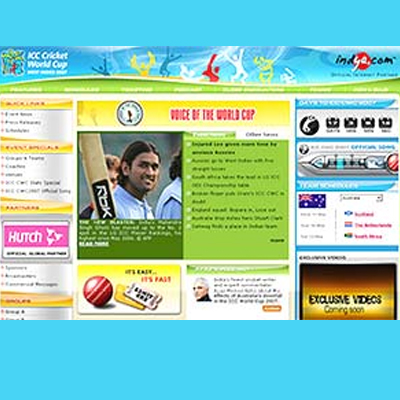
    With the cricket World Cup scheduled to kick off in less than a month’s time indya.com, which is running the official website www.cricketworldcup.com as the International Cricket Council’s (ICC) web partner, is starting to make a push.

    The site officially launches on Monday, 26 February.

    Information available with indiantelevision.com indicates that one presenting sponsor and four associate sponsors have been signed up so far for this year’s highlight cricket event.

    It was last year that Star inked a deal with the ICC to run its sites for the Champions Trophy and next month’s World Cup. Indya.com business head Sumant Kasliwal claims that its Champions Trophy site got three million unique users. In total there were over a billion hits, a lot of which, not surprisingly came from India. One million downloads took place and there were 100,000 registered users.

    For the Champions Trophy the site got 230 million page views. Kasliwal says that for the World Cup the site is expecting a billion page views during the event. “Our application Matchcast (which is a scorecard) has been expanded upon. It will be interactive. The aim is to give the consumer a complete experience. One can get match highlights, fall of wickets package, interactive contests. There will be live chat during the game. Users can comment on the state of the game. Our video content will include highlights from the previous World Cups. Other sites (as per the ICC diktat) are not allowed to show cricket videos.”

    Kasliwal also mentions another application – the Simulator. The visitor can view a graphical representation of what is happening ball by ball. He says that from a technological point of view it is a challenge. For each over two dozen parameters are taken into account. The recording takes place on the fly.

    There will also be expert analysis of each match. Prominent names are in the process of getting signed up. There will also be interviews with players and the captains. For the captains there is a section Captainspeak. Kasliwal says that it is in the process of tying up with speakers.

    It is also doing an interactive Voice Of the World Cup initiative. The contest kicks off next month. Here a clip of India’s match versus Pakistan in the previous World Cup is featured. Sachin basically hammers Shoaib. One can visit the section and provide a commentary recording. The winner who will be chosen by the public and a team of experts gets to do commentary for the semi finals and the final for the site.

    The site will also have a picture gallery courtesy gettyimages. For fun one can participate in games. One game that will shortly be launched is called Pick The Score. This is a prediction game and one has to guess scores. There will also be a fantasy game. Here one chooses a dream team for each match and one scores depending on how well the individual players are faring.

    The site will also have quizzes, an ICC contests suite. There will also be pages dedicated to teams and players, merchandise that can be ordered. In some countries like New Zealand, Hong Kong, Korea, Germany, France the site will offer for a fee live streaming of matches. In India highlights and the other earlier mentioned features will be given for free.

    GroupM COO South Asia Vikram Sakuja says that at first the agency was not sure how the product would turn out. However he is happy that for the Champions Trophy the site got a quarter of a billion page views. “I am glad that GroupM saw this potential and got some of our brands like Lufthansa to work with this exciting media offering.”
     

  • Tata Sky to pump in Rs 20 billion, expects break even in 5-7 years

    Tata Sky to pump in Rs 20 billion, expects break even in 5-7 years

     MUMBAI: Tata Sky will take 5-7 years to break even and plans to further invest Rs 20 billion to ramp up its direct-to-home (DTH) business.

    “We have already invested close to Rs 10 billion. We will pump in a further Rs 20 billion,” says Tata Sky CEO and MD Vikram Kaushik.

    There is a hardware and content subsidy and it will take us 5-7 years to break even, he adds. Tata Sky charges Rs 3999 for hardware and installation cost while the subscription fee is Rs 300 per month.

    The DTH service provider has a subscriber base of half a million and expects to benefit largely from the ICC cricket World Cup with its free subscription promotional scheme for the next three months.

    It has roped in actor Hrithik Roshan for its new marketing campaign where select viewers would get to watch the World Cup final match with him.

    “We are on course to achieve our target of one million subscribers in our first year of operations. We have activated half a million boxes. The World Cup should give us a spurt as we have interesting value-added features. In the Cas (conditional access system) areas, we have also seen a rise in demand for our service,” says Kaushik.

    Tata Sky hopes to add on the Sun network channels soon. “There was a hearing in the court today. The final hearing will be before the first half of March,” says Kaushik.

  • SET Discovery targets Rs 4.5 billion in FY07 on back of World Cup

    SET Discovery targets Rs 4.5 billion in FY07 on back of World Cup

    MUMBAI: Riding high on the ICC cricket World Cup wave, SET Discovery expects to garner a revenue of Rs 4.5 billion in 2006-07. This would mean a growth of 40 per cent in a tight subscription market with cable operators resisting any big increase in payouts to broadcasters.

    “SET Discovery is targeting a total income of Rs 4.5 billion in 2006-07. This will include for the first time income from direct-to-home (DTH) which should be contributing eight per cent of the overall kitty,” says a source in the industry who is close to the company.

    SET Discovery signed a contract with DTH service provider Dish TV in June 2006 and subsequently with Tata Sky.
    When contacted, SET Discovery president Anuj Gandhi declined to talk on the financials of the company. “We had set an aggressive target this year and we are going to hit it,” he said.

    Despite a slide in Sony TV’s ratings, analysts say SET Discovery’s growth in the fiscal would be greatly helped by a rich lineup of cricketing properties that include ICC Champions Trophy and the ICC World Cup.

    SET Discovery’s revenue stayed flat in 2004-05 but rose 15 per cent to Rs 3.2 billion last fiscal as it added Ten Sports in its distribution bouquet. Sony signed a distribution deal with the sports channel which has key cricket properties that include the Pakistan, Sri Lanka and West Indies boards.

  • ATN launches Cricket Plus channel in Canada

    ATN launches Cricket Plus channel in Canada

    MUMBAI: Asian Television Network International Limited (ATN) Canada’s South Asian Broadcaster has launched ATN-Cricket Plus.

    This is a sports channel with prime focus on cricket. ATN has entered into a strategic programming alliance with DirecTV, which has launched Cricket Plus all across the US.

    Earlier the Dubai based Taj TV had reached an agreement to produce DirecTV’s Cricket Plus Channel. Taj TV operates Ten Sports in India, and has experience in running sports channels for a variety of clients through its Dubai Media City operation. That currently handles Ten Sports Middle East, Ten Sports India, Ten Sports Pakistan, ART Prime Sport, Showtime Sportsnet, Showtime Sportsnet America and Citrus TV.

    ATN Cricket Plus in Canada will showcase some live and many competitions on a delayed basis. ATN Cricket Plus will compliment the existing successful Commonwealth Broadcasting Network (CBN) channel across Canada. ATN says that it has had many firsts to its credit in Canada dealing with cricket.

    It was the first to bring the Live Satellite feed of the World Cup Cricket back in 1986 to Canada. Since then ATN has brought in several ICC tournaments, Championship Trophies, one day internationals, Twenty 20’s, test matches including the Ashes and many world class games featuring countries like, India, Pakistan, England and Australia. ATN is also the official Broadcast Media Sponsor of the Canadian National Cricket Team, which is scheduled to participate in the World Cup soon.

    ATN Canada president and CEO Shan Chandrasekar says, “Through Cricket Plus we are extremely pleased to be associated with DirecTV one of the world leaders in entertainment, news sports, and the largest DTH platform in the world. DirecTV has redefined the sport of cricket for television entertainment. It has been a pleasure working with DirecTV executives.

    DirecTV VP international programming Aaron McNally says, “We admire the pioneering role played by ATN with its dedication and track record over the past several years in actively promoting and consistently broadcasting cricket across Canada.

    “We already have long-term agreements with ATN for live games from various countries and are delighted to enter into this exclusive agreement with ATN on Cricket Plus for Canada”.

    Along with cricket coverage the channel will also broadcast daily highlights, sports news bulletins as well as other sports relating to the South Asian community living in the United States and Canada, such as field hockey. Cricket Plus has acquired the rights to broadcast live, all major international men’s and women’s hockey world cup and champions trophies.

    It will also showcase Canadian cricket events, talk shows on cricket and cricket celebrity specials.


  • ICC pilots Media Notes publication in build up to the World Cup

    ICC pilots Media Notes publication in build up to the World Cup

    MUMBAI: With less than six weeks to go to the start of the cricket World Cup the International Cricket Council (ICC) has launched the first pilot edition of a new publication aimed at the world’s cricket media.

    Media Notes will be available to download from icc-cricket.com and will be produced on a regular basis in the build up to world cricket’s showcase event.

    The publication will promote major tournaments and ICC events, highlight the women’s game and also look at matches of significance involving the ICC’s Associate and Affiliate Members.

    And it will also keep readers up to date with the latest movements in the LG ICC Rankings, both for teams – the Test and ODI Championship tables – and individual players. The LG ICC Rankings are the only officially endorsed ratings for international teams and players.

  • SAB, Visa to give ‘Fame X’ winner opportunity to sing Indian Cricket anthem

    SAB, Visa to give ‘Fame X’ winner opportunity to sing Indian Cricket anthem

    MUMBAI: Sony’s general entertainment channel SAB, has partnered with the official regional sponsor for the ICC World Cup, Visa International to award the winner of its musical talent hunt show Fame X with an opportunity to sing an Indian cricket anthem in support of the team at the tournament. Apart from this, the winner will also receive a contract with Sony BMG.

    The cricket anthem aptly titled ‘Inspire India’ will be composed by the musical trio Shankar Ehsaan Loy and will be a tribute to inspire the Indian cricket team at the upcoming ICC Cricket World Cup 2007, in the West Indies. The music video will feature the 1983 cricket stars Mohinder Amarnath, Syed Kirmani and Kris Srikanth.

    Visa is the regional official sponsor for the ICC cricket tournaments for the South Asia region, including India, Sri Lanka, Bangladesh and Pakistan. This initiative will showcase support for the Indian cricket team, while being the core platform that will launch Visa’s activities for the World Cup, states an official release.

    SAB business head Vikas Bahl commented, “Fame X is based on an internationally successful format that has the potential to drive viewership with its gripping content and high emotional quotient. For SAB, the show has garnered a larger set of audience with its took and feet and it has successfully increased our reach in the Hindi speaking market.”

    “Often the winner of such reality shows is not able to make it big, due to the lack of a suitable and large platform. Keeping this in mind, we are glad to announce our association with Visa International for the Inspire India Cricket Anthem in association with Fame X. The Fame X winner wilt get this opportunity to sing the Inspire India Cricket Anthem for the Indian Cricket team. This is an excellent way to pay tribute to all the Indians who have supported the contestants throughout their musical journey.”
     

  • ICC issues ban on ‘live’ web coverage of World Cup

    ICC issues ban on ‘live’ web coverage of World Cup

    MUMBAI: International cricket governing body ICC is tightening the screws as regards its control over the rights to next year’s World Cup in the West Indies.

    In a move similar to that already applied by the International Olympic Committee since 2000, the ICC is looking to ban over-by-over internet coverage of the game’s premiere one day tournament.

    The website of UK’s Sports Journalists Association (SJA) reports that news organisations offering over-by-over coverage could lose ther press accreditations altogether.

    The SJA quotes the ICC rules as stating: “For the avoidance of doubt, ball-by-ball and over-by-over updates for transmission via the radio, the internet or via any form of mobile device (including mobile telephones) or other related devices from within the ground are strictly prohibited.”

    “These are draconian restrictions on press freedom and the ability of publishers and editors to inform their readers,” Steve Oram, the director of the Newspaper Publishers Association, and chairman of the sports rights working group at the World Association of Newspapers, was quoted in the report as telling the Guardian.

    “It is dangerous in terms of precedent but perhaps more sinister is that increasing controls interfere with press freedom by controlling what newspapers can or can’t say,” Oram said.