Tag: ICC

  • Cricket’s ruling body wants women to hack the future of sports technology

    Cricket’s ruling body wants women to hack the future of sports technology

    DUBAI: Cricket’s mandarins have never been mistaken for tech visionaries. But the International Cricket Council is taking a punt on innovation with Beyond Boundaries, a worldwide hackathon that demands every competing team include at least one woman—and promises cold, hard cash to the best all-female squad.

    The challenge, powered by Ignyte, a Dubai-based start-up accelerator, runs through 2025–2026 and invites students, start-ups and scale-ups to reimagine sport in the age of artificial intelligence. Though anchored in cricket, the hackathon welcomes ideas spanning any sport. The grand finale arrives in January 2026, when the most promising teams will pitch their wares on an international stage.

    Winners will pocket prize money, gain access to mentors and industry heavyweights, and—crucially—get pilot opportunities with the ICC and its partners to test their solutions in real sporting arenas. That is no small carrot for ambitious founders looking to crack a multi-billion-dollar industry.

    The competition zeroes in on three areas. First, boosting visibility and engagement for women’s sports through digital platforms and AI-driven fan models. Second, crafting next-generation experiences for younger audiences with interactive, personalised tech. Third, improving athlete health, performance and inclusivity using wearables, machine learning and smart analytics.

    Applications close on 19 December 2025. The ICC’s bet is simple: get more women into sports tech, and everyone wins. In a sector long dominated by blokes, that would count as boundary-breaking indeed.

  • Cricket body dangles south Asian media rights carrot

    Cricket body dangles south Asian media rights carrot

    LONDON: The International Cricket Council (ICC) has fired the starting gun on a potentially lucrative media rights auction, releasing tender documents for broadcasting deals across Bangladesh, Pakistan and Sri Lanka spanning 2026 to 2028.

    The prize package includes some of cricket’s crown jewels: the ICC Men’s T20 World Cup 2026 in India and Sri Lanka, and the Men’s Cricket World Cup 2027 across South Africa, Zimbabwe and Namibia. Women’s cricket gets equal billing with the T20 World Cup 2026 and the inaugural Women’s T20 Champions Trophy.

    Pakistan emerges as the most complex battleground, with the ICC carving up rights into five separate packages covering both men’s and women’s tournaments. Bangladesh and Sri Lanka each get streamlined single-package deals combining television and digital rights—a nod to the region’s rapidly evolving media consumption habits.

    Broadcasters and streaming platforms eyeing the action must contact iccmediarights2024-2031@icc-cricket.com to access tender documents. The ICC promises more invitation-to-tender releases for additional markets in the coming weeks, suggesting a coordinated global push to maximise revenues.

    The timing reflects cricket’s commercial renaissance, particularly in south Asia where the sport commands religious devotion and advertising premiums. Pakistan’s multi-package approach hints at the ICC’s confidence in extracting maximum value from a market where cricket broadcasts routinely deliver audiences in the tens of millions.

    The tender covers four men’s events and three women’s tournaments, underlining the ICC’s commitment to gender parity in its commercial strategy. For broadcasters, the stakes are clear: miss out now, and watch rivals corner one of sport’s most passionate fanbases until 2028.

  • Apollo Tyres takes the front of India’s shirt in record guesstimated Rs 579 crore deal

    Apollo Tyres takes the front of India’s shirt in record guesstimated Rs 579 crore deal

    MUMBAI: Apollo Tyres has replaced Dream11 as the lead sponsor of India’s men’s and women’s cricket teams in a three-year pact guesstimated to be worth Rs 579 crore, the richest jersey deal in the sport’s history.

    Media reports state that the Gurugram-based company will pay the Board of Control for Cricket in India (BCCI
    ) Rs 4.5 crore for each bilateral match and Rs 1.71 crore for ICC fixtures,  covering 121 bilateral games and 20 global tournaments through March 2028. Dream11 had reportedly been paying Rs 4 crore per bilateral game.

    The switch follows the government’s ban on real-money gaming platforms under the Promotion and Regulation of Online Gaming Act 2025, which ended Dream11’s contract and left the team without a shirt sponsor during the Asia Cup in Dubai.

    BCCI secretary Devajit Saikia called the deal “a partnership between two institutions that have earned the trust and respect of millions.” Vice-president Rajeev Shukla said the intense bidding—from Canva, JK Cement and other suitors—proved the “strong market confidence in Team India’s global brand.”

    Vinit Karnik from WPP Media had this to say on Linkedin: “Apollo Tyres stepping in as Team India’s lead sponsor marks more than a sponsorship—it underscores commitment to excellence on a global platform. Cricket is India’s cultural heartbeat, and this partnership reflects vision, scale, and legacy. At WPP Media, we are proud to stand alongside Apollo Tyres in this defining journey.”

    The Apollo logo will now feature on all formats of Indian cricket, giving the tyre maker unprecedented global visibility and underlining cricket’s unmatched commercial clout.

  • ICC teams up with Google to turbocharge women’s cricket

    ICC teams up with Google to turbocharge women’s cricket

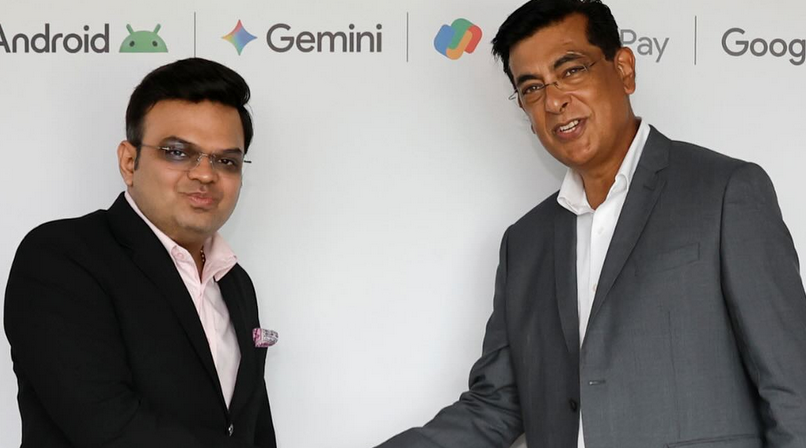
    LONDON: The International Cricket Council (ICC) has inked a landmark global partnership with Google to accelerate the growth of women’s cricket, betting that technology can turbocharge fan engagement at a moment when the sport is reaching critical mass.

    The tie-up, unveiled on Friday, comes just as the women’s game prepares for its two biggest stages: the ICC Women’s Cricket World Cup 2025, to be split between India and Sri Lanka, and the ICC Women’s T20 World Cup 2026 in England and Wales.

    For the ICC, the partnership signals a decisive push to make women’s cricket more visible, accessible and lucrative. Earlier this year, Unilever became the ICC’s first global partner for the women’s game. Now, Google’s entry adds the sheen of Silicon Valley to cricket’s most ambitious attempt yet at elevating women’s sport to parity with the men’s version.

    ICC chairman Jay Shah called the deal “a landmark moment” that would help take women’s cricket “to even greater heights” by inspiring new generations and strengthening the sport’s global reach. “Together with Google, we aim to make women’s cricket a truly global force, resonating with fans in both established and emerging markets,” he said.

    Google’s arsenal of consumer products—Android, Google Pay, Gemini AI, and Pixel smartphones—will form the backbone of this strategy. The idea is to create an integrated ecosystem that enhances every stage of the fan journey: discovering match schedules, watching highlights, engaging with players’ stories, making seamless payments for tickets or merchandise, and celebrating wins online.

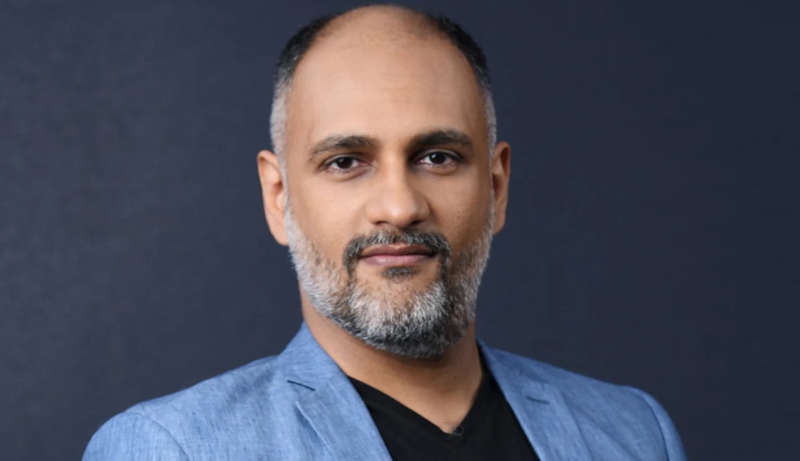
    “This alliance is not just about a single tournament; it’s about building deeper engagement,” said Google India vice-president of marketing Shekar Khosla. “We want to make the sport more accessible and enable fans to feel a stronger connection with what they care about.”

    The ICC hopes this “always-on” digital presence will not only expand the fan base but also attract new advertisers eager to reach younger, more digital-native audiences.

    Women’s cricket has been growing rapidly, buoyed by marquee tournaments like the Women’s Premier League (WPL) in India, the Big Bash in Australia, and increasing broadcast commitments. Audience numbers are rising, sponsorship is flowing in, and players such as Smriti Mandhana, Alyssa Healy, and Nat Sciver-Brunt are becoming household names.

    But the economics still lag far behind the men’s game. Rights packages, sponsorship valuations and player salaries remain a fraction of men’s cricket. By hitching the sport to Google’s technology stack, the ICC is signalling it wants to fast-track the commercialisation curve, making women’s cricket a product that broadcasters, advertisers and fans cannot ignore.

    The deal also reflects the growing entanglement of global tech platforms with sport. From Amazon streaming tennis to Apple bankrolling Major League Soccer, Silicon Valley is embedding itself in the sporting ecosystem. For Google, cricket is a natural fit: it is India’s most-followed sport and one of the most powerful cultural exports across the commonwealth. By associating with women’s cricket, Google also gets to position itself as a champion of inclusion and representation—values that resonate with global consumers.

    For the ICC, this is as much about geopolitics as sport. The women’s World Cup in 2025 will be staged in India and Sri Lanka, markets where Google dominates digital infrastructure but where competition from local players like Paytm, PhonePe and Jio is fierce. Embedding its brand through cricket is a way to reinforce dominance at a cultural level.

    For women’s cricket, the timing could not be better. With two World Cups in less than a year, unprecedented visibility is guaranteed. The challenge will be to convert eyeballs into habit, passion into loyalty, and novelty into permanence.

    Cricket’s men’s World Cups have long been billion-dollar properties. The women’s version has so far lived in their shadow, but that is changing. The 2022 Women’s World Cup drew record viewership globally, and the inaugural WPL auction stunned observers with player valuations that rivalled established men’s leagues. The ICC now wants to seize this momentum and institutionalise women’s cricket as a commercially viable product on its own terms.

    The Google alliance, then, is more than a sponsorship. It is an attempt to rewire how women’s cricket is consumed, blending sport with technology to create experiences that transcend stadiums and television screens. If successful, it could turn the women’s game into a global sporting phenomenon, not just a promising sideshow.

    If it fails, critics will dismiss it as another flashy announcement without structural change. But for now, women’s cricket has the wind at its back, the ICC has its boldest partner yet, and Google has found a new pitch to play on.

  • JioStar top executive Sanjog Gupta named ICC CEO

    JioStar top executive Sanjog Gupta named ICC CEO

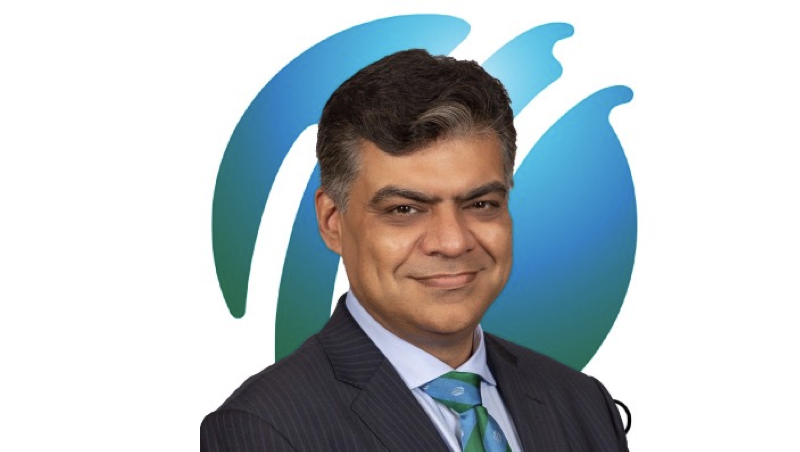
    MUMBAI: The International Cricket Council (ICC) has appointed Sanjog Gupta as its new chief executive officer, marking a bold leadership move at a time when cricket is chasing global expansion and Olympic glory. Gupta, currently CEO – sports & live experiences at JioStar, will take charge on from 7 July becoming the seventh CEO in the ICC’s history.

    A media and sports veteran with over two decades of experience, Gupta is widely credited with reshaping India’s sports broadcast landscape. He previously headed Disney Star’s sports business, playing a key role in scaling the IPL, ICC events, and launching leagues such as PKL and ISL. His appointment follows a global recruitment drive that drew over 2,500 applicants from 25 countries.

    ICC chairman Jay Shah said, “Sanjog brings extensive experience in sports strategy and commercialisation, which will be invaluable for the ICC. His deep understanding of the global sports as well as M&E landscape combined with his continued curiosity about the cricket fan’s perspective and passion for technology will prove essential in our ambition to grow the game in the coming years. Our goal is to move beyond traditional boundaries and establish cricket as a regular sport in the Olympics, growing its expanse across the world and deepening its roots in its core markets.

    We considered several exceptional candidates for this position, but the nominations committee unanimously recommended Sanjog. The ICC board directors look forward to working closely with him, and I would like to welcome him on behalf of everyone at the ICC.”

    Gupta’s selection was unanimously recommended by a nominations panel featuring ICC deputy chair Imran Khwaja, ECB chair Richard Thompson, SLC president Shammi Silva, and BCCI honorary secretary Devajit Saikia, before being approved by Shah and ratified by the full ICC board.

    Gupta said he was “honoured” to lead cricket at a pivotal moment. “It is a privilege to have this opportunity, especially at a time when cricket is poised for unprecedented growth and enjoys the passionate support of almost 2 billion fans worldwide. These are exciting times for the sport as marquee events grow in stature, commercial avenues widen and opportunities such as the women’s game scale in popularity. Cricket’s inclusion in the Los Angeles 2028 Olympic Games and the rapid acceleration of technology deployment/adoption could act as force-multipliers for the Cricket movement around the world,” he concluded.

    Gupta took over as CEO of JioStar Sports in late 2024 following the Viacom18–Disney Star merger. Known for fusing business savvy with creative storytelling, he championed innovations such as multi-language coverage and digital-first formats — especially around women’s sports.

    The ICC, under his leadership, will now look to script cricket’s next global chapter.

  • Ganguly pads up for second innings at ICC cricket committee

    Ganguly pads up for second innings at ICC cricket committee

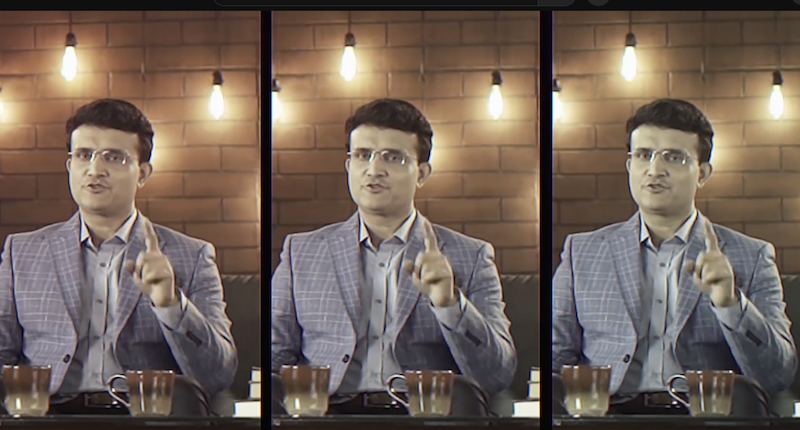
    MUMBAI:Cricket’s global governing body has tossed the ball back to Sourav Ganguly, reappointing the former Indian captain as chairperson of the ICC men’s cricket committee for another term. The 52-year-old, affectionately known as “Dada” by fans, will continue in the role he first took guard at in 2021 after replacing spin wizard Anil Kumble.

    Ganguly’s longtime batting partner VVS Laxman, known for his very, very special wristy flicks, has also been retained on the panel—ensuring India’s continued heavyweight presence at cricket’s administrative crease.

    The refreshed committee features a who’s who of cricket luminaries. Afghanistan’s Hamid Hassan and West Indies legend Desmond Haynes have been drafted in alongside South Africa’s current test and one-day international captain Temba Bavuma and former England batsman Jonathan Trott.

    Meanwhile, in the women’s pavilion, former New Zealand off-spinner Catherine Campbell has been elevated to chairperson of the ICC women’s cricket committee. She’ll be joined in the middle by ex-Australian player Avril Fahey and Cricket South Africa’s Pholetsi Moseki.

    The ICC’s commitment to inclusivity was bowled up by secretary Jay Shah, who announced a special task force and support fund for displaced Afghan women cricketers. “We are deeply committed to fostering inclusivity and ensuring every cricketer has the opportunity to shine, regardless of their circumstances,” Shah declared from the non-striker’s end.

    This support will be backed by a “comprehensive high-performance programme” designed to keep Afghan women’s cricket dreams alive despite challenging political conditions back home—proving that when it comes to cricket diplomacy, the ICC is determined not to be caught out.


  • ICC-Unilever sponsorship deal:  a sign that women’s cricket has arrived

    ICC-Unilever sponsorship deal: a sign that women’s cricket has arrived

    MUMBAI: The International Cricket Council (ICC) has broken new ground by unbundling its sponsorship rights, securing Unilever as the first dedicated partner for women’s competitions, ICC chief commercial officer Anurag Dahiya told SportsPro. 

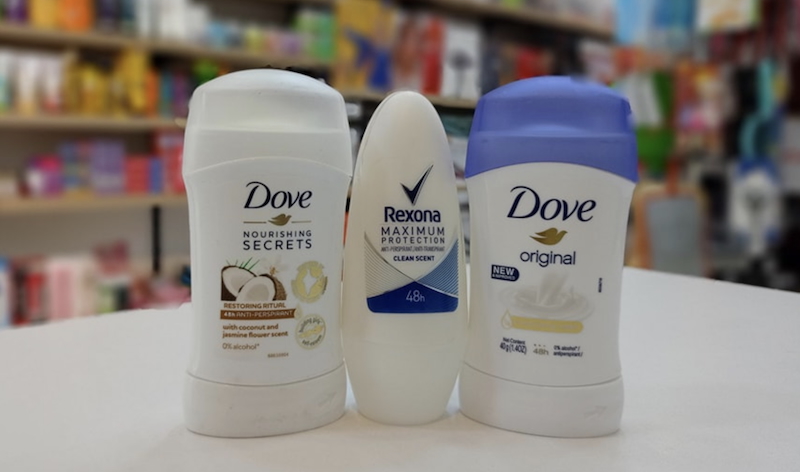
    In a deal announced on International Women’s Day, the consumer goods giant said it would promote its Rexona and Dove brands across all ICC women’s events over the next two years. The partnership covers the 2025 Women’s Cricket World Cup, Women’s T20 World Cup, U19 Women’s T20 World Cups and the inaugural Women’s Champions Trophy in 2027.

    Dahiya told SportsPro the move reflects the “standalone commercial value” of women’s cricket, with Unilever “jumping at” the opportunity to sponsor these tournaments.

    “Women’s cricket is no longer an add-on or a freebie attached to men’s cricket,” Dahiya said. “It’s a distinct product, has its own unique cultural resonance, commercial potential, and has its own ability to stand on its own.”

    Unilever’s existing involvement in women’s sport – including partnerships with WSL clubs Chelsea and Manchester City, plus sponsorship of this year’s UEFA Women’s Euro 2025 and the 2023 FIFA Women’s World Cup – “absolutely facilitated” discussions with the ICC.

    Beyond tournament branding, the partnership extends to digital initiatives, fan experiences and the ICC’s flag bearers programme. Unilever will also support Criiio festivals, grassroots events introducing women and girls worldwide to cricket.

    Dahiya confirmed that while the deal specifically covers women’s cricket, revenue won’t be ring fenced exclusively for the women’s game but added to central funding.

    “If you restricted women’s cricket to only revenue they were making, that would be a gross injustice,” he explained. “The commercial size of men’s sport outweighs women’s sport by factors of probably like 100.”

    The ICC has committed to maintaining equal standards across men’s and women’s competitions, including event presentation, facilities and prize money.

    “We’ve taken a very conscious decision that we’re not going to deliver to the competing teams and our fans any less than what we would for men,” Dahiya added. “Many times more will go into women’s cricket than just that money.”

  • Championship Trophy final  on JioHotstar clocks 90.2 crore views

    Championship Trophy final on JioHotstar clocks 90.2 crore views

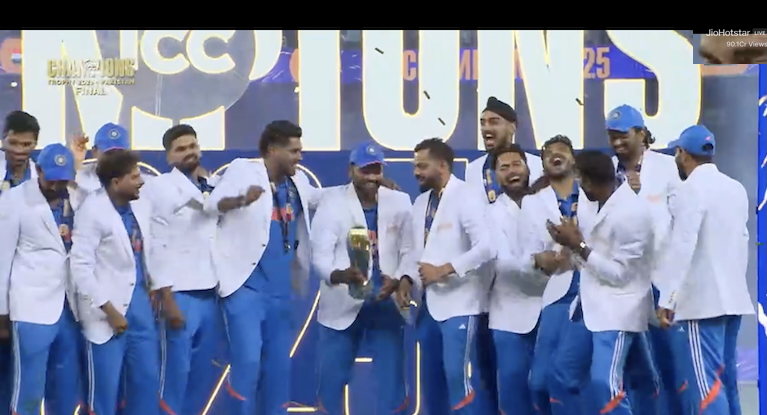
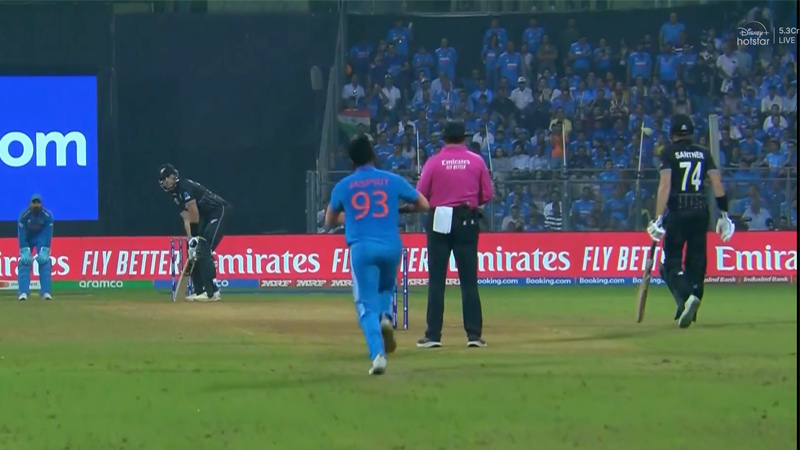
    MUMBAI: The final of the ICC Champions Trophy 2025 between India and New Zealand rewrote the record books, amassing a staggering peak of 90.2 crore views on JioHotstar. The match, held at the Dubai International Cricket Stadium, was a bit of a cliff hanger, with the Kiwi spinners putting the brakes on India’s batters’ initial lofty hitting. It was an absorbing battle on the green between the bat and the ball as India lost half their side with 49 runs to get India over the line with 54 balls to be bowled. But K. L. Rahul steadied the ship, even as Hardik Pandya struck some nasty blows to the fence to get India closer to the win.  

    On 9 March 2025,  the men in blue chased down the black caps score of 251, finishing at  254 for six in 49 overs, securing a commanding four-wicket victory. Rohit Sharma with a explosive 76 partnered Shubham Gill 31 in a century stand, the first one for the opening wicket in the tournament. Shreyas Iyer accumulated a workman like 48, even as Rahul ended up  unbeaten on 34. Jadeja hit the winning runs. 

    The New Zealand squad lost wickets at regular intervals. Batsmen who contributed included Rachin Ravindra with 37, Daryl Mitchell with a slowly crafted 63, Glenn Phillips with 34 and Michale Bracewell with 53. The Indian spinning quartet had the Kiwi batsman in knots and they could only score easier when the quickies came on.

    This match didn’t just break records—it steamrolled them. Blasting past all previous viewership highs, it showcased the unstoppable dominance of digital sports streaming. The previous record-holding Tata IPL final on JioCinema with 62 crore views now has a fierce challenger, as this 90.2 crore views  milestone  has reaffirmed cricket’s popularity amongst the Indian populace. 

    With JioHotstar leading the digital streaming revolution, fans are consuming the game like never before—anytime, anywhere, and on any device.

  • ICC & Unilever partner to push women’s cricket

    ICC & Unilever partner to push women’s cricket

    MUMBAI: It’s got a lever into the International Cricket Council (ICC) – the apex body of the cricketing world. FMCG behemoth Unilever  has announced a  two-year partnership for two of its personal care brands, Rexona and Dove,  with the cricket body for women’s cricket that will run until the end of 2027. 

    The alliance was unveiled during a vibrant criiio cricket festival in Dubai on International Women’s Day, featuring 100 participating girls. This strategic collaboration brings together two influential organisations committed to accelerating the growth of women’s cricket globally.

    The partnership comes at a crucial time when women’s cricket is experiencing unprecedented growth. It will span several major tournaments, beginning with the ICC Women’s Cricket World Cup 2025 in India and including Women’s T20 World Cups, U19 Women’s T20 World Cups, and the inaugural Women’s Champions Trophy in 2027.

    ICC chairman  Jay Shah described the deal as “a pivotal moment for women’s cricket” that will “empower female cricketers, inspire future generations, and contribute significantly to the continued growth and success of women’s cricket globally.”

    ICC chief commercial officer  Anurag Dahiya highlighted the significance of pursuing partnerships specifically focused on the women’s game, noting that this deal “not only highlights the growing commercial appeal of women’s cricket but also underlines ICC’s position as one of the pioneers of the women’s sport movement.”
    Rexona, as the world’s leading deodorant brand with a mission to inspire movement and confidence, will implement various initiatives including a flag bearers programme and digital experiences during events. The brand will also support participation through women’s criiio festivals and leverage its expertise to collaborate on women’s hygiene education programmes.

    Hindustan Unilever CEO& MD Rohit Jawa  called the partnership “an exciting opportunity for Rexona to tap into a cultural moment, connect with new audiences, and importantly help drive women’s cricket further.”
    The deal was facilitated by Unilever International, the company’s global business unit focused on exploring new market opportunities.

  • JioStar vice-chairman Uday Shankar  slams ICC as “East India Company of Cricket”

    JioStar vice-chairman Uday Shankar slams ICC as “East India Company of Cricket”

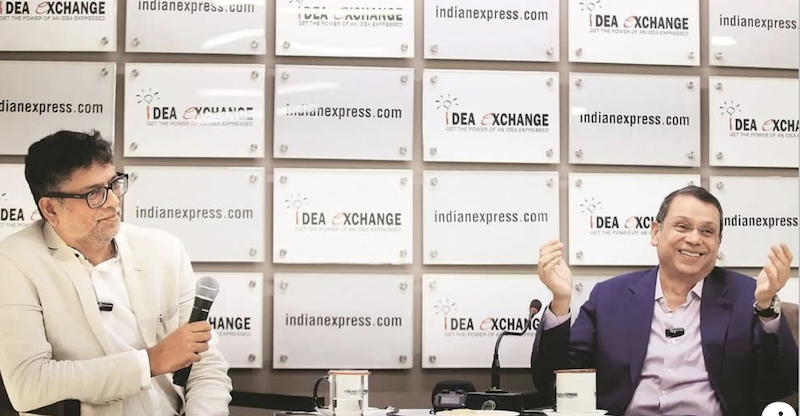
    MUMBAI: In a candid conversation during Indian Express’ Idea Exchange earlier  week that laid bare the tensions between broadcasters and cricket administrators, JioStar vice-chairman Uday Shankar has described the International Cricket Council  (ICC) as “the East India Company of Cricket,” accusing the sport’s global governing body of exploiting India’s cricket economy.

    Uday pulled no punches when comparing cricket’s global and domestic governance structures. “Contrary to the general perception, I find BCCI to be a far more alive body to engage with its stakeholders compared to the ICC,” said Shankar. “The ICC is just here to take the wealth of this country.”

    Shankar’s critique cuts to the heart of cricket’s financial ecosystem, where India generates the overwhelming majority of global revenue. “After taking this money, the ICC decides that India must play a country that no Indian is interested in watching India play because they want to develop cricket globally. So it’s their agenda and my money,” he stated.

    The comments come at a pivotal moment for sports broadcasting, with astronomical sums being paid for rights packages. The IPL rights alone cost approximately Rs 48,000 crore, raising questions about sustainability.

    Shankar acknowledged the strategic value of major sporting properties while being realistic about their financial burden. “You don’t necessarily make money on these big acquisitions,” he admitted. “The size of the economy and what the advertising market is like, those things come into play.”

    He emphasised that cricket has become “one of the most expensive sporting assets in the world” on a unit value basis, with the eight-week IPL tournament costing “more than a billion dollars” – comparable to year-round properties like the NFL or NBA.

    This financial pressure has consequences beyond cricket, with Shankar acknowledging that investment in other sports often suffers. Indian fans miss out on events like Formula 1 “because nobody has the money left to buy those rights.”

    Despite his passion for cricket, Shankar was clear that commercial imperatives would ultimately guide JioStar’s bidding strategy. “At the end of the day, we are running a business and if the financials don’t make sense, we’ll have to walk away,” he said.

    He pointed out a fundamental challenge: “All the money that you put in is primarily for India and you have to recover it from India. Despite all the talk, it’s just the Indian media companies who do that.”

    In his most pointed comments, Shankar suggested radical reform of cricket’s global governance. “The best service that someone like the new chairman of the ICC can do is to ensure that he is its last chairman,” he said.
    “A disproportionate share of talent comes from India. An overwhelming share of revenue comes from India. And all of it is going everywhere else,” Shankar argued, citing the push to include cricket in the Olympics as another example of initiatives that “don’t help Indian cricket” but represent “leakage for the money that could have stayed in the Indian cricket ecosystem.”

    As head of the newly merged Viacom and Star entity valued at $8.5 billion, Shankar recognises the influence his company wields. “Given our reach and platform size, what we do will be followed by everybody else,” he said. “As a leader, it is our responsibility to make sure that we take charge of the industry and get it to a good place.”

    This responsibility extends to content regulation, where Shankar advocates for self-discipline rather than government control. “I don’t like the word censorship, but not being responsible towards the people you serve is not an option,” he stated, adding that government regulation “stifles creativity” while warning that irresponsible content creators risk external authorities stepping in.

    For the former journalist who witnessed the birth of India’s 24-hour news cycle and helped launch Aaj Tak, the responsibility of reaching 750 million viewers weighs heavily. “I’ll entertain,” he said, “but I shall never do anything that I will be embarrassed by myself.”

    (Picture courtesy: Indian Express. Article content courtesy: Indian Express)