Tag: IBF

  • Delhi HC removes legal hurdles to implement DAS IV by 1 Jan 2017

    Delhi HC removes legal hurdles to implement DAS IV by 1 Jan 2017

    NEW DELHI/ MUMBAI: The Delhi High Court has vacated all interim orders giving extension of deadline in Phase III of digitisation, thus clearing legal hurdles for complete digitisation by the stipulated deadline of 31 December 2016 when the last and Phase IV is supposed to get completed.

    The court, disposing of pending petitions, directed all petitioners to run a scroll on their networks about digitisation and analog switch-off in two weeks, apart from informing their subscribers in advance about the change-over to digital signals that will require a set-top-box (STB).

    Last month, the court overruled orders passed by various other courts in the country and, in eight other cases, vacated the stay where petitioners had sought an extension of deadline for implementing digital addressable system (DAS) in Phase III areas.

    While originally the date for implementation of DAS Phase III was 30 September 2014, it was extended to 31 December 2015 by a notification issued by the ministry of information and broadcasting (MIB). The country, as per the original plan, is supposed to be fully digitised with the completion of Phase IV by the last day of 2016.

    With the latest court directive, now it’s up to the various industry stakeholders, the government and the regulator to ensure that Phase IV is completed on schedule or as early as possible. Complete digitisation of TV services in the country is expected to bring about more transparency in the system that would benefit all.

    Indian Broadcasting Foundation (IBF) president and Zee MD Punit Goenka said, “We welcome all stakeholders into the dawn of a new era and hope that the digitisation bandwagon continues unabated in Phase IV as well, which is to be implemented from 1 January 2017.”

    IBF, an apex body of broadcasting companies, has been involved in the cases filed in various courts that were finally transferred to the Delhi High Court under the direction of the Supreme Court. “We were hit by a flurry of litigations, all filed within a space of 15 days beginning with 30 December 2015, in Andhra Pradesh and Telangana. Stays were obtained on implementation for periods of up to two months. Soon, the fire spread to 18 other high courts with over 50 petitions being filed,” said IBF secretary-general Girish Srivastava.

    Welcoming the judgement, Siti Networks Limited ED & CEO and president of All India Digital Cable Federation (AIDCF) VD Wadhwa said, “This is a landmark moment in the Digital India journey as it will clear the passage for timely implementation of DAS Phase IV. It is now obligatory on part of broadcasters and other players to disconnect analog signals within two weeks. This will also pave the way for digital revenues to flow in from these areas.” AIDCF is an industry body representing digital MSOs.

    According to Hinduja Group CEO-Media Tony DSilva, “It’s a positive step in the direction of digitisation. I would appreciate if MIB comes out with a clarification on final cut-off date for digitisation and be more realistic in the dates for Phase IV.”

    DEN CEO S N Sharma, terming the court direction as positive, said that the demand (for STBs) would increase as the legal question marks over DAS have been cleared.

    Background To Legal Cases Relating to Digitisation

    A total of 62 cases had been filed in different courts and 29 cases had been transferred by various courts to Delhi by July-end. Of the 62 cases, 12 had been disposed off by respective courts and three cases had been withdrawn by the petitioners.

    While the Andhra Pradesh and Telangana High Court had given orders extending the deadline of 31 December 2015 for Phase III, the Bombay High Court, while referring to a judgement, had said that if similar situation prevails in all states, then the stay can be pan-India. This was because the plea taken by petitioners in high courts was shortage of STBs.
     Ministry of Information and Broadcasting (MIB) had admitted that the Law Ministry had observed the order passed by the Andhra Pradesh High Court staying Phase III “appears to have all-lndia applicability”.

    Indiantelevision.com had reported in January this year that MIB had told the Punjab and Haryana High Court it had “decided not to press the requirement of having a STB as for now till the decision of the cases, which are pending before various other high courts”.

    Sensing the wildfire effect the DAS Phase III cases could have, MIB approached Supreme Court with a plea to transfer all similar cases to one high court and the apex court asked Delhi High Court in April 2016 to handle these cases and directed notices to be sent to all other high courts to forward relevant files to Delhi HC.

    Also Read:

    DAS cases put off to 23 Nov as legal processes incomplete

    Siti Networks CEO V.D. Wadhwa hails dismissal of DAS III cases by Delhi HC
     

  • Delhi HC removes legal hurdles to implement DAS IV by 1 Jan 2017

    Delhi HC removes legal hurdles to implement DAS IV by 1 Jan 2017

    NEW DELHI/ MUMBAI: The Delhi High Court has vacated all interim orders giving extension of deadline in Phase III of digitisation, thus clearing legal hurdles for complete digitisation by the stipulated deadline of 31 December 2016 when the last and Phase IV is supposed to get completed.

    The court, disposing of pending petitions, directed all petitioners to run a scroll on their networks about digitisation and analog switch-off in two weeks, apart from informing their subscribers in advance about the change-over to digital signals that will require a set-top-box (STB).

    Last month, the court overruled orders passed by various other courts in the country and, in eight other cases, vacated the stay where petitioners had sought an extension of deadline for implementing digital addressable system (DAS) in Phase III areas.

    While originally the date for implementation of DAS Phase III was 30 September 2014, it was extended to 31 December 2015 by a notification issued by the ministry of information and broadcasting (MIB). The country, as per the original plan, is supposed to be fully digitised with the completion of Phase IV by the last day of 2016.

    With the latest court directive, now it’s up to the various industry stakeholders, the government and the regulator to ensure that Phase IV is completed on schedule or as early as possible. Complete digitisation of TV services in the country is expected to bring about more transparency in the system that would benefit all.

    Indian Broadcasting Foundation (IBF) president and Zee MD Punit Goenka said, “We welcome all stakeholders into the dawn of a new era and hope that the digitisation bandwagon continues unabated in Phase IV as well, which is to be implemented from 1 January 2017.”

    IBF, an apex body of broadcasting companies, has been involved in the cases filed in various courts that were finally transferred to the Delhi High Court under the direction of the Supreme Court. “We were hit by a flurry of litigations, all filed within a space of 15 days beginning with 30 December 2015, in Andhra Pradesh and Telangana. Stays were obtained on implementation for periods of up to two months. Soon, the fire spread to 18 other high courts with over 50 petitions being filed,” said IBF secretary-general Girish Srivastava.

    Welcoming the judgement, Siti Networks Limited ED & CEO and president of All India Digital Cable Federation (AIDCF) VD Wadhwa said, “This is a landmark moment in the Digital India journey as it will clear the passage for timely implementation of DAS Phase IV. It is now obligatory on part of broadcasters and other players to disconnect analog signals within two weeks. This will also pave the way for digital revenues to flow in from these areas.” AIDCF is an industry body representing digital MSOs.

    According to Hinduja Group CEO-Media Tony DSilva, “It’s a positive step in the direction of digitisation. I would appreciate if MIB comes out with a clarification on final cut-off date for digitisation and be more realistic in the dates for Phase IV.”

    DEN CEO S N Sharma, terming the court direction as positive, said that the demand (for STBs) would increase as the legal question marks over DAS have been cleared.

    Background To Legal Cases Relating to Digitisation

    A total of 62 cases had been filed in different courts and 29 cases had been transferred by various courts to Delhi by July-end. Of the 62 cases, 12 had been disposed off by respective courts and three cases had been withdrawn by the petitioners.

    While the Andhra Pradesh and Telangana High Court had given orders extending the deadline of 31 December 2015 for Phase III, the Bombay High Court, while referring to a judgement, had said that if similar situation prevails in all states, then the stay can be pan-India. This was because the plea taken by petitioners in high courts was shortage of STBs.
     Ministry of Information and Broadcasting (MIB) had admitted that the Law Ministry had observed the order passed by the Andhra Pradesh High Court staying Phase III “appears to have all-lndia applicability”.

    Indiantelevision.com had reported in January this year that MIB had told the Punjab and Haryana High Court it had “decided not to press the requirement of having a STB as for now till the decision of the cases, which are pending before various other high courts”.

    Sensing the wildfire effect the DAS Phase III cases could have, MIB approached Supreme Court with a plea to transfer all similar cases to one high court and the apex court asked Delhi High Court in April 2016 to handle these cases and directed notices to be sent to all other high courts to forward relevant files to Delhi HC.

    Also Read:

    DAS cases put off to 23 Nov as legal processes incomplete

    Siti Networks CEO V.D. Wadhwa hails dismissal of DAS III cases by Delhi HC

     

  • TRAI unlikely to take final call on draft orders soon

    TRAI unlikely to take final call on draft orders soon

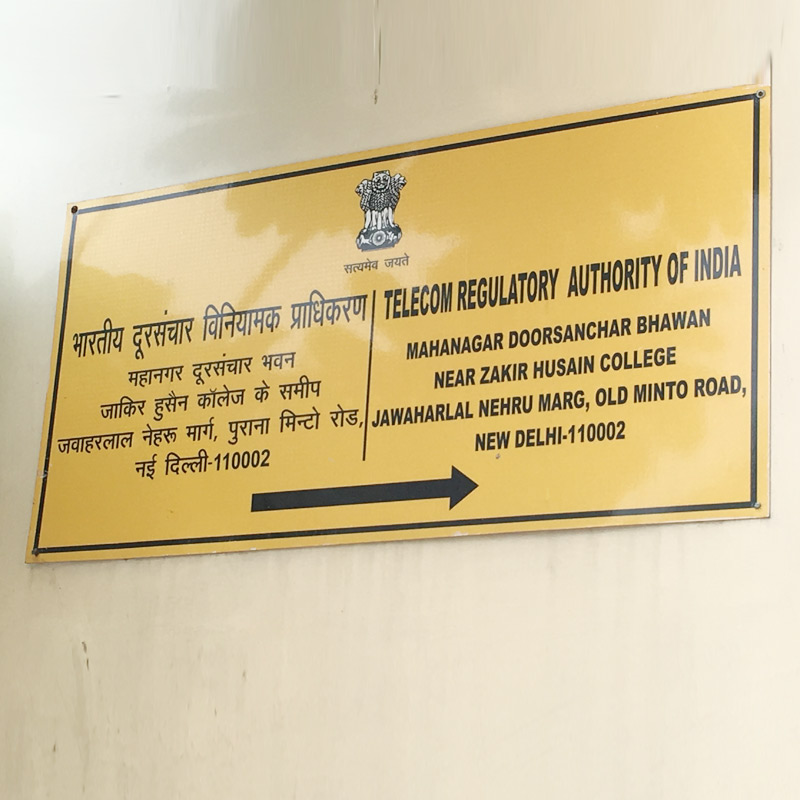
    NEW DELHI: The Telecom Regulatory Authority of India (TRAI) is unlikely to come out soon with its final recommendations on broadcast sector tariffs, interconnect and quality of service issues.

    “Considering the responses from stakeholders to our draft guidelines are exhaustive and lengthy running into over 100 pages, we would also need time to study them properly before taking a final call,” a senior TRAI official told indiantelevision.com.

    The broadcast companies, in particular, have been strident in criticising the draft orders and subsequent consultation papers from TRAI. The Indian Broadcasting Foundation (IBF) has gone to the extent of questioning whether TRAI can issue such guidelines as they conflict with international copyrights law and the Indian Copyright Act, 1957.

    In general, TRAI officials opine that if all the comments were to be taken into consideration, including IBF’s, then there would be no guidelines at all, draft or otherwise.

    A section of the broadcast and cable industry were hoping that if  TRAI came out with its final recommendations on issues related to tariff and interconnect by first half of January 2017, the big picture on digital rollout of TV services would have become clearer.

    Officially, the sunset date for all analog TV services in India is 31 December, 2016. However, a section of the MSO community contends that, apart from the last and Phase IV, there are still some 10 million homes in Phase III of digitisation left to be seeded with boxes.

    Also Read:

    TRAI draft tariff order skewed in favour of DPOs, will harm industry: IBF

    Slow pace of court cases, MSO registration may delay DAS deadline


  • TRAI unlikely to take final call on draft orders soon

    TRAI unlikely to take final call on draft orders soon

    NEW DELHI: The Telecom Regulatory Authority of India (TRAI) is unlikely to come out soon with its final recommendations on broadcast sector tariffs, interconnect and quality of service issues.

    “Considering the responses from stakeholders to our draft guidelines are exhaustive and lengthy running into over 100 pages, we would also need time to study them properly before taking a final call,” a senior TRAI official told indiantelevision.com.

    The broadcast companies, in particular, have been strident in criticising the draft orders and subsequent consultation papers from TRAI. The Indian Broadcasting Foundation (IBF) has gone to the extent of questioning whether TRAI can issue such guidelines as they conflict with international copyrights law and the Indian Copyright Act, 1957.

    In general, TRAI officials opine that if all the comments were to be taken into consideration, including IBF’s, then there would be no guidelines at all, draft or otherwise.

    A section of the broadcast and cable industry were hoping that if  TRAI came out with its final recommendations on issues related to tariff and interconnect by first half of January 2017, the big picture on digital rollout of TV services would have become clearer.

    Officially, the sunset date for all analog TV services in India is 31 December, 2016. However, a section of the MSO community contends that, apart from the last and Phase IV, there are still some 10 million homes in Phase III of digitisation left to be seeded with boxes.

    Also Read:

    TRAI draft tariff order skewed in favour of DPOs, will harm industry: IBF

    Slow pace of court cases, MSO registration may delay DAS deadline


  • TRAI draft tariff order skewed in favour of DPOs, will harm industry: IBF

    TRAI draft tariff order skewed in favour of DPOs, will harm industry: IBF

    NEW DELHI: The Indian Broadcasting Foundation (IBF), an apex body of broadcasting companies, has criticised sector regulator TRAI for over-regulating and proposing draft guidelines on tariff and interconnection that are skewed in favour of distribution platform operators (DPOs).

    Responding to Telecom Regulatory Authority of India (TRAI) draft orders relating to tariff, inter-connections and quality of service, IBF said the new regime will lead to “de-growth” of the industry and discourage investments and production of good quality content in the television industry.

    Pointing out that the proposed regulatory regime “regresses rather than advances”, IBF in a lengthy reply has said with over 830 channels for consumers to choose from and a large pubcaster offering of over 100 private and public TV channels, whether there a “need to regulate all aspects of a set of 200 odd pay TV channels”.

    “The question for the Authority would be, is there proven evidence of market failure that a dire need has arisen to over-regulate these 200 odd pay TV channels(?). We are of the firm belief that there is no compelling reason to regulate these channels and, accordingly, only a light touch regulation, if at all, ought to have been proposed,” IBF has submitted justifying its criticism of  draft  guidelines.

    Contending that pay TV channels (read cable and DTH services) were not essential services IBF counters there was no compelling reason to regulate these channels. “The present tariff order is based on the ‘erroneous premise’ that pay TV channels are essential services,” the broadcasting industry body said.

    Citing international copyrights and IPR laws, IBF pointed out that whole exercise undertaken by TRAI was in direct conflict with the provisions of the Indian Copyright Act, 1957.

    According to IBF, the proposed tariff and inter-connect orders conflict with the Copyright Act in the following ways and need to be “harmonised”:

    a.       The proposed tariff order(s) that impose restrictions on nature of content, prices of channels, mandated discount caps and commissions, manner of offering, etc have to be reviewed and modified in the light of specific copyright laws providing freedom to broadcast organisations to charge royalties and any other consideration/fees for their works and BRR in accordance with the market demands and contract laws.

    b.      The draft interconnect regulations issued by TRAI that take away the broadcast organisations’ exclusive rights to deal and imposes restrictions on their contractual abilities and takes away their ability to negotiate the terms of trade need to be reviewed and modified to harmonise the same with the provisions of the Copyright Act pertaining to voluntary licensing and assignments by Broadcast Organisations by permitting mutual negotiations.

    c.       The existing commercial tariff orders and regulations issued by TRAI in relation to commercial establishments is also at odds with copyright laws in as much as the Copyright Act clearly provides broadcast organisations the right to charge differential rates of royalties and license fees on commercial establishments vis-a-vis domestic/residential subscribers.

    Going a step further, IBF has raised questions over transparency and the manner in which draft guidelines were issued: “The draft consultations also do not meet the threshold of transparency mandated by Section 11(4) of the TRAI Act 1997, which requires that the Authority will ensure transparency while exercising its powers and discharging its functions.”

    Also Read:

    TRAI unlikely to take final call on draft orders soon

  • TRAI draft tariff order skewed in favour of DPOs, will harm industry: IBF

    TRAI draft tariff order skewed in favour of DPOs, will harm industry: IBF

    NEW DELHI: The Indian Broadcasting Foundation (IBF), an apex body of broadcasting companies, has criticised sector regulator TRAI for over-regulating and proposing draft guidelines on tariff and interconnection that are skewed in favour of distribution platform operators (DPOs).

    Responding to Telecom Regulatory Authority of India (TRAI) draft orders relating to tariff, inter-connections and quality of service, IBF said the new regime will lead to “de-growth” of the industry and discourage investments and production of good quality content in the television industry.

    Pointing out that the proposed regulatory regime “regresses rather than advances”, IBF in a lengthy reply has said with over 830 channels for consumers to choose from and a large pubcaster offering of over 100 private and public TV channels, whether there a “need to regulate all aspects of a set of 200 odd pay TV channels”.

    “The question for the Authority would be, is there proven evidence of market failure that a dire need has arisen to over-regulate these 200 odd pay TV channels(?). We are of the firm belief that there is no compelling reason to regulate these channels and, accordingly, only a light touch regulation, if at all, ought to have been proposed,” IBF has submitted justifying its criticism of  draft  guidelines.

    Contending that pay TV channels (read cable and DTH services) were not essential services IBF counters there was no compelling reason to regulate these channels. “The present tariff order is based on the ‘erroneous premise’ that pay TV channels are essential services,” the broadcasting industry body said.

    Citing international copyrights and IPR laws, IBF pointed out that whole exercise undertaken by TRAI was in direct conflict with the provisions of the Indian Copyright Act, 1957.

    According to IBF, the proposed tariff and inter-connect orders conflict with the Copyright Act in the following ways and need to be “harmonised”:

    a.       The proposed tariff order(s) that impose restrictions on nature of content, prices of channels, mandated discount caps and commissions, manner of offering, etc have to be reviewed and modified in the light of specific copyright laws providing freedom to broadcast organisations to charge royalties and any other consideration/fees for their works and BRR in accordance with the market demands and contract laws.

    b.      The draft interconnect regulations issued by TRAI that take away the broadcast organisations’ exclusive rights to deal and imposes restrictions on their contractual abilities and takes away their ability to negotiate the terms of trade need to be reviewed and modified to harmonise the same with the provisions of the Copyright Act pertaining to voluntary licensing and assignments by Broadcast Organisations by permitting mutual negotiations.

    c.       The existing commercial tariff orders and regulations issued by TRAI in relation to commercial establishments is also at odds with copyright laws in as much as the Copyright Act clearly provides broadcast organisations the right to charge differential rates of royalties and license fees on commercial establishments vis-a-vis domestic/residential subscribers.

    Going a step further, IBF has raised questions over transparency and the manner in which draft guidelines were issued: “The draft consultations also do not meet the threshold of transparency mandated by Section 11(4) of the TRAI Act 1997, which requires that the Authority will ensure transparency while exercising its powers and discharging its functions.”

    Also Read:

    TRAI unlikely to take final call on draft orders soon

  • IBF demands ‘infrastructure status’ for broadcast and content distribution sector

    IBF demands ‘infrastructure status’ for broadcast and content distribution sector

    MUMBAI: Finance Minister Arun Jaitley invited various stakeholders for pre-Budget consultations in New Delhi last Saturday (26 November). Speaking to the media Indian Broadcasting Foundation (IBF) president Punit Goenka said: “I am happy to learn that IBF had good discussions with the finance minister and other key officials on some of the key issues related to Broadcasting Sector – both from policy and tax perspective. Grant of Infrastructure Status for broadcasting and content distribution sector was one of our key demands during the discussions. Once infrastructure status is granted, broadcasters and distribution platforms will be aided with better and affordable financing options in the very capital intensive growth phase to realise the mission of complete digitisation in the country”.

    During the pre-Budget discussions, IBF secretary general Girish Srivastava said that, “The broadcasting and content distribution infrastructure like telecom, is important infrastructure for the country. Besides delivering digital television signals, it can be effectively used to deliver broadband services and thereby effectively contributing to the e-Governance initiative of the Government. Once the addressability is introduced by way of digitalisation, broadcast services are likely to contribute substantial revenue in the form of GST and other taxes to the State exchequer because of the transparency associated with the digital content distribution services.”

    On the tax front, key concerns raised were related to extending the benefit of the carry forward of losses in case of amalgamation or merger for Broadcasting sector under section 72A as is being extended to Telecom, Software and ISP services, taxability in the hands of shareholders in case of amalgamation of a foreign company holding shares in Indian company into another foreign company, provision of lowering the outer limit in processing of returns, reduction in MAT rate, resolving the long standing issue of tax withholding on transponder hire charges treating them as Royalty because of retrospective amendment in Income Tax vis-à-vis DTAA which is causing a huge unnecessary annual burden of US$ 20 – $ 22 million on Broadcasting, DTH & HITS services etc.

    “Once our key demands raised on tax and regulatory front such as grant of infrastructure status, 72 A benefit, MAT rationalization, Transponder Royalty, TDS rationalization etc pertaining to both policy and procedural aspects are addressed by the Government, it would be a good example in the direction of ease of doing business in country” said ZEE Network president A Mohan.

    Mohan added further: “Television has become an integral part of everyone’s life and has attained a status akin to “essential services” as it is an important tool for dissemination of information and entertainment to masses. Accordingly Broadcasting and Distribution services should be subjected to a lower rate under GST regime as is applicable to essential services, to make them affordable to masses.”

    On the issue of taxability in the hands of shareholders in case of amalgamation of a foreign company holding shares in Indian company into another foreign company, Star India CFO Sanjay Jain mentioned that, “The Government should issue an amendment to the provisions to the Act to specify that similar exemption is available to shareholders as well on a high priority. The purpose of allowing merger of foreign companies would be defeated without extending similar exemption in the hands of shareholders of amalgamating company.”

  • IBF demands ‘infrastructure status’ for broadcast and content distribution sector

    IBF demands ‘infrastructure status’ for broadcast and content distribution sector

    MUMBAI: Finance Minister Arun Jaitley invited various stakeholders for pre-Budget consultations in New Delhi last Saturday (26 November). Speaking to the media Indian Broadcasting Foundation (IBF) president Punit Goenka said: “I am happy to learn that IBF had good discussions with the finance minister and other key officials on some of the key issues related to Broadcasting Sector – both from policy and tax perspective. Grant of Infrastructure Status for broadcasting and content distribution sector was one of our key demands during the discussions. Once infrastructure status is granted, broadcasters and distribution platforms will be aided with better and affordable financing options in the very capital intensive growth phase to realise the mission of complete digitisation in the country”.

    During the pre-Budget discussions, IBF secretary general Girish Srivastava said that, “The broadcasting and content distribution infrastructure like telecom, is important infrastructure for the country. Besides delivering digital television signals, it can be effectively used to deliver broadband services and thereby effectively contributing to the e-Governance initiative of the Government. Once the addressability is introduced by way of digitalisation, broadcast services are likely to contribute substantial revenue in the form of GST and other taxes to the State exchequer because of the transparency associated with the digital content distribution services.”

    On the tax front, key concerns raised were related to extending the benefit of the carry forward of losses in case of amalgamation or merger for Broadcasting sector under section 72A as is being extended to Telecom, Software and ISP services, taxability in the hands of shareholders in case of amalgamation of a foreign company holding shares in Indian company into another foreign company, provision of lowering the outer limit in processing of returns, reduction in MAT rate, resolving the long standing issue of tax withholding on transponder hire charges treating them as Royalty because of retrospective amendment in Income Tax vis-à-vis DTAA which is causing a huge unnecessary annual burden of US$ 20 – $ 22 million on Broadcasting, DTH & HITS services etc.

    “Once our key demands raised on tax and regulatory front such as grant of infrastructure status, 72 A benefit, MAT rationalization, Transponder Royalty, TDS rationalization etc pertaining to both policy and procedural aspects are addressed by the Government, it would be a good example in the direction of ease of doing business in country” said ZEE Network president A Mohan.

    Mohan added further: “Television has become an integral part of everyone’s life and has attained a status akin to “essential services” as it is an important tool for dissemination of information and entertainment to masses. Accordingly Broadcasting and Distribution services should be subjected to a lower rate under GST regime as is applicable to essential services, to make them affordable to masses.”

    On the issue of taxability in the hands of shareholders in case of amalgamation of a foreign company holding shares in Indian company into another foreign company, Star India CFO Sanjay Jain mentioned that, “The Government should issue an amendment to the provisions to the Act to specify that similar exemption is available to shareholders as well on a high priority. The purpose of allowing merger of foreign companies would be defeated without extending similar exemption in the hands of shareholders of amalgamating company.”

  • DAS III: IBF welcomes Delhi HC order

    DAS III: IBF welcomes Delhi HC order

    MUMBAI: The Indian Broadcasting Foundation (IBF) has welcomed the order passed by the Delhi High Court on 3 November 2016 dismissing nine DAS-related petitions. The petitions dealt with the time extension for implementing digital addressable system (DAS) in certain areas of Karnataka, Kerala, Andhra Pradesh and Telangana and Uttar Pradesh under Phase-III, the deadline for which had expired on 31 December 2015.

    There is no change in DAS Phase IV deadline, which continues to be 31 December 2016.

    With the dismissal of these petitions, the stay granted by various high courts in areas covered by the above-mentioned nine cases stands vacated and will no longer apply.

    The Delhi High Court, dismissing these petitions, has also directed the petitioners to switch over to digital addressable systems within three weeks i.e. by 24 November 2016 and inform the subscribers by running a scroll on their networks about the digital switchover deadline

    The high courts in various parts of the country had earlier granted stay in certain matters on DAS Phase III deadline. The stay orders had stalled the implementation of DAS Phase III in those areas. This prompted the MIB to move the Supreme Court to get all the cases transferred to the apex court.

    The SC made Delhi High Court as the designated court for all cases related to DAS Phase III. The above-mentioned order of the Delhi High Court has removed the impediments in implementation of DAS in Phase – III areas.

    The IBF has advised all its member-broadcasters to apprise all its affiliate multi-system operators (MSOs) and local cable operators about the said switchover deadline of 24 November 2016 in these Phase – III areas and make it clear that after the said date the channels can be received only through a digital set-top box. The subscribers in these areas are advised to immediately contact their respective local cable operators (LCOs)/MSOs to ensure the installation of STBs before the expiry of the above-mentioned deadline.

  • DAS III: IBF welcomes Delhi HC order

    DAS III: IBF welcomes Delhi HC order

    MUMBAI: The Indian Broadcasting Foundation (IBF) has welcomed the order passed by the Delhi High Court on 3 November 2016 dismissing nine DAS-related petitions. The petitions dealt with the time extension for implementing digital addressable system (DAS) in certain areas of Karnataka, Kerala, Andhra Pradesh and Telangana and Uttar Pradesh under Phase-III, the deadline for which had expired on 31 December 2015.

    There is no change in DAS Phase IV deadline, which continues to be 31 December 2016.

    With the dismissal of these petitions, the stay granted by various high courts in areas covered by the above-mentioned nine cases stands vacated and will no longer apply.

    The Delhi High Court, dismissing these petitions, has also directed the petitioners to switch over to digital addressable systems within three weeks i.e. by 24 November 2016 and inform the subscribers by running a scroll on their networks about the digital switchover deadline

    The high courts in various parts of the country had earlier granted stay in certain matters on DAS Phase III deadline. The stay orders had stalled the implementation of DAS Phase III in those areas. This prompted the MIB to move the Supreme Court to get all the cases transferred to the apex court.

    The SC made Delhi High Court as the designated court for all cases related to DAS Phase III. The above-mentioned order of the Delhi High Court has removed the impediments in implementation of DAS in Phase – III areas.

    The IBF has advised all its member-broadcasters to apprise all its affiliate multi-system operators (MSOs) and local cable operators about the said switchover deadline of 24 November 2016 in these Phase – III areas and make it clear that after the said date the channels can be received only through a digital set-top box. The subscribers in these areas are advised to immediately contact their respective local cable operators (LCOs)/MSOs to ensure the installation of STBs before the expiry of the above-mentioned deadline.