Tag: IBF

  • TDSAT to hear petition challenging TRAI’s DAS tariff relating to commercial subscribers on 5 December

    TDSAT to hear petition challenging TRAI’s DAS tariff relating to commercial subscribers on 5 December

    NEW DELHI: The Telecom Disputes Settlement and Appellate Tribunal (TDSAT) will hear on 5 December the petition by the Indian Broadcasting Foundation (IBF) challenging the DAS tariff order issued in July by the Telecom Regulatory Authority of India (TRAI) relating to commercial subscribers.

     
    When the issue came up in the Tribunal, counsel Abhishek Malhotra who represents the IBF said he needed time to file a rejoinder to the reply filed by TRAI following a notice in this regard in September.

     
    In the tariff order, TRAI had said commercial establishments who do not specifically charge its clients/guests on account of providing/showing television programmes and offer such services as part of amenities are to be treated like ordinary subscribers wherein the charges would be on per television basis.

     
    In cases where commercial subscribers specifically charge its clients/guests on account of providing/showing television programmes the tariff would be as mutually agreed between the broadcaster and the commercial subscriber.
     

    TRAI had also said that the commercial subscriber was to obtain television service only from a distribution platform operator (MSO/DTH Operator/IPTV operator/HITS operator).

     
    The tariff order amendment has been brought out as per the directions of the Supreme Court. It is expected that with the coming into force of these changes in the regulatory framework, the distribution of TV services to the commercial subscribers would be streamlined and the services would be available to them at competitive rates.


  • TDSAT to hear IBF case on tariff on 12 December

    TDSAT to hear IBF case on tariff on 12 December

    NEW DELHI: The Telecom Disputes Settlement Appellate Tribunal (TDSAT) has adjourned to 12 December the petition by the Indian Broadcasting Foundation (IBF), Viacom 18 and MSM India challenging the tariff order amendment of 16 July that was passed by the Telecom Regulatory Authority of India (TRAI).


    Chairman Aftab Alam and member Kuldip Singh adjourned the matter as TRAI has still not filed its reply on the matter.


    Earlier when the case had come up in August, TDSAT had adjourned the hearing in view of Star India’s case challenging the TRAI order dated 18 July in the Delhi High Court.

     
    The Federation of Hotel and Restaurants Association of India (FHRAI) had then asked for a refund from broadcasters for deals signed before the order came into existence. However the IBF counsel stated that the order only talks of deals taking place in the new regime and the deals for which the FHRAI was asking for refunds were done in advance.

     
    Considering the Delhi HC order and also IBF’s proposition that in a 2012 judgment, the TDSAT had itself said that when an arrangement is ongoing between parties and a tariff order is issued, it is not applicable with retrospective effect, unless mentioned in the order.

     
    The court had in the earlier hearing also asked both parties to ensure all their pleadings were in place by 28 October so that a final verdict could be given on 18 November, which now has been postponed to 12 December.


  • NBA and IBF to approach govt bodies regarding broadcasting woes

    NBA and IBF to approach govt bodies regarding broadcasting woes

    MUMBAI: The broadcasting industry of India has been facing several issues right from carriage fees to the imposition of the ad cap. In order to reduce the burden on the broadcasters, the Indian Broadcasting Foundation (IBF) and the News Broadcasters Association (NBA) have now decided to unite and present their views to the highest authorities in India.  


    India TV chairman and editor in chief Rajat Sharma who is also the NBA president and the IBF vice president of strategic affairs, said that the two bodies will meet the Prime Minister Narendra Modi, the Finance Minister Arun Jaitley and the Information and Broadcasting Minister Prakash Javadekar to make them aware about the growing cancer called carriage fees. ”We will also show a revenue model that MSOs can adopt so that we don’t become dependent on carriage fees,” said Sharma.    


    Regarding ad cap he said that they will show the ministers the kind of revenue loss the channels will incur if the 10+2 minute ad cap is implemented. The case is currently being fought by the NBA in the Delhi High Court.  “We will request for the 12 minute advertising cap to be removed from the licencing conditions,” he said. The NBA president added that no channel, be it a news channel or a GEC, wants to show more than five minutes of advertising but the revenue model forces them to do so. “None of us want to compromise on programming,” he said.


    The new ratings system that will be applicable once BARC India starts its operations, should be transparent, he said. ”Till the time these issues are not addressed, the industry will keep suffering,” he opined.   


    While speaking to indiantelevision.com, Sharma said that the meeting is expected to happen in the next few days.


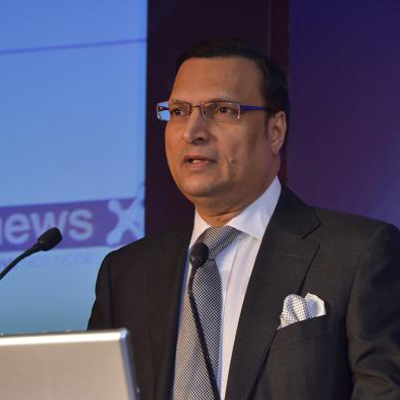
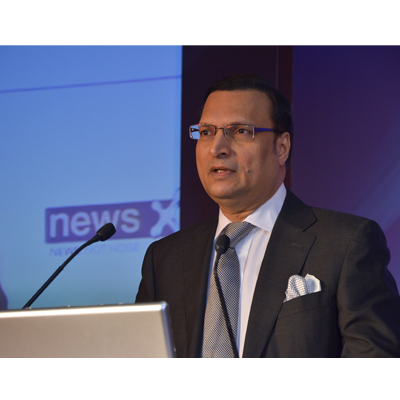
    Sharma was addressing a keynote at the Seventh Indian News Television Summit, organised by indiantelevision.com where he discussed the role of a news channel and the challenges and hurdles that they face.

  • The 7th Indian News Television Summit a roaring success

    The 7th Indian News Television Summit a roaring success

    NOIDA: The 7th Indian News Television Summit that was held at The Radisson in Noida, was a huge success with some of the big names in the industry attending the conference.


    The day began with a keynote by India TV chairman and editor in chief and the News Broadcasters Association president Rajat Sharma wherein he spoke about the changing face of news and how content as well as ad sales is under pressure and for things to improve, the industry has to get together and find solutions.


    He lamented on the horror of having to pay huge carriage fees along with the burden of the ad cap which the NBA is vociferously fighting. According to him, the TV news industry has changed in the last three years with more responsibility having crept into the veins of channels.


    This was followed by a one on one with ITV Network MD Kartikeya Sharma wherein he discussed about why he got into the news business, the aim of his news network and its future roadmap to being the biggest news company in the country.


    The first session saw NDTV Group CEO Vikram Chandra, TV Today CEO Ashish Bagga, IBN18 CEO Avinash Kaul, Focus News Network group CEO Neeraj Sanan and Doordarshan ADG news Mayank Agrawal speak on the various modes of revenue generation through traditional and digital mediums. Executives highlighted that it was too soon to depend heavily on the digital medium for revenue which will work as a compliment to television but not replace it.


    This was followed by a keynote from GroupM south Asia CEO CVL Srinivas who highlighted what brands were looking for in news networks and how the genre is growing year on year. According to Srinivas, news broadcasters need to keep in mind a few things for the future-co creating socially responsible agendas with brands, invest more in digital, new metrics such as consumer sentiment, social buzz, social impact, viewers’ profile and getting into big data.


    Following this was a discussion on finding innovative ways for revenue generation that saw Zee Sangam national sales head Harsha Vardhan Dwivedi, India TV senior VP and country head ad sales Sudipto Chowdhuri, CNN-IBN and IBN7 national revenue head Vishal Bhatnagar, IPG Mediabrands CEO initiatives Anamika Mehta and Times Television Network senior VP and business head for branded content Hemant Arora.


    An informative presentation by Amagi co-founder KA Srinivasan enlightened the audience about utilising geo-targetting to increase revenue for various channels of a network and also more focused reach for a brand.


    The day concluded with an editorial session that discussed how much editors are willing to allow ad sales to interfere with content for higher revenue. ITV Network editor in chief Deepak Chaurasia, senior columnist QW Naqvi and Mi Marathi consultant Nikhil Wagle discussed on how much an editor can mix with the ad sales team and how much of interference by them is acceptable.


    With the belief that the discussions between the various stakeholders of the industry will propel better returns for the community as a whole, we look forward to the Indian News Television Summit 2015.

  • “The news industry is fighting amongst itself”: Rajat Sharma

    “The news industry is fighting amongst itself”: Rajat Sharma

    NOIDA:  He is one of the most well known faces of the Indian media industry. Rajat Sharma, the host of popular talk show, Aap Ki Adalat, has added responsibilities on his shoulders. He is not only the chairman and editor in chief of India TV, but also represents the industry as the new president of the News Broadcasters Association as well as the vice president of strategic affairs of the Indian Broadcasting Foundation (IBF).

    Sharma, who was addressing the 7th Indian News Television Summit 2014 organised by indiantelevision.com as a keynote speaker highlighted the evolution of the news industry as well as listed the three biggest challenges that lie ahead.

    He began by saying that three years ago the news channel industry was very different from what it is today. “There has been a change in perception in the way news is seen,” Sharma said adding that news no longer is considered to be negative.

    Substantiating the evolution in terms of changing perception, Sharma gave the example of the 26/11 terror attack when reporters did 24X7 reportage and were blamed for aiding the terrorists and their handlers in Pakistan. “News channels also suffered commercial losses during the attacks as ad breaks were restricted,” he informed. According to Sharma, while news channels earlier were perceived as being a platform that telecasted frivolous events to garner eyeballs, things today have changed. “News is back,” he announced.

    He pointed out that the space has seen drastic changes.  “The society has evolved and the media has played a great role in it especially during events like the Lokpal Bill, the Delhi gang rape and the tirade against corruption,” he said.

     “Today even if Shah Rukh Khan or Salman Khan want to promote their films or emerging sports like Kabaddi wants to garner attention, news channels have a role to play in that as well,” he opined.

    Sharma while praising the social commitments of the news industry said that the space as a whole is not healthy. “The biggest problem for the industry is its revenue model,” he said while pointing out that though this year the balance sheets of the industry looks good due to elections, but, as a whole, the model is not sustainable.

    Listing the three main challenges for the genre, Sharma said that carriage fee was the biggest concern. “A few years ago, people expected news channels to be a loss making property since carriage fees were high and when broadcasters spoke to the multi system operators (MSOs) they said it was a problem of demand and supply. When digitisation kickstarted, we thought that consumers will get better quality channels and carriage fees will disappear. For the MSOs, it is the carriage fee from the news channels that helps them sustain, since they pay the GEC’s huge sums for getting their programming on their platform,” he said.

    He informed that the industry had 20-25 meetings with the previous TRAI chairman to discuss the issue of carriage fees.  While it was expected that digitisation would bring down carriage fees, something unexpected happened. Two days before the former TRAI chairman could retire he signed the ad cap. “When we were trying to improve the content and trying to solve one issue we were burdened with another one.”

    “Ad cap ensured we received 50 per cent less advertising. Death was certain now for the news channels,” he added.

    While the then Union Minister Ambika Soni said she will look into the matter, the broadcasters decided to fight the case in TDSAT. “News channels have managed to get a stay and therefore are surviving,” he said while giving the example of the newspaper industry, which has no such restriction. “We want the same for the broadcasting industry,” he opined.

    He also mentioned that the industry needs a better rating system and the TAM currency will be replaced by BARC India, which is an incorruptible agency.  “Therefore today the biggest challenge for the industry is the ad cap, the rating system and carriage fees,” he informed.

    In his closing remarks he said the whole industry including the IBF and the NBA should work together to resolve these issues. “The news industry as a whole cannot fight the MSOs as we are fighting amongst ourselves. While, we come together during a board room meeting, once we are out there will be one or two who would go against the same,” he lamented. 
  • “Govt needs to look at broadcast as an important sector”: Uday Shankar

    “Govt needs to look at broadcast as an important sector”: Uday Shankar

    MUMBAI: It was in September that Star India’s Uday Shankar was once again handed over the reins of Indian Broadcasting Foundation (IBF), and since then, he has been working on a three-point agenda.


    Says the man who has been very vocal about his views on digitisation in India, “When you are heading an organisation like IBF, there are three things that we all need to look at. First and foremost is digitisation. It is the most fundamental thing that the industry requires and so we need to ensure that we engage with government and put the digitisation road map back on track.”


    The second is the carriage fees for both big and small channels, particularly for niche channels which are dying under the weight of this. He points out that the investment done by niche channels on content is totally destroyed because they don’t have the money. “Most of them are going bankrupt and carriage fee is the single biggest destructive influence on the industry. The key objective of digitisation was that it would expand carriage capacity and the carriage fees will get substantially reduced or would go away. That has not happened. We need to work on that,” he says.


    Thirdly, the foundation needs to make sure that the new government looks at broadcast as an important sector. “The government is genuinely reviewing it also,” he adds.


    The view at the IBF , currently, is that broadcast will play a huge role in the Narendra Modi government’s agenda of creating more jobs, creating more opportunities, entrepreneurship and wealth for people. “We as IBF want to take the plan to the government and tell them the way we can carry forward the government’s agenda,” says Shankar.


     With a view to benefit the industry and the customer, the foundation aims to work closely with all its synergies as well as other bodies like BARC India.   

  • Delhi HC extends stay on Kantar, case pushed to Feb 2015

    Delhi HC extends stay on Kantar, case pushed to Feb 2015

    MUMBAI: The hearing on the case between Kantar Market Research and the government of India has been put off to 12 February 2015.


    The case that was last heard on 8 September saw a notice of the application by the Indian Broadcasting Foundation (IBF) being accepted by the Kantar counsel that has been asked to file a response within two weeks. After this, an advance copy of the same will be given to the IBF who may then file a response in two or three weeks’ time.


    The case has been put off to 12 February 2015, on account of the personal reasons of the Kantar counsel, who had prayed for a date in January 2015.


    Meanwhile, the interim order on the case will continue that will allow Kantar’s subsidiary TAM Media Research to publish ratings till the verdict on the case is out.


    Kantar had challenged the cross-holding norm in the policy guidelines for TV rating agencies for which it had got the HC’s stay order. However, the research agency still hasn’t received any response from the Ministry of Information and Broadcasting on its application to be registered as a TV ratings service.


    Apart from the IBF, the News Broadcasters Association (NBA) has also joined the respondents in favour of the guidelines.

  • IBF appoints Uday Shankar as the new president

    IBF appoints Uday Shankar as the new president

    MUMBAI: At the just concluded Indian Broadcasting Foundation (IBF) 15th annual general meeting (AGM), Star India CEO Uday Shankar has been appointed as the new president of the organisation.


    The position was earlier held by MSM non executive chairman Man Jit Singh.


    This is a comeback for Shankar who held on to the position from 2010 to 2012.


    Confirming the news to indiantelevision.com, Shankar said that he was happy to take charge. “I am privileged to be trusted by the members of IBF to lead the industry body at a critical juncture when the industry needs to leap to the next level by working collaboratively with the Government and other stake holders,”said Shankar and added, “Punit Goenka would have been my personal preference for the president’s role since I have already done a stint as IBF president.  However, in view of Punit’s existing commitment to BARC, he proposed that I hold the reigns at IBF”.


    The IBF Board also elected Punit Goenka as vice president – Measurement, N P Singh as vice president – Distribution, Rajat Sharma as vice president – Strategic Affairs and Rahul Johri as treasurer.

  • Prakash Javadekar confirms the new digitisation deadline

    Prakash Javadekar confirms the new digitisation deadline

    MUMBAI: The first deadline for complete digitisation in the country, 31 December 2014 has been pushed to 2015 and 2016, as first reported by indiantelevision.com.


    Now, the Information and Broadcasting (I&B) Minister Prakash Javadekar has assured stakeholders who were present at the Indian Broadcasting Foundation’s (IBF) annual general meeting that “Digitisation is on track and will happen as per new schedule.”


    Phase III of digitisation is scheduled to be completed by December 2015 and phase IV by December 2016.


    Javadekar once again emphasised that one of the key reasons for pushing digitisation to a further date was to allow time for Indian set top boxes (STBs) to be manufactured.


    Regarding industry rating body Broadcast Audience Research Council (BARC), the Minister said that the government was also keen to have its rollout to have multiple agencies for ratings.


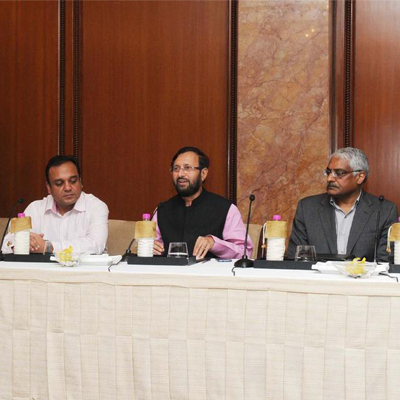
    A meeting to discuss carriage fees is also likely to happen sometime soon between Javadekar and members of the IBF.


    The Home Ministry has also given the I&B Ministry approval to treat files pending with it for more than three months as ‘cleared’ to speed up channel licence clearances.

  • TDSAT to hear IBF case on tariff in November

    TDSAT to hear IBF case on tariff in November

    MUMBAI: It has been a busy week for the courts. While on one hand, the Telecom Disputes Settlement Appellate Tribunal (TDSAT) on 21 August heard a case from the Indian Broadcasting Foundation (IBF), Viacom 18 and MSM India challenging the tariff order amendment of 16 July that was passed by the Telecom Regulatory Authority of India (TRAI). On the other, Star India’s case challenging the TRAI order dated 18 July was heard in the Delhi High Court.


    Taking into account the Delhi HC order for the Star India case which came out on 19 August, the TDSAT today postponed the next hearing date for 18 November.


    The Federation of Hotel and Restaurants Association of India (FHRAI) had asked for refund from broadcasters for deals signed before the order came into existence that will be applicable for the current duration. However the IBF counsel stated that the order only talks of deals taking place in the new regime and the deals for which the FHRAI is asking for refunds have been done in advance.


    Considering the Delhi HC order and also IBF’s proposition that in a 2012 judgment, the TDSAT had itself said that when an arrangement is ongoing between parties and a tariff order is issued, it is not applicable with retrospective effect unless mentioned in the order.


    Therefore, the current deals signed will be dormant but not terminated till the end of the case. It has asked both parties to ensure all their pleadings are in place by 28 October so that a final verdict can be given on 18 November.


    Star India’s case is set for its next hearing on 26 September where it has challenged the regulation itself to which Zee is also a party.


    Click here to read order