Tag: IBF

  • IBF welcomes special Parliament session on GST

    IBF welcomes special Parliament session on GST

    MUMBAI: The Indian Broadcasting Foundation (IBF) has welcomed the government’s proposed plan to hold a special Parliament session to pass the Goods and Services Tax (GST) Bill as it is likely to usher in greater transparency and consistency making compliance easier.

    According to reports, the government is looking at holding the special session for  the Constitution (One Hundred and Twenty Second) Amendment Bill, 2015- or the GST Bill, in the second week of September. The government has also initiated talks with all political parties to get the requisite 2/3 majority in Rajya Sabha.  


    IBF president and Star India CEO Uday Shankar said, “Indian broadcasting sector is happy to note that the government is mulling over calling a special session of Parliament in the second week of September 2015. On behalf of the sector, I would strongly appeal to the government to stay course on the implementation of GST Bill as it intends to bring a semblance of uniformity to the taxation structure, subsumes all existing central and state indirect taxes under one value added tax, both on services and goods, leading to greater efficiency and business speed. Looking at the larger perspective, a national comprehensive tax regime will not only integrate the goods and services sector, but will usher in greater transparency and consistency making compliance easier.”

  • BARC India wins the ‘Make In India Award for Excellence – 2015’

    BARC India wins the ‘Make In India Award for Excellence – 2015’

    MUMBAI: At a function in Ahmedabad today, Team Make In India conferred the ‘Make In India Award for Excellence -2015’ to BARC India.


    A JIB, launched in April 2015, BARC India is extremely happy to be the recipient of this prestigious award in its year of launch itself and that too in the first year of the Award’s institution. Attended and inaugurated by Kalraj Mishra (Cabinet Minister) and Chief Guest and Shri. Govindbhai Patel, MOS for Science and Technology, the event took place at Mahatma Mandir, Gandhinagar, Gujarat (Venue for Vibrant Gujarat).


    In its pursuit of measuring “What India Watches”, this early recognition and first Award – is inspiration for Team BARC India which is focusing on its ‘Make In India’ belief through its locally manufactured ‘BAR-O-meter’ at 1/6th cost of globally available meters thus providing scalability in future for robust and accurate data for generations to come.


    Team BARC India, thanks all its stakeholders, associates and executives along with members of its Technical Committee, Board of Directors, the apex bodies of IBF, AAAI, ISA and the Government of India and Prasar Bharti for their combined support and help in building the World’s largest television audience measurement system.

  • TDSAT questions MIB over DAS licence denial to Tamil Nadu’s Arasu Cable

    TDSAT questions MIB over DAS licence denial to Tamil Nadu’s Arasu Cable

    NEW DELHI: The Telecom Disputes Settlement and Arbitration Tribunal (TDSAT), on 14 August, asked the Ministry of Information and Broadcasting (MIB) to file an affidavit in a matter where the root issue is about the denial of digital addressable system (DAS) licence to Tamil Nadu Arasu Cable TV Corporation (TACTV).


    While the MIB had presented a note through a section officer, TDSAT refused to accept it and wanted the ministry to file a proper affidavit.


    Listing the matter for 2 September, TDSAT also said that Star India, respondent in the case filed by cable operator Thamizhaga Cable TV Communication, New Delhi, was free to negotiate with Arasu and other multi-system operators (MSOs) for areas in Chennai for DAS and outside Chennai for analogue transmission.


    At the same time, it said that there would be no disconnection of signals until the next date.


    TDSAT also directed that the Indian Broadcasting Foundation (IBF) should be impleaded as a party since other broadcasters were also giving signals to Arasu for Chennai though it did not have the DAS licence. Option was also given to other broadcasters if they wanted to be impleaded.


    During the hearing earlier this week, TDSAT chairman Aftab Alam and members Kuldip SIngh and B B Srivastava wondered why the Central Government had failed to take a decision on giving DAS licence to Arasu. It had therefore directed that the Ministry be impleaded in the case.


    At the same time, it had held that Arasu (TACTV) was guilty of transmitting television signals in Chennai, which had adopted DAS in the first phase – in analogue mode, and at the same time guilty of using Star signals in the metropolis without any authorisation inter-connect agreement with Star India.


    The Tribunal was told by TACTV that it had applied for a DAS licence as far back as July 2012 but the government had failed to take a decision despite an order of the Madras High Court in December 2013 asking the Centre to take a decision on the application of TACTV for grant of it’s license “in the soonest possible time.”  


    Noting that there is no compliance with the direction of the Court even after more than a year and half, the Tribunal felt it was imperative to know the stand of the Government for a proper adjudication of the matter.


    The Tribunal did not accept the argument by TACTV in the last hearing that it had negotiated with Star India for the entire state since the Letter of Intent (LOI) was only for the rest of Tamil Nadu barring Chennai.

  • Delhi MSO urges TRAI to draw up comprehensive DAS tariff order pronto

    Delhi MSO urges TRAI to draw up comprehensive DAS tariff order pronto

    NEW DELHI: The Delhi based multi system operator (MSO) Home Cable Network has urged the Telecom Regulatory Authority of India (TRAI) to fix the digital addressable system (DAS) tariff as early as possible in consonance with the directive of the Telecom Disputes Settlement and Arbitration Tribunal (TDSAT) order of 28 April. 


    This had become all the more imperative in the light of the Supreme Court dismissing the appeal by Indian Broadcasting Foundation (IBF) and others challenging the TDSAT directive, it said. 


    Home Cable Network had filed the appeal in TDSAT against the TRAI tariff orders, and IBF had appealed when the Tribunal upheld the appeal.


    In a letter to TRAI chairman R S Sharma, Home Cable Network managing director Vikki Choudhary said the exercise needs to be conducted keeping in view the interest of the consumers at large and to ensure a level playing field, on non-discriminatory terms with parity in conducting this business. 


    “In view of this, we request the Industry Regulator TRAI to re-notify its letter to Pay Broadcasters dated 23 July, 2015 requesting the rates for their respective Pay TV channels with prescribed MRP as well, along with the duration of Advertisements shown on their respective Pay TV Channels,” Choudhary said. 


    He said these issues had been adversely affecting the industry for the past three years and therefore the exercise needed to be completed in a time-bound manner, so the innovations continue with doing business.


    In its order upheld by the apex court, TDSAT had said TRAI “will be well advised to have a fresh look at the various tariff orders in a holistic manner and come out with a comprehensive tariff order in supersession of all the earlier tariff orders.” 


    “While doing so, it may consider all the agreements and relevant data available with it. It may consider differentiating between content which is of a monopolistic nature as against that which is shown by other channels also. It may also consider classifying the content into premium and basic tiers,” the Tribunal had added.

  • IBF appoints Girish Srivastava as secretary general

    IBF appoints Girish Srivastava as secretary general

    MUMBAI: The Indian Broadcasting Foundation (IBF) has appointed Girish Srivastava as secretary general.


    He has worked in the area of policy, regulations, promotion of cross-border trade in services, research, strategic expansion of existing businesses and development of new markets.


    In a career spanning over 24 years, Srivastava has worked with NASSCOM (National Association of Software and Service Companies), Bechtel Corporation, Bechtel Management Consulting, Reliance Industries, Toyo Engineering India as well as on projects mainly funded by international donor agencies.


    “I, along with rest of the IBF members welcome Girish and wish him success for his new assignment,” said IBF president and Star India CEO Uday Shankar.

  • Tariff Hike Case: SC rejects appeal challenging TDSAT order; asks TRAI to out new tariff

    Tariff Hike Case: SC rejects appeal challenging TDSAT order; asks TRAI to out new tariff

    NEW DELHI: Dismissing the appeal challenging an order of the Telecom Disputes Settlement and Appellate Tribunal (TDSAT) setting aside the amendments in two tariff orders, which had sought to put an inflation-linked hike of 27.5 per cent on addressable and non-addressable systems, the Supreme Court today asked the Telecom Regulatory Authority of India (TRAI) to come up with new tariff as early as possible.

    The Court also said that the multi-system operators (MSOs) will not insist on a refund of their payments to broadcasters but will wait for the new tariff orders.

    Thus, the apex Court held intact the 28 April order of the Tribunal holding as ‘untenable’ the Telecommunication (Broadcasting & Cable) Services (Second) Tariff (Eleventh Amendment) Order, 2014’ and ‘The Telecommunication (Broadcasting & Cable) Services (Second) Tariff (Thirteenth Amendment) Order, 2014’.

    Appellants Indian Broadcasting Foundation (IBF), Star India, Vijay Television, Viacom18 and Sun TV had sought stay on the ground of wholesale price index. They also sought to argue that there was consultation prior to issuance of the Tariff orders, which they said were not strictly Tariff orders.

    While the appellants were represented by senior advocates Kapil Sibal and Abhishek Manu Singhvi, the defendant Home Cable Network Services Pvt Ltd and Vikki Choudhary were represented by senior counsel Aman Lekhi and Vivek Sarin.

    When the appellants late last month sought early hearing, the Court asked TRAI not to give effect to its direction asking broadcasters to roll back the 27.5 per cent tariff hike for non-addressable areas until the next hearing. The regulator had on 27 July asked broadcasters to revise their wholesale tariffs, even though it had noted that the Supreme Court had declined to stay the TDSAT order.

    In its order, TDSAT had said TRAI “will be well advised to have a fresh look at the various tariff orders in a holistic manner and come out with a comprehensive tariff order in supersession of all the earlier tariff orders.”

    “While doing so, it may consider all the agreements and relevant data available with it. It may consider differentiating between content which is of a monopolistic nature as against that the like of which is shown by other channels also.”

    “It may also consider classifying the content into premium and basic tiers. It may identify the major cost components so that increase or decrease in such costs may be suitably factored while working out the inflationary hikes. Increase in costs of such components as may be available in indexes such as Wholesale Price Index (WPI), GDP deflator etc. can then be applied. While working out the tariffs, the effort should be to encourage a correct declaration of SLR. While carrying out the exercise, it may take the inputs from various stakeholders and give a reasoned order for accepting or rejecting the same. We want to be amply clear that the above are only some suggestions and TRAI being an expert body may arrive at suitable tariffs independently; it is up to it to consider the above and/or any other factors,” the Tribunal said.

    The IBF had come in as an intervener while the other interveners were direct to home (DTH) operators, MSOs, Association of Cable Operators and cable operators.

    TRAI had allowed a 15 per cent hike from 1 April, 2014. The second installment of 12.5 per cent tariff hike came into effect from 1 January, 2015.

    TRAI said the inflationary increases given by it were based on increase in the WPI. In the Explanatory Memorandum with the Second Amendment to the Principal Tariff Order, it was explained that for making adjustments for inflation WPI had been used. It was explained that Consumer Price Index (CPI) was not used as latest information for this was not available and further this related to certain specific consumption baskets. As per the Explanatory Memorandum to the impugned Tariff Order, the WPI has increased by 43.69 per cent and giving a pass through of 63 per cent, an inflation linked increase of 27.5 per cent is allowed.    

  • Regional Units  set up  to implement DAS; broadcasters ask MSOs for analogue rates till Dec

    Regional Units set up to implement DAS; broadcasters ask MSOs for analogue rates till Dec

    NEW DELHI: Twelve Regional Units (RUs) are being set up for implementation of Digital Addressable System (DAS) in Phase Ill areas.


    At the ninth meeting of the DAS Task Force earlier this month, Information and Broadcasting (I&B) Ministry joint secretary (broadcasting) R Jaya said these RUs will hold workshops on digitisation where all issues shall be discussed with the District Nodal officers nominated by State Governments.


    The remark came when a representative of local cable operators (LCO) from Assam said multi-system operators (MSO) are stopping signals to LCOs without any reason and the local authorised officers do not take cognisance of any violation of the provisions of the Cable TV Act. He added that there is no redressal mechanism for violations of Cable Act at State level and the cable operators do not have the means to file cases in Telecom Disputes Settlement and Arbitration Tribunal (TDSAT).


    Additional secretary J S Mathur, who chaired the meeting on 7 July, said time was fast running out and impressed on all stakeholders to ensure progress and timely completion of digitisation by the cutoff date.


    The Telecom Regulatory Authority of India’s (TRAI) GS Kesarwani was given the task to ask broadcasters to get details of MSOs who were intending to wait till September 2015 before sending requests to broadcasters for agreements in Phase III areas.


    On the other hand, Mathur said that the endeavour on the MSOs’ part should be to start using indigenously manufactured set-top-boxes (STBs) in their network.


    Kesarwani informed of a review meeting that was held by TRAI on the progress of signing inter-connect agreements for Phase Ill areas with broadcasters and MSOs. He said that three broadcasters namely Star India, Multi Screen Media (MSM) and TV18 – informed TRAI that they had received 55 requests from MSOs so far out of which they have signed commercial deals with two MSOs, whereas deals with 11 MSOs were in advance stages of negotiation.


    Kesarwani also urged MSOs who had not received any response to their requests from broadcasters, to inform TRAI.


    Saying that the Headend-in-the-Sky (HITS) operations were also covered under DAS regulations, Kesarwani asked HITS operators to apprise TRAI if no response was received from broadcasters to their requests for interconnect agreements.


    Apprehending that there may be some gap areas or MSO deficient areas, Jaya asked Indian Broadcasting Foundation (IBF) representatives to get details of these areas from broadcasters and intimate the same to the Ministry.


    Meanwhile even as they admitted some progress, representatives of national MSOs said  that broadcasters were asking for seeding plans and other data. However, MSOs were not in a position to provide this at this stage. They said channel pricing in Phase III areas was the main hurdle in signing of interconnect agreements. Some of them said that a few broadcasters had proposed agreements on analogue rates till December 2015 and others on reference inter-connect order rates.


    Even according to the TRAI, pricing can be different for different markets, they said.


    A representative of Siticable Networks said, “According to an analysis of urban areas carried out by us, it may not be feasible for any operator to carry out digitisation in urban areas having only a few hundred TV households. Even broadcasters are insisting on analogue agreements at present.”


    According to an IBF representative, broadcasters had entered into agreements with five regional MSOs. He said, “Broadcasters have filed an appeal in the Supreme Court challenging the TDSAT judgment on the tariff orders issued by TRAI.”


    On the issue of STBs, a representative of Consumer Electronics and Appliances Manufacturers Association (CEAMA ) said that no major orders were received by the industry so far from MSOs. On the other hand, while Siticable and Hathway officials said they were in talks with indigenous STB manufacturers, officials of direct-to-home (DTH) companies said that they had procured about three million STBs from Videocon.


    The meeting was attended by around 35 persons including some senior Ministry officials and some representatives from state governments.
  • BARC India floats initiatives to add new industry subscribers

    BARC India floats initiatives to add new industry subscribers

    MUMBAI: BARC India is looking at adding more broadcasters and agencies from the industry as subscribers by offering them various sops. 

    BARC India currently has more than 370 channels and agencies on board as subscribers, which comprise approximately 94 per cent of the total viewership of channels in India, whereas the agencies control about 95 per cent of the ad spends on television. 


    Now with its larger objective of inclusiveness, BARC India has decided to help all the other broadcasters and agencies to use its data and insights.

    The television ratings monitoring agency has launched special initiatives together with the Indian Broadcasting Foundation (IBF) and Advertising Agencies Association of India (AAAI) to motivate broadcasters and agencies who are yet to invest and subscribe for BARC India’s commercial services.


    The highlights of the offerings for broadcasters are as follows:

    • ‘Special Limited Period Offer’ with lease, rental and buy-back option
    • Limited period offer, closes on 15 August, 2015
    • Installation, testing, commissioning and maintenance for entire contract period would be taken care by Cineom, the authorised resellers of watermarking equipment of Civolution. 
    • Post placing the order with Cineom, broadcasters can subscribe to BARC India’s commercial services

    Highlights of the offerings for agencies are as follows:

    • Special Prime and Supreme packages have been designed for small and medium sized ad agencies
    • A special discount is especially being offered for AAAI member agencies


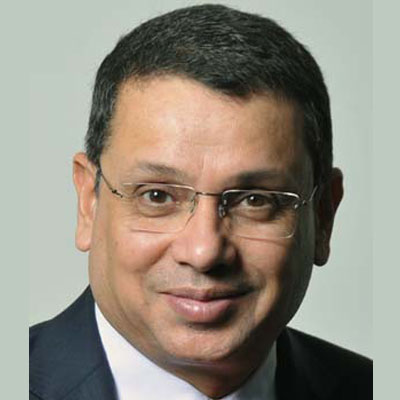
    Star India CEO and IBF president Uday Shankar says, “As a joint industry body – BARC India has always kept the interest of industry stakeholders at the forefront. I look forward to newer broadcasters joining this special initiative designed to facilitate and ease the financial burden. This will help the broadcast ecosystem in India.”


    AAAI president M G Parameswaran adds, “I am happy that BARC India has extended a special offer to small and medium sized ad agency members of AAAI, our largest constituency. I am hopeful that many of them will avail of this special offer, join the movement and benefit from the state-of-art rating systems offered by BARC India.”

  • IBF, NBA, MSO Alliance get more representation in DAS Task Force

    IBF, NBA, MSO Alliance get more representation in DAS Task Force

    NEW DELHI: New members have been taken on board of the Task Force for Digital Addressable System (DAS) Phases III and IV headed by the Additional Secretary in the Information and Broadcasting Ministry.


    These include one additional member each from Indian Broadcasting Foundation (IBF), and News Broadcasters Association (NBA).


    In addition, the new members include Noida Technology Software Park as members representing HITS operator; Ortel Communications; and a representative each from four national MSOs – Den, Siticable, Hathway and IMCL – who were also members of the MSO Alliance; and the All India Digital Cable Federation.


    The Government on 12 September last year had reconstituted the Task Force. This followed a revision of deadlines for the two final phases of DAS.


    The other members of the Task Force are Telecom Regulatory Authority of India (TRAI) principal advisor for broadcast and cable satellite, I&B Ministry joint secretary (Broadcasting), one other representative from the MSO Alliance, five independent MSOs one each from north, south, east, west and north east regions, five registered LCO associations one each from north, south, east, west and north east regions, representatives from the Indian Broadcasting Foundation, News Broadcasters Association, Association of Regional Television Broadcasters of India, DTH Association, FICCI, CII, ASSOCHAM, CEAMA, Department of Telecommunications, Department of Electronics and Information Technology, DG: Doordarshan, DG: All India Radio, BECIL, BIS, five prominent consumer organisations one each from north, south, east, west and north east regions and 33 state level nodal officers one each from the states/union territories governments.


    The task force is aimed to act as an interface between the government and the industry in matters related to implementation of DAS in the cable TV sector and monitor the implementation of DAS. It also will have to analyze the roadblocks that may come in the way of digitization and suggest measures. 

  • Supreme Court declines to stay TDSAT order cancelling inflation-linked hike

    Supreme Court declines to stay TDSAT order cancelling inflation-linked hike

    NEW DELHI: The Supreme Court has declined to stay the order of the Telecom Disputes Settlement and Appellate Tribunal (TDSAT) setting aside the amendments in two tariff orders, which had sought to put an inflation-linked hike of 27.5 per cent on addressable and non-addressable systems.


    While listing the appeal for hearing on 1 July, Justice V. Gopala Gowda and Justice C. Nagappan said it would only consider the matter if matters of law were involved.


    Earlier, counsel for the Indian Broadcasting Foundation (IBF) and some broadcasters sought stay on the ground of wholesale price index. They also sought to argue that there was consultation prior to issuance of the Telecommunication (Broadcasting & Cable) Services (Second) Tariff (Eleventh Amendment) Order, 2014’ and ‘The Telecommunication (Broadcasting & Cable) Services (Second) Tariff (Thirteenth Amendment) Order, 2014’ and these were not strictly tariff orders.


    However, counsel Vivek Sarin and Aman Lekhi for Home Cable Network, the Centre for Transforming India, Lucknow 9 Cable Network, Good Media News India Pvt Ltd, Sikkim Digital Network and Cable Combine Communication Siliguri said that the wholesale price index could not be applied in this case as WPI was applicable to labourers wages or products that were linked to agriculture since the WPI was fixed on the basis of prices of agricultural products


    TDSAT chairman Aftab Alam and member Kuldip Singh said in their order dated 28 April that the ‘The Telecommunication (Broadcasting & Cable) Services (Second) Tariff (Eleventh Amendment) Order, 2014’ and ‘The Telecommunication (Broadcasting & Cable) Services (Second) Tariff (Thirteenth Amendment) Order, 2014’] were ‘untenable.’


    The Tribunal also said it thought the Telecom Regulatory Authority of India (TRAI) “will be well advised to have a fresh look at the various tariff orders in a holistic manner and come out with a comprehensive tariff order in supersession of all the earlier tariff orders.”


    “While doing so, it may consider all the agreements and relevant data available with it. It may consider differentiating between content which is of a monopolistic nature as against that the like of which is shown by other channels also.”


    “It may also consider classifying the content into premium and basic tiers. It may identify the major cost components so that increase or decrease in such costs may be suitably factored while working out the inflationary hikes. Increase in costs of such components as may be available in indexes such as WPI, GDP deflator etc. can then be applied. While working out the tariffs, the effort should be to encourage a correct declaration of SLR. While carrying out the exercise, it may take the inputs from various stakeholders and give a reasoned order for accepting or rejecting the same. We want to be amply clear that the above are only some suggestions and TRAI being an expert body may arrive at suitable tariffs independently; it is up to it to consider the above and/or any other factors,” the Tribunal said.


    Later, IBF supported the order as intervener while other interveners including Direct to Home (DTH) operators, Multi System Operators ( MSOs), and Association of Cable Operators opposed the order on the same grounds as the Appellants.


    TRAI had allowed a 15 per cent hike from 1 April, 2014. The second installment of 12.5 per cent tariff hike came into effect from 1 January, 2015.


    TRAI said the inflationary increases given by it are based on increase in the Wholesale Price Index (WPI). In the Explanatory Memorandum with the Second Amendment to the Principal Tariff Order, it was explained that for making adjustments for inflation Wholesale Price Index (WIP) had been used. It was explained that Consumer Price Index (CPI) was not used as latest information for this was not available and further this related to certain specific consumption baskets. As per the Explanatory Memorandum to the impugned Tariff Order, the WPI has increased by 43.69 per cent and giving a pass through of 63 per cent, an inflation linked increase of 27.5 per cent is allowed.