Tag: IBF

  • I&B steps up content regulation with directive on horrow show timings

    I&B steps up content regulation with directive on horrow show timings

    NEW DELHI: Rapped by the government, the Indian Broadcasting Foundation (IBF), an apex body of broadcasters operating in India, has formed a panel which will look into the slotting of horror shows on private satellite channels so that such shows are not easily accessible to children.

    Reason: a missive from the Information and Broadcasting ministry on the issue of horror shows and their effect on children. The formation of the panel on horror shows – comprising Star India chief executive Peter Mukerjea, SET India chief executive Kunal Dasgupta and Sri Adhikari Brothers’ vice-chairman Markand Adhikari – also coincides with certain steps on content regulation that the Indian government proposes to take. 

    The Parliamentary Consultative Committee attached to the I & B ministry will be meeting tomorrow to discuss ways which can possibly give the government powers to control what it feels is undesirable programming on TV channels.

    Broadcasting industry sources confirmed that the IBF has formed a panel to look into the issue of horror shows as it received a letter from the I&B ministry saying various representations have been made to it on rampant airing of horror and thriller shows during prime time which can have negative effects on children. 

    The sources indicated that the IBF panel might look at shifting such programming on to late night slots or at times when children are not likely to be watching television.

    Programmes like Aahat and Achanak on Sony, Shhh…Koi Hai on Star Plus and Khauff on Sabe TV usually air at 9 pm or 10 pm on weekends currently. 

    The parliamentary panel tomorrow will discuss ways on how the government can enforce a control on content being put out on television channels, including commercials that have been termed objectionable like the Fair & Lovely cream ad – which, as per a petition to the I&B ministry by a human rights commission, promoted colour prejudice and is biased against the dark skinned girl child.

    According to government sources, the move to get some hold over content on television also comes in the wake of frequent objections raised by members of Parliament on un-Indian like programming on the small screen. 

    Meanwhile, the Indian Broadcasting Foundation (IBF) is close to finalising a programming code that is to be followed by the member-broadcasters. 

    According to early information available with indiantelevision.com, the IBF programming code, aimed at self-regulation, is a lengthy document running into almost 100 pages. It will be put up for the board’s approval once it is finalised. 

  • I&B steps up content regulation with directive on horrow show timings

    I&B steps up content regulation with directive on horrow show timings

    NEW DELHI: Rapped by the government, the Indian Broadcasting Foundation (IBF), an apex body of broadcasters operating in India, has formed a panel which will look into the slotting of horror shows on private satellite channels so that such shows are not easily accessible to children.

    Reason: a missive from the Information and Broadcasting ministry on the issue of horror shows and their effect on children. The formation of the panel on horror shows – comprising Star India chief executive Peter Mukerjea, SET India chief executive Kunal Dasgupta and Sri Adhikari Brothers’ vice-chairman Markand Adhikari – also coincides with certain steps on content regulation that the Indian government proposes to take. 

    The Parliamentary Consultative Committee attached to the I & B ministry will be meeting tomorrow to discuss ways which can possibly give the government powers to control what it feels is undesirable programming on TV channels.

    Broadcasting industry sources confirmed that the IBF has formed a panel to look into the issue of horror shows as it received a letter from the I&B ministry saying various representations have been made to it on rampant airing of horror and thriller shows during prime time which can have negative effects on children. 

    The sources indicated that the IBF panel might look at shifting such programming on to late night slots or at times when children are not likely to be watching television.

    Programmes like Aahat and Achanak on Sony, Shhh…Koi Hai on Star Plus and Khauff on Sabe TV usually air at 9 pm or 10 pm on weekends currently. 

    The parliamentary panel tomorrow will discuss ways on how the government can enforce a control on content being put out on television channels, including commercials that have been termed objectionable like the Fair & Lovely cream ad – which, as per a petition to the I&B ministry by a human rights commission, promoted colour prejudice and is biased against the dark skinned girl child.

    According to government sources, the move to get some hold over content on television also comes in the wake of frequent objections raised by members of Parliament on un-Indian like programming on the small screen. 

    Meanwhile, the Indian Broadcasting Foundation (IBF) is close to finalising a programming code that is to be followed by the member-broadcasters. 

    According to early information available with indiantelevision.com, the IBF programming code, aimed at self-regulation, is a lengthy document running into almost 100 pages. It will be put up for the board’s approval once it is finalised. 

  • Indian Broadcasting Foundation cheers TRAI’s decision on differential pricing

    Indian Broadcasting Foundation cheers TRAI’s decision on differential pricing

    MUMBAI: The Indian Broadcasting Foundation (IBF) has welcomed the Telecom Regulatory Authority of India’s (TRAI) decision to rule out differential pricing.

    “The broadcasting industry is appreciative of TRAI’s decision to rule out differential pricing. IBF has earlier opposed differential pricing terming it to be ‘non-competitive,” said IBF secretary general Girish Srivastava.

    In its response to the consultation paper, IBF had clearly stated that such discriminatory entry barriers would lead to “reduced scope of consumer choice, inducing artificial scarcity.”

    “In our opinion, TRAI’s regulation on prohibiting differential pricing constitutes a milestone as it was against the basic principle of Internet access as no private player should have the power and right to decide which information can be accessed and which is less easily available,” Srivastava added.

    As was reported earlier by Indiantelevision.com, major broadcasters like Star India, Sony Pictures Networks India and Zee Network submitted their comments to TRAI in favour of net neutrality citing the drawbacks of differential pricing for telecom services.

  • Indian Broadcasting Foundation cheers TRAI’s decision on differential pricing

    Indian Broadcasting Foundation cheers TRAI’s decision on differential pricing

    MUMBAI: The Indian Broadcasting Foundation (IBF) has welcomed the Telecom Regulatory Authority of India’s (TRAI) decision to rule out differential pricing.

    “The broadcasting industry is appreciative of TRAI’s decision to rule out differential pricing. IBF has earlier opposed differential pricing terming it to be ‘non-competitive,” said IBF secretary general Girish Srivastava.

    In its response to the consultation paper, IBF had clearly stated that such discriminatory entry barriers would lead to “reduced scope of consumer choice, inducing artificial scarcity.”

    “In our opinion, TRAI’s regulation on prohibiting differential pricing constitutes a milestone as it was against the basic principle of Internet access as no private player should have the power and right to decide which information can be accessed and which is less easily available,” Srivastava added.

    As was reported earlier by Indiantelevision.com, major broadcasters like Star India, Sony Pictures Networks India and Zee Network submitted their comments to TRAI in favour of net neutrality citing the drawbacks of differential pricing for telecom services.

  • IBF urges Centre to grant ‘infrastructure status’ to broadcasting industry

    IBF urges Centre to grant ‘infrastructure status’ to broadcasting industry

    MUMBAI: In a bid to push the digitisation agenda, the Indian Broadcasting Foundation (IBF) today urged the Union Government to grant “Infrastructure Status” to the broadcasting industry, including direct to home (DTH) and cable sectors.


    At a pre-Budget consultation meeting, chaired by Union Finance Minister Arun Jaitley, IBF stressed that the expected investment in STBs (set-top boxes) and optical fibre network alone would be to the tune of Rs 25,000 – 30,000 crore.


    “In the present era of convergence, distinction between Telecom, IT and Broadcasting sectors is getting blurred. Telecom is already treated as an ‘infrastructure service.’ Broadcasters and distribution platforms will be aided with better and affordable financing options in the present capital-intensive growth phase if broadcasting sector is accorded infrastructure status. This will also provide a level playing field to the broadcasting sector with telecom and ISP industry,” IBF secretary general Girish Srivastava said at the high level meeting.


    The Foundation also urged the Government to reduce customs duty on STBs to five per cent from the present 10 per cent. “The Finance Act, 2013 had increased customs duty on STBs to 10 per cent from earlier five per cent. In order to push digitisation, customs duty on STBs should be reduced to the earlier level of five per cent if not entirely removed,” Srivastava added.


    On the direct tax front, IBF urged the Finance Ministry to allow carry forward of losses in case of amalgamation/merger. “Currently all industrial undertakings in manufacturing, software, electricity and telecom sectors are allowed carry forward of losses in case of merger/amalgamation. Media and Entertainment industry should be granted a similar status by amending Section 72(A)(7)(aa) of the Income Tax Act,” IBF said in its presentation.


    Another proposal presented by IBF related to tax withholding on transponder charges. Finance Act, 2012 retrospectively included payment of transponder hire and other charges as royalty. However, these are not regarded as royalty under DTAA definition of royalty. IBF requested the Ministry of Finance that the definition of royalty under the Indian Income Tax Act and Treaty (DTAA) be aligned so that the credit of withholding tax is available to the foreign satellite service providers.

  • DAS Phase III: Govt. insists 76% STB seeding; stakeholders claim huge shortage

    DAS Phase III: Govt. insists 76% STB seeding; stakeholders claim huge shortage

     
     NEW DELHI: The Government has claimed that the percentage achievement of coverage of Digital Addressable System (DAS) Phase III so far is 76 per cent, even as reports from multisystem and local cable operators in various states alleged there was huge shortage of set top boxes.
     
    In fact, the 13th Task Force meeting – the last to be held before the deadline of 31 December – was told that the percentage achievement was 86.25 if Tamil Nadu that has some legal and other issues is excluded. The meeting was told there were only 405 zero seeding areas till the last report.
     
    But reports from MSOs and LCOs to Indiantelevision.com from various parts of the country including Maharashtra, Madhya Pradesh and West Bengal said there is acute shortage of set top boxes (STBs) and indicated under 50 per cent seeding.
     
    In the 13th Task Force meeting presided over Special Secretary J S Mathur, Joint Secretary (Broadcasting) R Jaya said the number of urban areas to be digitised in Phase lll after updation of 27 States/UTs is 6016. While changes had been made in some urban states on the basis of reports from some state governments and union territories, comments were still awaited from the States/UTs of Maharashtra, Karnataka, Bihar, Tamil Nadu, Lakshdweep and Dadra Nagar Haveli. 
     
    Out of the 685 areas including West Bengal (where 280 areas were removed soon after the Task Force meeting), 450 areas had less than 1000 TV households and 226 from 1000 to 5000 TV households.
     
    Jaya said out of 510 MSOs registered for Phase lll areas as on the date of the meeting, only 190 MSOs are entering seeding data in the Management Information System (MIS). A total of 135 MSOs have still not logged into MIS and 185 MSOs have logged but have not reported any seeding. She said the Ministry had granted 567 registrations so far. Ninety applications are under process and 35 applications are pending clarifications. Affidavits are awaited from 170 applicants. About 100 applications were received in November and December. 
     
    She said the Home Ministry in July 2015 decided that no security clearance was deemed for issue of registration to MSOs. Since this would involve amendment in the rules, till that time, provisional registrations are being issued by the Ministry. The Joint Secretary further mentioned that the applications are still being received and in some cases the registrations are pending for want of documents. She also mentioned that as informed in the PowerPoint presentation made at the meeting, the MSO dark areas were minimal. 
     
    A Toll free facility has been operational for the last two months and an average of about 500 calls are being received every day over the last 10 days. 
     
    About 400 officers from AIR and Doordarshan have been nominated to inspect the headends of MSOs and in this regard inspection reports have already been received from 50 officers. 
     
    Shortage of STBs and their delivery and pending interconnect agreements with broadcasters as reported by some MSOs, were also mentioned. It was informed that requests had been received from Uttarakhand, Andhra Pradesh and Maharashtra and some MSOs for extension in cut-off date for Phase lll of digitisation. 
     
    It was also pointed out that seeding data received from direct to home (DTH) operators was based on PIN codes of places. DTH operators were requested to confirm their data as per the urban areas notified by the Ministry to confirm correct seeding status in Phase lll areas. 
     
    The representative of DTH mentioned that they have at present 16 million active set top boxes and another two million STBs, which shall be activated soon after the 31 December timeline in Phase lll areas. He added that apart from this, four million STBs are catered to by DD Freedish and another eight million by digital cable. He said the the seeding data for each notified phase lll urban area would be sent very shortly. He stated that the data for seeding of 16 million STBs may be taken. 
     
    It was decided that the seeding data may be accepted. Jaya said the data for two million STBs to be activated after the cut-off date shall however be included only after report of their activation is finally received. 
     
    A representative of Ortel Communications mentioned that due to component shortage with STB manufacturers, the delivery of STBs ordered by them is affected despite advance payment made by them. He added that they have seeded 30 per cent of STBs so far and have a stock of about 20 per cent. 
     
    Mathur said the notification for the cut-off date for Phase lll had been issued on 11 September, 2014, which was more than a year ago. Further, several awareness campaigns, Task Force and MSO sub-group meetings and orientation workshops for the State and district Nodal officers have been held during this period. In addition concerned officials of the State Governments including the Chief Secretaries have been sensitised from time to time on the importance of the initiative. Hence there was no case whatsoever to consider any extension in the cut-off date. 
     
    On a query by the Indian Broadcasting Foundation (IBF) representative about 700 MSOs have single headend for both final phases, Jaya said an advisory was issued to all registered MSOs informing them that in case they have a single control room for Phase lll and Phase lV areas, they must take separate lRDs from broadcasters for taking digital signals in Phase lll areas and analogue signal in Phase lV areas. 
     
    A representative of the Telecom Regulatory Authority of India (TRAI) said it was made clear in all meetings that analogue signals can not be transmitted in Phase lll areas after 31 December, 2015. MSOs and broadcasters were required to make arrangements in advance for feeding Phase lll and Phase lV areas. He added that as per the interconnect regulations analogue transmission is permitted in Phase lV areas and MSOs and broadcasters should find a technological solution to the problem of segregating the feeds from the same control room. 
     
    When the IBF representative apprehended piracy problems in Phase lll areas, he was told the broadcasters must take action as per the law against those indulging in piracy. He was told that it is their responsibility to ensure that analogue signals are not transmitted in Phase lll areas without affecting transmission of analogue signals in Phase lV areas. 
     
    He was also told that the Ministry will write to all State/UT Governments to take action against those violating the law. Jaya remarked that broadcasters have to cancel the agreements entered by them for analogue signals in Phase lll areas.
     
    The Maharashtra government representative said difficulties have been reported from the field in implementing digitisation in the state within the timelines. 
     
    The Maharashtra Cable Operators Federation representative said about 60 per cent areas in Maharashtra are not served by the national MSOs. He said about one million STBs are to be seeded, which is not possible. He added that 40 registrations are pending to be issued by Ministry. 
     
     
    A representative of consumer organisation Savera said consumers were facing difficulties in redressal of their complaints from the MSOs/LCOs, and suggested the Consumer Affairs Ministry be added for redressal of the complaints. He also suggested that the Ministry may hold workshops on cable TV digitisation in all districts for awareness of the consumers. He was told that 11 workshops were held by Ministry for implementation of Phase lll and similar workshops have been planned to be held in Phase lV also. Besides, five advertisements on separate dates were issued in newspapers pan-India and both News and general entertainment channels (GECs) have been carrying ads and scrolls accordingly for information of all.
  • Uday Shankar re-elected as IBF president

    Uday Shankar re-elected as IBF president

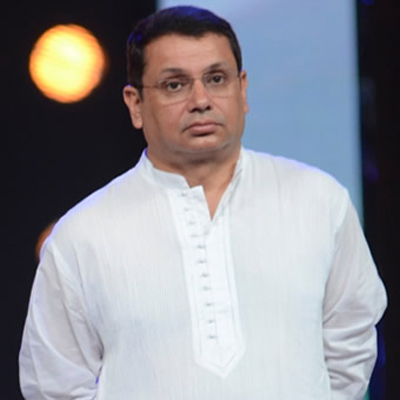
    MUMBAI: Star India CEO Uday Shankar has been re-elected as the president of The Indian Broadcasting Foundation (IBF) at the Sixteenth Annual General Meeting (AGM) for the second term running.

    The AGM was held in New Delhi today (29 September, 2015).

    The IBF Board also re-elected Zee Media Corp managing director Punit Goenka, Multi Screen Media CEO N P Singh and India TV chairman Rajat Sharma as IBF vice presidents, and Discovery Networks Asia-Pacific executive vice president and general manager, South Asia Rahul Johri as IBF treasurer.

    On being re-elected IBF president, Shankar said, “I am humbled by IBF members’ confidence in re-electing me. The broadcasting sector is going through a transition due to changes in technology and business environment and I hope to work with the government, industry and other stakeholders for realisation of the sector’s potential.”

  • STB shortage, lack of awareness continue to plague DAS implementation, DD & AIR to help in publicity

    STB shortage, lack of awareness continue to plague DAS implementation, DD & AIR to help in publicity

    NEW DELHI: With the third phase of digital addressable system (DAS) expected to be implemented by 1 January 2016, the single biggest challenge facing the government and stakeholders is the dire shortage of set top boxes (STBs).


    A senior Information and Broadcasting Ministry source told Indiantelevision.com that the main hurdle was that very few manufacturers were coming forward with proposals despite the government support to the Make in India programme.


    This issue and the problem of adequate publicity about the benefits of DAS perplexed those who attended the tenth Task Force meeting on DAS held on 17 August under the chairmanship of Additional Secretary J S Mathur.


    Meanwhile, Joint Secretary (Broadcasting) R Jaya said Regional Units were being established at twelve places and these would start operating from September to monitor and report the progress of digitisation in each State/UT. 


    While Consumer Electronics and Appliances Manufacturers Association (CEAMA) complained that no major orders were being placed with it by multi system operators (MSOs). A representative of the CEAMA said, “This is the time to place orders if they want the STBs, which are required to be delivered before the cut-off date.”


    A Telecom Regulatory Authority of India (TRAI) representative said under the regulations, MSOs and LCOs have to offer STBs to consumers on rent, installment, outright purchase or any other scheme according to the standard tariff package prescribed by it. Any complaint on this issue should be addressed to TRAI. 


    A representative of the Uttarakhand Government said adequate number of STBs are not provided by MSOs in the State, resulting in slow progress of digitisation. 


    A representative of Maharashtra Cable Operators’ Federation (MCOF) said there are 5000 head-end owners, which are MSOs or LMOs. But many of them had not applied for registration. He apprehended that it may result in some dark areas once the deadline is over. 


    Jaya said MSO registrations were still on and any one can apply. She said 349 MSO registrations had been granted till mid-August including 126 provisional ones. Referring to apprehension of dark areas, she said these will be identified through State nodal officers and broadcasters. 

    Meanwhile, there was a lengthy discussion about publicity about DAS. ASSOCHAM with some broadcasters had planned a Chetna Yatra from next month covering 450 cities/towns/villages in the country. 

    Representatives of direct-to-home (DTH) platforms said they were ready to give free publicity regarding cable TV digitisation if asked. 


    A representative of the News Broadcasters Association (NBA) said there are financial constraints facing broadcasters. However, they will carry advertisement spots and would be preparing these.


    The TRAI representative said it had placed an advertisement on mandatory digitisation on its website. It had also planned to come out with a quarter-page print advertisement in newspapers very soon. 


    TRAI is holding five consumer outreach programmes per quarter in each region. From its perspective, awareness about digitisation is happening. The TRAI representative said the advertisement could be shared with MSOs for publicity by them. 


    All India Radio (AIR) and Doordarshan (DD) have been carrying advertisements on mandatory digitisation for several months. It was suggested that Doordarshan may also give video advertisements on cable digitisation in local languages on their popular regional channels in prime time. The Doordarshan representative agreed to get this done. 


    A representative of the Gujarat MSO GTPL said they have been carrying out a publicity campaign through scrolls on their local channels and public gatherings. 


    A representative of Indusind-Media said a team of about 300 persons had been deployed on this job to carry the campaign.


    On the other hand, a representative of an LCO association from West Bengal said they were unaware of the consumer outreach programme arranged by TRAI. It was suggested that members should regularly check the websites of MIB and TRAI for all such information regarding cable digitisation. 


    According to Jaya, four regional workshops were held by the Ministry with the State nodal officers of some of the States/UTs to sensitise them about their role and responsibilities in implementing cable TV digitisation in their States. Registered MSOs permitted to operate in these States were also invited in these workshops. 


    She said it was heartening to know from these workshops that State Governments are also gearing up to meet the challenge of cable digitisation in their States. The MSOs participating in these workshops said they were carrying publicity awareness campaign on digitisation on their local channels and through pamphlets being distributed by them. 


    She added that seven more regional workshops have been planned by the Ministry in 45 days at different places. Another workshop has since been held with the nodal officers from the states in the North East and the registered MSOs operating there on 21 August at Shillong.


    A representative of an LCO association from Assam said broadcasters were not providing content to them and they were being forced to come to Delhi for filing cases in TDSAT. The TRAI representative said this was a matter of dispute and TDSAT was the only appropriate forum. But for issues related to regulations, the TRAI regional office in Kolkata could be approached. 


    On signing of interconnect agreements, the IMCL representative said it was working on delivery through headend in the sky (HITS) platform besides cable. It was now in the final stage of negotiations with broadcasters. The TRAI representative said all MSOs who had not received any response to their requests for interconnect agreements from broadcasters had been asked to inform TRAI by 24 August and a meeting had been slated with broadcasters on 28 August. 


    A representative of the Indian Broadcasting Foundation (IBF) said deals are happening and parallel negotiations are taking place.
  • TRAI asked to re-notify broadcasters in light of SC judgment rejecting tariff orders

    TRAI asked to re-notify broadcasters in light of SC judgment rejecting tariff orders

    NEW DELHI: The Telecom Regulatory Authority of India (TRAI) has been urged to re-notify its letter to pay broadcasters dated 23 July, requesting the rates for their respective pay TV channels with prescribed MRP as well, along with the duration of advertisements shown.


    In a letter to TRAI chairman R S Sharma, Home Cable Networks (P) Ltd head Vikki Chodhary said, “Needless to say, the exercise needs to be conducted keeping in view the interest of the consumers at large and to also ensure a level playing field on non-discriminatory terms with parity in conducting this business.”  


    The regulator had asked broadcasters on 23 July to revise their wholesale tariffs, even though it had noted that the Supreme Court had declined to stay the order of the Telecom Disputes Settlement and Appellate Tribunal (TDSAT) setting aside the amendments in two tariff orders, which had sought to put an inflation-linked hike of 27.5 per cent on addressable and non-addressable systems.


    The very next day – 24 July – the Supreme Court stayed implementation of this letter in view of appeal by Indian Broadcasting Foundation (IBF) and others challenging the order by TDSAT on Chaudhary’s petition relating to tariff.


    While dismissing the appeal challenging TDSAT’s order, the Supreme Court on 4 August asked TRAI to come up with new tariffs as early as possible.


    The Court also said the multi-system operators (MSOs) will not insist on a refund of their payments to broadcasters but will wait for the new tariff orders.


    Thus, the apex Court held intact the 28 April order of the Tribunal holding as ‘untenable’ the Telecommunication (Broadcasting & Cable) Services (Second) Tariff (Eleventh Amendment) Order, 2014’ and ‘The Telecommunication (Broadcasting & Cable) Services (Second) Tariff (Thirteenth Amendment) Order, 2014’.


    In his letter to Sharma, Chaudhary has drawn TRAI’s attention to observations by TDSAT that the regulator “will be well advised to have a fresh look at the various tariff orders in a holistic manner and come out with a comprehensive tariff order in supersession of all the earlier tariff orders… While doing so, it may consider all the agreements and relevant data available with it. It may consider differentiating between content, which is of a monopolistic nature as against that the like of which is shown by other channels also. It may also consider classifying the content into premium and basic tiers.”


  • TRAI open house: Broadcasters root for tariff distinction between subscribers

    TRAI open house: Broadcasters root for tariff distinction between subscribers

    MUMBAI: With an aim to get the broadcasters’ viewpoint on tariff issues related to commercial subscribers, the Telecom Regulatory Authority of India (TRAI) held an open house discussion in Delhi on 18 August.


    While welcoming the open house initiative held under TRAI chairman Ram Sewak Sharma, the Indian Broadcasting Foundation (IBF) member channels discussed issues including differentiation between domestic and commercial subscribers for provision of TV signals, the criteria for drawing distinction between ordinary subscribers and commercial subscribers, tariff framework both at wholesale and retail levels, transparency and accountability in value chain to effectively minimise disputes and conflicts among stakeholders and engagement of broadcasters in the determination of retail tariffs for commercial subscribers.


    IBF president and Star India CEO Uday Shankar said, “It is inconceivable that any sector regulator would actually equate five star hotels and commercial establishments with domestic consumers as far as tariffs are concerned. But that’s exactly what TRAI has done with rates for pay TV channels. I am not sure what exactly the regulator is trying to achieve with the present dispensation, i.e. five star hotels availing TV content at subsidised rates especially when they charge a leg and arm for a room, a meal or even a bottle of water? It appears to be a case of misguided regulatory zeal. I hope better sense prevails and the regulator does what is in the interest of its primary stakeholders, i.e. broadcasters and distribution platforms and not five star and four star hotels.”


    IBF secretary general Girish Srivastava added, “In keeping with the priorities of the current government of improving ease of doing business in India, such fixation is not warranted and forbearance should be the way forward. We believe that the regulator will factor that putting a ceiling on tariff will not help in promoting and protecting the interests of the ordinary consumers but will serve as an aberration to the growth story of the sector. Broadcasters have been unvarying and undeviating on this front and the regulator will hopefully keep this in mind before deciding on a regulation.”


    According to Multiscreen Media Limited general counsel Ashok Nambissan, commercial and residential subscribers are two completely different categories. “The residential subscriber consumes television content for his or her own use whereas the commercial subscriber provides television content for his customers to propagate the business of his establishment. Tariff regulation in today’s age is an anomaly: in any event it should not exist for commercial subscribers as a category whether at the wholesale or retail level and should be left to the market,” he said.


    Zee Entertainment president – legal & regulatory A. Mohan opined, “All along it has been TRAI’s consistent stand that there is a distinction between ordinary and commercial subscribers and the same has been recognised by various judicial forums such as the Hon’ble TDSAT and the Hon’ble Supreme Court of India.  This stand of TRAI is also reflected in various tariff orders of TRAI, except the last one, that the tariff applicable to commercial subscribers is under forbearance. Since the commercial establishments will use the television services for commercial exploitation, whether directly or indirectly, the tariff applicable for ordinary subscriber, which is frozen since the year 2004 (which is a subsidised tariff) cannot be applied to commercial subscribers.”


    Star India president – legal & regulatory Deepak Jacob said, “The Supreme Court has time and again in sectors such as oil and gas and power, clearly upheld the principles of differential tariffs for commercial and domestic subscribers. The rationale of differentiation is based on an understanding of motive and purpose i.e. commercial establishments have a clear profit motive and that the end usage is for a valuable benefit that accrues to and is built in to the charges paid by the consumer. It is also important that the regulator respects the mandate of Parliament and acts in accordance with laws laid down by the legislature by ensuring that the TRAI regulations/tariff orders are not in derogation of or repugnant to the provisions of Copyright Act, which is the principle legislation that governs content owners including broadcasters. The Copyright Act unequivocally provides for a separate dispensation in so far as commercial establishments are concerned and hence we hope that the regulator keeps the same in mind while formulating the new tariff regime.”


    BBC India COO Naveen Jhunjhunwala added, “We strongly advocate a distinction between ordinary and commercial subscribers as far as tariff is concerned since the place of viewing the TV signal and type of usage of TV signals is inherently different in both these categories. Having a global presence, we have seen that the regulators have left determination of tariffs to forbearance thereby ensuring dynamic competition.  With Government focus on making India an easier place to do business, leaving things to market forces will ensure growth and be in line with international scenario.”