Tag: IBDF

  • Broadcasters to withdraw petitions challenging Trai on NTO 2.0 in SC

    Broadcasters to withdraw petitions challenging Trai on NTO 2.0 in SC

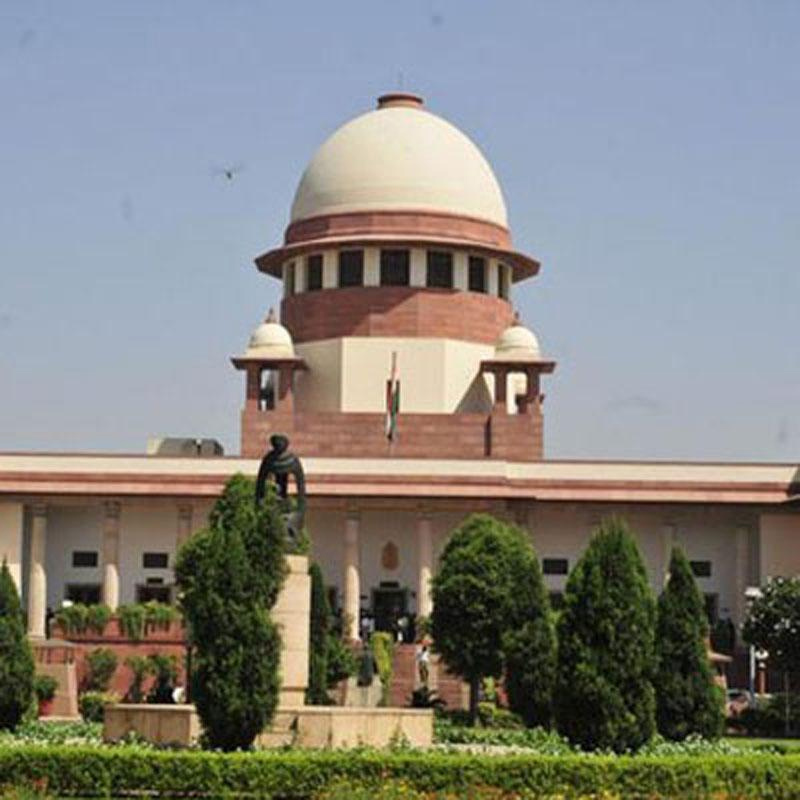
    Mumbai: The Indian Broadcasting and Digital Foundation (IBDF) and its members are likely to withdraw their petitions challenging the New Tariff Order (NTO) 2.0 in the Supreme Court, sources told indiantelevision.com. The apex court took up broadcasters’ applications for withdrawal of the petition while hearing the matter on Tuesday.

    Earlier this month, The Telecom Regulatory Authority of India (Trai) had extended the deadline for implementation of the new tariff order (NTO) 2.0 to 1 June. The previous deadline was 1 April.

    Trai had then also allowed broadcasters to revise their reference interconnect offers (RIO) by 28 February and publish the same on their websites. Distribution platform operators (DPOs) were directed to report the distributor retail price and composition of the bouquet of pay channels in compliance with the new regulatory framework by 31 March. Those who have already submitted can revise their RIOs by 31 March.

    In response to the earlier deadlines, broadcasters had come out with their new RIOs in October-November last year, preferring to pull their popular channels out of the bouquets instead of reducing the price to or below Rs 12. Though still above the cap, many of these prices were revised down later.

    Pertinent in this regard is Trai’s intention to form a committee with representation from leading pay-TV industry associations to ensure smooth implementation of the New Regulatory Framework 2020. In a letter dated 22 December 2021, the regulator has asked the IBDF, All India Digital Cable Federation (AIDCF), and the DTH association to nominate a maximum of two representatives to be part of the implementation committee.

    Prior to this, Trai had in November 2021, notified stakeholders that NTO 2.0 implementation would be delayed until 1 April. Speculations regarding backroom parleys between the telecom regulator and broadcasters to end the impasse have also been in the news lately. 

    This copy will be updated.

  • #Retrace2021: The year of regulatory challenges and no TRPs for news channels

    #Retrace2021: The year of regulatory challenges and no TRPs for news channels

    Mumbai: The year 2021 began with a rather chaotic legacy handed over by 2020. In the aftermath of the TRP Scam, TV ratings for the news genre remained suspended throughout the year. The legal tussle between Telecom Regulatory Authority of India (Trai) and broadcasters over the rollout of the New Tariff Order (NTO) 2.0 continued to dominate the headlines.

    Adding to this, was the Information Technology (Intermediary Guidelines and Digital Media Ethics Code) Rules, 2021 (IT Rules, 2021), announced in February which set the ball rolling for regulation of digital and social media. This was followed by the Cable Television Networks (Amendment) Rules, 2021 (CTNA 2021) and the proposed amendments to the Cinematograph Act, 1952, all of which sought to regulate content across media including digital, and align it with ‘public interest’.

    Also Read: SC refuses to grant interim protection to Tandav makers

    The year began with the controversy over the Amazon Prime web series ‘Tandav’ which became the tipping point for the government which was already deliberating the regulation of digital media including social. The show and its star cast was accused of hurting the religious sentiments of a particular community prompting the show’s director Ali Abbas Zafar to issue an unconditional apology on social media. The spate of FIRs and threats continued unabated despite the omission of two ‘objectionable’ sequences, and apologies from the platform and its then country head Aparna Purohit.

    Also Read: Tandav : And the future of storytelling

    While the hitherto pampered OTT-verse was bracing itself for government oversight, the pay-TV universe continued to be cannibalised by it and DD Free Dish at the top and bottom tiers. Even as distribution players worked on diversifying their offerings to embrace the imminent digital takeover and on building new ones to challenge Free Dish, they kept pushing for regulatory interventions to tackle the issue at its core. Though well within its rights to strive for survival, in the process of manoeuvring these challenges, the industry ended up creating another flashpoint between the regulators/government and itself.

    2021 closed with a trailer to the next big fight with Trai questioning the availability of linear channels on OTT and telco apps which, it said, is in violation of Clause 5.6 of Policy Guidelines for Downlinking of Television Channels dated 5 December 2011. Broadcasters, on the other hand, invoked section 37 of the Copyright Act 1957 known as Broadcast Reproduction Right (BRR) to justify their channels’ presence on their own OTT platforms and third-party aggregator apps. Also because they are not licensees under Trai Act, they do not fall under the scope of Trai Act or Interconnection Regulations or Clause 5.6 of Downlinking guidelines.

    Here, we take a look back at the regulatory events and challenges that re-defined the Indian TV industry in 2021.

    Legal tussle over NTO 2.0

    One of the biggest developments of the year was the pronouncement of the Bombay High Court order on the NTO 2.0 case on 30 June. After a legal tussle that lasted over a year, Trai had managed to get a green signal from the court on the implementation of the amended rules. While the HC upheld the constitutional validity of NTO 2.0, it termed one of the twin conditions “arbitrary”, according to which the maximum retail price of an a-la-carte channel could not be more than one-third the maximum rate of a channel in the bouquet.

    Also Read: NTO 2.0 Verdict : Who Wins What?

    Following the notification of NTO 2.0 in January 2020, several broadcasters under the umbrella of the Indian Broadcasting and Digital Foundation (IBDF) and a couple of other private channels challenged the amendment terming it “arbitrary and in violation of their fundamental right”. The NTO 2.0 prescribed linkage between a-la-carte price and bouquet via the imposition of twin conditions on bouquet pricing, and reduction in price cap from Rs 19 to Rs 12 for pay channels, thereby incentivising a-la-carte alone.

    Having recognised the adverse impact of NTO (2019) on all stakeholders including consumers, broadcasters and distributors refused to accept the judgement and challenged it further in the Supreme Court in July. After a series of adjournments, the apex court, on 30 November, posted the matter for hearing on 15 February 2022.

    Meanwhile, in November, Trai moved the deadline for implementation of NTO 2.0 from 1 December 2021 to 1 April 2022. Distribution platforms like DTH and cable will now have to seek subscriber choice till 31 March 2022, it said. The deadline for broadcasters to come up with their new reference interconnection offers (RIOs) and simultaneously publish the required information about channel and bouquet offerings, as well as their MRPs on their websites was also extended to 31 December.

    Also Read: Trai extends NTO 2.0 implementation to 1 April 2022

    Several large networks including ETV, Discovery Communications, Sun TV, Times Networks, ZeelL, SPNI, and others had come out with their new RIOs in October-November. In what looked like a refusal to back down, the broadcasters preferred to pull their popular channels out of the bouquets instead of reducing the price to Rs 12. Their move flies in the face of the regulators’ assertion and intention of preserving the interest of customers.

    Despite the short-lived benefits of incentivising à la carte and changes in NCF for broadcasters and distributors, the attempt to regulate channel pricing was soon recognised by all stakeholders as being counterproductive. Aside from having an overall negative effect on reach and viewership for broadcasters, it led to the shutting down of many niche channels which became inviable as a result of NTO implementation. The impact for distributors was felt when customers gravitated towards either OTTs or Free Dish to counter the increase in their monthly subscription bills.

    Also Read: DTH operators write to Trai over broadcasters offering pay channels on DD Free Dish

    The implementation of NTO 2.0 will further hasten this migration. Foreseeing the detrimental scenario, Direct-to-home (DTH) service providers including Tata Sky and Airtel Digital TV wrote to Trai in September asking the regulator to address the issue of broadcasters making their pay channels available on DD Free Dish. Alleging that this goes against the current tariff regime which mandates the designation of channels as either pay or FTA and prohibits their bundling together, they once again raised the demand for such designation to remain constant across distribution platforms.

    Also Read : There needs to be a level-playing field : Tata Sky CEO Harit Nagpal

    Further, in a letter dated 28 December written to Prime Minister Narendra Modi, the Delhi-based All Local Cable Operators Association alleged that the Trai and broadcasters are “forcibly pressurising” MSOs to implement the new tariff order, which will lead to cable TV operators, national MSOs and independent MSOs incurring huge losses. The NTO 2.0, if implemented, will lead to the unemployment of lakhs of families connected with the cable TV industry, it said. Several other representative organisations have also raised the issue with the government and regulators frequently.

    Also Read : Trai vs Broadcasters : Impact could be larger than expected

    IT Rules, 2021 & Cable Television Networks (Amendment) Rules, 2021:

    The introduction of the Information Technology (Intermediary Guidelines and Digital Media Ethics Code) Rules, 2021 by the ministry of electronics and information technology (MeitY) in February sought to regulate social media, digital platforms, and streaming services in the country through a three-level grievance redressal mechanism.

    The “soft-touch regulatory architecture” comprised Level I – self-regulation by broadcasters, Level II – Self-regulation by registered self-regulating bodies of the broadcasters, and Level III – oversight mechanism by the central government. Later in June, the government extended this framework to Cable TV with the Cable Television Networks (Amendment) Rules, 2021.

    Also Read: MIB amends Cable TV rules for redressal of broadcast related complaints

    Also Read: Trai issues new consultation paper to regulate monopoly in Cable TV services

    The new regulations, along with proposed amendments to the Cinematograph Act, 1952, brought together all forms of media in the country barring newspapers under the three-layer regulatory mechanism. Consequently, they also ran into troubled waters with broadcasting associations like NBA and IBDF and some independent players filing several petitions in various high courts.

    News Broadcasters Association (NBA) president Rajat Sharma wrote to the then I&B minister Prakash Javadekar requesting the exclusion of digital news platforms owned and run by traditional news media from the purview of the provisions of the new IT Rules, 2021. In July the organisation approached the Kerala HC with a writ petition contending that the oversight mechanism gives the executive “unfettered, unbridled and excessive powers to regulate the content of TV channels of news broadcasters.”

    Also Read : No exemption for mainstream media from IT rules

    The IBDF, Sun TV Network, and SJ Clement filed separate petitions challenging the constitutional validity of Part III of IT Rules 2021 and CTN Amendment Rules 2021 in the Madras high court.

    In May, IBF had renamed itself as IBDF bringing all digital/OTT platforms under its purview. It also announced plans to form a new subsidiary – an industry-led Self-Regulatory Body (SRB) called Digital Media Content Regulatory Council (DMCRC) to serve as a second-tier mechanism at the appellate level specifically for digital. The DMCRC is similar to Broadcast Content Complaint Council (BCCC) which IBF had successfully implemented for the linear broadcasting sector in 2011. 

    Also Read: Former SC judge Justice Vikranjit Singh Sen appointed chairman of IBF’s new self-regulatory body

    Overhaul of TRP ratings

    The committee on TRP ratings formed by the government in the aftermath of the 2020 TRP Scam came up with its recommendations pushing for the formation of multiple rating agencies in competition to Barc India and creating a specialised regulator to oversee all of them. The 39-page report submitted by the committee early this year was shared with Broadcast Audience Research Council (Barc) India and other broadcasters in November to take the discussions forward.

    Led by Prasar Bharati CEO Shashi Shekhar Vempati, the four-member team also included – IIT Kanpur, professor of statistics, department of mathematics and statistics, Dr Shalabh; C-DOT executive director Dr Rajkumar Upadhyay; Decision Sciences Centre for Public Policy professor Pulak Ghosh.  After consultation with stakeholders such as Barc India, MDPL, Zappr Media, Nielsen India, and Tata Sky AMS, the committee had issued several specific and sweeping recommendations on the technical aspects of TV rating measurement in India.

    Observing a broad consensus among industry stakeholders in favour of leveraging return data capabilities, it recommended that RPD should be made mandatory for set-top-boxes (STBs) deployed by distributed platform operators (DPOs). The collection of viewership data by DPOs is to be governed by privacy norms prescribed by the government/regulator. 

    Also Read : Govt committee seeks to set up specialised regulator for media ratings

    The report noted that crowdsourcing approaches could be economical alternatives to RPD and should be open to rating agencies to enrich panel-based measurement. The committee also batted for an open data ecosystem allowing academics and independent researchers access to algorithms and raw datasets to analyse, validate and enrich them.

    The television rating system in India had come under scanner in October 2020 when Mumbai Police claimed in a press briefing that they have probed a case of manipulation of TRPs and found some incriminating evidence. The police said the accused were allegedly bribing the households to keep a particular channel running, leading to several arrests. Three news channels, Republic TV, Fakt Marathi, and Box Cinema were named in an alleged TRP tampering scam. BARC had also temporarily suspended the publishing of weekly data for news channels, which remains in limbo to date.

    Also Read: MIB to implement TRP ratings recommendations soon: Anurag Thakur

    Making satellite-broadband services cheaper

    The cost of satellite-broadband services continues to remain on the higher side in the country, posing a major challenge to its wide adoption by the end-users. The issue was also taken by India’s telecom regulator which is looking for ways to drive down the rates of satellite broadband. Early this year, Trai also floated a discussion paper and sought views to make satellite communications more affordable in the country. 

    Among other issues, Trai also sought views on whether satellite service licensees should be allowed to obtain bandwidth from foreign satellites for providing IoT connectivity. Also, whether any specific or all bands should be permitted for provisioning satellite-based IoT connectivity. It also invited suggestions on whether a new licensing framework should be proposed for the provision of satellite-based connectivity for low-bit-rate applications or the existing licensing framework may be suitably amended to include the provisioning of such connectivity.

    Also Read: Trai seeks suggestions to make satellite broadband services affordable

    5G roll-out and spectrum clash:

    Earlier in the year broadcasters expressed concern over the rollout of 5G at a near-clashing frequency. Their apprehension was that the spectrum range of 3.0-3.6GHz identified for 5G does not allow for a buffer or ‘guard band’ before satellite television operates at 3.7 to 4.2 GHz. This could lead to disruption in television and radio services in the country. Even though welcoming of 5G has held great opportunity for the M&E industry in the era of convergence, broadcasters said that in the event they had to move to a higher frequency, the government should intervene with subsidies to offset the cost incurred.
  • SC posts the final hearing on NTO 2.0 to 30 November

    SC posts the final hearing on NTO 2.0 to 30 November

    New Delhi: The Supreme Court has posted the final hearing on a bunch of petitions filed against the Bombay HC order regarding the implementation of the New Tariff Order (NTO) 2.0 to 30 November. In the meantime, the court has also asked the Counsel of all parties to file their written submissions before 12 November.

    When the matter was last taken up for hearing on Friday, senior advocate Mukul Rohtagi appearing on behalf of the Indian Broadcasting and Digital Foundation (IBDF) put forward brief arguments based on the rejoinder filed previously by the Indian Broadcasting and Digital Foundation (IBDF). However, due to paucity of time, the arguments could not be concluded.

    The Indian Broadcasting Foundation, an umbrella organisation of private TV broadcasters and a couple of other private channels had moved the SC in July against the Bombay high court judgment which had upheld the constitutionality of the NTO 2.0. According to the broadcasters, the new tariff order “impinges” on the broadcasters’ fundamental right of freedom of speech and expression under Article 19(1)(a) of the Constitution

    The NTO 2.0 passed by the Telecom Regulatory Authority of India (Trai) in January 2020 sought to cap the pay channel price at Rs 12 from the existing Rs 19. The move was vehemently opposed by the broadcasters, who challenged the order as “arbitrary and in violation of their fundamental right”, who moved the Bombay HC against its implementation.

    However, on 30 June, the Bombay HC had upheld the constitutional validity of NTO 2.0, but partly struck down the second provision of the twin conditions as “arbitrary”. As per the second provision, the a-la-carte rates of each pay channel (MRP), forming part of a bouquet, shall in no case exceed three times the average rate of a pay channel of the bouquet of which such pay channel is a part.

  • Former SC judge Justice Vikramjit Sen appointed chairman of IBF’s new self-regulatory body

    Former SC judge Justice Vikramjit Sen appointed chairman of IBF’s new self-regulatory body

    New Delhi: Former Supreme Court judge Justice Vikramjit Sen was on Monday appointed as the chairman of the newly formed self-regulatory body – Digital Media Content Regulatory Council (DMCRC) formed by the Indian Broadcasting Foundation (IBF), the apex body of broadcasters.

    The industry-led self-regulatory body (SRB) for digital OTT platforms will work as a second-tier mechanism at the appellate level, quite similar to the Broadcast Content Complaint Council (BCCC), which IBF had implemented for the linear broadcasting sector in 2011. DMCRC was formed as per the mandate of the Information Technology (Intermediary Guidelines and Digital Media Ethics Code) Rules, 2021 that came into effect on 26 May, with active consultation amongst the creative industry fraternity.

    The newly formed Council constitutes prominent personalities from the media & entertainment industry and Online Curated Content Providers (OCCPs), with experience in IPR, programming, and content creation. Meanwhile, IBF will also be renamed as the Indian Broadcasting and Digital Foundation (IBDF) as it expands its purview to cover digital platforms to bring all digital (OTT) players under one roof. 

    A former supreme court judge, Justice (retd) Sen has practiced in all the courts in Delhi, although primarily in the high court of Delhi. He was elevated to the apex court on 24 December 2012. He was also appointed chairman of the Broadcast Content Complaints Council (BCCC)- a self-regulatory body for the non-news and current affairs television channels in India in 2017, said IBF in a statement on Monday.

    The other members of the council are national award-winning filmmaker Nikkhil Advani, Banijay Group CEO and founder Deepak Dhar,  prominent artist, filmmaker, and writer Ashwiny Iyer Tiwari and creative writer and innovative director, Tigmanshu Dhulia. The other two members from the OCCPs include Sony Pictures Pvt. Ltd, general counsel Ashok Nambisan, and Star and Disney India, chief regional counsel Mihir Rale and Disney India.

    Speaking on the appointment of the committee, IBF president, K. Madhavan said, “I am delighted that so many experts from the media and entertainment industry have come forward and accepted the invitation of IBDF to be part of the proposed self-regulatory body. I look forward to working with the Council whose mandate is to ensure freedom of expression of the Indian creative industry as well as help the discerning audience of the OTT platforms to have unhindered access to world-class and differentiated content. This is a historical and win-win moment for all the stakeholders i.e. the M&E industry, the policymakers, and the subscribers of the OTT platforms.”

  • The drama unfolding over OTT content self-regulation

    The drama unfolding over OTT content self-regulation

    KOLKATA:  There was a time when no one even believed that over-the-top platforms like Netflix, Amazon Prime Video, Hotstar (now Disney+Hotstar) would go beyond the premium urban audience. The digital fillip that most of India  got since Jio’s rollout, and the pandemic and lockdowns has seen streamers not only reach out to nooks and crannies in interior India, but also become a must-have service for hundreds of millions of Indians. The rapid spurt in popularity of the edge-of-the-seat risque content that these platforms have been serving has brought with it some woes as well – the main one being regulatory intervention by the Indian government.

    While praise has been showered on them for unlocking creative freedom in terms of stories, the OTTs have been flagellated more than once by an audience set whose sentiment was hurt either on account of some “objectionable” scenes or dialogue. The aggrieved folks fled to the courts and filed public interest litigation after litigation against several series and films as well.

    When there’s a hue and cry from a certain section of society, politicians obviously have no option but to take a closer look-see and then force the government to step in. Which is exactly what happened when the Modi-led central government started paying close attention to the streamers and eventually introduced new rules to regulate OTT content at the beginning of this year which came into effect on 26 May.

    “That is the first battle we lost. We wanted to resist the government’s interference but the new rules have been introduced,” a senior official with a leading OTT platform commented, on condition of anonymity.

    On 27 May, the ministry of information and broadcasting (MIB)  sent a letter seeking compliance reports to the new rules from OTT platforms as well as digital news publishers in 15 days. The government is within its rights to ask for the information as the law has been notified. At this juncture, the information it is asking appears to be harmless, albeit the spirit of the law is questionable, a legal expert with a leading law firm explained.

    But what is more concerning at the moment is the action that is taking place amongst the various players around the rules.  There is the Internet & Mobile Association of India (IAMAI) – under whose umbrella most of the digital publishers and early-mover  OTT platforms – had banded  over the past few years. The association had been consulted by the authorities for members’ feedback before the new rules were drawn up. And announcements had been made that a structure would be created  under it to meet the regulatory requirements. But there was talk all along that all was not well among its members, some of whom were not agreeable with the direction that the legislation was taking.

    That there are differing points of views became more than apparent last week when the  Indian Broadcasting Foundation  (IBF) – the association for linear television  broadcasters – announced that it would extend its purview to cover digital streaming platforms under a new name the Indian Broadcasting & Digital Foundation (IBDF). It would also form a self-regulatory body, the Digital Media Content Regulatory Council (DMCRC), as required under a three-tier oversight mechanism.

     According to the official quoted earlier, some of the players were not happy with the way the IAMAI was dealing with the situation. With so much back and forth, the body also started losing its relevance before the MIB, he added. Hence, the broadcaster-led OTT platforms like Disney+Hotstar, SonyLIV wanted to look out for other options, especially when the top management of these organisations wanted to ensure their rapidly  expanding digital business does not fall foul of the law..

    On the other hand, the IAMAI has formed the Digital Publishers Content Grievances Council (DPCGC) as part of the self-regulatory and grievance redressal framework for online curated content [OCC] publishers. Ten OTT platforms including Netflix, Amazon Prime Video have confirmed their allegiance to the IAMAI structure. The reason, the official told us, is that they did not want to be a part of a body that is dominated by broadcasters.

    Top MIB officials are today bewildered by the situation that has cropped up. Where earlier, there was a vacuum in terms of industry responding to demands to get its act together on content self-regulation, now it is grappling with problems of plenty. A question that is begging for an answer, according to sources, is should the two bodies be recognized or not? 

    Although no rule under the new guidelines restricts two independent bodies having oversight over the sector,  a part of the ministry is skeptical about the efficacy of such a step. Others however, point out to the news broadcasting vertical – which  also has two independent bodies overseeing , one serving the old guard of early newscasters, and the other, the newbies.

    In this situation, what is more important for both bodies is to reach out to the ministry with all their compliance reports, an industry observer noted.  IBDF has announced that it will file a new content code and self regulatory mechanism that is going to be similar to the Broadcast Content Complaints Council (BCCC) model that the MIB has been asking for.   

    On the other hand, the OTT platforms are in talks with the ministry asking for more time to fall in line, which it has been loath to do. According to multiple industry sources, the platforms are putting in their best efforts to comply with the timelines. Although digital publishers have challenged the regulation in courts, it is unlikely that OTT platforms will take that route. Moreover, observers believe that MIB will not take any cohesive proactive  step against non-compliant platforms in the first instance.

    The days ahead will reveal in which direction the OTT sector and the MIB  will tilt. In the meanwhile, streamers have achieved what they do best: come sharply under the spotlight, once again.

    (Indiantelevision.com reached out to all the players in the streaming sector. No one was willing to speak let alone come on record, keeping in mind how delicately posed the situation is. However, a couple of the platforms finally agreed to share their views with us, but they preferred to stay anonymous.)

  • IBF to be renamed as it plans to bring digital players under its ambit

    IBF to be renamed as it plans to bring digital players under its ambit

    KOLKATA:  The Indian Broadcasting Foundation (IBF), the apex body of broadcasters, is being renamed as Indian Broadcasting & Digital Foundation (IBDF), as it expands its purview to cover digital platforms to bring all digital (OTT) players under one roof. IBDF is in the process of forming a new wholly-owned subsidiary to handle all matters pertaining to digital media.

    IBDF will also form a self-regulatory body (SRB), as per the Information Technology (Intermediary Guidelines and Digital Media Ethics Code) Rules, 2021 as notified by the Government of India on 25 February 2021. 

    This industry-led SRB called Digital Media Content Regulatory Council (DMCRC) for digital OTT platforms, which is a second-tier mechanism at the appellate level is similar to Broadcast Content Complaint Council (BCCC), which IBF had successfully implemented for the linear broadcasting sector way back in 2011. 

    IBF president K Madhavan said: “We are pleased to extend our commitment of fostering an environment that is culturally adept, socially responsible and governance-bound to the fast-growing digital medium. The diversification will empower the Foundation to pursue growth opportunities for its members who run OTT services in the country, while ensuring they present a strong collective voice, both in the broadcast and digital sector under the combined body. We will continue to work arduously to create new benchmarks in line with the industry’s growth aspirations.”

    Over the years, IBF has played a key role in providing research-based policy and regulatory advocacy to the government to build a strong broadcasting sector which is the backbone of the Indian M&E sector.

    Today, with the emergence of new digital technical technologies, the Indian Broadcasting Foundation (IBF) is not only going to rechristen itself as Indian Broadcasting & Digital Foundation (IBDF) but will continue to proactively engage all the relevant stakeholders to introduce policy and regulatory certainties and strengthen self-regulatory mechanisms to help the Indian creative industry to produce world-class content which has received an overwhelming response from the global audience.