Tag: IBC

  • IBC cancels Amsterdam event amid surge in Covid cases

    IBC cancels Amsterdam event amid surge in Covid cases

    Mumbai: International Broadcasting Convention (IBC) has cancelled the in-person IBC2021 which was scheduled to be held in Amsterdam this December.

    The move follows growing concerns about the Covid-19 situation in The Netherlands, which has deteriorated over the past week, and the decision was taken after feedback from the IBC exhibitor and visitor community, it added. According to the IBC Partnership Board, the decision was made in order to prevent exhibitors and visitors from travelling to The Netherlands.

    IBC20201 will now focus on bringing the content and technology community together via IBC Digital, it announced late on Tuesday.

    On 13 November, The Netherlands government re-imposed lockdown measures on its 17.5 million population for a month to slow a resurgence of the virus, as daily infections have remained at their highest levels since the start of the pandemic. The cases have been surging despite over 84 per cent of the Dutch population being fully vaccinated.

    The World Health Organisation (WHO) has termed the situation serious, and warned that Europe and Central Asia could face another seven lakh Covid-19 deaths by 1 March.

    The annual trade show which is also touted as one of the world’s most influential media, entertainment and technology shows was scheduled to be held from 2-6 December at The RAI in Amsterdam.  The global event brings together broadcasters, content creators, equipment manufacturers, professional and technical associations and other industry players on one platform.

    The 2020 edition was also cancelled due to the pandemic.

  • ICC postpones T20 World Cup due to the ongoing pandemic

    ICC postpones T20 World Cup due to the ongoing pandemic

    KOLKATA: The International Cricket Council (ICC) has confirmed the ICC Men’s T20 World Cup in Australia 2020 has been postponed due to the ongoing Covid2019 pandemic.

    ICC also put out in the statement that – ICC Men’s T20 World Cup 2021 will be held October – November 2021 with the final on 14 November 2021; ICC Men’s T20 World Cup 2022 will be held October – November 2022 with the final on 13 November 2022; ICC Men’s Cricket World Cup 2023 will be held in India October – November 2023 with the final on 26 November 2023.

    ICC chief executive Manu Sawhney said: “We have undertaken a comprehensive and complex contingency planning exercise and through this process, our number one priority has been to protect the health and safety of everyone involved in the sport.

    “The decision to postpone the ICC Men’s T20 World Cup was taken after careful consideration of all of the options available to us and gives us the best possible opportunity of delivering two safe and successful T20 World Cups for fans around the world.

    The IBC Board (the commercial subsidiary of the ICC) agreed to continue to monitor the rapidly changing situation and assess all the information available in order to make a considered decision on future hosts to ensure the sport is able to stage safe and successful global events in 2021 and 2022.

  • Synamedia launches new video network solutions to optimize workflows, cut costs and transform video services

    Synamedia launches new video network solutions to optimize workflows, cut costs and transform video services

    MUMBAI: At IBC, Synamedia, the world’s largest independent video software provider, will unveil a torrent of new additions to its video network (formerly video processing) portfolio designed to ratchet up the quality and cost effectiveness of live streaming. New solutions will also help customers make more intelligent use of virtualization and cloud, as well as smooth service providers’ infrastructure transformation journey to IP.

    As the industry moves closer to achieving synchonized latency between live broadcast and OTT streams at scale, Synamedia will show a real-world use case with a latency from content ingest to display on the OTT device of just 6 seconds, which is equivalent to broadcast latency. This is made possible by incorporating Common Media Application Format (CMAF) to reduce workflow complexity and enable bandwidth-efficient, highly scalable delivery across the whole technology infrastructure to ABR-aware client devices including a low-latency DASH device. Synamedia will also unveil plans to support Apple’s Low Latency HLS protocol.

    Also on display will be a demo of Synamedia’s virtualized Digital Content Manager (DCM) with Smart Rate Control showing how automation using machine learning can optimize quality levels across the entire footprint to deliver a premium live OTT viewing experience cost effectively.

    Flexing its R&D credentials, Synamedia will use IBC to preview content-aware encoding, fuelled by AI and machine learning techniques. The demo will show a new content-aware encoding algorithm that incorporates information such as program recurrence, program similarity and genre taken from sources such as program guides and the IMDb database. Using pattern matching techniques, operators will be able to predict the required quality/bitrate per program (or event) to optimize the encoding. Applying machine learning techniques will hone the encoding algorithms to further minimize the number of bits used, while maintaining premium video quality.

    Operational workflow efficiencies will also be in the spotlight at IBC, with the launch of the PowerVu Insights module for video operations teams in the distribution segment. It incorporates a set of monitoring, analytics and remote troubleshooting tools for IP-connected receivers to help customers monitor the video distribution chain and drive greater efficiencies.

    Synamedia is helping customers boost operations with enhancements to its cloud workflow optimization tools. With a new automation feature for Synamedia Converged Headend, customers can find the right balance between on-premise, public/private cloud and hybrid deployments to optimize OPEX and CAPEX. New for IBC is a partner-enabled range of monitoring dashboards that let customers monitor every part of the processing and delivery chain, helping to control costs and optimizing the end-user experience.  Synamedia integrates its solutions with best-in-class third-party products from companies such as Agama and Telestream to offer customers proven ecosystem solutions and services.

    Synamedia will also highlight how it can increase uptime by isolating channels using its cloud-native containerized microservices approach. This allows customers to specify how resilience is handled based on each channel/program’s characteristics. For example, for premium content this might require building two synchronized channel container pipelines so that if the original source fails there is no impact on viewers.  

    Providing more detail on the news outlined in its IBC preview press release from July 2019, Synamedia is also introducing:

    · Five compute node variants that come pre-installed with a range of updated applications for its virtualized DCM including Packager and Origin Server. Over 1,000 customers running more than 25,000 DCM appliances now have a smooth migration path to a software-only environment – and a flexible, cost-effective, on-demand consumption model.

    · DCM support for Distributed Access Architecture (DAA) with Remote PHY, a building block for cable operators looking to futureproof their networks. Part of Synamedia Converged Headend, DCM offers cable operators a single, converged, virtualized component that lets them seamlessly move video flows from QAM to IP at their own pace. Offering a smooth migration path to virtualized DAA, Synamedia’s Converged Video Core will help customers unlock more bandwidth per subscriber while reducing OPEX.

    Julien Signes, senior vice president at Synamedia said, “We understand the challenges pay-TV and D2C providers face as they look to grow their business in a rapidly changing, competitive market, and are continually innovating and fine-tuning our end-to-end video network technologies to give customers that extra competitive edge. Helping customers to boost workflow efficiencies, cut costs and transform their services on prem, in the cloud or in a hybrid model is in our DNA. At IBC we will be showcasing a whole raft of innovations that will help them do just that.”

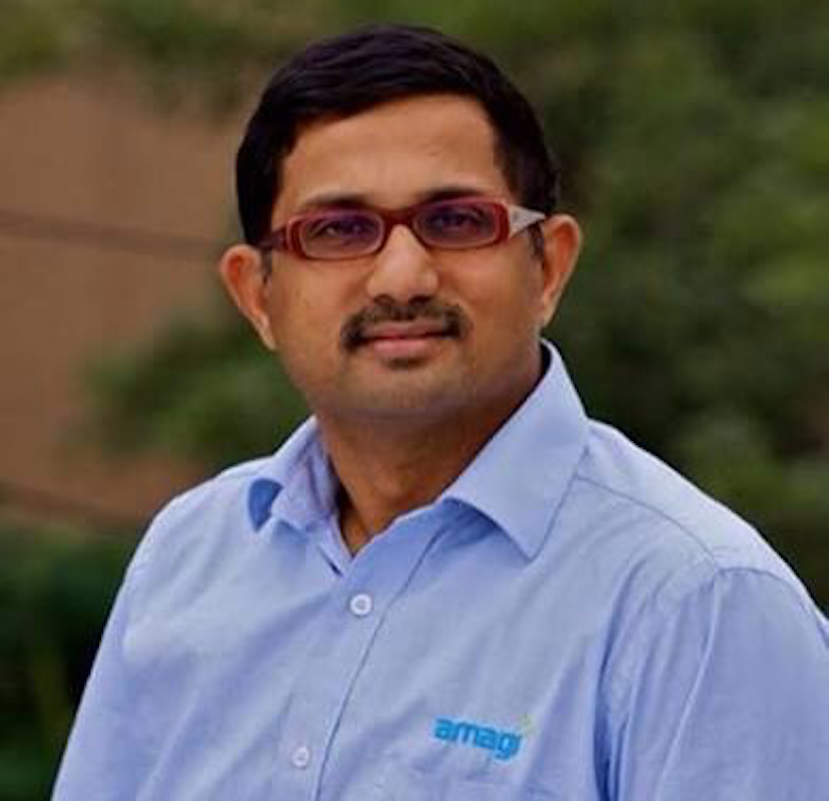
  • “Competition in OTT solutions is what makes it exciting:” Amagi’s Baskar Subramanian

    “Competition in OTT solutions is what makes it exciting:” Amagi’s Baskar Subramanian

    Founded in 2008, Bengaluru-hqed broadcasting, cloud and OTT ad and tech solutions provider Amagi is a homegrown outfit that is slowly and steadily making its mark globally, thanks to its innovative tech prowess.  With offices in New York, London and Hong Kong, and its R&D lab in Bangalore,  Amagi has made  deployments in over 40 countries and delivers more than 80 feeds to audiences worldwide. Its client roster features some big ticket premium players like: Discovery Communications (for DSport), Vice (for its Viceland channel),  Turner, AMC, IMG and B4U.

    Like previous years, the company is exhibiting at the global broadcast and OTT ecosystem confab, IBC in Amsterdam. Among the tech solutions it is showcasing at the exhibition include:  Cloudport channel Playout, Thunderstorm OTT Ad insertion, and Storm TV localization.

    Indiantelevision.com’s Kirti Chauhan had a brief conversation with Amagi CEO Baskar Subramanian about the company’s participation in IBC as well as on its journey so far. Excerpts from the interview: 


    What are the innovations you are bringing to IBC 2017?
    This time we are carrying two big innovations. First is related to machine learning capabilities or we call it the new deep learning capabilities, the artificial intelligence approach. For the first time, we are announcing products and services that would leverage machine learning capabilities to create new services. For example, we are demonstrating the  sports highlight feature.

    In a 90 minutes live soccer match, as soon as the match completes, a video editor identifies and creates a 10-15 minutes highlight show removing injuries, fouls and much more non-highlight things.

    But, Amagi has created a system that can automatically spit out 10 minutes highlights without worrying about missing the key factors.

    This is one step in the evolution of the bunch of services we are bringing in, which is going to transform how content is processed more in terms of live as well as VOD content.

    The new capabilities allow us to create promos, key frames, and much more with the help of our new solutions, which are done manually today.

    The second big innovation is the auto ad detection capability. It is an OTT offering. We have created a mechanism that can identify an ad and content separately so that each can be monetized on an individual basis.


    What is the amount of investment put in the technologies, which you are showcasing at IBC 2017?

    Amagi has raised $60 million to date and a large part of these funds are used on technology and research and development from the past six years. The products and innovations which we are going to present in IBC 2017 are a result of that R&D. We have raised  $35 million earlier in this year from KKR Emerald Media.


    How much traction has your ad insertion solution got globally?

    The total amount of ad insertion transaction we have done is close to about $30 million.


    You are entering a competitive market in OTT end-to-end solutions. Comment.

    There are three different parts specifically to the OTT value chain today. Looking at it from the technology standpoint, there is a need for OTT platform, that is, first, the software infrastructure, users interface towards the customers and the interaction with the customers. That is the whole customer related platform which is the online platform.

    Second is the advertising monetization, which is a separate piece of managing the monetization part. And third is video back pulling which is bringing the content into the system.

    Amagi basically focuses on its strength –  which is ad monetization as well as video back and forth today. We work with multiple different online platforms.

    Yes, it is a competitive market and that is the exciting part. The market is growing dramatically in this segment. Many different players from different parts of the globe are getting into this particular space.


    Who is your target clientele for live streaming online?

    Our target clientele is everybody who is into live streaming of any sort of content. One bunch is the large professional  sports TV channels. Another bunch of clients we are targeting is Youtube stars and wannabes. Those who already exist on Youtube space now are looking to create live events and sessions.

    We have few clients worldwide who have started to look at it and lot more is going to happen in the next few months, where we will be seeing digital first companies becoming great consumers of live streaming capabilities on the internet.

    For example, we already have channels that are using Amagi’s infrastructure for live sports. In India, DSport,  a Discovery Communications sports channel, is run by Amagi. We are handling their live content day in and day out. Content coming in from worldwide is going through our infrastructure where we help them to orchestrate and create live streams for different sports events worldwide. Currently, we are managing their Pakistan vs World XI  match via Bangalore.


    How you will take out the interruptions (ad breaks) from the live content that you are demonstrating at IBC2017?

    When an event happens, we take the whole event content into the cloud, and then there is a stream of the event coming as an IP stream or internet stream into the cloud. In the cloud, Amagi can through a browser insert exact points of the ad. For example, if we are watching a cricket match, exactly at the end of an over to put an advertisement, Amagi uses its browser-based approach. Another current example, in the DSport scenario, the satellite uplink is happening in Hong Kong,  the cricket match is happening in Pakistan, the control of the advertising, graphics and sports score card is done in Bangalore.

    Amagi does the effective master control of the whole live stream from the Bangalore master control room on cloud infrastructure. Amagi has built out sophisticated and complex architecture that we are demonstrating at IBC 2017 as our new innovation.


    What would be the time lag in the telecasting of the live content?

    From the time the camera captures the event to the time it comes to on any screen is called glass-to-glass latency. In Amagi, the glass-to-glass latency is about 10 seconds.


    How have you scaled up to offer these solutions?

    Amagi’s infrastructure has been built from a software architecture standpoint through which we would be able to scale and offer thousands of services. Once, applied on a public cloud infrastructure like Amazon, Microsoft Azure, then it starts scaling up dramatically.


    How do you operationalize these channels and run them?

    Amagi uses a lot of automation instead of people and has built automated monitoring capabilities, alerts, and system capabilities. Everything is automated, as much as possible, and we minimize manpower, as well as our scalability, is automatically addressed using machines.


    How do you manage monetization?

    Amagi has the technology to identify the location of all the ads breaks on the online television content, which is available on television today. Once it is identified, we connect with ad networks and ad exchanges and sell the advertisements to them.


    What is your expectation from these innovations?

    Fundamentally the innovations we are doing are world class and pioneering. We will be probably the only company or one of the companies talking about taking the machine learning and artificial intelligence approach. Also like Google and Microsoft, we will be one of the few companies, which talks about these capabilities for broadcasting as a media business programmer.


    Also read:

    Managed Broadcast Services Amagi’s Skylight Cloud Platform

    Amagi wins IBC Innovation Award

    Amagi to provide ad solutions to Sun TV Network

  • Viacom18 distribution among IBC finalists as Voot sees 77% visitor-to-video hike

    MUMBAI: IBC has announced the shortlist for the IBC2017 Innovation Awards. Demonstrating a breadth of innovation in the electronic media, entertainment and technology industry, the international judging panel reviewed an array of compelling entries, settling on 11 finalists from around the world, all offering very different solutions.

    The shortlist covers everything from a major football final to e-sports; from virtual studios to channel marketing; from mobile OTT on a massive scale to seamless content delivery on high speed trains. Taking to the stage during IBC Awards Ceremony on Sunday 17 September will be representatives from Toronto to Singapore, the UK to India, and Spain to the USA.

    For 2017, IBC’s 50th anniversary year, categories in the Innovation Awards were updated to reflect and respond to the shifting industry landscape. Three awards will be presented for the most innovative projects in Content Creation, Content Distribution and Content Everywhere. What has not changed is the emphasis on collaborative work to tackle a real challenge, and the trophies are taken home not by the technology partners but by the broadcasters, media enterprises and service providers who commissioned the project.

    “I was astounded by the quantity, and most important the quality, of entries this year,” said Michael Lumley, chair of the judging panel. “It took a lot of intense discussion to get down to 11 finalists – it was a very tough task and there were many excellent projects which did not make the shortlist, often by a very fine margin.”

    “The international spread of 2017 finalists reflects the global reach of IBC, and the global significance of these most highly-coveted awards,” Lumley added. “I look forward to congratulating all the finalists and hearing the winners announced on Sunday night at IBC.”

    Content Creation – three finalists

    ITV in the UK has been shortlisted for its Project Phoenix. The broadcaster needed to develop a system which managed the production of promos and trailers from commissioning to transmission. The result creates more than 1,000 marketing assets every month, with almost all versioning carried out automatically. Technology partners alongside ITV were 100 Shapes, Cantemo, Codemill, NMR, Pixel Power and Vidispine.

    Leading broadcaster Mediacorp made the shortlist for implementing a service-oriented architecture to break down silos across its global campuses and create a seamless production and delivery environment. Its new centre includes a 3,000 square metre newsroom producing online, television and radio news in four languages, together with six studios and a large theatre, more than 100 edit suites and OTT and broadcast delivery. Systems integrator Qvest Media brought in an enormous number of technology partners, including Actus, Adobe, ATCI, Autoscript, Avid, Axon, Baton, Blackmagic Design, Cisco, Dalet, DHD audio, EVS, Fairlight, Grass Valley, Harmonic, Hitachi, HP, IBM, Ihse, Lawo, Lund Halsey, Netia, Octopus, Oracle, Raritan, RCS, SAM, Scheduall, Shotoku, Sony, ST Electronics, Telestream, TriplePlay, TSL and Vizrt.

    Groupe Média TFO has transformed itself from a small, French language broadcaster in Ontario, Canada, into a major online presence producing much-loved children’s programming. Its Laboratoire d’univers virtuels, or LUV, took a fresh approach to virtual sets, using the power and cost-effectiveness of the Unreal games engine from Epic Games. Today TFO produces as many as 40 short videos, in real time, each day, from a single studio. As well as Epic, technology partners were CEV, stYpe and Zero Density.

    Content Distribution – four finalists

    Arena Television is a UK-based outside broadcast provider, and led the industry in Europe with its first all-IP truck. It is regularly used to originate BT Sport’s 4k Ultra HD coverage of the English Premier League. Technology partners for this pioneering truck (and a second which is now also in service) were Cisco, Grass Valley, Lawo and Videlio Video Solutions.

    Dutch media company DMC has migrated from broadcast playout centre to comprehensive media logistics service. As part of this it has migrated to a fully virtualised private broadcast cloud that provides DMC’s clients with the asset management, publishing and distribution services they need, linking international content owners with 700 million European viewers. The new platform was developed with Cisco, Equinix, Pebble Beach Systems, Red Hat, Super Micro and VMware.

    Sinclair Broadcast Group operates 233 television stations in 108 US markets. As part of its programme to provide a common platform for on air and online services, it has developed a revolutionary approach to terrestrial transmission. The usual American model is “high tower, high power”: a single mast and transmitter. The new approach – developed by TeamCast and ONE Media for Sinclair – takes a cellular approach, using mini-transmitters just where they are needed in a large single frequency network.

    Viacom 18 is a joint venture in India between media giant Viacom and local service provider Network 18, running a multi-channel OTT network called Voot. Faced with the prospect of delivering content to the 300 million smartphones in India, across networks which are often crowded and at high data costs, it took a fresh approach, developing a progressive web service that delivered high performance without taking valuable memory space. Within just a few days Voot saw a 77% increase in conversion from visitor to video viewer and a 39% increase in session time per user. Google provided technology support.

    Content Everywhere – four finalists

    BT Sport was host broadcaster for the 2017 Champions League Final in Cardiff, Wales, and went all in to engage with as many people as possible, in as many ways as possible. Separate trucks covered the game in HD and in 4k Ultra HD with Dolby Atmos sound – using the Arena truck nominated for the content distribution award. A unique 12 camera VR operation provided a rich 360˚ feed, including in-vision graphics, live replays and a separate commentary. The content was available online to all platforms as well as broadcast. Technology partners included Dolby, Ericsson, Moov, SAM, Sony, Telegenic and Timeline.

    ESL, the Electronic Sports League, is an eSports company that organises gaming competitions worldwide. For the finals of the 2017 Intel Extreme Masters tournament, held in Poland, it needed to find a delivery partner that could deliver live feeds to 13 broadcasters in multiple regions, with additional OTT and digital cinema delivery to some territories. ESL partnered with Deluxe to enable the delivery of live ESL broadcast feeds over the public internet. The eSports tournament reached more than 46 million viewers.

    For a decade Google Earth has given us the ability to explore the world using just the internet. Now we can immerse ourselves in its wonders using Google Earth VR. The new app uses touch, sight and sound to engage the viewer and to receive control feedback. New techniques render imagery smoothly, maintaining the immersion without confusion or motion sickness. Technology partners were Ant Food, Even/Odd, Joshua Moshier and Richard Devine.

    The final project on this year’s shortlist is a real content everywhere application – ensuring consistent media delivery on trains travelling in excess of 300km an hour. Renfe, Spain’s national railway operator, worked with Telefonica to ensure its 19 million high speed rail passengers can access premium content and live sports on trains and at stations as if they were at home. The project was led by Telefonica, with technology partners including Accedo, Cires21, Cisco, Hispasat, Iecisa, Indra, Nagra, Signiant and Teldat.

    The winners of these three awards will be announced during the IBC2017 Awards Ceremony, on 17 September. Special guest host for the evening is scientist and broadcaster Dr Helen Czerski. As well as the Innovation Awards, the ceremony will see the announcement of the Judges’ Prize, also in the gift of the same panel of international editors and consultants who have judged the Innovation Awards. Other awards to be presented during the ceremony include the IBC International Honour for Excellence, IBC’s highest award.
  • Ang Lee and the art of 4KHD 3D 120 fps film-making

    Ang Lee and the art of 4KHD 3D 120 fps film-making

    AMSTERDAM: Ang Lee is an auteur par excellence. His films Crouching Tiger Hidden Dragon and The Life of Pi bear testimony. Lee is open to pushing technology to mount a magnificent tale. Lee was at the IBC here to talk about his latest film Billy Lynn’s Long Halftime Walk.

    What’s different about his latest work is that it has been shot in 4K HD 3D and at a 120 fps frame rate under the Tristar banner for a 11-November release in the US. It is the highest frame rate that a film has been shot at so far, and has been filmed at a budget of $ 46-48 million. The film has been shot on the Sony 4K F65 by two-time Oscar-winning cinematographer John Toll.

    Otherwise, it’s based on Ben Fountain’s 2012 novel by the same name. It follows Billy Flynn, a 19-year old soldier (played by newcomer Joe Alwynn) and his unit who survive a battle in Iraq to return to the U.S. for a promotional tour culminating with a halftime-show appearance at a Thanksgiving football game.

    Lee has said that his film is a story of a young man “learning his place in the world, and of the special brotherhood among men at arms, the depths of their bonds, and the sacrifices they make.”

    Sony’s TriStar and Britain’s Film4 are partnering with Jeff Robinov’s Studio 8 for the film.

    Lee disclosed during his key note that it was a challenge to film at 120 fps 4K HD 3D.

    “We had to really light up everything differently. I wanted realism for this film. I wanted the expressions to be real, and not acting. But, everything was magnified,” he stated. “If the actors overacted or made some awkward facial movements, it became larger than life.”

    “I am a guinea pig for the studio,” he confessed. “Since the day I began this film, everyday has been crazy. I was seeing what was being shot at 120 fps 4K in 60 fps 2K monitors, and it was a challenge. I kept telling my heads of departments that they are not good enough. Because, even I am not good enough while working with this new format.”

    While Lee was greeted with applause, some stated that the clip which was screened looked very much like “video” and did not look like cinema.

    To this Lee, responded, “Please give us a chance. It is a baby, and we are pioneering something. Directing this film has been very humbling for me as no one has tread this path before, shooting in 120 fps 4K, HD, 3D.”

    Lee chose to shoot at these frame rates because it would allow the studio to be able to experiment with various frame rates below — right from 60 fps to 24 fps to 48 for releases in different territories because of the availability — or lack of 4K HD 3D 120 fps projectors – in theatres in different parts of the world.

    “I am not saying 24 fps 2D is not good enough,” he pointed out. “But, it is about making a difference and taking a leap forward in technology and in art.”

    Lee ended by saying he would continue pushing the boundaries on technology in cinema. He would like the equipment makers to come up with smaller cameras, better sensors.

  • Ang Lee and the art of 4KHD 3D 120 fps film-making

    Ang Lee and the art of 4KHD 3D 120 fps film-making

    AMSTERDAM: Ang Lee is an auteur par excellence. His films Crouching Tiger Hidden Dragon and The Life of Pi bear testimony. Lee is open to pushing technology to mount a magnificent tale. Lee was at the IBC here to talk about his latest film Billy Lynn’s Long Halftime Walk.

    What’s different about his latest work is that it has been shot in 4K HD 3D and at a 120 fps frame rate under the Tristar banner for a 11-November release in the US. It is the highest frame rate that a film has been shot at so far, and has been filmed at a budget of $ 46-48 million. The film has been shot on the Sony 4K F65 by two-time Oscar-winning cinematographer John Toll.

    Otherwise, it’s based on Ben Fountain’s 2012 novel by the same name. It follows Billy Flynn, a 19-year old soldier (played by newcomer Joe Alwynn) and his unit who survive a battle in Iraq to return to the U.S. for a promotional tour culminating with a halftime-show appearance at a Thanksgiving football game.

    Lee has said that his film is a story of a young man “learning his place in the world, and of the special brotherhood among men at arms, the depths of their bonds, and the sacrifices they make.”

    Sony’s TriStar and Britain’s Film4 are partnering with Jeff Robinov’s Studio 8 for the film.

    Lee disclosed during his key note that it was a challenge to film at 120 fps 4K HD 3D.

    “We had to really light up everything differently. I wanted realism for this film. I wanted the expressions to be real, and not acting. But, everything was magnified,” he stated. “If the actors overacted or made some awkward facial movements, it became larger than life.”

    “I am a guinea pig for the studio,” he confessed. “Since the day I began this film, everyday has been crazy. I was seeing what was being shot at 120 fps 4K in 60 fps 2K monitors, and it was a challenge. I kept telling my heads of departments that they are not good enough. Because, even I am not good enough while working with this new format.”

    While Lee was greeted with applause, some stated that the clip which was screened looked very much like “video” and did not look like cinema.

    To this Lee, responded, “Please give us a chance. It is a baby, and we are pioneering something. Directing this film has been very humbling for me as no one has tread this path before, shooting in 120 fps 4K, HD, 3D.”

    Lee chose to shoot at these frame rates because it would allow the studio to be able to experiment with various frame rates below — right from 60 fps to 24 fps to 48 for releases in different territories because of the availability — or lack of 4K HD 3D 120 fps projectors – in theatres in different parts of the world.

    “I am not saying 24 fps 2D is not good enough,” he pointed out. “But, it is about making a difference and taking a leap forward in technology and in art.”

    Lee ended by saying he would continue pushing the boundaries on technology in cinema. He would like the equipment makers to come up with smaller cameras, better sensors.

  • IBC to Honour NASA at IBC2016 Awards

    IBC to Honour NASA at IBC2016 Awards

    MUMBAI: IBC announced that it is to give one of its highest awards, the Judges’ Prize, to NASA. Celebrating the achievements of one of the world’s most well known brands, the award will be presented at the ceremony held on Sunday 11 September at the RAI, Amsterdam. NASA’s contribution to the ceremony promises to be literally out of this world.

    From the very beginning, NASA has ensured that every moment of the space exploration programme has been captured, firstly with film cameras and then video, including the globally viewed footage of Neil Armstrong setting foot on the moon in 1969. Today NASA operates a 4K Ultra HD channel and allows viewers to watch footage on a wide range of televisions and internet connected devices.

    The Judges’ Prize is presented to a company or project displaying a unique creative, technical or commercial imagination and past winners include Stereoscopic 3D coverage of the 2010 FIFA World Cup and DNA’s single frequency networks for HD with DVB-T2, which was awarded in 2011. The award will be accepted by Carlos Fontanot, Imagery Manager for the International Space Station and Kelly O. Humphries, the voice of mission control for more than 50 shuttle missions and hundreds of space station activities.

    “It is impossible to understate the importance of NASA’s film and video efforts,” said Michael Crimp, CEO of IBC. “Their engineers and producers have had to overcome massive technical challenges, which has meant close co-operation with suppliers of equipment and systems. The result has been stunning imagery, which has literally changed our view of the world.”

    The IBC Awards Ceremony will take place on Sunday 11 September, and is free for all IBC attendees. Find out more about the awards at IBC.org/awards and register for your IBC2016 pass at IBC.org/register

  • IBC to Honour NASA at IBC2016 Awards

    IBC to Honour NASA at IBC2016 Awards

    MUMBAI: IBC announced that it is to give one of its highest awards, the Judges’ Prize, to NASA. Celebrating the achievements of one of the world’s most well known brands, the award will be presented at the ceremony held on Sunday 11 September at the RAI, Amsterdam. NASA’s contribution to the ceremony promises to be literally out of this world.

    From the very beginning, NASA has ensured that every moment of the space exploration programme has been captured, firstly with film cameras and then video, including the globally viewed footage of Neil Armstrong setting foot on the moon in 1969. Today NASA operates a 4K Ultra HD channel and allows viewers to watch footage on a wide range of televisions and internet connected devices.

    The Judges’ Prize is presented to a company or project displaying a unique creative, technical or commercial imagination and past winners include Stereoscopic 3D coverage of the 2010 FIFA World Cup and DNA’s single frequency networks for HD with DVB-T2, which was awarded in 2011. The award will be accepted by Carlos Fontanot, Imagery Manager for the International Space Station and Kelly O. Humphries, the voice of mission control for more than 50 shuttle missions and hundreds of space station activities.

    “It is impossible to understate the importance of NASA’s film and video efforts,” said Michael Crimp, CEO of IBC. “Their engineers and producers have had to overcome massive technical challenges, which has meant close co-operation with suppliers of equipment and systems. The result has been stunning imagery, which has literally changed our view of the world.”

    The IBC Awards Ceremony will take place on Sunday 11 September, and is free for all IBC attendees. Find out more about the awards at IBC.org/awards and register for your IBC2016 pass at IBC.org/register

  • Ooyala offers Indian broadcasters a quick OTT build service

    Ooyala offers Indian broadcasters a quick OTT build service

    MUMBAI: Come September and Indian broadcasters will have easy access to a quick OTT build solution. Australian telco Telstra subsidiary Ooyala is all set to roll out its AppStudio at the IBC convention in Amsttersam from 8-13 September 2016.

    Ooyala AppStudio, a press release from the company claims, mitigates the expensive custom development and integration costs typically associated with OTT market entry. An out-of-the-box solution, it ensures customers can deploy premium OTT experiences on time and on budget, with a simple, easy-to-use interface. As such, it does not require highly technical staff to build or manage services. Content providers can automate the build of OTT apps directly within the Ooyala AppStudio console for any device, supporting apps for Apple TV, Roku, Amazon Fire TV, and Chromecast as well as on iOS, Android and the web. No engineering is required, drastically reducing time-to-market as well as development and personnel-associated costs.

    Developed in partnership with Massive Interactive, Ooyala AppStudio is a comprehensive solution for companies to deploy, manage, track, analyze and monetize all components of a cloud-based OTT service. It supports revenue models including subscription vide-oon-demand (SVOD), advertising-supported video-on-demand (AVOD) or hybrid strategies. It also comes pre-integrated with a comprehensive set of best-in-breed technologies to ensure the experience is simple to use and seamless for the viewer, including:

    ● User registration, offer management, content scheduling as well as advanced user-interfaces (UIs) for device-tailored user experiences, powered by Massive Interactive’s technology, Massive HALO

    ● Video management and delivery, powered by Ooyala

    ● Content recommendation and personalization, powered by Ooyala Discovery

    ● Detailed analytics for video performance and audience engagement to help boost ad revenue or reduce subscriber churn, powered by Ooyala IQ

    ● Payment management, security and subscription billing, powered by Stripe

    ● Quality-of-experience (QoE) analytics, powered by Youbora from Nice People At Work

    ● Page-level behavior analytics in-app or on the web, powered by Google Analytics

    ● Support for any IAB VAST-compatible ad server including Ooyala Pulse

    Ooyala AppStudio, the company says, has an elegant interface for making changes to content layout, promoting high-performing video, adjusting seasonal promotions and content schedules, and optimizing the user experience for higher engagement. Customers can quickly apply offers and calls to action within the app experience, easily linking in¬-app images to promotional content either within the app or on an external website. These changes and updates are applied automatically with no need to rebuild or recertify the apps.

    “Media companies want to tap into the fast-growing opportunity OTT represents, but have been held back by slow pace and high cost of developing apps for the broad array of connected devices in the consumer market. Ooyala AppStudio changes that,” said Ooyala co-founder and senior vice president of roducts and olutions Belsasar Lepe. “There is tremendous growth in OTT demand particularly outside of the U.S., where broadband and 4G connectivity is improving, making offerings accessible to huge new audiences. For local content providers who want to hedge against larger OTT incumbents entering their market, Ooyala AppStudio is a perfect fit.”

    Ooyala has provided OTT solutions to companies such as Star India and Viacom18 in the past in India. And last month Ooyala CEO Ramesh Srinivasan announced that it was setting up an R&D facility in Chennai. “Our new office here will be instrumental in expanding the company’s global presence, providing another local team to support our growing Asia-Pacific customer base, and helping accelerate the rapid pace of innovation within the company,” he had told local media.