Tag: I&B

  • Reproduce newspapers in electronic form: I&B Ministry

    Reproduce newspapers in electronic form: I&B Ministry

    NEW DELHI: The government intends to bring ‘reproduction of any newspaper in electronic form’ within the ambit of the Press and Registration of Books Act.


    In the amendments proposed to the PRB Act, the Information and Broadcasting Ministry (I&B) has also proposed inclusion of a section which says ‘paid news’ means publishing any news or analysis in the publication for a price in cash or kind as consideration.


    The amendments, which have been placed on the website of the ministry, also says that ‘facsimile edition’ of a publication means an exact replica in full or in part of the original edition of a foreign publication ‘in so far as the contents concerned and may not include title’, subject to the condition that any page is not published in part.


    The government also proposes to establish a Press and Registration Appellate Board to be constituted by the central government, by notification in the official gazette, consisting of a chairperson and another member, to be nominated by the Press Council of India, established under section 4 of the Press Council Act 1978 from among its members.


    It says any dispute relating to registration of newspapers or publications would be referred to a ‘specified appellate authority’ that may be prescribed by the central government.


    Under the amendments, publication means newspapers, magazines, journals or newsletters printed periodically and published in India ‘including its reproduction in electronic form or any syndication, facsimile edition, and Indian editions of periodicals published outside India.’


    While noting that the Press Registrar General will consider all applications of new titles ‘as soon as practicable’, the amendment says an application for a title may be rejected if it is ‘same or similar to that of a known foreign publication’, subject to the proviso that ‘the same or similar title shall not be rejected if the Indian entity seeking the title has a tie-up with the owners of the title of such a foreign publication’.


    The amendment further says that no publication shall be printed and published in India except with the prior approval of the central government granted if such publication is owned by or has investment from any individual who is not an Indian citizen or foreign unincorporated body of individuals or body corporate incorporated under the law of any country other than India.


    Furthermore, the Press Registrar General may reject, after giving the person concerned an opportunity of showing cause against the action proposed to be taken, and holding an inquiry into the matter, if he is satisfied that the publication mentioned in the declaration is found indulging or having indulged in the practice of ‘paid news’, on the basis of adjudication by the Press Council of India or any other quasi-judicial/judicial authority. Till a decision is taken, the Press Registrar General may suspend the publication of such publication.


    Furthermore, any person aggrieved by an order of a specified authority refusing to authenticate a declaration under section 10 or cancelling a declaration under section 19 (l) (a) to (d) may appeal within 60 days from the date on which such order is communicated to him to the Press and Registration Appellate Board and may entertain an appeal after the expiry of the said period, if it is satisfied that the appellant was prevented by sufficient cause from appealing on time.


    The Appellate Board may, after calling for the records from the specified authority and after making such further inquiries as it thinks fit, confirm, modify or set aside the order appealed against. The decision of the Appellate Board shall be final in respect of provisions given in sub section 19(1) (a) to (d).


    Any person aggrieved by an order of the specified authority for suspension of publication under the provision of section 19(1)(e) will still be free to approach a court of law.


    In case of change of name or place of press, a fresh declaration will not be necessary if this information is given to the specified authority within five days.


    It shall be the duty of the publisher, and owner in the absence of the publisher, of every publication ‘to furnish details of the advertisement revenue of the publication as and when asked for.


    Whoever prints or publishes any book or publication otherwise than in conformity with the provision of section 3 will have to explain the reasons for this and to complete the formalities as specified in this section.


    In its penal provision, the government has said that any contravention of sub-section (1) will invite a fine not exceeding Rs 5,000 in addition to suspension of the publication for a period of 30 days.


    Furthermore, whoever owns any press, other than in conformity with the provision of section 4 will have to explain for such activity and to complete the formalities as specified in that section. For contravention of sub section (1), the person shall be liable to a fine not exceeding Rs 5,000 in addition to sealing of the printing press for a period of 30 days.


    The amendment says that ‘In particular and without prejudice to the generality of the foregoing power’ such rules may provide for all or any of the following matters, namely: the period of suspension of the declaration under sub-section (i) of section 19 , and the manner of filing appeals to the specified appellate authority under sub-section (1) of section 20.

  • I&B sets up Internal Complaints Committee for female staff

    I&B sets up Internal Complaints Committee for female staff

    NEW DELHI: In its attempt to strengthen the mechanism for redressal of grievances of the female employees working with it, the Information and Broadcasting (I&B) Ministry has renamed the Women’s Cell in the Ministry which will now be known as ‘Internal Complaints Committee’. 

    The Committee will review the programmes and monitor implementation of development schemes for women in accordance with the guidelines suggested by the National Commission for Women. It will also function as the Complaint Committee in terms of the judgment delivered by the Supreme Court in a matter relating to sexual harassment in the work place, which has since been included in the CCS (Conduct) Rules, 1964 as Rule 3 C.

    Accordingly, this Committee will also look into all complaints of sexual harassment including such complaints filed against the heads of the media units under the administrative control of this Ministry in lines with Duty of Employer at workplace or other institution to prevent or deter the commission of acts of sexual harassment in terms of guidelines and norms laid by Supreme Court in Vishakha & Others versus the State of Rajasthan and others (JT1997(7)SC 3847).

  • Manish Tewari does not endorse internet policing

    Manish Tewari does not endorse internet policing

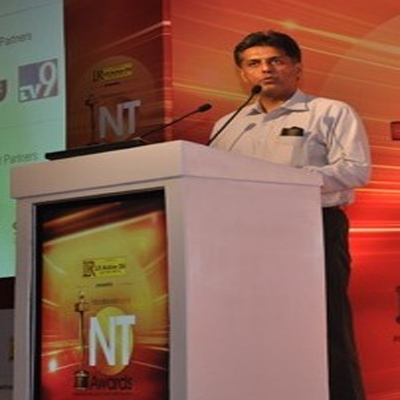
    NEW DELHI: Information and Broadcasting (I&B) minister Manish Tewari feels that those who insist on privacy and the right to use new media on the internet should understand that while the government does not favour policing, the users themselves have to show a certain sense of responsibility while going on the social space.


    Speaking on freedom of expression in the internet age at a function here last night, Tewari said that there is a need to draw a line between policing and freedom of speech and expression adding that the right to online privacy and anonymity should come with accountability. He also defended the government for policing of online content that it deemed “defamatory”.


    The minister also feels that there should be agreed global rules of engagements in this new media space to prevent misuse.


    “We do not believe there should be a regulation or policing of the internet but common rules of engagement need to emerge in the new media space also because it is a virtual civilisation which has its own dynamics,” said Tewari


    He referred to the recent riots in Muzaffarnagar where he claimed that a video posted on YouTube had flared up the entire incident. He also referred to the mass exodus from Bangalore of people hailing from the northeast from southern states last year after rumours of attack on them spread.


    The rules of engagement are important because hardware responsible for dissemination of information over the Internet may not be under the control of a state at whom it is targeted. He said this as he noted that the cyber world has the potential to inflict destruction though it enables grassroots democratisation.


    He sought the views of stakeholders on the role that a government can play when people fan violence through new media.

  • An epic wait for Epic

    An epic wait for Epic

    MUMBAI: What do &Pictures, Star World Premier HD and Romedy Now have in common? The three channels have had a smooth run-up to their recent launch.

    However, starting a new channel isn’t an easy task. One has to get approvals from various ministries which can be labeled as the biggest hurdle (at least in some cases), apart from want of money and resources, in premiering a new channel.

    A classic case of such a channel which is yet to see the light of day despite everything being ready is Mahesh Samat’s Epic Television, a venture invested in by Mukesh Ambani and Anand Mahindra.  

    Epic, which will air content based on the country’s history, folklore, and mythology, albeit in a contemporary format, was slated for a mid-August launch. However, it’s end-September and there’s still no sign of the channel going live.

    Apparently, production of the shows is already on floors and various agencies too have been decided, but there’s no clarity even about when the channel will go on test signals. This, despite the hope that Epic would cash in on rising demand for specialty channels, given the increasing speed of digitisation.

    So what’s keeping it from going on air? Among the series of approvals to be procured before a new channel can be launched: first comes the foreign ministry, next the home ministry, and most importantly, the I&B ministry. Only when all of them have looked into the nitty-gritties and given their clearance can the newbie go live. Again, clearances may take as little as three months, or as long as three years. In the meanwhile, if a file gets stuck with a ministry for more than six months, it has to go for re-approval.

    While we may keep wondering as to which phase of this bureaucratic process, the Epic file is stuck in, according to sources, the channel isn’t alone in its predicament. Nearly 45 to 50 files are stuck with various ministries owing to a variety of issues.

    With elections round the corner, one wonders whether these would stand a fighting chance versus the many issues the ruling party may want to deal with first, even if just to guard their turf.

    So, we will have to continue playing the waiting game…

  • Former I&B Secretary proposes fresh study into ad cap

    Former I&B Secretary proposes fresh study into ad cap

    NEW DELHI: It’s been a month and more since former Information & Broadcasting secretary Uday Kumar Varma relinquished his post to Bimal Jhulka. But you can’t get broadcasting  out of Varma’s blood. After all he and his team in the I&B almost single handedly forced a fragmented cable TV sector and a disbelieving television ecosystem to follow the government mandate for digitsation.  

    Now the former secretary has proposed that with the onset of digitisation, it is  possible for the Telecom Regulatory Authority of India (TRAI) to get all the data needed for a fresh look at the 12 minute ad cap which the regulator had mandated earlier this year.
    Uday Kumar Varma

    Speaking exclusively to indiantelevision.com Varma said  that the Telecom Disputes Settlement & Appellate Tribunal (TDSAT) has stayed the implementation  of the ad cap on news channels, and the TRAI should use this time to conduct a study on how much time is being devoted to advertising by the various television channels and determine how much can and should actually be devoted by them.  He stated that the regulator should be able to complete a thorough study in two or three months.

    Varma said that while the ad cap was sought to be enforced in view of the provisions of the Cable Television Networks (Regulation) Act 1995, the situation had changed considerably since with a much larger number of television channels than previously anticipated.

    He felt the 12-minute ad cap was in any case arbitrary as it was based on the experiences in other countries rather than in the Indian context.

    He agreed that there were some channels – particularly regional language ones – which aired up to 30 minute per hour of ads, but pointed out that the new regime under digitisation afforded TRAI the freedom to study the issue afresh.

    He said a method had to be found to enforce whatever ad cap is decided upon finally, since many channels are not members of either the News Broadcasters Association or the Indian Broadcasting Foundation. Even otherwise, he said all broadcasters were not on the same page on this issue.

    Asked about the demand that the ad cap be put off to December 2014 by when the entire country would have gone digital, Varma declined to comment as he said the matter was before the TDSAT.

    Merger of Phase III and IV of DAS

    On the topic of the merger of Phase III and IV of the digitisation process, Varma said it had been found this would work better since towns and rural areas in these two phases come under the jurisdiction of district collectors, and management would be easier.

    The merger would also give more time to stakeholders to put their infrastructure in place.

    Analogue Switch-off Justified

    Meanwhile, Varma said he stood by the decision to switch off analogue transmissions when resorting to digital addressable systems.

    He further added that permitting the co-existence of  both analogue and DAS, as had been done in the United States or the United Kingdom, would have led to a ‘warped policy’ in a country like ours.

    Digitisation should be seen as a means to make the broadcasting sector more transparent and give a better choice and viewing experience to the consumer, he said, adding that it  had also led to greater investments from India and overseas.

    The very fact that subscribers, who have switched over to DAS were not complaining and there were many others opting for the new system, meant the average Indian had become more conscious of what they were watching on TV.

    Affordability is not a major issue as those who have not yet bought digital set top boxes ‘will do so without being coerced’ once they see the advantages in terms of quality of picture, services, and value added services that may follow.

    Varma felt the method of collection and sharing of subscription fees too is undergoing a major change, and the consumer will be able to see the benefits of this. Furthermore, carriage fees charged by cable TV operators and MSOs had also come down and this would be reflected in the fee they charge subscribers.

    Varma believes that even the rural TV viewer will be in a position to partake of the fruits of cable TV digitisation. He pointed out that fatter wallet subscribers in metros and cities who will be paying  for value-added services and other benefits  will, in a sense, subsidise the rural consumer who is not so rich.

    As the adage goes, take from the rich to feed the poor. Even in television!

  • IPTV: I&B mandates carriage of 24 DD channels

    IPTV: I&B mandates carriage of 24 DD channels

    NEW DELHI: Superseding its earlier orders in this connection, the Information and Broadcasting Ministry has updated its list of channels to be compulsorily carried on the Internet Protocol Television (IPTV).

    The new order lists a total of 24 channels, which includes 21 Doordarshan channels apart from Gyan Darshan, Lok Sabha TV and Rajya Sabha TV.

    The DD channels in the list are National, News, Bharati, Urdu, Sports, DD India, DD Kashir, DD Punjabi, DD Girnar, DD Sahyadiri, DD Saptagiri, DD Malayalam, DD Podhigal, DD Candana, DD Bangla, DD North East, DD Bihar, DD Uttar Pradesh, DD Rajasthan, DD Madhya Pradesh and DD Oriya.

    The memorandum says it shall be obligatory for every IPTV Service Provider to provide these channels to the subscribers, irrespective of any bouquet(s) or a-la-carte channel(s) being subscribed by them. The IPTV Service Provider shall also place the above channels in the respective genre and shall display them in full television screen.

  • Media should consider reasonable restrictions: Tewari

    Media should consider reasonable restrictions: Tewari

    NEW DELHI: Information and Broadcasting Minister (I &B) Manish Tewari today stressed that the government wanted the relationship with the media to be one of persuasion rather than regulation but the media should introspect about the reasonable restrictions laid down in the constitution to the freedom of speech.

    Making the inaugural address at the Big Picture Summit on Media and Entertainment organised by CII, the minister said the government will cooperate to ensure that the M & E sector is able to ‘unlock the potential of millions.’

    He stated that the phase III in FM radio will get underway next month with the e-auctions, adding that radio had seen a major resurgence thanks to mobile telephony.
    Manish Tewari believes that the industry must explore new avenues and technologies like mobile telephony and how it can be used to grow the sector

     The minister announced that the Justice Mudgal Committee which was going into the Cinematograph Act including film censorship was expected to give its report by mid-October. Tewari was responding to remarks made by previous speakers Star TV CEO Uday Shankar and Walt Disney MD Ronnie Screwvala about extra-constitutional authorities and even state governments raising voices even after a film had been cleared by the Central Board of Film Certification, and making a strong case for bringing cinema on the concurrent list.

    Tewari noted that despite the general slowdown the world over and in India, the M and E sector was expected to grow at a pace of 18.4 per cent CAGR to Rs 2,245 billion by 2017 from Rs 965 billion in 2012.

    He noted that the print and television sector comprised 48 per cent of this growth and the internet was expected to take over by 2017. He said the real success story was the print media since its growth continued at a rate of ten per cent per year when it was falling all over the world.

    Although India had the largest number of TV news channels in the world, it represented only 17 per cent of the M and E industry and therefore there was need to remove the bottlenecks in distribution.

    While the channels were not lagging in content, hardware was an area in which they were found lagging, he felt. The minister said that he wanted the industry to come up with ideas on how the number of cinema screens could be increased.

    Complimenting CII for its optimism in setting a target of USD 100 billion for the industry, he spoke of the opportunity that the sector presents in terms of innovation in content and non-content areas, adding that the government would partner the industry to put into place a system to see that the vision of USD 100 billion is translated into reality.

    He also mentioned that the industry must explore new avenues and technologies like mobile telephony and how it can be used to grow the sector, emphasising that the government would look to facilitate innovation and expansion.

    Screwvala in the keynote address said that although there have been challenges and a sense of gloom, there has been a fair amount of progress as well, especially in the movie industry, which has flourished.

    The M&E industry, he said, is seen as an industry of ‘high impact’ with the ability to bring about noteworthy transformation. Therefore, he felt that the time is right for the M&E industry, the government and other stakeholders to take time to deliberate upon the challenging issues that the industry faces such as dependency on advertising, inconsistent regulation, the need and ability to attract the best talent, unanimity and long-term thinking and then come up with a roadmap that will help the industry achieve the target of USD 100 billion.

    He hailed the progress in digitisation of cable TV and efforts to go on to better consumer TV viewing surveys, he said dependency on advertising remains a big problem and ways have to be found to make the consumer pay. There was need for unanimity and long-term thinking in the industry, a need to attract the best talent, and the need to recognise that new media needed a different kind of audience and talent.

    While India was among the least regulated countries in the world, he admitted that some regulation was necessary and this has to be consistent and not vary from state to state.

    He also wanted edutainment to be encouraged without being dependent on curriculum, sports to extend from just cricket as far as media was concerned, and the need for a greater bandwidth.

    He suggested setting up of a core group of the government and the industry which could work over the next 18 months or so to get over the bottlenecks, an issue supported by eminent filmmaker Amit Khanna.

    Khanna said the target of $100 billion for M &E was not unrealistic, if there was proper planning and greater cooperation between the government and the industry.

    He said it was unfortunate that the country was over-producing in cinema, considering the small number of screens.

    He suggested that the I & B ministry should change its name to the media ministry as new media was taking over.

    He regretted that there was no proper broadcasting regulator and the Telecom Regulatory Authority of India had been given this responsibility.

    India may have the largest number of TV news channels, but they were all getting ‘tabloidised’.

    He also felt the need for more trained professionals if the industry had to meet its targets.

     Delivering the theme address, Shankar said that openness to new ideas, capital and talent would unleash a fresh wave of growth, just as it did in the 1990s, when economic reforms ushered in a fresh wave of growth for the Indian economy.

    Earlier, in his welcome remarks, CII director general Chandrajit Banerjee spoke of the tremendous ‘soft power’ of the industry to bring about innumerable benefits to the Indian economy.
    A CII-PriceWaterhouse Coopers report on the M&E industry, titled ‘India Entertainment and Media Outlook 2013’ was also released on the occasion by Tewari.

  • I&B ministry’s ad cap succor for broadcasters

    I&B ministry’s ad cap succor for broadcasters

    MUMBAI: On the one hand, the Telecom Regulatory Authority of India (TRAI) is putting the squeeze on broadcasters. On the other, the ministry of information and broadcasting (I&B) is proving to be an angel in disguise all ready to provide it with some succor. At least in the area of the 12 minute cap on advertising per hour allowed on television which TRAI activated earlier this year, and which is to be implemented next month.

    Reports are that the ministry is collecting data from broadcasters to ascertain the loss that they would incur on account of the TRAI-mandated ad cap.  It is then expected to prepare a consultation paper within the next 10 days, say these reports.

     
    Broadcasters – especially news broadcasters – have been yelping about how any reduction in air time would lead to a shriveling of revenues for them; in fact it might make it unviable for them to sustain their operations. Their constant wailing caught the attention of I&B minister Manish Tewari who last month requested the TRAI to post-pone the ad cap to end-2014 to coincide with the inflow of subscription revenues which are expected to accrue to broadcasters post the completion of cable TV digitisation.

    The Telecom Disputes Settlement & Appellate Tribunal (TDSAT) concurred with the news broadcasters’ appeal and put a freeze on the applicability of the ad cap, till their plea was heard on 11 November 2013. General entertainment channels have, however, agreed to comply with TRAI’s directions and have even gone ahead and reduced their commercial advertising air time.

    Says a media observer: “All the players – TRAI, I&B, broadcasters – need to get together to have a road map for the reduction of the ad cap gradually and periodically over time and not in one fell swoop as TRAI has been suggesting. It’s good that the I&B ministry and TDSAT have been supporting the broadcasting sector as far as the ad cap is concerned. It is imperative for its survival.”

  • I&B officials: Digitisation drive will accelerate further

    I&B officials: Digitisation drive will accelerate further

    NEW DELHI: For all those who think that there’s going to be a slowdown in cable TV digitisation. It is time to think again. All thanks to the focus of the Information and Broadcasting Ministry on the preparations for the upcoming elections next year.

    In fact, the teams at I&B and TRAI, which have been spearheading the drive along with TRAI representatives, has been informed by  new secretary Bimal Jhulka and TRAI chairman Rahul Khullar, to keep the foot on the accelerator pedal and if possible rev the digitisation drive even more.

    Last week, I&B sources told Indiantelevision.com that MSOs and other television ecosystem players are being told to start planning for phase III and phase IV of digitisation from now itself. Phase III and phase IV have been compressed into a single deadline which will end in December 2014.

    “The learnings from phase I and phase II are being put into place,” says an I&B source. “We will be setting up deadlines for import of set top boxes and for rollout of the boxes. There will also be a clear game plan about which channels will be switched off to force the pace of digitisation and CAF forms in the smaller towns and rural areas. We want the transition from analogue to digital to be smoother in the next phase.”

  • I&B minister Manish Tewari’s update on Phase II digitisation data

    I&B minister Manish Tewari’s update on Phase II digitisation data

    New Delhi: The level of cable television digitisation in 38 cities in 14 states and one union territory of Phase II has touched 89.8 per cent, including 28.33 per cent DTH homes as on 21 April, three weeks after analogue switch-off.

    Thus, a total of 14,379,454 digital set top boxes have been seeded out of a total demand of 16,013,059 total TV households. The houses where STBs have been installed include 4,536,676 DTH subscribers.

    According to a report presented to parliament by information & broadcasting minister Manish Tewari yesterday, the total number of TV households has been computed by making provision of twenty per cent for multiple TVs in offices/shops or homes.

    Pointing out that a toll free number receives complaints from subscribers and others, Tewari said these are normally forwarded to the multi-system operators in the area concerned.

    14 cities have already crossed the 100 per cent with Hyderabad at the top with 191.07 per cent followed by Ludhiana (175.91 per cent), Allahabad (160.46 per cent), Faridabad (142.69 per cent), Chandigarh (119.23 per cent), Meerut (112.24 per cent), Jaipur (111.84 per cent), Varanasi (111.78 per cent), Amritsar (111.03 per cent), Thane (109.33 per cent), Jodhpur (107.94 per cent), Aurangabad (103.37 per cent), Indore (102.29 per cent), and Nasik (101.75 per cent).

    By the government’s own claim, Ghaziabad, Pune and Kanpur have crossed the 90 per cent mark.

    Srinagar stands at the bottom with 22.28 per cent seeding of STBs, with Visakhapatnam at 29.61 per cent, Coimbatore at 29.74 per cent, and Jabalpur with a DAS reach of only 45.32 per cent. All the other 17 cities have crossed the 57 per cent mark.

    The ministry had announced earlier this month that analogue signals has been completely switched-off in the five states of Maharashtra, Punjab, Rajasthan, West Bengal, Haryana, and the Union Territory of Chandigarh.

    DAS continues to be stayed in the cities of Bhopal, Indore, Jabalpur, Hyderabad, and Visakhapatnam. The Karnataka and Gujarat High Courts had learlier this month quashed petitions seeking extension of DAS thereby paving way for the analogue signals to be switched-off. In addition, stay continues in Chennai which was part of Phase I because of court case.

    The Supreme Court is expected to hear tomorrow a special leave petition by the Indian Broadcasting Foundation seeking to quash all pending cases in various high courts and also ensure there is no postponement of the date of digitisation.