Tag: I&B

  • Government notifies new dates of phase III and phase IV of DAS

    Government notifies new dates of phase III and phase IV of DAS

    NEW DELHI: The Government has finally issued the notification postponing the dates of phase III and phase IV of implementation of digital addressable system (DAS) to December 2015 and December 2016 respectively.


    Indiantelevision.com was the first to break the news about the postponement of the dates for DAS phase III and IV. Speaking to indiantelevision.com I&B secretary Bimal Julka had confirmed that ‘the government had decided to delay the digitisation deadline by a full year in order to give all those involved enough opportunity to overcome all the unseen hurdles that had come up after the UPA government mandated  DAS and the various analogue sunset dates.’


    The notification says that the change has been done ‘on being satisfied to do so in public interest’.


    The DAS notification has been issued by way of amendment to the notification issued on 11 November 2011 which had made it “obligatory for every cable operator to transmit or re-transmit programmes of any channel in encrypted form through digital addressable system.”


    Although the Government had announced its decision to postpone DAS in phase III and phase IV to encourage greater indigenisation of set top boxes, no action could be taken until issuance of the notification.


    Until now, the deadline for phase III was September 2014 and for phase IV December 2014.


    In the first two phases of digitisation, which included cable TV households in the four metros and other major cities, most of the STBs that were installed had been imported from other countries.


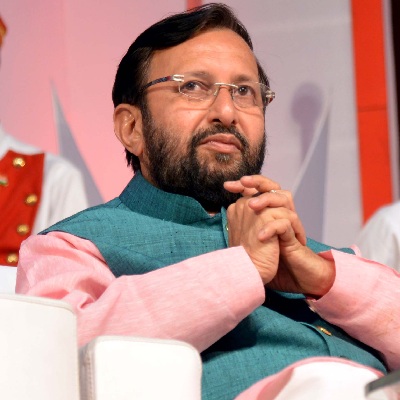
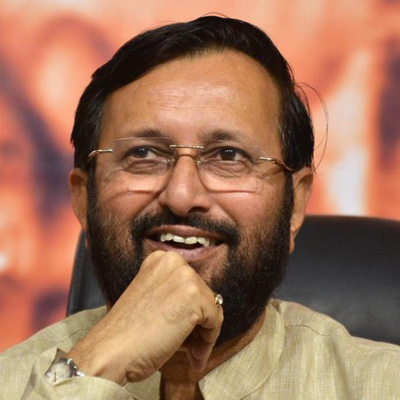
    After he took over as Information and Broadcasting Minister, one of the major areas of focus of Prakash Javadekar has been indigenisation of STBs and Ministry sources said the new dates are in keeping with inputs supplied to the Minister in this connection.


    The ministry has made efforts to get STBs declared as Telecommunication Network Equipment which will enable domestic manufacturers to get exempted from certain taxes, an official said.


    Nearly 110 million STBs are required to be installed in cable TV households in the remaining two phases of digitisation and the extended deadline will ensure that the domestic manufacturers prepare themselves and meet this demand, officials said.
  • Local STB manufacturers confident of meeting target of DAS phase III and IV

    Local STB manufacturers confident of meeting target of DAS phase III and IV

    NEW DELHI: The Information and Broadcasting (I&B) Ministry has been assured by manufacturers of domestic set top boxes (STBs) that they will be able to meet the demand of 11 crore STBs needed for the final two phases of cable television digitisation.


    This assurance was given to I&B Ministry secretary Bimal Julka over the weekend with manufacturers to check the status of indigenous manufacturing of STBs.


    I&B Minister Prakash Javadekar had recently told that it was unfortunate that good quality STBs were being exported overseas and poor quality STBs from overseas were being installed.


    Earlier, he had said that the Ministry will take steps to solve problems of local manufacturers including those relating to taxation.


    The manufacturers appreciated the efforts of the government for resolving their long pending demand of C-form. They said that they have sufficient installed capacity to meet the full demands of STBs locally and said the government’s initiative would help give employment to about 50,000 people and would attract an investment of about Rs 500 crore. It would generate local support facility for repair of STBs and would also help in smooth implementation of digitisation initiative in the country. 

    The Finance Ministry had on 13 August extended the facility of Form ‘C’ under section 8(3) (b) of Central Sales Tax (CST) Act 1956 to STBs thus fulfilling the major demand of the domestic STB manufacturers who would charge CST @ 2 per cent against VAT of 12-14 per cent being paid earlier. 

    The phase III of digitisation to be completed by December 2015 would cover all other urban areas (municipal corporations/ municipalities) which were not covered in first two phases. Phase IV to be completed by December 2016 would cover the rest of India.


    The meeting was attended by the members of the consumer electronics and appliances manufacturers association (CEAMA) and representatives from STB manufacturers such as My Box Technologies, Dixon Technology, Videocon, Jabil, One-Eight Technologies, Skyworth Digital, Spectra Innovations, Indieon, Logic Eastern and Simmtronics.

  • Project Management Unit set up in MIB to monitor DAS

    Project Management Unit set up in MIB to monitor DAS

    NEW DELHI: A project management unit has been set up in the Information and Broadcasting Ministry to monitor digitisation of cable television networks in the country.

    Information and Broadcasting Minister Prakash Javadekar told Lok Sabha that this is in addition to the task force constituted earlier to steer phase III and phase IV of digital addressable systems, which has to be completed by December, this year.

    He said intensive monitoring of digitisation was undertaken by the Ministry earlier with the support of Prasar Bharati officials and the Broadcasting Engineering Consultants India (BECIL).

    The first phase was set at March 2012 covering the four metros (though DAS was later stayed in Chennai) under the Cable TV Networks (Regulation) Amendment Ordinance 2011, which is an amendment of the Cable TV Networks (Regulation) Act 1995.

    The target date for completely digitising cable sector in cities with population of more than one million was 30 March 2013, all urban areas by 30 September 2014, and the whole country by 31 December 2014.

  • Government won’t interfere in media: Prakash Javadekar

    Government won’t interfere in media: Prakash Javadekar

    MUMBAI: The new government has always been questioned about the freedom of media in the country. Responding to a question in the Rajya Sabha, Information and Broadcasting Minister Prakash Javadekar said that the government is committed to protecting the independence of the press, reports PTI.


    However, he also reiterated that freedom comes with responsibility and so media needs to look at itself by its own mechanisms. But what is needed is ‘improvement’ in these mechanisms with penal consequences for irresponsible reporting.


    As far as social media is concerned, Javadekar said that though there is a need to evolve a mechanism for regulating it, it comes under the information and technology law.


    Recently, two Telangana channels were blocked by MSOs- ABN Andhra Jyoti and TV9. On Javadekar’s query the state government said that it had nothing to do with the blocking. Asserting that media is independent, he said that MSOs can’t resort to such censorship. If the Ministry comes to know of any such case, it is empowered to take action.

  • No ideological apartheid or hate in invitations to media by Prasar Bharati: Javadekar

    No ideological apartheid or hate in invitations to media by Prasar Bharati: Javadekar

    NEW DELHI: The Government has emphasised that Prasar Bharati is ‘not overshadowed by ideological apartheid or hate.’


    Responding to a question, Information and Broadcasting Minister Prakash Javadekar said recently that Prasar Bharati carries out the public broadcasting services in a fair and objective manner and does not discriminate on the basis of ideologies.


    He said in Parliament recently that Prasar Bharati has informed the Ministry that no journalist has been decommissioned or debarred by Doordarshan to curtail their independence.


    Prasar Bharati has also said journalists are invited to various programmes according to the requirement of the subject, without any discrimination.


     The Minister made it clear that Prasar Bharati was a statutory autonomous body set up by an Act of Parliament – the Prasar Bharati (Broadcasting Corporation of India) Act 1990 – and “it is not a state run broadcasting network.”

  • Govt denies any plans to reduce DAVP allocations

    Govt denies any plans to reduce DAVP allocations

    NEW DELHI: The Government has denied that there is any move to drastically cut the budget of the Directorate of Advertising and Visual Publicity (DAVP).

    In fact, Information and Broadcasting Minister Prakash Javadekar has said that the publicity budget of DAVP has shown an increasing trend since 2009-10 onwards.

    While the actual plan and non-plan DAVP expenditure for 2010-11 was Rs 90.92 crore, it was Rs 127.72 crore in 2011-12, Rs 139.75 crore in 2012-13, and Rs 222.47 crore for 2013-14.  

    The allocation of budget for advertisement and publicity of the schemes/programmes of an individual Ministry/Department is allotted by Planning Commission and Ministry of Finance, the Minister told Parliament.

    Therefore, Javadekar said this Ministry cannot put any embargo on Ministries / Departments /Autonomous Bodies / Constitutional Bodies, etc. resorting to advertising. 

    In response to another question, the Minister said the money spent on electronic media and print media during 2013-14 was Rs 500.35 crore and Rs 446.68 crore, respectively. During 2012-13, the money spent on electronic media and print media was Rs 198.30 crore and Rs 404.38 crore, respectively.

  • BARC updates the I&B ministry on its progress

    BARC updates the I&B ministry on its progress

    MUMBAI: The media industry went into a tizzy last week when the union cabinet accepted the Ministry of Information and Broadcasting (MIB)’s proposed regulatory framework for television rating agencies in India. 


    The most affected from this entire episode is the Broadcast Audience Research Council (BARC) as the pressure is building up on them to speed up the process and bring the new system for TV ratings in to place. 


    Hence, BARC board members met the MIB to present an update on the progress made so far. As per a highly placed source, the council members told the Ministry that the pilot testing has already begun. “There will be three-four phases of these testing sessions before the work officially starts.” 


    Elaborating the phases, the source remarks: “Firstly, the entire ratings system has to be tested how well the equipments work with the Indian technology and ecosystem. Secondly, we will have to see if all the elements are aligned properly. Thirdly, how accurate is the data collected; and lastly, the overall panel design.” 


    Another source reveals that the Ministry has been informed that the council will start signing contracts soon. “BARC is partnering with around six to seven tech organisations to complete the process,” the source claims.


    When asked about the Ministry’s reaction on the update, the council’s chairman of the technical committee Shashi Sinha says, “The Ministry is happy with the progress we are making and even we are happy with the way things are shaping up.”


    BARC has organised a press conference on 20 January in Mumbai to discuss further progress.

  • Tata Sky, Reliance, Sun Direct issued notices by I&B

    Tata Sky, Reliance, Sun Direct issued notices by I&B

    NEW DELHI: Earlier today, PTI reported that the Information and Broadcasting Ministry (I&B) had issued showcause notices to three private direct to home (DTH) operators for not showing all the 24 mandatory Doordarshan channels to their subscribers.


    When Indiantelevision.com contacted the ministry, a source in the ministry confirmed that the three DTH operators are Tata Sky, Reliance Big TV, and Sun Direct.


    According to the rules relating to mandatory telecast, all DTH operators are expected to provide the 24 DD channels to their subscribers, irrespective of any bouquets or a la-carte channels being subscribed by them. 

    A ministry source, revealing the names of the operators, said it had come to the notice of the ministry that some DTH operators were either not showing all the mandatory channels or were not showing them as primary channels. The operators have therefore been told to showcause why action should not be taken against them.

    It was noticed that while one of the DTH service providers was beaming only eight of the mandatory 24 channels, another was showing 17 channels, a source said. The third company which has been given the showcause notice was carrying only 18 channels. 

    According to the norms, DTH operators should show the mandatory 24 channels alongside other private channels of the same genre. 


    The channels which cable operators must show are DD National, DD News, DD Bharati, DD Urdu, DD Sports, DD India, DD Kashir, DD Punjabi, DD Girnar, DD Sahyadri, DD Saptagiri, DD Malayalam, DD Podhigai, DD Chandana, DD Bangla, DD North East, DD Bihar, DD Uttar Pradesh, DD Rajasthan, DD Madhya Pradesh, DD Oriya, Gyan Darshan, Lok Sabha TV and Rajya Sabha TV. 

  • TRAI gives DTH players more time

    TRAI gives DTH players more time

    MUMBAI: The DTH players now have time until 5 December to furnish their views on the supplementary consultation paper on ‘Issues related to new DTH licences.’ The earlier deadline set by the Telecom Regulatory Authority of India (TRAI) for submitting views and comments was 25 November.


    It was on 14 November that the consultation paper was released by the TRAI.  The date  extension  has been given in keeping with the request of the stakeholders.  The regulator though has made it clear that no further extensions will be entertained.


    It is to be noted that the supplementary consultation paper was released as a follow up to the consultation paper it had issued on 1 October on issue/extension of DTH licences at the behest of the Ministry of Information and Broadcasting (I&B).


    The points raised in the supplementary consultation paper were:   Cross-holdings and control between a DTH licencee, broadcasting entities and TV channel distribution entities; Interoperability of DTH STBs; Licence fee and Migration fee.


    Stakeholders can send the comments in electronic form to TRAI advisor Wasi Ahmad.

  • TRAI recommendations on accreditation of rating agencies accepted: Tewari

    TRAI recommendations on accreditation of rating agencies accepted: Tewari

    NEW DELHI: Even as the industry body Broadcast Audience Research Council (BARC) is struggling with its teething problems, the Information and Broadcasting Ministry (I &B) has accepted view of the Telecom Regulatory of India (TRAI) that the minimum number of homes that a rating agency should measure should be 20,000 within six months of the guidelines coming into force, after which the number should be increased by 10,000 every year to reach 50,000.


    Minister Manish Tewari has said that his Ministry would place these guidelines before the union cabinet, a note for which has already been circulated. The Ministry had earlier asked the regulator to provide its guidelines on the issue, after which TRAI had in September released its recommendations including a condition that they be notified within two months.


    He said most recommendations had been “more or less accepted.” “Once we have the cabinet approval, we will notify the guidelines,” he added. Interestingly, Tewari, during his speech, also touched upon the dispute on whether the foreign direct investment should be raised for the print media.  While the Press Council of India (PCI) had submitted its recommendations that the current levels of FDI in print media should be maintained, the Indian Newspaper Society (INS) had favoured raising the limit to 49 per cent. “We are trying to build a political consensus after all media is a sensitive area,” Tewari said.


    The TV audience measurement mechanism has been a subject of controversy in the past with many channels expressing dissatisfaction with TAM ratings.


    Tewari said the amendments to the Press and Registration Books Act were already on the Ministry website and stakeholders’ had sought fresh consultations on issues including ‘paid news’, which had been slated for Tuesday.


    Replying to a question related to setting up of a National Gaming and Animation Centre in Mohali in Punjab, Tewari said there was a problem as it was intended to be a Public-Private Partnership (PPP) but the private sector had not responded.


    He said government was considering a plan to set up the institute with Japanese assistance. Tewari said bills to give special status to Film and Television Institute of India (FTII) and Satyajit Ray Film and TV Institute had been sent to the Law Ministry. He said another proposal to give the status of ‘institute of national importance’ to the Indian Institute of Mass Communication was by and large ready.