Tag: I&B

  • Parliamentary panel asks Google, Facebook to comply with new IT rules

    New Delhi: The Parliamentary Standing Committee on Information Technology (IT) has directed US tech giants Facebook and Google to comply with the new IT rules, which came into effect on 26 May.

    Both Facebook and Google officials had appeared before the Parliamentary panel on Tuesday regarding the issue of safeguarding citizens’ rights and preventing the misuse of social/online news media platforms. The panel chaired by Congress MP Shashi Tharoor had asked the officials of the social media sites to appear in person on the issue.

    According to media reports, the representatives were made aware of certain loopholes in their existing data protection and privacy policy mechanism and were asked to have stringent safeguards in place to protect the data privacy and data security of their users. The meeting was attended by Facebook India associate general counsel Namrata Singh and the company’s director of public policy Shivnath Thukral.

    Google officials also informed the committee that between January and March 2021, YouTube removed over 9.5 million videos for violating its community guidelines. “95 percent of these videos were first flagged by machines rather than humans. Of those detected by machines, 27.8 percent never received a single view & 39 percent received one and ten views,” officials told the committee, “During this same quarter, YouTube terminated over 2.2 million channels for violating its Community Guidelines. In this same period. YouTube removed more than one billion comments, the majority of which were spam and were detected automatically.”

    While officials from Facebook, Google, and Twitter have also appeared before the panel, representatives of YouTube and other Social Media Intermediaries will also be summoned in the coming weeks over the issue.

    The new IT (Guidelines for Intermediaries and Digital Media Ethics Code) rules, 2021 were notified on 25 February and came into effect on 26 May. The rules recommend a three-tier mechanism for the regulation of all online media. As per the rules, each significant social media intermediary is required to appoint a chief compliance officer, a nodal contact person for 24×7 coordination with law enforcement agencies, and a resident grievance officer. All three should be resident Indians.

  • MIB seeks public comments on the draft Cinematograph (Amendment) Bill 2021

    New Delhi: The government has sought public comments on the draft Cinematograph (Amendment) Bill 2021 which proposes to penalise film piracy with a jail term and empower the Centre to order re-certification of an already certified film in case of complaints.

    The general public can send their comments on the draft bill by 2 July.

    “The ministry of information and broadcasting proposes to introduce the Cinematograph (Amendment) Bill, 2021 which will make the process of sanctioning of films for exhibition more effective, in tune with the changed times and curb the menace of piracy,” it said in a statement.

    Age-based film certification

    Among the proposed changes, there are provisions relating to certification of films under ‘unrestricted public exhibition’ category which are proposed to be amended so as to further sub-divide the existing UA category into age-based categories – U/A 7+, U/A 13+ and U/A 16+.

    The draft also adds a provision to grant revisionary powers to the government on account of violation of Section 5B (1) (principles for guidance in certifying films) of the Act. “Since the provisions of Section 5B(1) are derived from Article 19(2) of the Constitution and are non-negotiable, it is also proposed in the Draft Bill to add a proviso to sub-section (1) of section 6 to the effect that on receipt of any references by the Central Government in respect of a film certified for public exhibition, on account of violation of Section 5B(1) of the Act, the Central Government may, if it considers it necessary so to do, direct the chairman of the Board to re-examine the film,” said the ministry.

    Prohibition of unauthorized recording

    The release of pirated versions of films on the internet, causes huge losses to the film industry and government exchequer. “In most cases, illegal duplication in cinema halls is the originating point of piracy. At present, there are no enabling provisions to check film piracy in the Cinematograph Act, 1952 making it necessary to have a provision in the Act to check film piracy,” said the ministry in a press statement.

    The draft bill proposes to insert section 6AA which prohibits unauthorised recording, according to which, no person shall, without the written authorization of the author, be permitted to use any audio-visual recording device in a place to knowingly make or transmit or attempt to make or transmit or abet the making or transmission of a copy of a film or a part thereof.

    “If any person contravenes the provisions of section 6AA, he shall be punishable with imprisonment for a term which shall not be less than three months but which may extend to three years and with a fine which shall not be less than Rs three lakh but which may extend to five percent of the audited gross production cost or with both,” it added.

    The Cinematograph (Amendment) Bill, 2019

    The government had introduced the Cinematograph (Amendment) Bill, 2019 in the Rajya Sabha in February, 2019 to impose strict penalties against unauthorised duplication of films in cinema halls. The draft Bill prohibited a person from using a recording device to make a copy of a film, without authorisation and made it a punishable crime with an imprisonment of up to three years and a fine of up to Rs 10 lakh, or both.

    Later, the standing committee on information technology (2019-20) presented its report on the Cinematograph (Amendment) Bill, 2019 in the Rajya Sabha and Lok Sabha on 16 March 2020.

    “The observations and recommendations made by the committee in the report have been examined and it is proposed to suitably revise the clauses in the Cinematograph (Amendment) Bill, 2019 based on the recommendations,” said the ministry.

    The comments may be submitted at the following email address: dhanpreet.kaur@ips.gov.in

  • MIB asks GECs to promote Covid helplines

    Mumbai: The union ministry of information and broadcasting (I&B) asked general entertainment channels (GECs) to promote six central government Covid helpline numbers. The country is battling with its worst-ever health crisis, with over 2,500 people succumbing to the infection daily.

    “The private general entertainment (non-news) TV channels are advised to promote awareness of these six national level helpline numbers by way of a ticker or such (other) appropriate ways as they may consider, at periodical intervals,” the I&B ministry said in its recent advisory.

    It has asked channels to promote national helpline numbers that include the union ministry for health and family welfare (1075), women and child development ministry (1098), and the national institute of mental health and neuro-sciences for psychological support (08046110007).

    Apart from these three major helplines,it has also sought to promote other helpline numbers that include, the AYUSH COVID-19 counselling number (14443), the MyGovWhatsApp help desk (9013151515), and that of the union ministry of social justice and empowerment for senior citizens (14567).

    In its advisory, the I&B ministry noted that the second wave of the coronavirus in India was showing signs of slowing down, even as the number of fresh cases was still on the higher side. On Friday, the country recorded as many as 1,34,000 new cases. The advisory also lauded private channels for complementing government efforts to fight the Covid pandemic by creating awareness regarding the infection.

  • Amit Khare to start his second tenure as  I&B secretary

    Amit Khare to start his second tenure as I&B secretary

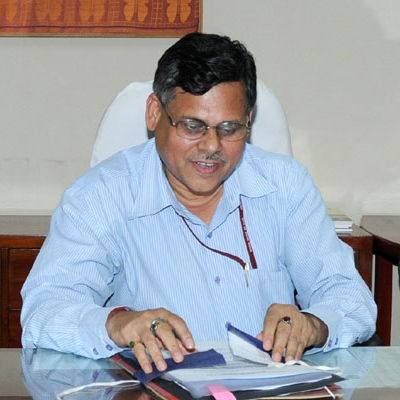
    MUMBAI: He’s back at a post he held just about two years back. Amit Khare, the higher education secretary in the HRD ministry and schools, has been hoicked into the position of secretary, ministry of information & broadcasting (I&B). He replaces Ravi Mittal who has been in the hotseat since December 2019.

    Khare had been appointed to the secretary’s post for the first time on 31 May 2018. It was in December last year, that Mittal got the top charge of MIB during a reshuffle. Now, Mittal has been transferred  as secretary, department of sports.

    Khare is a 1985 batch Indian Administrative Service officer .Considered an upright civil servant, he is credited for unearthing the multi-million dollar fodder scam two decades ago in Bihar for which some powerful politicians, including former Bihar chief minister Lalu Yadav, and senior officials have been handed jail sentences of varied time periods.

    Khare comes into the I&B ministry at a crucial time when the government is battling hard to stem the spread of the dreaded novel coronavirus SARS-COV2 which has already claimed more than 800 lives and afflicted more than 26,000 Indians. Khare will have an important role to play especially considering that the economic trials and tribulations the TV broadcasting, and advertising and media sectors are facing courtesy the government enforced lockdown nationally for the past month or so.  Khare has been relieved of his secretary schools portfolo, while continuing to hold the higher education one.

    During a career span of more than 35 years, Khare has held various field postings and has worked from grassroots to the higher levels of governance in both state and central governments.  Prior to being additional chief secretary, Jharkhand,  Khare served as principal secretary, finance & planning department, Jharkhand. He has served as member secretary in the department of pharmaceuticals, ministry of chemicals & fertilizers, and joint secretary to the in the department of higher education, ministry of human resource development.

  • Need to focus on self-regulation and less regulation: Amit Khare, Secretary, I&B at FICCI FRAMES 2019

    Need to focus on self-regulation and less regulation: Amit Khare, Secretary, I&B at FICCI FRAMES 2019

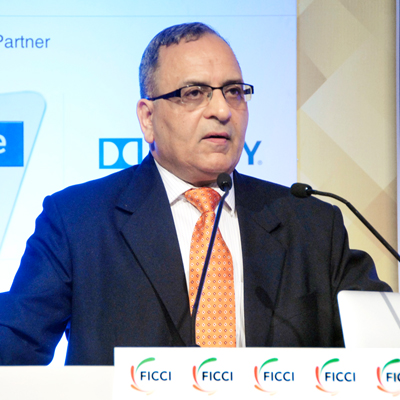
    MUMBAI: The 20th edition of three-day global convention covering the entire gamut of media and entertainment industry, FICCI Frames 2019, saw its inauguration today at Grand Hyatt in Mumbai.

    Mr. Amit Khare, Secretary, Ministry of Information & Broadcasting, delivered the keynote address.

    “One should encourage co-production so that content could be greatly enhanced, joining more countries, that will lead to better viewership.” Said Amit Khare.

    “We have taken an initiative of having a national broadcast policy. One should consider self-regulation and less regulation if we want the system to grow.” He added talking about the regulations in Media and Entertainment industry.

    While Mr. Uday Shankar, Vice President, FICCI took to stage for opening remarks, where he mentioned how the media and entertainment industry and FICCI FRAMES is growing by leaps and bounds. “India is one of the most exciting markets for the Media & Entertainment industry. The great Indian media story has just begun,” he said.

    Mr. Ronnie Screwvala in his ‘Media Mastermind Keynote: An Indian Entrepreneur’s Journey’ said he had seen the industry and FICCI FRAMES for so many years and was happy to note that business people were at the centre stage of the conclave.

    “The companies of tomorrow need to be more consumer companies and not just media companies. The Media and Entertainment sector cannot just function with passion, we also need leaders, founders and entrepreneurship,” said Mr. Screwvala talking about how the media and entertainment industry needs to focus on consumers.

    “Learning is story-telling,” Mr. Screwvala concluded.

    The other speakers in the opening session were Mr. Charles H. Rivkin, Chairman & Chief Executive Officer, Motion Picture Association of America and Mr. Gary Knell, Chief Executive Officer, National Geographic Partners. 

    FICCI-EY 2019 report on Media and Entertainment was also unveiled along with the law book of Cyril Amarchand Mangalda,s and Odisha Film Policy by Dr. Nitin Bhanudas Jawale, Managing Director Odisha Film Development Corporation.

    Apart from the 2nd edition of content market, an initiative to bring together content creators and content buyers from across the globe, another new initiative call 'Frame Your Idea' has been set up this year to help promote script writers in the industry. While the fraternity has been talking about the importance of stories and scripts writers within the industry, FICCI FRAMES will provide a platform as an opportunity for writers to pitch their content to various renowned production houses like Aamir Khan Productions, Balaji Telefilms, Dharma Productions, Disney Studios, Eros Now, RSVP, Kabir Khan Films, SPE Films India Pvt Ltd., Viacom18 Motion Pictures and Fox Star Studios to name a few.

    The pitching sections will be divided into Films, Television, Web shows and short films to make it smoother for the writers to book appointments and to pitch their stories to interested production houses for fruitful associations.

  • Jaipal Reddy calls for doing away with MIB

    Jaipal Reddy calls for doing away with MIB

    MUMBAI: Junk the ministry of information and broadcasting (MIB). That’s the call that once MIB minister Jaipal Reddy – who held the portfolio during the Congress I regime in the previous decade – is giving these days. Writing a column in The Hindu last week, he said “It is important to note that no advanced democracy, be it in western Europe or in North America, has a ministry called I&B. Those democracies instead have independent commissions. In the US, for example, the Federal Communications Commission has been effective in regulating the functions of television companies for more than a half a century.”

    Reddy points out in the column that “Sardar Vallabhbhai Patel briefly handled the home ministry after India attained independence, and he also handled the MIB. He used the MIB portfolio to reach out to the people with urgent messages during the country’s formative and most difficult period.”

    He highlights that the “the political demand for conferring autonomy of DD gained volume only in the 1970s, because of which the BG Verghese Committee went into the question and submitted its recommendations. But it assumed the shape of a specific statute only in 1990 when leaders from all parties, including Rajiv Gandhi as the opposition leader, reached a consensus. It fell on me as the I&B minister in 1997 to notify the Act — the Prasar Bharati (Broadcasting Corporation of India) Act, 1990. At that time, I made a public statement that the time had come for abolishing the I&B Ministry.”

    According to Reddy, Prasar Bharati can truly enjoy independence when it is given financial independence. Says he in the column: “The BBC enjoys financial autonomy as the citizens pay fees compulsorily and directly to it. As a consequence of this freedom, the BBC sometimes takes on the British Prime Minister as well, not to speak of the government.”

    So why garbage the ministry? Reddy has his reasoning. Says he: If a minister is there for the portfolio, he/she cannot sit idle; they poke their nose into the functioning of such institutions by way of self-employment. Hence, the urgency to abolish this portfolio.”

    There’s nothing really new about his yelling about this from the rooftops – he’s done it in the past too – as he mentions in his column. He was instrumental in the drafting of the Broadcasting Regulatory Authority of India Bill in 1998. Nothing came of it then. Will someone in the Modi government listen to him this time?

  • Right time for India-centric global news channel: Smriti Irani

    Right time for India-centric global news channel: Smriti Irani

    MUMBAI: Information and broadcasting (I&B) minister Smriti Irani is ready to take India abroad. The minister has said it is the right time for the state-owned broadcaster to launch a news channel focused on India for the international market, although she added that no decision has been taken yet.

    In an interview with the Hindustan Times, Irani added that Doordarshan’s (DD) quality of content had to improve significantly for it to compete with private news and general entertainment channels but added that Prasar Bharati (DD’s parent body) had the kind of infrastructure and reach that could not be matched by private broadcasters.

    According to Irani, the big priorities for the I&B ministry are to minimise the interference of the government, but because I&B is a sensitive area, there are many regulations that need to be reviewed. “I need to increase the efficiency of how we work, because this is the first time in the history of the I&B ministry that we have eight zones specially set up (as communication hubs for the government). Zone-wise, state-wise, our communication has to be strengthened. My third big focus is on communication in local and regional languages,” she said hoping that the CEO of Prasar Bharati can make some big-bang changes.

    “The data needs to be democratised—that data cannot have only have a few masters. It is this data that helps fund channels and programmes. It is this data that drives what the viewer consumes. Advertising decisions are based on this data. The kind of programmes produced is based on this data. If the data is opaque, it leaves many questions unanswered,” she said during the interview.

    But Irani is not in the habit of casting aspersions at random. “The facts at hand are simply that we do not have details on many aspects related to ratings agency BARC (Broadcast Audience Research Council), and when BARC gives us that information I can make a more informed decision. As things stand, there’s very little understanding of BARC in the public domain,” she said.

    She said that there have to be more voices from regional media and language-based media houses — editors, creators. “On budget day, when DD was the only channel with the finance minister and ministry officials, we saw a 582 per cent growth in viewership,” she added.

    On the talks of expanding the reach of DD News to over 100 countries, she said, “If we do something like this, we will also have to involve the Ministry of External Affairs, but there is no decision on this. Yes, the timing is right to do something like this, and the market also seems to be ready.”

    She brushed away claims that the department controls advertising. “That’s a misconception. Government departments and ministries decide how much they want to spend and where they want to spend it. We just become the channel for implementing it. To say I&B decides who spends what and where is an anomaly,” she pointed out.

    Also read:

    MIB mulls broadcast of DD News to 100 countries

    Doordarshan’s R-Day broadcast notches up record TV viewership

  • MIB mulls broadcast of DD News to 100 countries

    MIB mulls broadcast of DD News to 100 countries

    MUMBAI: The Ministry of Information and Broadcasting is contemplating its expansion of Doordarshan’s 24-hour news broadcast to around 100 countries with a view to reaching out to the world and putting forth India’s viewpoint on domestic and international issues, according to an Economic Times report. 

    Primarily, DD India is into producing various cultural and general entertainment programmes for broadcast in overseas countries. 

    The channel also produces 24-hour news and current affairs programmes that are limited to Nepal, Bangladesh, Sri Lanka, the UAE and China. 

    The decision to start broadcast of news in a particular country will depend on financial implications such as cost of engaging a local cable for carrying the Indian channel as well as stationing correspondents in that particular country, according to a senior official. 

    The factors that would also be considered for starting a news broadcast in a country include the percentage of the Indian diaspora in the total population of that nation, foreign direct investment inflow and outflow, remittance and tourists arrival from that country, the official said.

    The ministry will also look at whether India has strategic partnership with that nation, number of visits of the prime minister to that country, whether the Ministry of External Affairs has a joint secretary level officer there and proximity of that nation to multilateral agencies. 

    Also Read:

    MIB has no data on OTTs; not under regulation: Minister

    MIB, DoS nudge TV channel to use Indian satellites

    MIB categorises all non-Hindi and non-Eng TV channels as regional

  • I&B tightens up on condom ads on TV

    I&B tightens up on condom ads on TV

    MUMBAI: Condom ads are off prime time television. The latest advisory from the information and broadcasting (I&B) ministry has asked broadcasters to keep them out of the purview of children and only telecast them between 10 pm and 6 am.

    The ministry said that it had taken note of objections regarding condom ads – which are “targeted at a particular age group” – being aired on some channels that are considered as ‘indecent especially for children.’ It used Rule 7 (7) and Rule 7 (8) of the Cable TV Networks Rules, 1994 to tell broadcasters to refrain from telecasting ads of condoms that could be considered inappropriate/indecent for viewing by children.

    Channels may air the ads at night from 10 pm to 6 am—a time when Indian kids are possibly asleep—and abide by the rules.

    Rule 7 (7) says that ‘no advertisement that endangers the safety of children or create in them any interest in unhealthy practices or shows them begging or in an undignified or indecent manner shall not be carried in the cable service.’ Rule 7 (8) says ‘indecent, vulgar, suggestive, repulsive or offensive themes or treatment shall be avoided in all advertisements.’

    The Advertising Standards Council of India (ASCI) had approached the ministry for guidance after several people complained regarding the inappropriate nature of condom ads being telecast during primetime viewing on most television channels.

    Recently, Mankind Pharma had been pushing the creative boundaries and had featured former porn-turned-Bollywood star Sunny Leone in a series of TVCs in which she cavorted around in a sensual and alluring way that could be argued as being in the zone of titillation. The company had earlier run into a spot when one of its ads had offended local groups in the western Indian state of Gujarat and it had to pull the hoardings off.

  • ‘Sanskari’ India wants condom ads off primetime

    ‘Sanskari’ India wants condom ads off primetime

    MUMBAI: India is a country that takes offence at the slightest suggestion of titillation. The Advertising Standards Council of India (ASCI) has approached the ministry of Information and Broadcasting (MIB ) for withdrawing condom ads that are telecasted during prime time or ‘family viewing time’. The council received several complaints on the kind of content condom brands show in ads, which may not be suitable for kids and teenagers. The ASCI, in its letter to the ministry, has specifically stated that ads that are explicit and vulgar in nature should be aired only between 10 pm to 6 am.

    The most recent instance wherein our sanskari-ness was awakened was when Mankind put up banners across Gujarat that had Sunny Leone advertising condoms with a tagline to ‘Play Navratri but with love’ that did not impress people one bit. Twitter and Facebook were bombarded with hate posts, forcing Manforce to eventually pull down the banner.

    ASCI’s consumer council looks into the content of advertisements and decides whether the ad is a s per its self-regulation code or not. Speaking to Indiantelevision.com, ASCI secretary general Shweta Purandare said, “Given the nature of the category (condoms), some sort of intimacy shown in the ad is inevitable but viewers are upset about them being shows during family viewing time. We replied to a few complaints that were forwarded to us by the MIB , by stating that those ads were not considered objectionable as per ASCI’s code but they (I&B) could consider the timing.”

    Vouching for brands, Vizeum Media Services associate vice president Saumya Agarwal adds, “One cannot penalise the product for the incorrect/unacceptable treatment in their communication. The guidelines must be placed towards how should the creatives be designed, without demeaning any gender in any way, etc., but to put an embargo on their exposure time is not justified.”

    Calling it an extremely myopic and ad hoc approach to solving a much larger issue, Agarwal notes that given the plethora of freely available information across multiple media, this would hardly make any difference. In fact, it is an irony that a country that is promulgating sex education is also fighting to ban condom advertising to the same audience.

    Doordarshan during the 1980s had declared that sanitary pads are ‘unmentionable’ and were not allowed to be advertised before 10 pm. That created a vicious circle for the product since young girls were the primary target. Brand-Building.com brand strategist and founder Ambi MG  Parameswaran is of the opinion that there is nothing wrong with pushing what is known as ‘unmentionable’ products into a more ‘adult’ time slot. “We should remember that condoms are in fact health products, they are for family planning and for prevention of sexually transmitted disease and that needs to be kept in mind when pushing condom ads to midnight slot.”

    On a different note, Harish Bijoor Consults brand strategy expert and founder Harish Bijoor said that laws such as these will help protect the innocence of young audiences that are besotted with television. “If implemented, I do believe that the meaning of explicit should be common to all categories and not condoms alone. If showing skin above the knee is explicit, it should be common to every category for sure. If a skin cream can get away with it, why not condom brands,” he adds.

    Pointing out that brands need to self-regulated before they put out ads, Purandare added, “We are not against advertising of products but the execution is very important. Some ads are quite bold in nature and may not be appropriate for kids and we can’t allow them to show pornography at prime time. Advertisers have to be more conscious about what they put out.”

    One might want to consider the fact that even if the I&B accepts the proposal, kids and teenagers are fairly active on digital as well. They can view the content on digital platforms making it a moot point. Havas India CCO Nima Namchu believes that the content can be delivered to the target audience with a relatively higher degree of accuracy on digital media. But if the idea is to regulate content so that explicit content is not viewed by our children, then this step with ads on television will perhaps be followed by similar requests with digital content as well.

    Doesn’t the nature of the product need ads to be creative with raunchiness and ‘explicit’ communication? Our media experts tend to think otherwise. While Namchu thinks that is not the case, Agarwal adds that categories like alco-bev (Alcohol and Beverages), condoms, feminine hygiene need to be portrayed sensitively without falling into the obvious traps and there must be some sure shot ‘socially responsible’ guidelines in order to prevent marketers crossing the line of objectification of women which is indeed objectionable!

    If and when the move happens, it will impact brand communication and marketing spends for these brands on television as the viewership between 11 pm to 5 pm is negligible. Advertisers would be forced to find alternative routes, use surrogate advertising and move to digital platforms. Harish Bijoor added, “The loss is more for the medium of television rather than for the brand player. The brand player will find other means to advertise. Water will find its own level.”

    Purandare also points out that whether prime time ban would only be applicable for certain products or the entire category would be I&B’s call.

    A head of a big TV network, who did not wished to be named, says it is “hypocritical “ on the part of any government or regulator to say condom ads pollute Indian culture or corrupt young minds, especially when government  itself runs awareness campaigns for HIV/AIDS.

    “At a time when bursting population is becoming a problem for a government and the country, saying young people should not be taught or made aware of sexual activities of humans, especially as it has a big health angle (prevention against AIDS, etc.), any effort to push ads of condoms to unearthly hours past midnight defeats the whole purpose of sex-health education of young people,” the TV exec adds. 

    However, sources in Ministry of Information and Broadcasting (MIB) said no decision has been taken on the issue yet, though, prima face, some content and it’s depiction in such ads are a bit explicit .

    KamaSutra and Durex declined to comment on the issue.