Tag: I&B ministry

  • Govt still to take action against misleading & surrogate ads of liquor brands

    NEW DELHI: The Government has not been able to take a decision on allegations of surrogate or misleading advertising in television advertisements of as many as 37 products in the last two years.

    A reply given in Parliament earlier this week by Information and Broadcasting Ministry Ambika Soni lists 17 advertisements of 2011 and 20 of 2012 as ‘under consideration’ of the Ministry.

    While there were no complaints during 2009, action was taken on all seven complaints during 2010.

    The advertisements ‘under consideration’ in 2011 are for products like Bagpiper Club Soda, Bacadardi Together Music CD, Imperial Blue Music CDs, McDowell No. 1 Platinum Soda, Royal Stag (five different versions), Imperial Blue (two versions), Royal Challenge, Kingfisher Premium, Blender’s Pride, Howard 5000 (two versions), Kingfisher Beer, and VB Best Cold Beer.

    In 2012, the complaints are for most of the above-mentioned brands, in addition to Carlsberg Beer, Seagram’s Imperial Blue Superhits music CDs, Signature, Tuborg, 100 Pipers Music CDs, Seagram’s Royal Stag Mega Cricket, McDowell Century Soda, Kingfisher Premium Packaged Drinking water, Signature Natural Mineral Water, ICE Music CDs, Teacher’s Music CDs, Signature Parties (sponsored by Karbonn Mobiles), Seagram’s Royal Stag Mega Music, and Seagram’s Natural Mineral Water.

    In addition, there was a complaint this year about a misleading advertisement of Garnier Fructus shampoo, and another about Bhavishya Jeevan Amrit which are under consideration.

    In most other cases, the matter was referred to the Advertising Standards Council of India (ASCI), the Indian Broadcasting Foundation (IBF) or the News Broadcasters Association (NBA) and these self-regulatory bodies advised the TV channels not to carry the advertisements.

    Most prominent among these was the daily telecast of the advertorial on ‘Third Eye of Nirmal Baba’ on some channels.

    A total of 43 cases of misleading or surrogate advertisements were received by the Ministry during 2011 and 2012, many of them for the same product telecast in different channels.

    Soni said complaints also came for 18 advertisements in the print media between 2009-10 and 2011-12, including three this year which were under process with the Press Council of India.

    Earlier this year, MoS C M Jatua had said the Department of Consumer Affairs is holding a series of consultations and workshops with all stakeholders in different parts of the country to create awareness about this issue.

    He said the Consumer Protection Act 1986 had ample provisions to act against advertisements making false or misleading representation and these had been duly notified as Unfair Trade practices for which a consumer could approach the Consumer Courts.

    The Press Council Act and the Journalistic Norms drawn up by the Council, and the Cable TV Networks (Regulation) Act apart from the ASCI also had powers to deal with such complaints.

    In reply to another question, Parliament was informed that a representative of the Department of Consumer Affairs was now represented on the Inter-Ministerial Committee which hears complaints against TV channels.

  • DAVP issues new rates for TV channels

    NEW DELHI: The Directorate of Advertising and Visual Publicity has decided to issue new ad rates for 200 private cable and satellite channels which have become effective from 1 June while continuing “for the time being” the existing rate of FM radio.

    The new rates have come following the announcement of the new rate determination formula by the Information and Broadcasting Ministry.

    DAVP has also provisionally extended the empanelment of all C&S TV channels currently empanelled with it till 31 August. There are six time bands in the revised rates.

    Meanwhile, DAVP has decided to extend till 31 August or the date of completion of the fresh empanelment process of television and FM radio channels.

    In an advisory issued on 30 May, DAVP noted that it had commenced the process of empanelment in 24 May but had not been able to complete it by 31 May as announced earlier. DAVP empanelment is done for a period of three years.

    The listed 200 channels (which can be seen on www.davp.nic.in) may also apply for their empanelment with DAVP for the year 2012-15 using the Online Application Form available on the DAVP website.

    All the channels that are currently empanelled with DAVP have to give their acceptance to the revised rates by 15 June 2012.

    Earlier, the Ministry had put on its website the content of the radio, television and print advertisements of the Bharat Nirman ads.

    Empanelled channels are under contractual obligation to telecast DAVP or AA (Authorised Agency) advertisements and face suspension for a year if they drop Government spots.

    Out of the total annual budget allocation for television, 40 per cent is exclusively earmarked for regional channels.

  • 50 years after, FTII diplomas not recognised for higher studies

    50 years after, FTII diplomas not recognised for higher studies

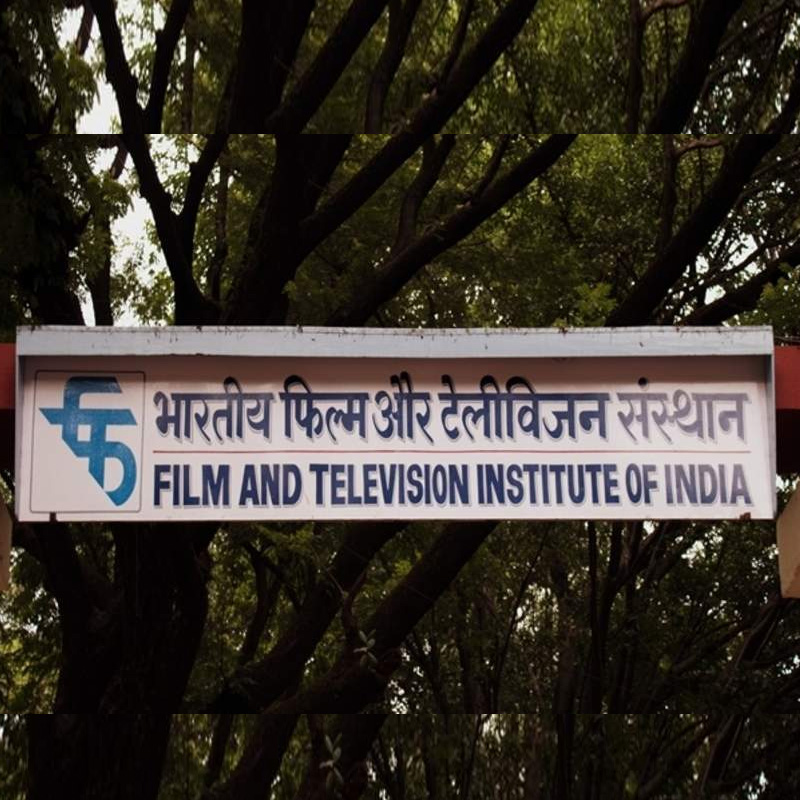
    NEW DELHI: Even half a century after it was set up, the Film and Television Institute of India, Pune, has failed to get equivalence status for its post-graduate diploma courses in various disciplines of film and television.

    As a result of this, those who pass out of the FTII are unable to take up higher studies and research. Taking note of this, a Parliamentary Committee has asked the Information and Broadcasting Ministry to expedite this matter with the Human Resource Development Ministry and the Association of Indian Universities. Interestingly, even the National School of Drama enjoys this equivalence status.

    Meanwhile, the I&B Ministry has prepared a Detailed Project Report with the help of a group of experts to upgrade the Institute and its infrastructure. A programme has already been undertaken to upgrade the infrastructure during the 11th and the 12th Plan period in a phased manner.

    A bill is expected to be introduced in Parliament to declare the FTII an “Institute of National Importance” to upgrade the position of FTII at the national and international levels to attract talented faculty, staff and students and to start high level research and innovation schemes related to Film, TV and allied media.

    The FTII was set up in 1960 in Pune, as a premier Institute for imparting training in art and technique of Film making. The Institute has been conducting Post Graduate Diploma in Film and Television in various disciplines, namely, Direction, Cinematography, Audiography, editing etc. FTII also runs various short courses for working professionals.

    The Standing Committee on Information Technology regretted that “no initiatives have been taken to upgrade the status of FTII, and the Ministry is still exploring the possibilities of getting equivalent status for its diploma courses from the Ministry of HRD”.

    The Committee said the upgradation of FTII to global standards should be done with ‘due promptness’ and wanted to be apprised of the progress and the Ministry’s definite plan for this purpose at the earliest.

  • Misleading ads issue: Asci to meet govt soon

    Misleading ads issue: Asci to meet govt soon

    NEW DELHI: The Department of Consumer Affairs is studying the possibility of framing some guidelines to check misleading advertisements in the print and electronic media, following a directive from the Prime Minister’s office.


    The Advertising Standards Council of India (ASCI) is expectedly irate, and a Delhi-based member said the Council would raise the issue with the Ministry.


    An ASCI delegation is expected to meet senior officials in the government early next week, and it is also expected that this delegation will press for all matters relating to the media to be dealt with only through the Information and Broadcasting Ministry.


    Taking objection to advertisements that make promises for checking falling hair, obesity and skin conditions, the PMO has directed the Consumer Affairs Ministry to work on the existing Advertising Code and suggest changes.


    The government may also consider setting up a regulator to enforce the guidelines, though I& B Ministry sources said they would press for this issue to come under self-regulation.


    PMO sources said the matter was discussed at a recent review, particularly in view of the messaging on mobiles.


    There are laws to deal with consumer issues and courts that specifically address complaints, but a guide will make it clear to the buyer and seller about a legitimate advertisement and a doubtful appeal seeking to exploit human fears, insecurity and suffering.

  • Bond film shooting in India gets I&B nod

    Bond film shooting in India gets I&B nod

    MUMBAI: Giving a reprieve to thousands of James Bond fans who were dejected because the producers of the next installment of the film couldn’t get permission to shoot in India, the Information & Broadcasting (I & B) ministry has given its nod to the makers to shoot across the country.

    The I&B ministry has given permission to the producers to shoot the latest Bond film Bond 23 in places like Daryaganj, Sarojini Nagar market and Ansari Road in the capital. As per the makers request, they have been given permission to shoot in North Goa with the exception of the tunnel at Dudhsagar (south-eastern railway) and Zuari rail bridge over Zuari river (Konkan railways) due to security concerns.

    In Ahmedabad, the producers had sought permission to shoot near the Navagam area that is close to installations like Torrent Power limited, ONGC and IOC. The ministry has asked them to ensure that permissions are taken from the railway ministry and the state government. It is said that talks with the railway ministry were on regarding these particular locales.

    Bond 23 will be the latest addition to films that have already been given permission to shoot in India. Twenty-two films including the Tom Cruise-starrer Mission Impossible, Life of Pi, Singularity and The Best Exotic Marigold Hotel have already got clearance to shoot in the country.

  • Broadcasters to suggest formula on surrogate ads

    Broadcasters to suggest formula on surrogate ads

    NEW DELHI: The government has asked the Indian Broadcasting Foundation (IBF) and the News Broadcasting Association (NBA) to finalise within three weeks their strategy relating to surrogate advertisements of products using brand names or logos which are also used for cigarettes, tobacco products, wine, alcohol, liquor or other intoxicants that continue to appear on television channels.

    The two organisations had told the Ministry that there are some cases of genuine brand extension and, therefore, there could not be a blanket ban on all such advertisements. The time of three weeks had been sought by the organisations.

    Senior officials of the Information and Broadcasting Ministry, the Health Ministry and the Law Ministry in a meeting here discussed the issue with representatives of the two organisation.

    Senior I&B Ministry sources told indiantelevision.com that the organisations were apprised about the concerns of the Government and the need to take stern action against violations.

    In a directive on 17 June last year, the I&B Ministry had asked all TV channels to stop such advertisements. It had said the notification of 27 February 2009 cannot be cited as an excuse for airing such advertisements in violation of Rule 7(2)(viii)(A) of the Cable Television Networks Rules 1994 as the guidelines had not been operationalised.

    It had further said that certificates issued by the Central Board of Film Certification under the Ministry‘s notification of 9 August 2006 will also not be accepted as these are null and void in view of subsequent amendment of Rule 7(2)(viii) of the Rules.

    All channels including news and current affairs channels have been directed to, therefore, immediately withdraw such advertisements.

    In another notification, the Ministry had asked all TV channels to stop violating Rule 7(10) which clearly states that advertisements should be clearly distinguishable from the programme/news broadcast and cannot be carried on the same screen as captions, static or moving alongside the programme.
     
    This followed several complaints that channels often carry advertisements in scrolls which get mixed with news and also on the screen which interferes with the programme.
     

  • I&B ministry issues advisory to news channels; plans changes in Cable TV Act

    I&B ministry issues advisory to news channels; plans changes in Cable TV Act

    MUMBAI: Information and Broadcasting ministry has issued an advisory to all the private news channels, to exercise restraint while airing news related to Mumbai terror attacks and its subsequent developments.

    Appreciating the efforts of the media for covering the attacks, the ministry has cautioned news channels to “exercise some degree of caution and restraint as a mark of respect to those who have died in the terror strikes,” PTI quotes a senior official of the Ministry as saying.

    “Though we appreciate the maturity shown by the Indian media while broadcasting last week’s terror attacks, through the advisory issued we have appealed to them that by repeatedly showing the visuals of the carnage, they are inadvertently harming the sentiments of those affected by it,” the official adds.

    The advisory has been sent to the channels only to give them a message that they should be a bit more considerate in their coverage of the incident even though they have shown a lot responsibility.

    It was learnt initially that the Ministry may take some decisions regarding further tightening of the cable laws. However, Ministry sources said that considering the responsible role of media, they just decided to issue an advisory.

    Meanwhile, the ministry is tightening laws governing cable television broadcast, for which it is planning to introduce changes in Cable Television Networks (Regulation) Act 1995.

    In the backdrop of India TV getting a notice from the ministry last week for airing a telephonic conversation with a couple of terrorists involved in the attack, ministry officials held a series of long meetings chaired by I&B secretary Sushma Singh to discuss the pros and cons of amending the Cable TV Act in order to bring private television channel coverage under stricter supervision.

  • Delhi HC fallout: NBA chastises motivated stings

    Delhi HC fallout: NBA chastises motivated stings

    NEW DELHI: For the first time since its inception, the News Broadcasters Association (NBA) have officially criticised motivated sting operations on TV news channels, saying that the Delhi High Court’s suggestion that an I&B ministry committee clear all stings before going on air is a matter of grave concern.

    In a press note, NBA president G Krishnan said, “We condemn motivated reporting that attempts to fabricate news to gain popularity at the cost of journalistic integrity.”

    Krishnan also added that such acts risk discrediting television news and indeed the news media as a whole.

    “But this does not mean that sting operations are wrong in principle. The NBA believes that sting operations are a legitimate journalistic tool and means of investigation, but like all powerful tools they have to be used with care and responsibility,” he emphasised.

    It may be recalled that on 30 August, the TV news channel India Live had shown a ‘sting’ that purportedly ‘caught’ Uma Khurana, a school teacher, using her students for flesh trade.

    While the so-called news exposé caused rioting in Delhi’s congested Dariya Ganj area, within two days the operation had been found to be fake, the reporter arrested and a while later, Khurana was cleared by the police.

    Dismissing the case two days ago, the Delhi HC chastised sensational reporting and suggested that the concerned ministry set up a committee to subject all stings to scrutiny and give them clearance, which the journalistic circle has been alarmed about.

    If the ministry were to take up the court’s suggestion at all, there would be clear chances of censorship, the media has felt widely.

    “We have noted with concern the suggestion of the Delhi High Court that the I&B Ministry set up a committee to vet sting operations and issue no-objection certificates on being satisfied that they serve the public interest, before the stories are telecast,” a press statement from NBA said.

    Krishnan said, “We are all aware that events of the recent past have called sting operations to question on grounds of authenticity, but stray incidents do not warrant such interference, which is totally against the tenets of democracy, free speech and the freedom of the press.”

    The NBA feels that the suggestion that a telecast of news receive prior permission of the Government would constitute censorship of news and would, for that reason, constitute “content control” and thereby an unacceptable restraint on the right of free speech.

    “As much as stray incidents of irresponsible reporting cannot constitute a basis for imposing censorship upon the print media, such incidents of abuse of ethics cannot constitute a basis of imposing censorship upon the electronic media,” said the statement.

    The NBA is in the process of formulating a code of self-regulation for news and current affairs channels. Senior advocate and former Solicitor General of India Harish Salve is helping the NBA in finalising the self-regulation guidelines and grievance redressal mechanism.

    Krishnan said, “The Ministry of Information and Broadcasting has been encouraging our endeavour towards self-regulation. We trust the government will view the present suggestion in the same supportive spirit and resist attempts and suggestions to interfere with the press.”

  • Delhi HC warns news channels on irresponsible stings

    NEW DELHI: The Delhi High Court warned the news channels in being cautious and circumspect on airing sting operations, and suggested that the I&B Ministry should set up a committee to ferret stings before they are aired.

    The TV news channel Live India which had aired a fake sting operation on a woman school teacher, has been let off after warning and the court clearly admonished the TV news industry for blindly chasing TRPs (television rating point).

    Live India had shown a woman teacher, Uma Khurana, as being involved in a sex racket. This had come for widespread criticism after it transpired that the sting was a fake, and the court said this was an entrapment.

    The Bench comprising Chief Justice M K Sharma and Justice Sanjeev Khanna said that damage to the reputation of anyone for the interest of channels chasing TRPs must be avoided in the future, without of course going so far as to ban stings.

    The court, while suggesting guidelines, said that every reporter and news channel doing a sting operation should give an undertaking regarding its veracity.

    The court said the editor-in-chief and senior journalists of a TV channel must be more “mature” and “circumspect” while airing sting operations, which must not damage anyone’s reputation.

    “No doubt the media is well within its domain in resorting to investigative journalism to bring us face to face with the ugly underbelly of society,” the Bench said.

    “There is no doubt and there is no second opinion that truth is required to be shown to the public in their interest and the same can be shown whether in the nature of sting operation or otherwise, but we feel that entrapment of any person should not be resorted to and should not be permitted,” the Court said.

    The channel had shown the ‘sting’ on 30 August, which had led to rioting in Central Delhi’s crowded Chandni Chowk area and Khurana had been beaten up by an irate mob. But two days later, Hindustan Times exposed the channel; one reporter and an aspiring lady reporter had faked the ‘sting’.

    The High Court had then taken up the matter suo moto and on Friday, dismissed the case after admonishing the channel, and warning the TV news industry in general.

    Later, Delhi Police had after investigation said that Khurana had not been involved in any form of flesh trade or trafficking in women.

  • Govt. issues showcause notice to Live India on fake sting

    NEW DELHI: Live India, which ran into controversy after telecasting a sting operation that was subsequently declared as fake, has been issued a showcause notice by the information and broadcasting ministry.

    “A notice has been issued to the channel to show cause why its licence and permission to uplink should not be withdrawn for carrying out a fake sting and violating the Programme Code as well as the regulations under the Cable TV Networks (Regulation) Act 1995,” confirms a senior ministry official, speaking to Indiantelevision.com.

    “The Act is clear that ‘no person shall transmit or re-transmit through a cable service any programme unless such programme is in conformity with the prescribed Programme Code,” the source adds.

    Queried about the government notice, Broadcast Initiative Ltd promoter Markand Adhikari, however, refuted it. “I am not aware of any showcause notice issued by the ministry,” Adhikari stated.

    Meanwhile, Live India is facing the ire of the government on the one hand and other TV news channels on the other, as the incident has come at a time when there is growing confrontation between the I&B Ministry and news broadcasters on the need or relevance of an imposed Content Code.

    The channel’s reporters Prakash Singh and Rashmi Singh are in police custody, while school teacher Uma Khurana has been granted bail in the fake sting which showed her using her own students for prostitution.

    Businessman Virendra Arora, who is said to have wanted to recover money reportedly owed to him by Khurana, now stands accused of having hatched the conspiracy using Singh.