Tag: I&B ministry

  • Kolkata could go completely digital by 1 February

    Kolkata could go completely digital by 1 February

    MUMBAI: Kolkata could go completely digital by 1 February with the Information and Broadcasting (I&B) ministry, the broadcasters and most of the multi-system operators (MSOs) pressing for a blackout of analogue delivery of television channels.

    The MSOs met the West Bengal state government minister to get the support for an effective implementation.

    Though technically Kolkata has gone digital along with the four other metros since 1 November, analogue signals have continued amid seeding of digital set-top boxes (STBs) as the Mamata Banerjee government has refused to support a total blackout.

    "The state government of West Bengal has given an unofficial nod to MSOs in Kolkata to switch-off analogue cable completely beginning 1 February," the CEO of a MSO who attended the meeting said on condition of anonymity.
    There is one big MSO in Kolkata who is still waiting for digital set-top boxes (STBs) to arrive and is continuing with analogue transmission. Some cable operators are also saying that STB shortage is still there in some pockets of the city.

    In the backdrop of this, the support of the state government is crucial. "The state government is fine with the analogue switch-off as long as there is no law and order problem," a senior executive representing a MSO said on condition that his identity not be revealed.

    In any case, most of the MSOs have switched off most of the channels except the Bengali entertainment and news channels. The city was expected to go digital from 28 December after initial hiccups. However, an unrelenting state government had warned MSOs against complete switch off.

    The MSOs had begun the process of switching off analogue signals from 16 December with English entertainment channels.

    The Bengali channels were the last to be swtiched off from 27 December but the Information & broadcasting ministry‘s efforts to implement complete digitisation came to a nought due to state government‘s tough posturing.

    "Kolkata should be able to go totally digital by 1 February. We have also been told by the I&B ministry verbally that they will take action if we do not switch off analogue signals," said Manthan director Gurmeet Singh.

  • I&B Ministry presses for convergence regulation

    I&B Ministry presses for convergence regulation

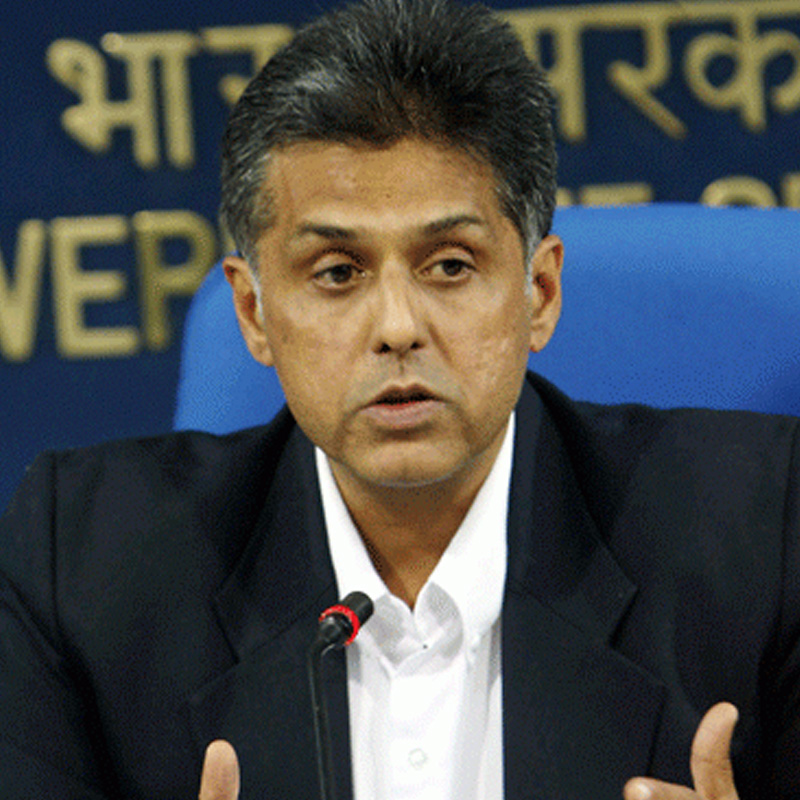
    NEW DELHI: Information & Broadcasting Minister Manish Tewari on Wednesday said he would talk to Telecom Minister Kapil Sibal to impress upon him the need to create a statutory mechanism to address issues related to convergence across media, entertainment and telecom.

    "Convergence across media, entertainment and telecom space specially with digitisation kicking in, is inevitable. Therefore, at some point in time there will have to be an overarching (legal) architecture which looks at it holistically," Tewari told reporters on the sidelines of Convergence India 2013.

    Admitting that convergence is a reality which cannot be ignored, he said: "I will talk to my senior colleague, the minster of telecom (Kapil Sibal) and see if we can work out a modus operandi whereby we can put a statutory architecture on the convergence format."

    Efforts have earlier been made to have a legal framework for convergence of the three sectors. A Convergence Bill was tabled in Parliament more than a decade ago. The bill has sought to create an autonomous commission to regulate carriage of all forms of communications, and for establishment of an appellate tribunal and to provide for matters connected therewith or incidental thereto.

    The bill aimed at promoting, facilitating and developing in an orderly manner the carriage and content of communications (including broadcasting, telecommunications and multimedia). The Convergence Bill had sought amalgamation of Information Technology (IT), Telecommunications and entertainment industry by replacing the Telegraph Act of 1985 and the Indian Wireless Act of 1933.

    Tewari admitted that the convergence bill tabled earlier could not be worked on. "The EGoM (empowered group of ministers) will work on the prevalent conditions," he said.

    Need to encourage production of indigenous STBs

    Tewari said one of the government‘s primary concerns now is to ensure that digital set top box (STB) manufacturing happens in India as the whole process is going to lead to revenue expansion of about $4 to $5 billion, according to a Trai estimate.

    "As we speak today, most of that business is not coming to India. So, that is an overriding priority for us as to how we are able to build an indigenous STB manufacturing model on to it," he said.

    Tewari also said STBs should be inter-operable and wanted enough operators for the consumers to switch to.

  • Trai against allowing govt or govt entities in broadcasting and distribution

    Trai against allowing govt or govt entities in broadcasting and distribution

    MUMBAI: The Telecom Regulatory Authority of India (Trai) has stuck to its November 2008 recommendation that central and state governments or entities owned by them should not be allowed to be in broadcasting and television channel distribution businesses.

    Trai on Friday submitted its recommendations to the Information & Broadcasting (I&B) Ministry on "Issues related to entry of government or government entities into the business of broadcasting and/or distribution of TV channels".

    The I&B Ministry had made a reference to the regulator in November to give its views on allowing central government ministries, central/state government departments, central/state government owned companies, central/state government undertakings, joint venture of the central/state governments and the private sector and central/state government funded entities may in the business of broadcasting and/or distribution of TV channels.

    Trai has also reiterated its view that the government should provide an appropriate exit route to government or government-owned companies which have already been accorded permission to carry on the business of television channel distribution.

    The immediate impact of the Trai recommendation is on Arasu Cable TV Corporation, the Tamil Nadu government-owned company engaged in cable TV distribution business.

    Trai has recommended that suitable provisions be incorporated in the proposed new legislation on broadcasting to provide for an appropriate exit route for such entities which have been already granted permission by the government but are likely to be hit by the proposed disqualifications.

    Trai has also said that the government should further strengthen the arm‘s length relationship between the public broadcaster Prasar Bharti and the central government. Trai said measures should ensure functional independence and autonomy of Prasar Bharti.

    Pending enactment of any new legislation on broadcasting, the disqualifications recommended for political bodies to enter into broadcasting and/or distribution activities should be implemented through executive decision by incorporating the disqualifications into Rules, Regulations and Guidelines as necessary, Trai further said in its recommendations.

    These recommendations are in continuation of the earlier recommendations that it had made in November 2008 following an exhaustive consultation process after the I&B Ministry in December 2007 sought Trai‘s recommendations whether state governments and political bodies should be permitted to enter into broadcasting and distribution activities.

    In the consultation process, Trai had comprehensively examined the issue in the broader context of both central as well as state governments and their respective organs.

    Trai based its recommendations on the Sarkaria Commission report which said a political party controls the executive and there could be "a temptation to use the media wrongly in party interest and not necessarily in national interest".

    While the observations in Sarkaria Commission report were made in the context of the Union Executive, the same logic, Trai says, applies to a state government as the spirit of the observation pertains to the exercise of power and control wielded by the government in question.

  • NBA agrees to release of ratings data only from 9 January

    MUMBAI: News broadcasters Association (NBA) has agreed to have resumption of TAM Media Research’s viewership ratings data of all news channels from 9 January, a deferment of three weeks from the 19 December release date fixed earlier.

    However, TAM, the only ratings provider in India, is yet to hear from the industry bodies including Association of Advertising Agencies of India (AAAI), Indian Society of Advertisers (ISA) and the Indian Broadcasting Foundation (IBF).

    One of the industry body members told Indiantelevision.com that discussions are on and no final decision has been made yet.

    Earlier in the day, TAM said in a statement on its website that, “At the request of the Ministry of Information and Broadcasting and in concurrence with the ISA, AAAI and IBF, data of news channels is being withheld. From week 41 of 2012, data for news channels for all markets will be aggregated with ‘Others’.”

    Accordingly, TAM was to release the later on Friday but decided it would first want to have “quick” consent letters from individual news channels (including members of NBA) stating their agreement with their channel’s viewing being clubbed into the category of ‘others’. Others category includes lesser viewed channels like religious channels and shopping channels.

    In a later development, an official with NBA told Indiantelevision.com that the association has “agreed that TAM resume reporting of viewership data from 9 January, including for individual news channels and for the period since 7 October, no individual news channel data be reported.” NBA has a strong weightage with almost all major news networks as its members, but there are a large number of smaller news channels which are not its members.

    Indiantelevision.com has learnt that no conclusive decision seems to have been taken by the other industry bodies till the filing of this report. TAM has played it safe by asking individual news channels to give their consent.

    TAM had suspended ratings of all genres from 7 October after an agreement with AAAI, ISA and IBF. It was to release data for the nine-week period of suspension on 19 December, but was asked by the Information and Broadcasting (I&B) Ministry to not resume reporting television ratings on the prodding of NBA.

    Also Read:
    Why news broadcasters want TAM to defer ratings

    Govt pushes TAM to defer release of TV ratings data

  • Govt pushes TAM to defer release of TV ratings data

    MUMBAI: The industry will have to wait longer to get to know how audiences watched television for the last nine weeks in a digitised environment. TAM Media Research will not release the data today following the request of the Information and Broadcasting Ministry.

    The decision to defer the data release was taken in concurrence with the Indian Broadcasting Foundation (IBF), Advertising Agencies Association of India (AAAI) and Indian Society of Advertisers (ISA).

    TAM said in a statement that the delay is for a couple of days. The three industry bodies, however, will meet with the I&B Ministry to take a final call.

    The News Broadcasters Association (NBA) particularly feels that the data of the news genre during these nine weeks should be kept dark.

    “At the request of I&B Ministry, Government of India, and in concurrence with IBF, AAAI and ISA, we are delaying the data release to Thursday/Friday. The reason for doing so is that the Govt. of India has requested us to withhold release of news channels data by two or three days. The industry is meeting with the ministry to take a decision,” TAM said.

    The fate of the data release will only be known after the I&B Ministry and the three industry bodies meet.

  • Kolkata to go completely digital from 28 December

    Kolkata to go completely digital from 28 December

    MUMBAI: Kolkata‘s cable television will go completely digital from 28 December.

    The Information and Broadcasting (I&B) ministry has cracked the whip for switching off of all analogue television signals in the West Bengal state capital by 27 December.

    The multi-system operators (MSOs) will begin the process of switching off of analogue signals from 16 December. The second genre-wise switch off will be on 20, followed by 23 and finally 27 December when the Bengali language channels also go dark on analogue cable.

    "The I&B ministry has said that from 16 December onwards till 27 December all the analogue channels should go off air and only digital should be activated (from 28 December)," Siti Cable Kolkata director Suresh Sethia told Indiantelevision.com.

    Cable television networks in Mumbai and Delhi have already gone totally digital. According to a TAM survey, set-top boxes (STBs) required for digital reception have been deployed in 93 per cent of cable TV homes in Mumbai, 97 per cent in Delhi and 70 per centin Kolkata.

    The I&B had mandated compulsory switch to digital delivery of cable television in the four metros of Mumbai, Delhi, Kolkata and Chennai from 1 November. The ministry did not push for switching off of analogue signals along with Mumbai and Delhi as a large number of homes in Kolkata were still on analogue then. The situation has now changed. Over 75 per cent of cable TV homes in Kolkata now have STBs installed.

    Sethia said almost 85 per cent of Siti Cable‘s subscribers now have STBs installed.

    Manthan Broadband services, a regional multi-system operator, is also pushing for digitisation. "We have received a communication from the I&B ministry and will be switching off analogue signals completely by the deadline specified. We have also worked out a lower-priced package for those subscribers who hold a BPL (below poverty line) card as desired by the West Bengal state government," said Manthan business head Samrat Sen.

    Chennai is the only city still to go digital as the Madras High Court is hearing a petition filed by associations of cable operators. The court has scheduled a hearing in the last week of this month.

  • Hinduja group plans HITS platform; seeks licence from I&B Ministry

    Hinduja group plans HITS platform; seeks licence from I&B Ministry

    MUMBAI: Hinduja Group, which has interests in cable TV distribution business through IndusInd Media and Communications Ltd, is planning to launch Headend-In-The-Sky (HITS) platform for smaller cable TV operators to offer digital service.

    The HITS business will be under Grant Investrade, an investment arm of the Hindujas. Grant Investrade holds 6 per cent stake in IMCL.

    Grant Investrade has applied to the Information and Broadcasting ministry for a licence to operate HITS.

    "We applied for HITS licence about two weeks back. We feel that there will be a huge demand for such a service in the third and fourth phase of digitisation which will spread over small towns," IMCL managing director Ravi Mansukhani tells Indiantelevision.com.

    Former Sun Group chief executive officer Tony D‘Silva will head the HITS business for the Hindujas. A veteran in the distribution business, D‘Silva has experience in both the broadcasting and the direct-to-home (DTH) side of the business. He was earlier heading Sun Direct, Kalanithi Maran‘s DTH company. Prior to that, he was headling Star India‘s distribution business.

    Wouldn‘t it have made more sense for the HITS business to reside in IMCL? "We are looking at creating a neutral platform which cable operators and other MSOs can also tap. So we decided that it be housed under a separate company," explains Mansukhani.

    IMCL is in talks with private equity investors to raise $75 million to fund the second phase of cable TV digitisation. The company plans to deploy four million set-top boxes (STBs) on top of the 1.5 million it is expecting to achieve in the first phase of digitisation.

    Building a HITS platform will involve huge investments as it requires transponder space on satellite, encryption systems and digital set-top boxes. Noida Software Technology Park Limited (NSTPL), part of the Jain TV Group, is planning to invest Rs 15 billion over five years in its Headend-In-The-Sky (HITS) project. The HITS service will operate under the JainHits brand.

    The government has mandated digitisation across India by 31 December 2014. The second phase in 38 more cities will be by 31 March 2013, following the switchover to digital delivery of cable TV in Mumbai, Delhi and Kolkata from 1 November. The revised deadline for switchover to digital delivery in Chennai is likely to be decided by the Madras High Court.

  • Advertisers want deals to reflect digitisation gaps

    MUMBAI: Advertisers are pressing for structuring of advertising deals with television broadcasters to reflect the likelihood of a section of homes going without cable TV connections in the four metros as the shift to digital delivery of television channels happens from 1 November.

    The advertising industry expects about 15-20 per cent of television households to remain disconnected for some period from 1 November. Also, advertisers’ communications in the run up to the deadline for digitisation will not reach to the fullest extent as broadcasters have begun to switch off analogue channels genre wise from 10 October and would end the process of complete withdrawal of analogue TV channels in the four metros on 22 October with the most watched Hindi general entertainment channels (GECs).

    Allied Media COO PM Balakrishnan says, “There is lot of thinking happening at the backend. I don’t think advertisers are panicking.
    Even the deals are getting structured considering all these things.”

    The CEO of a large media buying and planning agency, who did not want to be quoted, said, “Advertisers may do well to analyse the realities of digitisation based on data available and fine-tune their media plans for the festive season.”

    The Information and Broadcasting Ministry on Wednesday said an average of 77 per cent of cable TV homes in Mumbai, Delhi, Chennai and Kolkata have switched to digital with the installation of set-top boxes (STBs), led by Mumbai with 99 per cent digitisation. According to the ministry, Chennai is the laggard with 59 per cent cable TV homes converted to digital.

    Advertising, particularly by consumer durable companies and automobile makers, peaks during Diwali festival when the consuming class spends the most.
    Havas Media India and South Asia CEO Anita Nayyar says, “The timing is very bad. The advertisers and media agencies are not going to be happy considering the environment currently. This was the period when we were looking at some traction at least. This has been a year of reduced ad spends and basically a slowdown year. Now there is uncertainty about the reach of the channels in the metros. The deals will have to be re-packaged.”

    Advertising community is also doubtful about the government’s claim of 77 per cent average digitisation in the four metros. Cable operators in Chennai and Kolkata are asking for extension of the digitisation deadline as they fear a significant percentage of homes would be without cable TV connection after 31 October.

    Lodestar UM COO Anamika Mehta says, “The economy has been sluggish, so all marketers were looking at the festive period to drive sales. TV obviously takes the big chunk of advertising. Now on TV many marketers will play safe.”
    Adding to this, OMD COO Haresh Shriyan says, “Whatever genre broadcasters will pull out, there are companies which are advertising on it. It will have serious implications on them in all the four metros. All this will certainly reflect on the ratings and reach, if executed. The advertisers now will have two options. One is that if the reach comes down and if the ratings and connectivity is impacted, advertisers will seek to have compensation from the broadcasters. They have paid when everything was normal but today it isn’t. Also, if this is the scenario, if the reach is impacted, if people don’t get to see their ads, the advertisers and agencies need to recommend a boost of plan for these markets.” 

    There is also a faction of media planners that feels the advertisers need not panic. If the current figures are to be believed, then the percentage of media darkness will be small compared to the earlier estimates. Madison Media CEO Basab Datta Chowdhury says, “Given the current level of penetration, it is only 20 per cent of homes that will be without cable TV connections. 100 per cent penetration won’t happen, we all know.”

    The important point to consider here is what part of the estimated 20 per cent media dark homes constitutes the TG. The advertisers’ ire on the pull out of analogue signals will depend on how much of their TG is being excluded from the reach.

    According to Madison’s Chowdhury, there isn’t much to worry in that case. “Right now, we are talking about 20 per cent of the homes (in media darkness). Also, if we extrapolate IRS figures onto the current penetration of digitisation, then it is essentially the Sec D and E homes. Nearly 95 per cent of the communication is targeted at the Sec A B and C viewers,” she says.

    TAM’s ratings

    If the industry banked on TAM ratings for planning and estimates earlier, the data becomes all the more important now in view of the genre-wise switching off of analogue signals. Nayyar says, “What TAM does post 1 November will be known only after the meeting next week. But till 31 October, TAM should continue giving ratings. This will serve two purposes — we will know the reality of digitisation figures in the metros. Secondly, we will know how much media darkness is prevalent in the metros.”

    Representatives from Advertising Agencies Association of India (AAAI), Indian Society of Advertisers (ISA) and Indian Broadcasting Foundation (IBF) would be meeting TAM Media Research on 15 October to discuss issues arising out of digitisation and the likelihood of some homes remaining without cable TV connections.

  • I&B Ministry seeks to placate irate film fraternity over IFFI

    I&B Ministry seeks to placate irate film fraternity over IFFI

    NEW DELHI: The Information and Broadcasting Ministry has assured the film fraternity that it had never intended to keep out representatives from the organisation of the International Film Festival of India.

    I&B Joint Secretary (Films) Raghavendra Singh told a delegation of the Film Federation of India that the he would examine their grievances but requested them to cooperate with the organisation of the Festival, being held in November in Panaji, Goa.

    Singh, an Indian Administrative Service officer of the 1983 batch from the West Bengal cadre, said he had been in the Ministry for just a few weeks and would study their issues.

    The FFI was represented by its President Vinod Lamba, Secretary General Supran Sen, and Vice-Presidents L Suresh and Ravi Kottarakara, Rajendra Singh from Delhi, and Ramesh Tekwani from Mumbai among others.

    The move comes just over a week after the FFI, the apex body of the film industry, decided to boycott all activities of the IFFI to protest its being by-passed and not being called to any meeting of the Steering and other Committees.

    The members present told Raghavendra Singh that they were told of the Industry Coordination Committee meeting as late as August-end by which time some major discussions that are normally taken at this meeting had already been taken by the Directorate of Film Festivals and IFFI Secretariat.

    The Federation in its Annual General Meeting earlier this month in Mumbai unanimously decided that FFI will not participate in any of the activities of IFFI.

    FFI has always been an essential component of the Steering Committee and its members actively involved in various other committees and sub-committees such as Theatre, Technical, Hospitality and others. But this has not happened in recent years and ‘FFI can only assume that either the committees have been discontinued or FFI has been kept out of them.’

    The IFFI by its very tenets is a festival held jointly by the Government and the Indian Film Industry, and the Film Federation of India being the apex body of the industry ‘has been playing their part with total sincerity and efficiency.’

  • Digitisation: Ad deals may be reworked on short term basis

    Mumbai: Advertisers may have to enter into transitory arrangements with broadcasters if some homes are left without digital cable connections in the four metros after 1 November.

    The government has mandated compulsory end to analogue delivery of television channels after the digitisation deadline, resulting in the possibility of a significant number of cable TV homes going without television signals for failing to have set-top boxes (STBs) installed to receive digital television signals.

    “In the worst case scenario, when we do have 30 per cent dark homes in the four metros, there may be need to rework the commercial deals on a short term basis,” Leo Burnett Indian sub-continent chairman and CEO Arvind Sharma told Indiantelevision.com.

    The Information & Broadcasting (I&B) Ministry last week said 68 per cent of cable TV homes in the four metros of Mumbai, Delhi, Chennai and Kolkata have already installed STBs to receive television channels in digital form. It said Mumbai leads the progress in digitisation with 95 per cent homes digitised, followed by Kolkata with 67 per cent. In Delhi, 53 per cent of the cable homes have switched to digital and in Chennai, 49 per cent.

    The number of households, however, is based on census data and a broad section of the broadcast industry does not believe this reflects the actual estimate of the STB requirement in these four metros.

    “In my opinion, digitisation will ramp up and only in the interim period will we as industry (advertisers, agencies and broadcasters) have to work out short term commercial deals. More importantly, the events of the next 40 days will be crucial,” Sharma said.

    So will TAM, the television audience measurement agency, report from digital homes only in the four metros after 1 November? A TAM spokesperson said: “TAM started reporting Digital TV Homes viewing data since 2008 when Digitization crossed threshold levels in some of the markets. TAM currently reports data from Non-C&S households (Terrestrial Antenna reception mode)and two types of C&S households: Digital C&S and Analog C&S – depending on whether households receive channels through a Set-Top Box (STB) or without Set-Top Box.

    As per TAM JAN 2012 TV baseline report, almost 35% of All India C&S homes have already adopted Digital way of watching TV, with 1/3rd of them coming from Urban markets. The government, by its DAS notification, has mandated that from November 1st 2012, C&S channels can be legally received in the Municipal Corporation (MC) limits of the four major metros (NCR for Delhi) only through a Digital STB. Therefore, from NOV 1st, TAM will not report data of channels viewed in TV Homes that are not received through a Digital STB in these areas (exception being, viewing happening in TV Homes through Terrestrial Antenna signal reception)”.

    The spokesperson added: “In other words, TAM will only be reporting Digital TV viewing data and Non C&S TV viewing in the DAS implemented areas of the 4 City. Data from Homes in the non-MC area of the cities (which does not fall under Phase I of DAS implementation) will continue to be reported as usual. We will be sending out a formal communication to our clients in the coming few days spelling out the details.”

    As a broad section of the industry feels that a total 100 per cent STB penetration will not be possible on day one itself (1 November), there will be some empty homes. If TAM sticks to its current statement, this will mean the analogue coverage in the four metros will not be reported by TAM. So what happens if cable TV operators transmit the analogue signals illegally (take digital signals through a STB and convert it through a modulator for carriage on their analogue networks)? The government, however, is determined to implement digitisation and may take recourse to strict action by arresting the ‘violators‘ under criminal offence.

    Media agency ZenithOptimedia CEO Satyajit Sen fears some kind of temporary disruption in business. “We presume that there will be disruption in the business. In the four metros, there aren‘t enough STBs to make them (cable TV homes) all go digital. Majority of the consumption of various categories happens in the four metros. Our clients will demand for TAM ratings and hence we will also ask for it,” Sen said.

    Lodestar UM CEO Shashi Sinha, however, is not disturbed by the disruption in TV viewership. “People who matter to us are the consuming class and they will switch to digital. May be in the beginning for two to three months, we will see some impact but gradually everyone will switch to digital. At least the consuming class will by the last week of October,” he said.

    Broadcasters to switch off analogue, Rajat Sharma to work in interests of viewers

    Broadcasters are largely confident of a smooth changeover to digital delivery of television channels from analogue. Like Lodestar‘s Sinha, Times Television Network MD & CEO Sunil Lulla too felt there is no need for any worry as the first phase of digitisation is happening at good speed.

    “Digitisation will happen. People who want to get STBs will get those who don‘t want won‘t,” Lulla said.

    The government is dead serious this time around in ensuring digitisation happens in the four metros by the deadline of 1 November and that all the stakeholders are brought on board. It has issued orders directing broadcasters to switch off analogue decoders in the four metros, unlike in 2003 when certain pockets in the metros were asked to shift to digital delivery of television channels.

    The government has gone a step ahead and made carriage of analogue television signals after the digitisation deadline in the four metros a criminal offence.

    BAG Films CMD Anurradha Prasad said, “All broadcasters want digitisation and, hence, we all will be switching off our analogue signals from 1 November. This is an order of government.”

    An NDTV spokesperson said, “The government order is sacrosanct and the broadcasters are adamant on switching off the analogue signal from 1 November.”

    India TV chairman and editor-in-chief Rajat Sharma sounded a different note. He said, “For all stakeholders — IBF, NBA, I&B Ministry and MSOs, the viewers‘ interest is foremost. We will take a call keeping in mind that the viewer doesn‘t suffer.”

    Pay TV channels will be more than willing to shift to digitisation as early as possible as it will mean a rise in their subscription revenues as the number of cable television subscribers disclosed by local cable operators will rise. In analogue, cable operators under-report the number of cable TV connections and thereby cause a loss of revenue for broadcasters with pay TV channels.