Tag: I&B ministry

  • Calcutta HC extends stay order on Digicable Comm’s licence cancellation

    Calcutta HC extends stay order on Digicable Comm’s licence cancellation

    KOLKATA: Granting relief to Digicable Comm Services once again, the Calcutta High Court has further extended the interim stay on the cancellation of the registration of the Kolkata-based multi system operator (MSO), till 31 October.


    As reported earlier, the MSO had got a stay order on the cancellation of the registration of its licence till 29 August.


    The case was again up for hearing on 29 August. “The matter was heard by the bench comprising Justice Nadira Patheria and the stay has been further extended till 31 October 2014,” said Digicable Comm Services VP – operations and technology Lokesh Agarwal.


    Last month, the Ministry of Information and Broadcasting (MIB) had cancelled the registration of Digicable Comm.
     

    Digicable counsel had earlier argued in the court that the MIB only stated the reason for cancellation of registration as not receiving security clearance from the Home Ministry. However, it did not give the reason for denial of security clearance. The Ministry counsel, in his response said that the reason for non- clearance cannot be disclosed to Digicable for security reasons.


    The court observed that when the MSO received its DAS licence in 2013, it was subject to security clearance from Home Ministry and the same has been denied in the order passed last month. Subsequently, Digicable Comm was asked to stop operations within 15 days.

     
    Digicable Comm however appealed to both the Home Ministry and High Court in order to put a stay on the cancellation.

     
    The company is a joint venture between Digicable (51 per cent) and Kolkata-headquartered Multicar Group (49 per cent) and was formed in 2009 to gain foothold in the West Bengal market.


  • Community Radio Stations to get extension for up to 5 years at a time

    Community Radio Stations to get extension for up to 5 years at a time

    NEW DELHI: Even as the term of permission for community radio stations (CRS) should continue to be five years, the extension should also be for five years at a time.


    In recommendations made relating to community radio stations in the country, the Telecom Regulatory Authority of India (TRAI) has said CRS seeking extension should submit an application and verification to the terms and conditions of the permission in the fourth year of operation.


    CRSs should be allowed to broadcast news and current affairs content, sourced exclusively from AIR, in its original form or translated into the local language/ dialect. It will be the responsibility of the CRS permission holder to ensure that the news is not distorted during translation.


    CRSs should be allowed to take advertisements from other sources to encourage self-sustainability and enhance its relevance to the community, and the stipulation that Directorate of Advertising and Visual Publicity approved rates are their lowest rates and cannot be offered to any other agency should be relaxed.


    The Information and Broadcasting Ministry should develop a performance evaluation format in consultation with the stakeholders and place it in the public domain.


    CRSs applying for extension beyond 10 years should submit the performance evaluation report, duly filled in, along with their application one year before end of the permission period. The application for extension will be considered along with other fresh applications, if any.


    The same procedure will be adopted for all applications for extension beyond 10 years of operation.


    The duration of advertisement on a CRS should continue to be five minutes per hour.


    The Ministry should establish an online ‘single window’ system that will reengineer and integrate the entire process from the stage of filing application with MIB; grant of the Wireless Operating Licence (WOL) by WPC and signing of the GOPA. The online system must provide feedback on stage and status of the application in accordance with the time-lines already prescribed by the Ministry.


    The National Disaster Management Authority in consultation with the I& B Ministry and WPC establish detailed guidelines for use of CRSs in disaster management operations. The guidelines should include the procedure to be followed in case relocation of an existing CRS is required or for the establishment of a new CRS in the disaster affected region.


    As on 1 July 2014, 200 Grant of Permission Agreements (GOPA) have been signed. Of these 170 CRSs are operational 101 CRSs of which are run by educational institutes and universities, six by Krishi Vigyan Kendras and the rest 63 by civil society organisations. Currently, CRSs in rural and remote areas are generally being run by NGOs and campus CRSs by educational institutions mostly in urban and semi-urban areas.


    The TRAI recommendations are in response to a letter sent by the government on 8 January. As validity of GOPA for some of the CRSs had already expired on completion of five years, TRAI suggested some interim measures on 23 January. TRAI also issued a Consultation Paper on the subject on 21 May.


    The government announced its policy for the grant of permission for setting up of CRS in December 2002. Under those guidelines well established educational institutions, including IITs and IIMs, were permitted to setup CRSs.


    In December 2006, the government revised the policy for CRSs, bringing non-profit community based organisations, apart from other educational institutes, within its ambit. Non-profit organisations like civil society and voluntary organisations, state agriculture universities (SAU), Indian council of agricultural research (ICAR) institutions, Krishi Vigyan Kendras, registered societies and autonomous bodies and public trusts registered under Societies Act or any other such Act relevant for the purpose, were permitted to operate CRSs.


    The period of permission was increased three years to five years. All the operational CRS permission holders under the 2002 guidelines were permitted to migrate to the new policy regime without any financial implications.
  • I&B Ministry issues new deadlines for DAS phase III and IV

    I&B Ministry issues new deadlines for DAS phase III and IV

    NEW DELHI: It is official now. The new dates for digitisation of cable television in the entire country have been announced. While indiantelevision.com was the first to write about the extension in the date given for digitisation of phase III and IV, Information and Broadcasting Ministry officials have said that while phase III has been postponed to December 2015, phase IV can be completed by December 2016. The move has been taken to allow great indigenisation of production of Set Top Boxes (STB) to meet the demands of digital addressable system (DAS).


    Earlier, the government had set 31 December 2014 as the date by which the cable sector across the country would be completely digitised.


    In the first two phases of digitisation, which included cable TV households in the four metros and other major cities, most of the STBs that were installed had been imported from other countries.


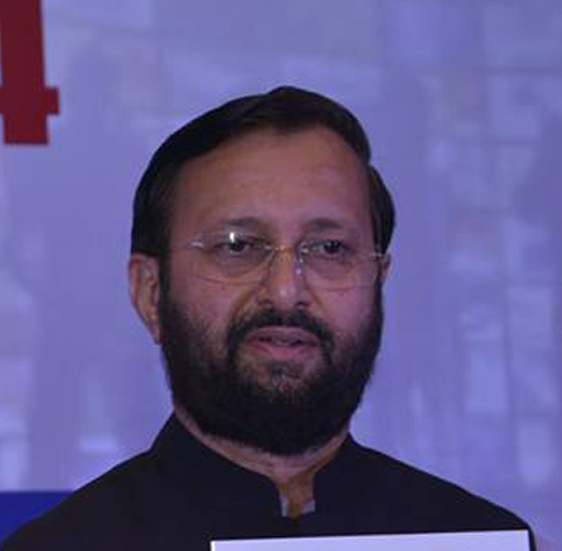
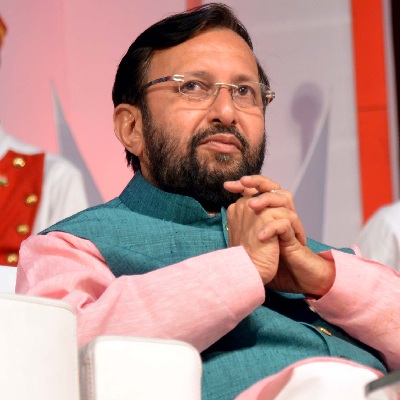
    After he took over as Information and Broadcasting Minister, one of the major areas of focus of Prakash Javadekar has been indigenisation of the digitisation drive and Ministry sources said the new dates are in keeping with inputs supplied to the Minister in this connection.


    The Ministry has made efforts to get STBs declared as Telecommunication Network Equipment which will enable domestic manufacturers to get exempted from certain taxes, an official said.


    Nearly 110 million STBs are required to be installed in cable TV households in the remaining two phases of digitisation and the extended deadline will ensure that the domestic manufacturers prepare themselves and meet this demand, officials said. 

  • Contribution of filmmakers from north east appreciated globally: Julka

    Contribution of filmmakers from north east appreciated globally: Julka

    NEW DELHI: Information and Broadcasting secretary Bimal Julka has lauded the role played by cinema in the cultural integration of the country with the north-eastern states and said it is the rich cultural legacy of the north east cinema from renowned film personalities which creatively impact the young minds of the country.


    Tracing the journey of films from the region, Julka said story lines, professional and technological expertise of the industry of films from the region have been appreciated at the global stage.


    Speaking at the closing ceremony of the north east film festival fragrances, Julka said the participation of stakeholders associated with the film industry was critical. He invited suggestions from the people for the approach, methodology and philosophy regarding the future roadmap of convening such festivals. 


    Appreciating the efforts and initiative of the I&B Ministry, Meghalaya Governor K K Paul said it is the fragrances from north east which brought the diverse culture of the region to the centre stage. Dr Paul added that the perceived gaps among the cultures could be filled with the appropriate and positive messaging from radio, TV and films.


    The three-day long film festival concluded with the screening of Pradip Kurbah’s film RI. The screening of the closing film was preceded by a cultural event that saw classical pianist Nise Meruno’s performance and rendition of Naga folk-based choir by ‘Nagaland Singing Ambassadors’. 

  • Only pay TV channels to facilitate feed to EMMC by 25 August

    Only pay TV channels to facilitate feed to EMMC by 25 August

    NEW DELHI: The Government has clarified that free to air television channels are not required to provide one set of professional IRD for each TV channel which can give SD-SDI output (in case the channels are HD then HD-SDI output) along with one spare IRD per bouquet to the electronic media monitoring cell (EMMC) by 25 August.


    Issuing a second reminder to the broadcasters, the Information and Broadcasting (I&B) Ministry said that pay TV broadcaster / service provider should provide viewing card (VC) with matching CAM module for interface with demodulators to decrypt and demodulate the channels over lP.


    This reminder by the I&B Ministry is in furtherance of the earlier letter of 22 July and letter of 14 August.


    The Ministry informed all TV channels that any failure to provide the module to EMMC within the time schedule will be viewed seriously.


  • Telangana MSOs continue to boycott two news channels

    Telangana MSOs continue to boycott two news channels

    MUMBAI: The Telangana Multiple System Operators (MSOs) on 11 August 2014 decided to continue blockade of TV9 and ABN Andhra Jyothi news channels, a mediahouse reported.


    Federation of Telangana MSOs’ president M Subhash Reddy, charged the channels of telecasting objectionable content that hurt the sentiments of Telangana people and said, “Even the Telangana state assembly took cognisance of the objectionable content.”


    The Federation maintained that they had presented their case to the High Court and responded to a notice served by the Telecom Regulatory Authority of India (TRAI). “The TRAI sought explanation on why we had stopped the two channels without the mandatory 15-day notice and we explained the reasons. There was pressure on us from the Telangana people and we had to act,” the president of the federation said.


    At a meeting attended by district representatives, the Federation of Telangana MSOs said they are planning to send a delegation to the I&B minister to explain to him the events that led to the cable operators blocking these two news channels.


    Reddy also added that since the channels are not doing anything to find a resolution to the problem, the MSOs will stick to their decision of blocking the channels.

  • IIS rules amended for a principal DG position in six media units of I&B Ministry

    IIS rules amended for a principal DG position in six media units of I&B Ministry

    NEW DELHI: Seven posts in six media units of the Information and Broadcasting Ministry will be headed by officials of the rank of principal director general, though only one will be in the higher grade and the others will be in the selection grade.


    Although it has still not made any official announcement about changes made in the top posts of some its media units including the Press Information Bureau (PIB), the Ministry has now placed on its website a copy of the Indian Information Service (Group A) amendment rules 2014 as notified in the official gazette late last month.


    According to the amendments, one post in each of the six media units – news services division of All India Radio (AIR), director general of Doordarshan, the Registrar of Newspapers in India, the Directorate of Advertising and Visual Publicity, Directorate of Field Publicity, and two posts in the Press Information Bureau (PIB) will be held by principal director generals.


    The designation of the incumbent holding the higher grade will be principal director general and it will remain unchanged irrespective of the media unit, except in the Registrar of Newspapers of India where the post will be designated as press registrar.


    The insertion of the amended rules comes within two days of the announcement of Neelam Kapur, who had been holding the post of principal director general of media and communication of the PIB, being shifted to the directorate of field publicity and being replaced by Frank Noronha who had been posted in DFP. In another significant change, Archana Dutta who is director general of news in AIR was given additional charge of DD News, whose head SM Khan was placed on compulsory wait.


    The amendment also detailed the necessary changes that were being made in the rules of 2013.


    Highly placed sources had told indiantelevision.com that while Kapur has not been demoted as she retains her position as principal DG which is of secretary level; the DFP is seen as an office lower in stature to that of PIB, as the head of that office serves as the official spokesperson of the government.

  • 106 MSOs registered says Javadekar; Arasu application under review

    106 MSOs registered says Javadekar; Arasu application under review

    MUMBAI: The government is doing well in the area of registering multi system operators (MSOs), especially in those areas where digitization has been implemented. This was stated by information & broadcasting minister Prakash Javadekar in a written reply in th Rajya  Sabha. He revealed that 106  MSOs have  have been granted permanent registrations by his ministry to enable them to operate in digital addressable system (DAS) zones.


    He added that the I&B ministry had received a letter from the Tamil Nadu chief minister J Jayalalithaa to also register the government run MSO the Tamil Nadu Arasu Cable TV Corp  Ltd to allow it to operate in the DAS notified areas of the southern state.


    He disclosed that his ministry was examining Arasu’s application in the light of the TRAI’s recommendations regarding the entry of government entities in the broadcasting and distribution activities.


    The TRAI has been consistent in its stand that state government entities should not be allowed to enter the business of broadcasting and distribution of TV channels. It had made these recommendations in its paper on Issues related to entry of certain entities into Broadcasting and Distribution Activities in December 2012, and reiterated them in its consultation paper on monopoly/market dominance in cable TV in June 2013.

  • Gov asks Prasar Bharati to work out action plan for implementing Sam Pitroda Committee report: Javadekar

    Gov asks Prasar Bharati to work out action plan for implementing Sam Pitroda Committee report: Javadekar

    NEW DELHI: Prasar Bharati has been asked to prepare an action plan for undertaking the studies/reviews/audits on recommendations of the Sam Pitroda Committee.


    Information and Broadcasting Minister Prakash Javadekar told Parliament today that the pubcaster had been asked to apprise the Ministry about the outcome reports.


    In his reply, the Minister said that the report included recommendation of a study of independent sources of finances of Prasar Bharati.


    Meanwhile, a senior Prasar Bharati official who did not want to be named said that the Ministry should first clarify whether it has accepted or rejected the Pitroda report.


    The Pitroda Committee set up to review the working of Prasar Bharati had in its report in January this year stressed the need for constituting a Parliamentary Committee, as originally envisaged in the Prasar Bharati Act 1990 to ensure that the pubcaster discharges its duties in accordance with the provisions of the Act and Government defined duties.


    In the report submitted to the then Information and Broadcasting Minister Manish Tewari, it had recommended reorganisation of the pubcaster’s Board to make it a professionally managed body and make it more effective in guiding the organisation.


    Pitroda noted that Prasar Bharati’s vision must be to become a genuine ‘public broadcaster’ as against a ‘government broadcaster’.


    The report said there is need to effectively complete transfer of ownership and management of assets and human resource to Prasar Bharati ‘to make the organisation administratively and financially autonomous of government.’


    A regulatory body has to be set up to ensure public accountability of Prasar Bharati with respect to all content broadcast on its television and radio networks. The regulatory body should be a sub-committee of the Prasar Bharati Board.


    Interestingly, the Committee has suggested setting up of Prasar Bharati Connect (PBC) as the third arm of the public service broadcaster, independent of Doordarshan and All India Radio, to expand the social media. PBC should be mandated to manage the various social media initiatives of all the wings of Prasar Bharati. It also wants a social media strategy of Prasar Bharati.


    The Committee was set up on 28 January last year and had decided to set up 11 working groups on different issues and has now come out with a report on eight main areas: governance and organisation, funding, human resource, content, technology, archiving, social media and global outreach.


    It has said that in addition to the public broadcasting function, there is a distinct requirement for the state to broadcast messages and accomplishments of public interest which can be met by using existing public and private broadcaster infrastructure.


    The Committee suggests amending the 1990 Act was necessary so as to impart genuine and effective autonomy to the organisation.


    Apart from Pitroda who is advisor to the Prime Minister of India on Public Information Infrastructure & Innovation and chairman of the National Innovation Council, the other members include additional secretary and nominated Prasar Bharati Board member J S Mathur. National Innovation Council member Shekhar Kapur, former I&B secretary Asha Swarup, Vikram Kaushik who is a business strategist and brand advisor and part-time member on the Prasar Bharati Board; M P Gupta from the Indian Institute of Technology in Delhi, B K Gairola who is mission director (e-Governance) and Prasar Bharati CEO Jawhar Sircar who was the convener.

  • DTH ops plea: Exclude content cost from AGR

    DTH ops plea: Exclude content cost from AGR

    MUMBAI: The Telecom Regulatory Authority of India (TRAI), last week, came out with the much needed recommendation paper on new DTH licences. The issue had come into light when India’s oldest DTH operator Dish TV was nearing the end of its 10 year licence that was given to it when it started operating.


    While the need for fresh and transparent rules came up, TRAI issued a consultation paper in October 2013 and it was just last week that it came up with its recommendation paper on the same. What most DTH operators were glad about was the reduction in the annual licence fee from 10 per cent of gross revenue (GR) to 8 per cent of adjusted gross revenue (AGR). This would mean that the DTH industry in all will save around Rs 200 crore to Rs 300 crore.


    The AGR is calculated after deducting service tax, sales tax and entertainment tax from the GR. TRAI states that since there has been growing convergence of telecom and broadcast, the 8 per cent is aligned to the unified licence (UL) in the telecom field. The recommendation paper states that in the UL, AGR is arrived at by excluding taxes and charges of ‘pass through’ nature. Even though TRAI states that there is no such charge of ‘pass through’ nature for DTH players, the latter disagrees.


    “We were hoping for either a 6 per cent of AGR or 8 per cent of AGR with ‘pass through’ of content cost,” says Videocon d2h CEO Anil Khera. When a few months ago, the Ministry had sent notices to all the DTH operators to pay the licence fee dues, they had taken the issue to court. Tata Sky CEO Harit Nagpal had then said that the Ministry of Information and Broadcasting had itself asked the Finance Ministry to reduce the fee from 10 per cent to 6 per cent.


    The paper says that two DTH operators had recommended that for calculating AGR, deduction should be made for not just service tax, sales tax and entertainment tax, but also for content costs, transponder costs, hardware sales revenue etc.


    Dish TV CEO and soon to be DTH Operators Association president RC Venkateish says that the fight for exclusion of content cost isn’t over yet. He says, “We will approach the Ministry of Information and Broadcasting to press for content cost to be excluded from the AGR. Like we had said, either it should be removed or else the licence fee should be brought down to 6 per cent of AGR instead of the recommended 8 per cent of AGR.”


    The parliament was told in April 2013 that six private DTH operators paid Rs 307.8 crore as licence fee to the government for the year 2011-12. According to figures furnished in the reply to the Parliament, Tata Sky paid licence fee of Rs 79.3 crore in 2011-12 as against Airtel Digital’s Rs 61.87 crore and Dish TV’s Rs 30 crore. Sun Direct paid Rs 36 crore, Reliance Big TV paid Rs 9.5 crore, and Videocon d2h paid Rs 5 crore.


    For now, the recommendations are pending with the Ministry for approval.