Tag: I&B ministry

  • Phase III of digitisation likely to begin from April 2015: Javadekar

    Phase III of digitisation likely to begin from April 2015: Javadekar

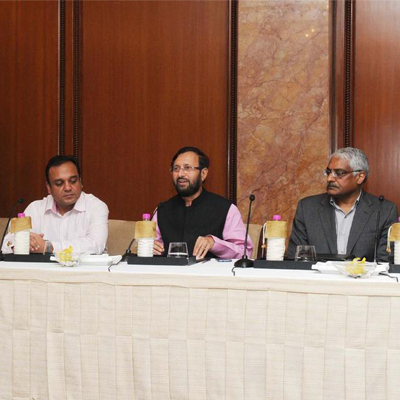
    NEW DELHI: Just two days after the Information and Broadcasting (I&B) Minister Prakash Javadekar officially announced the extension of deadlines for phase III and phase IV of digitisation, he has now announced that the phase III of digitisation is likely to begin from April 2015 and will end the same year in December. “And phase IV will commence as soon as the phase III is completed,” Javadekar said.


    The I&B Minister made the announcement at the ongoing CII Big Summit 2014. “There is some confusion with regards to the extension of digitisation dates.  Tentatively, it will start from 1 April 2015, the final decision on this will be taken soon,” he added.


    The Ministry will also form a committee consisting of all the stakeholders. “So unlike what people feel, we are not delaying digitisation. Our commitment is having a ‘Digital India’. Even a household in a remote village has the right to experience digital viewing,” he informed.


    He also asked the direct to home (DTH) and multi system operators (MSOs) to advertise to the consumers how they are selling expensive set top boxes at cheaper rates. “If the customers understand that they are benefitting with digitisation, they will be supportive of the action,” said Javadekar adding that digitisation is on track.


    Elaborating on the theme of the summit: ‘Monetising strategies: The tryst for a $100 billion Indian M&E industry’, he said, “Aiming low is a crime. So an industry which in 2014 is already a $50 billion industry, cannot say that by 2020, it will become a $100 billion industry. This is not correct. We must aim high. This industry has immense potential to grow.”


    Javadekar in order to boost the fraternity said that no one had thought in 1992 when cable TV started that so many crore of households will be connected to cable, but it happened. No one had also thought that people would pay anywhere between Rs 200 to Rs 500 for entertainment, but people are paying. “Entertainment has become a necessity today and so people are ready to spend. So $100 billion is achievable and so we need to aim high,” he said.


  • I&B Ministry explains to PMO its reasons for postponing digitisation dates

    I&B Ministry explains to PMO its reasons for postponing digitisation dates

    NEW DELHI: The Information and Broadcasting Ministry feels that digitisation is a tool to empower the people and not create difficulties, and therefore does not agree that it will create any setback to the Digital India Plan.


    Ministry sources told indiantelevision.com that this had been conveyed by the Ministry to the Prime Minister’s Office (PMO) in response to the communication to PMO by Telecom Regulatory Authority of India chairman Rahul Khullar.


    The sources also pointed out that the pace of digitisation had slowed down over the past year due to lack of adequate publicity and paucity of fund allocation. 


    The Ministry said cable TV digitisation was only a small though major part of Digital India.


    The main purpose was not to delay digitisation of cable television networks but to encourage greater indigenisation of both set top boxes and other equipment, the sources informed.


    The dates proposed by the Ministry were only the outer limit and every effort would be made to ensure digitisation of cable TV is achieved before that. It was also pointed out that the consumer’s capacity to pay was of great importance in the last two phases which were reaching out to semi-urban or rural areas.


    It was also emphasised that TRAI was being consulted on the proposal about the new dates and the views of the regulator would be taken into account.


    Khullar in his note to the PMO has said staggering implementation of the cable TV digitisation plan will be a major setback to the Digital India plan.


    He said, “For the last six months, we have been working on phase-III and phase-IV. If implementation is now staggered, it will be a body blow to the project, primarily because momentum will be lost and it is truly very difficult to enforce compliance countrywide.”


    Under the current plan, the third phase of the cable TV digitisation plan is expected to end on 30 September, and phase IV by 31 December this year, while the Ministry feels the new dates should be December 2015 and December 2016 respectively.


    “Should this happen, it will be a major setback to digitisation in the country. Further, a huge effort was made by TRAI to enforce compliance. We encountered significant difficulties in ensuring that phase I and phase II were effectively completed,” the TRAI chief wrote.


    There are 100 million homes with cable TV connection of which 20 million are digital. In addition, there are 56 million DTH homes. This is more than the fixed line telephony subscriber base. Digitisation would enable cable TV networks to be used for two-way communications, a pre-requisite for internet services.


    TRAI said that digitisation offers much cheaper means of providing broadband to consumers compared to the National Optical Fibre Network project, which aims to roll out fibre cables across the country as broadband is the main supplier of TV signals in all developed countries. 

  • IBF appoints Uday Shankar as the new president

    IBF appoints Uday Shankar as the new president

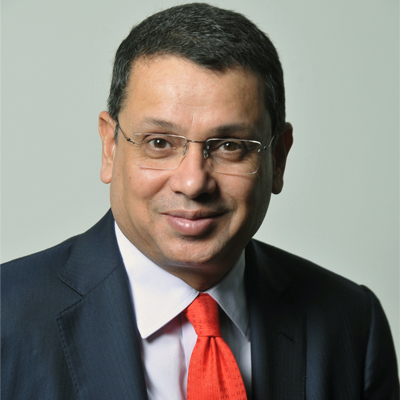
    MUMBAI: At the just concluded Indian Broadcasting Foundation (IBF) 15th annual general meeting (AGM), Star India CEO Uday Shankar has been appointed as the new president of the organisation.


    The position was earlier held by MSM non executive chairman Man Jit Singh.


    This is a comeback for Shankar who held on to the position from 2010 to 2012.


    Confirming the news to indiantelevision.com, Shankar said that he was happy to take charge. “I am privileged to be trusted by the members of IBF to lead the industry body at a critical juncture when the industry needs to leap to the next level by working collaboratively with the Government and other stake holders,”said Shankar and added, “Punit Goenka would have been my personal preference for the president’s role since I have already done a stint as IBF president.  However, in view of Punit’s existing commitment to BARC, he proposed that I hold the reigns at IBF”.


    The IBF Board also elected Punit Goenka as vice president – Measurement, N P Singh as vice president – Distribution, Rajat Sharma as vice president – Strategic Affairs and Rahul Johri as treasurer.

  • Prakash Javadekar confirms the new digitisation deadline

    Prakash Javadekar confirms the new digitisation deadline

    MUMBAI: The first deadline for complete digitisation in the country, 31 December 2014 has been pushed to 2015 and 2016, as first reported by indiantelevision.com.


    Now, the Information and Broadcasting (I&B) Minister Prakash Javadekar has assured stakeholders who were present at the Indian Broadcasting Foundation’s (IBF) annual general meeting that “Digitisation is on track and will happen as per new schedule.”


    Phase III of digitisation is scheduled to be completed by December 2015 and phase IV by December 2016.


    Javadekar once again emphasised that one of the key reasons for pushing digitisation to a further date was to allow time for Indian set top boxes (STBs) to be manufactured.


    Regarding industry rating body Broadcast Audience Research Council (BARC), the Minister said that the government was also keen to have its rollout to have multiple agencies for ratings.


    A meeting to discuss carriage fees is also likely to happen sometime soon between Javadekar and members of the IBF.


    The Home Ministry has also given the I&B Ministry approval to treat files pending with it for more than three months as ‘cleared’ to speed up channel licence clearances.

  • Digicable Network among MSOs denied permanent licence, three new MSOs get licence this month

    Digicable Network among MSOs denied permanent licence, three new MSOs get licence this month

    NEW DELHI: While 115 multisystem operators (MSOs) have been granted permanent licence as on 3 September, Digicable Network and Kal Cables are among the prominent MSOs whose licences have been cancelled following refusal of security clearance by the Home Ministry.


    However, the Madras High Court has quashed the cancellation of provisional licence of Kal Cables on the ground that the Information and Broadcasting Ministry had not issued any show-cause notice, before cancelling the permit. The court also said that the MSO should be given another chance to respond. The Kalanidhi Maran owned Kal Cables had opposed the 20 August order, saying that it is just a MSO and not a channel. And if the I&B Ministry had issued a notice, it would have cleared the doubts.


    The MSO was given a permanent licence to operate in Chennai in June 2012, while a provisional licence was given to operate in DAS notified areas in phase II cities in March 2013.  


    The licence of Digicable Network India was cancelled on 3 September because of denial of security clearance by the Home Ministry. The MSO had applied on 11 May 2012 for DAS notified area of NCT of Delhi, Municipal Council of Greater Mumbai and Kolkata in phase-I and on 28 January and 6 March last year for 38 cities of phase II.


    Siddhi Digital Services of Sholapur was also not given a licence and its ‘case closed as Company is no longer interested in registration.’  


    The application of Silverline Entertainment of Allahabad for operation in DAS notified areas of Agra, Allahabad, Ghaziabad, Kanpur, Lucknow, Meerut and Varanasi was also cancelled early this month following denial of security clearance by the Home Ministry.


    Earlier, MSOs Godfather Communication of Punjab and Intermedia Cable Communication had also got stay orders issued by the Punjab High Court and Delhi High Court respectively on cancellation of their licences.


    The MSOs which got permanent licences early this month were Koduri Satyanarayana, Sri Sai Star TV Services for the Khammam district of Telengana; Abhilash Communications of Adilabad for notified areas of phase – II and phase – III cities pan India and JPR channel of Mumbai for Mumbai (phase – I) and phase – II areas in the state of Maharashtra and Gujarat. 

  • I&B Ministry may relax FTA channels from proposed 10+2 ad cap

    I&B Ministry may relax FTA channels from proposed 10+2 ad cap

    NEW DELHI: The News broadcasters, music channels as well as a few general entertainment channels are still fighting the case against the 12 minute advertising cap per hour proposed by the Telecom Regulatory Authority of India (TRAI). While they await the decision of the Delhi High Court, news is that the Information and Broadcasting Ministry (I&B) may consider a relaxation in the proposed ad cap for the Free to Air (FTA) channels as these channels depend only on commercials for survival.


    A source from the Ministry confirmed the news to indintelevision.com while adding that the ad cap fixed under the Cable Television Networks (Regulation) Act, 1995, was in view of the international practice in other countries.


    It was in March 2013, when the TRAI had notified the regulations, which restricted advertising time on TV channels to a maximum of 12 minutes per hour. The Regulator had then said that the move was to protect the interest of consumers and quality of service being offered to them.  


    I&B Minister Prakash Javadekar has assured the FTA channels at various forums that he would favourably consider their plea of scrapping the proposed 12 minute ad cap.


    The FTA channels claim that as they are pitted against pay channels, that also get subscription fee, there is a need for the government to intervene to create a level-playing field.


    Of the 810 channels approved by the government as of 31 August 2014, close to 548 are FTA, which include both news and non-news channels.

  • 100 days of the I&B Ministry

    100 days of the I&B Ministry

    NEW DELHI: The Narendra Modi led NDA government has completed 100 successful days in power. And in these days, the Information & Broadcasting (I&B) Ministry has done its bit to woo the Media and Entertainment industry.


    Listing the achievements was I&B Minister Prakash Javadekar, through a press meet in Delhi.


    The government is launching a new 24×7 channel for the northeast called Arun Prabha in order to provide a strong platform for expression of cultural identities and for creating greater awareness regarding the region.


    Even as a Task Force has been constituted to steer the remaining two phases i.e. phase III and phase IV of digitisation in India, the government has made efforts towards fulfilling the long pending demand of domestic manufacturers of Set Top Boxes to get tax concession (C Form benefit) in order to compete with imported STBs.


    He said this will pave the way for implementation of digitisation initiative in India and see digitisation of about 80 million Cable TV homes in India. It is also a step towards the Prime Minister’s dream of a Digital India as digitisation will enable quick penetration of broadband connectivity in India.


    The Minister talked of initiatives taken in different sectors aimed at enhancing the outreach of policies and programmes across platforms. Some of the initiatives undertaken have been innovative involving people’s participation, enhancing government’s presence on the social media platforms and strengthening communication at the grassroots.


    He said Rs 100 crore had been allocated to Kisan Channel, which will disseminate real time information to the farmers regarding new farming techniques, water conservation, organic farming etc.


    In order to facilitate Ministries/Departments in registering their presence on social media the Ministry had organised a half day training workshop on 11 July.


    The Telecom Regulatory Authority of India (TRAI) has on the request of the Ministry given recommendations on migration of FM Radio Broadcasters from phase-II to phase-III which is under examination.


    Goa has been declared the permanent destination for the International Films Festival of India to develop the “Brand IFFI” on the lines of other International Film Festivals. Although the decision to move IFFI to Goa was taken in 2004 when the National Democratic Alliance was in power, a fresh Memorandum of Understanding was being signed year-to-year for the Festival.


    The three-day North East Film Festival held in Delhi recently will henceforth be an annual feature organised by the Directorate of Film Festivals.


    The Film and Television Institute of India and the Satyajit Ray Film and TV Institute are to be institutes of National Importance and an Act of Parliament will be passed for this. The proposed Bill would enable both the Institutes to award its own degrees and diplomas and start new activities on the lines of IITs and IIMs.


    The office of the Registrar of Newspapers for India (RNI) has streamlined its Single Window Public dealing mechanism at its office. RNI has achieved 100 per cent success in online e-filing of annual statements by publishers for 2013-14.


    Under the Rs 100 crore set aside for “Supporting Community Radio Movement in India,” 600 community radio stations will be set up across the country in the 12th Five Year Plan. This major initiative of the new government will strengthen the link with the population living in rural and marginalized areas.


    The Home Ministry has agreed to the proposal of the Ministry for not seeking security clearance for such channels whose security clearance have already been sought earlier along with the Board of Directors. This decision has paved the way for speedy clearance of additional television channel permissions, which will benefit the broadcast industry in a big way.  After the decision was taken, 23 TV channels have already been permitted by the Ministry.


    The proposal has been cleared for Rs.600 crore National Film Heritage Mission (NFHM) to preserve India’s film legacy by the Expenditure Finance Committee in the Finance Ministry. The draft Cabinet Note has been circulated to the concerned Ministries and the Note will shortly be submitted for approval of the Cabinet.


    To ensure people’s participation in Government Advertising through Crowd-Sourcing of Advertisements, the advertisement for important events are to be designed by the people. The Independence Day advertisement designed on these lines and DAVP has invited suggestions for the proposed advertisement to be brought out on 5 September to observe “Teachers Day”.


    For Independence Day, the advertisements were crowd sourced for the first time and Independence Day coverage was extended to all media platforms. Similarly, a series of press conferences being organised to highlight the initiatives of the Government and the same approach is being adopted to ensure information dissemination across all platforms.
  • Al Jazeera to respond to I&B Ministry notice within 15 days

    Al Jazeera to respond to I&B Ministry notice within 15 days

    Updated:  02 Sep 2014 12:30 pm


    NEW DELHI: News broadcaster Al Jazeera is expected to respond well in time to the show cause issued by the Information and Broadcasting Ministry for allegedly depicting a wrong map of India in its news reports. 


    Sources confirming the issuance of the notice said a period had been given to the channel to reply to the notice.

    The Ministry had said that it had come to its attention that a wrong map of India had been shown in its news broadcasts by the channel last year more than once, in which parts of the country were shown outside the border. 

    “It had come to the notice of the Ministry that in some of the news reports shown by the channel in 2013 related to various incidents, parts of Jammu and Kashmir were shown in territory outside India. The Ministry took the matter with the office of Surveyor General of India. 

    “After a report was received from the office of Surveyor General of India, a show cause notice has been issued to the channel,” a source said. 

    Under the Cable TV Networks Rules 1994, no programme should be carried in the Cable Service which contains anything affecting the integrity of a nation. 


    An official spokesperson from the company said, “Al Jazeera takes all feedback on its coverage very seriously.  Our editorial policy is always in line with international law, and to ensure the greatest integrity and quality of information to our viewers in India and right around the world.


    “Our style guide says: ‘Any map of India must include Indian-Administered Kashmir, and any map of Pakistan must include Pakistan-Administered Kashmir.  The borders of Kashmir should be a dotted line.’ Some of our maps of both India and Pakistan though did not have the disputed territories clearly visible. This has been rectified.” 

  • Stern warning to News Live TV for showing disturbing visuals of dead bodies and badly injured people

    Stern warning to News Live TV for showing disturbing visuals of dead bodies and badly injured people

    NEW DELHI: The government today issued a warning to News Live TV channel for showing ‘extremely disturbing visuals of dead bodies and badly injured people including children which were not only disturbing but could also hurt the sentiments of the viewers.’


    In a stern directive to the channel to follow the Programme and Advertising Code as well as the Downlinking/Uplinking Guidelines, the Information and Broadcasting Ministry said ‘visuals were neither morphed nor blurred. The visuals appeared to be in bad taste and against the sensitivities of the victim’s family. Hence, the visuals appeared to offend good taste and decency. The visuals also did not appear to be suitable for children and for unrestricted public exhibition.’


    Any violation shall entail such action against the channel as deemed fit in accordance with the Cable Television Network (Regulation) Act, 1995 and the Rules framed thereunder as also the terms and conditions of the permission granted under uplinking/downlinking guidelines.


    Earlier, a show cause notice was issued to the channel on 5 November last year for the visuals carried in several news bulletins during 2012 and 2013. Initially, the channel said it was required to keep the recordings for only 90 days and therefore was unable to reply as the recordings had been destroyed.


    The Ministry thereafter sent recordings in its own possession and also referred the matter to the Inter-Ministerial Committee which considered the matter on 4 July this year where a representative of the channel was also present.


    The IMC observed that telecast of news bulletins were clear violation of the provisions of the Programme Code, particularly Rules 6(l)(a),6(lXo), and 6 (5) of Cable Television Network Rules, 1994. The IMC observed that even though the channel had accepted their fault and apologised for their mistake, they cannot escape the responsibility of ensuring content on their channel which must invariably be in conformity with the Programme Code.


    ‘News Live’ TV Channel is also governed by the provisions of Uplinking/Downlinking Guidelines and Pride East Entertainments while applying for the uplinking/downlinking permission had undertaken to abide by the Programme and Advertising Codes and the Uplinking/Downlinking Guidelines, read with the permission granted to ‘News Live’ TV Channel. 

  • Govt. rejects TRAI proposal for lower reserve fee for FM phase III auctions

    Govt. rejects TRAI proposal for lower reserve fee for FM phase III auctions

    NEW DELHI: The recommendations by the Telecom Regulatory Authority of India (TRAI) to review the reserve price for FM phase III auctions have not found favour with the Information and Broadcasting (I&B) Ministry.


    TRAI had recommended a change, after going through the views expressed by radio channel operators and new stakeholders that the price was too high.


    However, the Ministry has pointed out to TRAI that the reserve price was fixed by a Group of Ministers and later approved by the Union Cabinet.


    TRAI had expressed apprehensions that the auctions could be jeopardized since many operators felt the price was too prohibitive. The phase III reserve fee formula (highest bid of phase II), has already led to a lot of opposition from broadcasters.


    When asked if this would lead to lesser number of bidders for phase III, I&B secretary Bimal Julka told indiantelevision.com, “We will cross the bridge when we come to it. At this moment, I can only say that we have accepted the TRAI recommendations with some exceptions.” 

    When the process begins – hopefully expected to start by October as indicated by Ministry sources – phase III is set for auction of 839 FM channels across 294 cities. These sources did not feel the reserve price was a major issue as the players likely to bid for the channel are large parties.


    However, the Ministry sees nothing wrong with the TRAI recommendation of allowing 15-year licence period for operators migrating from phase II to phase III as phase II had provided for 10 years of licence.


    TRAI had also recommended a lower minimum channel spacing of 400KHz for FM radio broadcast, as against 800KHz now, to allow more radio stations which has not been accepted by the Ministry. 

    The recent 2G auctions which came as a result of an order of the Apex Court had justified the need for a low reserve fees.