Tag: I&B ministry

  • K. Sanjay Murthy appointed joint secretary in I&B

    K. Sanjay Murthy appointed joint secretary in I&B

    NEW DELHI: Senior Indian Administrative Service officer K Sanjay Murthy has been appointed as the joint secretary in the Information and Broadcasting Ministry (I&B).


    A 1989 officer from the Himachal Pradesh cadre, he was until now principal secretary (Food & civil supplies, Transport, & Technical Education) in the state of Himachal Pradesh.


    His appointment took effect from 21 November and will continue until 20 November 2019 or until further orders, whichever is earlier.


    Ministry sources said that Murthy was expected to be given charge of films, as Raghuvendra Singh is due for transfer as his term is over. 

  • Nodal monitoring units for DAS to be formed by mid-January, task force to meet every month

    Nodal monitoring units for DAS to be formed by mid-January, task force to meet every month

    NEW DELHI: A total of 11 crore set top boxes (STBs) will be needed for the third and final phase of digital addressable system of which only three crore will be for direct-to-home (DTH) platforms.

     
    The Information and Broadcasting Ministry (I&B) says the requirements for phase III have been worked out on the basis of census 2011 data and the compiled data will be sent to state governments for vetting.
     

    The data for TV households is also being collected from the Registrar General and Census Commissioner for verification.

     
    The Ministry, which claims that manufacturers have assured it of adequate supplies of STBs, has constituted a publicity committee and begun issuing advertisements in newspapers and the electronic media in this regard to encourage multi-system operators to place orders.

     
    During the recent task force meeting for the next two phases of DAS, the Ministry said it will facilitate a meeting of manufacturers of indigenous STBs and MSOs in view of complaints by the manufacturers that no orders were being placed for the STBs.

     
    A multi-lingual call centre will be set up by the end of February, and 12 nodal regional monitoring units will begin working by 15 January. The task force will meet every on the second Wednesday of every month.

     
    The task force meeting under the chairmanship of Ministry additional secretary J S Mathur was also addressed by the advisor for DAS Yogendra Pal.

     
    A road map has been prepared by the government for the final two phases, and MSOs have been asked to apply by 21 December this year for licences.

     
    The Home Ministry will clear all security licences within 90 days, the meeting was informed.

     
    Publicity awareness campaigns have also commenced, for which a Publicity Committee has been formed.

     
    The Department of Information Technology is in the process of developing an Indian cable access system that will be ready in a year and will make interoperability of STBs possible. A participant pointed out that there was still the issue of certification involved in the embedment of CAS in set top box manufactured by the domestic STB manufacturers. The integration of CAS with the STB is a time consuming process and indigenous STB manufacturers must clear the apprehensions on this account.

     
    The long pending demand of “C” Form had been resolved to give fillip to domestic manufacturing of STBs.

     
    Interestingly, the Telecom Regulatory Authority of India has not attended any of the two task force meetings, a point noted by several participants. However, Mathur said TRAI was being apprised of the proceedings.

     
    The Ministry officials said that MSOs could simply download the forms for registration and did not have to come to the Ministry.

     
    A participant pointed out that the carriage fee which had fallen initially after announcement of DAS had again shot up. Others said issues relating to billing, packaging and reference interconnect order had still not been ironed out by TRAI.

     
    There was also a reference to entertainment tax, and it was stated by some participants that the Uttar Pradesh Government had sharply raised this tax.


  • I &B sets format for Home Ministry Security clearance for TV channels

    I &B sets format for Home Ministry Security clearance for TV channels

    NEW DELHI: In view of new clearances and those who need fresh security clearance for next 10 years, the government has set out the format in which applications should be sent by news and non-news television channels seeking Home Ministry security clearance to uplink or downlink.


     The applications have to be sent to the Information and Broadcasting Ministry within 15 days.


     The companies owning channels have to furnish the details of the company and its Board of Directors (in four additional sets) in the prescribed format listed out in the Ministry’s website mib.nic.in.


     The details required are details of the company/firm for whom clearance is sought; names of firms/bidders, registered office address, date of incorporation, details of the Directors/Key Executive in respect of whom clearance is sought, name/parentage, date of Birth, Present Position held and complete address including e-mail and websites etc.

  • I&B Ministry to study why MSOs are not taking indigenous STBs

    I&B Ministry to study why MSOs are not taking indigenous STBs

    NEW DELHI: The Information and Broadcasting Ministry (I&B) will facilitate a meeting of manufacturers of indigenous set top boxes (STBs) and multi-system operators (MSOs) next week in view of complaints by the manufacturers that no orders were being placed for their STBs.


    This was decided at a meeting of the Task Force which will oversee the next two phases of digital addressable system (DAS) and which met under the chairmanship of Ministry Additional Secretary J S Mathur here today.


    Earlier this week, the manufacturers had met Ministry secretary Bimal Julka and made the same complaint.


    The participants were apprised that around 3.5 households had to be covered in the third phase of digitisation.


    A Ministry source told indiantelevision.com that the meeting discussed various roadblocks on the road to full digitisation and ways to overcome these hurdles.


    Star India legal & regulatory senior vice president Pulak Bagchi, who is also the representative of the broadcasters said emphatically that broadcasters would support voluntary transition to DAS as long as there were some ground rules.


    He also said that broadcasters were prepared to give concessions to operators switching over to DAS provided the operators totally stopped analogue transmission.


    Bagchi also said that it should be made mandatory that any MSO or local cable operator who switches over to DAS should switch off analogue and not run both systems.


    The meeting was attended by around 20 people and included representatives of trade bodies like FICCI and CII, apart from MSOs, LCOs and DAS advisor Yogendra Pal.


  • AIR News SMS service now available in 14 languages including English

    AIR News SMS service now available in 14 languages including English

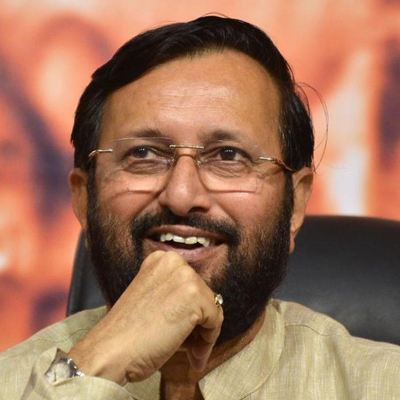
    NEW DELHI: Noting that mobile phones acted as a tool of empowerment to all sections of society, Information and Broadcasting Minister Prakash Javadekar has suggested that All India Radio could consider a customised news and related information to varied sections of the society.


    Javadekar said the government has initiated innovative approaches in reaching out to the people through multiple media platforms.


    The endeavour was to address the communication needs, to enter into a dialogue with different cross-sections of the society and address the aspirations of young people.


    The Minister stated this while launching the free News SMS service of All India Radio News Services Division in four Indian languages – Assamese, Gujarati, Tamil and Malayalam – thus bringing the total number of languages covered by this service to 14.


    Javadekar said the SMS services of AIR intended to provide instant communication to public in a language and form understood by them. The service reiterated the richness and reach of each of the languages introduced by AIR.


    AIR had launched SMS service in English on 9 September last year and in five other languages on 19 September this year – Hindi, Marathi, Dogri, Sanskrit and Nepali – to provide AIR News on mobile sets to its subscribers free of cost. The service has already touched the database of over three lakh subscribers. 


    This newly launched service can be availed by registering on the website of All India Radio viz. http://newsonair.nic.in/smsservice . SMS can also be sent for registration in following format to 7738299899:


    AIR<space>NAME<dash>AGE<dash>GENDERCODE<dash>LANGUAGECODE

    Different codes for the SMS are as follows:

    GENDER CODES: M for Male    and    F for Female


    LANGUAGE CODES: A for Assamese,  G for Gujarati, ML for Malayalam, T for Tamil, H for Hindi, M for Marathi, D for Dogri, S for Sanskrit, N for Nepali.


  • Veteran journalist A Surya Prakash is the new Prasar Bharati chairman

    Veteran journalist A Surya Prakash is the new Prasar Bharati chairman

    NEW DELHI: Senior journalist A Surya Prakash has been appointed the chairman of the Prasar Bharati Board, succeeding Mrinal Pande whose term ended around six months earlier.


    The appointment, which will be for three years, was made on the recommendation of a three-member committee headed by Vice President M Hamid Ansari and comprising Press Council of India chairman Markandey Katju and Information and Broadcasting Ministry secretary Bimal Julka.  


    Pande completed her tenure on 30 April this year. 


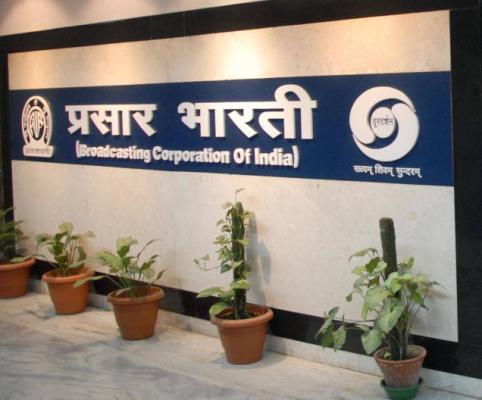
    The pubcaster, which was created by the Prasar Bharati (Broadcasting Corporation of India) Act 1990 but notified in 1997, is governed by the Prasar Bharati Board, which comprises a chairman, an executive member (chief executive officer), a member (finance), a member (personnel), six part-time members, a representative of the I&B Ministry and the directors general of All India Radio and Doordarshan as ex-officio members.


    The chairman is a part time member. 


    Prakash has vast experience of both TV and print media. He has held key positions in several print and electronic media organisations.


    He was editor of Zee News; executive editor of the Pioneer; India editor of Asia Times which is a business and political daily published from Bangkok and Singapore; political editor of the Eenadu Group of Newspapers; and chief of bureau, Indian Express, New Delhi.


    He is also known for his well-researched interventions on national political issues. He is the founder-director of the Film and Media School at the Institute of Integrated Learning in Management, New Delhi, and founder-director of the Pioneer Media School. 


    Prakash is currently consulting editor of the Pioneer newspaper and a distinguished fellow at Delhi-based Vivekananda International Foundation (VIF), a think tank with which National Security advisor Ajit Doval was also associated earlier.  

  • Roadmap soon on converting IIMC into Communication University: Javadekar

    Roadmap soon on converting IIMC into Communication University: Javadekar

    NEW DELHI: Information and Broadcasting Minister Prakash Javadekar has said steps are being initiated shortly to upgrade the Indian Institute of Mass Communication into a ‘Communication University.’
     
    A roadmap would be prepared soon by the Ministry, he said, inviting suggestions from the public especially the young generation.
     
    Javadekar said a specific corner would be developed on the I&B Ministry’s website for these suggestions to be placed for the perusal of the Ministry. The entire process was part of the Prime Minister’s Communication Vision which laid emphasis on ‘Participative Communication’- a process which linked the key stakeholders including the media fraternity.

     
    The Minister stated this while delivering the address at the 47th Convocation Ceremony of the Indian Institute of Mass Communication and the launch of the Golden Jubilee Celebrations of the Institute in Delhi.

    Javadekar said press freedom came with an element of responsibility. Throughout history, the responsibility of the press had been flagged on different occasions. He exhorted the students who were conferred diplomas to avoid sensationalism at all costs and fight the menace of paid news. A young journalist ought to work with passion, compassion in a mission mode without commission. He called upon the students to balance information taking into account the sourcing of information from different media sources which included new and traditional media streams. These aspects would lay down the architectural framework for ethical journalism in the future.


    He called upon the IIMC to undertake studies to understand the different aspects of elections related to the communication process and the electoral system. The Minister also unveiled the new logo to commemorate the golden jubilee celebrations of IIMC. He inaugurated the new bilingual website of IIMC.

    IIMC has the distinction of being universally recognised as a centre of excellence in the field of journalism, media and mass communication teaching, training and research. A total of 341 students were conferred with their Diplomas at this Convocation which included students from six Centres of IIMC, at New Delhi and Dhenkanal, as well as at the newly opened Regional Centres at Aizawl in Mizoram, Amravati in Maharashtra, Jammu in J&K and Kottayam in Kerala. The PG Diploma courses were conferred in Journalism Hindi and English, Advertising& Public Relations, Oriya Journalism and Urdu Journalism. Special awards were also conferred in different categories to 31 students across all courses. 

  • DAS task force to meet on 8 October amidst protests

    DAS task force to meet on 8 October amidst protests

    NEW DELHI: Almost a month after its constitution, the task force set up for the implementation of digitisation in the country and particularly overseeing the execution of the last two phases of Digital Addressable System (DAS) is expected to meet on 8 October at 10:30 in Delhi.


    However, local cable operators who have already expressed their protest at not being given a voice in the Task Force have not been invited to the meeting.


    Talking about the meeting, Information and Broadcasting Ministry secretary Bimal Julka told indiantelevision.com that all the stakeholders named in the task force order of 12 September had been nominated and are expected to be at the meeting. Although an official of the Information and Broadcasting Ministry denied this.


    LCOs who form the backbone of the cable television system in the country said no organisation of LCOs had been included in the task force or invited in the meeting.


    Meanwhile, ASSOCHAM Media and Entertainment Committee co-chairman Sujatha Dev informed the industry body that she is unaware of how a representative of ASSOCHAM was nominated to the task force.  


    National Cable & Telecommunication Association president Vikki Choudhry has in a letter to the I&B Minister Prakash Javadekar alleged that “In spite of all your endeavours taken to clean up the mess that had been created on account of DAS by the previous UPA government, few officials still attached to the MIB are bent on misleading and misguiding you on this much controversial DAS issue.”


    He has also pointed out that certain categories had not been invited to the task force meeting despite them being directly involved in implementation of DAS which included five Independent MSOs one each from North, South, East, West and North East region, five registered LCO associations one each from North, South, East, West and North East regions, a representative of the Association of Regional Television Broadcasters of India/ Regional News Broadcasters Association, five prominent consumers organisations, one each from North, South, East, West and North East regions, a representative of ASSOCHAM and a representative of Telecom Equipment Manufacturers Association of India (TEMA).


    Choudhry added that while there had been mention of these in the order of 12 September constituting the task force, no persons had been nominated for these categories.


    Additionally, he also revealed that there was no representation / invitation sent to Conditional Access System Vendors (an integral part of the entire DAS) and Subscriber Management System (SMS) that controls the entire DAS ecosystem after integration with the CAS.


    According to the 12 September order, the new task force was to be headed by I&B additional secretary as chairperson, with Telecom Regulatory Authority of India (TRAI) principal advisor for broadcast and cable satellite, I&B Ministry joint secretary broadcasting, representatives from the MSO Alliance, five independent MSOs one each from north, south, east, west and north east regions, five registered LCO associations one each from north, south, east, west and north east regions, representatives from the Indian Broadcasting Foundation, News Broadcasters Association, Association of Regional Television Broadcasters of India, DTH Association, FICCI, CII, ASSOCHAM, CEAMA, Department of Telecommunications, Department of Electronics and Information Technology, DG: Doordarshan, DG: All India Radio, BECIL, BIS, five prominent consumer organisations one each from north, south, east, west and north east regions and 33 state level nodal officers one each from the states/union territories governments.

    The task force was to act as an interface between the government and the industry in matters related to implementation of DAS in the cable TV sector and monitor the execution of DAS. It also will have to analyse the roadblocks that may come in the way of digitisation and suggest measures.


    While NBA and IBF will be participating in the meeting, representatives of cable operators associations from different states are protesting against the exclusion of LCOs and MSOs from the meeting. 


  • Ad Cap case adjourned till 20 November

    Ad Cap case adjourned till 20 November

    MUMBAI: The Delhi High Court once again adjourned the ad cap case, this time to 20 November.


    The News Broadcasters Association (NBA), the lead petitioner in the matter, had sought 10 days adjournment as senior counsel S Ganesh, was not present in view to other pending cases in Mumbai.


    “We had requested to accommodate the case for 10 days as the senior consel had to go to Mumbai,” said the lawyer for NBA.


    However, the HC postponed the case till 20 November since it didn’t have any dates before that to hear the case.


    The Telecom Regulatory Authority of India (TRAI) advocate Saket Singh emphasised that the matter has already been pending for more than 10 months.


    During the last hearing on 15 July, the HC had adjourned the case as the final hearing of the bunch of petitions challenging the ad cap sort to be imposed by TRAI as the authority has not finalised its rejoinder.


    The case had been previously heard in the High Court on 17 December last year and 13 March this year.

     
    The NBA had challenged the ad cap rule, contending that TRAI does not have jurisdiction to regulate commercial airtime on television channels.

     
    Apart from the NBA, the petition have been filed by Sarthak Entertainment, Pioneer Channel Factory, E24 Glamoru, Sun TV Network, TV Vision, B4U Broadband, 9X Media, Kalaignar, Celebrities Management, Eanadu Television and Raj Television.

     
    The news and regional broadcasters fear that the capping of commercial airtime will curtail their ad revenues. They also argue that the ad cap must be brought only after the benefits of cable TV digitisation start kicking in.
     

    Earlier this year, the Court also granted interim relief to Hyderabad-based MAA Television Network against the ad cap regulation. However, the court had also observed that the cap on advertisements is a ‘reasonable exercise’.

     
    Four major broadcast networks—Star India, Zee Entertainment, Multi Screen Media and TV18 Group—are following the regulations.

  • “DoT should regulate carriage and I&B can look at content”: Rahul Khullar

    “DoT should regulate carriage and I&B can look at content”: Rahul Khullar

    NEW DELHI: The Telecom Regulatory Authority of India (TRAI) chairman Rahul Khullar has once again spoken loud and clear. The 62-year-old Khullar has proposed that while the Department of Telecom should exclusively focus its attention on carriage and carriage related issues while the Information and Broadcasting Ministry (I&B), considering its history, should be only regulating content.


    “And I think that is the way we need to go,” he said while addressing the gathering at the recently concluded CII Big Summit 2014.


    He also came down heavily on the politicians and political parties. He said, “The Supreme Court through its ruling has clearly stated that airwaves are not the monopoly of the state.”


    So, while Prasar Bharati must exist and it must be independent; politicians, governments, state governments and their organs have “absolutely no business whatsoever to be in broadcasting space,” he announced and suggested that the government must announce this as an integral part of the National Media Policy.


    Khullar also gave his perspective on the other components of the National Media Policy. “Firstly, there must be a clear articulation that we want a free media, unhampered and unrestricted by the government in any way possible,” he said while also suggesting that the media itself must be subject to safeguards. “It could come from other forms of independent regulators. You cannot have an institution which has rights but no duties,” he added.  


    Secondly, there must be commitment in National Media Policy to uphold plurality of views and opinion. “And this must be a commitment,” he said.


    Thirdly, time has come that we start talking about infrastructure. “If this National Media Policy is actually going to work, are we or are we not going to be in a digitised world? We cannot be flipping and flopping the dates as we send out wrong signals to the rest of the world about your credible commitment towards any policy,” he stated.


    Khullar also pointed out the issues with spectrum availability. “It is a nightmare to deal with ISRO. The organisation neither gives you a transponder nor does it allow you to get a transponder of your own,” he informed.