Tag: I&B ministry

  • I&B ministry earmarks Rs 20 crore to strengthen TV channels’ monitoring

    I&B ministry earmarks Rs 20 crore to strengthen TV channels’ monitoring

    NEW DELHI: An amount of Rs 20 crore has been allocated in the current financial year 2014-15 for facilitating augmentation of the monitoring capacity of the Electronic Media Monitoring Centre (EMMC).


    Information and Broadcasting Ministry (I&B Ministry) sources told Indiantelevision.com that a sum of Rs 90 crore had been earmarked in the 12th Plan 2012 to 2017 to enhance the monitoring capacity of the centre.


    EMMC is a subordinate office under the Ministry of I&B and has been set up with state-of-the-art facility with effect from 9 June, 2008. EMMC monitors the content of the private satellite TV channels with regard to violation of Programme and Advertising Codes as enshrined in the Cable Television Networks (Regulation) Act, 1995 and Cable Television Network Rules, 1994.


    The government hopes to increase the capacity of the EMMC to 1500 by 2017, which currently monitors around 300 television channels.


    These channels are chosen randomly out of the 839 channels beaming into Indian homes. The aim is to first achieve the target of monitoring 600 channels within a few months.


    The Programme Code provides that no programme should be carried which (a) offends good taste or decency (b) contains anything obscene, defamatory, deliberate, false and suggestive innuendos and half truths (c) criticizes, maligns or slanders any individual in person or certain groups, segments of social, public and moral life of the country (d) denigrates women through the depiction in any manner of the figure of a woman, her form or body or any part thereof in such a way as to have the effect of being indecent or derogatory to women, or is likely to deprave, corrupt or injure the public morality or morals (e) denigrates children (f) is not suitable for unrestricted public exhibition (g) is unsuitable for children. Action is taken against defaulting channels whenever any violation of the said codes is noticed or brought to the notice of the Ministry.


    The Ministry also has an Inter Ministerial Committee (IMC) to look into the violations of the Programme and Advertisement Codes. IMC has representatives from the Ministry of home affairs, defence, external affairs, law, women and child development, health and family welfare, consumer affairs and a representative from the industry in Advertising Standards Council of India (ASCI). IMC meets periodically and recommends action against violations.


    The Ministry issues advisories from time to time on various issues, which are also relevant to reality shows. These are available at Ministry’s website www.mib.nic.in.


    In addition, the National Commission for Protection of Child Rights (NCPCR) has formulated the ‘Guidelines for Media Reporting on Children,’ which has been circulated by this Ministry among all TV channels/NBA/IBF on 23 November, 2012. The guidelines lay down provisions to be followed by broadcasters/producers in case child participants are taken in their shows.


    Besides, as part of self-regulation by industry, Indian Broadcasting Foundation (IBF), which is a representative body of non-news and current affairs TV channels, has set up Broadcasting Content Complaints Council (BCCC) to examine the complaints about television programmes. BCCC has also issued some Advisories on various issues related to reality shows to their member channels, which are available at their website Indian Broadcasting Foundation (IBF).


  • I&B Ministry denies interference in CBFC as Leela Samson quits over movie

    I&B Ministry denies interference in CBFC as Leela Samson quits over movie

    NEW DELHI: Following the controversy over the clearance to the film Messenger of God, made by and starring Dera Saccha Sauda head Gurmeet Ram Rahim Singh, Central Board of Film Certification (CBFC) chief Leela Samson has put in her papers.


    Asked if she was aware of media reports that the nod has been given by Film Certification Appellate Tribunal (FCAT) to the film’s screening, Samson said, “I hear so. Yet, it is a mockery of CBFC. My resignation is final. I have informed Information and Broadcasting Ministry (I&B) secretary Bimal Julka.”


    The Censor Board had referred the issue of clearance to Messenger of God to FCAT. The film was slated to hit the screens on Friday.


    Asked why she has decided to quit, she did not specifically refer to the reported clearance to the film but said the reasons cited are alleged “interference, coercion and corruption of panel members and officers of the organisation who are appointed by the ministry.”


    Refuting allegations of interference, coercion and corruption levelled by Censor Board chairperson Samson, the government today said that it has always maintained a distance from the entire process of film certification.


    With Samson deciding to resign amid a row over controversial film Messenger of God, Minister of State (MoS) for Information and Broadcasting Rajyavardhan Rathore said, “We have respected the Censor Board all along. In fact when the issue of the previous film came up, we respected the decision of the Censor Board. We kept a hands away distance from its decisions.”


    He also said that if evidence was provided that any particular member had been coerced, the government would take appropriate action.


    Dismissing Samson’s allegations, Rathore said due process was being followed in all cases including  the case of Messenger of God.


    “Now when this particular film has come into discussion, the Censor Board would realise that the final call lies with the FCAT, the film appellate tribunal,” Rathore said.


    Asked whether the Ministry had received Samson’s resignation, “No, we are not aware. We heard this on TV, and we are briefing you so that the public is not misled.”


    He said very eminent persons constitute the appellate tribunal and emphasised that the government does not interfere in the entire process of film certification.


    “There is a retired justice heading the tribunal. There is a Supreme Court advocate in the appellate tribunal. There is a senior journalist in the tribunal, they take decision, whatsoever, which will be made public very soon,” he said.


    The Minister also emphasised that the present Board and its members were placed by the previous government and current regime had not put in any additional member.


    Meanwhile, Samson told the media, “Having to manage an organisation whose Board has not met for over nine months as the ministry had no funds to permit the meeting of members.” She said the term of all the members and the Chairperson of the Censor Board “are over but since the new government failed to appoint a new Board and Chairperson, a few were given extension and asked to carry on till the procedure was completed.”


    “However, recent cases of interference in the working of the CBFC by the ministry, through an ‘additional charge’ CEO, and corrupt panel members has caused a degradation of those values that the members of this Board of CBFC and Chairperson stood for,” Samson alleged.


    Meanwhile, a spokesman for Sirsa (Haryana)-based Dera Sachcha Sauda said, “As per our information, FCAT has cleared the movie for release. But a written order is awaited.”


    Her resignation led to comments from the film industry, where veteran Mahesh Bhatt observed, “I don’t know whether the corruption charges are true… but I’d like to make an appeal to I&B minister Arun Jaitley – when he follows a system of liberal values and freedom of speech, his ministry should also be reflective of that.”


    Award-winning filmmaker Onir said, “I hope her resignation brings about a positive change. She has a lot of respect in the industry and her resignation explains the hypocritical approach that the Censor Board has. It does come as a shock, but I hope filmmakers are not harassed anymore.”


    Mary Kom director Umang Kumar said, “If Samson took a stand, there must be a reason. After all, she was put in that position because she was considered capable of using her discretion wisely.”


  • Government should set aside Rs 10,000 crore for cable modernisation: Arvind Prabhoo

    Government should set aside Rs 10,000 crore for cable modernisation: Arvind Prabhoo

    MUMBAI: The seed of the dream of seeing a ‘Digital India’ was sown by Prime Minister Narendra Modi, as he took charge to make India a better and developed country. And now to make this dream come true are the cable TV operators, who are looking at achieving this through cable TV transformation.


    In keeping with this, Maharashtra Cable Operators Foundation (MCOF) president Arvind Prabhoo has already sent a presentation to the Information and Broadcasting Ministry (I&B) to not only update them of the needs of the industry, but also how the government could help push the agenda.


    According to Prabhoo, the sector needs regulatory support. This includes cable Internet Service Provider (ISP) licence on soft terms, last mile cable operator licensing, price control on content and level playing field for domestic voice over IP (VoIP). The MCOF president has also requested the Ministry for infrastructure support including long haul fibre and BSNL networking sharing, innovative per customer/month fees and cable modernisation fund. With the industry moving to a whole new system of cable TV viewing, the industry needs re-skilling and incentives for innovations.    


    MCOF in its proposition to the I&B has also said that the government needs to become the national data pipe in order to act as a digital courier. “Set one country, one service, one price,” informed Prabhoo. 


    Not only this, the government should look at setting aside a cable modernisation fund of around Rs 10,000 crore. Of this, according to Prabhoo, Rs 4000 crore will be used in set top box (STB) financing at Rs 300 per SD STB, Rs 5500 crore at Rs 600 per home passed will be used in infrastructure upgrade and Rs 500 crore will be used towards technology R&D. “The Ministry could fund the industry for a tenure of five years. With this funding, the government will be the biggest beneficiary as it would be collecting taxes on the funds,” opined Prabhoo.


    Cable TV currently reaches to close to 60 per cent homes (12 crore) of which around 9 crore are in DAS phase III and IV areas. “The sector which has a workforce of close to 300,000, has the potential to serve some 50 crore data users,” he added.


    In the presentation to the Ministry, MCOF has also highlighted the challenges faced by the digital India. These include the high customer acquisition cost, resulting in unavailability of basic data services, shortages in last mile local loop and predominance of concrete in civil structures which is eroding fidelity of wireless services.


    “We had sent the presentation to the Ministry for a robust cable TV industry, but have not heard from them so far,” concluded Prabhoo.

  • ACT to focus on broadband, cable ops acquisition

    ACT to focus on broadband, cable ops acquisition

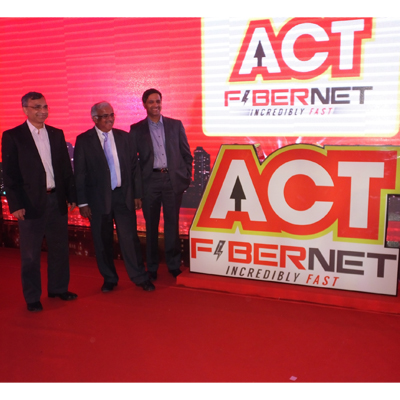
    BENGALURU: Atria Convergent Technologies (ACT), one of the largest broadband players in India after the public sector BSNL, MTNL and the private sector Airtel will focus primarily on broadband, reveal company sources. ACT withdrew its application for permanent registration as an MSO in September 2014 according to the MIB ‘List as on 05.01.2015 of MSOs whose Registration by Ministry of Information & Broadcasting to operate in digital addressable system (DAS) has been cancelled or cases closed’.


    “Our focus for our mother brand ACT will be broadband. We have MSO licenses in the states that we operate in under individual names. We will expand our cable footprint by acquiring only the operators that have permanent licenses,” revealed ACT CEO Bala Maladi to indiantelevision.com.


    MSOs under the ACT umbrella operate in Karnataka and Andhra Pradesh (AP) through Kable First India in Bangalore, Kable First Davangere in Davangere,  Mandapeta Digital Entertainment (Mandapeta, AP), Venkateshwara Digital Home Entertainment (Kutukuluru and  Nakapalli in AP) and ACT Digital Home Entertainment (AP and Telangana), Raja Rajeshwari Entertainment (Notified areas of Nellore, AP), Sree Digital Home Entertainment (East Godavari District in the state of AP). Earlier, ACT was present in Indore (Madhya Pradesh) through SR Cable TV. In Tamil Nadu (TN), it provides broadband internet services.


    ACT is a triple play service provider offering an ensemble of information, communication and entertainment through Fibernet, Digital TV, Analog TV and IPTV. Headquartered in Bengaluru, ACT is spread across the towns and cities of Karnataka, Andhra Pradesh (AP) and Tamil Nadu (TN). ACT says that it presently has 10 lakh (1 million) plus cable and broadband subscribers. ACT has been funded by IVFA (India Value Fund Advisor). Industry sources say that the company has crossed turnover of Rs 700 crore (Rs 7 billion).

  • Govt. plans no change in regulating advertisements on private television

    Govt. plans no change in regulating advertisements on private television

    NEW DELHI: Even as a legal debate continues on the ad cap of 12 minutes to the hour, the Government feels the existing mechanism available in the Information and Broadcasting Ministry is ‘adequate’ to regulate advertisements on private TV channels

    There is no proposal under consideration of the Government to amend Section 6 of the Cable Television Networks (Regulation) Act 1995 in this regard, Ministry sources told indiantelevision.com.

    While replying to a question during the last Parliament session, Minister of State for I&B Rajyavardhan Singh Rathore had said no study had been brought to the notice of the Ministry with regard to the efficacy of self-regulation vis-a-vis legislative regulation.

    However, advertisements telecast by private satellite TV channels are regulated under the provisions of Advertising Code as contained in the Cable Television Network Rules, 1994 framed under the Cable Television Networks (Regulation) Act, 1995.

    Besides this as a part of self-regulatory process, Advertising Standards Council of India (ASCI), established in 1985, undertakes self-regulation of advertisements. ASCI has a Consumer Complaints Council (CCC) to consider complaints in respect of advertisements.

    The sources said the self-regulation mechanism put in place by the industry, however, does not replace the existing regulatory function of the Government.


  • Date extended for MSO registration for DAS phase III

    Date extended for MSO registration for DAS phase III

    NEW DELHI: Following an assurance in the last Task Force meeting, the Government has extended till 6 February the last date for multi-system operators for registration for Phase III of digital addressable systems (DAS) for cable television.
     
    The earlier date was 21 December.
     
    The Ministry noted that Cable TV digitisation in remaining urban areas not covered in phases I and II is slated for completion by 1 December 2O15.
     
    Cable TV Digitisation Security clearance from the Home Ministry – a prerequisite for permanent registration – takes about three to four months.
     
    The extension is being given as MSOs complained at the last meeting of the Task Force for phase III that they needed sufficient time to operationalise their digital set ups after the issue of the registration.


    Speaking at the task force meeting last week, several stakeholders also wanted online registration for MSOs wanting to enter their names for phase III.
    Information and Broadcasting Ministry Additional Secretary J S Mathur, who chaired the meeting, also said that meetings were being organised between manufacturers of indigenous set top boxes and the Ministry of Information and Technology.


    Mathur responding to queries from some MSO’s wanted them to prepare a list of areas in phase III which were currently not being reached by cable television. A member had pointed out that a Headend In The Sky (HITS) platform could be used in such areas.


  • Standing Committee wants complete digitisation before amending act on illegal channels

    Standing Committee wants complete digitisation before amending act on illegal channels

    NEW DELHI: A Parliamentary Standing Committee has opposed any amendments to the Cable Television Networks (Regulations) Act 1995 with regards to illegal channels.

     
    Information and Broadcasting Ministry sources told indiantelevision.com that the Committee on Information Technology in its 36th report observed that the requirement of amending legislation may not be feasible in view of the ongoing process of digitisation of cable network as it can provide solution to address the issue of showing illegal / unregistered channels on the cable networks.

     
    The Ministry had been informed by security agencies about carriage of some unregistered foreign channels by cable operators.

     
    To address the problem of carriage of unregistered channels by cable operators, the Ministry had introduced the Cable Television Networks (Regulation) Second Amendment Bill, 2011 in Lok Sabha on 15 December 2011 but this was referred to the Standing Committee.


    There are 93 private satellite TV channels which are Uplinked from outside India and have been granted permission to downlink in India under the policy guidelines for Downlinking of Television Channels.


    The scheme of enforcement envisaged under this Act is primarily through the authorized officers who are district magistrate, sub divisional magistrate and the commissioner of police of the State Governments.
     

    Whenever a complaint is brought to the notice of the Ministry, they are sent to the authorized officers since the action as per the Act primarily remains in the domain of authorized officers, the sources said.


  • 2014: Cable TV’s year of missed opportunities?

    2014: Cable TV’s year of missed opportunities?

    2014 many would say has been a year of more downs than ups, especially for the cable TV industry. But, if one peels off the superficial layers and looks deep, it would be fair to say that it was indeed a year of opportunity for all the stakeholders in the cable TV ecosystem, despite all the trappings that it had of a Bollywood film with all the drama and twists and turns.

    The year began with industry regulator the Telecom Regulatory Authority of India (TRAI) cracking the whip on errant multisystem operators (MSOs) and last mile owners (LMOs) who had not implemented simple hygiene requirements such as subscriber information and billing in Digital Addressable System (DAS) phase I and II areas. 2014 probably was the most litigious one in recent memory for those in the cable TV ecosystem with the various constituents spending more time in courts or in the portals of the Telecom Disputes Settlement Appellate Tribunal (TDSAT) than in upgrading their systems or moving ahead on business models. LMOs and MSOs snapped at broadcasters and aggregators, even as the latter took swipes at them with their heavy hands. No resolution seemed in sight and hence the anti-climactic postponing of phase III and phase IV DAS to 2016 by the Information and Broadcasting (I&B) Ministry almost came as a lifeline to the industry. Some carped about the postponement, some decided to take it upon themselves to voluntarily digitise, while other LMOs just got back to squabbling once again.

    Even as international strategic and financial investors got repelled by the chaos in Indian cable TV land, domestic lay investors and equity investors too gave the sector a thumbs down. One of the leading stocks, the Sameer Manchanda-run Den Networks, which was the investors’ darling in 2013, registered a 19 per cent erosion in its share price from Rs 161.65 in early January 2014 to Rs 131.30 on 24 December. Hathway Cable & Datacom rose 25 per cent from Rs 278.75 to Rs 347.50. Both underperformed the Bombay stock Exchange Sensex which rose 28.5 per cent from 21,000 on 2 January 2014 to 27,206 on 24 December 2014. However, an exception was the stellar performer  Essel group owned Siti Cable which appreciated 80 per cent from Rs 18.15 to Rs 32.75 on the same dates. 

    November 2014 saw Star India take a big punt and play pioneer by deciding to enter into only Reference Interconnect Offer (RIO) deals with MSOs in DAS areas.  The hope was that it would push cable operators to come up with better subscriber packages and hopefully improve realisations for themselves and Star too. With ARPUs sneaking up marginally, the big MSOs and cable TV cooperatives aggressively moved ahead with the more lucrative broadband offerings to subscribers.

    The year began with the MSOs meeting in different parts of the DAS areas to ensure gross billing could be started. While Delhi and Kolkata could, at least in a few parts start gross billing, Mumbai and other phase I and II cities, even as the year comes to an end, haven’t seen bills being rolled out. The reasons for this being no consensus: on the biller’s name (whether it should be of the LCO or MSO), revenue share between the two and the pending entertainment tax case in the Bombay High Court.

     The next big development in the year was when Hathway Cable and Datacom announced a cricket pack, wherein the MSO created a separate offering consisting of all the sports channels. When the announcement was made, little did people know that the issue would be dragged to the court and would keep the TDSAT occupied for almost the rest of the year. Hathway has been one player that has been in the news throughout, mostly for its progressive moves- from launching new local cable channels, to launching DOCSIS 3 broadband technology. It also wrestled with the major broadcasters such as Star and Zee through the year on terms and conditions.

     2014 was the year of opportunities, as it opened doors for the $100 million Hinduja’s Headend In The Sky (HITS) project and the Cable Virtual Network Operator (CVNO) model. As part of this LMOs can come together and join hands with the MSO to take its infrastructure, thus giving the former the power to own their consumers. The former Indusind Media CEO and promoter of Bhima Riddhi Digital Services Nagesh Chhabria too showed his intent of getting into the cable TV market with a national MSO. A much hyped $200 million announcement – in July about his agreement with Atlas Consolidated LLC (a joint venture between Greenwich Equity Partners and Jagran Infra-Projects led by Sanjiv Mohan Gupta) – to create a national MSO it has been followed by a strange silence since.

    It was a year of opportunity, as after a gap of long seven years, the TRAI decided to defreeze prices and allowed a price hike. The regulator in March, released a notification, offering a 27.5 per cent inflation-linked hike to stakeholders in the tariff ceiling. The hike was to be implemented in two phases: 15 per cent from April 2014 and the remaining 12.5 per cent from January 2015. The move gave some hope to stakeholders to increase their Average Revenue Per User (ARPU) which was at around Rs 180 – a 20-25 per cent increase. But the industry is clearly aiming at much higher ARPUs of Rs 300-350 in the short to medium term. 

    The most important month for the cable TV industry was August. Ask why? Well, this was the month, which shocked the whole value chain.  While the LCOs were relieved, the worried ones were the broadcasters and the MSOs. The newly appointed Information and Broadcasting Minister (now former)  Prakash Javadekar, looking at the condition of phase I and II cities, which had undergone seeding of set top boxes (STBs) decided to further push the digitisation dates for phase III to December 2015 and phase IV to December 2016, from the earlier deadline of December 2014. The reason given by the Minister was that he wanted to promote indigenous STB manufacturers, who had not benefitted much from the earlier two phases.

     The news brought in some cheer for the indigenous STB manufacturers who said that this would help the indigenous manufacturing industry give employment to about 50,000 people and would attract an investment of about Rs 500 crore. The move, according to many would also generate local support facility for repair of STBs and help in smooth implementation of digitisation in the country.

    While, everyone has their own take on the decision, one should take this as an opportunity to be able to complete phase III and IV cities, which includes the small towns and villages, in a much more organised manner. Currently in phase I and II, while boxes have been seeded, no proper rollout of package and billing has happened. The stakeholders have time to ensure that along with seeding of boxes in phase III and IV cities, they can ensure that Consumer Application Forms (CAFs) are filled, the information is added in the Subscriber Management System (SMS), packages are created, offering consumers the option to choose and proper bills are rolled out, bringing in complete addressability and transparency.

     According to many, with delayed digitisation, carriage fees are once again on the rise. According to a Media Partners Asia (MPA) report, carriage fee has gone up by 14 per cent, while broadcasters and MSOs peg this at around 20-25 per cent for niche and news channels. In fact, Colors CEO Raj Nayak at this year’s India panel in MIPCOM said that carriage fees which had come down by 20 per cent are again climbing and have gone back to pre-digitisation rates. Yes, all these can be counted as the drawback of delayed digitisation, but tackling the same is broadcaster Star India’s take on the deals with MSOs.

    The case which kept TDSAT busy this year was the Hathway vs Zee and Star case. It was during this, that Star India, in order to fight discrepancy in deals with MSOs, took a firm decision of entering into only RIO deals with MSOs. While this did hit the MSOs, since their cost of content went up, it did two things. One, it nipped carriage fees and two, opened the doors for the MSOs to increase their ARPUs. In fact broadcasters, who feel that the carriage fees are headed northwards, should consider entering into RIO deals, as was also said by MPA in one of its reports.

     With the extension of digitisation dates, a number of MSOs also decided to opt for voluntary digitisation, which was a welcome move, since it showed the intent of MSOs to see the country fully digitised.

    Keeping digitisation and broadband plans in mind, the year saw a few MSOs raising funds for themselves. Considering the money spent by the MSOs in acquiring content and taking digitisation forward did not match with the on-ground collections, MSOs were left with no choice but raise more funds to complete the task in hand. So while Hathway got board approval to raise Rs 300.80 crore through preferential allotment of shares, Essel Group’s subsidiary Siti Cable Network raised Rs 600 crore through the issuance of securities. Last mile owner Ortel Communications too made its move towards getting listed. The LMO, this year, filed its draft red herring prospectus (DRHP) for its proposed initial public offering (IPO) with the securities and exchange board of India (SEBI). The IPO may raise as much as Rs 360 crore.

    The year also saw the I&B cracking its whip on a few MSOs like Digicable and Kal Cable as their licences were cancelled following refusal of security clearance by the Home Ministry. But the duo got relief from their respective state High Courts and are still up and running. Even as Tamil Nadu former Chief Minister J Jayalalithaa owned Arasu Cable struggles to get its DAS licence, Karnataka state government Minister for Information, Public Relations and Infrastructure R Roshan Baig too showed some interest in entering the cable TV business, this year.

     The cable TV industry, like every year was brought together through one forum organised by indiantelevision.com and MPA, IDOS 2014, held in Goa. The three day event threw light on some important statistics:

    ·         Of the 262 million households in the country only 162 million houses have a TV. Of this, 27 million is taken up by the free to air service providers such as Freedish via satellite and 7 million by terrestrial DD, while the rest comes under cable and satellite.

    ·         Rs 32,000 crore has been invested in digitisation since 2005 with a bulk of the investment coming from the DTH operators followed by the MSOs and LCOs since 2011. Out of this, over Rs 11000 crore in the last 24 to 30 months has been invested by MSOs and LCOs.

    ·         While the cost of all the pay channels on a wholesale basis is Rs 922 to digital platforms, the highest pack price is Rs 550 which is an anomaly and needs correction. Retail pricing is the answer to correct this. And it is competition amongst six DTH, two HITS, five national MSOs and several regional ones and the local cable ops will keep retail rates in check.

     We at indiantelevision.com hope that broadcasters, LMOs, MSOs will take a progressive view towards digitisation of their operations and also becoming transparent with their partners in 2015. The fact is there is a lot of work to be done: more than $3-4 billion are needed to digitise India’s cable TV infrastructure; a large part of these will most likely come from international players.   Many of these who were pacing the sidelines watching the developments clearly got a stomach upset and decided to park their funds elsewhere. Now it is up to the industry to restore investor confidence; that cable TV is a sector where one can see adequate returns. Failing which newer distribution technologies like OTT, video streaming and 4G might end up being good options which video lovers could end up considering.
  • After Tamil Nadu, Karnataka state govt eyes cable TV business

    After Tamil Nadu, Karnataka state govt eyes cable TV business

    MUMBAI: Even though the demand for getting the Digital Addressable System (DAS) licence for J Jayalalithaa run Tamil Nadu Arasu Cable TV Corporation (TACTV) is still pending with the Information and Broadcasting Ministry (I&B), there is another state government that is looking at entering the cable TV industry.

    The Karnataka state government Minister for Information, Public Relations and Infrastructure R Roshan Baig has been making headlines after his conference where he expressed interest in setting up cable television system, provided the Centre permitted it.  In the meeting, the Minister said that the Ministry has been receiving complaints from consumers who have to pay Rs 400-Rs 500 for cable TV service.

    Baig in the conference, while applauding the model of Arasu Cable in Tamil Nadu, said that the Karnataka government will also apply the same module, where consumers won’t be paying more than Rs 100 per month for the cable TV channels.  
    In response to the statement, Karnataka State Cable TV Operators’ Association (KSCOA) met the Minister to apprise him of the situation. “We told him that in the Rs 70 that Arasu charges for its services, it gives only free to air and regional channels, while the others give all the leading channels, which is what the consumers want,” informs Karnataka State Cable TV Operators’ Association spokesperson Sudhish Kumar adding that they have also addressed the matter to Telecom Regulatory Authority of India (TRAI) chairman Rahul Khullar.

    “Khullar in his address to the media has already made it clear that any government body or agency getting into the cable TV or distribution business is against the rules,” adds Kumar.

    “But, if it still happens, we will move the court,” he states.

    The association has suggested that the government could through DD Freedish give cable services at a lower tariff.

    The multi system operators (MSOs) in the region are shocked with even the new Tamil Nadu Chief Minister O Panneerselvam backing the demand for DAS licence for Arasu Cable.

    In order to ensure that the Karnataka government does not get the nod from the Centre, the South Indian Federation will be meeting the I&B Minister Arun Jaitley. “We are seeking his appointment and could be meeting him between 21 January to 23 January,” informs Kumar while adding that they want the I&B Minister to come out with his clear statement on the matter.


  • DD invites programmes for proposed rural-based Kisan Channel

    DD invites programmes for proposed rural-based Kisan Channel

    NEW DELHI: Noting that the proposed Doordarshan Kisan is a dedicated channel for the farmers to give them information targeted to address the wholesome edutainment needs of a farmer to adopt and adapt to modern scenario, the national broadcaster has invited proposals for programmes under the Self Financing Commissioned Scheme.

     
    DD says that the content expected for DD Kisan will primarily address the developmental needs of the farmer addressing ‘Core Agriculture’, ‘Critical Support’ and ‘Essential Ancillary’ areas, keeping in mind the varied agro-economic zones, climatic areas, different crops and the need to address the target audience spread across various states but will have to be entertaining and engaging.

     
    The content on DD Kisan will be in Hindi with regional dubbing.

     
    The genres for which it has invited proposals are: documentaries/features (field based); magazines/docu dramas (field based); cookery shows/biographies; daily soap/fiction serials/family serials/thrillers; film song based programmes; reality shows/game shows; and mandi bhav/bazar bhav/agro based bulletins.

     
    In addition, DD Kisan will have a new segment for iconic characters plus content packaging where animated characters will convey the agricultural themes and desired messaging. It is expected that the participants under this category will also provide layouts of the channel’s packaging.

     
    It will also have a segment for edited feature films where the entire film is expected to be capsuled with anchor based presentation for 60 minutes.

     
    In the ‘bazar bhav’/mandi bhav’ segments, updates from the mandis including the template will be required to be provided, which would be required to give the core audiences suitable direction and help in the agricultural productive activity.

     
    To begin with, each producer has to send in the synopsis of 26 episodes but this may be extended if necessary.

     
    Under the scheme of self financed commissioning, the producer will produce the programme at his own risk and cost and on the selection of the programme, Doordarshan will market it, telecast the same and pay the producer for his services after a specified period of time.

     
    Self financed commissioning of programmes through outside producers could be done for DD’s national channels, regional language channels, state networks, regional and local services.

     
    DD shall, at its discretion and in accordance with its programme requirements, select producers suo moto for production of programmes. DD may also consider proposals submitted by producers on their own.

     
    The proposals are to be submitted in complete accordance with the guidelines of SFC programmes for DD Kisan which have been placed on the website of Doordarshan – www.ddindia.gov.in