Tag: I&B ministry

  • I&B budgetary allocations up by Rs 600 crore; Prasar Bharati’s grants-in-aid upped

    I&B budgetary allocations up by Rs 600 crore; Prasar Bharati’s grants-in-aid upped

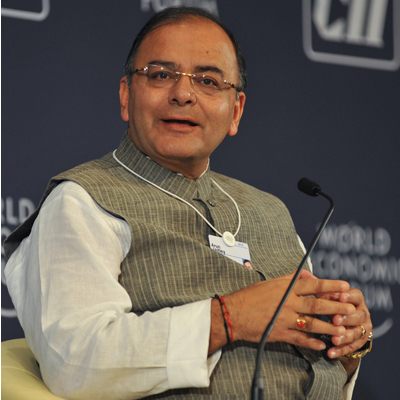
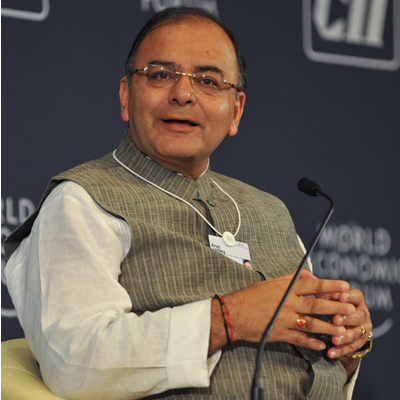
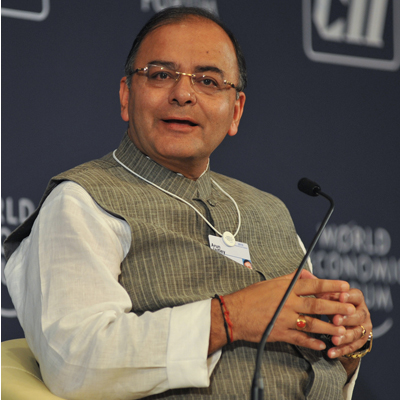
    NEW DELHI: The total budget of the Information and Broadcasting Ministry has been raised to Rs 3711.11 crore for 2015-16 against the revised budget of Rs 3176.80 crore (against the initial allocation of Rs 3316 crore) for the year 2014-15. This was announced by Finance Minister Arun Jaitley to the Parliament on Saturday, while presenting the Union Budget 2015 – 16.


    Additionally, the grants-in-aid for Prasar Bharati have been also raised from the revised estimates of Rs 2361.54 crore in 2014-15 to Rs 2824.55 crore for 2015-16, apart from an investment of Rs 200 crore by the government in the pubcaster.


    The investment in the pubcaster was stopped over the past two years but has been revived this year in the budget for 2015-16.


    Although the grants-in-aid for Prasar Bharati had provided for Rs 90 crore for the Kisan TV channel in the budget presented by Jaitley in July last year after the new government took over, the revised estimates for 2014-15 show the amount as Rs 21.68 crore and this amount has been raised to Rs 45 crore in the budget for 2015-16.


    An explanatory memorandum says that the grants-in-aid is meant for meeting salary and salary related expenditure. In addition, there is a proposal for Kisan TV for making available information to farmers across the country.


    (Expenditure on salaries of Prasar Bharati has fallen on the shoulders of the government since all Prasar Bharati employees, who were in employment as on 5 October, 2007 have been given deemed deputation status.)


    The allocation under ‘Secretariat – Social services’ covering centenary of cinema celebrations and digitisation of cable television among other things has gone up to Rs 235.23 crore as against the revised estimates of Rs 92.81 crore. Other subjects under this head include the National Film Heritage Mission, anti-piracy measures, promotion of Indian cinema overseas, production of films and documentaries, and setting up a centre of excellence for animation, gaming and visual effects. The explanatory note adds that Secretariat – Social services also covers expenses on development of community radio, and development support to the north-east as well as Jammu and Kashmir and ‘other identified areas’.


    The allocation under the Film Sector has been reduced to Rs 130.69 crore for 2015-16. The budget for the film sector for 2014-15 was Rs 135.81 crore while the revised estimates had put this figure at Rs 128.40 crore. There is an additional outlay of Rs 7.68 crore towards certification of cinematographic films.


    For the sixth year in a row, the government has not announced any investment in the National Film Development Corporation (NFDC).


    The allocation for Press Information Services, which includes grants to the Press Council of India has been marginally increased to Rs 71.45 crore from last year’s revised estimates of Rs 65.47 crore to meet the expenses for the Press Information Bureau, and the Press Council of India.


    For the first time after almost three decades, there is no allocation to the Press Trust of India for running the non-aligned countries news pool. (The pool had been established in the eighties but had gradually ceased to exist, although the allocation to PTI had continued.)


    The allocation to the Electronic Media Monitoring Centre has been reduced marginally to Rs 10.41 crore from the revised estimates of Rs 12.52 crore in 2014-15. The EMMC was set up for monitoring television and radio channels for violation of programme and advertising codes.


    The allocation for advertising and visual publicity has been more than halved to Rs 91.02 crore against the revised estimates of Rs 210.48 crore and budget allocation of Rs 230.37 crore for 2014-15, covering expenditure incurred by the Directorate of Advertising and Visual Publicity for publicity campaigns through advertising and other printed materials, as well as through radio, television, exhibitions and other outdoor campaigns.


    The allocation for research and training in mass communication has been raised marginally to Rs 26.26 crore as against the revised estimates of Rs 24.48 crore and the budgetary allocation of Rs 33.54 crore for 2014-15. This covers the Indian Institute of Mass Communication and the Research and Reference Division of the I&B Ministry, which collects and collates basic information on subjects of media interest for providing assistance to the Ministry and to its media units, Indian missions overseas, and newspapers and news agencies.


    There is an increase in the lump sum provision for projects/schemes for development of North-eastern areas including Sikkim to Rs 92 crore for 2015-16. The budgetary allocation had been Rs 100.5 crore in the 2014-15 but had come down in the revised estimates to Rs 75.2 crore.


    The Minister has also proposed a Centre for Film Production, Animation and Gaming in Arunachal Pradesh for the North Eastern states. Though there is no separate budgeting for it, Ministry sources told indiantelevision.com that this will come under the lump sum provision for the North East and from the Development of North Eastern Region Ministry.

  • Over 3000 posts in AIR, DD revived for filling through direct recruitment

    Over 3000 posts in AIR, DD revived for filling through direct recruitment

    NEW DELHI: The Government has said that 3067 of the 3452 identified as essential category posts in All India Radio (AIR) and Doordarshan to be filled through direct recruitment have already been revived.


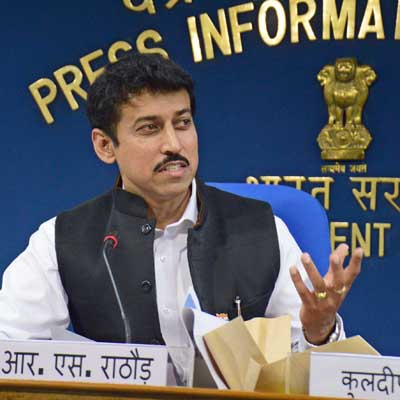
    Another 38 middle/senior level programme posts have also been revived through deputations, Minister of State for Information and Broadcasting Rajyavardhan Rathore told the Lok Sabha on 27 February.


    The Minister admitted that there are 16,764 vacancies in All India Radio and Doordarshan as against a sanctioned strength of 46,756. 


    Rathore said that the Sam Pitroda Committee had recommended a complete manpower audit of the pubcaster and also asked to draw up a re-deployment scheme. The Ministry had already asked Prasar Bharati to prepare an action plan in this connection, the Minister said. 


    In June last year, the then I&B Minister Prakash Javadekar had given his clearance in principle to setting up Recruitment Boards for Prasar Bharati, and Indiantelevision.com had learnt that a total of 1154 technical posts had been cleared by the relevant selection committees.


    These include programme executives, transmission executives, technicians, engineering assistants and duty officers, sources in Prasar Bharati said.


    The pubcaster has not had any senior-level recruitment since it came into being in September 1997, and sources said that those posts, which could not be filled out of these, were held up because there is no Prasar Bharati Recruitment Board.


    As of early 2013, there were 1362 vacancies in Group A, 1,584 in Group B, 4863 in Group C and 2272 in group D in All India Radio. In Doordarshan, 724 posts are vacant in Group A, 1140 in Group B, 2871 in Group C, and 1451 in Group D.


    All India Radio and Doordarshan had total staff strength of 33,800 against a total sanctioned strength of 48,022, leaving a gap of 14222 posts.


    The most critically affected areas were the Programme Wing and the News Services Division (AIR)/DD News.


    The Committee for Information Technology in 2012 regretted that Prasar Bharati had failed to live up to the assurance given by then Prasar Bharati CEO that the Recruitment Boards for Prasar Bharati would be set up by 31 March, 2011.


    It is understood that the Union Public Service Commission and SSC had both refused to select for a non-Governmental organisation, thus creating a new problem for the Ministry/Prasar Bharati.


    The Proposal for setting up a Prasar Bharati Recruitment Board was approved by Prasar Bharati Board on 21 July, 2010 and discussed in the Ministry and a final proposal was referred to the Department of Personnel and Training on 15 February, 2011. DOP&T concurred with the proposal in June 2011 and the comments of the Department of Expenditure (DOE) were also received on 28 September 2011.


    The DoE had requested that a separate proposal be formulated for creation of posts for the secretariat of Prasar Bharati Recruitment Board and also requested for drafting of agreement containing terms and conditions of the members of the Board. This had been done and the proposal sent to DoE in February 2012 and then to Law Ministry.  

  • National Optic Fibre Network cost escalates by Rs 10,000 crore

    National Optic Fibre Network cost escalates by Rs 10,000 crore

    NEW DELHI: A total of 97,480 km of National Optic Fibre Network (NOFN) is planned in the first phase out of the total envisaged – 244,729 km – in 36 states and union territories in the country.


    The government had set a budget of Rs 20,000 crore for the project, but Ministry sources informed Indiantelevision.com that the cost had already escalated to Rs 30,000 crore.


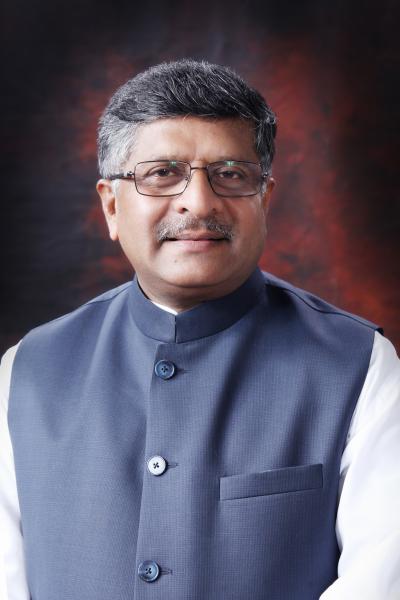
    Communications Minister Ravi Shankar Prasad told the Parliament that work was at various stages in all the planned regions.


    The NOFN aims to connect all Gram Panchayats in the country through optical fibre cable (OFC) by bridging the connectivity gap between Gram Panchayats and Blocks for providing broadband.


    Meanwhile, the number of fibre to the home (FTTH) and fibre to the building (FTTB) subscribers in Europe has soared, increasing by 50 per cent over the 12 months ending December 2014, according to the latest update to the FTTH Ranking announced at a press conference held at the FTTH Conference in Warsaw.


    There are now nearly 15 million FTTH/B subscribers in the European continent (14.5 million) – not including Russia and the Ukraine, which would add a further 14.8 million homes to the total (Source: FTTH market panorama prepared by IDATE for FTTH Council Europe).

  • FICCI pushes for 10-year tax holiday for AVGC industry

    FICCI pushes for 10-year tax holiday for AVGC industry

    NEW DELHI: With the nation waiting for the maiden Narendra Modi government’s Budget 2015, every sector is speaking its heart out with regards to their expectation from the Union Budget.


     The entertainment wing of the Federation of Indian Chambers of Commerce and Industry (FICCI) in its wish-list submitted to the Finance Minister Arun Jaitley- who also holds the Information and Broadcasting portfolio, addressed the issues faced by not just broadcast, cable and radio sectors, but also pointed out the changes needed in the cinema and animation sectors.


    Cinema


    Referring to the film sector, FICCI wants Digital Cinema Services to be included under the Negative List for Service Tax exemption, as this will help the industry, which is struggling against piracy. Digital Cinema service distributors were exempted from Service Tax vide notification of March but with the introduction of the Negative List in Service Tax, this circular got rescinded.


    It wants the Government to exempt performing artists from levy of Service Tax, which will help the industry that already suffers from very high rate of indirect taxes in India. Levy of service tax on artists increases the cost of the film producers and distributors, which ultimately gets passed on to the consumer.


    On-screen advertising in cinemas and multiplexes may be exempted from levy of service tax as the on-screen advertising within cinemas caters to advertisers with small businesses, with limited resources. The on-screen advertising forms an important source of revenue for the exhibitors, which are already reeling under the pressure of multiple taxes. Until recently, on-screen advertising within cinemas and multiplexes was subject to service tax till 30 June 2012. Since 1 October 2014, the negative list of services has been amended whereby on-screen advertising within cinemas shall be liable to service tax.


    There should be a clarificatory instruction on the on applicability of service tax on revenue sharing arrangements for exhibition of films. At present, service tax is levied on revenue of such sharing arrangements for exhibition of films between producers, distributors, sub-distributors, and exhibitors. But the exhibitions of films are carried out on a principal to principal basis and neither party renders any service to another.


    Furthermore, Rule 4(a) of the Service Rules 2012 should be amended suitably to include post-production services, as this will provide parity with goods imported for re-export and will promote growth of such services. At present, services performed on the goods temporarily imported for re-export are not liable to Service Tax due to specific provision in POPS Rule. But in case of post-production services such as dubbing, editing, title printing etc. the above rule is not applicable and Service Tax is payable.


    FICCI wants reversal of the increased withholding tax to eliminate the differentiation for the transactions with entities in nations having treaties and other entities. This withholding tax rate has a significant impact on payments to be made for acquisition of content. There is a direct impact on companies distributing foreign films in India and Indian films distributed outside India with non-residents with no treaty jurisdictions such as Croatia, Fiji, and Monaco etc. While the withholding rate for transactions with major treaty nations such as UK and US is in the range of 10 per cent to 15 per cent, the rate of 25 per cent is punitive for the same transactions which do not originate from treaty nations. (It pointed out that the Tax on royalty and fees for technical services earned by non-resident taxpayers has been increased from 10 per cent to 25 per cent in the cases where India does not have a Double Tax Avoidance Agreement (‘Treaty’) with the country of service provider.


    FICCI also wants a suitable reduction in the existing period of 90 days before end of the financial year (under Rule 9A and 9B of IT Rules) as this will grant relief to assesses whose feature films have incurred losses and have been released for exhibition in the last quarter of the financial year. It said that in certain cases where not all rights of exhibition of a feature film are sold and it is released for exhibition on a commercial basis within 90 days before end of the financial year, the feature film performs poorly and it is exhibited only for a short duration.


    Consequently, the film producer may not recover costs. In such cases in view of the prevailing IT Rules, the film producers are unable to claim a deduction of entire production cost and the loss is to be carried forward to the next financial year. Accordingly, such film producers are unable to claim losses in the year the feature film is released for exhibition despite no further scope of income. A similar situation exists in the case of expenditure of distribution rights in view of Rule 9B of IT Rules.


    Animation and Special Effects


    Referring to animation, special effects (VFX), gaming and comics (AVGC), FICCI wanted a 10-year Tax Holiday for the AVGC industry and lifting of service tax on studios developing original content. It wanted restoration of STPI advantage scheme for AVGC or ITES for another 10 to 20 years and cover/encourage exports as well as IP creation.


    It wants animation as one of the priority sectors and said the Minimum Alternate Tax (MAT) applicability for units undertaking Animation work in SEZ should be withdrawn to encourage export of animated contents.


    Encouragement should be given to entities through reduced tax rates/incentives for exploitation of self-developed content in overseas markets. Exemptions should be granted to overseas payments to foreign artists stationed overseas from withholding taxes. A 50 per cent reimbursable MDA (Market Development Assistance) should be given for travel and registration fees to international market events and withholding tax on revenues accruing from sales of mobile games in non-India markets as well as removal of withholding tax on the development contracts given to mobile game developers outside India should be removed. Also, there should be removal of withholding tax paid by expats working in India for Indian mobile game development companies. This was because of long gestation period, potential to generate IPs, and potential to generate future stream of incomes.


    The Government should consider setting up of co-production fund for a minimum of five years with Rs 110 crore each year with the Children’s Film Society, India, for AVGC. This will help the industry immensely and in the next five years India can boast of over 100 successfully implemented co-productions and shows, which will be extremely strong original intellectual property out of India, one of the strongest libraries establishing and restoring forms of art, culture and creative styles and designs which will be known throughout the globe. India would emerge a true leader in the digital content economy and it will ensure jobs for over 400,000 to 500,000 creative, techno creative and artistic youth of the country in the next five to seven years.


    The industry body says the excise duty on local manufacture should be brought down from 12.5 per cent to zero per cent (similar to film and music industry). This will enable CVD to be brought to zero. In addition, the Import duty on consoles (Gaming hardware) should be brought down to zero per cent. This will increase the installed base of gaming consoles to enable the local developer ecosystem to flourish.

  • No role in CBFC’s decision to put list of offensive words on hold: I&B

    No role in CBFC’s decision to put list of offensive words on hold: I&B

    NEW DELHI: Even as the Central Board of Film Certification (CBFC) has put on hold the list of 28 “objectionable and abusive” words to be banned from Indian films, the Information and Broadcasting Ministry has denied any role in this.


    A Ministry official told Indiantelevision.com that any decision in this regard may have been taken at the level of the Board or by its chairman Pahlaj Nihalani, who had issued the list, leading to protests from some members.


    Interestingly, in reply to a question in the Rajya Sabha in this regard on 24 February, Minister of State for I&B Rajyavardhan Rathore had said, “CBFC under the Ministry certifies films for public screening in accordance with the Cinematograph Act, 1952 and Cinematograph (Certification) Rules, 1983. Section 5B of the Cinematograph Act, 1952 provides principles for guidance in certifying films. Guidelines for certification of films notified under the Cinematograph (Certification) Rules lay down among other things that CBFC shall be guided by the following principles in this regard: (i) human sensibilities are not offended by vulgarity, obscenity or depravity; and (ii) such dual meaning words as obviously cater to baser instincts are not allowed.”


    Interestingly, the Minister refrained from making a comment on the list issued by Nihalani.


    Meanwhile, it is learnt that Nihalani will be meeting Ministry officials in New Delhi in the next few days.


    Earlier in a circular to the producers’ association and regional officers, the Board listed several “objectionable words” that are being used in films and directed its regional officers to ensure a ban on the list of cuss words. It also aimed to seek more conformity from directors and scriptwriters on cultural matters and political correctness. It also said ‘Mumbai’ should be used in place of ‘Bombay’ in films.


    The list led to a Twitter war where some members said Nihalani had taken the decision unilaterally.


    However, Nihalani told Indiantelevision.com that he was within his rights to issue the list as he was only following the powers given to him under the Cinematograph Act and was only referring to words that the Certification Guidelines do not allow.


    It is learnt that during a several-hours-long meeting of CBFC in Mumbai earlier this week, several members of the board opposed the move to impose such a ban. It is understood that status quo would be maintained and the list will be put on hold, the source said.


    The letter by Nihalani directed its regional officers not to issue certificates to films, which use these words, which are abuses in Hindi and English, and it has also been specified that double meaning words, violence against women and glorification of bloodshed should not be allowed.

  • English ads on TV only a small fraction as compared to Hindi & regional ads: Rathore

    English ads on TV only a small fraction as compared to Hindi & regional ads: Rathore

    NEW DELHI: The audio-visual medium received 55.7 per cent of the government advertisements in Hindi as compared to 32.38 per cent in the print medium in rupee terms during 2014-15 until 13 February.


    Minister of State for Information and Broadcasting Rajyavardhan Rathore told the Parliament that only 2.79 per cent advertisements were given in English to the audio-visual medium as compared to 28.53 per cent in the print medium.


    The regional electronic media received 41.49 per cent of the advertisements as against 30.09 per cent to the print medium.

  • Reliance Jio awaits security clearance for pan India MSO licence

    Reliance Jio awaits security clearance for pan India MSO licence

    NEW DELHI: Despite announcements by the Information and Broadcasting Ministry about expediting clearances, several proposals by private multi-system operators have remained pending for long periods either with the I&B or the Home Ministry. 


    However, I&B secretary Bimal Julka told Indiantelevision.com today that a letter had been sent to the Home Ministry to expedite security clearances, so that the DAS targets could be met.


    The Ministry said a proposal by Reliance Jio for registration as a multi-system operator (MSO) under the digital addressable system was sent to the Home Ministry on 2 Feburary for security clearance.


    The representative of Reliance Jio, Abhishek Soni, was told that the Home Ministry will take some time to furnish comments/security clearance.


    CAT Vision, during a recently held open house meeting, was told that a reminder was being sent to the Home Ministry in its case. Signum Digital Network was also given the same assurance.


    Digirevo Networks received a similar response to its query at the open house meeting.   


    Indiverse Broadband was told that its request for foreign direct investment (FDI) had been turned down by the Finance Ministry. Its representative said the company had already informed the I&B Ministry in June last year that it no longer needed FDI. However, it was informed by the Ministry officials that no such response had been received from the company.

  • Infrastructure status for b’cast industry, reduce customs duty on STBs: FICCI budget wish-list

    Infrastructure status for b’cast industry, reduce customs duty on STBs: FICCI budget wish-list

    NEW DELHI: The Broadcasting industry should be granted infrastructure status to push the digitisation agenda of the government. 


    In its wish-list submitted to Finance Minister Arun Jaitley – who also holds the Information and Broadcasting portfolio – the entertainment wing of the Federation of Indian Chambers of Commerce and Industry (FICCI) said that in the present era of convergence, the distinction between Telecom, IT and Broadcasting sectors is getting blurred. 


    The Telecom sector is already treated as “infrastructure service” and so giving the infrastructure service status to broadcasting will provide a level playing field to the sector.


    Broadcasters and distributors will be aided with better and affordable financing options in the very capital intensive growth phase. 


    The FICCI wish-list covers television and radio broadcasting, cinema and animation and gaming, apart from suggestions relating to advertising in the media. 


    At the outset, FICCI says the Indian media and entertainment industry grew from Rs 821 billion in 2012 to Rs 918 billion in 2013, registering an overall growth of 11.8 per cent. Given the impetus introduced by digitisation, continued growth of regional media, new government formation, strength in the film sector and fast increasing new media businesses, the industry is estimated to achieve a growth rate of 15.3 per cent in 2014 to touch Rs 1059 billion. The sector is projected to grow at a healthy CAGR of 14.2 per cent to reach Rs 1786 billion by 2018. 


    Television clearly continues to be the dominant segment, but strong growth has been posted by new media sectors, whereas gaming and digital advertising recorded a strong growth of 25.5 per cent and 38.7 per cent compared to the previous year. The music sector has shown a decreasing growth (-9.9 per cent growth in 2013 over 2012 compared to 18 per cent growth in 2012 over 2011) despite strong content and digitisation.


    Radio is anticipated to see a spurt in growth after the roll-out of Phase III licensing. The benefits of Phase I cable digital access system (DAS) rollout, and continued Phase II rollout are expected to contribute significantly to strong continued growth in the TV sector revenues and its ability to invest in and monetize content. 


    The sector is expected to grow at a compounded annual growth rate (CAGR) of 18.1 per cent over the period 2013 to 2018.


    Set Top Boxes 


    It said the expected investment in set top boxes alone is around Rs 20,000 to Rs 25,000 crore and therefore wants the customs duty levied on STBs to be on the transactional value and not the maximum retail price. Basic customs duty should be reduced to five per cent if not zero per cent as this will help push digitisation faster, which would lead to transparency which will result in manifold increase in the tax revenues from Service Tax, Entertainment tax and Income-Tax. 


    Television Sector


    Referring to tax withholding on Transponder hire charges (Section 9(1)(vi) Explanation 6 of Income Tax Act, 1961), FICCI pointed out that the Finance Act 2012 amended the section to retrospectively include payment for transponder hire and other charges as royalty. However FICCI wanted a clarification to be issued that Transponder hire charges are not “royalty” as Courts in India have held that such charges are not ‘royalty’ or ‘Fee for Technical Service’ (FTS). The law was retrospectively amended to nullify the effect of the judicial decisions. This is an artificial deeming provision hurting industry. These are standard services and no transfer of technology. OECD commentary also does not treat such payments as “royalty” or “FTS”. 


    On tax withholding rate on Royalty (Section 115A (1) (A) & (B) of Income Tax Act, 1961), FICCI said the Finance Act 2013 increased withholding rate from 10 per cent to 25 per cent. However, it wanted that the 10 per cent withholding rate should be restored as most of the Tax Treaties have 10 per cent or 15 per cent rate and most of the contracts are on ‘grossed up’ basis leading to 37 per cent tax burden on Indian payer. This assumes almost 100 per cent profit on the payment at current corporate tax rate and is absurd, says FICCI. The change will also reduce the cost to Indian business/consumer and would benefit Broadcasting, DTH and HITS sectors. 


    Section 72A of the Income Tax Act 1961 allows carrying forward of losses in case of amalgamation or merger for service industry. Currently, all industrial undertakings in the Manufacturing, Software, Electricity, Telecom, etc. sectors are allowed carry forward of losses in case of merger /amalgamation, but the services industry undertaking in general is not allowed such carry forward. Section 72A(7)(aa) should be amended to include Broadcasting, Media and Entertainment sector if not all services sector undertakings to ensure a level playing field with other services industry like Telecom, Software etc. as this will encourage consolidation for rapid growth.


    Credit under the ‘Served From India Scheme’ under the Foreign Trade Policy is currently available as set off against excise and customs duty liability and the period of utilisation of SFIS credit is two year and is not transferable. Therefore, the SFIS credit should be allowed as set off against Service Tax liability in addition to Excise and Customs Duty liability. SFIS credit should be made transferable or tradable outside the group entities similar to DEPB scheme. The period of utilization of SFIS credit should be increased from two to five years. FICCI says that for the purpose of CENVAT credit, there is no distinction between Service Tax and Excise duty and not all companies have import requirement and thus the benefit of the scheme is not really received by such company. Making SFIS credit transferable will give level playing field with DEPB and other incentives schemes.


    Doordarshan 


    FICCI wants Doordarshan to launch DD Kids, a channel dedicated to kids’ content in “digital terrestrial” space as it would promote intellectual property creation in India in the field of animation and other content for children. 


    Radio 


    Referring to radio, the industry body said it wanted reduction of customs duty on radio broadcasting equipment to four per cent especially on transmitters, consoles etc which are not produced in India. It said there is no justification for the high CVD and additional CVD being charged and India has one of the highest import duty rates for transistors. 


    It wanted a removal of the service tax on advertisement in radio since it competes with newspapers at local level even though there is no service tax on advertisement on newspapers. This will also provide a level playing field to radio. 


    Referring to FM Radio Phase III, FICCI wanted assistance to raise money, provide priority Provide tax holiday for five years for new capital investment in Phase III and provide a fiscal sector lending sector status so that radio industry is able to access easier availability of finance at with lower interest rates. This was because a large amount of capital is required for the roll out of phase III of FM radio privatization.

  • MSOs, LCOs working towards increasing broadband reach: I&B

    MSOs, LCOs working towards increasing broadband reach: I&B

    NEW DELHI: Officials in the Information and Broadcasting Ministry said that several multi-system operators (MSOs) and local cable operators (LCOs) were already helping in increasing the reach of broadband throughout the country.


    However, these officials told Indiantelevision.com that they were unaware of any approach to the Ministry by the Department of Telecom (DoT) to seek the help of MSOs and LCOs for this purpose.


    They agreed that using LCOs would help as this segment had the last mile connectivity all over the country. In any case, it was felt that MSOs and LCOs – being private businesses – could be approached directly by the DoT.


    It was stated by LCO and MSO sources that several LCOs were already involved in the business of broadband penetration in addition to television. Furthermore some MSOs and LCOs already had licences for this purpose. One MSO said that the DoT had in fact already devised different categories of licensing for such purposes.


    The Broadband Policy 2004 had also suggested that cable TV network be used as a franchisee network of the service provider for provisioning broadband services, the official added.


    Some MSOs and LCOs have held a meeting with DoT in this connection, and sought certain facilities. 


    The government plans to provide broadband connectivity across the country and it has to work on many fronts, the official said adding that one is National Optical Fibre Network (NOFN), which will cover villages, and the other will be to ensure Internet connectivity in cities and small towns.


    The government plans to utilise Universal Service Obligation Fund to provide incentives to ensure coverage in such areas through viability gap funding, DoT officials said. 

  • MPs push for fresh guidelines to promote India as film destination

    MPs push for fresh guidelines to promote India as film destination

    NEW DELHI: Information and Broadcasting Ministry (I&B) Arun Jaitley said that all efforts need to be taken to give the concept of India as a film destination a strong ‘Brand Push’ to promote India as a soft power.


    The branding could be undertaken by creating and promoting a capsule that incorporated the key features of India’s professional ability, that is skills, human resources, diverse locales, filming support from institutional structures and core strengths of India’s film industry. This capsule needed to be showcased at all major international film festivals as part of the efforts to promote the ‘filming destination concept.’


    The Minister was chairing a meeting of the Consultative Committee of Members of Parliament attached to the I&B Ministry to discuss the issue of “India as a soft power – As a Filming Destination.” Minister of State Rajyavardhan Singh Rathore was also present in the meeting.


    Jaitley said the topic for discussion was extremely important in view of the efforts being made to project India’s ability and standing as a soft power and a filming destination. The concept would not only facilitate the contours of growth of the film industry but would also promote the diversity of India to the world through the medium of films and cinema. This initiative and proactive stance would boost the inflow of tourism in India from other countries. Jaitely also emphasized that there was a need to simplify procedures and rules in order to promote the idea in letter and spirit.


    A presentation was made on behalf of the Ministry giving an overview of the steps and initiatives undertaken so far to promote India as a soft power. The presentation provided an overview of the processes involved to promote filming in India with reference to the multi pronged strategy adopted by the Ministry. Specific references were made to promotion to film festivals and film bazaars, co-production units, the proposed legislative framework and policy initiatives to promote skill development in the film industry.


    Members of the Committee gave suggestions to ensure that the concerns of the stakeholders were addressed and the idea was implemented in totality. It was emphasized that skill development was a critical area and necessary measures needed to be taken by the Government and the industry together.


    It was also suggested that rules and guidelines for promoting the destination concept required a relook. Laws and rules needed to be in sync with contemporary technological tools. It was also mentioned that the concept required collaboration and partnership between the ministry and the state governments and other stakeholders.