Tag: I&B ministry

  • India steps up fight against digital piracy

    India steps up fight against digital piracy

    MUMBAI: The Ministry of Information and Broadcasting has opened the floor to industry voices as it plans a major revamp of India’s digital anti-piracy armour.

    A public notice issued on 7 November invites inputs from film producers, broadcasters, OTT platforms and telecom players on tackling the fast-spreading menace of online content theft. With billions lost each year to pirated movies and shows, the government is keen to tighten its grip on digital delinquents.

    Stakeholders have been asked to share their experiences on identifying and removing pirated content, plugging technological gaps, improving coordination with enforcement agencies and adopting global best practices that fit India’s media landscape.

    Suggestions can be emailed to digital-mediamib@gov.in within 20 days of the notice. The move signals a renewed push to build a stronger, smarter defence for India’s creative economy, before the pirates sail any further.

  • MIB  & the business of TV channel licensing in 2024

    MIB & the business of TV channel licensing in 2024

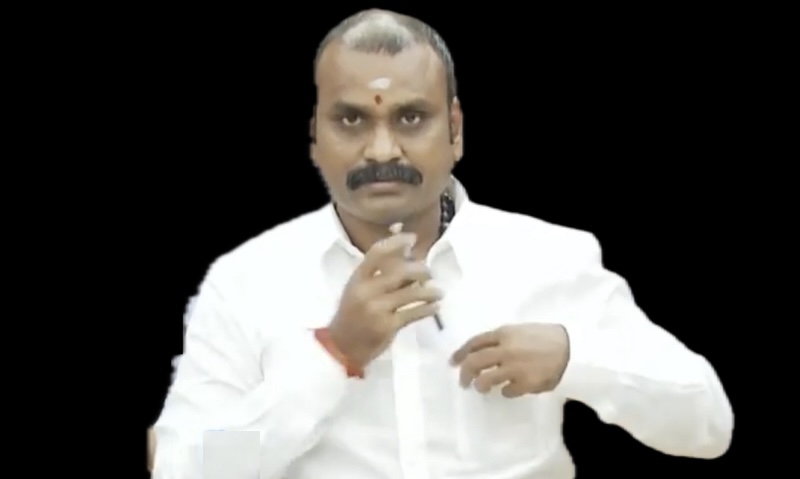
    MUMBAI: The Indian government has rejected more than half the number of licence applications it has approved  in 2024. This was revealed by the information & broadcasting minister of state L. Murugan in the Rajya Sabha on 20 December 2024.  This was in response to a question posed in the upper house of parliament. 

    According to him,the  I&B ministry rejected 13 applications for channel licences in 2024, the highest number in the past five years. It has approved 22 applications for licences and renewed 34 of them in 2024. 

    The number of channel licence applications approved in 2024 was twice the number that were given the green light in 2023. .

    2024 is also the year when the MIB cancelled the least number of TV channels in the past five years. The figure for 2024 is only one, while in 2021 it cancelled 24 TV licences.

    Since, 2020 the government has rejected 34 applications for channel licences, of which 13 are accounted for by the rejections in 2024. 110 new channel licence applications have been approved since 2020, while 269 channel licence renewal applications were approved.  

    The list of channel licence applications approved, renewed, rejected and cancelled. as given by L. Murugan in the Rajya Sabha is in the table below:: 
     

    Status of tV channel licence applications

  • India can be the post-production hub of the world: I&B minister Anurag Thakur

    India can be the post-production hub of the world: I&B minister Anurag Thakur

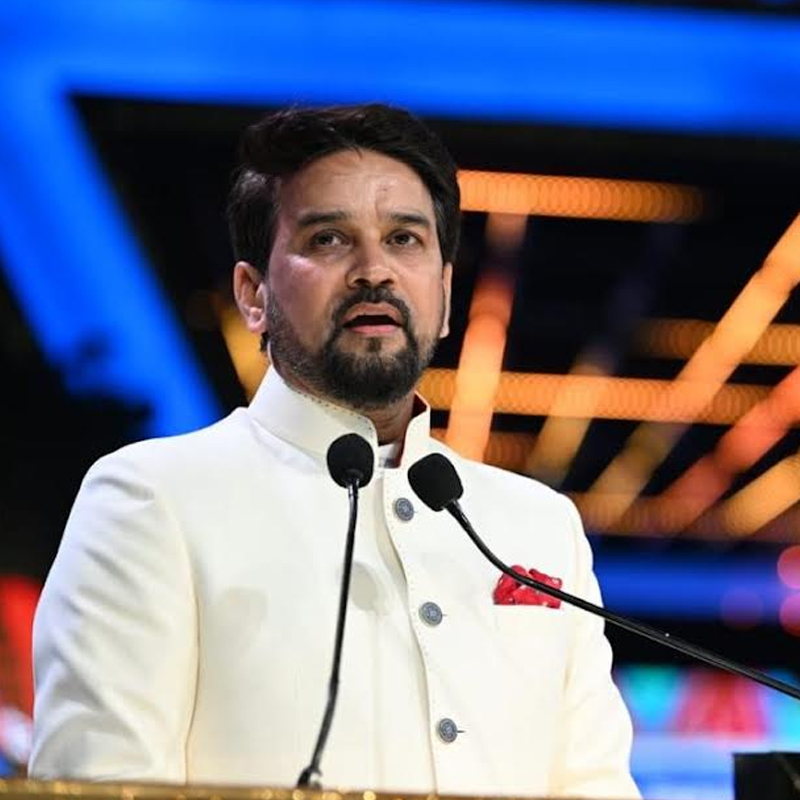
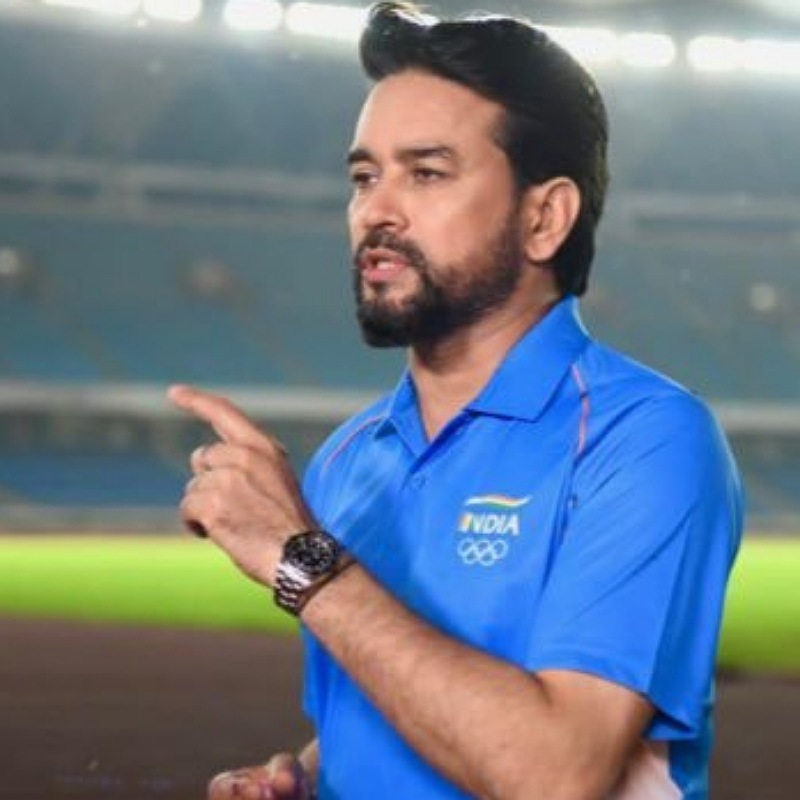
    Mumbai: “International Film Festival of India (IFFI) has become a platform for film directors from all over the world to showcase their work. I am sure that India will become a hub for co-production, post-production, film shooting, content, and also for the technology partners,” said the union minister for information & broadcasting and youth affairs & sports Anurag Thakur, during the inauguration ceremony of the 53rd edition of the International Film Festival of India at Panaji, Goa.

    Thakur added that his vision is to make India the most sought-after destination for film shoots and post-production, backed by the talent of our people and the innovation of our industry leaders.

    The minister went on to say that his vision for IFFI isn’t limited to a single event, but rather what IFFI should be when India celebrates its 100th year of independence, when we switch from Amrit Mahotsav to Amrit Kaal. “We aim to make India a powerhouse of content creation, especially regional cinema, by scaling up regional festivals. India can be the post-production hub of the world by leveraging the immense tech talent amongst our skilled youth,” he added.

    “For the first time, gala premieres of Indian, global, and OTT films will be held at IFFI, including the premiere of the fourth season of the globally acclaimed series Fauda, which features some of the biggest Israeli stars in the world today. I would also like to share that the next season of this show will also be launched at IFFI,” Thakur added.

    The minister further congratulated celebrated Spanish filmmaker Carlos Saura for winning the Satyajit Ray Lifetime Achievement Award this year. He also announced that the Indian Film Personality of the Year award will be conferred to South Indian actor Chiranjeevi.

    While sharing the achievements, Thakur pinpointed the importance of the Film Bazaar, which is being organised on the sidelines of IFFI. “For the first time, IFFI has augmented the scope of the ‘Film Bazaar’ by introducing ‘Country Pavilions,’” he added.

  • India’s M&E industry needs to focus on incredible creative endeavours: Disney+ Hotstar’s Gaurav Banerjee

    India’s M&E industry needs to focus on incredible creative endeavours: Disney+ Hotstar’s Gaurav Banerjee

    MUMBAI: Delivering an address at a session of Ficci Frames Fasttrack 2022 called ‘The Magic of Online Curated Content (OCC)’, Disney+ Hotstar head content Gaurav Banerjee said that the time is now for India’s media and entertainment industry to focus on incredible creative endeavours. 

    “We need to do better when it comes to incredible creative endeavours. The time for us to crack the code of creating incredible stories that travel all over the world is now. It is up to all of us to do better, to equip ourselves better. We must note that this is what our potential is. That is when massive success for all of us will follow,” Banerjee added.

    He gave an example of Korean content. The movie “Parasite” won multiple Oscars including best picture, director and screenplay. Recently, a Korean actor won an Emmy. It was a Korean show on Netflix that got incredible followership all over the world.

    He also said that the entertainment industry choosing to do things for profit or a larger social cause is a false choice. “We must do both.” 

    He gave the example of Satyamev Jayate, a show that Star did. When the show returned, he took the decision not to market other shows. Only this show was marketed. Interestingly, nobody complained. Instead, the fact that the show took a position against female infanticide was greatly appreciated. His company always wanted to be part of a large cause. That was when greater success followed. He added that there were two components in the media and entertainment industry – artists and fans. “They want us to do more and do the right thing.” This, he said, had massive business benefits. And even if doing the right thing does not always produce big benefits one must still do it.

    In his address, he mentioned the media and entertainment are accountable to society. “Creativity works in the service of society.” Disney, he said, believes in this contract. When it has followed the reward has happened. But equally, when it didn’t follow there were punishments. In terms of Disney Star’s curated content journey, he said it is notable for how women have been treated over the years. 

    This was never the case earlier even though cinema had existed for decades. The first phase for him was the early 2000s with the K serials and other shows like Sanjivani. The decision was taken to put women at the centre of storytelling. It was not just about entertaining people. This was a big massive change happening at scale. “The impact was massive and significant.” He pointed to a study done by two American scholars from the University of Chicago. They went to homes before they got satellite TV and went back to the same homes three years later after they got exposed to those shows from Star India and other companies. As a result, women’s preference for male children fell by 20 per cent. Women’s tolerance for abuse decreased by 10 per cent. 8 per cent of girls between the ages of 6-10 went to school. “There was a lot of power in this room. Sometimes, we lost sight of it.”

    The Chicago study was phase one. This second phase came around 10-11 years later. The broadcaster decided that it was not enough to just put women at the centre. They need to work and become successful professionals. They were backed by their husbands and in-laws. Star did a show. 

    On TV, people were told that there is no job that a woman cannot do. However, at that time some things were sacred like marriage. This changed with the third phase in 2020. The show Anupama questioned marriage. The storyline, he noted, was powerful. If a woman was taken for granted, was that worth it? At 45, she could start a new life cheered by India.

    When asked a question on TV versus OTT he noted that the creativity paths were similar. All content on Star’s TV channel is put first on OTT. So for example new episodes of Anupama come first to Disney+Hotstar at 6 a.m. Creativity answers are the same. A good show is a good show. The same logic applies to movies. But he also acknowledged that distribution channels make a difference in digital because people use mobile content to watch solo. So edgier themes and shorter stories are more convenient. He added that his team watches a lot of content. They watch Youtube, OTT and TV. Often they call creative people like filmmakers about the possibility of working together. The best way to get a yes in terms of working with Disney+Hotstar is if he calls.

    The keynote address was delivered by the Ministry of Information & Broadcasting (MIB) joint secretary (P&A) Vikram Sahay. He was in favour of the government keeping itself away from the area. Online content curation must have self-discipline and grow. There is self-certification. He noted that people are taking advantage of the low Internet costs. “Today online, curated content is the big thing in terms of reach, popularity. OTT is here to stay. We have been producing some very good original, value-based content.” He added that actors, screenwriters, etc., who were not getting a chance in films now got a space. More people can showcase their talent. He noted that six months back the MIB ministry had developed a mobile game on India’s freedom struggle and this was done with Zynga. It is in English and Hindi. There are prizes to incentivise children. For promotion, a 30-second rap song was created. 

    “Now the game has been launched globally.” While the government around a year and a half back introduced a three-tier system, a grievance mechanism where people can voice their complaints about digital content, he said that this has not inconvenienced any of the OTT platforms. That is because most people are happy when their grievance is heard and they get a response. “We have not heard a single OTT platform complain about the grievance system. Nobody will be inconvenienced or be burdened.”

    During a panel discussion on being asked how the journey of The Viral Fever (TVF) started, Head- TVF Originals Shreyansh Pandey said, “TVF came into existence because a unique set of audience who were not getting entertained from the television or let’s say the shows which were being run at that time – they wanted something fresh, they wanted something new.”

    The actor Divya Dutta, on being asked how it has been for an actor when OTT is booming, said, “It’s a good time for actors. It is the layer of characters now. You get that time when it comes to a series vis-à-vis a short film or a feature film.”

    The filmmaker Nikhil Advani talked about the lack of pressure in creating content and the freedom which follows. He said, “On OTT, the shelf life is longer. The word of mouth stays for a longer time. The pressure to get stars the numbers vis-à-vis a story…this is easy when you have OTT.”

    The actor Sohum Shah also talked about the reach of OTT and its rising popularity. “Films like Tumbbad have reached more audiences because of OTT. As an actor, it also allows you not to get typecast and work like a chameleon. It is also good, especially for female actors. Talent is flourishing because of OTT,” he added.

  • Prasar Bharti collaborates with IIT Kanpur for direct-to-mobile broadcasting project

    Prasar Bharti collaborates with IIT Kanpur for direct-to-mobile broadcasting project

    Mumbai: Today, there is a shift in viewing habits from linear television to OTT and from theatres to OTT. The rise in content creation is leading to more and more jobs for people. With the arrival of 5G, there is the possibility of direct-to-mobile broadcasting. In a collaboration, Prasar Bharti and IIT Kanpur have come up with a proof of concept whereby, with a small attachment, there can be a direct-to-mobile broadcast. So, without purchasing data, there can be 100-200 channels streamed direct to mobile.

    Speaking at Ficci Frames Fasttrack 2022, I&B secretary Apurva Chandra said, “Without data and high-quality internet, users will be able to see high-resolution movies and listen to digital radio on their mobile phones. This change is coming. It will happen.”

    He also announced that a report on the creation of an AVGC task force will be submitted soon. He noted that there were reports on skills, gaming, education, incentives, and other policy aspects within the task force. They are all being combined and will be submitted to the authorities. He added that the report will be adopted during the course of the year.

    “AVGC is the future of this country. The best Hollywood films are being created in Bangalore and other places. AVGC will be the next great revolution like IT was 30 years ago,” he stated. Furthermore, he mentioned changing the cinematography act to include anti-piracy provisions. Also, there will be an age classification within the U/A category. The aim is to bring in amendments to the Act and put it before Parliament during the winter session.

    He further added that the AVGC centre of excellence, which has not seen the light of day over the past six years, aims to do this only in collaboration with the private sector. An in-principle decision has been taken in this regard. A total of 26 per cent of the task force will be owned by the Confederation of Indian Industry (CII), 48 per cent by the ministry of information and broadcasting (I&B), and 26 per cent by the Federation of Indian Chambers of Commerce & Industry (Ficci).

    He also said that the media and entertainment industries should target a combined size of $100 billion by 2030. He noted that during National Cinema Day, theatres were full even in the morning. That, he said, shows that you can get people to view movies in theatres as long as the ticket pricing is right. National Film Development Corporation of India (NFDC) will be the cinematic arm of the I&B ministry. The four film units will be merged into one. The film facilitation office will be revamped, he concluded.

  • Barc reaching out broadcasters to inform about new reporting standards: I&B minister

    Barc reaching out broadcasters to inform about new reporting standards: I&B minister

    Mumbai: The minister of information and broadcasting Anurag Thakur told the Lok Sabha that the Broadcast Audience Research Council (Barc) India is reaching out to all constituents to sufficiently inform and educate them about new augmented data reporting standards and would require eight weeks’ time to resume the reporting of individual news channels.

    In October 2020, Barc announced that it would cease publishing weekly individual ratings of news and niche genres for an initial period of 8-12 weeks. The I&B ministry directed Barc to maintain the status quo in February 2021 in view of alleged reports of manipulation of rating data and review the whole ecosystem of publishing of ratings.

    A committee was instituted under the chairmanship of Prasar Bharati CEO Shashi Shekhar Vempati which made recommendations on strengthening corporate governance and bolstering technical oversight of the existing rating agency.

    “In the spirit of the recommendations of the above-said TRP Committee and Trai, various steps on corporate governance and on streamlining of processes and their transparency have been taken by Barc,” said Anurag Thakur. “The management involvement in the rating generation process has been institutionally removed. The Oversight and Technical Committees within Barc have been strengthened for data validation and methodology. The access protocols for data have also been revamped and tightened. Notwithstanding the existing processes put in place by Barc, reforms are a continuous process and policy prescriptions as may be required are made by the government from time to time.”

    “After review of the steps taken by Barc on corporate governance and on streamlining of processes and their transparency etc. Barc had been asked on 12 January to resume the release of the news ratings,” he added.

  • Kerala HC dismisses Media One’s plea against order barring transmission

    Kerala HC dismisses Media One’s plea against order barring transmission

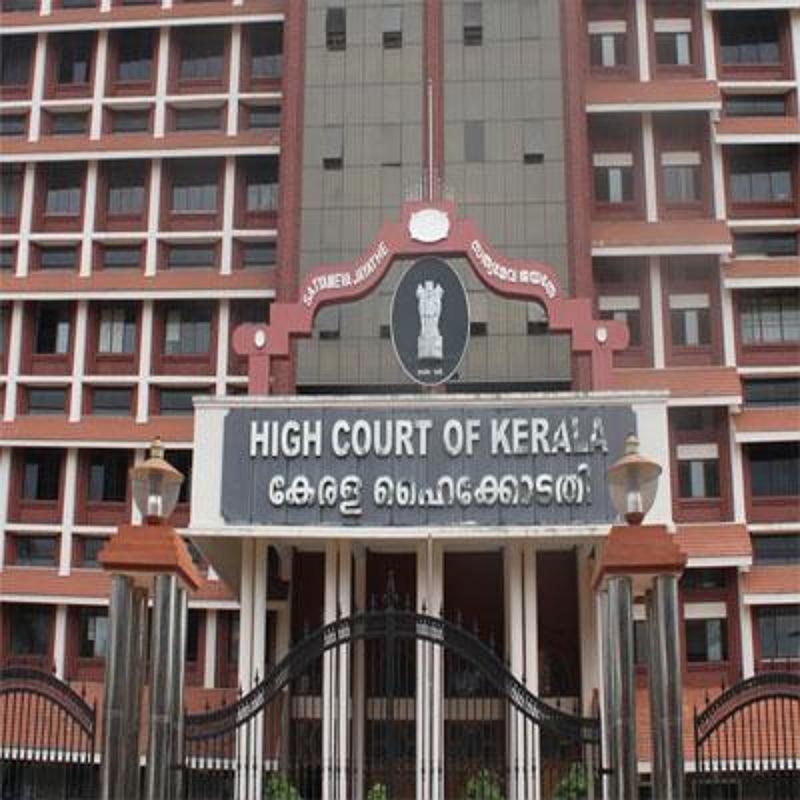
    Mumbai: The Kerala high court on Tuesday dismissed the petition of Malayalam news channel Media One TV challenging the government’s order barring its transmission after the ministry of home affairs refused security clearance for renewal of the channel’s license.

    The bench of Justice N Nagaresh dismissed the appeal after going through the files submitted by the ministry of home affairs following the ban order issued by the ministry of information and broadcasting. The court observed that there are sufficient grounds for denying permission for the renewal of the channel’s license.

    Madhyamam Broadcasting Ltd which operates the channel MediaOne had applied for renewal of permission on 3 May 2021 was denied security clearance by the ministry of home affairs. In response to a show-cause notice sent by the I&B ministry, the company mentioned that they are “unaware of the grounds for denial of security clearance.”

    According to the I&B ministry order, clause 9.2 of the uplinking guidelines stipulates that security clearance of a company and its directors is a prerequisite condition for grant of permission for TV channels which is up for renewal every ten years.

    Subsequently, MediaOne posted a statement on its social media handles stating that it would take legal steps against the I&B ministry’s order. This is the second time that the MediaOne channel has been barred from airing. In March 2020, Asianet News and MediaOne TV had been barred for 48 hours by the I&B ministry citing security concerns.

  • Budget 2022: I&B ministry allocation slashed to Rs 3980.77 crore in FY23

    Budget 2022: I&B ministry allocation slashed to Rs 3980.77 crore in FY23

    Mumbai: The Union Budget 2022 has earmarked a total sum of Rs 3980.77 crore for the ministry of information and broadcasting in the fiscal year 2022-23. This amounts to a decrease of Rs 90 crore from last year.

    With the exception of the Press Council of India that saw an increase of Rs 7 crore, up from Rs 20 crore in FY22 to Rs 27 crore for FY 23, the budgets for all other autonomous bodies under the MIB were slashed.

    Allocation for Prasar Bharati’s declined to Rs 2,555.29 crore from Rs 2,640.11 crore in the last financial year. The same was the case with The Films and Television Institute of India (from Rs 58.48 crore last year to Rs 55.39 crore this year), the Indian Institute of Mass Communication (from Rs 65 crore to Rs 52 crore), Children’s Film Society of India and the Satyajit Ray Film and Television Institute.

    Allocation for broadcasting under the social services head has also gone down from Rs 2,921.11 crore to Rs 2,839.29 crore. There was also a reduction in the budget for ‘information and publicity’ from Rs 971.26 crore to Rs 942.04 crore.

    ‘Information and publicity’ covers establishment expenditure of media units in the country such as the Bureau of Outreach and Communication, Press Information Bureau, Publications Division, New Media Wing, Registrar of Newspapers for India (RNI), Films Division, National Film Archive of India, Electronic Media Monitoring Centre and others.

    Hailing the budget as “beneficial”, information and broadcasting minister Anurag Thakur said that it is a blueprint to fulfil the hopes and aspirations of a new India in the 100th year of its independence.

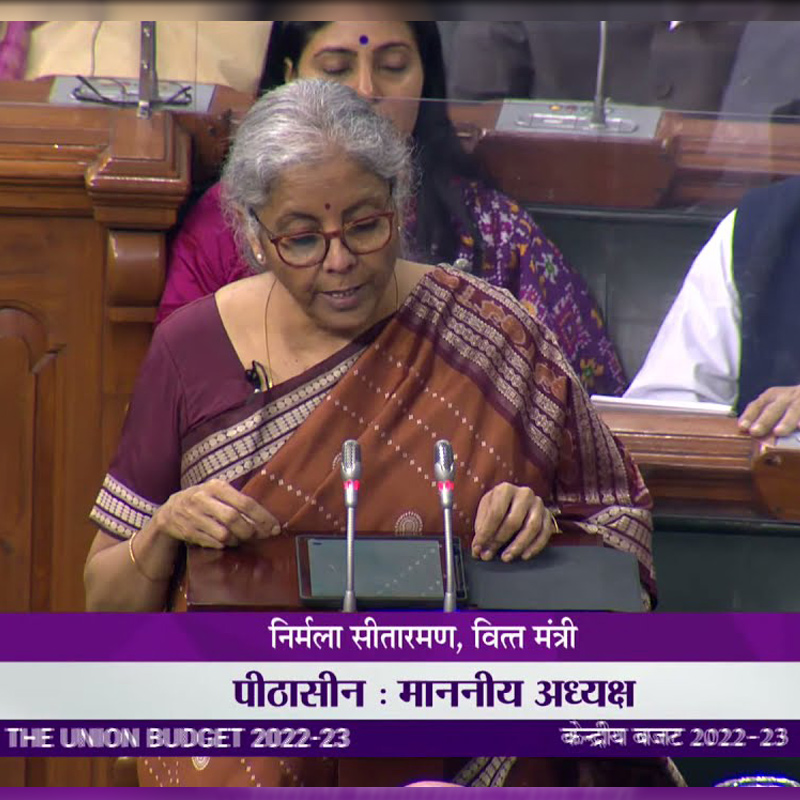
    The annual budget for 2022-23 was presented by finance minister Nirmala Sitharaman in Parliament on Tuesday.

  • Kerala HC defers MIB order pulling news channel MediaOne off air

    Kerala HC defers MIB order pulling news channel MediaOne off air

    Mumbai: The Kerala high court has issued a two-day stay on the ministry of information and broadcasting (MIB) order revoking the permission for downlinking and uplinking of Malayalam news channel MediaOne.

    Madhyamam Broadcasting Ltd which operates the channel MediaOne had applied for renewal of permission on 3 May 2021 was denied security clearance by the ministry of home affairs. In response to a show-cause notice sent by MIB, the company mentioned that they are “unaware of the grounds for denial of security clearance.”

    Malayalam channel MediaOne goes off air as MIB revokes permission

    According to the MIB order, clause 9.2 of the uplinking guidelines stipulates that security clearance of a company and its directors is a prerequisite condition for grant of permission for TV channels which is up for renewal every ten years.

    Subsequently, MediaOne posted a statement on its social media handles stating that it would take legal steps against the MIB order. This is the second time that the MediaOne channel has been barred from airing. In March 2020, Asianet News and MediaOne TV had been barred for 48 hours by MIB citing security concerns.

  • Malayalam channel MediaOne goes off air as MIB revokes permission

    Malayalam channel MediaOne goes off air as MIB revokes permission

    Mumbai: The ministry of information and broadcasting (MIB) on Monday revoked the permission granted to Madhyamam Broadcasting Ltd to uplink and downlink the Malayalam news channel MediaOne citing security concerns.

    The MIB granted permission to the MediaOne channel to be aired on 30 September 2011 which was valid up till 29 September 2021. According to the ministry order, clause 9.2 of the uplinking guidelines stipulates that security clearance of a company and its directors is a prerequisite condition for grant of permission for TV channels which is up for renewal every ten years.

    Madhyamam Broadcasting Ltd which had applied for renewal of permission on 3 May 2021 was denied security clearance by the ministry of home affairs. In response to a show-cause notice sent by MIB, the company mentioned that they are “unaware of the grounds for denial of security clearance.”

    On its social media handles, MediaOne has put out a statement attributed to its editor Pramod Raman. It reads, “MediaOne telecast has once again been disallowed by the ministry of information and broadcasting, government of India, citing security reasons. The government has not been forthcoming with the details.”

    It added “MediaOne is taking urgent legal steps for the restoration of the channel and hope to get back to the viewers as soon as we can. For the time being, we are suspending our telecast confident that justice will prevail.”

    According to media reports, the company has moved to the Kerala high court to secure a stay order. This is the second time that the channel has been barred from airing. In March 2020, Asianet News and MediaOne TV had been barred for 48 hours by MIB citing security concerns.