Tag: I&B minister

  • No government interference in acquisition of Network 18 by RIL: Prakash Javadekar

    No government interference in acquisition of Network 18 by RIL: Prakash Javadekar

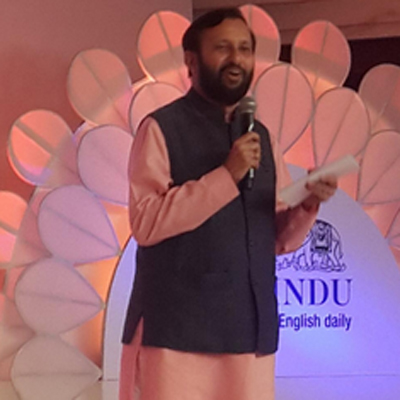
    GOA: “There is no government interference in the acquisition of Network 18 by Mukesh Ambani owned Reliance Industries Limited,” announced I&B Minister Prakash Javadekar, brushing aside any rumour about BJP led government having a role to play in the recent acquisition of Network 18 by RIL. The newly appointed I&B Minister was addressing the gathering on the final day of GoaFest. Javadekar also accepted that cross media ownership was debatable and will be addressed soon.


    “The I&B Ministry will always protect and respect the freedom of press,” emphasised Javadaker. The Minister further went on to say that I&B Ministry is looking at making both Doordarshan and All India Radio competitive. “It is my dream to make Doordarshan a success story,” he said.


    “I would address the grievances of all cable operators if they take DD in the prime brand,” added the Minister on a lighter note. “The Ministry will take into consideration all the viewpoints of various stakeholders of the media and then take necessary actions in the near future,” he announced.  


    The biggest challenge for the Minister will be the smooth rollout of the remaining two phases of digitisation. While in phase III of digitisation 11 crore set top boxes are expected to be installed, Javadekar is of the view that the set top boxes manufactured in China do not guarantee good value for money. “The Ministry is looking at creating opportunities to manufacture set top boxes locally. We will soon meet with both the Finance and Commerce Ministries to take this forward,” he said.  


    Javadekar also touched upon the issue of FM radio in India. “I have already met all the FM radio heads and the way forward will be declared shortly.  The age old batteries of transmitters of AIR stations will soon get some ‘air’ as the Ministry is looking at replacing them with new ones,” he announced.  


    The Minister, who believes in the age old thought that good advertising cannot make a bad product good and strongly feels that it holds true in today’s world too, also used the platform to address the advertising fraternity. “The difference that the nation will see now is not only difference in leadership but in its vision too,” he said.


    Javadekar too has the experience of creating campaigns. The Minister who had crafted campaigns for his party away back in 1989 in Maharashtra said, “I truly understand the system that goes behind each campaign.”


    Javadekar is impressed with what ASCI has been initiating and said the Ministry will give its complete support to the association. He also mentioned that issues related to ratings, if any, should be treated privately by advertisers and broadcasters unless there is conflict and they seek government intervention.


    The Modi government has truly used the power of social media to scale up its communications. Javadekar said that under his leadership he will review the party’s social media activities very keenly. 


    It will be interesting to see what Javadekar brings on table in the coming days for the media fraternity as a whole! 

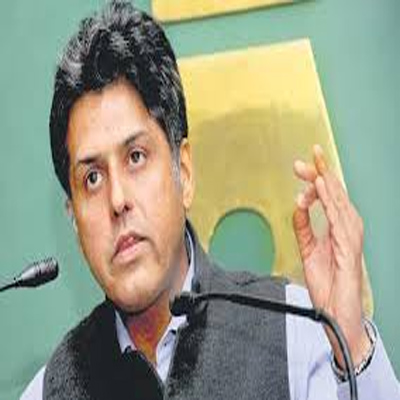
  • News channels want longer security clearance period: Tewari

    News channels want longer security clearance period: Tewari

    Mumbai: News broadcasters have approached the ministry of information and broadcasting to increase the number of years they get security clearance for the channels they run. This was revealed by I&B minister Manish Tewari today in the Lok Sabha in reply to a question, says a Press Trust of India report.


    Current regulations put the security clearance given to a company and its directors validity period at three years, and the News Broadcasters Association has made a representation to the I&B ministry to extend it as it makes things difficult for them, disclosed Tewari.


    Adding to the news broadcasters woes is the Ministry of Home Affairs’ (MHA) decision that a media company should apply for fresh clearances for a new channel even if the firm has got security permissions earlier. Permissions for uplinking and downlinking of channels are issued for 10 years, and hence this has created an anomalous situation.

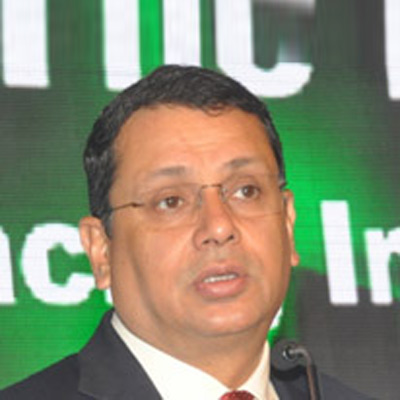
  • Absence of regulation is as bad as over regulation :Uday Shankar CEO Star India

    Absence of regulation is as bad as over regulation :Uday Shankar CEO Star India

    All of us took stewardship of our companies in the last two decades, when robust economic growth created an air of optimism and confidence in the country, and about India in the world. We gather today in the midst of an extremely turbulent time for the Indian economy. Beyond shrinking GDP growth and falling currency, what is truly remarkable is that the spirit of optimism seems to have been replaced by one of apprehension and despondency.

    It is therefore appropriate that this industry forum has as its theme, renewal and innovation. In my mind, the forces that unleashed our exciting growth story are the very same as those that can inspire innovation and renewal in our industry. And at its heart is our willingness to be resolutely open to the world, to new capital and to new talent. But no renewal can happen, either in our economy or in our industry, if we are not brazenly open to new ideas.

    It is in this context that I had made the point a few months ago that there is no media industry without free expression. If anything, the last few months have proven to us that there is no Indian growth story without free enterprise. Because free expression and free enterprise go together. Our ability to improve the lives of millions of Indians is firmly tied to our ability to unshackle businesses; in allowing them the space and the imagination to create new products and services.

    Every time we have made it a bit easier for entrepreneurs to conduct business, we have generated enormous dividends through growth and new jobs. Every time we have made it easier for investors to bring in capital, we have created new markets and services.
    _____****_____

    In many ways, the dramatic economic reforms of 1991 were accidental. It did not emerge from a strong national consensus that we needed to change the direction of our post-independence path. It came from a shocked polity that opened the country for business only when there was no other conceivable option left on the table. And, yet, that accidental moment created the space for a new generation of Indian entrepreneurs whose enterprise and initiative not only created wealth but resulted in millions of new jobs. It also helped India achieve a near double digit annual growth triggering a social transformation the pace of which, if sustained, was capable of lifting India out of poverty in a generation. Today, there is a vociferous debate in play on whether India can afford a $22 billion food program. 

    What is truly remarkable is it is evidence of how much distance we have moved. Two decades ago, the topic would not even have come up!

    Of course, business cycles can ebb and flow. But, what stalled India’s growth and employment creation was our remarkable ability as a country to create a web of processes, regulations and norms that make it extremely difficult for entrepreneurs to conduct business. And in a hyper competitive global economy, where countries actively nurture promising sectors and constantly renew themselves to attract new investments, we really run the risk of being left behind.

    While skepticism about reforms could have been justified 20 years ago, what is surprising is that we are still debating the value of reforms and unshackling businesses when our own recent history is the most compelling testimonial to the power of entrepreneurship. Every time we have made it a bit easier for entrepreneurs to conduct business, we have generated enormous dividends through growth and new jobs. Every time we have made it easier for investors to bring in capital, we have created new markets and services.

    Nowhere is this dichotomy more prevalent than in the media and entertainment industry. Twenty years ago, the real face of liberalisation for most Indians was the appearance of dish antennas on roofs. It was a compelling signal to the world outside that India was open for business. We were ready to embrace new ideas, wherever they originated. And we were confident enough in our own identity to be open to new worlds.

    (L-R) Walt Disney India MD Ronnie Screwvala, Star India CEO Uday Shankar, I&B Minister Manish Tewari, CII Director General Chandrajit Banerjee

    And in that period, the industry saw a remarkable transformation in its size and in its scale. From one state run broadcaster with limited reach and less than five hours of daily content, we now have over 800 channels telecasting more than half a million hours of original content to 700 million viewers. From around 3,000 newspapers in 1991, we have grown to more than 80,000 newspapers today, with most of the growth coming in the vernacular languages. Our movie industry has grown 20 times. The industry has evolved from a disorganised community dominated by a few players to a highly competitive sector that is increasingly better organised and better run. From 750 million in 1991, it is now an industry worth 15 billion dollars. It supports six million jobs directly and probably twice more indirectly. It has both facilitated and absorbed new technologies. And, it has created a compelling platform to showcase India to the world. So much so that last year we set ourselves an ambitious target of $100 billion for the sector.  And, yet, this spectacular success in serving the Indian consumer and in creating employment has not been met with more reforms and more openness. Surprisingly and frighteningly, we seem to have regressed in many ways. Successive governments have created a web of policies and regulations which while they may have had the honorable intent of protecting the consumer has had exactly the opposite effect.

    Today, I would like to call out two big challenges the combination of which have had stifling impacts on innovation in the industry.

    Our television viewers today have easy access to global content, whether through online portals, through network broadcasters who are airing shows closer and closer to global launch dates, or simply through piracy. This has brought about a burning need for innovative, original content. However, for an industry that boasts of over half a million hours of original programming every year, how much of it is innovative content that we are proud of having brought on to the screen?

    The reason is simple. Our ability to charge for content has nothing to do with the scale of our investments in it. If a bold producer does decide to risk capital on cutting-edge, new idea, today he has no liberty to price his creative work. Why then should he take a risk when he stands no chance of getting a decent return on his investment even if his production becomes a blockbuster success? The result is tired, stagnated, insipid content for the consumer. No policy has done more damage to this industry than that of price controls on television content.

    What is amazing is that we have compelling evidence in the same industry that shows that abolishing price controls can dramatically improve consumer choice. Freeing up ticket pricing in cinemas created the foundation for a dramatic improvement in the quality and diversity of movies that came to the market. Without raising costs substantially for the price conscious consumer, it has financed a generation of content that has appealed to both niche and mass audiences.

    It is difficult today to avoid the persistent debate about the quality and health of news channels. But, there is no question at all that it is the restrictive tariff regime that has prevented news broadcasters from producing high quality content for an audience that is much smaller than that available for general entertainment or sports. Ironically, a regime that was brought to protect the consumer has ended up doing the most damage to consumer choice and quality.

    Even more frightening than price control is the creeping controls on free speech. For a country that prides itself on its deep democratic ethos, the last decade has been characterised by a creeping inclination to impose controls on speech and expression. It may have started with opposition to a book but controls on expression seem to mark new grounds every year. Small film makers who decide to invest in off-beat movies are plagued by having to defend their movies in litigation because a minority is offended by it. Films cleared by the censor board are banned by state governments, and often blocked by non-state actors under the threat of violence. TV shows attempting to break through the clutter find their characters’ voices beeped out. Even the titling of a movie as the Dirty Picture seems to be an open invitation to trouble. The result is work that is so mundane that it sparks no questions, elicits no debate and pushes no creative boundaries.

    This month, Star will launch Mahabharat on television. It is a show that we have made with a lot of passion and on a scale and grandeur that has never been seen on television to date. And, yet, a few days before the launch, what worries me the most is not the quality of the series. What keeps me awake is that some lunatic fringe somewhere in the country would raise some absurd objection to the show.

    It is no surprise then that this tyranny of the minority has now reached the central halls of Parliament. Today, a small but vocal group can claim both the moral high ground and have the political legitimacy to hold to random India’s legislature for a session, a day and sometimes more. This should not come as a shock at all. For, behind this practice, is the very same culture that we have nurtured and indulged for too long. The culture that grants legitimacy, cover and sometimes state protection to the very few who are offended or bothered by the expression of another group, and who can take to the streets and can vandalise private and public property with impudence. It should not be surprising that when we start putting limits on new ideas and free expression in our cultural space, they will find their way into our political and economic spaces too.

    It is difficult today to avoid the persistent debate about the quality and health of news channels. But, there is no question at all that it is the restrictive tariff regime that has prevented news broadcasters from producing high quality content for an audience that is much smaller than that available for general entertainment or sports.
    _____****_____

    The collective impact of regulation and the creeping tyranny of the minority have stifled innovation in our industry and, dare I say, in the economy as whole. At 15 per cent, we may grow at thrice the rate of the GDP but that is more a reflection of our topline economic growth than the health of our industry. At this rate, it will take us another 15 years to hit $100 billion in value and by then, we will be just three per cent of the world media market. This is just unacceptable.

    Make no mistake. I am definitely not arguing for a world without regulation. History has taught us that free enterprise is well served by clear rules and policies. Absence of regulation is as bad as over regulation.

    But what is desperately needed is a consensus on what to regulate and how much. It is this lack of consistency in regulation that is impacting multiple industries. At exactly the moment when our economy is poised for the next big leap, we have found a way to make it harder and harder for our companies to innovate, to create new products and services, and to find new markets.

    Ladies and gentlemen, I do hope that over the next two days, as we explore new ways to grow our sector, the resounding message from this Summit is that, as a sector and as a country, we will remain stubbornly open to new ideas and committed to expanding the spaces for free expression.
  • India, Senegal agree on joint cooperation in broadcasting and cinema

    India, Senegal agree on joint cooperation in broadcasting and cinema

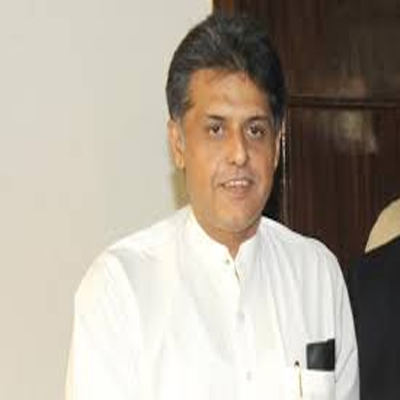
    NEW DELHI: India and Senegal have agreed to form a joint working group in areas identified under the executive programme for cultural cooperation, including cinema and broadcasting, signed between the two countries.


    The areas identified are based on the Articles 4 and 11 of the agreement pertaining to the Information and Broadcasting Ministry. The Agreement to constitute the joint working group was taken during the meeting between I&B Minister Manish Tewari and Senegal Culture Minister Abdul Aziz Mbaye. Both Ministers agreed to draw a time bound roadmap in order to take the cooperation in the Information and Broadcasting Sector forward.


    During the discussions, Mbaye accepted the invitation to visit the International Film Festival of India in Goa in November this year. Both Ministers also agreed to identify cooperation in areas pertaining to co-production in the film sector, sharing the experience by India in setting up the National Museum of Indian Cinema and the efforts being made by India to establish a single window clearance for film shooting in the country.


    Tewari apprised the Minister from Senegal on the potential of the areas of cooperation in the film sector and the participation in festivals such as the Children’s Film Festival and the Documentary Film Festival organised by the Films Wing of this Ministry.


    Tewari also outlined the initiatives undertaken by the Ministry in the Broadcasting space. He specifically referred to the laws/rules/regulations formulated pertaining to Cable TV/DTH/HITS. Special mention was made regarding the digitisation process in the country and the endeavour to create a viable business model for the industry through this process.


    The Senegal Minister referred to the possibilities of cooperation between the Public Broadcaster and the Senegalese Government Broadcaster in the near future.


    Tewari also offered to cooperate in training and capacity building through the Indian Institute of Mass Communication. This segment could be promoted through workshops, training modules and orientation courses.

  • I&B Minister reiterates plan to rein in cable monopolies, says Trai recommendations on way

    I&B Minister reiterates plan to rein in cable monopolies, says Trai recommendations on way

    NEW DELHI: The government appears serious in reining in monopolistic tendencies in cable TV distribution. The Information and Broadcasting (I&B) Ministry has reiterated that it wants the Telecom Regulatory Authority of India (Trai) to examine monopolistic practices in the distribution segment of the broadcasting sector.

    In a letter to Trai on 16 May, the ministry had asked for regulatory recommendations on the specific issues of vertical integration within the various segments in the broadcasting sector. This was done as more and more broadcasting companies were venturing into various distribution platforms including cable TV, DTH and IPTV and many companies owning distribution platforms were entering into television broadcasting.

    I&B Minister Manish Tewari told Parliament on Monday that the ministry is awaiting recommendations from Trai.
    Tewari had in November observed that monopolies will kill the entire purpose of cable TV digitisation, which is to give more choice to the customers. Digitisation will provide several tangible benefits to customers including picture quality, freedom of choice and value added services, which will make it interactive.

    Trai has also been asked to look into the issue of horizontal integration wherein companies have control/ownership across print, TV and radio (cross media ownership).

  • Soni ok to all party meeting on offending ads

    Soni ok to all party meeting on offending ads

    NEW DELHI: Information and Broadcasting Minister Ambika Soni today agreed to a suggestion by former I&B minister and leader of the Opposition in the Lok Sabha Sushma Swaraj to convene an all-party meeting to discuss the issue of obscene and objectionable advertisements and commodification of women.

    However, she said in answer to a question that a Group of Ministers had been asked to go into this issue and any meeting should be held after the GoM comes to some conclusion.

    The GoM had also been asked to study the suggestion for giving more teeth to the Press Council of India to take action against offending newspapers which included cases of paid news.

    Meanwhile, she said the Advertising Standards Council of India which was a self-regulatory body of advertisers which dealt with content issues, had suggested to the government that some advertisements could be permitted after 11 pm and this issue was under consideration of the Government. This is a recommendation relating to certain advertisements of ‘Fast Track’, ‘Wild Stone Deo’ and ‘Tata Docomo’ about which the Government had received complaints and forwarded them to Asci.

    She said in reply to a supplementary question that the government had drawn up plans for a regulatory body and a bill in this connection was already uploaded on the Ministry’s website. “While the Ministry retains the power to take a TV channel off the Regulatory Act, we are trying to give self-regulation a chance to succeed in this country,” she added.

    Referring to self-regulation, she said the Asci had drawn up a Code about content and was taking action against offending television channels, while the Press Council of India was going into complaints against the print media.

    In the main reply, the Minister said a total of 21 complaints against advertisements on television channels and four in the print media had been heard in the last one year. In the case of the electronic media, most of the complaints were forwarded to the Asci.

    On a question about the self-regulatory body Broadcasting Content Complaints Council set up by the Indian Broadcasting Foundation for general entertainment channels, she said a total of 777 complaints had been received since the BCCC began running a scroll in this regard in all channels. Of these, 104 complaints were upheld and a solution was found in the case of 84 others.

    Referring to the Ministry, she said ads had been withdrawn or corrected in 85 of the 105 cases where notices were sent on objectionable advertisements in the past few years. “We have had success of over 85 per cent in removing such ads”, she said.

    At the outset, Soni agreed that the portrayal of women in advertisements has been attracting the attention of not only media critics, civil society, women group, NGOs, Members of Parliament and, in fact, the society as a whole. “It is for this reason that the Government of India, ever since Independence, has formulated laws. I have at least 15 laws which have been formulated from time to time”.

    She referred to the Cable TV Networks (Regulation) Act as well as the Inter-Ministerial Committee which heard complaints.

  • Film industry calls off strike on 23 February

    Film industry calls off strike on 23 February

    MUMBAI: The proposed nationwide strike that was called by the Film Federation of India (FFI) on 23 February has been called off.


    Speaking to Indiantelevision.com, filmmaker Mukesh Bhatt said: “The strike has been called off after we had a positive meeting with our Finance Minister Pranab Mukherjee. We were asked to be patient till the Budget. So be it. We will take a call if the Budget is not satisfactory and take our steps accordingly.”


    Last Sunday, a film delegation met I& B minister Ambika Soni and Finance minister Pranab Mukherjee to talk on the service tax issue.


    Earlier, it is understood that there was growing resentment among film producers from across the country, exhibitors, single screens and multiplexes about the strike; they didn‘t want to be part of it.

  • AdAsia begins with I&B Minister stressing on the need of CSR

    AdAsia begins with I&B Minister stressing on the need of CSR

    NEW DELHI: Even as advertising has grown from Rs 100 billion to Rs 300 billion in the last 20 years, consumers are rewarding those advertising agencies who are doing good for society and fulfilling their corporate social responsibility (CSR), Information and Broadcasting Minister Ambika Soni said here today.

    CSR should be used in a country like India for health and education, she said while inaugurating the 27th AdAsia being held in India after a gap of eight years.

    Reiterating that the government is for a free media, she noted that the Advertising Standards Council of India (Asci) is doing a great job in self-regulation as far as advertising was concerned.

    At the same time, the government wants to bring in a more robust system for television rating points and is working towards that end.

    She said the Directorate of Advertising and Visual Publicity (DAVP) is being revamped to “match up to the private advertising agencies”. 
     
    Meanwhile, she said that despite the meltdown in the west, Indian media has continued to grow and there is a boom in the newspaper industry where around 107 billion copies are being sold daily. The number of television channels has reached almost 800 and the number of radio FM channels is expected to go up to 839 after the third phase.

    She said the country had also taken concrete steps to be fully digitalised by 31 March 2014.

    Referring to the theme of the meet, ‘Uncertainty: the new Certainty‘, Soni said “the only certainty is that there will always be uncertainty.”

    Bollywood star Shah Rukh Khan, who has just achieved a milestone in marketing with the way his film Ra.One has been promoted, said on the occasion that he saw himself in various ways as far as advertising was concerned. He was the consumer who always fell for the dream merchants and the “tricks unveiled on my poor unsuspecting greed”; the brand endorser; the seller of his own films and the causes he endorsed including the Kolkata Knight Riders; and marketing himself as a brand for which he always needed to re-invent himself. Luring attention to himself is a great effort and therefore he believed in the idiom “early to bed and early to rise, work as hell and advertise.”

    Khan also unfurled the AdAsia flag, before former Miss India Diana Hayden who was conducting the inaugural ceremony asked him to do a jig on ‘You are my chhamak chhalo‘ from Ra.One.

    About 1200 delegates from India and 25 other countries are attending the meet, which is featuring around fifty of the world‘s top experts in the world of marketing, media and advertising.

    Around 18 sessions are being held on various subjects apart from the opening and closing ceremonies. The speakers will include around 45 from overseas.

  • HITS a gain but government mum on FDI hike in 2009

    HITS a gain but government mum on FDI hike in 2009

    With India having touched the monumental figure of 512 in terms of television channels including 249 news channels, the Information and Broadcasting Ministry pushed the panic button towards the end of 2009, asking the Telecom Regulatory Authority of India (Trai) to study how many channels can be permitted in the country.

    As a follow-up, the Government has with immediate effect suspended receipt of new applications for permission to uplink television channels from India and downlink channels to India until the regulator submits its report on spectrum availability.

    In an order of 18 January, the Ministry said “it has been observed that although improved technologies have resulted in better utilization of the available spectrum and transponder capacities, the spectrum and transponder capacities for satellite TV channels are not unlimited. A need is felt to revisit the present policy for uplinking and downlinking with respect to the approach towards grant of permission including the eligibility criteria and the terms and conditions of the permission.”

    Early in October 2009, I&B Minister Ambika Soni had written to Trai Chairman J S Sarma to examine issues relating to expansion of private television channels in the country. The Minister asked the Authority to examine ways of checking the financial viability of parties that apply for setting up news channels in the country.

    However, Soni on 7 December denied in Parliament that the directive to Trai to examine the status of television channels in the country implied any plans to curb the growth of the sector. She said the study to examine the maximum number of channels that could be telecast was being carried out in view of spectrum constraints.

    “The government is surely not going to shut the door on the growth of TV channels in India. But there is a logistic problem and the government has to sort it out. Some of our growth plans may be temporarily upset,” says the head of a broadcasting company on request of anonymity.

    Meanwhile, the I&B Ministry is also keen that the Broadcast Services Regulation Bill that is pending finalization for about three years should sail through and provide for an independent regulator and a Content Code.

    A senior Ministry official told indiantelevision.com that a task force had been set up under the chairmanship of the Secretary in the Ministry, Mr Raghu Menon, and had already held a few internal meetings, The task force – which comprises representatives from the Indian Broadcasting Foundation, the Broadcast Editors Association, and the News Broadcasters Association among others – would now meet stakeholders including consumers, representatives of the print media, civil societies, and editors “to understand their concerns.”

    “Self-regulation has some limitations,” the official added without elaborating, while referring to the Content Code and the Regulatory Body formed by the News Broadcasters Association.

    It was expected that this task force would complete its work by March this year. The official said the issues under discussion were not merely content, but also quality of service, carriage fee, service charges and so on. Thus, the entire responsibilities that the independent regulator would have to bear would be finalised.

    However, the Cable Operators Federation of India has challenged the constitution of the Task Force on the ground that those sought to be regulated cannot adjudicate on the kind of regulation the government can impose.

    Meanwhile, six State Monitoring Committees and 67 District level Committees have been constituted to review and deliberate on the litany of complaints received by authorized officer or take suo motu cognizance of violations transmitted and re-transmitted in the local channels.

    Over 130 Advisories/Warnings/Orders were issued to various TV channels for violation of the Programme and Advertising Codes prescribed under the Cable Television Networks (Regulation) Act, 1995 and rules framed thereunder.

    Interestingly, many of the notices issued during 2009 related to reality shows like Big Boss on Colors, Pati Patni aur woh on NDTV Imagine, and Sach ka Saamna on Star Plus, apart from some for popular series like Bandini on NDTV Imagine and Balika Vadhu and Na aana is des Laado on Colors, and most of the others for the content of commercial advertisements.

    A total of 77 private satellite TV channels were permitted to uplink/downlink under the uplinking and downlinking guidelines, taking the number of general entertainment channels to 263. Permission has been given to set up nearly 75 teleports.

    In comparison, there were 417 private channels (357 uplinked from India including 197 news channels) and 33 Doordarshan and Parliamentary channels in 2008.

    Trai had earlier issued a consultation paper on restructuring of the cable sector, and is understood to be working on a deadline since cable operators have not been responding to the questionnaire placed by it on its website.

    After obtaining the Union Cabinet‘s approval to issue policy guidelines for Headend-In-The-Sky (HITS) operators, the guidelines were announced on 26 November 2009. Being a digital delivery mode of distribution, HITS would speed up the process of digitalization of cable services located in non-Cas (conditional access system) areas of the country.

    Though the country failed to make much headway in the area of IPTV despite the Ministry having rushed through amendments in the downlinking guidelines for this segment in September 2008, this was attributed to the slow pace of broadband growth and to the strong penetration of cable TV and growth of DTH. IPTV operators also complained that there was very little clarity provided by the government on content issues.

    Media companies are hoping that the government will hike FDI (foreign direct investment) limit and come out with more liberal policies in 2010 to fuel the sector‘s growth.

  • Ofcom-based news code set for public debate

    NEW DELHI: A clear chapter on news content code based on Ofcom, the independent regulator and competition authority for the UK communications industries, will be put up on the website of the I&B ministry in the next few days, early enough to be well debated before the FICCI seminar on the issue on 23 July.

    Sources in the ministry told Indiantelevision.com, that the broad features of the news content code has been taken from Ofcom, though they clarified that “we have not bodily lifted the Ofcom regulations, but modelled it on the same principles.”

    One official explained: “No regulation can be lifted form one country and cultural base and grafted on to another cultural context. So we have adjusted it according to our cultural context, but it will have the same principles, especially on accuracy and privacy and such issues.”

    Does that mean it is a loose regulation that could be open to governmental interpretation and arbitrary clamp downs?

    “We have said and I am reiterating that the government does not want to play the editor. But yes, there will be reasonable restrictions within the boundaries of Indian sensitivities,” officials stressed.

    The code on news, though, will not be as watertight as that of Ofcom: “We have not been so rigid like Ofcom, which makes the Ofcom regulaton so bulky… we did not want that.”

    The official also clarified that there will not be two separate bodies of codes, one generak and one on news. “It does not make sense, but this will be a clearly delineated chapter in the overall code.”

    One of the key issues as revealed by officials arises out of the government’s concern over privacy, which had been breached, it feels, by TV channels covering court cases. Officials said that there are going to be parameters set for that.

    However, officials sought to dismiss the fears that sting operations would not be allowed: “We have never said that, but there must not be intrusions into privacy and they must have a broader and larger social interest.”

    Basically that means sting expose on official corruption or issues of public interest would still be allowed, so long as they do not indulge in vulgarity or invade privacy.

    Officials said also that it has to be more self-regulatory because no regulator could possibly monitor the content of 300-odd channels.

    “But the concerned persons need to understand that though the debate would be started soon with the code being uploaded in the MIB website, it is not something which will be put into effect in any hurry,” officials said.

    The code will not come into effect unless the Broadcast Act is past and the Broadcast Regulatory Authority of India is set up, which will take some time in coming.

    The reason that the ministry is hurrying with the publication on the website is that on 23 July, the Ficci is organising a government-industry interface on the issue of content.

    Currently, the code is awaiting the clearance of I&B minister PR Dasmunshi. As he is deeply involved with the presidential elections, the code is expected to be put on the site around 20 July, if not earlier, sources said.