Tag: IAS

  • Integral Ad Science partners with Good-Loop to provide digital advertising solutions

    Integral Ad Science partners with Good-Loop to provide digital advertising solutions

    Mumbai: The global leader in digital media quality, Integral Ad Science (IAS), on Wednesday announced a global partnership with purpose-led ad platform Good-Loop.

    The partnership will enable advertisers to measure the carbon emissions generated by their digital ad campaigns.

    The partnership will see Good-Loop’s carbon measurement solution integrated into IAS’s reporting platform, IAS Signal. The integration will allow advertisers to seamlessly track and view the end-to-end carbon footprint of their digital ads in a similar way to other crucial metrics such as viewability.

    Data feeds from Good-Loop will enable advertisers that use IAS’s media quality platform to closely monitor and reduce the environmental impact of their ads throughout the entire campaign lifecycle.

    There is significant computing power required to fuel the trillions of real-time auctions taking place across the length and breadth of the programmatic ecosystem, resulting in carbon emissions.

    Speaking about this partnership, IAS CEO Lisa Utzschneider said, “Sustainability is a global priority for IAS and we believe that it is our collective responsibility to make a lasting impact.”

    “Our partnership with Good-Loop will bring greater climate change transparency for advertisers and provide them with the tools they need to reduce their carbon emissions. The partnership is a major step forward to further decarbonize digital media,” he added.

    Good-Loop is on a mission to develop simple solutions that move the industry towards positive, climate-friendly advertising. Good-Loop is a certified net carbon-negative business.

    Adding to that, Good-Loop CEO Amy Williams said, “Integral Ad Science has been a leader in our industry for many years, helping to educate and equip our industry for an era of safer, more effective media buying.”

    He further said, “In fact, it’s a company I took a lot of inspiration from when I was establishing my own business. I’m genuinely thrilled to partner with such a pioneering, forward-thinking company as we work together to drive the industry forward once again. Together, our integrated Green Media solution will empower advertisers across the world to put their net zero commitments into action and to make a real, lasting change for generations to come.”

    Sanofi, the global healthcare brand, and Omnicom Media Group (OMG), the leading media services provider, will take part in the testing of carbon emissions tracking developed by IAS and Good-Loop.

    Sanofi global head of media, digital & strategic planning Prasad Ghag said, “Sanofi’s consumer healthcare business will look to challenge all activities across the marketing supply chain in line with our objective to build the road to carbon neutrality by 2030. The carbon tracking tool beta test along with IAS and Good-loop will be our starting point to understand carbon emissions levels through our media activities and will be key in designing future actions in media to contribute to our broader carbon reduction targets.”

    OMG is the global media agency, responsible for media planning and buying across Sanofi’s consumer healthcare brands.

    OMG global digital and operations lead Charlotte Baxter commented, “At OMG, sustainability is a priority, and we take our collective responsibility to care for the planet seriously. We are pioneering solutions to help measure and ultimately reduce carbon emissions related to media activity and are proud to support Sanofi on their equally ambitious journey.”

    Furthermore, earlier this year, IAS committed to the Vista Climate Pledge along with the Vista Equity Partners portfolio of companies. The pledge includes IAS measuring its greenhouse gas (GHG) emissions and reducing emissions annually.

  • India Affiliate Summit (IAS) 2022 sheds light on trends, predictions and innovation in two-day conference

    India Affiliate Summit (IAS) 2022 sheds light on trends, predictions and innovation in two-day conference

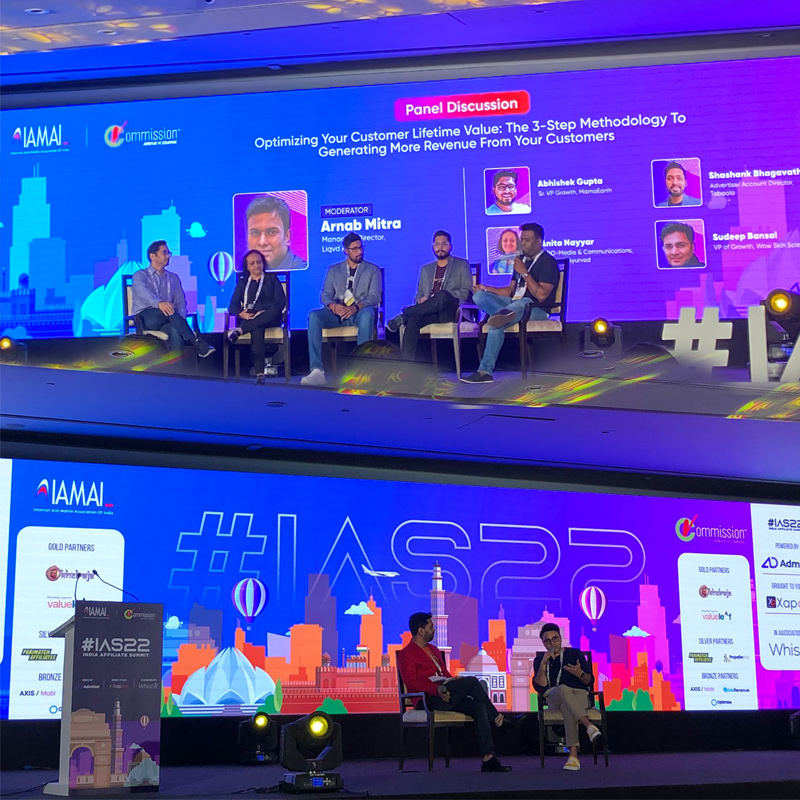
    Mumbai: The Internet and Mobile Association of India (IAMAI) and vCommission jointly organised the 8th edition of The India Affiliate Summit (IAS) 2022 on 14-15 September, 2022. The event, which included engrossing keynote sessions, masterclasses, panel discussions, and exhibitions, was held at The Leela Ambience, Gurugram.

    The country’s biggest affiliate marketing event saw the participation of national and international attendees from over 700 companies and provided ground for them to network and discuss opportunities to accelerate business.

    On the first day of the two-day long event, vCommission CEO Parul Bhargava opened the floor for discussion with her keynote session, wherein she spoke about the lessons that she has learnt from her entrepreneurial journey in affiliate. “Affiliate marketing has made businesses millions and people millionaires. The affiliate industry is so young and innovative that no one can say, we know it all.”

    Looking at the journey of the India Affiliate Summit since 2015, she added, “As I stand here, from where we started this journey, I am very proud that affiliate as an industry, as a department, is now prevalent in most brands, companies, and agencies.”

    As a piece of advice to marketers, Valueleaf vice president – delivery & ad operations Ameya Kaulgi pointed out, “Affiliate is a massive pull. If you make your funnel right, with the right checks, you can build your brand with the bottom funnel.”

    Patanjali Ayurved COO-media and communications Anita Nayyar spoke about how a brand should optimise its customer lifetime value. “It is important to go back to basics in terms of brand benefits and customer engagement, and once this war is won, optimising ‘lifetime value’ will follow.”

    On the first day of the conference, industry veterans presented new insights, data-driven strategies, and innovative ideas on affiliate, ecommerce, D2C, etc. Twitter business head Kanika Mittal, Meta industry head automotive & D2C Hari Pulipati, HDFC Bank VP and head-acquisition content and social media marketing Jahid Ahmed, and The Man Company director-brand marketing Rumi Ambastha, were among the other key speakers on the inaugural day.

    The second day of the event threw light on several subjects, such as social media listening, influencer marketing, and creativity. Admitad country head Neha Kulwal spoke about Indian SMEs, “For SMEs, partner marketing is a great way to increase their reach and raise brand awareness without breaking the bank. Since most SMEs strike a balance between productivity and profitability, including low-cost and high ROI-driven channels such as partner marketing is a must. Also, the world is moving to ‘Digital First’ and with this shift, performance/partner marketing will be a major driver in their marketing mix.”

    Addressing a session titled, “From celebrities to social media influencers.. what’s next?”, HDFC Bank vice president and head-digital acquisition content and social media marketing Jahid Ahmed said, “Today celebs and influencers are shaping up well. But as a brand, to ensure stronger and long-term communication for the audience, it is important that they focus on building individual brand advocates who can further educate micro communities. And that’s how they can turn this around to build a large pool of their brand lovers.”

    On a panel about “Programmatic reach by using new age media-CTV, audio & DOOH etc.,” Optimise Media Group – India CEO Shaan Raza revealed, “The IAS as a platform has evolved over the years. This year, they’ve discussed new marketing trends like programmatic and connected TV, which are preparing the audience for the web 3.0 space. The new age media has now become popular and it is in its transition phase. Various new trends are entering India, and new age performance marketers should look forward to them. They should use their creativity and imagination to engage with them from the performance marketing aspect.”

    Amongst other prominent speakers who spoke on the concluding day at IAS22 were Google Cloud head of regional marketing-India Virginia Sharma, Samsung Electronics deputy general manager Nitin Guleria, Max Life Insurance VP & head of D2C ecommerce Sameer Jain, and Niva Bupa SVP head of marketing Nimish Agrawal.

  • MIB secretary Apurva Chandra visits Tata Play’s technology centre

    MIB secretary Apurva Chandra visits Tata Play’s technology centre

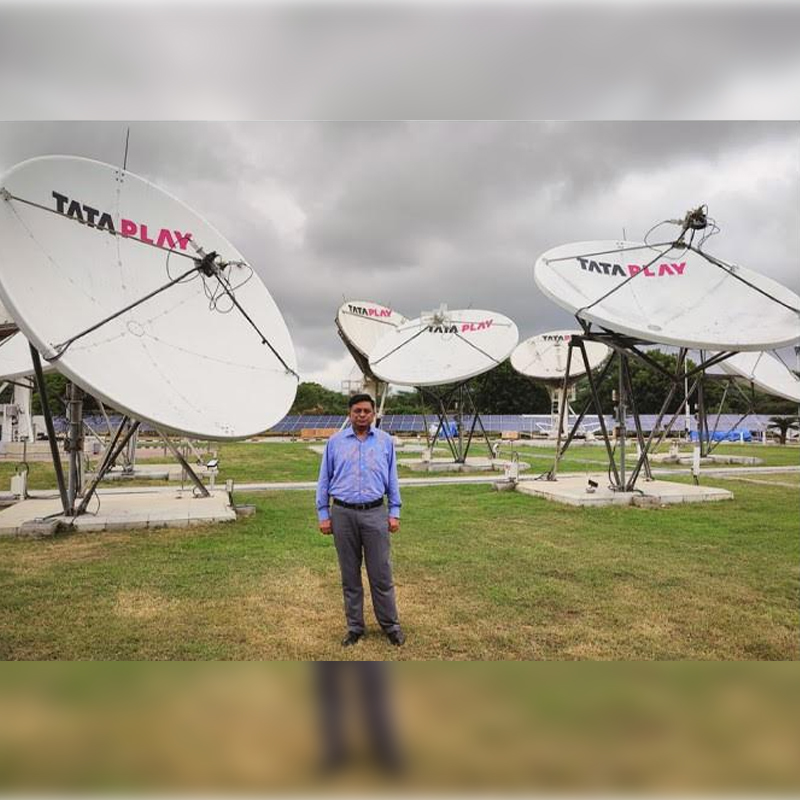
    Mumbai: Ministry Information & Broadcasting (MIB ) secretary Apurva Chandra has visited Tata Play’s technology center in New Delhi to explore how Tata Play is leveraging technology and providing benefits to the end consumers.

    While exploring various ideas about technology that can benefit the customers, Chandra spent a considerable time understanding the complexities of a content distribution platform and steps Tata Play is taking to boost Make in India efforts for manufacturing set-top-boxes.

    During his visit, the Tata Play team demonstrated to Chandra the complete satellite communication and direct-to-home (DTH) delivery workflow and discussed other topics of mutual interest.

    Last year, Tata Play launched the first batch of Make-in-India set-top boxes in association with Technicolor Home and Flextronics. Earlier, Tata Play’s managing director & CEO Harit Nagpal had said that the India made set-top boxes would help generate employment and serve Indian consumers better.

    Tata Play has invested in advanced digital infrastructure and partnered with global leaders to provide superior technology. The company has a pan-India footprint of 23 million connections.

  • GUEST COLUMN: One-third of digital ads going unseen; what can brands do?

    GUEST COLUMN: One-third of digital ads going unseen; what can brands do?

    Mumbai: When you look at the evolution of digital advertising, it makes sense that viewability has continued to be a top concern for marketers. The entire digital advertising ecosystem exists to support brands and their efforts to reach and influence consumers. Whether caused by a growing number of channels and platforms or out of necessity to stay connected, consumers are increasing their time spent with digital media.

    It was not long ago that viewability rates of 50 per cent were the industry norm, but rates are now on the rise. According to our H1 2021 media quality report, viewability averages stand above 65 per cent across nearly all formats and environments. While this marks an impressive accomplishment, this range indicates that as much as one-third of digital ads are going unseen by consumers in certain environments. This viewability gap creates challenges for both the buy and sell side of the digital media business. Marketers often talk about reaching the right consumers, in the right places, in the appropriate context. But first, marketers should ensure that their ads have the opportunity to be viewable in order to make a lasting impact.

    Consider time-in-view to measure ad effectiveness

    In simple terms, viewability is a digital ad seen by an actual consumer, while time-in-view is the average duration that a viewable impression remains in view. This excludes impressions that are not viewable. Viewability is good for eliminating waste, but time-in-view may be an even better metric for measuring media quality, especially for brand campaigns where exposure time drives better brand recall.

    A joint study by GroupM and Integral Ad Science (IAS) for Toyota proved that media quality, frequency, and time-in-view metrics as well as exposure to ad placements were key to driving positive business outcomes for the auto manufacturer. Toyota saw an 83 per cent conversion rate uplift, resulting in 3,679 incremental brochure downloads attributed to viewable impressions. The case study showed that exposure time is a primary driver for outcomes, directly impacting campaign effectiveness.

    As advertising budgets continue to shift towards digital, advertisers are being asked to prove RoI and the added value of digital marketing. This need to demonstrate impact is driving a shift in how they seek to measure the quality of their digital investments. Time in view allows advertisers to optimise towards a metric that better drives marketing ROI.

    Mobile campaigns in India deliver stronger media quality results

    With over 500 million Indians using smartphones, an overwhelming majority of consumers today are making purchasing decisions through mobile devices. A recent study found that over 60 per cent of Indian consumers are using their mobile devices to guide them through their shopper journey, from research to discovery to making the ultimate purchase.  People are typically on the go and traveling during the festive season, which means that they will be spending additional time on their mobile devices. It’s critical for marketers to have a mobile-first strategy for India.

    According to the recent IAS media quality report H1 2021, mobile campaigns in India delivered stronger results. Mobile web display viewability increased by one percentage point to 58.9 per cent in H1 2021 and mobile in-app display increased from 51.3 per cent to 54.1 per cent. The time-in-view for mobile web display campaigns in India increased from 15.24 seconds to 19.33 seconds, while the worldwide average stood at 14.91 seconds, clearly indicating that Indian consumers were engaged longer with the ads on mobile web display.

    From a brand risk perspective too, mobile campaigns in India posted lower brand risks than display, with mobile web display registering brand risk reduction from 2.6 per cent to 1.8 per cent. The ad fraud on mobile web display marginally decreased to 0.2 per cent, while the global average was 0.4 per cent. As spending increases on mobile, media quality challenges may arise such as ad fraud, unsafe brand environments, and unviewable inventory.

    Forrester expects e-retail sales to reach about $9.2 billion in India during the 2021 festive month, up 42 per cent year-on-year. While this indicates a huge opportunity for marketers, it also calls for them to evaluate the metrics of their campaign’s performance – bringing to the forefront viewability and time-in-view.

    Brands need to know that their ads are being viewed by real people – or risk losing the chance to improve RoI this Diwali.

    (The author is commercial lead for India at Integral Ad Science. The views expressed in the column are personal and Indiantelevision.com may not subscribe to them.)

  • Supriya Sahu’s tenure as Doordarshan DG comes to an end

    Supriya Sahu’s tenure as Doordarshan DG comes to an end

    MUMBAI: Doordarshan director general Supriya Sahu has moved on from the pubcaster. Senior IAS officer Sahu had been appointed as Doordarshan’s director general in 2016. The post was vacant for almost two years before her joining.

    On her last day at Doordarshan, Sahu expressed deep gratitude to everyone via Twitter after completing her 30-year tenure. She also added that she is heading back to her cadre in the state of Tamil Nadu to begin a new journey.

    The 1991 batch IAS from the Tamil Nadu cadre was chosen by the public broadcaster Prasar Bharati in 2016 February, after which the broadcaster had recommended her name to the ministry of information and broadcasting (MIB) for approval. Sahu served as the director at MIB in the past and later got promoted to the post of joint secretary.

  • Sunil Arora to step in Sircar’s place as Prasar Bharati CEO?

    Sunil Arora to step in Sircar’s place as Prasar Bharati CEO?

    MUMBAI: With the resignation of Prasar Bharati CEO Jawhar Sircar, the punters are betting on who is going to come in as his replacement. Among the names being talked about is the former I&B secretary Sunil Arora. He currently serves as an advisor to Prasar Bharati, a post he was given in August after retiring from the MIB.

    Arora is a 1980-batch IAS officer of the Rajasthan cadre. Sources indicate that Arora’s candidature as Prasar Bharati CEO has been recommended by the former information and broadcasting minister Arun Jaitely.

    However, observers don’t expect Arora’s candidature to be a shoo-in. Reason: it is not clear who the current I&B minister Venkaiah Naidu will back. “For all you know, he might want somebody from his state of Andhra Pradesh,” says a Prasar Bharati source. “Finally, the PM will decide.”

    Sircar submitted his resignation on 4 October, and has sought to be relieved by 4 November 2016 after which he will return to Kolkata.

  • Sunil Arora to step in Sircar’s place as Prasar Bharati CEO?

    Sunil Arora to step in Sircar’s place as Prasar Bharati CEO?

    MUMBAI: With the resignation of Prasar Bharati CEO Jawhar Sircar, the punters are betting on who is going to come in as his replacement. Among the names being talked about is the former I&B secretary Sunil Arora. He currently serves as an advisor to Prasar Bharati, a post he was given in August after retiring from the MIB.

    Arora is a 1980-batch IAS officer of the Rajasthan cadre. Sources indicate that Arora’s candidature as Prasar Bharati CEO has been recommended by the former information and broadcasting minister Arun Jaitely.

    However, observers don’t expect Arora’s candidature to be a shoo-in. Reason: it is not clear who the current I&B minister Venkaiah Naidu will back. “For all you know, he might want somebody from his state of Andhra Pradesh,” says a Prasar Bharati source. “Finally, the PM will decide.”

    Sircar submitted his resignation on 4 October, and has sought to be relieved by 4 November 2016 after which he will return to Kolkata.

  • Political, bureaucratic wrangles likely road-blocks for the new I&B secretary

    Political, bureaucratic wrangles likely road-blocks for the new I&B secretary

    NEW DELHI: The biggest challenges for the bureaucrats in the country can be summed up in just a few words: being unprepared, and forced to make compromises.

    Thus, a person taking charge as the head of the bureaucracy in any ministry has to put aside his or her own personal views and get down to translating the decisions of the government and the minister/ministers into action, apart from the fact that he or she may be completely new to the field. And this task becomes even more onerous when there are deadlines to be met in short periods of time.

    Ajay Mittal is taking over the reins of the administrative machinery in the Information and Broadcasting ministry from Sunil Arora who had barely eight months to grapple with problems. Arora joined the Ministry on 31 August last year just as the ministry was making preparations for the Digital Addressable System Phase III and was in the midst of the Phase III auctions of FM radio.

    Mittal, is a senior Indian administrative service (IAS) officer of the 1982 batch from the Himachal Pradesh cadre. Born on 24 February 1958, Mittal is a law graduate and also has a Masters degree in rural development. His first posting was as principal secretary to the then chief minister of Himachal Pradesh and in the information and public relations wing in the state. Mittal was empanelled as secretary in December last year when he was additional chief secretary at Transport, Social Justice & Empowerment Department, Shimla.

    Now, Mittal has to deal with not only the onerous task of overseeing the implementation of the last phase in DAS which will cover all remaining urban and all rural areas of the country by December-end, but bringing the government out of the morass of legal cases which stayed the implementation of DAS Phase III in many states and have now been transferred to the Delhi high court.

    DAS Phase III

    Even though the deadlines for the last two phases of DAS were changed, the stakeholders were clearly unprepared as they all claimed shortage of compatible set top boxes – a claim which even the ministry could not deny. Expectedly, several high courts stayed implementation for varying periods  
    And although the ministry has succeeded in getting all the cases transferred to the Delhi high court, the fact remains that the ministry had itself admitted in a letter to its counsel in Chandigarh that it understood the stay to be pan-India, until the Supreme Court said nothing in the directive of the Bombay high court implied this.

    With the shortage of compatible set top boxes and little headway despite the incentives offered under the Make in India scheme, the ministry has to find ways to encourage indigenous production. Even at present, a large number of LCOs work with poor quality STBs made in China or other countries.

    Added to that is the fact that a large number of broadcasters, multi system operators, and local cable operators have still to work out their agreements – an issue further complicated by the directives of the Telecom Disputes Settlement and Arbitration Tribunal which wants the tariffs to looked at anew.
     
    In fact, many MSOs or LCOs have also not been able to get the Consumer Application Forms from their clients despite major publicity by the broadcasters.

    It is also a fact that analogue transmission continues in many parts of cities and towns that have gone digital and the government has failed to get the stay of DAS in Chennai vacated.

    The Home ministry had many months earlier made it clear that it was prepared to do away with security clearance for Indian-owned multi-system operators, the I and B Ministry has not yet got the go-ahead, with the result that MSOs are only getting provisional licences and the number of those with ten-year permanent licences remains at 231. The new secretary will have to push the Home ministry if he wants DAS to succeed.

    TRAI

    Although these are issues that the Telecom Regulatory Authority of India is dealing with, all decisions relating to the broadcasting sector can only be effective if there is proper coordination between the regulator and the ministry. This effectively means there has to be a quick response to any issues that either of the two raises to the other, if deadlines have to be met.

    Other issues pending before TRAI relating to broadcasting include the need to reconsider the foreign direct investment norms for media, shortage of spectrum, a growing demand by states seeking permissions to start their own television channels despite the TRAI having opined against it twice since 2008, and the imperative to work on the tariff issues for commercial and non-commercial set-ups following directives of the Telecom Disputes Settlement and Appellate Tribunal.

    Although broadcasting duties were handed over to TRAI just over a decade earlier, it is also clear that the ministry will have to consider whether there is need to form a broadcasting-specific body since TRAI is primarily a body set up for the telecom sector. If the Government decides to continue with TRAI handling both portfolios, the regulator will be under pressure from the I and B Ministry to strengthen its broadcasting team and also ensure greater coordination among officers in both broadcasting and telecom.    

    With convergence of technologies becoming a reality, and with issues of spectrum already bringing telecom and broadcasting together, the National Democratic Alliance Government has again begun to talk about convergence and this is bound to gather pace over the next two years.

    Spectrum

    The Defence Ministry has in principle agreed to hand over some spectrum and swap some other spectrum, and TRAI has also worked on the process of auctioning the available spectrum and given out reserve prices, the whole process is caught up in bureaucratic wrangles as it involves the Telecom ministry. If the I and B ministry wants to continue with its policy of ensuring there are no caps on the number of television, FM radio channels, or direct-to-home (DTH) Headed in the sky (HITS) platforms in the country, the issue of spectrum will need early solution.

    FM Radio Auctions

    When the last secretary Sunil Arora took over, the government was in the midst of the first stage of auctions of the FM Radio e-auction which only covered cities which already have FM but there were some vacancies. Learning from the experiences where there were no bids in 13 of the 69 cities, the government has now decided to revise the guidelines for the e-auction. The new secretary may have to find ways of either lowering the reserve price for those cities or finding other incentives before the next stage of e-auction.

    The fact that the cumulative winnings from the channels auctioned so far has exceeded the reserve price by more 100 per cent is undoubtedly a matter of great satisfaction, but some cities failing to attract bidders is an irritant.

    Ad Cap

    The Cable Television Networks (Regulation) Act 1995 was clear that the advertising cap should be twelve minutes an hour, but television channels went to court because many – particularly the news channels most of which are free to air – said they had no other source of income unlike the pay channels. But the ministry is already doing a rethink as admitted by the ministry as well as the News Broadcasters Association.

    This rethink is probably because the I and B minister had said early this last year that he was opposed to ad caps on the print or electronic media, and because the free-to-air channels (most of which are news channels) have already expressed their opposition to this. TRAI had failed to get permission to take action against television channels violating its diktat of a total of 12 minutes of commercial and promotional advertisements every hour, though all broadcasters were asked to keep records of this by the Delhi High Court.

    Spread of FM Radio vs DRM

    The Digital Radio Mondiale Consortium feels that All India Radio has done the most in terms of digitization of radio. AIR has in fact spent crores of rupees on the digitized Digital Radio Mondiale. But Prasar Bharati feels that Frequency Modulation which is an analogue technology should be promoted until the nation is ready for digital radio sets.

    The ministry can resolve this issue only if it can ensure adequate manufacture at affordable process of DRM sets under the Make in India programme. Until then, this continues to be a thorn in the already dicey relations between the public service broadcaster and the ministry. The fact remains that there are just one or two manufacturers of DRM sets and these have also been successfully demonstrated in moving cars, but they remain unaffordable.

    Community Radio

    More than a decade has elapsed since the introduction of community radio, but the number of operational stations is still very low. To boost this sector, the government introduced a new scheme last year for funding community radio and has also been giving away awards, but bureaucratic wrangles continue to hold up the smooth implementation of this scheme.

    Prasar Bharati and the Ministry

    On paper, the Prasar Bharati (Broadcasting Corporation of India) Act 1990 is clear that the pubcaster is autonomous. However, in reality this appears to the contrary.

    On the one hand, a group of ministers had decided as a measure to help the pubcaster that persons employed as on 5 October 2007 will get the salary and pension from government funds. For employees who joined after that date, Prasar Bharati was left to fend for itself.

    In any case, Prasar Bharati is listed as an autonomous company under the ministry.

    This means – and it appears so even from the manner in which questions relating to the pubcaster are answered in parliament – that there is dispute on what real autonomy is. Prasar Bharati CEO Jawhar Sircar – a former bureaucrat himself – feels the government does not give him full freedom and there is interference at every level and has said so either in speeches or in articles by him or others in the pubcaster.

    Journalists on the parliamentary beat are often flabbergasted by the fact that when it suits the government, a reply will say that the pubcaster is an autonomous body, and yet there has been the intervention of the government even in appointments in Prasar Bharati.

    While there is generally full autonomy as far as content goes, there are allegedly checks and balances placed by the government in administrative matters.

    In a new development that has in principle been accepted by the government, Prasar Bharati, which has been losing revenue and viewership, has decided to auction prime time slots – perhaps inspired by the success of the e-auctions of slots on the country’s only free-to-air direct-to-home platform DD Freedish, or the FM auctions.

    Freedish

    Even though the auctions have been extremely successful and the pubcaster not only got two or three times the reserve price per slot, but even managed to get at least two pay channels to come as FTA, it has still not been able to switch over from MPEG2 to MPEG4 to enable it to increase the number to 112 as promised over the last three to four years.

    Foreign Direct Investment

    The TRAI had given its recommendations for an increased FDI in many sectors of the media in a report in July 2013. Although there was some change by the government earlier this year, it has still not implemented the FDI report of TRAI in full.

    Security Clearance

    While the Home ministry has decided it is doing away with security clearance for MSOs, it has not taken a decision as far television channels are concerned. And while the issue relating to foreign ownership can be understood, the denial of security clearance to Sun TV and its affiliated MSOs continues to flummox everyone in the media. It is generally felt that an accused is not guilty till proved, but the Home ministry – and the I and B ministry – appear to have decided that the Maran brothers should be denied security clearance despite the fact that the cases against them have no relation to the security of the country, and are in fact an incursion n the freedom of the media. Even the Supreme Court while permitting Sun group companies to take part in the FM auction said so.

    Paid News

    It is now almost five years since the issue of paid news became the talk of the town. The Press Council of India set up a committee which even gave recommendations, and a Parliamentary Panel and the Election Commission also wanted some steps to be taken to stop this. But there has been no tangible action so far.

    Film Industry

    The film industry has been raising similar issues year after year. As far as taxation issues were concerned, it was hoped that the Goods and Services Tax when implemented will help. But the way the matter is stuck in parliament forces the industry to just wait and watch.

    Entertainment tax is another issue on which there has been no unanimity and states have different taxes. A proposal about a decade earlier for bringing cinema into the Concurrent List of the Constitution might have solved the problem, but most states opposed the idea. Perhaps the only positive move has been that service tax or cess on entertainment tax has been done away with.

    In a country producing around one thousand feature films every year apart from the large number of films from overseas, the country still suffers from an acute shortage of theatres, with the number less than 11,000. With the high rates of ticketing charged by the multiplexes, the average cinegoer is denied of the pleasure of seeing a film in a cinema hall.

    All attempts to curb video piracy appear to have failed because the film industry and the government have failed to work together to curb the menace, which means huge losses for the makers of bold films unless there are big stars to lure the audiences.

    The Film Museum has been in the planning and making for more than a decade, but it does not appear that the Museum planned for 2013 to coincide with a centenary of cinema will seek the light of day for at least a couple of more years.

    The Centre of Excellence in Animation and Visual Effects

    For almost ten years, minister after minister has promised to set up a Centre of Excellence in Animation and Visual Effects, and Hyderabad and Bangalore have even claimed that they have the right ambience for such a centre.

    But indications are coming that it will be established in the Film City in Goregaon in Mumbai, a decision that may not be digestible to studios of animation and VFX in cities like Hyderabad and Bangalore.

    Clearly, the new secretary has a difficult task ahead, moving on a road that is not without political or bureaucratic potholes that can hold up even his best intentions.

     

  • Political, bureaucratic wrangles likely road-blocks for the new I&B secretary

    Political, bureaucratic wrangles likely road-blocks for the new I&B secretary

    NEW DELHI: The biggest challenges for the bureaucrats in the country can be summed up in just a few words: being unprepared, and forced to make compromises.

    Thus, a person taking charge as the head of the bureaucracy in any ministry has to put aside his or her own personal views and get down to translating the decisions of the government and the minister/ministers into action, apart from the fact that he or she may be completely new to the field. And this task becomes even more onerous when there are deadlines to be met in short periods of time.

    Ajay Mittal is taking over the reins of the administrative machinery in the Information and Broadcasting ministry from Sunil Arora who had barely eight months to grapple with problems. Arora joined the Ministry on 31 August last year just as the ministry was making preparations for the Digital Addressable System Phase III and was in the midst of the Phase III auctions of FM radio.

    Mittal, is a senior Indian administrative service (IAS) officer of the 1982 batch from the Himachal Pradesh cadre. Born on 24 February 1958, Mittal is a law graduate and also has a Masters degree in rural development. His first posting was as principal secretary to the then chief minister of Himachal Pradesh and in the information and public relations wing in the state. Mittal was empanelled as secretary in December last year when he was additional chief secretary at Transport, Social Justice & Empowerment Department, Shimla.

    Now, Mittal has to deal with not only the onerous task of overseeing the implementation of the last phase in DAS which will cover all remaining urban and all rural areas of the country by December-end, but bringing the government out of the morass of legal cases which stayed the implementation of DAS Phase III in many states and have now been transferred to the Delhi high court.

    DAS Phase III

    Even though the deadlines for the last two phases of DAS were changed, the stakeholders were clearly unprepared as they all claimed shortage of compatible set top boxes – a claim which even the ministry could not deny. Expectedly, several high courts stayed implementation for varying periods  
    And although the ministry has succeeded in getting all the cases transferred to the Delhi high court, the fact remains that the ministry had itself admitted in a letter to its counsel in Chandigarh that it understood the stay to be pan-India, until the Supreme Court said nothing in the directive of the Bombay high court implied this.

    With the shortage of compatible set top boxes and little headway despite the incentives offered under the Make in India scheme, the ministry has to find ways to encourage indigenous production. Even at present, a large number of LCOs work with poor quality STBs made in China or other countries.

    Added to that is the fact that a large number of broadcasters, multi system operators, and local cable operators have still to work out their agreements – an issue further complicated by the directives of the Telecom Disputes Settlement and Arbitration Tribunal which wants the tariffs to looked at anew.
     
    In fact, many MSOs or LCOs have also not been able to get the Consumer Application Forms from their clients despite major publicity by the broadcasters.

    It is also a fact that analogue transmission continues in many parts of cities and towns that have gone digital and the government has failed to get the stay of DAS in Chennai vacated.

    The Home ministry had many months earlier made it clear that it was prepared to do away with security clearance for Indian-owned multi-system operators, the I and B Ministry has not yet got the go-ahead, with the result that MSOs are only getting provisional licences and the number of those with ten-year permanent licences remains at 231. The new secretary will have to push the Home ministry if he wants DAS to succeed.

    TRAI

    Although these are issues that the Telecom Regulatory Authority of India is dealing with, all decisions relating to the broadcasting sector can only be effective if there is proper coordination between the regulator and the ministry. This effectively means there has to be a quick response to any issues that either of the two raises to the other, if deadlines have to be met.

    Other issues pending before TRAI relating to broadcasting include the need to reconsider the foreign direct investment norms for media, shortage of spectrum, a growing demand by states seeking permissions to start their own television channels despite the TRAI having opined against it twice since 2008, and the imperative to work on the tariff issues for commercial and non-commercial set-ups following directives of the Telecom Disputes Settlement and Appellate Tribunal.

    Although broadcasting duties were handed over to TRAI just over a decade earlier, it is also clear that the ministry will have to consider whether there is need to form a broadcasting-specific body since TRAI is primarily a body set up for the telecom sector. If the Government decides to continue with TRAI handling both portfolios, the regulator will be under pressure from the I and B Ministry to strengthen its broadcasting team and also ensure greater coordination among officers in both broadcasting and telecom.    

    With convergence of technologies becoming a reality, and with issues of spectrum already bringing telecom and broadcasting together, the National Democratic Alliance Government has again begun to talk about convergence and this is bound to gather pace over the next two years.

    Spectrum

    The Defence Ministry has in principle agreed to hand over some spectrum and swap some other spectrum, and TRAI has also worked on the process of auctioning the available spectrum and given out reserve prices, the whole process is caught up in bureaucratic wrangles as it involves the Telecom ministry. If the I and B ministry wants to continue with its policy of ensuring there are no caps on the number of television, FM radio channels, or direct-to-home (DTH) Headed in the sky (HITS) platforms in the country, the issue of spectrum will need early solution.

    FM Radio Auctions

    When the last secretary Sunil Arora took over, the government was in the midst of the first stage of auctions of the FM Radio e-auction which only covered cities which already have FM but there were some vacancies. Learning from the experiences where there were no bids in 13 of the 69 cities, the government has now decided to revise the guidelines for the e-auction. The new secretary may have to find ways of either lowering the reserve price for those cities or finding other incentives before the next stage of e-auction.

    The fact that the cumulative winnings from the channels auctioned so far has exceeded the reserve price by more 100 per cent is undoubtedly a matter of great satisfaction, but some cities failing to attract bidders is an irritant.

    Ad Cap

    The Cable Television Networks (Regulation) Act 1995 was clear that the advertising cap should be twelve minutes an hour, but television channels went to court because many – particularly the news channels most of which are free to air – said they had no other source of income unlike the pay channels. But the ministry is already doing a rethink as admitted by the ministry as well as the News Broadcasters Association.

    This rethink is probably because the I and B minister had said early this last year that he was opposed to ad caps on the print or electronic media, and because the free-to-air channels (most of which are news channels) have already expressed their opposition to this. TRAI had failed to get permission to take action against television channels violating its diktat of a total of 12 minutes of commercial and promotional advertisements every hour, though all broadcasters were asked to keep records of this by the Delhi High Court.

    Spread of FM Radio vs DRM

    The Digital Radio Mondiale Consortium feels that All India Radio has done the most in terms of digitization of radio. AIR has in fact spent crores of rupees on the digitized Digital Radio Mondiale. But Prasar Bharati feels that Frequency Modulation which is an analogue technology should be promoted until the nation is ready for digital radio sets.

    The ministry can resolve this issue only if it can ensure adequate manufacture at affordable process of DRM sets under the Make in India programme. Until then, this continues to be a thorn in the already dicey relations between the public service broadcaster and the ministry. The fact remains that there are just one or two manufacturers of DRM sets and these have also been successfully demonstrated in moving cars, but they remain unaffordable.

    Community Radio

    More than a decade has elapsed since the introduction of community radio, but the number of operational stations is still very low. To boost this sector, the government introduced a new scheme last year for funding community radio and has also been giving away awards, but bureaucratic wrangles continue to hold up the smooth implementation of this scheme.

    Prasar Bharati and the Ministry

    On paper, the Prasar Bharati (Broadcasting Corporation of India) Act 1990 is clear that the pubcaster is autonomous. However, in reality this appears to the contrary.

    On the one hand, a group of ministers had decided as a measure to help the pubcaster that persons employed as on 5 October 2007 will get the salary and pension from government funds. For employees who joined after that date, Prasar Bharati was left to fend for itself.

    In any case, Prasar Bharati is listed as an autonomous company under the ministry.

    This means – and it appears so even from the manner in which questions relating to the pubcaster are answered in parliament – that there is dispute on what real autonomy is. Prasar Bharati CEO Jawhar Sircar – a former bureaucrat himself – feels the government does not give him full freedom and there is interference at every level and has said so either in speeches or in articles by him or others in the pubcaster.

    Journalists on the parliamentary beat are often flabbergasted by the fact that when it suits the government, a reply will say that the pubcaster is an autonomous body, and yet there has been the intervention of the government even in appointments in Prasar Bharati.

    While there is generally full autonomy as far as content goes, there are allegedly checks and balances placed by the government in administrative matters.

    In a new development that has in principle been accepted by the government, Prasar Bharati, which has been losing revenue and viewership, has decided to auction prime time slots – perhaps inspired by the success of the e-auctions of slots on the country’s only free-to-air direct-to-home platform DD Freedish, or the FM auctions.

    Freedish

    Even though the auctions have been extremely successful and the pubcaster not only got two or three times the reserve price per slot, but even managed to get at least two pay channels to come as FTA, it has still not been able to switch over from MPEG2 to MPEG4 to enable it to increase the number to 112 as promised over the last three to four years.

    Foreign Direct Investment

    The TRAI had given its recommendations for an increased FDI in many sectors of the media in a report in July 2013. Although there was some change by the government earlier this year, it has still not implemented the FDI report of TRAI in full.

    Security Clearance

    While the Home ministry has decided it is doing away with security clearance for MSOs, it has not taken a decision as far television channels are concerned. And while the issue relating to foreign ownership can be understood, the denial of security clearance to Sun TV and its affiliated MSOs continues to flummox everyone in the media. It is generally felt that an accused is not guilty till proved, but the Home ministry – and the I and B ministry – appear to have decided that the Maran brothers should be denied security clearance despite the fact that the cases against them have no relation to the security of the country, and are in fact an incursion n the freedom of the media. Even the Supreme Court while permitting Sun group companies to take part in the FM auction said so.

    Paid News

    It is now almost five years since the issue of paid news became the talk of the town. The Press Council of India set up a committee which even gave recommendations, and a Parliamentary Panel and the Election Commission also wanted some steps to be taken to stop this. But there has been no tangible action so far.

    Film Industry

    The film industry has been raising similar issues year after year. As far as taxation issues were concerned, it was hoped that the Goods and Services Tax when implemented will help. But the way the matter is stuck in parliament forces the industry to just wait and watch.

    Entertainment tax is another issue on which there has been no unanimity and states have different taxes. A proposal about a decade earlier for bringing cinema into the Concurrent List of the Constitution might have solved the problem, but most states opposed the idea. Perhaps the only positive move has been that service tax or cess on entertainment tax has been done away with.

    In a country producing around one thousand feature films every year apart from the large number of films from overseas, the country still suffers from an acute shortage of theatres, with the number less than 11,000. With the high rates of ticketing charged by the multiplexes, the average cinegoer is denied of the pleasure of seeing a film in a cinema hall.

    All attempts to curb video piracy appear to have failed because the film industry and the government have failed to work together to curb the menace, which means huge losses for the makers of bold films unless there are big stars to lure the audiences.

    The Film Museum has been in the planning and making for more than a decade, but it does not appear that the Museum planned for 2013 to coincide with a centenary of cinema will seek the light of day for at least a couple of more years.

    The Centre of Excellence in Animation and Visual Effects

    For almost ten years, minister after minister has promised to set up a Centre of Excellence in Animation and Visual Effects, and Hyderabad and Bangalore have even claimed that they have the right ambience for such a centre.

    But indications are coming that it will be established in the Film City in Goregaon in Mumbai, a decision that may not be digestible to studios of animation and VFX in cities like Hyderabad and Bangalore.

    Clearly, the new secretary has a difficult task ahead, moving on a road that is not without political or bureaucratic potholes that can hold up even his best intentions.
     

  • IAS officer Vijai Sharma appointed chief information commissioner

    IAS officer Vijai Sharma appointed chief information commissioner

    NEW DELHI: Senior Indian Administrative Service (IAS) officer Vijai Sharma has been appointed as the chief information commissioner. 


    A 1974 batch IAS officer, he was until now information commissioner in the Central Information Commission, New Delhi.


    Sharma has been serving in the commission as information commissioner since 2012 and is the senior-most information commissioner. 


    Retired IAS officer Sudhir Bhargava of the 1979 batch, who had retired as secretary in the Social Justice and Empowerment Ministry has been appointed an information commissioner in the Commission. 


    These appointments have been made for a term of five years from the dates on which they assume charge of their new offices or till they attain the age of sixty five years, whichever is earlier.