Tag: IAMAI

  • TRAI recommendation on media and ownership including cross-media issues expected next month

    TRAI recommendation on media and ownership including cross-media issues expected next month

    NEW DELHI: More than 15 months after its second consultation paper on media ownership, the Telecom Regulatory Authority of India (TRAI) is expected to come out with its recommendations on media control and ownership including the tricky issue of cross-media ownership next month.


    TRAI chairman Rahul Khullar has said that he hopes the final recommendation will be out in early August but says that at the latest it would be available before the end of the month.


    TRAI had in 2008 and in its consultation paper in February 2013 given its view on the matter in which it ruled out state and government ownership leading to a furore since states like Tamil Nadu and West Bengal have applied for state ownership of either television channels or TV signal distribution. After issuing the paper, TRAI had also organised several Open House meets with stakeholders in different parts of the country. Open Houses were in Ahmadabad, Hyderabad, Delhi, Bhubaneswar and Indore.

    It has gained urgency with Tamil Nadu once again raising the issue of Arasu licensing for Digital Access Systems.

    While bodies like the Delhi Union of Journalists have suggested dismantling of existing monopolies and cross media empires, Times Television Network wants a ban on entry of lobbyists having association with public relations or political parties, religious bodies, urban and local administrative bodies, central government ministries and departments, and central government owned companies undertakings.


    However, the Indian Newspaper Society feels TRAI should stay out of this as this will mean placing restrictions on the print media with which TRAI is not authorised to deal.

     
    Besides media companies, industry bodies including Cable Operators Association of India, CII, CASBAA, FICCI and IAMAI also participated in consultation process.


    In its paper issued in February last year, TRAI had sought comments on devising ownership rules for vertical integration between broadcasting and distribution entities.

     
    The paper was expected to devise rules/restrictions in case of mergers and acquisitions in the media sector, and media ownership rules within and across media segments.


    Methodology to measure ownership or control of an entity over a media outlet, identification of genres to be considered while framing media ownership rules and prescribing norms for mandatory disclosures by media entities are some other issues.

     
    TRAI also discussed in its paper issues relating to identification of media segments wherein media ownership rules are to be prescribed, and identification of relevant markets for evaluating various parameters to be used for devising ownership rules and the methodology for measuring these parameters.

     
    At the outset, TRAI said the paper had been issued at the request of the Information and Broadcasting Ministry earlier last year following a report of the Administrative Staff College of India, in Hyderabad.


    TRAI said that it was felt that reasonable restrictions may need to be put in place on ownership in the media sector, to ensure media pluralism and to counter the ills of monopolies. It pointed out that such restrictions do exist in many international markets.


    In the Open Houses, a majority of the participants in the fifth Open House on Media Ownership in Indore today alleged that the media in the country was in the hands of just a handful of large corporate houses.

  • Jabong WOWs customers, stays ahead of the ‘pack’

    Jabong WOWs customers, stays ahead of the ‘pack’

    MUMBAI: According to the IAMAI, digital commerce grew by 33 per cent to Rs 62, 967 crore last year vis-a-vis Rs 47, 349 crore in 2012. With increasing internet penetration, e-commerce growth is only headed north.

    While it is becoming routine for a growing number of people to shop online, what is the clincher that makes consumers decide in favour of one e-retailer over the other? The answer lies in innovation and re-invention; qualities that Jabong.com claims to specialise in.   

    For starters, marketing, operations and all other critical components of Jabong are well integrated with social media in keeping with the company’s mantra: to create superlative customer experiences every time.

    Significantly, the approach to social media is “to be open-source.” “This affects the way we engage, the tonality and the words we use. Also, it has created a culture of being proactive rather than reactive. We are glad it’s been appreciated by our customers,” says Jabong’s co-founder and MD Praveen Sinha.

    Secondly, the online retailer is high on EQ (emotional quotient). It understands that when a customer buys from Jabong, it’s not just a product that has been ordered but there are emotions attached to the purchase. According to Sinha, this aspect has a deep impact on Jabong’s culture of creating customer WOW.

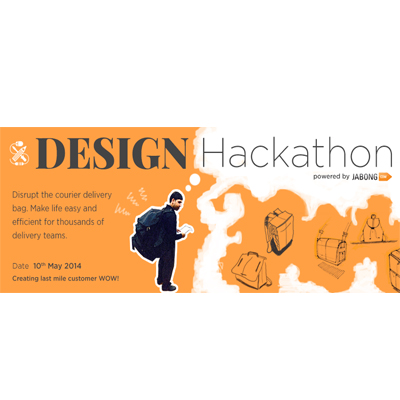
    Thirdly, all comments, suggestions and complaints are taken very seriously. A case in point is the Jabong design hack which is the result of a seemingly innocuous tweet sent to all major e-commerce companies by a gentleman from Bangalore. Jabong took up the gauntlet and initiated a design hack-a-thon where sundry designers and even orthopaedics sat together and brain-stormed to turn the somewhat bulky courier container used by the e-retailer into a hip, easy-to-carry delivery bag. “The intention was to host some brilliant minds at our headquarters in Gurgaon and come up with interesting solutions to the challenge. The focus was on the solution, which was to make the courier delivery bag easy to carry, efficient, lighter (if possible) and fashionable. Jabong will now work with the winning team to build a prototype,” says Sinha.

    Courier services have had to evolve in the last 2-3 years for serving e-commerce. The fast turn-around-times, different sized packages, time scheduling of deliveries, cash collection on delivery and increasing service expectations at the doorstep are aspects attached to the delivery part, which was not an expectation pre e-commerce. All these are very recent and every delivery company is currently focusing on them and improving.

    The process was completed in four stages. In the first stage, participants tried to better understand the challenge. The second stage had a lot of research going into finding a solution for the human body to carry weight while doing less work. The third stage saw the teams engage in design thinking and lean prototyping to come up with three designs. The last stage was a feasibility check, after which, the most practical solution was presented. A core parameter was to re-design the bag at a price competitive to the existing cost. Indeed, Jabong will work along with the winners to come up with a prototype in three months. Sinha informs that 25 people participated in the activity that was judged by Jabong operations director Pratik Gupta, MIT Media Labs innovator Anirudh Sharma, and GoJavas COO Vijay Ghadge.

    Two teams won with team one comprising a biker (Gourav Gupta), an engine designer (Abhikaran Singh), a food enthusiast (Rakshit Kerni), an artist (Sahil Bindra) and IshanPadgotra from JagritiYatra. Whereas team two was made up by a student (Mohd Salman), a professional from a startup (Sameer Malik) and a user experience designer (Arunesh Moudgil).

    If Jabong can think of improving on something as minor as its courier bag, even if it is in response to a consumer complaint that says a lot about how seriously the brand takes its consumers.

  • We have done a terrible job in broadband penetration: Rahul Khullar

    We have done a terrible job in broadband penetration: Rahul Khullar

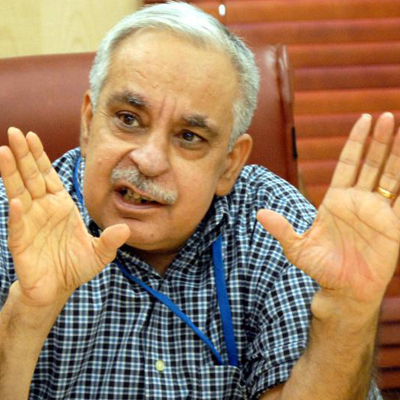
    MUMBAI: The chairman of the Telecom Regulatory Authority of India (TRAI) Rahul Khullar is known for being vocal. While earlier he has voiced his opinion on various things including bringing transparency in the way telcos function, delivering his keynote address at the India Digital Summit of the Internet and Mobile Association of India (IAMAI) in the capital, he candidly admitted that the rollout of National Optic Fibre Network (NOFN) was not-so successful. He said, “We have done a terrible job in broadband. We are nowhere near to meeting target of NOFN and unless it is done, internet penetration cannot happen at the desired pace.”


    Referring to the fact that 80 per cent of new internet users are coming through 2G network, Khullar said, “Access and speed will determine penetration of smart-phones and internet. Unless there is reasonable pricing of spectrum and making spectrum available, we will not succeed.” He opined that the next government has to take immediate action on spectrum availability to have successful internet penetration in India.


    IAMAI chairman and Google India managing director Rajan Anandan, talking at the inaugural ceremony said: “India is adding four million active internet users every month. At this rate we will overtake the United States by end of this year to become the second largest internet market.”


    According to Anandan, India’s e-Commerce industry will be around US $100 billion in the next decade. However, investments of upward of US $3 billion will be required to reach that stage. “And that can only happen if FDI in e-Commerce is allowed,” said Anandan.


    “Given the dire strait of our finances, e-Commerce industry should embrace itself for taxation,” remarked Khullar, who also raised the issue of data protection, privacy and internet governance and said that industry members should come forward along-with civil society in creation of internet governance laws.

  • Urban Ladder bags ‘Best Digital Start-Up Award’ at 4th India Digital Awards

    Urban Ladder bags ‘Best Digital Start-Up Award’ at 4th India Digital Awards

    MUMBAI: What better than to be lauded for your good work and so it was that Urban Ladder walked away with ‘Best Digital Start-Up’ at the recently concluded fourth India Digital Awards organised by the Internet and Mobile Association of India (IAMAI).  

     
    The awards honoured companies across five categories and 22 sub-categories of the internet and mobile value added services industry.

     
    ‘Viral Marketing Campaign of the Year’ went to BCCI’s #ThankYouSachin while Just Dial founder and CEO VSS Mani won the coveted ‘Best Digital Person of the Year’ title.

     
    Pepsi India created by the 120 Media Collective bagged ‘Best Display Campaign’ while both Jubilant Foodworks by Blazar and Big Tree Entertainment by Interactive Avenues Marketing Solutions took home ‘Best Search Marketing Campaign’.

     
    ICICI Lombard was awarded ‘Best Email Marketing Campaign’ while Grey Digital’s Cadbury India picked up ‘Best Digital Integrated Campaign’.
     

    Meanwhile, Tata Docomo won ‘Best Execution of Performance Campaign’; www.caratlane.com bagged ‘Best eCommerce Website’; www.navbharatimes.com took home ‘Best Local Language Website’; www.ndtv.com picked up ‘Best News Content Website’; www.travelkhana.com walked away with ‘Best Travel Website’; www.policybazaar.com was awarded ‘Best Financial Website’ andwww.gana.com bagged ‘Best Entertainment Website’.

     
    Whereas ‘Best Digital Agency of the Year’ went to Interactive Marketing Solutions and BookMyShow by Big Tree Entertainment and Adaptxt by Keypoint Technologies jointly won ‘Best Innovative Mobile App’.

     
    Among others, Platinum Guild India created by GroupM Media picked up ‘Best Advertising or Marketing on Mobile’; Gamechanger & PHD India took home ‘Best Consumer Mobile Service’; ‘Best Mobile Money Product or Service’ was awarded to One97 Communications and ‘Best Mobile Enterprise Product or Service’ to SPRIN Technosys.

     
    www.ssangyongrexton.in which picked up ‘Best Brand/Product Website’ and www.meritnation.com and www.simplolearn.com which jointly won ‘Best Educational Website’ were also part of the long list of awardees.


  • “Cyber security should be an integral part of national security” Narendra Modi

    “Cyber security should be an integral part of national security” Narendra Modi

    NEW DELHI: Gujarat Chief Minister and BJP Prime Ministerial candidate Narendra Modi’s valedictory speech was the highpoint of the just concluded eighth India Digital Summit organised by the Internet and Mobile Association of India (IAMAI).


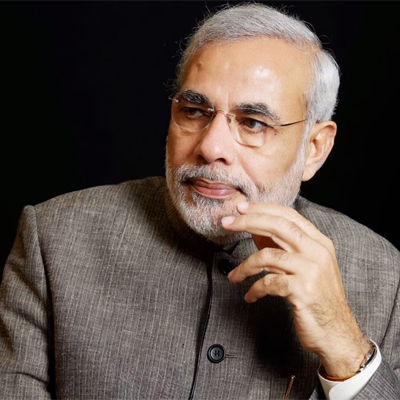
    Addressing the audience through video link, Modi outlined his vision of a ‘Digital India’. “India is a repository of knowledge. Time has come to create a high-speed digital highway so that knowledge can be shared easily to enable empowerment of the people,” said he. “Access to information should have no barriers. And when we create such a digital environment, not only will governance be transparent, technology will ensure citizen governance.”


    Modi stressed upon provision of easy access to and availability of government services to people on their mobile devices. He even spoke of empowering farmers through this medium. In order to boost the agricultural sector, farmers need to have access to global knowledge and information in real-time; he said.  


    Mirroring IAMAI chair and Google India managing director Rajan Anandan’s contention that India would have a US $100 billion e-commerce industry within a decade, the Gujarat CM said e-commerce should drive every industry and every sector.


    Speaking of the need to make the national capital entirely Wi-fi-driven, he said, “This is where the world is moving, and we have to ensure that we start by making Delhi a wi-fi equipped capital.”


    Pointing out how every political party today is actively using social media to reach out to the masses, he said, “With social media, the common man has become powerful and can raise concerns.” While emphasizing the need to link cyber security to national security, Modi concluded his speech on a positive note saying: “Digital India will ensure that the world looks to India for the next big idea.”

  • Vserv.mobi joins forces with IAMAI for AppFest 2013 to evangelise App Developer ecosystem

    Vserv.mobi joins forces with IAMAI for AppFest 2013 to evangelise App Developer ecosystem

    MUMBAI: Vserv.mobi, a leading Global Mobile Ad network, announced its collaboration with Internet & Mobile Association of India (IAMAI) to reinforce its commitment to the growing Indian mobile app developer community. Vserv.mobi will be powering the Hackathon session at IAMAI’s AppFest 2013 event, a team based coding marathon running over 24 hours to create an innovative app, where the winners will be rewarded with handsome cash prizes. AppFest 2013, scheduled to be held from 26th to 28th July 2013 at IIM-Ahmedabad, seeks to provide an environment for developers and entrepreneurs to come together on a unique platform, and leverage the enormous opportunity to establish India as a superpower in the global Apps economy.

    Commenting on the event, Binay Tiwari, Director – Global Marketing & Product, Vserv.mobi said, “We are in an era, where the global mobile App economy is lowering the barriers to entrepreneurship. Today’s young App Entrepreneurs have an unprecedented opportunity to create products that will touch the lives of millions of mobile users across the world. Vserv is committed to fostering App Entrepreneurs across the world, and we are excited to collaborate in India with IAMAI AppFest, to further expedite the rise of India as a Superpower in the App economy.”

    India has emerged as a global leader in app downloads from stores such as Android Play store, Nokia App store and SlideMe, underpinned by factors such as the influx of affordable mobile devices, rapidly increasing mobile internet penetration and mobile-ready regional content. Vserv.mobi’s recently released report on the ‘Rise of India as an App Superpower’, corroborated this trend and also indicated that mobile games account for the most downloaded content on mobile phones. Apart from the app consumption aspect, the ‘appification’ of the Indian economy is also the result of a growing breed of app entrepreneurs from tier 1 and 2 towns of India who are leading the app development culture. Ahmedabad is one such burgeoning mobile app development location and reports state that out of the 250 (ICT) firms in the city, more than 60 companies are dedicated mobile app developers.

    Since its inception, Vserv.mobi’s developer-first approach has translated into creating powerful technology tools based on the monetization challenges of developers in emerging markets like India. Typically, developers enable ads on their apps through the traditional way of integrating an SDK, which is a tedious process that requires significant source code changes and even app layout changes. Also to enable other forms of monetisation such as paid in-app purchases, the developer has to integrate additional SDKs. Vserv.mobi’s flagship AppWrapper technology dramatically simplifies this process down to just One Click. Without any coding efforts, AppWrapper enables both – premium advertising & innovative pricing models – to create a compelling & effortless App monetization approach for developers.

    As a result, the company has empowered developers across the world to earn money from apps, across all mobile platforms. Having monetized over 20,000 Apps, developers are earning unprecedented global revenues powered by the Vserv.mobi AppWrapper.

    Organized under the aegis of IAMAI, this is the second edition of Appfest after the overwhelming response and success of last year’s event in Hyderabad. The winning team of the Hackathon challenge in 2012 included three Hyderabad-based developers – S Nithin Reddy, Paulomi Roy Choudhary and Ashish Das who received a cash prize of Rs 1 lakh from Vserv.mobi.

  • IAMAI Conclave: Connecting marketers, consumers through social media

    IAMAI Conclave: Connecting marketers, consumers through social media

    MUMBAI: Digital media is the new buzz word. Every sector today is looking at ways to connect with its consumers through the new medium on the block- the social media. There is a huge shift in the way people consume products. With this shift, companies around different sectors have started looking at ways to build a connect between their offline and online consumers.

    At the Internet and Mobile Association of India (IAMAI), 9th Marketing Conclave ’13, held today at The Hyatt Regency, close to 150 professionals from across sectors came together to not only understand this medium, but also devised solutions to address the rising demands of consumers.

    Bisleri uses messaging to keep consumers engaged on Facebook; But Bisleri‘s Anjana Ghosh says it is a challenge to continue keeping them engaged

    “Data as a service is the next big thing. Digital evolution is happening at such a large pace that it has become mandatory for
    everyone to follow suit. It is essential that we work towards convergence of both online and offline technologies for effective
    marketing,” announced Netcore solutions chief executive officer Girish Nair.

    The forces driving the market have changed. “While 20-30 years ago, brands led the consumers, today the scenario is undergoing a reverse process,” said IBM Global business services partner Rajesh Rao, while setting the stage for the first of the five panel discussions.

    While session one of the conclave concentrated on the role digital marketing plays in ‘Consumer Product Goods’ (CPG), the other sessions dealt with the impact of social media on automobile, retail, travel and banking sectors. The sessions focused on the experiences and opinions of various marketers with social media.

    “We need to develop a preference for our product. This is possible only if we understand the needs of the consumer. Consumers will buy your product only if it is relevant to them and can influence them,” informed Marico India head media Aditya Save. It is newness in the product that generates interest amongst consumers. “Marketers today strive at engaging consumers and social media is the best tool to achieve this,” he adds.

    Marketing is all about psychographic proposition and demographic media. “There is a big tussle which marketers face between the two. Right segmentation and reach is a major problem,” said Save while explaining the challenges he faces while dealing with consumers through digital media.

    The changing purchasing trends has forced companies to draw a connect with consumers. “Digital marketing helps us listen to our consumers and respond accordingly,” says Bisleri International director- business development & HR Anjana Ghosh. Though even Bisleri uses social media to engage with consumers, the biggest challenge it faces is to keep them engaged.

    Mahindra & Mahindra‘s CMO- auto division Vivek Nayer uses the social media to tell stories that cannot be conveyed in a 20 second TVC

    Digital marketing has made the consumer the most powerful. “A consumer will buy your product only if it means anything to him and is relevant. It is important for marketers to create an emotional bond with consumers,” said WatConsult founder and chief executive officer Rajiv Dingra. Digital media creates buzz, engagement and bonding with consumers.

    “What is important is that consumers should connect to the product, whether it leads to sale today or later is irrelevant. We are building relationships through our digital endeavour,” informed Mahindra & Mahindra chief marketing officer – auto division Vivek Nayer.

    Brands always have had stories to tell; digital media has provided them with the platform to share stories with consumers. “These stories cannot be conveyed in a 20 second TVC. Digital media can give the audience what they could only dream of,” he added.

    Mahindra & Mahindra has successfully reached to its audience through its digital campaign. “We reached to close to 700,000 people through social media, as compared to only 100,000 using offline medium. If you have the content, it will travel to your audiences,” he said.

    Digital media has the power to provide real life brand experience using virtual platform. It also helps measure trends and emotions.
    “Trust, value, service and growth in retail hasn’t changed. What has changed are the channels, scale and technology to reach to consumers,” opined Reliance Industries chief brand and marketing officer Andrew Campbell.

    Though several companies have come up with separate campaigns for their offline and online consumers, Allen Solly believes in connecting the two. “We do not differentiate between the two. There is a need for merging of the world. Consumers do not want to be differentiated,” highlighted Madura Garments brand head-Allen Solly Sooraj Bhat.

    “We have grown from 200,000 Facebook fans in 2011 to 4.6 million fans today. We have also added several apps to connect with our consumers,” informed Shoppers Stop customer case associate and vice president, marketing and loyalty Vinay Bhatia.

    The conclave also concentrated on how the convergence of digital marketing technologies gave a creative boost to the travel industry, leading to formulation of new travel strategies. “We have now started using digital media to inform our consumers of our best services,” revealed Virgin Atlantic general manager-India Stephen King.

    Shoppers Stop‘s customer care & VP marketing & loyalty Vinay Bhatia has seen his facebook audience explode; Apps are also being used to connect with consumers

    For digital media to work perfectly in favour of companies, personalisation and targeting is the key. “This will take another 3-4
    years,” said Cleartrip chief marketing officer Subramanya Sharma. Cleartrip has added meta search engines like Trip Advisor, Google and Kayak to connect to its consumers.

    Social media has created a platform wherein consumers can express their happiness and grudges. “We have several feedback forms and forums through which we can hear our consumers and enhance our services accordingly. I make it a point to read to all feedbacks. It helps me understand the psyche of the consumer,” added Sharma.

    Digital medium has also changed the outlook of the banking, financial services and insurance (BFSI) sector. Every bank today wants to reach out to its customers as easily as possible. “We have had a very successful social media presence. We keep coming out with new ideas to interact with our consumers during events important to them,” said Standard Chartered head digital marketing- India & South Asia Shilpa Desai. Standard Chartered had started several online competitions for Kolkata Knight Rider fans during the IPL season. “We gave our customers a chance to watch the match live at Eden Gardens. This has worked wonderfully as a strategy to connect with customers,” she concluded.

    Digital media surely has created a space for itself. But, how successful will be the marketer in turning the screenagers into
    consumers? Only time will tell.

    Here are the photos from the IAMAI Conclave
  • Digital Commerce Market to spike by 33% in 2013

    Digital Commerce Market to spike by 33% in 2013

    MUMBAI: The total digital commerce market in India was valued at Rs 473.49 billion in December 2012 and is expected to grow by 33 per cent to achieve Rs 629.67 billion by the end of 2013. This is according to the latest Digital Commerce Report, by the Internet and Mobile Association of India (IAMAI) and IMRB International, released today.


    Source: IAMAI-IMRB International

    The report claims that while Online Travel, which includes booking rail, air, bus tickets, hotel accommodations and tour packages comprised a majority 71 per cent of the whole Digital-Commerce pie in 2012, E-Tailing, which includes purchases of various consumer products or services such as electronics, apparels, footwear, jewellery, home & kitchen appliances, consumer durables, furnishings, constituted 16 per cent of the overall share.

    Financial Services, which include services such as paying insurance premiums and renewals, paying utility and mobile bills, trading shares and securities amounted to 6 per cent of the overall share. B2B and B2C Classifieds (jobs, matrimony, car, real estate etc.) contributed 5 per cent, whereas other online services such as online entertainment ticketing, online food delivery, buying discounts/deals/vouchers etc. constituted 2 per cent of the overall digital commerce market in 2012.

    Source: IAMAI-IMRB International

    According to the report, online travel industry has on an average grown by 32 per cent from Rs 149.53 billion in 2009 to Rs 345.44 billion in 2012 and is estimated to grow by another 30 per cent and be valued at Rs 449.07 billion by the end of December. The E-Tailing category has grown from Rs 15.5 billion in the year 2009 to INR 64.54 billion in year 2012. This category is estimated to grow by 55 per cent and cross 100 billion by the end of this year.

    Financial services market was valued at Rs 28.86 billion in 2012 and is expected to grow by 25 per cent and reach to Rs 36.07 billion by the end of the year. According to the report, Classifieds market has seen a significant growth and has reached Rs 23.54 billion in 2012. Classifieds as a category has grown with a CAGR of 45 per cent growth from 2009 and is expected to grow by another 30 per cent to Rs 30.61 billion by end of the year.

  • Rajan Anandan takes over as new IAMAI chairman

    Rajan Anandan takes over as new IAMAI chairman

    MUMBAI: Google India MD Rajan Anandan has to take over as the new chairman of the Internet and Mobile Association of India (IAMAI). He replaces InfoEdge MD and CEO Hitesh Oberoi, who was at the helm of IAMAI‘s affairs since April 2011.

    Facebook director online operations and head of office India Kirthiga Reddy has replaced Yatra co-founder and CEO Dhruv Shringi as the vice-chairman replacing of the mobile and internet body.
     
    On his new role, Anandan said, “I am excited to take over this responsibility at a time, when the industry is going through an exciting transition. The digital industry has reached an inflection point and is growing steadily. IAMAI, which has been working persistently towards the growth of the medium, is also growing. We plan to engage and interact more closely with the government to ensure that the online industry registers a balanced growth in the years to come and the internet user base widens.”

  • 130 Million Mobile Internet Users by March 2014: IAMAI

    130 Million Mobile Internet Users by March 2014: IAMAI

    MUMBAI: India will have 130.6 million mobile internet users by March 2014 according to the Mobile Internet Report by Internet and Mobile Association of India (IAMAI) and Indian Market Research Bureau (IMRB).

    According to the report, in December 2012 there were 87.1 million mobile internet users. Meanwhile, in October 2012, there were 78.7 million mobile users who had accessed internet in the last one month, which include Laptop with dongles, tablet, dongles that connects to Internet. Of this number, there are 61 million Off-Deck Users (accessing sites other than sites of the operator), 15 million On-Deck Users (accessing only sites specified by the operator) and the rest 2.7 million users accessed the internet using dongles (i.e. connected to Internet using 2G, 3G or high-speed data cards).
     
    The report further reveals that an average monthly bill of a user who access Internet on mobile devices is Rs 460. Of which, the user spends Rs 198 towards Internet expenses.

    According to the company, this is a very healthy trend as it shows willingness of the users to spend nearly 40 percent of the bill towards Internet access. The rest is spent on voice services.

    Email, social networking services (SNS) and messengers have high usage among mobile internet user. Accessing online videos, games or reading online news are done approximately 2-6 times a week. While online games are accessed by nearly 50 per cent of the Mobile Internet users, less than 30 per cent of users read online news and watch online videos.