Tag: IAMAI

  • IAMAI to focus on emergence of mobile marketing in India

    IAMAI to focus on emergence of mobile marketing in India

    MUMBAI: The internet population in India is growing at a healthy rate. With 400 million internet users in India, the medium has provided a huge canvass for marketers to reach out to their audience. But, what is witnessing an exponential growth is the mobile marketing.


    The growth of consumer internet companies has also given an impetus to growth in internet users. If India is on the brink of attaining the magic figure of Rs 1 lakh crore in digital commerce, the availability of smart phones at cheaper rates coupled with low internet mobile tariffs have ensured that internet is within the reach of all.

     
    With a huge population of young consumers hooked to the internet, the marketing and advertising fraternity has taken cognisance of the power digital advertising. In 2014, the market size of digital advertising was Rs 2,750 crore and if we are to take 30 per cent y-o-y growth, it will be over Rs 3,500 crore. Though it is still at a nascent stage, planners have woken up to the embrace the power of the digital medium.


    IAMAI president Subho Ray says, “If the growth of digital commerce is anything to go by, planners will certainly spend more time understanding how to tap the hidden potential of the digital world. The phenomenon of online shopping is no longer restricted in the urban areas. If you look closely, internet users in rural India is growing faster than in urban India. The coming of age of payment banks and mobile wallets will encourage consumers to transact online. The point is, newspapers might not reach every village, but there is mobile connectivity in almost entire India and people out there are watching the world in their handheld device. It is just a matter of time that most brands will give a huge push for digital marketing.”


    The Mobile Marketing Summit, to be held in Bengaluru on 18 December, 2015, will have industry doyens taking a closer look at the emergence of mobile marketing in India.


    Acer CMO S Rajendran adds, “The Mobile Marketing Summit event always provides fascinating insights into the way mobile technology is bringing positive changes to how consumers behave and conduct their lives across all facets of their lives.  This summit helps bring audiences one step closer to ideas and developments that are breaking new ground in the market. Some recent trends are quite revealing about the pace of change in this space: the adoption rate of mobile is twice that of the internet, three times that of social media, and ten times faster than PCs. Today mobile is becoming not only the new digital hub but also the bridge to the physical world. That is the reason why mobile will be transformative to entire businesses.”
     

    Echoing Rajendran’s sentiments, Quikr CMO Vineet Sehgal echoes says, “80 per cent of our traffic comes from mobile and in that context it’s pretty clear that mobile marketing is no longer an experimental format but rather a crucial part of the mix for online businesses such as ours. Technological advances have made it possible for consumer touch-points via mobile to be personalized, location-based and hence extremely relevant which brings marketers immense opportunity.”

     
    The Mobile Marketing Summit 2015 will have sessions like State of Mobile Marketing In India; Mobile First and Brand Marketing; Engaging with multi-screen users: Every advertisers’ challenge; How Brands are considering promotions through Mobile Medium; etc.


    Speaking about multi screen users, Titan Company eCommerce head Alokedeep Singh added, “In a multi-screen world, mobile is becoming the primary/first screen for consumers to search, experience and shop online. In coming times, not only targeting users with relevant ads, push notifications etc, newer technologies like ibeacons, wearables will create endless opportunities for brands, marketeers.”
  • Simplification of wallets key to digital payment’s success

    Simplification of wallets key to digital payment’s success

    MUMBAI: In a world fast moving towards all things digital, simplification of wallets will be the key to digital payment’s success.

    Addressing the session ‘Paving the way for Digital Money in India’ at IAMAI’s Digital Money 2015 Summit, Nykaa.com chief strategy officer Nihir Parikh said, “To go truly digital, there needs to be a process of paying through wallet that is less cumbersome. It should be a one click check-out like cash-on-delivery option. The time has arrived for integrated payment gateway, unless this is in place, it will be difficult to evolved digital payments.”

    Panelists at the session concurred that while women shoppers shopping online has increased phenomenally, 80 per cent of them still use cash –on-delivery as mode of payment. The last couple of years have seen a rise in internet banking, use of debit card for online transactions and usage of mobile wallets.

    The panelists were of the view that unless there is consolidation in the wallets segment, user base will not grow. Since by 2018, almost 50 per cent of internet users will be from rural India, the digital payment platform needs to embrace simpler and consumer friendly forms of transaction.

    A holistic approach towards payments ecosystem is inadvertent and digital platforms have provided a great opportunity for financial inclusion, in every aspect.

    The panel included Amazon India payments head of strategy and products Srikanth Rajagopalan, Yepme CEO Vivek Gaur; PayU Money business head Virender Gupta; Nykaa.com chief strategy officer Nihir Parikh, E-Billing Solutions  director Bhavin Mody and ItzCash Card general manager & business head Bhavik Vasa. The session was moderated by Billdesk co-founder and director Srinivasu M.N.

  • IAMAI to host summit on Digital Money for Digital India

    IAMAI to host summit on Digital Money for Digital India

    MUMBAI: India’s internet economy is flourishing rapidly. With over 350 million internet users and over 213 million mobile internet users the future of digital in India seems to be bright.


    With the growth of digital commerce, the digital payment industry has shown steady growth. According to IAMAI-IMRB’s Digital Commerce 2015 Report, 45 per cent of the online shoppers prefer cash on delivery as a mode of payment, 21 per cent prefer payment through debit card and 16 per cent via credit card. The other modes of payment, which are used are Internet Banking (10 per cent) as well as prepaid cash cards, mobile wallets etc (8 per cent).


    With this framework, Digital Money 2015 Summit with the theme – Digital Money for Digital India – organized by the Internet and Mobile Association of India (IAMAI), gains significance.


    The digital economy cannot be overlooked as various forms of digital payment are taking significance in India. digital payment is no longer restricted to e-commerce transactions now. White label ATMs, payment banks, mobile wallets, POS are all part of the digital payment ambit.


    With different social sectors schemes by government and digital India gaining prominence and priority, this year’s Digital Money Summit has relevance like never before. While there are many industry leaders who will be speaking at the summit, the special address by eminent economist and Niti Ayog member Bibek Debroy is significant, as very few can be expressive like him on the importance of digital payment in the backdrop of digital India.


    The Digital Money Summit will have industry representation from bankers, payment banks, and mobile wallets among others. The day long summit will have speakers like Bank of India chairman G Padmanabhan; PayTM founder Vijay Shekhar Sharma; ItzCash Card chairman and managing director Naveen Surya; RBL Bank head – strategy Rajeev Ahuja and Fino Paytech managing director and CEO Rishi Gupta. 


    Speaking about the Digital Money 2015 Summit, IAMAI president Dr. Subho Ray said, “India is in the cusp of digital revolution. No longer is digital payment a phenomenon of the urban elite. Today, the digital payment platform is the biggest enabler of financial inclusion. The summit this year will be interesting from the perspective of emergence of the platform and its relevance in digital India program.”


    By keeping accord with the theme, Digital Money 2015 Summit will have sessions like Investor’s view on digital payments industry in India. They sessions will focus on Digital Money for Digital India – How can both complement each other?; E-Commerce – paving the way for digital money in India; Mobile money in India – the road map for growth; Payments banks – moving towards differentiated banking; etc.

  • Tonic Media Wins 2015 Social Media Agency of the Year

    Tonic Media Wins 2015 Social Media Agency of the Year

    MUMBAI: Tonic Media, India’s leading independent digital agency, has been named 2015 Social Media Agency of the Year at the Big Bang Awards organised by the Ad Club, Bangalore on Friday, the 25th of September.The agency was nominated across 10 categories with 14 shortlisted entries and bagged 12 awards including five golds, five silvers and one Bronze.

    Over 987 entries were submitted across 58 categories by 72 agencies. Honorees were selected by a jury comprising of 46 Senior Advertising, Marketing, Media, PR and digital professionals from all over India, based on the nominations filed by the respective agencies. The awards re-emphasized the strengths of Tonic Media across social and creative platforms with the agency winning Best Use of Facebook, Twitter, LinkedIn as well as Community Development under separate campaigns.


    We are excited that Tonic has had such a successful year in terms of performance and receiving appreciation for the same.” said Chetan Asher, CEO, Tonic Media. “The awards are a testament to the pace and commitment of the Tonic team. We aim to build the best-in-class services and focus on producing better creativity year on year.


    Tonic received the following titles at The Big Bang Awards:


    Winner


    ·     Social Media Agency of the Year


    Gold


    ·     Best Use of Twitter for Aditya Birla Group

    ·     Best Use of LinkedIn for Sony Entertainment Television

    ·     Best Community Development for Sony Mix

    ·     Best Corporate Communications Campaign for Aditya Birla Group

    ·     Best CSR Campaign for Aditya Birla Group


    Silver


    ·     Best Corporate Website of the Year for Little Millennium

    ·     Best Use of Facebook for Sony Entertainment Television

    ·     Best Use of Twitter for Sony Max2

    ·     Best Community Development for Sony PIX

    ·     Best Social Game/App/Contest for Aditya Birla Group


    Bronze         


    ·     Best Use of Facebook for Sony PIX

  • Online food delivery market sees 40% growth, ticket sales drop 49%: IAMAI

    Online food delivery market sees 40% growth, ticket sales drop 49%: IAMAI

    MUMBAI: The online food delivery market in India has been thriving. This in turn has also led to the mushrooming of many an online start-ups, catering to the growing demand. What’s more, the online food delivery market saw an impressive growth of 40 per cent in 2014 to touch Rs 350 crore by the end of December 2014, as per a report by the Internet and Mobile Association of India (IAMAI).


    As part of the previous year’s industry review data released by IAMAI, the food delivery segment is now witnessing a lot of traction. Significantly, the online food delivery market constitutes 17 per cent of the overall other online services pie.


    On the other hand, the share of buying online tickets for movies, sports, shows, concerts in the online service pie has dropped to 49 per cent as compared to 2013 and was pegged at Rs 990 crore in December 2014. The online grocery market garnered six per cent of the total online services pie.


    Online booking for commuting (cabs etc) too saw rapid growth during 2014 to touch Rs 600 crore by the end of the year.


    As per the report, other online services market, which includes emerging service categories like Online Entertainment Ticketing, Online Commuting, Online Food and Grocery Delivery, has grown with a CAGR of 73 per cent since 2010 and was valued at Rs 2,025 crore by year end.


    This segment IAMAI-IMRB data also reveals that the e-tailing category has grown manifold with a CAGR of 33 per cent from Rs 2,372 crore in the year 2010 (Jan-Dec 2010) to Rs 10,004 crore in year 2013 (Jan-Dec 2013). It further grew by 1.4 times and reached Rs 24,046 crore in December 2014.


    Mobiles and mobile phone accessories contribute to 41 per cent (Rs 9,936 crore) to the e-tailing segment followed by apparels, footwear and personal items, which contribute 20 per cent. Consumer durables along with kitchen appliances contribute another 14 per cent. Out of the remaining 25 per cent, laptops/ tablets, home furnishings, and books contribute to another Rs 2,780 crore, Rs 1,059 crore and Rs 648 crore respectively.


    Emerging categories that comprise products like deals/coupons, toys, gifts, handicrafts, flowers etc. continue to contribute just about three per cent of the e-tailing pie.

  • Porn ban: IAMAI says notice to ISPs will lead to a chilling effect

    Porn ban: IAMAI says notice to ISPs will lead to a chilling effect

    MUMBAI: The Internet and Mobile Association of India (IAMAI) has said that the latest government notice dated 4 August, 2015, to the Intermediaries (ISPs) is vague and has led to a chilling effect.


    The notice states that the ISPs are free not to disable any of the 857 URLs, as provided in the list earlier, which do not have child pornographic content. However, the problem is with the caveat in the notice mentioning “which do not have child pornographic content.”


    The problem is that the said notice is not accompanied by any specific list of sites or links and the Intermediaries are expected to find out the links or sites containing child pornography themselves. This is not how it works under the law. The correct procedure should have been to provide the ISPs with a specific list along with the notification, as was done in the earlier notice dated 31 July, 2015.


    The ISPs have rightly asked the government to withdraw the notification. The Internet Service Providers Association of India’s (ISPAI) letter to the government states, “We urge you to withdraw the said vague directive as it is not only confusing, but also putting responsibility on ISPs of the website on which ISPs does not have any control.” However, they are wrong in saying that “till further directives, the said 857 sites will continue to be blocked.”


    IAMAI has said that this is a typical case of a chilling effect and its worst fears have come true.

  • IAMAI welcomes DoT recommendations on Net Neutrality

    IAMAI welcomes DoT recommendations on Net Neutrality

    MUMBAI: The Internet and Mobile Association of India (IAMAI) has welcomed the DoT Committee recommendations on Net Neutrality and agrees with the report that the primary goal of public policy should be directed towards facilitating affordable and universal connectivity.


    This actually is in line with IAMAI’s submission on Net Neutrality to the DoT. 


    IAMAI has always advocated a principle that guarantees consumers equal and non-discriminatory access to all data, apps and services on internet, with no discrimination on the basis of tariffs or speed, and is happy that the DoT paper also conforms to the view of IAMAI.


    The industry body has also welcomed the DoT recommendation that OTT services should be actively encouraged and any impediments in expansion and growth of OTT application services should be removed. This is also in line with the suggestions put forward by IAMAI that bringing in more regulation would be counterproductive to innovation and investments in this sector.


    According to IAMAI, Zero rating and other pro-access programs have the potential to dramatically expand internet access in India and bring more people online, but the report fails to fully recognize the value and potential of such programs. Not all Zero Ratings are violating the Net Neutrality principles and especially in countries like India where the Internet penetration is very low, such services can actually help in faster proliferation of broadband. So, the Net Neutrality laws should keep the plan of zero-rated services open and implement along the lines that is not anti-competitive and in lines with the principles of Net Neutrality. 


    In light of the observations made in the DoT Committee Report on Net Neutrality, IAMAI states that there are already enough regulations on the Internet Telephony in India [Calls from Skype to mobile numbers and land line consume reasonably less, but this is not yet permitted in India] and there is no need to further bring a licensing or revenue share arrangement between the OTTs and TSPs. This will disrupt VOIP and will also skew any further innovation in the same field, which is need of the hour.

  • IAMAI hails CCI order to close investigation against e-commerce

    IAMAI hails CCI order to close investigation against e-commerce

    MUMBAI: The Internet and Mobile Association of India (IAMAI) has welcomed the Competition Commission of India’s (CCI) decision to quash charges of cartelization and anti-competition practices by e-commerce companies.


    IAMAI hopes that this will finally put a stop to motivated charges brought up regularly by certain interested groups against e-commerce companies. IAMAI is of the view that this order will allow e-commerce companies to continue to provide innovative services to consumers in a free and fair manner.


    In recent months, charges have been brought by various malcontent elements that discount sales launched by numerous e-commerce websites were anti-competitive in nature. It was also alleged that e-commerce websites and online product sellers entered into exclusive agreements, thereby leading to market dominance.


    The CCI has ruled that e-commerce companies did not violate competition norms by indulging in cartelization or by abusing their dominant position. “The Commission is of the prima facie view that no case of contravention of the provisions of either section 3 or section 4 of the Act is made out against the opposite parties,” it said in its order.


    With regard to exclusive agreements, the CCI said that such pacts need not result in appreciable adverse effect on competition. “It does not seem that such arrangements create any entry barrier for new entrants. It seems very unlikely that an exclusive arrangement between a manufacturer and an e-portal will create any entry barrier as most of the products which are illustrated in the information to be sold through exclusive e-partners face competitive constraints,” the order stated.


    In fact, the CCI order praises the e-commerce companies by observing that online distribution channel provide an opportunity to the consumers to compare the prices as well as the pros and cons of the product. Furthermore, through the option of delivery right at their door steps, consumers have the opportunity to accept the purchase at their convenience and do not need to set aside a couple of hours at a stretch to make the purchase through a brick-and-mortar retail outlet. Therefore, at this stage, it does not appear that the exclusive arrangement between manufacturers and e-commerce/portal companies lead to Appreciable adverse effect on competition (AAEC) in the market.

  • “Digitisation will boost GDP growth” – Ravi Shankar Prasad

    “Digitisation will boost GDP growth” – Ravi Shankar Prasad

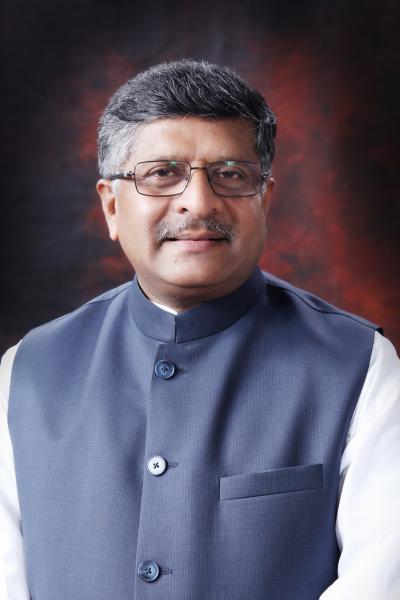
    MUMBAI: Taking a leaf out of Prime Minister Narendra Modi’s Digital India initiative, Union Minister of Communication and Information Technology Ravi Shankar Prasad today stressed on how the country’s growth is interlinked to this programme.
    “The government is dedicated to creating a digital ecosystem that will enable internet to touch the lives of all Indians,” Prasad, who was speaking at the 9th India Digital Summit of IAMAI, said.
    He further pointed out how it was imperative to create hubs in rural India that will help the growth of e-commerce, which remains unexplored so far. “Unless connectivity reaches every village of India, the dynamics of growth will remain unchanged,” he said.
    Speaking on access, Prasad said, “It took 30 years to cover 10 lakh kilometres of optic fibre laying, and in just next three years, seven lakh kilometres will be added, making rural connectivity a reality.”
    Releasing the IAMAI &The Boston Consulting Group (BCG) report India@Digital.Bharat, Prasad said, “For the internet economy to touch $200 billion by 2020 that will contribute five per cent of GDP, we need to move at a fast pace towards computer literacy. The other key areas which will help the internet economy to grow is mobile internet. The government is committed to digitisation and we look at extensive public-private partnerships (PPP) to the have successful implementation.”
    The India@Digital.Bharat report establishes that India is headed towards an internet economy worth $200 billion by 2020, that will contribute five per cent of the GDP growing at 23 per cent compared to 13 per cent overall.

    As the following chart shows, Internet in India by 2018 will be more mature and mobile will be more predominant.

    The number of internet users in rural areas will touch 210 million by 2018, aiding India’s internet user base to cross 500 million by 2018.

    Speaking at the launch of the report, BCG senior partner and director Alpesh Shah said, “India will have more than half a billion internet users in the next three years – this growth has the potential to fundamentally change the way in which consumers save, learn, play, move and work. However, the extent of shift will depend a lot on how the government and the industry come together to unlock the true potential of the internet.”
    IAMAI chairman and Google India managing director Rajan Anandan, stressed on the growth of internet in India and successful roll-out of the government’s Digital India programme. “India is the third country in the world to have over five Internet companies valued at over $1 billion. India is the fastest growing Internet country but we need to move from narrow band to broadband at the earliest,” Anandan said.


  • Online ad market to reach Rs 3575 crore by March 2015: IAMAI-IMRB report

    Online ad market to reach Rs 3575 crore by March 2015: IAMAI-IMRB report

    MUMBAI: As of June 2014, there were 243 million claimed internet users in India out of which 192 million are active internet users who access internet at least once a month. There has been a consistent growth in the number of internet users over the past few years. In urban cities, the penetration of active internet users is nearly 36 per cent whereas in rural villages the penetration is 6 per cent. There is a large part of the population that still needs to be included in ensuring a large-scale digital adoption in the country.


    The latest finding of the ‘Digital Advertising in India’, a report jointly published by the Internet and Mobile Association of India (IAMAI) and IMRB International, reveals that the online advertising market in India is projected to reach Rs 3,575 crore by March 2015 with a y-o-y growth rate of 30 per cent.


    The report finds that currently, search and display are the top two contributors to the total digital advertisement spends in India. Of the Rs 2,750 crore digital advertisement market, search ads constitute 38 per cent of the overall ad spends followed by display ads which contribute 29 per cent and social media contributing 13 per cent of overall digital advertisement spends. It is estimated that the proportion of spends on search advertisements will reduce and spends will increase on email, video and mobile advertisements.


    By 2015, spends on video ads will grow by a CAGR of 56 per cent and contribute 12 per cent to the overall market share of digital advertisements. In FY ending in March 2014, the contribution of search spends reduced to 30 per cent of the overall digital advertisement spends i.e. contributing Rs 825 crore to the Rs 2,750 crore digital advertisement market.


    According to the report, ad spends on mobile devices are growing at a CAGR of 43 per cent and social media is grew at a CAGR of 41 per cent y-o-y and touched Rs 385 crore and Rs 440 crore in March 2014. Spend on video grew at CAGR of 51 per cent and reached Rs 303 crore. Spends on email ads grew at a CAGR 16 per cent to reach Rs 88 crore.


    Further, on industry wise spends, the report finds that e-commerce, telecom and FMCG & consumer durables are the top three verticals driving the digital advertisement spends in India.


    Digital ad spend on mobile devices is 14 per cent whereas on desktop PCs, laptop computers, it is 86 per cent. Although traditional media still holds strong ground in the Indian ad space, digital advertising is catching up fast and is expected to overtake traditional media within the next 5 -10 years.