Tag: IAA World Congress

  • 45 IAA World Congress set to make waves in Penang, Malaysia from 6 to 8 March, 2024

    45 IAA World Congress set to make waves in Penang, Malaysia from 6 to 8 March, 2024

    Mumbai: The International Advertising Association (IAA) is to unveil the forthcoming 45 IAA World Congress poised to captivate Penang, Malaysia, from 6 to 8 March, 2024. Against the dynamic canvas of a rapidly evolving global landscape, this landmark event pledges to unite influential leaders and trailblazers from the advertising and marketing realm for an immersive three-day experience brimming with insightful discussions, innovation showcases, and unprecedented networking opportunities.

    At the core of the 45th IAA World Congress lies the compelling theme ‘Brand: Re-Code, an imperative call for businesses to adapt, infusing creativity, compassion, and technology into their strategies to redefine brand narratives. In an era characterised by transformative shifts – social, economic, and technological, organisations must recalibrate their approaches. The vulnerabilities exposed by recent crises underscore the need for a re-evaluation of traditional brand models and the adoption of agile operating frameworks.

    The 45 IAA World Congress aims to probe into cutting-edge trends shaping the advertising landscape. Through engaging dialogues, insightful knowledge exchanges, and the sharing of best practices and case studies, attendees will gain illuminating insights into frameworks that empower brands not only to thrive but also to positively impact the evolving global scenario.

    Building on the resounding success of the 2019 IAA global Congress in Kochi, India which witnessed a remarkable gathering of industry experts, the 45th IAA World Congress in Penang is poised to establish new benchmarks. Penang, renowned for its rich cultural heritage and exceptional connectivity, provides an ideal backdrop for nurturing meaningful collaborations and connections among industry professionals.

    Expressing his excitement, 45th IAA World Congress President, Chairman IAA Malaysia Penang John Chacko said, ‘The convergence of social, economic and climate issues, along with rapid technological advancements has created a new reality for businesses to navigate. Equally, social issues such as inequality, diversity and inclusion have gained significant attention with customers and the workforce demanding more ethical practices all around. All these issues would be discussed and debated by senior global experts in Penang. And Penang itself is a wonderful confluence of diversity, heritage, and culture.”

    Eros Media World PLC and IAA global vice president & area director, APAC Region, Group CEO Pradeep Dwivedi added, “The Indian media, advertising and marketing talents are making big waves globally in creative excellence, impact and effectiveness. The IAA World Congress 2024 in Penang, Malaysia offers Indian delegates with the perfect blend of learning and sharing the same with the worldwide community of professionals. I am confident of its wide appeal and benchmark level of participation from India, coming on the back of the phenomenally successful IAA World Congress previously held in Kochi, India. I am especially delighted to share that my good friend and an esteemed industry colleague Avinash Pandey, CEO, ABP Network has been chosen as the leader of the Indian Delegation to IAA World Congress at Penang and looking forward to it. With Indians not needing visas to come to Malaysia the path has been made even easier for a good participation from India.”

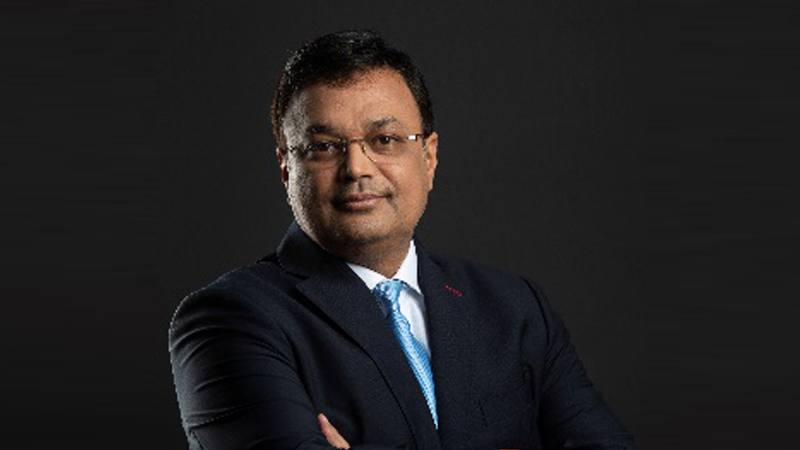
    Further, President IAA India chapter and CEO ABP Network Avinash Pandey said, “The 45th IAA World Congress marks a pivotal gathering, echoing the success of our 2019 Congress. It serves as a hub for innovative ideas and transformative discussions, shaping the future of our industry. We eagerly anticipate a robust Indian delegation, expecting invaluable insights and collaborations.”

    The 45 IAA World Congress will feature an exceptional line-up of some influential figures as speakers from the creative and marketing domain. Some of them will include Maher Nasser (UN director of Outreach Communications), YAB Chow Kon Yeow (chief minister of Penang), Dr. Alex Connock (senior fellow, Oxford University), Tan Sri Tony Fernandes (founder CEO of Air Asia, Capital A), Caroline Yap (MD, Global Google AI Business), Dato’ Loo Lee Lian, CEO of Invest Penang, Dato’ Seri Paduka Maimunah, executive director of UN-Habitat, and Ashwin Gunasekaran, CEO of Penang Convention & Exhibition Bureau (PCEB), amongst others.

    With its focus on fostering innovation, collaboration, and redefining brand strategies, the 45 IAA World Congress invites global leaders, industry experts, and visionaries to be part of this transformative journey.

    More about the event – https://www.iaawc.com/

  • IAA World Congress 2019 – execs stress on customer centric approach

    IAA World Congress 2019 – execs stress on customer centric approach

    KOCHI: The International Advertising Association (IAA) – a global organisation inaugurated its first ever World Congress in India, in Kochi in grand style. The marquee event saw an eclectic mix of thought leaders, spiritual gurus, entertainers, domain experts and industry professionals discussing the future. Bollywood superstar Amitabh Bachchan, spiritual guru Shri Sri Sri Ravi Shankar, Srinivasan Swamy Chairman & World President, International Advertising Association, Punit Goenka , MD & CEO, Zee Entertainment Enterprises Limited and Kaushik Roy, Vice President/Area Director, Asia Pacific, IAA Global were present for the inauguration ceremony.

    Punit Goenka, in his opening address, stressed on the ‘Brand Dharma’ theme of the World congress, as the basic principle a brand should follow, to connect with its customers and society at large. He said “what matters at the end of the day is the deep connect a brand establishes with the audience and the language, dialects in which the brand speaks with the audience. Also, how purely and honestly does the brand believe in the culture and value system of the audience.”

    Excerpts from some of the key sessions:

    Bollywood super star Amitabh Bachchan also spoke passionately on the topic. He mentioned that –“Customer’s hard earned money is Dharma, and a brand should sell their products accordingly, that should become brand’s Dharma.  He internalised the theme and said that “My face is present on over 24 product's packaging. Not endorsing tobacco and alcohol products, that's my Dharma.”

    Spiritual guru Sri Sri Ravishankar said that If you believe in your product's quality, it is Dharma. He spoke about the dangers of the virtual world that had resulted in personality disorders in young children.  He said that “Video games per say encourages violence in children. Too much of screen exposure to kids impacts their central nervous system and hence the screen usage shall be controlled.”

    Nandan Nilekeni, Ex Chairman, UIDAI and co-founder & Non-executive chairman Infosys during his session on “How India uses Digital technology” spoke about how Aadhar has been essential to provide everyone a digital ID.  He also asserted Aadhar was not a data gathering instrument and rather uses minimal data to fulfil two key requirements of providing a basic and unique identity document as well as to ensure welfare benefits reach the right person.

    HANS Paul Burkner, Chairman BCG on his topic Tech for Good talked about how personalisation is possible and doable and is absolute must for most companies as new consumers are really expecting personalisation of information and now companies have the tech to make it work. He indicated the fact that in today’s society, Privacy is dead but security is a big issue and both these are interlinked as there is need of respecting privacy and security needs of the customers. There is an issue of collecting data stealthily and utilising for the benefit of select enterprise. For true personalisation, there should be transparency in collecting data and consumers should control the data collected to bring a balance in personalization and privacy.

    Penny Baldwin, Senior VP and CMO, Qualcomm Technologies spoke about how Mobile is the world’s largest tech platform in the history of mankind and how Brand Dharma of Qualcomm is innovation.   According to Penny Mobile is the largest technology platform with 8 BN connections all over world and There's a huge opportunity for marketers and advertisers to reach their audience even in remotest areas with the rise in data consumption.

    Shivakumar Group Executive President-Strategy & Business Development, Aditya Birla Group, introduced the audience to the DUCA (Digitally unacceptable content and attitude) world. He mentioned that digital has become mainstream. Digital world consumers are more aware and more cynical and more distrusting. He said people trust people like them. In a digital world it is society not your stakeholder and not your board that matters. If you need to build trust you need to build that trust in society. He also shared nine  lessons for brands to survive in the digital age that include, Collective experience is a dominant force, Internal culture and speed of company matters , ethical vs legal (more ethical), heritage is a driver of trust, reliability is the foundation of trust, Data handling , what will you do with it as privacy is big issue and hence brands should self-regulate, should have same standards for transparency for you and partners, have clear social media guidelines, junior people should not handle the social handles of senior agreement.

    Jonas Kjellberg, lecturer, author, venture investor and co-creator Skype talked about three key gears building game changing companies and deploying capital. He spoke about customer acquisition, customer delight and zero cost innovation. Jonas said ,”what a customer loved before, today it has become commodity so there is need to spend time and energy on tomorrow ‘s delight through innovation and not only about today’s efficiency and functionality. Innovation in business model should be zero/ no cost innovation like Air B&B, Uber and Alibaba   as these businesses gained from innovating and not imitating.

  • IAA World Congress: Go digital, focus on new media

    The much talked about 42nd IAA World Congress has come and gone and given many an opportunity to visit Russia, which is generally not on anybody’s tourist map. I am sure all delegates are reasonably happy that they made it to the Congress, whether it was for the Congress speaker presentations or the venue Russia or the opportunity to meet with advertising big wigs from around the world.

    India, made its presence felt at this Congress with 47 delegates, three speakers – Vinita Bali of Britannia, K Srinivas of Bharti Airtel and Sam Balsara of Madison World; and bagging the 2010 IAA Chapter Excellence Award.

    When one visits a new country, in your flight, you replay the impressions you have about the country – so images of the biting cold, vodka and a language that you can‘t understand a word of came to my mind. But on stepping out of the Moscow airport, the heat and the sun gave us a not so pleasant surprise. Since the Conference was in the Kremlin, I was kind of expecting to bump into Putin, but that was another disappointment.

    But, let’s talk about advertising first. The Congress’s 38 speakers were to talk to over a thousand delegates from all over the world about the Consequences of Change taking place all around us.

    If I have to sum up what industry stalwarts like Sir Martin Sorrell, Mark Pritchard, Maurice Levy and other prominent speakers had to say, I would say I have four broad take aways that all speakers touched upon in their presentations:

    Go Digital and focus on new media

    Add value to consumers

    Increase consumer base and compete against non consumption

    Use CSR as a business tool

    Now going into details of what some of the speakers said, Sir Martin Sorrell gave a good overview of the advertising and marketing industry at large. He seemed upbeat about the emerging climate as reflected in WPP figures that he had seen days before the conference.

    He spoke about WPP’s strategy of focusing on BRIC markets, new media and digital, and consumer insights. He highlighted eight trends that he had observed or prophesised about and said because of this the advertising and marketing industry was poised to play a more critical role in the near future:

    Shift in economic power from West to East and North to South.

    Overcapacity in the world and therefore a need for differentiation.

    Growth and importance of digital companies. He cited the example of Google being the biggest media owner in the UK.

    Growth in retail.

    Internal communication and the challenge of getting people to work together.

    Shift in coordination from global to local.

    Importance of CSR and the use of CSR not for a social cause but more to meet a business purpose or goal.

    The Government in all markets is becoming extremely important and influential and a huge spender on advertising.


    India‘s Kaushik Roy at the Congress in Moscow
      Mark Pritchard, the global marketing   and     brand building officer at Procter and Gamble made a pitch for brands to move from marketing to serving a purpose. He also touched upon why a brand exists (what is its purpose or soul); what does the brand stand for (its benefits or its heart); and how is the brand expressed (its execution or body). To make his point come alive, Mark shared some examples of the work they did on Pampers in Russia, based on the insight that when babies sleep well at night,they are 

    active and grow up healthier; PUR, a campaign for clean water in Africa and from our very own India, the famous Gillette – Shave or Not to Shave campaign. No international conference can now be complete without the mention of this campaign! Divya, please take a bow. He also emphasized on the fact that when an organization does all these things, it boosts employee morale.

    Eric Joachimsthaler, spoke very passionately on Challenger Brands. He emphasized that organisations should forget about Disruption and focus on Deep Dive. The key difference between Disruption and Deep Dive being, in Disruption companies would focus on optimizing their own value chain, focus on market sharing and competing against the next competitor. While in Deep Dive the focus is on optimizing your consumer’s value chain, focus on market creation and competing against non consumption.

    He made his viewpoint come alive by giving the example of Flip, a video camera that could upload photos immediately on Facebook in six seconds and achieved 34 per cent market share in US in three years, because of understanding and capitalising on the need gap in the market. He also emphasized on the need for 365 day Communication and not 360 degree communication and the need to create social currency. Whilst Sir Martin spoke about the need for differentiation because of overcapacity, Eric felt it was no longer possible to differentiate your product in today’s fully wired and instant world.

    Vinita Bali was eloquent and said that challenger brands usually have less resources, so they employ sharper strategies, act faster and make better use of scarce resources and these are the qualities necessary for challenger brands to survive.

    The panel discussion on Media Opportunities in the BRIC markets, had Sam Balsara, representing India and the Panel spoke about how the only way to make the advertising business grow was to make the client’s business grow and aggressive use of new media and a better understanding of new media by agencies would help the cause.

    Microsoft and 20th Century Fox made a joint presentation on how they promoted and marketed the biggest animated film of the year Avaatar, highlighting that when two giants tango together you can get delightfully surprising results.

    Day 2 had Maurice Levy open the Congress and he spoke about companies‘ need to take their responsibility to society seriously and that they will be rewarded for doing that.

    Rich Riley from Yahoo spoke about taking the online platform to the next level and how Creative and Media agencies could use digital to engage with consumers in a meaningful way.

    Another interesting panel discussion was on The Advertising Agency Model which had representation from Group M, Publicis Groupe and Joanne Davis Consulting. The panel highlighted the lack of communication between clients and agencies, and groaned about the growing influence and power of procurement managers in agency-client relationships.

    Nikesh Arora from Google, highlighted that 26 per cent of the world’s population is online and 24 hours of video is uploaded every minute on YouTube. He also said that the internet provides instant feedback, interactivity with advertisers, a borderless world and gives a notion of mass personalisation. He emphasised that the last 10 global brands have all been built online – Google, Facebook, YouTube, etc.

    Another interesting presentation was from K Srinivas of Airtel, where he took the audience through the miraculous Airtel story of how it became the No. 1 telecom service provider in India through an innovative business model, focussing on outsourcing of core functions to overcome shortage of resources, but investing heavily on the brand.

    IAA also had a special package for their Young Professional Members, which gave them an opportunity to be part of the Congress at a fraction of the regular delegate fee. 16 youngsters from around the world, including me took advantage of this offer, including five from India.

    The evening entertainment organised by the IAA World Congress organisers gave the delegates a good flavour of Russian customs, from a gala dinner at The Kremlin Palace Congress Centre Rooftop Ballroom, to the Bolshoi Ballet. After the gala dinner, there was an after party on the roof top of the Ritz Carlton, at a Lounge called O2. Reminded me of our AER Bar at Four Seasons; O2 lounge gave an aerial view of the Kremlin and the Moscow skyline by night.

    Moscow as a city is similar to Delhi in winter in some ways – very wide roads, majestic buildings and flowers (tulips no less). But despite the wide road, the traffic and the traffic jams make you wonder if you are still in Bombay! With the onset of spring, the lush green gardens and flowers were in full bloom, the warm weather also got most of Moscowites out on the streets, enjoying the warmth, making walking on the streets, a delight.

    Quite a lot of Indian delegates were fortunate to bump into Indian taxi drivers from South India, most of whom came to Moscow 10 – 12 years ago to study medicine and because of circumstance landed up doing all sorts of businesses except medicine. They proved to be good tourist guides for us for both Moscow and St Petersburg city to show its historic sights. St Petersburg is another must see city, a one-hour flight from Moscow. The city again is very historic with many parts in the city looking a lot like Rome, but on a bigger scale.

    Russia as we all know is famous for its vodka, but what many don’t know is how a Russian has his vodka. Chilled vodka is poured into a short glass and right next to it comes another glass of orange or tomato juice. Instead of mixing the two together, like many of us do, they first take a gulp of the vodka followed by the juice. And by the way Russian girls don’t drink vodka.

    So on the whole, the 42nd IAA World Congress provided delegates a good overview of the state of advertising in the world today and gave me an opportunity to tick off Russia from the 100-places-to see-before-you-die list.


    (The author is Madison World Business Development & Diversification Manager)