Tag: IAA Conversations

  • Sunil Gupta lectures AI’s transformative role at IAA Conversations

    Sunil Gupta lectures AI’s transformative role at IAA Conversations

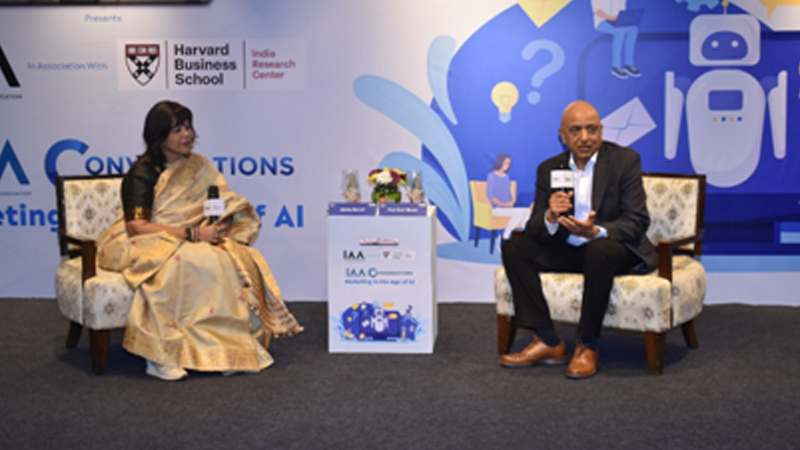
    MUMBAI: Artificial intelligence isn’t just a buzzword anymore—it’s shaping the way industries think, act, and innovate. At the recent IAA Conversations in Mumbai, Harvard Business School Edward W. Carter professor of business administration, Sunil Gupta delved into AI’s transformative power in marketing, branding, and beyond. The event, titled ‘Marketing in the Age of AI’, was moderated by VML India CEO and an IAA Mancom member, Babita Baruah and organised in association with Harvard Business School.

    The session kicked off with Gupta highlighting the disruptive nature of AI and how businesses across sectors are adapting to leverage it. “Almost every business, not just advertising, is thinking about AI and how it will affect their operations,” he noted.

    He outlined three ways AI is transforming industries:

    1    Augmenting and automating tasks to increase efficiency.

    2    Expanding and growing capabilities with innovative tools.

    3    Disrupting and experimenting, encouraging businesses to push creative boundaries.

    Gupta cited tech giants like Facebook and Google, explaining their use of AI to automate ad creation, audience targeting, and budget allocation.

    Gupta emphasised the unprecedented access to consumer data in today’s digital age. “It’s not just about what they buy or search for. It’s also about what they do on social media or why they contact a call centre,” he observed.

    AI, he argued, offers the ability to synthesise qualitative and quantitative data to create a 360-degree view of consumers. It enables brands to map customer journeys, uncover pain points, and even predict behaviours. “AI can act as a smart research assistant, helping brands connect the dots across vast datasets,” he added.

    Gupta also introduced the concept of synthetic consumers, personas created using past data to simulate market research scenarios. This approach offers quick insights at early product development stages.

    Gupta didn’t shy away from discussing the hurdles of AI adoption. “The use of AI will increase competition as it lowers entry barriers, making it easier for anyone to experiment and innovate,” he said.

    However, he flagged the risk of short-term thinking in advertising. “With AI’s ability to experiment and fine-tune ROI, there’s a danger that brands might focus too much on immediate results and lose sight of long-term brand building. And advertising is all about building brands,” he cautioned.

    Addressing how organisations should approach AI, Gupta urged companies to embrace the technology actively. “You can’t learn to swim by watching someone else. You need to dive into the pool yourself,” he remarked.

    He recommended dedicating time to understanding AI’s potential and limitations, noting that no technology has ever reduced workload—it has only shifted it. “Jobs don’t go away, tasks do. AI will eliminate non-value-added tasks, allowing professionals to focus on more impactful work,” he asserted.

    On a closing note, Gupta reminded attendees of the importance of starting with the problem, not the technology. “Sometimes, we get so caught up in the technology that we forget the problem we’re trying to solve,” he said, adding that copyright and IP protection will remain critical concerns in an AI-driven world.

    IAA India Chapter president, Abhishek Karnani underscored the event’s relevance, “At the India Chapter of the International Advertising Association (IAA), we take pride in being the only body in the industry that brings together creative agencies, media agencies, and media under one roof. This year, our focus is clear—Conversations, Skilling, and Artificial Intelligence—all aimed at preparing us for the opportunities and challenges ahead.”

    Organised with support from Free Press Journal as the presenting partner, the IAA Conversations event highlighted the intersection of technology, creativity, and strategy, offering a forward-looking perspective on how AI is reshaping industries.

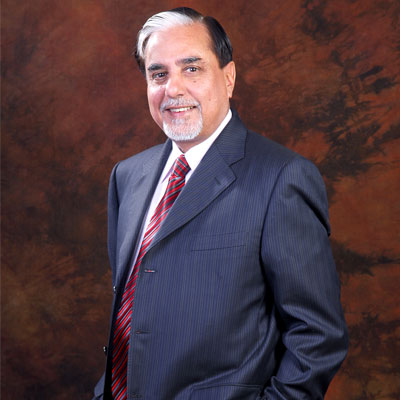
  • ‘Self regulation of media hasn’t failed Indian news completely:’ Dr Subhash Chandra

    ‘Self regulation of media hasn’t failed Indian news completely:’ Dr Subhash Chandra

    MUMBAI: In this era of ‘byte journalism,’ where media is either accused of paid news or being sold out for advertisement revenue, how to balance compulsion and competition was the question of the hour raised at the recently held IAA Conversations.


    Spearheaded by journalist and author Shankkar Aiyer, the discussion saw media mogul and Essel Group chairman Dr Subhash Chandra analyse if news neutrality is but a myth in our country or is it an achievable fete. Stating that the role of media is to inform rather than reform, Chandra emphasised that news anchors should refrain from becoming arbitrators of news.


    While Chandra’s take on ‘Google’ journalism isn’t very positive, he certainly credits the digital medium for revolutionising the way news is consumed.


    “Digital medium has helped us in the news business tremendously. You not only get news in 140 words, but you can also gauge what news consumers are engaging in. It is no longer just an editorial call, but the nerve of the news consumers can be gathered through various social network engagements. That is where news media comes in. We pick up those pointers, and then give them more information around it. To some extent it also safeguards the interest of the consumers as the decision to what to pick up and what not to is more on the public’s hand,” he says, adding that the follow up by print and broadcast media is very essential as digital media doesn’t have the tool of infrastructure to do such in depth elaboration of the news.


    According to him, the key factors that work against news neutrality, especially in broadcast news is the lack of transparency in their ownership as well as faulty editorial regulation from within the system.


    “I can bet that 70 per cent of owners of the 300 something news channels airing in our country are not eligible to do so. The country’s law is very clear that no political party or religious group should own any channel. But still they do,” says Chandra adding that he wouldn’t be surprised if two of the channels are owned by notorious criminals like Dawood Ibrahim.


    The way ahead, according to him, is to suggest to the government of India to look deeper into the actual ownership and investigate the stakeholders of media organisations and ultimately have their ownership transparent to the viewers, who can then decide for themselves.


    When asked about his thoughts on the allowance of 49 per cent foreign direct investment (FDI) in news media in India, Chandra was prompt to reply that he is all in for ‘100 per cent FDI in news media’ as long as the foreign nationals allow the same stakes for Indian investors in their media. “If a US company is to own 100 per cent in a news media company here, Indian companies must be allowed to do the same in the US,” he says.


    It is interesting to note that Chandra doesn’t find it wrong that a big corporation owns a certain media organisation, as long as the corporate veil is lifted to the public. “Corporate ownership is not illegal as per our law, though it may become unethical,” he says.


    Chandra explains the latter issue of self-regulation by citing an example from within his own organisation. “I am aware of the unethical practices that have seeped within Zee News as well. Recently, I was informed of a stringer from Zee News in Hoshiarpur Punjab, who would collect evidences of corruption against builders, administrators, politicians and businessmen and blackmail them for money through agents. You see, it’s very easy to find scoop against such people. They ask for Rs 5,000 for not running it and Rs 1,000 for running it,” revealed Chandra, even congratulating the media who were successful in busting the scam.


    On another instance, news brokers have been heard of sitting outside police stations in Haryana, looking out for victims whose FIRs have not been filed or other discrepancies by the police. “They promise to highlight their story through media in exchange for some money,” Chandra informs. While one may think of this as a social service in favour of the victim, Chandra is of the opinion that this goes against the ethics of a journalist and is no better than paid news.


    The problem doesn’t only exist at the grassroots level of a media organisation. “This happens across levels – even at editor and sub-editor level,” reflects the media honcho. There are plenty of cases when a report, filed by a reporter becomes completely different by the time it is published or aired. “Those who report and file a story are at the very base of the news chain. The same report then goes through input and output editor. Then there is the entire organisation’s editorial that gives its own colour to the story. The publishers then add the final touch on whatever is left of the story,” Chandra adds wryly.


    There are countless examples of how news media manipulates the truth, or in some cases become part of it, and Chandra regretfully admits that he hasn’t been able to put a stop to it.


    While Chandra recognises their evils of news media colouring the news with opinion and judgements, he still doesn’t think there is any need of an external regulatory body. As per him, self regulation hasn’t completely failed Indian journalism, and he still has faith in it.


    “We have put technological engines in place, which will be used post January 2016,” Chandra says while introducing a new self monitory mechanism that Zee News will put in place. “The moment somebody starts working on a story or any news – there is no way it won’t get recorded through the technological engine itself. And what happens with the story up to what level will be available. We feel this will help us control biases about the story by about 90 per cent.”


    Chandra signs off from the conversation pregnant with ideas of a news analysis program that not only reviews the headlines on newspapers every morning, but also dissects the prime time news discussions of the previous night.