Tag: Hyundai

  • AliveNow to handle Forum Malls’ social media biz

    MUMBAI: Bangalore-based social media agency AliveNow has won the social media mandate of the city‘s Forum Mall.

    The agency will carry out digital marketing activities for Forum Mall, Koramangala and Forum Value Mall, Whitefield.

    AliveNow CEO Adhvith Dhuddu said, “We are very excited to partner with Forum Mall and the Prestige Group to promote this iconic mall on social media. Malls could benefit from these social media tools and push the brand towards better visibility, and we plan to execute some very innovative and interesting campaigns for Forum Mall on Facebook and other social platforms.”

    Forum general manager – mall operations Mall Ramaraju added, “Forum Mall being one of the pioneers of the mall culture in Bangalore, is gearing up to elevate the brand proposition to the next level. Understanding the demographics of our TG who are significantly prevalent on social media platforms, we are pursuing to establish a better user interface to engage them further. We aim to create such an experience wherein our customers, even while being seated within the comfort of their homes, can still interact with us. Our goal is to enable our customers to carry the experience of visiting our mall out of the premises and beyond, thus creating effective brand recall”.

    AliveNow has also worked with brands like Hard Rock Cafe, Pepsi, Hyundai, Honda, Chevrolet, ITC, Prestige Smart Kitchens, Fortis and Barista Lavazza.

  • Hyundai’s new i10 TVC featuring SRK goes on air

    Hyundai’s new i10 TVC featuring SRK goes on air

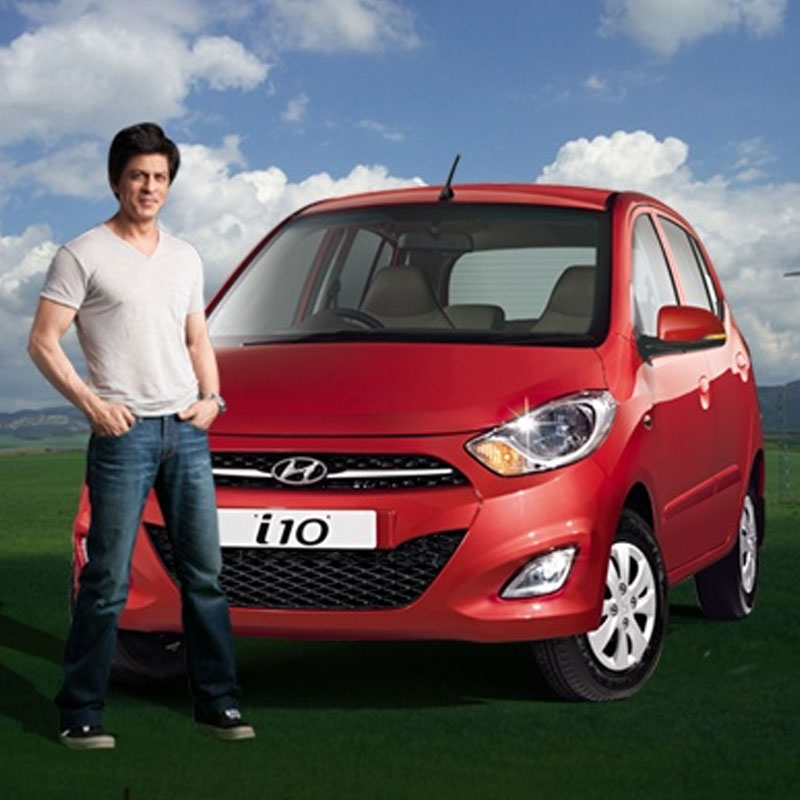
    NEW DELHI: A new television commercial featuring Shah Rukh Khan in Hyundai Motor India Ltd’s (HMIL) Next Gen i10 goes on air today.

    Khan is supported by Manajari Phadnis who plays the female lead in the commercial. The TVC is built around the theme of, “The World is on your side when you drive an i10,” — the film unfolds to show how “good things” happen to Khan as soon as he gets into an i10.

    Announcing the launch of the new television commercial, HMIL marketing and sales director Arvind Saxena said, “The i10 has been one of our most successful cars, with the new commercial we want to reiterate the message that the i10 continues to be a preferred choice with competition nowhere close to it in styling, features or mileage.”

    The storyline revolves around the “good” things that the i10 brings to its owners. As Khan starts driving the car, he gets great company in the form of Manjari next to him. And the weather that was looking ominous also begins to turn sunny as he drives along. The whole theme has been explained with the help of a device that is a “benevolent imaginary hand” which makes Khan’s luck turn good.

    The commercial depicts how the i10 becomes a means of acquiring a life that is brilliant.

    The i10 was launched in October 2007. It was awarded the Indian Car of the Year Award in 2008. In September 2010 the Next Gen i10 was launched.

  • Hyundai Motor rolls out new global brand campaign

    Hyundai Motor rolls out new global brand campaign

    MUMBAI: Automobile major Hyundai Motor Company has launched a new global brand campaign called ‘Live Brilliant‘.

    Through the campaign, the company aims to reinforce its brand management activities and fulfil its vision to become the most beloved automotive company in the world, rather than the largest.

    Last year, Hyundai started focusing on enhancing awareness of its new brand direction ‘Modern Premium‘ and its accompanying slogan, ‘New Thinking. New Possibilities‘. The company‘s aim now is to illustrate how ‘Modern Premium‘ is expressed and delivered in customers‘ everyday lives.

    Hyundai‘s previous campaigns were executed regionally but this is the first time that a worldwide brand campaign is being launched with one single communication applied to all major markets to build up a consistent image as a global brand.

    The new campaign is expected to help global customers have a unified image of Hyundai and get a better understanding of the company‘s ‘Modern Premium‘ values which aim to provide more customers with new experiences and values beyond their expectations, in Hyundai‘s innovative ways, the company said.

    It also said that the new campaign was finalised after customers‘ characteristic and lifestyle analysis to determine what they wanted and expected from an automobile.

    In the campaign, the concept is expressed by not only showing Hyundai‘s “excellence to make customers‘ lives brighter”, but also depicting shiny visuals through sunshine or moonlight, the company said.

    The company will be releasing four short film-style advertisements whose themes are self, love, friendship and family.

    Director Juergen Bollmeyer has directed the films. Departures,‘ a song from the original soundtrack of the movie Like Crazy is used as the background music for the films.

    The ‘Live Brilliant‘ campaign begins this month starting with global pan media. It will gradually launch in all markets and will be carried out on television, printed media and digital media.

    Additionally, Hyundai has launched innovative marketing activities including the ‘Mega Orgel‘ corporate ad.

  • Indian media ad rev to grow by 8.7% in 2012: MPA

    Indian media ad rev to grow by 8.7% in 2012: MPA

    MUMBAI: Media ad sales will grow by 8.7 per cent in net terms this year against the background of a slowing economy with the real GDP falling from the historical range of 8-9 per cent to 7 per cent, says Media Partners Asia.

    The absence of the Cricket World Cup that took place last year will also impact slow ad growth.

    The ad revenue growth in 2012 will be primarily driven by MNCs investing in India. There could be upward revisions made in the second half of 2012.

    The outlook for ad growth across key categories is mixed.

    FMCG: Media buyers expect robust growth from the FMCG sector, which is the largest advertising category, contributing 30-35 per cent to total ad spend.

    MNCs are expected to report robust numbers, while a few large MNC accounts (with annual ad budgets in the region of Rs 2-3 bn) are looking to increase spends by 50-70 per cent for the coming year.

    Domestic FMCG companies are expected to see only marginal growth as the profits of these companies have deteriorated due to rising input costs.

    Auto: Traditional companies such as Maruti and Hyundai have reduced spends, but global car manufacturers investing in India are driving the overall growth for the sector.

    As suggested in the recently held Auto Expo 2012, the sector will benefit this year from new launches in the two-wheeler and utility vehicle segments in subsequent quarters.

    Telecom: The year will see flat-to-declining spends among the telcos as their profits are falling.

    Life insurance: MPA forecasts steady growth in the life insurance sector, a prevailing trend in this category since 2008.

    A reversal of interest rates will be the underlying factor influencing consumption and ad spend across sectors. The rising interest rate cycle seems to have peaked out. After raising interest rates by 13 times since March 2010, the Reserve Bank of India (RBI) may shift its approach towards the country‘s monetary policy.

    Inflation is likely to fall considering the high base last year, and in order to bring the country‘s economic growth back on track, the RBI is likely to reduce interest rates gradually in 2012. This will encourage investments and spending, in turn benefiting the ad market, especially in the second half of 2012.

    Consumption demand has held up reasonably well though rural demand may be a concern going forward, highlighted by a recent slowdown in sales of two wheelers and durables.

    Other key factors that will have an impact on the ad marker include:

    Competition in Hindi GEC: Competitive intensity in the Hindi general entertainment channel space is nothing new, though new competition is accelerating amongst second-tier channels. There has been a change in the pecking order of top three Hindi GECs, with Sony climbing up to the No. 2 spot while incumbent Zee TV has now slipped to No. 4.

    “Based on our discussions with some of the major media buyers, the genre currently has limited supply of inventory, which should keep ad rates healthy,” MPA said.

    Digitalisation to create new niches: Before the first phase of digitalisation is implemented in June 2012 (it may be delayed to December 2012), broadcasters are already rolling out new niche channels in various genres like action and comedy. This will attract advertisers who are willing to target and segment their audience not just from demographic but also psychographic parameters.

    FDI in single-brand retail: Opening up of FDI in single-brand retail (precursor to opening up multi-brand retail) will benefit regional print companies.

    State elections: In the near to medium term, print media will benefit from the upcoming closely contested elections to be held in five states: Uttar Pradesh, Uttarakhand, Punjab, Goa and Manipur.

  • Pearson to release Ramesh Kumar’s book on marketing

    Pearson to release Ramesh Kumar’s book on marketing

    BANGALORE: Education book publisher Pearson Education (Pearson) will be releasing Dr S Ramesh Kumar‘s‘Case Studies in Marketing Management‘ in Bangalore tomorrow. A paperback edition of the 392 pages book costs Rs 450.

    Case Studies in Marketing Management is meant for postgraduate students of management with a specialisation in marketing.

    Amongst the 25 case studies are included Shanghai Jahwa: Liushen Shower Cream (A); Hyundai Car‘s Marketing Strategy; ITC in Rural India; Cineplex Entertainment: The Loyalty Program; Super Shampoo Products and the Indian Mass Market; Shoppers Stop: Targeting the Young; The Wii: Nintendo‘s Video Game Revolution; Shiny Provision Store: Retailing Challenges in the Indian Context; The Brand in the Hand: Mobile Marketing at Adidas; Nike Inc: Developing an Effective Public Relations Strategy; and Dabur India: Globalisation among others.

    Pearson says that Indian business schools have suffered a dearth of Indian cases, especially ones that offer consumer insights that challenge students. This book is meant to fill the lacuna with a number of real-life cases on the Indian context, allowing students to appreciate and compare the different challenges that marketers face in the emerging Indian scenario.

    Further, Pearson says that several cases have been drawn from the renowned Ivey Business Case collection in discussion with Prof. Paul Beamish, based on his intricate understanding of the emerging markets, and the editor‘s rich academic experience with regard to the Indian context. The cases were selected specifically to blend theory with practice, with a difficulty level that encourages effective comprehension of the issues involved. The Indian cases added to the collection are meant to illustrate the finer aspects that a management student needs to be aware of while dealing with the Indian context.

    Kumar, a Professor of Marketing at the Indian Institute of Management Bangalore (IIM-B), has academic and industry experience of over 30 years and has authored eight books on marketing and consumer behavior – this includes co-authored book with Leon Schiffman and Leslie Kanuk who are some of the pioneers in the field of consumer behavior, and has published in several journals that are reputed for their academic rigor and practical relevance. He was awarded the ICFAI Best Teacher Award by the Association of Management Schools.

  • ‘India is our largest revenue contributor’ : TSA Group CEO Marcus Luer

    ‘India is our largest revenue contributor’ : TSA Group CEO Marcus Luer

    As it plans to grow its business in India, Total Sports Asia (TSA) is looking at media formats that combine sports with lifestyle.

    Plotting an aggressive growth strategy, the sports marketing company has been able to double its India business year on year.

    The business in India has been divided into three verticals – media, licensing and events and sponsorship. Forty per cent of the business comes from media. Another 40 per cent comes from events and sponsorship, while licensing takes up the rest.

    In an interview with Indiantelevision.com‘s Ashwin Pinto, TSA Group CEO Marcus Luer talks about the challenges sports marketing companies face in Asia.

    Excerpts:

    How has the business grown over the last couple of years?
    In the TV rights and production business, we are physically involved in over 50 live events across the globe. We provide satellite and production service to our core properties in badminton, table tennis, squash and boxing. We own and sell major properties worldwide including BWF Super Series, ITTF Pro Tour and all other ITTF events, PSA Pro Tour, AIBA Boxing and the World Series of Boxing.

    So far as partnerships and sponsorships go, we work on both ends of the spectrum. We work directly with rights holders and help them find new partners in Asia, including major football clubs from Europe, F1 teams, US Open Tennis and ITTF Pro Tour.

    What challenges did the economic downturn pose for you?
    2008-09 were not “fun” years. We had invested heavily into new areas, manpower and had lost a big account. We stuck to our core principals and retooled certain areas of the business. We are on target to have our best year ever.

    As it plans to grow its business in India, Total Sports Asia (TSA) is looking at media formats that combine sports with lifestyle.

    Plotting an aggressive growth strategy, the sports marketing company has been able to double its India business year on year.

    The business in India has been divided into three verticals – media, licensing and events and sponsorship. Forty per cent of the business comes from media. Another 40 per cent comes from events and sponsorship, while licensing takes up the rest.

    In an interview with Indiantelevision.com‘s Ashwin Pinto, TSA Group CEO Marcus Luer talks about the challenges sports marketing companies face in Asia.

    Excerpts:

    How has the business grown over the last couple of years?
    In the TV rights and production business, we are physically involved in over 50 live events across the globe. We provide satellite and production service to our core properties in badminton, table tennis, squash and boxing. We own and sell major properties worldwide including BWF Super Series, ITTF Pro Tour and all other ITTF events, PSA Pro Tour, AIBA Boxing and the World Series of Boxing.

    So far as partnerships and sponsorships go, we work on both ends of the spectrum. We work directly with rights holders and help them find new partners in Asia, including major football clubs from Europe, F1 teams, US Open Tennis and ITTF Pro Tour.

    What challenges did the economic downturn pose for you?
    2008-09 were not “fun” years. We had invested heavily into new areas, manpower and had lost a big account. We stuck to our core principals and retooled certain areas of the business. We are on target to have our best year ever.

    Are things back to normal now or has the Japan earthquake set things back?
    Sports marketing in Asia has been back to normal since 2010, which was also a big Football World Cup year. I believe the industry has growth potential for the next 20-30 years. Of course, there will be course corrections based on global macro economic problems or more domestic issues in key markets which will affect everyone.

    On the other hand, sports marketing is still only a toddler in Asia and has plenty of years left before it reaches levels of maturity as seen in the US, Europe or Australia. Certain sports have already been developed like cricket in India. But even cricket has plenty of room to improve and grow. As powerful as the IPL is, it‘s not on the same level of professionalism as major football Leagues in Europe. For a still relatively new League, it has done incredibly well and has plenty of room to grow and improve.

    How has the business in India grown?
    The business from India has been doubling year on year. India has always been a very important market, even prior to 2004 when we set up our local subsidiary. Over the years, India has now grown to be the single largest country in terms of revenue contribution to the group.
    ‘We already have great scale in India and do very little in cricket. That just shows that there are plenty of other areas to concentrate on and grow the business outside cricket‘

    Given that India is a one sport country, what is the strategy to build scale here?
    We already have great scale in India and do very little in cricket. That just shows that there are plenty of other areas to concentrate on and grow the business outside cricket.

    We have divided the business into three verticals – media, events and sponsorship and licensing. We do six to seven events a year.

    How did you get involved with the Delhi Golf Club?
    The Delhi Golf Club made the most sense for us in terms of taking the rights for their calendar year and getting sponsors. We have got sponsors like Mitsubishi Motors and China Tourism. The other option is to do a one off event like everyone else. We did not want to get into a crowded space.

    How are you going to get involved with the F1 event here?
    In F1, our focus is on the teams and only occasionally we work with the local races.

    I do believe that F1 viewership and general interest in the sport will dramatically grow in India over the next three-five years. I saw it first hand in Malaysia where F1 was unknown to the general public prior to the first race in 1999; now everyone seems to be an expert. I have no doubt that F1 will have a similar success in India. It‘s an amazing product and even more exciting to watch live than on TV.

    Once Indian corporations have a chance to see the F1 spectacle live, they will get the idea pretty quickly on how to leverage the power of it in the local market and even worldwide.

    In India what work are you doing to grow soccer?
    We have worked with several clubs including Churchill Brothers to help them grow their commercial revenue streams. We had partnered with CAA to bid for the rights, which now are handled by IMG/Reliance. So we were ready to invest considerable resources into the sport, but unfortunately came up a bit short.

    We are seeing sports bodies and agencies making a bigger push in India. WWE just set up an office here. IMG Reliance is doing work to push sports. How will all this activity benefit the sports marketing environment here?
    It clearly will grow the size of the pie,,there is no doubt about it. Just like Cricket, there are several other sports which have good growth potential. It has happened all over the world and will happen here as well. Clear second tier sports will emerge and will develop their own niche and space.

    Growth will be led by new star players emerging in certain sports; the 2012 Olympics will particularly unearth new talent. Sports will be driven by corporations seeking new ways to reach consumers and being driven or prized out of cricket.

    Are you looking at the possibility of a JV in India like what IMG has done with Reliance?
    We are always open to team up with powerful partners.

    In terms of leveraging their brands, to what extent is digital becoming important for sports federations and sports marketing agencies?
    The digital world is a huge opportunity for sports in general. Niche sports can now deliver their content directly to their fan base without having to rely on the big sports platforms or channels.

    At the same time, sports is the only true “appointment TV” and, therefore, will continue to drive pay TV and other traditional media platforms as it caters to huge audiences — “live”.

    The only difference is sports, where it is all about live experience; no one will tape a crucial match of their favourite team, player or sport. People make “appointments” to watch it live; the delivery mechanism and the viewing experience might change but not the desire to see it while it unfolds. That‘s the true power of sports.

    What progress has your online streaming service Total Sports TV made since launch?
    It‘s an on-going case study into the digital world for us. We don‘t claim to have found the ultimate solution yet — but it gives us exposure into a new fast developing area and will lead to new business opportunities down the line.

    How is Total Sports Asia planning to get involved with the 2012 Olympics?
    I assume that the economic impact in Asia will be much smaller compared to 2008. We are working with several companies who are major Olympic sponsors and helping them with marketing and leveraging ideas and implementation across the region.

    I believe the London Olympics will be big in Asia, because of the host city itself. Beijing was unique in many ways and might not be topped in terms of the sheer scale and size. But I have no doubt that London will set new standards in many other ways. Overall, the Olympics will definitely grow in Asia and we will see more and more global sponsors trying to take its advantage by making it locally relevant.

    What are the new technologies coming up here that are enhancing the viewer‘s experience?
    Our racket sport production business is growing dramatically this year. We have brought in many innovative ideas such as speed guns and virtual technology to enhance the viewer experience. We are also aiming to provide fans with new data and info about their sport.

    We will continue to work with our Federations to push new technologies and ideas, while making it commercially viable at the same time.
    Sports marketing in Asia has been back to normal since 2010, which was also a big Football World Cup year. I believe the industry has growth potential for the next 20-30 years. Of course, there will be course corrections based on global macro economic problems or more domestic issues in key markets which will affect everyone.

    On the other hand, sports marketing is still only a toddler in Asia and has plenty of years left before it reaches levels of maturity as seen in the US, Europe or Australia. Certain sports have already been developed like cricket in India. But even cricket has plenty of room to improve and grow. As powerful as the IPL is, it‘s not on the same level of professionalism as major football Leagues in Europe. For a still relatively new League, it has done incredibly well and has plenty of room to grow and improve.

    How has the business in India grown?
    The business from India has been doubling year on year. India has always been a very important market, even prior to 2004 when we set up our local subsidiary. Over the years, India has now grown to be the single largest country in terms of revenue contribution to the group.
    ‘We already have great scale in India and do very little in cricket. That just shows that there are plenty of other areas to concentrate on and grow the business outside cricket‘

    Given that India is a one sport country, what is the strategy to build scale here?
    We already have great scale in India and do very little in cricket. That just shows that there are plenty of other areas to concentrate on and grow the business outside cricket.

    We have divided the business into three verticals – media, events and sponsorship and licensing. We do six to seven events a year.

    How did you get involved with the Delhi Golf Club?
    The Delhi Golf Club made the most sense for us in terms of taking the rights for their calendar year and getting sponsors. We have got sponsors like Mitsubishi Motors and China Tourism. The other option is to do a one off event like everyone else. We did not want to get into a crowded space.

    How are you going to get involved with the F1 event here?
    In F1, our focus is on the teams and only occasionally we work with the local races.

    I do believe that F1 viewership and general interest in the sport will dramatically grow in India over the next three-five years. I saw it first hand in Malaysia where F1 was unknown to the general public prior to the first race in 1999; now everyone seems to be an expert. I have no doubt that F1 will have a similar success in India. It‘s an amazing product and even more exciting to watch live than on TV.

    Once Indian corporations have a chance to see the F1 spectacle live, they will get the idea pretty quickly on how to leverage the power of it in the local market and even worldwide.

    In India what work are you doing to grow soccer?
    We have worked with several clubs including Churchill Brothers to help them grow their commercial revenue streams. We had partnered with CAA to bid for the rights, which now are handled by IMG/Reliance. So we were ready to invest considerable resources into the sport, but unfortunately came up a bit short.

    We are seeing sports bodies and agencies making a bigger push in India. WWE just set up an office here. IMG Reliance is doing work to push sports. How will all this activity benefit the sports marketing environment here?
    It clearly will grow the size of the pie,,there is no doubt about it. Just like Cricket, there are several other sports which have good growth potential. It has happened all over the world and will happen here as well. Clear second tier sports will emerge and will develop their own niche and space.

    Growth will be led by new star players emerging in certain sports; the 2012 Olympics will particularly unearth new talent. Sports will be driven by corporations seeking new ways to reach consumers and being driven or prized out of cricket.

    Are you looking at the possibility of a JV in India like what IMG has done with Reliance?
    We are always open to team up with powerful partners.

    In terms of leveraging their brands, to what extent is digital becoming important for sports federations and sports marketing agencies?
    The digital world is a huge opportunity for sports in general. Niche sports can now deliver their content directly to their fan base without having to rely on the big sports platforms or channels.

    At the same time, sports is the only true “appointment TV” and, therefore, will continue to drive pay TV and other traditional media platforms as it caters to huge audiences — “live”.

    The only difference is sports, where it is all about live experience; no one will tape a crucial match of their favourite team, player or sport. People make “appointments” to watch it live; the delivery mechanism and the viewing experience might change but not the desire to see it while it unfolds. That‘s the true power of sports.
     

    What progress has your online streaming service Total Sports TV made since launch?
    It‘s an on-going case study into the digital world for us. We don‘t claim to have found the ultimate solution yet — but it gives us exposure into a new fast developing area and will lead to new business opportunities down the line.

    How is Total Sports Asia planning to get involved with the 2012 Olympics?
    I assume that the economic impact in Asia will be much smaller compared to 2008. We are working with several companies who are major Olympic sponsors and helping them with marketing and leveraging ideas and implementation across the region.

    I believe the London Olympics will be big in Asia, because of the host city itself. Beijing was unique in many ways and might not be topped in terms of the sheer scale and size. But I have no doubt that London will set new standards in many other ways. Overall, the Olympics will definitely grow in Asia and we will see more and more global sponsors trying to take its advantage by making it locally relevant.

    What are the new technologies coming up here that are enhancing the viewer‘s experience?
    Our racket sport production business is growing dramatically this year. We have brought in many innovative ideas such as speed guns and virtual technology to enhance the viewer experience. We are also aiming to provide fans with new data and info about their sport.

    We will continue to work with our Federations to push new technologies and ideas, while making it commercially viable at the same time.

  • Toyota on top in TNS Automative study

    Toyota on top in TNS Automative study

    MUMBAI: According to a study by TNS Automotive, Toyota continues to lead the satisfaction index. The no. 2 spot was claimed by Hyundai which improved its ranking over that of 2008. Mahindra & Mahindra and Maruti Suzuki shared the same number of points.

    According to the study, the industry as a whole witnessed an improved relationship with dealer partners in 2010. This is reflected in the relationship level across all manufacturers.

    The overall industry performance (measured through the profitability index) has improved significantly- from 66 in 2008 to 78 in 2010. Here too, Toyota and Hyundai are the leading companies. According to the report, in 2010, the industry as a whole witnessed an improved relationship with dealer partners. This is reflected in the relationship level across all manufacturers.

    Says TNS Automotive Executive Director Pradeep Saxena, “The study helps manufacturers in assessing the strength of their relationship with their primary customers namely dealers.”

    “In the current system of brand exclusive dealerships, it is all the more important for the existing manufacturers to retain their channel partners in their fold, particularly with some of the largest global companies such as Volkswagen and Nissan entering the Indian market,” he adds.

    According to the survey, one more focus area for the industry is after-sales service. Dealer partners have consistently voiced their concerns on availability of spare parts as also service promotions. They also seek a greater support in handling complaints related to OEM fitted items.

    The findings also revealed that dealer partners have rated the industry performance poorly on relationship aspects such as willingness to solve their problems and taking their suggestions on-board. Another such aspect is fairness in network planning.

    The study was conducted across India covering a wide spectrum of passenger car dealers of all leading manufacturers. Giving due importance to the market diversity, the study coverage included tier 2 and 3 towns as well, in addition to metros and tier 1 towns.


  • Vijay TV brings ‘KBC’ in Tamil

    Vijay TV brings ‘KBC’ in Tamil

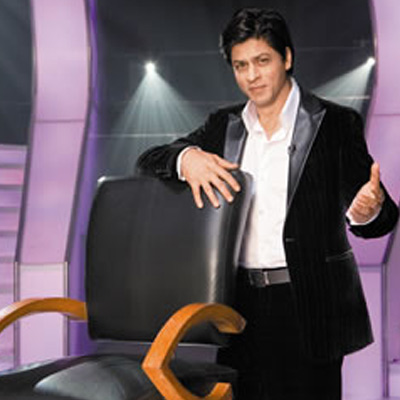
    MUMBAI: Now you can catch King Khan mouthing the words ‘Vanakkam; neengal parthukondu irupadhu Kaun Banega Crorepathi’. Star Plus’ Kaun Banega Crorepati will be dubbed in Tamil and telecast on Vijay TV for its Tamil viewers starting 23rd January.

    Auditions for the dubbing artistes on the show are on in full swing. The search for SRK’s Tamil dubbing artiste is also to be finalised, a company release sates.

    Says Vijay TV general manager Ravinath Menon, “The question promos are on high rotation on Vijay TV giving Tamil viewers equal opportunity to be part of the show. We hope, in this season, we will see more Tamil viewers get into the hot seat with Shah Rukh and play for the highest prize money. We are also planning different interactive plug-ins around the Tamil version to make it more interesting to Vijay viewers.”

    The show starts 23 January and will be telecast from Tuesday to Friday at 7pm, a time band that was popularized by the channel’s successful show Swamy Iyappan. Advertising clients lining up include Airtel, Hyundai, Motorola, KRBL, HDFC Standard Life, Univercell and Cadbury.

    The release quotes Univercell Telecommunications managing director Satish Babu as saying, “KBC and SRK are two big brands with immense popularity; more so as Shahrukh Khan takes on the role of the Big B, the expectations and interest levels are that much higher; especially among the youth. Vijay TV with its differentiated and innovative programming is the right platform for Univercell to be a part of.”

    KBC will be supported by an extensive on ground campaign spread across various media; with hoardings in Chennai and a road show in three cities; Chennai, Coimbatore and Madurai. Specially designed KBC merchandise will be distributed to its active audience during the road activity.