Tag: hype

  • Jio Haptik announces exclusive product launch event ‘Hype’ ahead of festive season

    Jio Haptik announces exclusive product launch event ‘Hype’ ahead of festive season

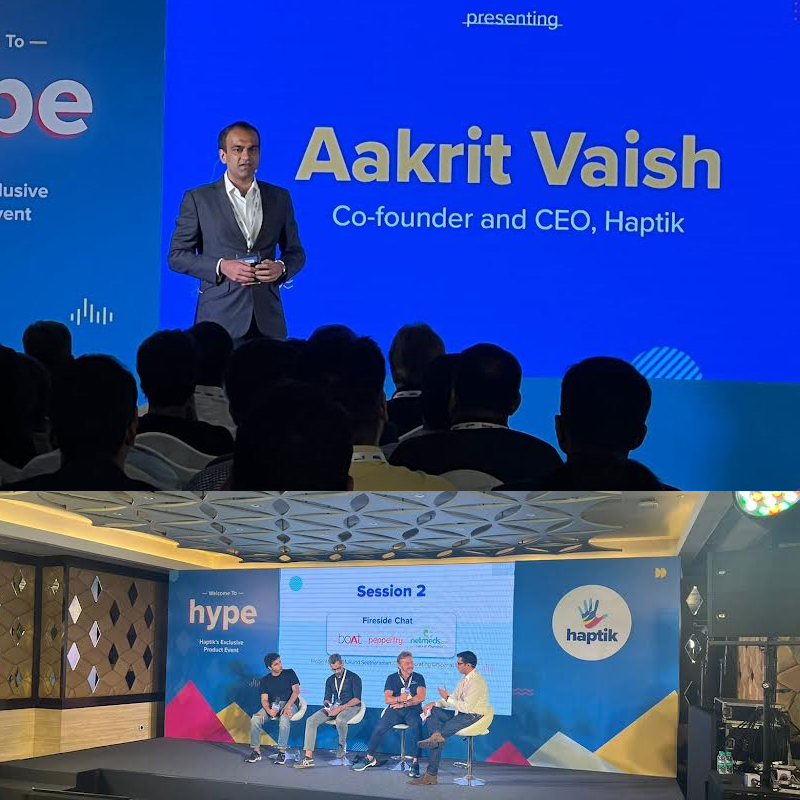
    Mumbai: As the festive season is just around the corner, a conversational commerce company, Jio Haptik, has announced plans to organise its exclusive product launch event, ‘Hype.’ Jio Haptik, through this much-awaited event, will launch new commerce products and features for the upcoming festive sales.

    The event will be held at Taj Santacruz, Mumbai, on 15 September from 4:00 p.m.

    While dealing with an increase in sales and support requests, WhatsApp has emerged as the ideal medium for brands to achieve their goals. This product launch event is aligned with the increasing importance of proactive customer engagement strategies through WhatsApp. The event will witness top industry leaders discuss various WhatsApp campaign strategies to help brands break sales records, especially during the upcoming Diwali and festive season.

    As part of the launch, the products introduced by Jio Haptik will help brands significantly optimise marketing budgets, achieve phenomenal sales, and enhance customer interactions. The product ‘proactive messaging’ will help customer-facing teams to initiate new conversations with users via WhatsApp notifications. The second product, ‘commerce plus,’ will make shopping through conversations easier through search and FAQs on WhatsApp, Facebook, and Instagram.

    The event will be facilitated by leading CX and growth leaders –  Jio Mobility platforms & products manager Satinder Singh, Jio Mart director of product management Archit Shrivastava, Netmeds chief communications officer Bruce Schwack and many more.

    Sharing his views on the event launch, Haptik CEO and co-founder Aakrit Vaish said, “Messaging as a medium is now helping brands accomplish sales via direct customer conversations at scale. As the world’s largest WhatsApp chatbot provider, our exclusive features will help enterprises proactively sell their products to customers, digitise the end-to-end shopping experience, and meet enormous demand during the festive season. Also, our solution shall significantly increase brand discovery through newer channels like ads, SMS, and Instagram to help brands build a true-omnichannel strategy.”

    Commenting on the occasion, Netmeds chief communications officer Bruce Schwack said, “We have been using Haptik for two years now, and from the outset, we have been impressed not only with their technology, but also with their sharp focus on how the technology could help us achieve our business objectives. We’ve already experienced the tremendous advantage Haptik gives us in managing and reducing friction on the CS side, and now the new WhatsApp commerce feature promises to help us convert browsers into customers. Any tool that helps us retain existing customers and on-board new ones gets a big thumbs up from me. So, don’t put your fork down, the best is yet to come!”

  • Pink: Neither strategy nor reviews helped

    Pink: Neither strategy nor reviews helped

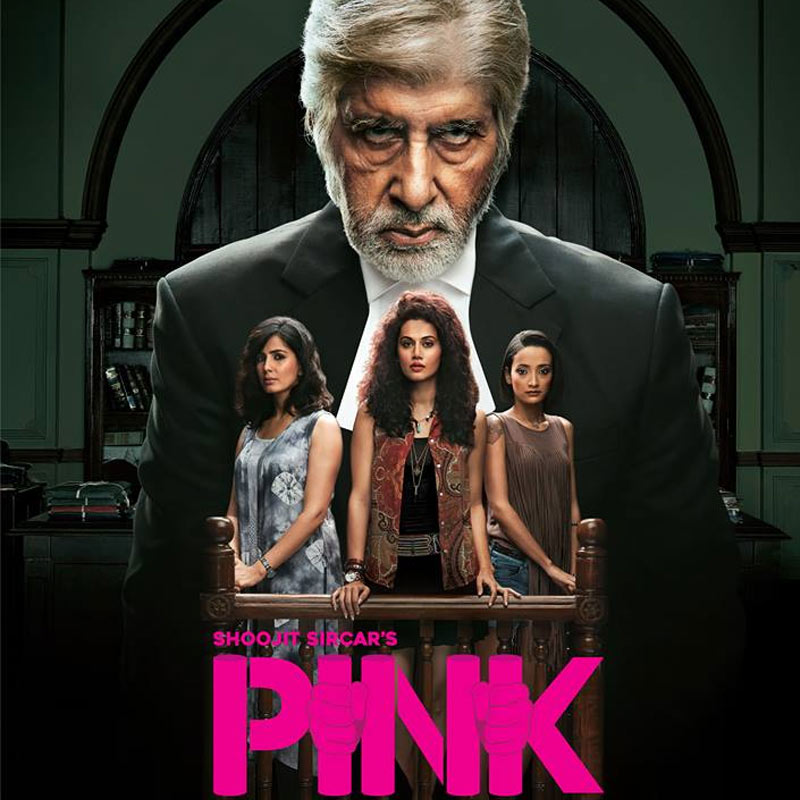
    Pink, with Shoojit Sircar as the force behind the film, was much hyped. The film also enjoyed a great deal of media and critics support. However, all this hype did not help the film as the response on the opening day remained tepid with a business of about Rs 4.2 crore.

    It is the word of mouth which matters more in the days of high-priced admission rates and the film caters mainly to the multiplex audience. As the film managed to generate a debate on the social media, its collections took a jump on Saturday with figures of Rs 7 crore plus while Sunday went very well as the film collected Rs 20.6 crore for its first weekend.

    Raaz: Reboot opened a bit better benefitting on its brand as it followed three Raaz episodes. The film took a reasonable opening day collections of about Rs 5 crore but, once the word of mouth spread about its poor merits, it dropped on Saturday while the Sunday collections remained static for the film to collect Rs 14.8 crore for its opening weekend.

    Baar Baar Dekho proved to be a let-down on all counts. A farfetched story idea, to script writing to execution and casting, it looked amateur in all departments. The film earned almost total rejection. With an opening weekend of Rs 18.4 crore, the drop in the four days that followed was telling as it closed its first week with a total of Rs 26.1 crore.

    Freaky Ali, a lift from a Hollywood film, Happy Gilmore, tried to attempt a comedy around the sport of golf, an unfamiliar sport with the Hindi audience, backfired. Nawazuddin Siddiqui’s talent could not sell this dud.

    The film had a poor opening weekend of Rs 6.4 crore, and had little hope of sustaining through rest of the week as it collected Rs 10.7 crore for its first week.

    Akira continued with its poor run in second week. The film collected Rs 3.1 crore to take its two week tally to Rs 27.2 crore.

    A Flying Jatt collected Rs 10 lakh in its third week to take its three week total to Rs 35.6 crore.

    Rustom collected Rs 20 lakh in its fifth week to take its five week total to Rs 124.3 crore.

  • Pink: Neither strategy nor reviews helped

    Pink: Neither strategy nor reviews helped

    Pink, with Shoojit Sircar as the force behind the film, was much hyped. The film also enjoyed a great deal of media and critics support. However, all this hype did not help the film as the response on the opening day remained tepid with a business of about Rs 4.2 crore.

    It is the word of mouth which matters more in the days of high-priced admission rates and the film caters mainly to the multiplex audience. As the film managed to generate a debate on the social media, its collections took a jump on Saturday with figures of Rs 7 crore plus while Sunday went very well as the film collected Rs 20.6 crore for its first weekend.

    Raaz: Reboot opened a bit better benefitting on its brand as it followed three Raaz episodes. The film took a reasonable opening day collections of about Rs 5 crore but, once the word of mouth spread about its poor merits, it dropped on Saturday while the Sunday collections remained static for the film to collect Rs 14.8 crore for its opening weekend.

    Baar Baar Dekho proved to be a let-down on all counts. A farfetched story idea, to script writing to execution and casting, it looked amateur in all departments. The film earned almost total rejection. With an opening weekend of Rs 18.4 crore, the drop in the four days that followed was telling as it closed its first week with a total of Rs 26.1 crore.

    Freaky Ali, a lift from a Hollywood film, Happy Gilmore, tried to attempt a comedy around the sport of golf, an unfamiliar sport with the Hindi audience, backfired. Nawazuddin Siddiqui’s talent could not sell this dud.

    The film had a poor opening weekend of Rs 6.4 crore, and had little hope of sustaining through rest of the week as it collected Rs 10.7 crore for its first week.

    Akira continued with its poor run in second week. The film collected Rs 3.1 crore to take its two week tally to Rs 27.2 crore.

    A Flying Jatt collected Rs 10 lakh in its third week to take its three week total to Rs 35.6 crore.

    Rustom collected Rs 20 lakh in its fifth week to take its five week total to Rs 124.3 crore.

  • ‘Consolidation in news business is an inevitability’ : Laxmi Goel – Zee News Ltd director

    ‘Consolidation in news business is an inevitability’ : Laxmi Goel – Zee News Ltd director

    Laxmi N Goel, director Zee News Ltd and the second of the three brothers of Essel Group chairman Subhash Chandra, is not given to hype and hoopla.

    Even when he has to announce his organisation’s achievements, true to his style, he’s most likely to hold the event in modest surroundings. A case in point being the launch of the book Pehal, which he authored, done in Federation of Indian Chambers of Commerce and Industry auditorium in Delhi instead of a five star hotel. As he says, every paise or penny saved is that much earned, which can be reinvested into the company.

    He doesn’t have any formal training in business management or television programming, but has still managed to oversee the functioning of Zee News channel quite successfully over the years after it was decided to do away with professional CEOs at the helm to manage news.

    These days Laxmi Goel spends more time discussing annual budgets and increments of his colleagues than on the exercising cycle. After all, the restructuring of Zee Telefilms has landed him added responsibilities of all the Zee family regional channels, which have been hived off into Zee News Ltd to conform to government guidelines on foreign investment in television news entities. “I wish I could find some more time for my daily walks,” Goel rues.

    In an interview with Indiantelevision.com, held at the Zee News’ headquarters in Noida on the outskirts of Delhi, Goel discusses some aspects of the restructured Zee News.

    Excerpts:

    Why was the de-merger of Zee News necessary?
    When the organization becomes big, this type of de-merger helps in better control of various aspects of business. However, for me, things still remain the same. We have to do well and show good results to our shareholders. That was the theme earlier. It’s still so.

    Have you settled down in your new role and what would be the agenda now?
    It’s still early to spell out agendas as it’d take five to six months for things to settle down completely.

    But, as I said earlier, the basic process remains by and large the same. We have started a Bengali news channel (24 Ghanta or 24 Hours) and we would evaluate our expansion options as the market pans out.

    The Bengali channel seems to be a case of the Right shaking hands with the Left. Zee’s promoter family are said to be Bharatiya Janata Party and parent RSS sympathizers, while Bengali channel partner Akaash Bangla owners are known backers of the Left parties. Comment.
    I don’t understand what political ideologies, if at all there is one, has to do with business decisions? 24 Ghanta was a business decision where Zee News thought Akaash Bangla to be the right business partner. Moreover, as Akaash Bangla is an existing TV channel, its owners had the advantage of understanding the TV business.

    What would you like to do with the organization now that you have more properties to look after, apart from Zee News and Zee Business?
    The functioning of the organization remains more or less the same. It has just taken a different avatar. What is remarkably different is that there would not be any consolidated profit and loss account for Zee News any more. You journalists can say that we would not be able to hide behind Zee Telefilms with our financial performance any more. Now, that’s a challenge too. We would have to continue showing good results and keep our shareholders happy by nurturing the bottom-line.

    Apart from that, we are now free to take independent decisions on expansion, which will always be guided by market forces. At the moment, we are not actively considering any addition to the present crop of channels, but I cannot predict the future. If a sudden need arises to have a product in a certain segment of television business or geographical area, we can consider it then.

    Do you feel that so many news channels, including those from the Zee News stable, will survive in the long term?
    India is a growing market where increasingly people are formally getting educated. A combination of this has fuelled consumption of news. The trick lies in delivering news quickly and in a manner that is consumer friendly.

    But such mushrooming of news channels all over is unlikely to be supported by the market in the long term. The process of consolidation has started.

    We would have to continue showing good results and keep our shareholders happy by nurturing the bottom-line

    Will the economics of running news channels force consolidation?
    Partly yes. Let’s take, for example, a news channel that aims to have a national presence. On an average capital expenditure on national news channel can range between Rs 800 to Rs 900 million. At times it can go beyond that too. Then the running expense per month for a national news channel comes to approximately Rs 80 million, which would include expenditure on news gathering and marketing activities. Now these figures are not small, though not huge either.

    As different news channels have different business models, over the years mounting expenses will force consolidation. This can happen in the form of mergers and acquisitions or can result in cutting down cost on news gathering and infrastructure by evolving a model where some sharing is done by various players in the industry.

    Carriage fee that most TV channels pay to cable operators, coupled with growing employee wage bill in news organizations, also add to the cost. To outsiders, these costs might not look very important, but let me assure you that carriage fee and increasing pay packets of TV journalists do weigh down a TV news organization.

    Since the Indian news market is still very active, the exact shape of consolidation is difficult to predict accurately. But consolidation is an inevitability.

    How is Zee News Ltd addressing the problems of carriage fee and bloating wage bills?
    We are not as aggressive as other news channels in holding back people who want to leave for another channel for a better pay packet. We do talk to people who want to leave and try to reason out the advantages of Zee News Ltd. However, we feel that beyond a point it’s futile to negotiate on remuneration as the demands and wish list of some people just don’t seem to end. Such people would leave anyway. If not today, then tomorrow.

    In such cases, Zee News lets people go for the larger benefit of the company and its bottom-line. And, there have been innumerable cases when former Zee News employees have requested to be taken back at the salary that they had been drawing at the time of leaving.

    As far as carriage fee is concerned, we feel CAS is the solution. Newer technologies like CAS and DTH would help in arresting the demands of cable operators, which can be unreasonable at times.

    What is the revenue mop up level for Zee News and Zee Business channels?
    A majority of the revenue, of course, comes from Zee News, which is in the range of Rs 10-20 million per month. Out of this, subscription revenue is more than advertising money.

    How are the regional channels doing financially and ratings wise?
    Most of the channels are doing well, but the actual process of consolidation is still on. Only after the formal work is complete, we’d get down to evaluate the prospects of each channel in our company (which include Zee Bangla, Zee Telegu, Zee Gujarati, 24 Ghanta, etc).

    How many news channels do you foresee in the next two to three years?
    At the national level, I foresee 2-4 channels surviving in the next three to five years time.