Tag: hygiene

  • Zlade Ballistic ropes in Milind Soman as brand ambassador

    Zlade Ballistic ropes in Milind Soman as brand ambassador

    Mumbai: Zlade, one of the fastest growing men’s grooming brands in India, has onboarded celebrated supermodel and actor Milind Soman as the brand ambassador for their Zlade Ballistic range, a dynamic assortment of below-the-belt grooming and intimate hygiene products.

    With the multi-faceted Milind Soman coming aboard, Zlade Ballistic aims to strengthen its presence in the men’s intimate grooming and hygiene segment by creating awareness around the importance of ‘manscaping’ among its target audience in India.

    This collaboration will see national heartthrob Milind Soman taking centerstage as Zlade Ballistic rolls out an elaborate campaign that involves social experiments, droolworthy photoshoots, and what is touted to be one of the quirkiest and most interesting ad films to grace digital platforms.

    To mark this association, the brand released some exclusive behind-the-scenes footage to kick-off the campaign through its YouTube and social media channels. In this video, Milind is seen in an animated, candid conversation about manscaping with his manager. Considering that intimate grooming, pubic hair removal, and intimate hygiene for men have always been tricky and conventionally taboo topics, Milind cleverly uses humour to draw attention towards the subject, also involving the general public to chip in with creative ideas.

    Speaking about the importance of creating awareness around manscaping or men’s intimate grooming, Zlade co-CEO & co-founder Suraj Chaudhari said, “There is a tendency in our society to avoid conversations about intimate grooming and hygiene. It is important to us as a brand to normalise the notions people have about manscaping (and create awareness around the subject and the problems or infections the lack thereof can lead to). Milind Soman has always been the epitome of health and fitness and he has never been shy to call a spade a spade. These aspects of his personality, along with his undying popularity across age groups and genders, make him the ideal fit for Zlade Ballistic. Zlade’s association with him will make Indian men more aware of their intimate grooming and hygiene habits. As a company, we aim to introduce manscaping to India and revolutionise the men’s intimate grooming landscape.”

    Always known to speak up about issues that matter, model, actor, and fitness enthusiast Milind Soman said, “Feels good to be a part of this campaign by Zlade Ballistic! They are a purpose-driven Indian brand that is pioneering change in the men’s grooming segment; intimate grooming in particular. With a shared vision, Zlade Ballistic and I want to throw light on societal stereotypes when it comes to pubic hair, manscaping, and intimate grooming, and spark a necessary and candid conversation about below-the-belt grooming habits since it ties directly to hygiene, lifestyle, intimacy, and more. I’m delighted to be a part of this initiative.”

    With a range of hair removal and intimate hygiene products already in the market, Zlade co-CEO & co-founder Mihir Vaidya said, “With the new Zlade Ballistic range of hi-tech trimmers, we are constantly innovating and making below-the-belt grooming safe, hassle-free, and convenient. Our collaboration with Milind Soman will help us amplify awareness around this category as well as our products across markets. We are thrilled to have him on board.”

    The brand, rapidly growing into a force to reckon with in the Indian grooming and personal care industry, also recently conducted an interesting social experiment to understand India’s take on manscaping. The interactive vox-pop engaged random people in candid discussions around intimate grooming, men’s intimate hygiene, pubic hair, sexual intimacy, and women’s preferences towards men’s below-the-belt grooming.

  • Hygiene, health & wellness remain key consumer concerns: Kantar report

    Hygiene, health & wellness remain key consumer concerns: Kantar report

    Mumbai: Emerging from the pandemic, the Indian FMCD (Fast Moving Consumer Durables) market presents significant opportunities. While the pandemic caused much anxiety amongst consumers in general, there was a high demand in the FMCD health and wellness space, according to the latest Sustainability Report from Kantar. New-market segments such as air purifiers, ACs with purification filters, smaller sub-categories such as UVC disinfection categories, UVC Desk lamps, and growth of personal care health tech products such as smartwatches and fitness monitors saw amped-up sales, says the report. Consumption patterns have changed significantly – towards safety, premiumness and technologically advanced products.

    The data-driven analytics and brand consulting company unveiled the FMCD Sustainability Report – “Walking the Talk on Sustainability with Consumers – a roadmap for India’s FMCD Sector.” The Kantar report reveals that the Indian consumers are also becoming more conscious about the impact of human activity on climate change and other environmental factors. The report highlights how the intersection of the FMCD sector and sustainability will further enable growth. It aims to provide key sustainability roadmaps for FMCD brands to help them navigate the ecosystem with sustainable solutions.

    The India Story: Post-pandemic Consumer Attitudes and Behaviour

    According to the Kantar report, consumer reactions in the wake of Covid-19 continue to evolve and the Indian market presents several opportunities for the FMCD brands. The report further states that cautious consumption is the norm – hygiene, health and wellness are key consumer concerns, where 91 per cent Indian households are washing hands more often now, 47 per cent Indian households claim increased toilet cleaning, more so in rural (49 per cent) vs urban (43 per cent).

    Data also suggests that consumers are changing education and work codes, with work ecosystems being reshaped by digital transformation. With accelerated digital adoption, there is 125 per cent growth in usages of smart devices among internet users, paving the way for the emergence of a smart home. Some of them are – smart lights, smart speakers, smart air purifiers, smart display, smart home entertainment and smart cleaning.

    There is also evidence to suggest that ‘value’ is a key factor for consumers since post-pandemic financial concerns have cropped up, where 73 per cent attribute Covid-19 to have impacted household income, while 67 per cent pay greater attention to prices while shopping. This has led to an overall joint accountability of both businesses and consumers towards adopting a stronger sense of collective corporate responsibility, according to the report.

    “The FMCD sector is witnessing rapid growth even in post pandemic phase while we’ve also seen a great consumer shift towards sustainability and the environment urging brands to rethink their strategies,” said Kantar Insights Division Qualitative & Lead- Sustainability Practice South Asia managing director Paru Minocha. “Consumers have greater expectation from companies than from themselves; this is likely to be amplified in FMCD, where personal behaviors post purchase is led primarily by the policies/features of the product and company they use. With this report, we are putting forward recommendations to brands which help in solving customer tensions with sustainable solutions, addressing barriers such as packaging, service models, repairability, and return and recycling policies.”

    Commenting on the focus and relevance of FMCD, Kantar Shopper and CX Domain lead Sushmita Balasubramaniam said, “Consumers today are more aware and concerned about sustainability and other issues like pollution, carbon emissions, etc. For example, in the mobile phones category, consumers expect brands to address macro environment issues of carbon emissions and plastic pollution whereas in the computing category – carbon emissions, packaging and tax evasion are palpable concerns. In appliances, concerns exist on pollution (air and plastic) and emissions besides packaging. While we see consumers consciously making smarter choices, the responsibility resides with brands andmarketeers to provide sustainable solutions to resonate and build credibility with their audiences moving forward.”

    Launched at the recent CII’s FMCD Summit, the Kantar report also provided key recommendations for the FMCD brands such as embedding Green Lifecycle across portfolio and processes, connecting the environment and the everyday, addressing Consumer Knowledge Barriers and meeting accountability expectations. With the suggested roadmap, the report also highlights noticeable consumer trends that lead to a collective accountability of both businesses and audiences, seeking the path to a more sustainable world.

  • Bisleri forays into hygiene segment with new TVC

    Bisleri forays into hygiene segment with new TVC

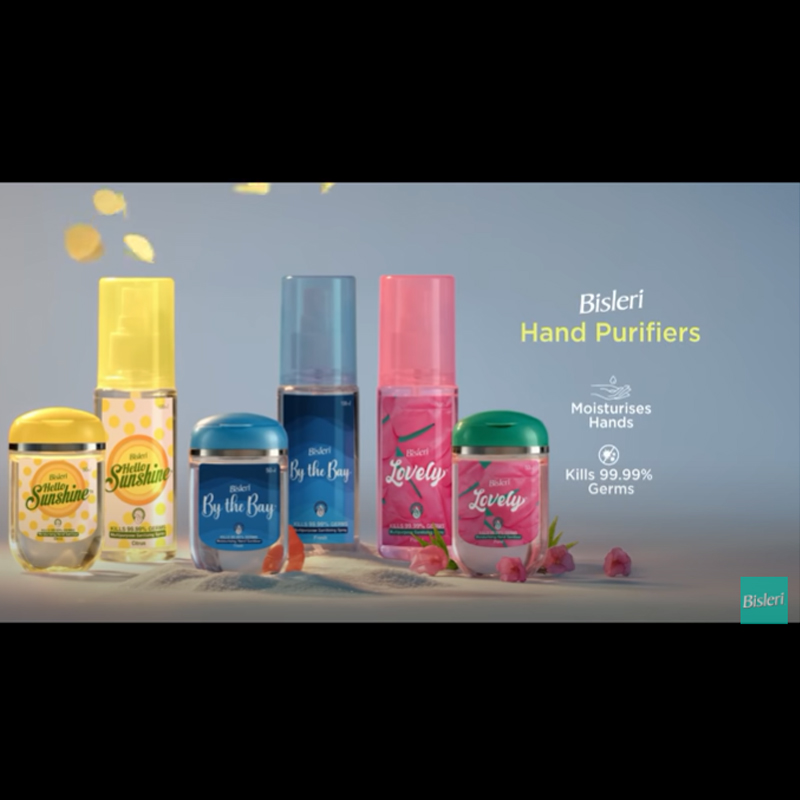
    Mumbai: Bottled drinking water brand Bisleri has announced its foray into the personal hygiene segment. The company launched a new TVC for its new range of hand purifiers, with the tagline – ‘For the love of hands’, and became the latest entrant in the hand sanitisers market, a segment which has witnessed an upsurge in demand since the onset of the pandemic.

    With the frequent use of regular sanitisers, consumers experience adverse effects on the skin, like coarseness and dryness. The TVC aims to portray how Bisleri’s new range of hand purifiers that are enriched with aloe vera, glycerol, and vitamin E, can keep the skin moisturised and nourished while ensuring protection from germs.

    The film’s visuals effectively drive across the message in a simple yet engaging manner that Bisleri Hand Purifiers not only provide safety to the hands but also keeps them soft, fragrant, and refreshing. In addition to the TVC, the company also has plans to roll out digital campaigns on social media and OTT platforms for the new product range.

    Bisleri chief executive officer Angelo George said, “There has been exciting growth in the personal hygiene segment triggered by increasing health and hygiene concerns. We developed Bisleri hand purifiers with these enhanced features in premium packaging, to provide a superior experience. With our distribution reach across the country, the exciting range of Bisleri hand purifiers is available at leading general trade stores, pharmacies, and modern trade outlets as well as e-commerce platforms.”

    The skin-nourishing formulation, packaging design, and fragrances were developed under the guidance of Bisleri vice-chairperson Jayanti Chauhan. Bisleri’s range of hand purifiers is available in three refreshing fragrances- citrus, fresh & floral in both gel and spray formats, the company said.

  • Gaurav Jain elevated as head of Reckitt India

    Mumbai: In a top deck restructuring, Reckitt India has elevated Gaurav Jain as the head of the hygiene unit, along with the health unit. Jain has been heading its health unit in India since 2017. 

    Accordingly, this new development makes him the chief of the company’s India business. Jain has been named senior VP, South Asia, with all business units across the region reporting to him.

    “Our health and hygiene business units have been brought under one focused leadership team. Gaurav Jain is the senior vice president, South Asia for Reckitt,” said a Reckitt India spokesperson, confirming the top management rejig.

    “Health and hygiene business units have been brought under one focused leadership team, to optimise the potential of the complementary nature of products spread over the Dettol, Lysol, and Harpic businesses,” said the spokesperson.

    This focused approach will help enhance synergies, align business strategy & execution consequently improving performance, she further added.

    Reckitt’s health unit houses brands such as Dettol, Veet, Durex, Strepsils, while its hygiene home business includes Harpic, Lysol, Mortein, and more.

    However, the spokesperson for the conglomerate clarified that the health and hygiene business units have not merged and will be operated independently. “This focused approach will help enhance synergies, align business strategy and execution,” she said.

  • Dettol’s education programme delivers strong social value

    Dettol’s education programme delivers strong social value

    NEW DELHI: RB, under its flagship campaign, Dettol Banega Swasth India has launched the social return on investment (SROI) evaluation study report of its successful Dettol School Hygiene Education Programme at ISC-FICCI Indian Sanitation Conclave 2020. The virtual discussion focused on the need for an integrated approach to Wash in schools in the times of Covid-19.

    The link between hygiene and public health has now been clearly established. Yet, proper hand-washing practices remain elusive in much of the country. Even before a meal, 69.9 per cent of rural India still washes their hands without soap. Another 15 per cent only wash their hands with water after defecation. The Dettol School Hygiene Programme was envisioned as a step towards improving poor sanitary practices in schools, homes, and communities, by promoting behavioral changes.

    Reckitt Benckiser Health AMESA director external affairs and partnerships Ravi Bhatnagar said, “We at Dettol BSI believe in the idea of health and hygiene for all. Dettol School Curriculum in partnership with our development partners was introduced to drive behavior change among young children based on age-appropriate behavioral nudges. Our aim is to emphasize on the need to facilitate a sanitized environment and to create the importance of Wash in preventing the spread of infection amongst children.”

    He further added, “There is a tremendous amount of work done by corporates, NGOs and citizens to work with the government. However, to address the current situation we all must come together to fight this pandemic. A standalone intervention receives a lower social return on investment, however with an integration of interventions which is more nutrition-sensitive including water, right to nutrition, and diarrhoea management, social return on investment touches the ratio of 1:47. This creates a bigger impact on society. It's time we look at hygiene, sanitation and health together and not separately to tackle this pandemic.”

    India Sanitation Coalition chair Naina Lal Kidwai said “In addition to the monetary investment, corporates like RB also bring their ability to successfully implement and their need to measure outcomes that we see in the SROI report of the Dettol School Hygiene Education Programme. The fact that we can measure every 1 rupee invested has delivered 33 rupees of social value is a huge multiplier when looking at actual impact on the ground.”

    “Through the hygiene programs in school, we have seen role reversal of children & parents where children have taken up the role of teaching the right way to wash hands. They have become an agent of change in communities in spreading awareness about health & hygiene. We believe that the hygiene curriculum should be part of the daily school day. As we have seen through the pandemic, the only way to protect ourselves from diseases is by washing hands.” said Aga Khan Foundation CEO Tinni Sawhney.

    Key highlights from the report:

        For every ₹ 1 invested, the Dettol School Hygiene Education Programme delivers ₹ 33.05 of social value
        An initial investment of INR 15.9 crore has yielded worthy outcomes through innovations such as using creative platforms to reinforce key hygiene measures, structured hygiene sessions in schools, supporting trainings at multiple levels and more, we have brought about social value worth Rs 526 crore
        At a time when hand hygiene is of critical importance to prevent the spread of COVID-19, an increase of 86 per cent in the adoption of hygiene practices by students was witnessed  
        The program has reached 13 million children so far and counting across 8 states, 40 districts and 650,000 schools across India
        250+ Schools awarded by PM under Swachh Vidyalaya (Clean School) Awards
        Direct Impact on children:
            14.2 per cent reduction in diarrhoea among children
            17 per cent increase in school attendance
            89 per cent students follow all the necessary hygiene practices which have been taught in school
            92 per cent students share hygiene knowledge with parents and family members

    The Dettol School Hygiene Education Programme seeks to drive behaviour change through a multifaceted approach, which targets schools and the community at large. The school programme has been designed in recognition of the fact that, by changing the mindset and behaviour of school students, they can become a catalyst for change in schools, homes and neighborhoods. By working with teachers and principals, the right knowledge can be passed on to build good habits in children and future generations.

  • Sony Pictures Networks India ups safety bar on TV sets

    Sony Pictures Networks India ups safety bar on TV sets

    MUMBAI: TV production in India has been a bit of a bummer over the past few years: hazardous material constructed sets, loosely put together electrical connections, below par sanitation, and shoddy facilities have been the hallmarks of shooting floors. Safety measures for TV actors and crews have been sub-par. Accidents have sometimes got out of hand, and there have been several incidents over the years where crew have been injured or lost their lives. Sony Pictures Networks India (SPN) is changing that at least on one front: having ambulances and clinics on all sets where TV shows or films are being shot.

    Apparently, the company has hired one of India’s top emergency response services TopsLine to deploy 11 mobile clinics and ambulances at the sites of 16 shows where shooting is under way in Mumbai and its periphery. Why is SPN India suddenly getting a shot of corporate social responsibility?

    Well, it’s part of its efforts to raise the bar and provide protection to those who work on the front lines to churn out the content that brings it ratings and revenues. A while ago SPN India officials had conversations with these folks on how they felt on the sets, and the reaction was pretty eye-opening. Most respondents said that, apart from wages, what they wanted was better hygiene and ablution facilities, apart from safety. That prompted the network to spring into action, taking the first of many more steps it intends to take in this direction.

    The mobile medical vans are likely to cover around 1600 people at a stretch if one were to assume 90-100 people working on an average at each of its different sets at a time.

    While TV industry professionals have lauded SPN India’s initiative, a lot more needs to be done says Hats Off Productions co-founder and the Indian Film & TV Producers Council TV division head JD Majethia. However, there are challenges, he admits.

    “The nature of business is so different — the shooting sites are temporary structures; it’s difficult to make arrangements. Sites keep shifting, and sometimes the sets are on wheels,” says Majethia.

    There is the lack of basic hygiene amongst the crew at times who chew tobacco, spit betel nut juice (pan) on the sets, which tends to dirty the area. Of course actors have their vanity vans, which keeps them ring fenced from the mess. But the crew has to bear with it all the same.

    A problem that is faced by many a producer and production supervisors is providing proper lunch tables on locations. “On large shooting floors, if there are 100 people at work and everybody needs to be accommodated during lunch, it becomes difficult to manage, say 10 tables, in an hour’s time,” explains Majethia. Then, potable water, for example, is one of the issues that needs careful planning.

    At times there is the mosquito menace at the shooting locations. And when the Dengue fever scare has been running rampant, this is indeed concerning. “In such situations, we often take the help of pest control services and also provide safety creams such as Odomos to all the actors and workers,” Majethia said.

    Majethia once again lauded SPN India’s ambulance drive and added that the industry is constantly working with the various trade craft bodies to improve the lot of those on the sets. “And things can only get better from here,” he said.

  • Sony Pictures Networks India ups safety bar on TV sets

    Sony Pictures Networks India ups safety bar on TV sets

    MUMBAI: TV production in India has been a bit of a bummer over the past few years: hazardous material constructed sets, loosely put together electrical connections, below par sanitation, and shoddy facilities have been the hallmarks of shooting floors. Safety measures for TV actors and crews have been sub-par. Accidents have sometimes got out of hand, and there have been several incidents over the years where crew have been injured or lost their lives. Sony Pictures Networks India (SPN) is changing that at least on one front: having ambulances and clinics on all sets where TV shows or films are being shot.

    Apparently, the company has hired one of India’s top emergency response services TopsLine to deploy 11 mobile clinics and ambulances at the sites of 16 shows where shooting is under way in Mumbai and its periphery. Why is SPN India suddenly getting a shot of corporate social responsibility?

    Well, it’s part of its efforts to raise the bar and provide protection to those who work on the front lines to churn out the content that brings it ratings and revenues. A while ago SPN India officials had conversations with these folks on how they felt on the sets, and the reaction was pretty eye-opening. Most respondents said that, apart from wages, what they wanted was better hygiene and ablution facilities, apart from safety. That prompted the network to spring into action, taking the first of many more steps it intends to take in this direction.

    The mobile medical vans are likely to cover around 1600 people at a stretch if one were to assume 90-100 people working on an average at each of its different sets at a time.

    While TV industry professionals have lauded SPN India’s initiative, a lot more needs to be done says Hats Off Productions co-founder and the Indian Film & TV Producers Council TV division head JD Majethia. However, there are challenges, he admits.

    “The nature of business is so different — the shooting sites are temporary structures; it’s difficult to make arrangements. Sites keep shifting, and sometimes the sets are on wheels,” says Majethia.

    There is the lack of basic hygiene amongst the crew at times who chew tobacco, spit betel nut juice (pan) on the sets, which tends to dirty the area. Of course actors have their vanity vans, which keeps them ring fenced from the mess. But the crew has to bear with it all the same.

    A problem that is faced by many a producer and production supervisors is providing proper lunch tables on locations. “On large shooting floors, if there are 100 people at work and everybody needs to be accommodated during lunch, it becomes difficult to manage, say 10 tables, in an hour’s time,” explains Majethia. Then, potable water, for example, is one of the issues that needs careful planning.

    At times there is the mosquito menace at the shooting locations. And when the Dengue fever scare has been running rampant, this is indeed concerning. “In such situations, we often take the help of pest control services and also provide safety creams such as Odomos to all the actors and workers,” Majethia said.

    Majethia once again lauded SPN India’s ambulance drive and added that the industry is constantly working with the various trade craft bodies to improve the lot of those on the sets. “And things can only get better from here,” he said.

  • Carat Media Services appointed AOR of SCA Hygiene in India

    Carat Media Services appointed AOR of SCA Hygiene in India

    MUMBAI: Carat Media Services has bagged the media duties of SCA in India. The business will be handled by Carat’s Mumbai office.

    SCA is a leading global hygiene and forest product company that develops, produces and markets personal care products in categories such as baby diapers, incontinence care and feminine care, the world’s third largest suppliers of tissue, forest products and packaging solutions.
    SCA India VP consumer goods Cecilia Edebo

    The brands that SCA intends to launch on the Indian market in the coming months include Libero baby care, Tempo – for hand and face hygiene, TENA – the world leader in incontinence care, and Tork – the global leader in the away-from-home tissue segment.

    India being one of the emerging markets there would be under significant focus and investment towards fulfilling the needs of Indian customers and consumers in a spirit of innovation, through continuous efficiency enhancements and with a clear desire to contribute to sustainable development.

    On the launch, SCA India VP consumer goods Cecilia Edebo said: “SCA aims to grow organically and has extensive experience in the hygiene business, which should help to provide better hygiene for the Indian consumer. The large population and the low penetration of hygiene products provide the potential for SCA’s future growth. In this endeavor, we had a series of presentations and discussions to evaluate the strategic thinking capabilities of Carat to enable our differentiation at the market place, demonstration of tools and passion of the team. We are happy that Carat India’s team demonstrated great ability in strategic thinking capabilities backed by a solid integrated offering to support the Marcom. We are happy to have them as our media partner.”

    Carat India Sr. VP Himanka Das said: “We are delighted to extend our partnership with SCA in India, they have some great personal care and incontinence care brands in their portfolio to offer and we do look forward to partnering them in their India plans. We have been working with them for the last one year to firm up the launch strategies based on extensive media market analysis.”

    Carat is part of the Aegis Media Group. Other companies in the group include Vizeum, Posterscope the global OOH sector leader, Brandscope, Hyperspace (Retail), Carat Fresh Integrated (Activation), PSI (Airports), Doosra (Creative), Isobar, the global communications agency with digital at its heart and iProspect, the global leader in search and performance marketing.

  • Pogo and Cartoon Network spruce up on-ground activities

    Pogo and Cartoon Network spruce up on-ground activities

    MUMBAI: If you thought on-ground activation was the exclusive domain of big television channels, think again.

    Niche channels like Pogo and Cartoon Network too are engaged in strengthening direct connect with audiences, in this case – kids.

    A case in point is the School Contact Programs (SCP) conducted annually by these two channels from the Turner India stable.

    This time round, Pogo’s SCP, spanning July to September, targeted around 500 schools in eight cities, including Mumbai, Bengaluru, Delhi, Hyderabad, Ahmedabad, Hyderabad, Ludhiana and Chennai. The program saw the kids’ most loved character Chhota Bheem conduct Bheem’s Masti Ki Class across schools. Children were educated about issues like hygiene, internet security, team work and traffic signals through interactive games. The medium of instruction was Tamil in Chennai, Gujarati in Ahmedabad and so on. At the end of these sessions, students took home goodies and sponsor samples. Each activity lasted approximately three hours and touched nearly 900 students per school. Students from standards one to eight participated, sans their parents.  

    Says Turner International India senior director and network head Krishna Desai: “These SCPs provide an excellent platform to build a bridge between kids and their favourite channels and characters. Valuable lessons are imparted to kids in an entertaining format with branded games, activities and prizes. In addition, our advertisers also get a direct platform for their target audiences.”

    Bheem’s Masti Ki Class was presented by Knorr Soupy Noodles, powered by Parle G, with associate sponsors including Honda, Dabur Hajmola Anardana, ICICI Prudential and TAT-O.   

    “Metros provide the necessary number of schools and students to help us achieve our goals,” adds Desai.

    The theme of Cartoon Network’s SCP this year was Go Active Move It Movement based on tips and games to keep kids fit and active. The program featured several popular characters like Kris (from Roll No. 21) and Tom, Jerry and Oggy (from Oggy and the Cockroaches). The SCP was presented by Parle G, powered by Alpenliebe Juzt Jelly, with associate sponsors including Dabur Real Juice, Dabur Red Toothpaste, Hero Cycles & Yellow Diamond Chips.
    Chhota Bheem engages kids during an interactive session with school children

    The marketing departments of both Pogo and CN handle all activities while on-ground is deputed to specific agencies.

    For kids who can’t get enough of their favourite characters on their favourite channels, this sure is a great way to keep connected with them.