Tag: Hyderabad

  • Media depends on PR agencies for quality inputs: MSLGroup report

    Media depends on PR agencies for quality inputs: MSLGroup report

    MUMBAI: We have heard stories about people struggling to make a mark in their chosen fields. Somehow, the number of such stories seems to be reducing. Thanks to the public relation work!


    The PR professionals work behind the scenes to bring their clients to the forefront, also making reaching out to concerned people easier and accessible.


    The “communication” industry has changed over the years and has become an integral part of today’s business. Be it brands or individuals, everyone needs that additional push to make it all work. But even the wand of the PR fairies would work only when one comes with a fat wallet! Considering the economic slowdown that has impacted almost all the sectors, even the PR sector must have been affected. Let’s see how…


    As per the report by MSLGroup on ‘Public Relations in India: The impact of the economic downturn and the 2014 outlook’ highlights the tough time, the paradigm shift and the new possibilities.


    With moderate growth and economic situation buffeting the currency, corporations have started working on the mantra: work leaner, battle for every square inch of the market and reduce budgets.


    Till two years ago, the Indian PR industry was different from what it is today. It was battling with numerous questions – how to come together to find solutions to the talent crisis? How to ensure fees are commensurate with value delivered? What can be done to underscore the sector’s strategic value and change its image from that of a media manager to brand builder?


    To keep a tab on how things have changed and how the industry is being perceived, not only from outside but within itself, the group put a pulse on the finger of the industry by commissioning a national survey of PR professionals. The focus was on the business environment, the challenges a slowdown presents and ways to negotiate it.


    Numerous questions were posed to the participants (67) across cities (Delhi, Mumbai, Kolkata, Chennai, Hyderabad, Ahmadabad, Pune and Mumbai). For instance when asked about which part of the marketing ecosystem has been most affected by the downtown, the respondents thought that the PR industry was second after the advertising agencies.


    The report also quotes Eureka Forbes Marzin Shroff saying, “While it is true that businesses are facing turbulent times, the first thing most do is significantly reduce their marketing budget. We, however, are against this practice…. There are low-cost and even no-cost ways to market your product in order to keep your business on track even during difficult times. In view of this, our marketing budgets have not been significantly affected.”


    The report also talks about the way forward – the industry needs to keep the focus on issues like adapting to new modes of communication, innovative thinking, talent, targeting the right industry, product mix and building relationship with clients.


    The main learning from the responses stated in the report are:


    1.There is an increase in the media’s dependence on PR consultants for coverage

    2.Media is looking increasingly to PR agencies for quality inputs and content

    3.Competition between media houses has made it tougher for PR consultants


    The report goes on to focus on how there is a rise in the number of cheap smartphones and what it means for communications.


    Since consumers are using smartphones to communicate in multiple ways, marketers need to take note of how smartphones are helping consumers in their purchase decisions. Considering that smartphones sales saw a record 167 per cent annual growth, the market was projected to hit $1 billion by the 1013 end as per industry estimates.


    Click here for the full report…

  • TRAI gives final deadlines for filling subscriber details in DAS Phase II cities

    TRAI gives final deadlines for filling subscriber details in DAS Phase II cities

    MUMBAI: The Telecom Regulatory Authority of India (TRAI) may have once again extended the rope for stakeholders of digitisation but with a warning that they would get no further extension. In a recently issued notice, fresh and “final” deadlines have been given out for entering the subscriber details in the subscriber management system (SMS) in DAS phase II cities.


    The regulator has already given two extensions of the deadlines earlier for collecting customer application forms (CAF) and entry of these details in the SMS. However, this comes as a warning from the regulator. It says that 23 cities (Rajkot, Surat, Vadodara, Faridabad, Mysore, Aurangabad, Nasik, Pimpri-Chinchwad, Pune, Sholapur, Amritsar, Ludhiana, Jaipur, Jodhpur, Agra, Allahabad, Ghaziabad, Kanpur, Lucknow, Meerut, Varanasi, Chandigarh and Howrah) have completed 90 per cent of the task and the MSOs in these cities have been ordered to cut off signals from 27 January to subscribers who haven’t given their CAFs.


    7 February is the last date for Bhopal, Indore and Jabalpur in Madhya Pradesh; while Vishakhapatnam and Srinagar have time till 28 February. However, state of Tamil Nadu and Hyderabad city have not been given any date due to litigation processes that are pending regarding DAS.


    Eight other cities (Patna, Ahmedabad, Ranchi, Bengaluru, Kalyan-Dombivali, Nagpur, Navi Mumbai and Thane) have been given 31 January as the last date. Subscribers have been requested to cooperate with the process and submit their CAFs, failing which MSOs will have to cut off signals to their TVs or will be in breach of law.


    MSOs will have to provide bills with exact breakup of charges and subscribers will have to insist for a bill and receipt or see blackout on their screens.


    Click here to read the full notice

  • International fashion brand vinegar launches in hyderabad

    International fashion brand vinegar launches in hyderabad

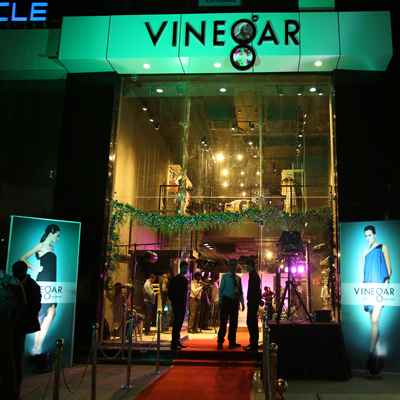
    MUMBAI: Vinegar, the Spanish Apparel and Accessories Brand known for its quirky take on fashion and style marks its entry in Hyderabad. A collection of imaginative and well designed apparel for women is available at this exclusive outlet which was launched by stunning Bollywood Diva Kangana Ranaut at Jubilee Hills on December 2013. The 2000 sq ft Vinegar store is a destination that offers a wide range of uber-chic western clothes and accessories.


    Ms Varsha Bhawnani, Owner and Managing Director- Vinegar, is the brain behind the brand. This true story continues to inspire many young entrepreneurs foraying into different industries with little experience and tons of passion to pursue what they dream of. Vinegar currently has 2 flagship stores in Mumbai and now in Hyderabad.  It will soon open stores in Delhi, Chandigarh and later into the tier 2 cities in the next few years by way of company owned franchising model. Vinegar is a concept based store and only partners with those who understand the brand ethics and have the passion to sell. Not just in terms of collection, it is unique in terms of design aesthetics and overall International appeal of the brand and therefore an expensive venture. Vinegar has opted for the model with strict criteria by associating with Dolly Lakhani.


    The stand alone stores offer both the pr?t and couture line. The collection mainly comprises of dresses, jumpsuits, shorts, maxi dresses and office wear like trousers and skirts. Vinegar is known for its unique silhouettes, embellishments, colours and cut which is highly modern yet wearable. Following the latest international trends, Vinegar’s design is fun and flirty that enhances the look of every body type.


    When Varsha was asked why she selected Hyderabad for Vinegar’s expansion, she said, “Hyderabad has emerged as the most promising city in recent times-from luxury brands to high street, all major brands have opened gates in the city only to establish the fact that the city has potential for being one of the greatest retail destination. People here are fashion conscious and have a flare for all things nice. We had to be present in this city and here we are to offer the best in hi street fashion.”


    Vinegar experience, store décor and feel remain universal. Clean and unique display of the collection in the enormous 2000 sq ft store, spread across two floors allows the buyer to easily browse through the collection. The store décor includes multiple black and white striped mannequins striking attractive poses suspended in a formation amidst a crowd of closely hung light bulbs. With absolute white pristine walls and décor, the store spells elegance and style.


    On Vinegar’s International priority list are markets like Singapore, Dubai and other Middle-Eastern countries such as Saudi Arabia and Kuwait. Also Vinegar has already set shops in Europe and is now retailed in countries like Israel, Spain, Portugal, Finland and Russia. By 2014 it aims to have an international presence in countries like United States and Australia.

  • DAS & the LCO fightback for survival

    DAS & the LCO fightback for survival

    It’s the festival of lights. And for many the festival of noise courtesy exploding fireworks. In the hope of reducing the number of those belonging to the latter tribe, we, at indiantelevision.com, decided to put a display of firecracker articles for visitors this Diwali. We have had many top journalists reporting, analysing, over the many years of indiantelevision.com’s existence. The articles we are presenting are representative of some of the best writing on the business of cable and satellite television and media for which we have gained renown. Read on to get a flavour and taste of indiantelevision.com over the years from some of its finest writers. And have a happy and safe Diwali!

    Written By Seema Singh


    (Seema today is senior manager – PR & Communication at the Broadcast Audience Research Council. She wrote this article in 2013.)


    Posted on : 05 Dec 2013 09:45 pm


    MUMBAI: With no one giving them any guarantees about their long term survival under the government-mandated DAS regime, small time local cable operators (LCOs) are banding together as cooperatives in pockets nationally, agglomerating funds, and setting up their own headends. From Bengaluru to Kolkata to smaller towns, this is being mirrored across the country.  Digitisation has spurred a new wave of entrepreneurialism in the cable TV business.

    “Analogue cable TV spread like wildfire in the 80s and early 90s thanks to small time business men who invested and toiled away to deliver satellite TV via cable to homes,” says a cable TV industry observer.

     “Now digitisation in its current form is designed to kill those very last mile operators, big or small,” points out  Maharashtra Cable Operators Federation (MCOF) president Arvind Prabhoo.

    “Some have given up and have joined hands with the MSOs, fearing the huge investments needed for digitisation and the backlash from the national MSO,” says the cable TV industry observer. “But don’t expect all the guys who have built the cable TV industry to what it is today to yield without a fight; hence the new wave of entrepreneurialism.”

    Take the case of the Bengaluru boys.  70 independent cable TV operators got together to set up their own cable TV headend and distribution infrastructure in March 2013.

    Explains one of the members – Sagar E Technologies’ executive director Sudhish Kumar: “There were two reasons: digitisation and revenue share. We had at several instances raised voice against the MSOs with regards to billing, ownership of set top boxes (STBs) and ownership of consumers. The TRAI suggested revenue share model showed that the revenue shared between the LCOs and MSOs will be 35:65 or 40:60. We were being given a small pie. The same was the case as far as cable TV carriage, placement fees or value added fees. We were to get nothing.”

    Branded as Mirai Communication, the consortium is registered as a private limited company and has 10 directors. Its headend is located in Electronics City, Bengaluru. It is through this that the operator provides feeds across Bengaluru. “In Bengaluru we cover areas like: Central Bengaluru, Central Railway Station, Whitefield and ITPL among others,” informs Kumar.

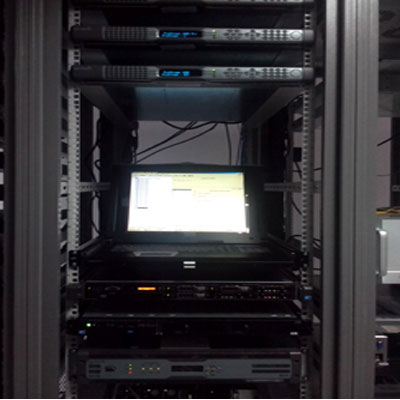
    And Kumar says its headend is future-ready technologically. “We have a Harmonic headend, costing Rs 3 crore, with a carrying capacity of 500 channels.” 

    Some 50,000 STBs imported from DTM, China with CAS from NSTV and SMS from Magnquest, have been seeded amongst its subscribers and the plan is to take the number to one lakh soon. Since some of the LCOs in the joint venture were link operators for the major MSOs in Bengaluru, their boxes have been replaced with the Mirai Communication STBs.

    “These are standard definition high quality MPEG4 boxes with one GB of DVR,” informs chief technology officer Sriram. The price tag of each box is between $16 and $19 (around Rs 1200). The final cost works out to Rs 2000- 2500. This includes CAS, cost of headend, import duty and the cost of STB.” 

    Issues with DAS implementation and revenue share got us together to setup our own headend says Sudhish Kumar

    The company has spent close to Rs 30 crore on the whole setup, which includes infrastructural help from Tata Teleservices, using the optical fibre it has laid across the garden city. “Though we have our own hybrid fiber-coax (HFC), we are using almost 400 km of Tata Teleservices underground OFC, since maintaining the network across the city is a huge task. It has given us drops at several points across the city through which the signal is made available to homes,” says Kumar.

    So what are the challenges the group has faced? “Well, the current 10 directors got along to form a team. We then proposed what we were planning to do to others in the city. It was a challenge to bring everyone to come together, but it has worked out well since,” he informs.

    Each of them was asked to choose between acting as a collection agent by becoming a link operator for a national MSO  becoming an owner by becoming a part of Mirai Communication. “Though it earlier seemed like a herculean task, with 70 operators coming together, we realised that we had to pay only Rs 2000-2500 per box. We were anyways paying Rs 1000-1500 to the MSOs for seeding boxes. So, now by paying extra Rs 1000-1500, we could own the STB and also keep our consumers intact,” explains Kumar.

    It was the Hyderabad based Fibre Optics that offered a one-stop solution and the challenge has not yet ended.  “It is an ongoing task. We have managed to get feeds from all broadcasters.  We are paying them for one lakh subscribers, when currently we have 50,000 subscribers. But, we hope to seed more boxes soon,” adds Kumar.

    What is the revenue share between the 70 cable ops who have formed the consortium? “Well! It is simple. The operator gets a share against the active boxes which are part of his own subscriber network,” he informs. Mirai Communication has started generating bills. “The revenue has started rolling out now,” he informs.

    Bengaluru’s operators are not the only ones, who have come together to setup their own headend. Following their footsteps are the 100 cable operators from Kolkata that recently announced the setting up of ‘Bengal Broadband’. As reported by Indiantelevision.com, the new entrant will be functional from FY2015 (LCO’s form ‘Bengal Broadband’ to be effective from FY15).

    Says Prabhoo, “LMOs all over India like in Bengaluru and Kolkata must group together and form a co-operative model in such a way that even the smallest LMO can survive and sustain. LMOs must register under small scale industry so that they can avail of collateral free bank loan up to Rs 1 crore.”

    We have seeded standard definition high quality MPEG4 boxes with one GB of DVR, informs Sriram
    While the State Bank of India already is providing such facilities, MCOF is also in talks with IDBI Bank and Canara Bank to offer the same. 

    “Time is running out for the MSOs and if they do not learn to act fairly soon enough then many co-operative headends will come up in most cities of India. One may find another 100-200 headends coming up with 200-300 different cooperatives formed and that will continue for a year or two and then there will be consolidation. And I see it happening. These are large cooperatives with a 500,000 or million universe,” adds Prabhoo.

    Kumar points out that they are already in talks with both independent MSOs across India and also LCOs in Mumbai, Delhi, Nasik, Kerala, Chennai, Hyderabad and Gujarat for setting up more such co-operative headends. “We are in talks with independent MSOs and asking them to collectively set up one headend for the entire country,” he concludes. 

    Change as we say is the only constant. Even in cable TV land. 

  • Star Sports plays hard ball with Siti Cable

    Star Sports plays hard ball with Siti Cable

    MUMBAI: Star Sports has come out with a pan India notice against India’s Multisystem operator Siti Cable. The notice that was issued in select newspapers on 15 November as per the Telecom Regulatory Authority of India (TRAI) guidelines has hauled up the multiple system operator (MSO) on several grounds.


    “A huge outstanding and non-signing of agreement in both DAS as well as non-DAS markets are the two major reasons for this notice,” says Star Sports India COO Vijay Rajput.  “I would like to point out here that Siti Cable has not submitted subscriber reports for any of the DAS I and DAS II markets.  Also there have been instances of piracy. Earlier in October, we had filed an FIR against Siti Vision Digital, a joint venture unit of Siti Cable Network at Saifabad police station in Hyderabad, for illegal transmission of the Star Sports channels.”


     The sports network has come out heavily against Siti Cable for not playing with a straight bat.   “We have been following up with Siti Cable for all these issues but have not received a favorable response from its  officials. Therefore, as per the law of the land we have issued a 21 day public notice. We will avail all options available to us if in case Siti Cable fails to resolve the stated issues within the stipulated period,” adds Rajput.


     Star Sports had earlier played hardball with GTPL and yanked its channels off the cable network. Now it’s the turn of Siti Cable. Rajput says that he has been forced to take these steps. “These are the two specific cases that we are trying to address primarily due to non-payment and non-renewal of agreements.”


     So what is it that Siti Cable plans to do post this notice? Answers Siti Cable chief operating officer Anil Malhotra, “Well, this is a regular practice adopted by every broadcaster as per the TRAI regulation, when an agreement is about to end or has ended. The notice is a precursor to negotiation.”


     Malhotra claims that his cable network is already intalks with the sports channel for the renewal of contract. “We had signed the agreement last year in October-November. So the agreement is due for renewal and, so, this notice. We will amicably resolve the issue.”

    Star Sports says it is ready to revisit the matter if the MSO resolves the issues in the set deadline.

  • DQ Entertainment reports sextuplicate half year PAT on forex gain

    DQ Entertainment reports sextuplicate half year PAT on forex gain

    BENGALURU: The Tapas Chakravarti led DQ Entertainment (International) Ltd, (DQE) reported an almost six fold increase  (up by 5.76 times) in its first half-2014 (half year ended Sept 30, 2013 – H1-2014) financial result at Rs29.4 crore as compared to the Rs 5.1 crore for the corresponding period last year, albeit the revenue reported by the company was lower.


    The Hyderabad based company reported foreign exchange gain of Rs 14.4 crore for Q2-2014 and Rs 18.4 crore for Q1-2014, totalling Rs 32.8 crore for H1-2014. During the corresponding period last year, the company reported a foreign exchange loss of Rs 7.98 crore.


    DQE reported revenue for H1-2014 of 2014 at Rs 87 crore as compared to the Rs 95.3 crore for H1-2013.


    Let us look at the Q2-2014 results reported by DQE


    The company reported a consolidated net income from operations for Q2-2014 at Rs 56.68 crore, 12 per cent lower than the Rs 64.34 crore for Q2-2013 and almost double (up by 86 per cent) the Rs 30.43 crore for Q1-2014.


    PAT for Q2-2014 at Rs 22.72 crore was up 60.22 per cent as compared to the Rs 14.18 crore during the corresponding period last year and more than triple (3.44 times) the PAT of Rs 6.6 crore during Q1-2014.


    Expenditure without accounting for forex gain/loss and transfer of expense to capital account for Q2-2014 at Rs 41.77 crore was 5.8 per cent higher than the Rs 39.48 crore for Q2-2013 and 12 per cent higher than the Rs 37.3 crore for Q1-2014.


    Segment Results


    Two segments contribute to DQE revenue – animation and distribution.


    Animation reported revenue of Rs.41.51 crores, 1.4 per cent lower than the Rs 42.09 crore for Q2-2013 and 50.6 per cent higher than the Rs 27.57 crore for Q1-2014. The segment reported positive result of Rs 27.32 crore for Q2-2014, more than double (2.38 times) the Rs 11.46 crore for Q2-2013 and 25.7 per cent more than the Rs 21.73 crore for Q1-2014.


    Distribution reported 32.6 per cent drop in revenue to Rs 15 crore in Q2-2014 as compared to the Rs 22.25 crore for Q2-2013. Distribution revenue for Q1-2014 was Rs 2.85 crore. Distribution returned positive result of Rs 9.44 crore, 40.4 per cent lower than the Rs 15.86 crore for Q2-2013. DQE’s distribution segment had returned negative figures of Rs (-1.86) crore for Q1-2014.


    DQE CMD and CEO Chakravarti said, “The global entertainment industry is developing at an unprecedented pace. Mobility and portability of content will, in my opinion, have a profound impact as viewers consume  programming outside their homes and want to control what they watch, when they watch, and on what device. So many opportunities are evolving and we recognise that in so far as content production is important, even more vital will be the distribution technologies that are emerging.”


    “Recognising and serving this need with regards to distribution technology, we have made substantial and focused progress in licensing and distribution of our Intellectual Properties not only for television broadcast, but other VOD (Video on Demand) and SVOD (Subscription Video on Demand) and OTT (Over the Top) platforms as well. Our flagship global property Jungle Book Series is on Netflix, Vudu and Hulu – the famous OTT platforms in the USA,” added Chakravarti.


     “New associations with leading networks and licensees globally are paving the way to monetise our IPs and co-produced content. New deals across our portfolio of properties in recent months are with best-in-class partners such as France Television, Nickelodeon, Disney Channel Productions, Sky Italia, Universal Music, Discovery Kids, Rai TV, Italy etc. The promotional deal for The Jungle Book with Burger King Worldwide has been immensely successful and will be extended for second promotion,” revealed Chakravarti.


     “We have successfully completed deliveries while new productions are in development. Our foray into theatrical production of ‘The Jungle Book’ is gathering momentum, and we hope to conclude announceable distribution deals in the near future. We remain confident that the global entertainment industry has excellent growth prospects, while our business remains well placed for projected growth in the current year,” concluded Chakravarti.

  • When sports became front-page news

    When sports became front-page news

    MUMBAI: When ESPN Star Sports changed its identity to Star Sports at midnight on 6 November, it was part of a mission to put sports first.

    Which is exactly what came through when readers of national newspapers in some cities discovered that their morning reads did not have the usual masthead.

    It didn’t end there. The front page had only sports news. People were left wondering why. The answer came when two full page ads greeted them announcing the launch of the six new Star Sports channels. The motive of this disruption was simple- ‘sports first’.

    It was less print campaign, more (new) brand announcement for Star India.
    “It was a statement of purpose. A mission to put sports first,” as Star India executive vice president marketing & communications Gayatri Yadav puts it.

    The network was aware that delivering such a powerful brand promise required a high-impact strategy. “In a bold and innovative campaign, we asked India to imagine a world where sport comes first. For the first time in history – Star Sports has enabled sports to move to the front page of a newspaper in India,” exults Yadav.

    The print campaign covered all editions of The Times of India, Maharashtra Times and Ei Samay, Dainik Jagran (all editions), the Madhya Pradesh and Chhattisgarh edition of Nai Duniya and the Chennai, Hyderabad and Bengaluru edition of The Hindu. It targeted six metros and the HSM markets like Uttar Pradesh, Madhya Pradesh, Bihar and the PHCHP region (Punjab, Haryana, Chhattisgarh and Himachal Pradesh). It is learnt the network spent around Rs 5-7 crore on the print ad releases.

    “The time for the campaign is perfect. With Sachin playing his last series before retirement, we knew there will be a whole buzz around this match and so, for us, it was a good time to bring it up front for maximum impact,” informs Star India’s media agency’s Mindshare principal partner, client leadership Anita Kotwani.

    Getting the sports section to the front page was a strong innovation. “We needed to bring sports to the forefront and what better way to bring the back page to the front page. The live edit of the sports page was upfront and there was no repetition of the sports section in the latter pages. We have been able to execute this innovation with the top publications having the best sports coverage. And this in itself is an achievement,” she says.

    In fact, the one-point brief to Mindshare was – ‘How can we bring sports to the forefront? “Given the fact that it’s sports, the male audience becomes our main target group and naturally, newspapers and publications became the right medium to communicate,” explains Kotwani.

    Asked about the response to the disruption, Kotwani says: “We are talking about the leading newspapers in the country, so of course we couldn’t go wrong with our plan. When the consumers opened the newspaper and saw the sports page upfront, wondering where the masthead was: our job was done. In short, we have achieved the impact that we wanted to create among consumers.”

    Says Maxus managing director south Asia Ajit Varghese: “Rebranding and repositioning the Star Sports network as the sports destination is surely very good messaging. They have four channels and one cannot miss any action across sporting events. It is something that sports lovers will clearly connect with.”

    A media observer points out that Star India still has its work cut out with viewers. Says she: “India is a one sport nation – cricket. With so many channels on offer, there could be some confusion in viewers’ minds: how is each of them different from the other? And will they have to pay additionally for each of them? How much and why? Star India will have to address these issues separately through some promos and advertising later.”

    That probably should give the marketing folks at Star India some food for thought!

  • Have talent, will become animation hub

    Have talent, will become animation hub

    MUMBAI: The state-wide agitation over Telangana notwithstanding, the Andhra Pradesh government is pulling out all stops to make Hyderabad a media, animation and gaming hub.

    And not without reason, for, of the approximately $70 billion worth global animation industry, India’s contribution is around $ 900 million, with Hyderabad alone accounting for nearly $ 550 million.

    The Rs 350-crore GAME City project is in the last leg of finalising tenders, informs Madani

    So, after sponsoring the participation of Hyderabad-based animation companies at the recently concluded MIPCOM 2013, Information Technology and Communications Department deputy director (promotion) Syed Shawket Hussain Madani also made a pitch about how Hyderabad has a large talent pool that just needs the right push.

    Enlisting the challenges facing the animation industry, Madani said: “Infrastructure, which is dedicated to the media pool, is one challenge. The second important thing is to nurture the talent pool that specialises in 2D and 3D. The third challenge is to make gaming a part of the curriculum while the fourth is the policies relating to the animation industry,” and added that the AP government is coming up with a Gaming Animation Media Entertainment (GAME) City to tackle these obstacles.

    About the Rs 350-crore GAME City project funded by the state government, Madani informed: “We are in fact in the last leg of finalising tenders, which will be out by this month end.”

    Spanning more than 38 acre, GAME City will have an incubation space constructed over 8 lakh sq ft and various other facilities including a sound and acoustic studio, auditorium and shade studio. “We will give free bandwidth to the occupants for the first three years. Also considering that the software required for making animation series is expensive, the government has decided to buy the software and load it on the common server, which can be used by various companies located within GAME City,” said Madani.

    With plans to complete the 27,000 square feet incubation centre in the next two months, “Tenders for this are already out,” said Madani. The AP government is looking at big names to be part of the GAME City project. “Though Electronic Arts and Walt Disney already have their presence in Hyderabad, we want more such names to be part of this GAME city,” he said.


    As part of the larger project, a delegation was recently formed, comprising members from the AP government, industry and associations as well as architects and teachers from various institutes. “The team went to Dubai, Manchester, Amsterdam and South Korea to understand the needs of the animation industry and ensure that GAME City is well equipped,” said Madani.

    Additionally, the government is in the process of holding meetings with BBC and Al Jazeera among a host of other channels to set up businesses in Hyderabad. “We are negotiating with the University of Manchester for its specific programme that promotes animation in 2D and 3D. We have already signed a memorandum of understanding with Netherlands to set up an educational joint venture for making available its educational content to universities in Hyderabad,” informed Madani.

    Not only Hyderabad’s animation industry but also the work force stands to gain from these measures, which are expected to generate jobs for nearly 40,000 people. “This GAME city will complement the existing media and entertainment industry of Hyderabad,” concluded Madani.

    This is all very well but naysayers peg the fortunes (or otherwise) of the project on the upcoming elections. “The project sounds interesting and will be helpful to us. But, everything depends on the upcoming elections. If there is change in power, I am unsure if the project will see the light of the day,” said a Hyderabad-based CEO of an animation company who did not wish to be named.

  • Empowered Committee recommends re-drafting of Cinematograph Act 1952

    NEW DELHI: The empowered Committee under the chairmanship of retired Punjab and High Court Chief Justice Mukul Mudgal has submitted a fresh draft of the Cinematograph Act 1952 to incorporate its recommendations related to certification of films and piracy issues.

    In its report submitted to Information and Broadcasting Minister Manish Tewari today, the Committee has also dealt with issues such as advisory panels, guidelines for certification and issues such as portrayal of women, obscenity and communal disharmony, classification of Films and jurisdiction of the Film Certification Appellate Tribunal (FCAT).

    The Committee also gave its views on advisory panels in different parts of the country to the Central Board of Film Certification; apart from ways to deal with video piracy.

    A thorough review of the Cinematograph Act has also been undertaken in the light of developments over the last six decades.

    The Censorship Guidelines were last amended on 6 December 1991. The Board presently consists of non-official members and a chairman (all of whom are appointed by Central Government) and functions with headquarters at Mumbai. It has nine Regional offices/Advisory Panels, one each at Mumbai, Kolkata, Chennai, Bangalore, Thiruvananthapuram, Hyderabad, New Delhi, Cuttack and Guwahati. The Regional Offices are assisted in the examination of  films by Advisory Panels. The members of the panels are nominated by Central Government by drawing people from different walks of life for a period of two years. 

    The committee was constituted by the Ministry on 4 February 2013 and held several meetings during its eight-month tenure with various stakeholders. These meetings were held in Chennai, Delhi, Mumbai and Kolkata. Eminent persons connected with the film sector were invited by the Committee to present their views. The Committee also held discussions with members and officials of CBFC, officials of the Animal Welfare Board of India, Chairperson of BCCC, representatives of the Film Federation of India, the Films and Television Producers Guild of India and the Multiplex Association of India.

    Other members of the Committee are former I and B Secretary Uday Kumar Varma; FCAT Chairman Lalit Bhasin; former CBFC Chairperson Sharmila Tagore; eminent film lyricist Javed Akhtar; CBFC Chairperson Leela Samson; South Indian Film Chamber of Commerce Secretary and former Film Federation of India President L Suresh; Supreme Court advocate Ms Rameeza Hakim, and I and B Joint Secretary (Films) Raghvendra Singh who was the member convener.  

  • FICCI – MEBC 2013 to kick off on 29 October at Bengaluru

    FICCI – MEBC 2013 to kick off on 29 October at Bengaluru

    BENGALURU: The Federation of Indian Chambers of Commerce and Industry (FICCI) annual Media and Entertainment Business Conclave (MEBC) will be held at the Garden City this year on 29 and 30 October. Previous editions of the conclave have been held in Chennai and Hyderabad.


    Some of the key sessions of MEBC 2013 include (1) Formulating and Implementing a viable Media and Entertainment policy for a State: The panel comprising of state government representatives and industry stake holders will discuss various scopes to develop infrastructure, local skills, technology and explore possibilities on how to develop the media & entertainment eco system for a State.


     (2) Emerging Technologies and the impact on Indian Cinema? The Indian film industry enters its next phase of production and distribution where digital technologies are taking very important roles. In this session we bring in experts from the field of creative industry and technology to understand what the future lies for Indian cinema.


    (3) The Broadcasting Ecosystem in the Digital Era: What are the experts thinking after the implementation of Digitization of Cable TV in India? In the era of convergence with integrated Apps, Broadband, wireless, VOD, pay TV and Multiplatform distribution how will the ecosystem look like. Let’s discuss.  


    (4) Session on Visual Effects (5) Emerging Trends of Indian IP in Animation & its exploitation (6) The War for News: Defining No. 1 in The Dizzying Newscape: Are there any winners in the plethora of news be it TV or Print, despite the TAM, NRS/IRS figures? Is it all the same content packaged in different formats which finally just confuses the viewer? What are our news media’s aiming for – Ratings or Pure Journalism? Can we learn anything from the international newsgathering model in content and standards?


    (7)  Reshaping Mobile entertainment in the era of Digital Revolution:  A session on display of the upcoming latest Apps in Mobile Entertainment, the transformation from 3G to 4G redefining mobile entertainment (8) Changing Trends in Regional TV: Ratings, Content, Formats: Regional TV programming are constantly evolving in terms of contents and formats keeping in mind the audience tastes and the cut throat competition with national televisions channels. In this session let’s listen to the stalwarts giving their perspectives from GEC to news following a peek into the state of the much-debated ratings systems.  


    (8) Marketing & Distribution of films in Multiplatform Ecosystem (9) Making movie through Crowd funding – The case study of Lucia:  A case study on the Kannada Film Lucia will be conducted by Film Director Pawan Kumar. Lucia is the first crowd funded film in India. The case study will emphasise on how best new script and ideas can receive funds through social networking sites without depending on producers for fund (11) The Emerging Gaming Industry in southern India.

    Among the speakers  at the concvlave include Kamal Haasan, Chairman, Media & Entertainment Business Conclave, FICCI; Biren Ghose , Convener  MEBC & President ABAI & Country Head- Technicolor India; Srivatsa Krishna , Secretary , Department of IT , Bt and S&T , Govt. Of Karnataka;  Kumud Srinivasan , President , Intel India; Ashish Kulkarni ,Co  Chairman , FICCI AVGC Forum & CEO, Big Animation; Neeraj Roy , CEO , Hungama Digital Media;  Anup Chandrashekar , Business Head , Asianet & Star Suvarna ; Shruthi Naidu , Director TV serials; LV Krishnan , CEO , TAM India; Jawhar Sircar, CEO, Prasar Bharti; Preet Dhupar, COO India , BBC World News; Ravi Hegde , Group Editor, Udayvani among others