Tag: Hyderabad

  • DAS Stay extended to 4 June in Andhra Pradesh, court wants action taken report from Govt

    DAS Stay extended to 4 June in Andhra Pradesh, court wants action taken report from Govt

    New Delhi: The Andhra Pradesh High Court today extended to 4 June the stay on switch-off of analogue signals in Hyderabad and Vishakhapatnam, even as it expressed its annoyance against the Information and Broadcasting Ministry counsel not giving an action-taken report as directed by the court.

    Adjourning the hearing of six petitions to 4 June, the Court also permitted other parties including the Indian Broadcasting Foundation to be impleaded in the case.

    The division bench headed by the Chief Justice Justice N.V.Ramana posted the case for orders after the vacation.

    The Court also asked the authorities not to take any coercive steps against Multi System Operators (MSOs) for not implementing digital addressability system in Hyderabad and Rangareddy districts.

    The bench which was hearing arguments on a public interest petition passed a single order in five other similar cases including one by an MSO, Mr S V Krishna Mohan and another by the Greater Hyderabad Cable TV Operators Association, that came up for hearing before the bench.

    The petitioner Chalasani Narendra filed the PIL saying the Union of India was ‘scuttling the constitutional rights of the citizens by blocking out the TV Channels in the guise of implementation of Digital Addressability System (DAS) without making any efforts for easy availability of Set Top Boxes (STBs) in the market’.

    He also alleged that the government is also trying to favour the big corporate establishments in the cable and DTH industry in the guise of DAS implementation.

    Hathway had also got itself impleaded in the petition saying that there is no need to extend the time for the implementation of DAS in Hyderabad. Hathway submitted before the High Court that Digitalisation of cable services brings out a lot of undeclared connectivity from the cable operators benefiting the Broadcasters, the government and the MSOs.

    The Indian Broadcasting Foundation submitted that the Court should not grant any more time against the compulsory usage of STBs in Hyderabad.

    According to figures published by the Ministry on 21 April, Hyderabad has 8,81,512 TV households of which 17,37,052 STBs have been installed, including DTH, with the total digitization going up to 193.83 per cent. Vishakhapatnam has 5,42,692 TV households, and only 1,58,291 STBs including DTH have been installed thus taking the percentage to 29.76.

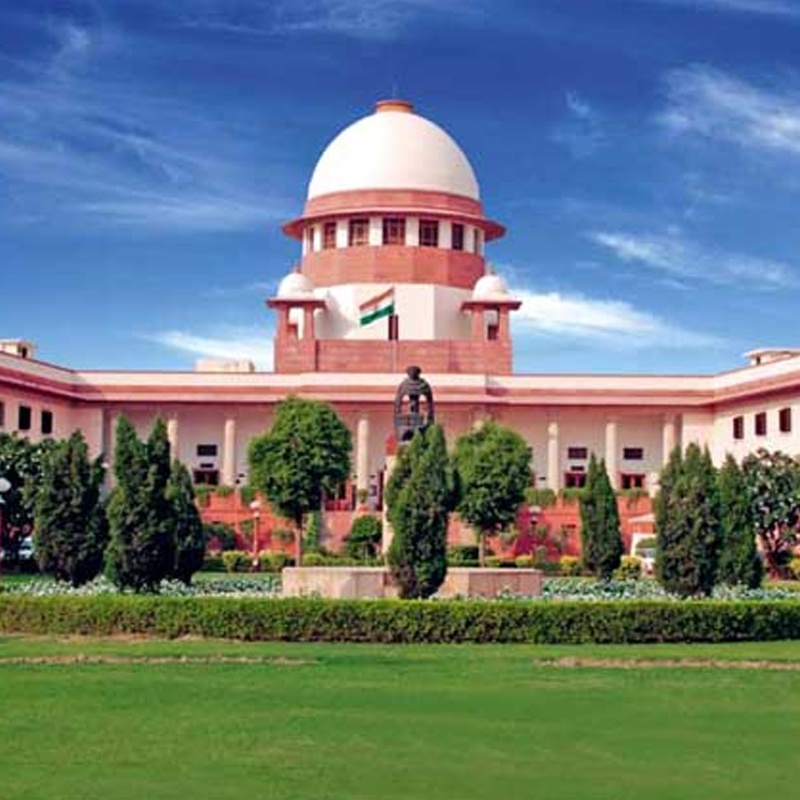
    Stay also continues till 8 May in Jabalpur, Indore, and Bhopal apart from Chennai with petitions pending in Madhya Pradesh and Madras High Courts, even as the Indian Broadcasting Foundation has moved the Supreme Court to ensure these petitions are not entertained.
  • AP HC adjourns hearing in DAS extension case till 29 April

    AP HC adjourns hearing in DAS extension case till 29 April

    NEW DELHI: The Andhra Pradesh high court today adjourned the hearing of petitions seeking extension of digitisation deadline in Hyderabad and Vishakhapatnam to 29 April. The interim order restraining MSOs from disconnecting analog signals continues in both the cities.

    The court also asked the authorities not to take any coercive steps against Multi System Operators (MSOs) for not implementing digital addressability system (DAS) in Greater Hyderabad city limits.

    The division bench headed by interim Chief Justice N.V. Ramana was hearing public interest litigation and five petitions including one filed by an MSO ICE TV through its CEO S V Krishna Mohan and another by the Greater Hyderabad Cable TV Operators Association.

    The petitioner Chalasani Narendra filed the PIL saying the Union of India was ‘scuttling the constitutional rights of the citizens by blocking out the TV Channels in the guise of implementation of Digital Addressability System (DAS) without making any efforts for easy availability of Set Top Boxes (STBs) in the market‘.

    He also alleged that the government is also trying to favour the big corporate establishments in the cable and DTH industry in the guise of DAS implementation.

    Hathway Cable and Datacom also got itself impleaded in the petition saying that there is no need to extend the time for the implementation of DAS in Hyderabad.

    The court was informed that the nodal officer who is Joint Collector in Hyderabad had written a note to the Information and Broadcasting ministry that only 30 to 40 per cent STBs had been seeded in the state and had sought an extension of three months.

    The note said: ‘As per the information submitted by the MSOs and cable operators approximately 3.4 million consumers are existing, out of which only 30 per cent to 40 per cent STBs are supplied leaving majority of them still waiting for supply of STBs.‘

    According to figures published by the Ministry on 3 April, Hyderabad has 881,512 TV households of which 546,892 STBs had to be installed. Vishakhapatnam has 542,692 TV households, and 466,466 STBs had still to be installed.

  • IBF moves Supreme Court over DAS Phase II hold-ups

    IBF moves Supreme Court over DAS Phase II hold-ups

    NEW DELHI: Concerned with the increase in the number of petitions that have been filed in the past two weeks leading to a stay on the spread of cable TV digitisation (Digital Addressable System – DAS) in several states, the Indian Broadcasting Foundation (IBF) has knocked on the doors of the country‘s apex court seeking a stay on the stay orders issued by different high courts in the country.

    The IBF petition seeks to ensure that digitisation is implemented as scheduled and without any hindrance. The supreme court has posted the matter for hearing on 23 April.

    The special leave petition filed by the IBF did come up before the SC, however the apex court refused to intervene after it was informed that the Karnataka high court judgment on the case was due.

    The bench comprising chief justice Altamas Kabir therefore felt that the court would wait for the Karnataka High Court judgment before taking up the matter.

    In the meanwhile, the Karnataka and Gujarat high courts have dismissed the petition petitions filed by Karnataka State Cable TV Operators Association (KSCOA) and Cable Operators Association of Gujarat (COAG) respectively paving the way for DAS Phase II to commence.

    However, petitions challenging digitisation are still pending in the Andhra Pradesh High Court and Madhya Pradesh High Court. These affect the cities of Hyderabad, Visakhapatnam, Bhopal. Indore, and Jabalpur.

    According to IBF president Man Jit Singh, the broadcasters association wants a full and final closure on this issue by the Supreme Court so that digitisation can progress smoothly across its various phases as has been drawn up by the government in conjunction with industry.

    Also read:

    DAS extension pleas quashed in Karnataka and Gujarat

    Gujarat HC dismisses petitions seeking DAS extension

    Karnataka HC dismisses KSCOA petition, paves way for analogue cable switch-off

  • Govt gives 15 days grace for phase II cable TV digitisation

    Govt gives 15 days grace for phase II cable TV digitisation

    NEW DELHI: Ever since the ministry of information and broadcasting ministry announced that it was enforcing 31 March 2013 for Phase II cable TV digitization and switch-ff of analogue signals in 38 cities in 14 states, there have been yelps from state government chief ministers and cable TV operators, and MSOs all over.

    Media reports were that a large number of viewers in these cities are grappling with blank TV screens as cable TV operators have not been able to speedily provide the set top boxes (STBs) needed to digitize. Some state governments went so far as to ask for a six-month extension to the digitization deadline. A couple of high courts – in Karnataka and Gujarat – had already agreed to a week long postponement in late March and on 1 April

    Late last night, according to a PTI report, the government heard the protesters’ pleas and said it would go slow on enforcing the black out of analogue signals. While categorically stating that the deadline was not being extended, information & broadcasting secretary Uday Kumar Varma, said that the industry was being given “a transition time of 10 to 15 days depending on the ground level situation so that there is no inconvenience to the people.”

    Reports are that almost 25 per cent of the 16 million households in these cities missed the deadline to switchover to digitized cable TV. The ministry has hence told MSOs and cable TV operators “to switch off the signals in a phased manner and depending on the situation in various cities.”

    Says the head of a leading MSO: “It’s good to hear that the government has given us this grace period. During the day there were ghastly reports that nodal officers and SDMs in various cities were threatening cable TV operators and MSOs with arrests if they did not switch off analogue TV signals. This should come as a relief to all of them. As it is we have not been able to sign digital agreements with a majority of broadcasters for these cities. Hopefully we will be able to do something soon.”

    Sources indicate that the ground situation in various cities is varied and that the I&B ministry officials would coordinate with the local nodal officers in order to decide the timing and extent of analogue TV switch offs in order to avoid blank TV screens.

    Data available with the I&B ministry has revealed that towns which are facing a problem include: Vishakapatnam with 12.8 per cent digitization (out of 500,000 TV homes); Srinagar with 20 per cent, Coimbatore with 28.89 per cent, Jababalpur with 34.87 per cent and Kalyan Dombivili (38.59 per cent). Seven of the 38 cities had achieved 100 per cent plus digitization: Ludhiana, Hyderabad, Faridabad, Allahabad, Amritsar, Chandigarh and Jodhpur — reported 100 per cent digitisation while three others — Thane, Meerut and Jaipur — had 90 per cent plus.

    Varma’s announcement came a little after indiantelevision.com reported that cable TV operators had got a reprieve in the Andhra Pradesh high court too. Justice M V Ramanna had directed DAS to be stayed for two weeks and the case is expected to be heard on 15 April. The order came on a petition by the Greater Hyderabad Cable TV Operators Association which took the position that there was no clarity regarding the availability of STBs.

  • DAS Phase II commences as analogue TV switched off

    DAS Phase II commences as analogue TV switched off

    NEW DELHI: The second phase of Digital Addressable System (DAS) in India marched on even as the month of March 2013 came to and end as envisioned by the Information & Broadcasting (I&B) Ministry. Analogue television signals in 36 cities all over India were clipped even as stay orders were imposed by high courts in Ahmedabad and Bengaluru.

    However, I&B Ministry sources told Indiantelevision.com that the level of digitisation achieved as on 30 March was 70 per cent in phase II towns, and admitted there was a likelihood of viewers facing blank TV screens in some places.

    The sources said that these problems primarily existed in Srinagar which has just 4,300 set top boxes (STBs) installed. The situation in Coimbatore and Vishakapatnam was more serious with almost zero STB deployment on 20 March.

    They also added that the estimates had been made based on information received from multi-system operators (MSOs) and making a provision of 20 per cent for multiple TVs in households and TVs in offices/showrooms.

    While the seeding of STBs and switch-off of analogue was being overseen by nodal officers in all the cities, the sources said teams would be dispatched to all these cities in the coming days to study the impact and ensure implementation. They insisted that there were ample digital STBs available.

    However, Uttar Pradesh Chief Minister Akhilesh Yadav in a letter to I&B Minister Manish Tewari over the weekend requested for an extension of six months in the seven cities in the state that were to switch over to digital addressable system from today: Agra, Allahabad, Ghaziabad, Kanpur, Lucknow, Meerut, and Varanasi.

    While the Gujarat High Court in Ahmedabad stayed the introduction of DAS till 9 April in Ahmedabad, the Karnataka High Court issued the stay till 1 April in Bengaluru. The Karnataka High Court will hear cases relating to both Bengaluru and Mysore on 1 April.

    Ministry sources confirmed that both High Courts had issued notices to the Union government and the I&B Ministry.

    In both case, the petitioners Cable Operators Association of Gujarat through its president Pramod Pandya andKarnataka Cable TV Operators Association president V S Patrick Raju, have said there is confusion about availability of STBs and MSOs are also helpless. Raju has also raised the issue of who owns the STB that is installed at the home of a subscriber – the customer or the LCO.

    For the second phase, the 38 specific cities and towns in fourteen states and one union territory which have been listed in the notification are – Bangalore, Hyderabad, Ahmedabad, Pune, Surat, Kanpur, Jaipur, Lucknow, Nagpur, Patna, Indore, Bhopal, Thane, Ludhiana, Agra, Pimpri-Chinchwad, Nashik, Vadodara, Faridabad, Ghaziabad, Rajkot, Meerut, Kalyan-Dombivali, Varanasi, Amritsar, Navi Mumbai, Aurangabad, Solapur, Allahabad, Jabalpur, Srinagar, Visakhapatnam, Ranchi, Howrah, Chandigarh, Coimbatore, Mysore and Jodhpur.

    A high-level Monitoring Committee has also been set up to oversee the digitisation process in the entire country, which is expected to be achieved by the end of next year.

    In order to facilitate digitization, the Ministry has already issued provisional registration to 30 Independent MSOs to operate in Phase II cities. This would enable these MSOs to operate in their respective cities to provide digital cable TV services.

    The Ministry has set up a Task Force exclusively for Phase II cities to oversee and monitor the digitization process. A public awareness Committee has also been constituted in the Ministry for spearheading awareness campaign and all TV channels ran a scroll informing consumers about the deadline for cable TV digitization, as well as an animated commercial.

    All India Radio has also started broadcasting radio jingles on its national and regional networks to get the DAS message across. Several other initiatives like an SMS campaign, video spots and prints are on the anvil. The state governments/UTs have already nominated nodal officers in 38 cities of Phase II. The Ministry had recently conducted a workshop for them.

    Workshops have been held at some places to take stock of preparedness in Phase II cities and sensitize local MSOs, cable operators and other stakeholders.

    The Ministry had set up a Control Room during Phase I, which has continued to function to address the queries of consumers, cable operators and others. The Control Room which also has a toll free number has been receiving a number of calls from consumers of Phase II cities.

  • PVR launches India’s first NFC enabled “Wallet” app for BlackBerry 10

    PVR launches India’s first NFC enabled “Wallet” app for BlackBerry 10

    NEW DELHI: PVR Ltd. has launched its first ‘NFC enabled PVR Wallet’ app for the BlackBerry 10 platform.


    Empowered with the NFC technology and NEC’s Integrated E-money solution, moviegoers can now ‘tap and pay’ for movie tickets and refreshments without using paper money across 15 PVR cinemas in cities like Delhi & NCR, Chennai, Mumbai, Chandigarh, Pune, Hyderabad, and Bangalore.


    PVR app has been bolstered by NEC India, which is the supporting backend provider for ‘PVR Wallet‘. NEC India has provided an end-to-end cloud-based e-payment system called NFC e-Money server to PVR that integrates itself facilitating interactivity between devices (the NFC enabled phone and PVR wallet access), for any monetary transactions.


    PVR Group President & CEO Pramod Arora said, “PVR has always been a market leader in technology innovation in lieu of providing the very best experience to its consumers. We have a long standing association with BlackBerry and we are excited to launch the ‘NFC enabled PVR Wallet’ app for the BlackBerry 10 platform. Also, with the launch of this latest application, PVR reiterates its commitment to provide it’s consumers the latest in technology and innovative features making lives of movie lovers simpler, faster and worthwhile.”


    Annie Mathew, Director, Alliances and Business Development at BlackBerry, said: “BlackBerry is committed to NFC technology, including supporting mobile payments and the convenience it brings to BlackBerry customers. We are pleased that PVR has launched their wallet app for BlackBerry 10.”


    NEC India managing director Koji Oda said, “NEC has been a premier player in the retail technology domain globally and we are honored to be selected again by PVR Cinemas as its preferred technology partner. NFC is an important technology used to bridge the smartphone owner to both the physical and online world for an enhanced user experience. We are committed to empowering our customers with innovative technologies like NFC to help them gain customer loyalty, and together, strengthen our foothold in the retail and entertainment industries.”


    The NFC enabled PVR Wallet app is a ‘Closed Loop Payment Wallet’ where the rights to use the transaction money remains within the premises of PVR cinemas. The multiplex brand PVR has been in the entertainment business for more than a decade and continues to bring different offerings for its movie aficionados, making it convenient, safe and enjoyable with every innovation.

  • International Uranium Film Festival to conclude its Indian journey in Mumbai

    International Uranium Film Festival to conclude its Indian journey in Mumbai

    NEW DELHI: The International Uranium Film Festival is opening in Mumbai on 11 February after having traveled to several other parts of the country.

    Many Indian and foreign critically acclaimed, international award-winning documentaries films will be screened at the two-day festival.

    .
    The festival is dedicated to films about Uranium and the possible dangers it poses to the environment and the survival of humanity from both its military and peaceful uses. The festival includes documentary and fiction films on issues like Uranium mining, nuclear power plants, atomic bombs, nuclear waste, radioactive risks, nuclear medicine, Hiroshima, Three Mile Island, Chernobyl and Fukushima. Waste from nuclear power plants remains radioactive for more than 100,000 years.

    The films screened raise questions about how coming generations will protect themselves from this deathly waste. The festival will stimulate discussions and encourage the production of new documentaries, movies and animated films about the nuclear or radioactive issue.

    The international festival was inaugurated in New Delhi on 4 January and has made its way to Mumbai from cities like Shillong, Ranchi, Manipal, Hyderabad, Pune, Bangalore, Chennai and Thrissur.

    The Mumbai edition of the festival is being presented by the 7 Islands Film Festival, sponsored by Yusuf Meherally Centre, Shrividya Sansthan and Bhawan’s Cultural Centre, and supported by NGOs Janhit Seva Samiti, Konkan Bachao Samiti, Konkan Vinashkari Prakalp Virodhi Samiti, Muktiyaan Loksanskritik Sanghatana and other anti-nuclear activists in the city.

    The International Uranium Film Festival was first held in Rio de Janeiro in May 2011 and then travelled to Portugal, Germany and would move to New York after the Indian edition.

    “The festival stimulates discussions about the nuclear question and stimulates the production of new documentaries, movies and animated films about any nuclear or radioactive issue. In addition, the Uranium Film Festival creates a neutral space to throw light on all nuclear issues. Societies and peoples have the right of choice if they want to follow the nuclear road or not,” said Norbert G. Suchanek, International festival director.

  • IAA announces ‘Gender Sensitisation Drive’

    IAA announces ‘Gender Sensitisation Drive’

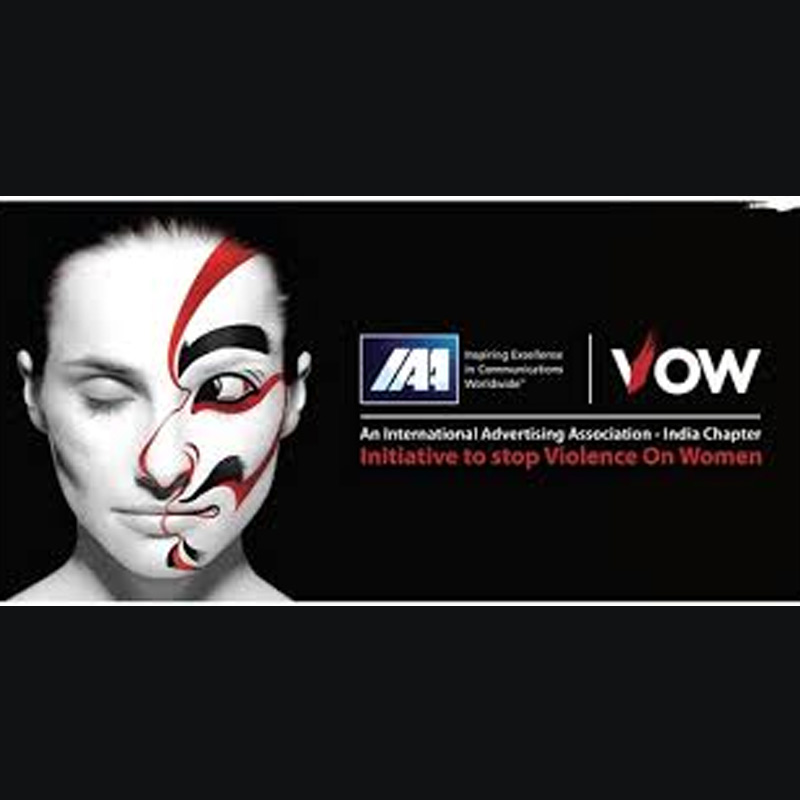
    MUMBAI: India Chapter of the International Advertising Association (IAA) has announced “IAA Gender Sensitisation Drive” the components of which seek to fundamentally change the deep routed bias against women.

    The initiative has an acronym “VOW” standing for “Violence on Women” which we seek to stop consciously doing our bit and taking a vow to get rid of this bane in our society.

    The initiative consists of two segments. Gender sensitisation Seminars for content creators: The first part of the drive would be to hold a series of Seminars across India to sensitise content writers in film and TV industry, story writers (in print media) and in advertising, to guard against typifying women and on other gender nuances, and create focused awareness about the right way to project women across media.

    The Seminars would be addressed by experts in the field and also people of the communications industry.

    The first one is scheduled in Mumbai on 16 February. IAA is hoping to have Union Minister of Women and Child Development Krishna Tirath to inaugurate it.

    Seminars are also being planned in Delhi, Kolkata, Hyderabad and Pune in the next few months.

    The second segment is multi-media advertising campaign against ‘eve teasing‘: The initiative is a national advertising campaign that will use the creative resources of the communications industry and the strength of media linkages to use creative communications to try and change behavioral patterns in a manner that would benefit women. Eve Teasing has been identified as the critical issue that needs to be addressed.

    IAA president Srinivasan K Swamy said, “eve teasing is seen as the mother of most evils affecting women. Today‘s eve teaser is tomorrow‘s molester, and could be a future rapist. It is necessary to nip this in the bud itself. Research and experience of experts in the field like UNFPA and leading NGO‘s like Laadli have also suggested this subject as the critical one to address.”

    A national contest would be run inviting entries from creative people all over the country on how to tackle this issue through effective communication.

    The entries for this Contest would be judged by the best creative minds in the communications industry and short list some good campaigns; and a jury consisting of leaders from a cross section of society and NGOs would then select the winning campaign.

    The IAA would fund the production of this winning entry and use its media linkages to run the campaign on all newspapers and TV channels across the country.

  • Cinemax opens 2nd multiplex in Hyderabad

    Cinemax opens 2nd multiplex in Hyderabad

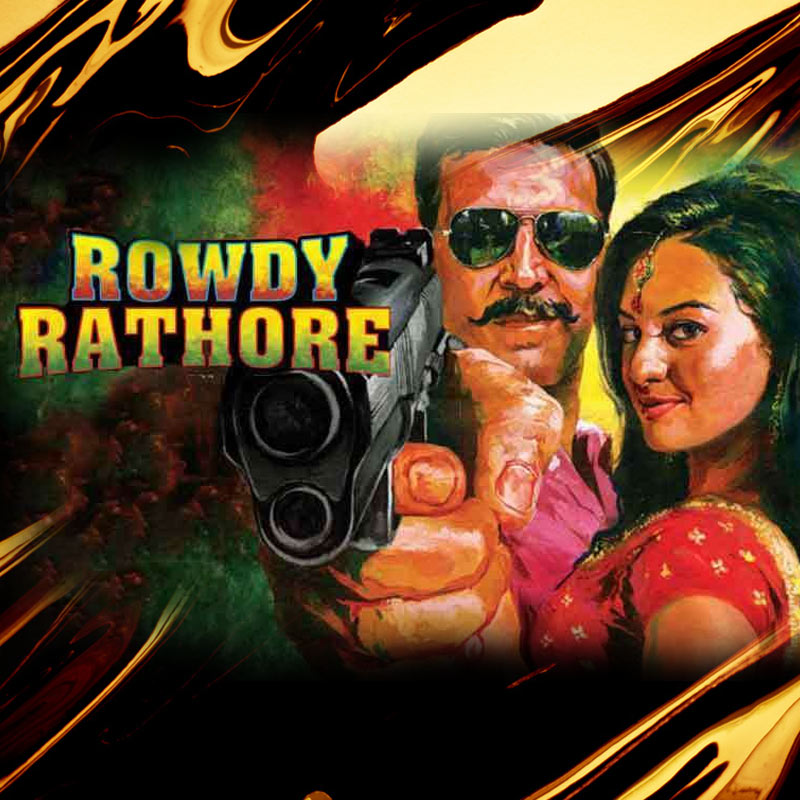
    MUMBAI: Cinemax has launched its second multiplex in Hyderabad with the release of Rowdy Rathod.

    With the launch, Cinemax now has 40 properties in India and 141screens.

    The new multiplex in Inorbit Mall is situated at Cyberabad, an upcoming township with an increasing urban and corporate populace.

    The six-screen plex has a total seating capacity of 947 seats and is equipped with its benchmarked technology, lighting and acoustic sound system. In addition, the property offers luxurious seats, variety in gourmet food, personalised café service along with computerised ticketing.

  • Annapurna’s film and media school to start making films this year

    Annapurna’s film and media school to start making films this year

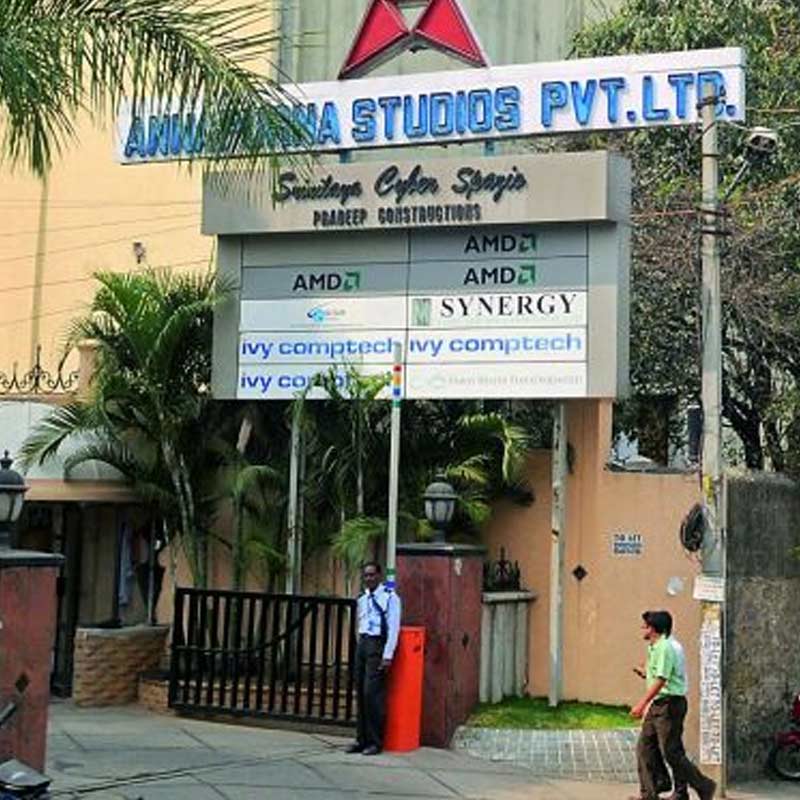
    MUMBAI: The Hyderabad-based Annapurna Studios promoted not-for-profit institute, International School of Films and Media, will start film production this year to give its students hands-on experience.

    “We are planning to make at least two films a year. They will be full-fledged commercial films. Our faculty, students and some other stakeholders will take care of all aspects in producing these films,” observed Annapurna Studios’ chief executive officer Kurt Inderbitzin.

    The maiden film by the institute will have Nagarjuna in the lead role.

    “Perhaps this is the only film institute in the country with a full-fledged functional studio supporting it. This runs on the model of a college-hospital,” Kurt said.

    The institute is planning to offer a four-year degree course in film and television production and acting . “We are in talks with a university to support us in certification. We have announced admission schedule and course will begin in July,” the CEO averred.

    Quoting a study, Inderbitzin said that Indian media and entertainment industry would have three million jobs in the next 10 years.