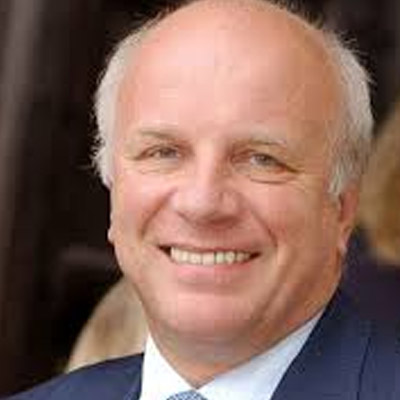
Tag: Hutton

  • Dyke hits out at Hutton, says report full of errors

    Dyke hits out at Hutton, says report full of errors

    MUMBAI: Any hopes that 10 Downing Street may have harboured that Gerg Dyke, dubbed “Tony’s Crony” when he took the reins at the BBC four years ago, would quietly ride away into the sunset look certain to be dashed.

    A day after he quit as BBC director-general, Dyke, who’d said his resignation should draw the line under the Kelly affair as far as the rest of the BBC top management were concerned, fired his first salvo.

    Speaking on BBC radio and GMTV television, Dyke said he did not accept all of Lord Brian Hutton’s report into the death of weapons expert David Kelly, saying it was lacking in balance and tainted with errors.

    “I would be very interested to see what other law lords looking at Hutton thought of it. There are points of law in there in which he is quite clearly wrong,” Dyke said.

    Dyke said he agreed with the departing BBC chairman, Gavyn Davies, that one could not “choose the referee” and had to accept his decision, but quipped: “The government did choose the referee.”

    Dyke also blasted prime minister Tony Blair’s former spokesperson and chief spinmaster Alastair Campbell, calling him “remarkably ungracious” for the tenor of his comments in a series of interviews that he gave yesterday. A clearly gloating Campbell stated he had always told the truth and that he had been vindicated by Hutton.

    Vindicated by Hutton maybe, but certainly but not so by the British public. A YouGov poll in the Daily Telegraph found that 56 per cent of Britons believed Hutton’s report was a “whitewash”, and that 67 per cent trusted BBC journalists compared with 31 per cent who trusted Blair’s government.

    The public response to the whole sorry affair as well as the outpouring of spontaneous support that came from across the rank and file of the BBC might well explain the combative stance that Dyke has taken the “morning after typhoon Hutton” left the Beeb desperately trying to find its bearings again. Dyke’s resignation triggered walkouts and demonstrations by hundreds of BBC staff around Britain.

    A comment made last night by John Tusa, the former head of BBC World Service, and reported in The Guardian is relevant in this context. Tusa has been quoted as saying he believed the government’s satisfaction with resignations at the top of the BBC could backfire.

    Tusa noted that Dyke had offered an apology on Wednesday when the Hutton report came out, but that he had backtracked on Thursday, questioning the governors’ decision to offer an unreserved apology for the way the corporation handled the Kelly affair.

    “If I were the government, I would say this is an argument which is not going to go away, because the two most dangerous men involved are out there and they have got an argument to make,” Tusa was quoted by The Guardian as telling BBC2’s Newsnight.

  • Hutton report may alter BBC functioning

    Hutton report may alter BBC functioning

    MUMBAI: BBC chairman Gavyn Davies, who has stepped down from his post, has been the first casualty of the Lord Hutton report on the BBC. But deeper, far reaching changes are in the offing for the British Broadcasting Corporation and the way it handles its journalism as a result of the events that led to the death of Dr David Kelly.
    One of the first changes to take place is the ban on its main presenters from writing columns on contentious issues, which will remove, among others, John Humphrys from the Sunday Times, and Jeff Randall from the Sunday Telegraph, according to media reports. It has also announced it is strengthening its complaints process and the editorial procedures designed to ensure programmes comply with its guidelines, both of which had come under criticism by some who gave evidence to Lord Hutton.
    Gavyn Davies
    BBC World Service head Mark Byford has been promoted to deputy director general and put in charge of both complaints and compliance procedures. Reporting to him will be a new controller of complaints, heading an enlarged department, and the controller of editorial policy, whose department already deals with programmes before they are broadcast.
    In his report, Hutton has pointed out that, I consider that editorial system which the BBC permits was defective in that (correspondent Andrew) Gilligan was allowed to broadcast his report… without editors having seen a script of what he was going to say and without having considered whether it should be approved. The judge said BBC governors should have properly investigated Downing Street complaints as they defended the Corporation’s independence, reports say.
    Dr David Kelly
    Other changes that could take place in the BBC could also change the way programmes like Today and networks like Radio 5 Live and News 24 go about their business, particularly in their live coverage. BBC director general Greg Dyke had admitted to Lord Hutton in his testimony that there were “lessons to be learned” from the Kelly episode. Kelly allegedly slashed his wrist after being outed as the source of a BBC reporter’s claim that Prime Minister Tony Blair’s team exaggerated the threat posed by Iraq’s weapons to justify war.
    Dyke has since got senior BBC lawyers and editorial figures to review producer guidelines, particularly concerning the use of anonymous sources and how they are described in broadcasts. Dr David Kelly had supposedly killed himself after being named as the suspected source of the BBCs weapons dossier story put out by Andrew Gilligan about the British government’s intelligence dossier.
    Lord Hutton
    Dyke now says senior editorial figures will now consider whether in future all controversial reports should be scripted, instead of being discussed by the reporter and the presenter in what is known in broadcast terms as a “two-way” interview. The dossier story broke in the same format, in a discussion between Gilligan and Humphrys. In his evidence, Gilligan later said that he’d made “a slip of the tongue” in that broadcast and regretted giving the impression he thought the government had lied. “It is something that does happen in live broadcasts, an occupational hazard. It would have been better to have scripted this one.”