Tag: Human Rights

  • Harnessing the power of PR, journalism, and human rights: A global influence catalyst

    Harnessing the power of PR, journalism, and human rights: A global influence catalyst

    Mumbai: Promoting human rights is significant not just for their protection and respect but also to achieve sustainable development. PR and Media’s role is vital in advocating human rights. PR functions to promote brand awareness and human rights by influencing public opinion to raise voices for critical social causes. Media is the primary source of information. It bridges the organisation and the public, being the most influential promoter of human rights and safeguarding.

    The role of PR and media in human rights advocacy

    The role of PR is broader than building a positive brand image or generating brand awareness. It overarches to advocate human rights and protection of the same. PR helps to influence public opinion, shaping social norms and advocating for the causes of the marginalized section of society. PR strategic thinking helps promote human rights by raising awareness, educating audiences, mobilizing support, and inspiring action.

    In the words of Sam Cherri, human rights is the universalization of values, virtues, attitudes and social standards, and media is the guardian of these values and virtues. As media is the primary source of information, it plays a vital role in creating the right atmosphere for advocating human rights. Media not only reports on the violation of human rights but also an effective platform to promote it. The media act as gatekeepers who generate information between the organization and the masses.

    PR and journalism are two pillars that safeguard human rights by creating a conducive environment that protect and establish it. The creation of a democratic nation rests upon the existence of a free and independent media. To say that the media is sometimes compliant to the government is not as concise as it seems. It implies that it can either have a beneficial effect or damage the stakeholders’ interests.

    Ethical journalism and PR practices

    In an ever-evolving industry like PR, ethical practices and communication are the building blocks of the industry. The critical function of any PR professional is to build trust and credibility for a particular brand, company or organization. Following ethical practices is the key to building trust among the masses. An ethical PR practice involves honesty. Providing truthful and accurate information is critical to building trust by advocating views of all sides and facts to help people make informed decisions. Another vital ethical practice is to build a trusting relationship by acquiring expert knowledge and using critical thinking to maintain credibility. The most vital point is to respect different viewpoints without favouring anyone based on bias.

    If we look at today’s scenario, ethical journalism is the need of the hour. The set of ethical codes that every journalist is aware of is to find and report the truth as it is without distorting the facts and minimizing the misuse by demonstrating understanding for sources and story subjects and acting wisely by not falling for undue influence from potential newsmakers. Another important aspect of ethical journalism is to take responsibility for the accuracy of their work. Ethical journalism requires to remember that there is no excuse for inaccuracy. The facts are the prerequisite of good journalism therefore gather and update correct facts throughout the life of the news story.

    Amplifying human rights and World Human Rights Day

    On the 10 December, every year, we come together and celebrate the Human Rights Day. We have rights simply by being born as human beings. Human rights are pertinent for a sustainable future and relatively easy to understand and conjure. It is a value and virtue that implies feeling respected, treated with dignity, and valued for who we are. The rights we humans have emanate from the fact that we have a Constitution that guarantees its citizens the fundamental right to live a life with human dignity.

    Human Rights is our natural right and it is pivotal that our liberty should not be rescinded. Our right to voice our opinion should not be snubbed or choked, and this is where the role of news professionals and PR practitioners comes in. Like the beacon of light, PR professionals and journalist should act as a ray of hope to people especially marginalised section whose voices have been choked and ignored.

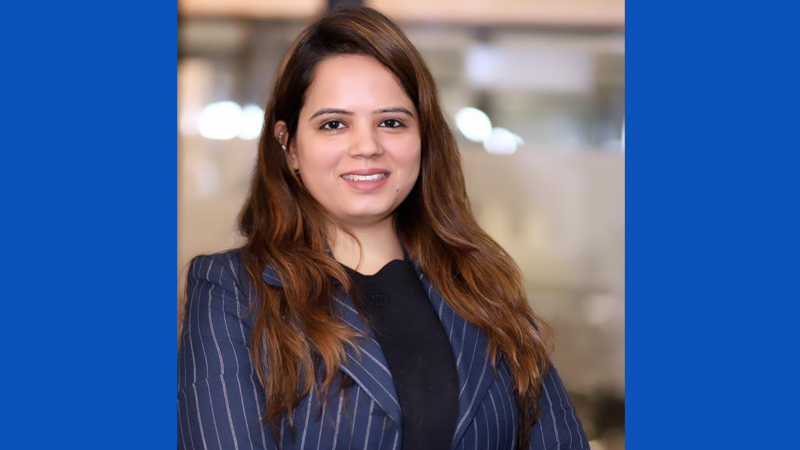
    The author of this article is Media Maniacs Group founder Surabhi Trivedi.

  • Kashish 2021 announces panel discussion on same-sex marriage rights

    Kashish 2021 announces panel discussion on same-sex marriage rights

    Mumbai: The 12th edition of Kashish Mumbai International Queer Film Festival – South Asia’s biggest LGBTQIA+ film festival, is underway from 19 August to 5 September, screening 221 films from 53 countries over three weekends. During the weekdays the festival is programming several interesting panel discussions and filmmaker Q&As.

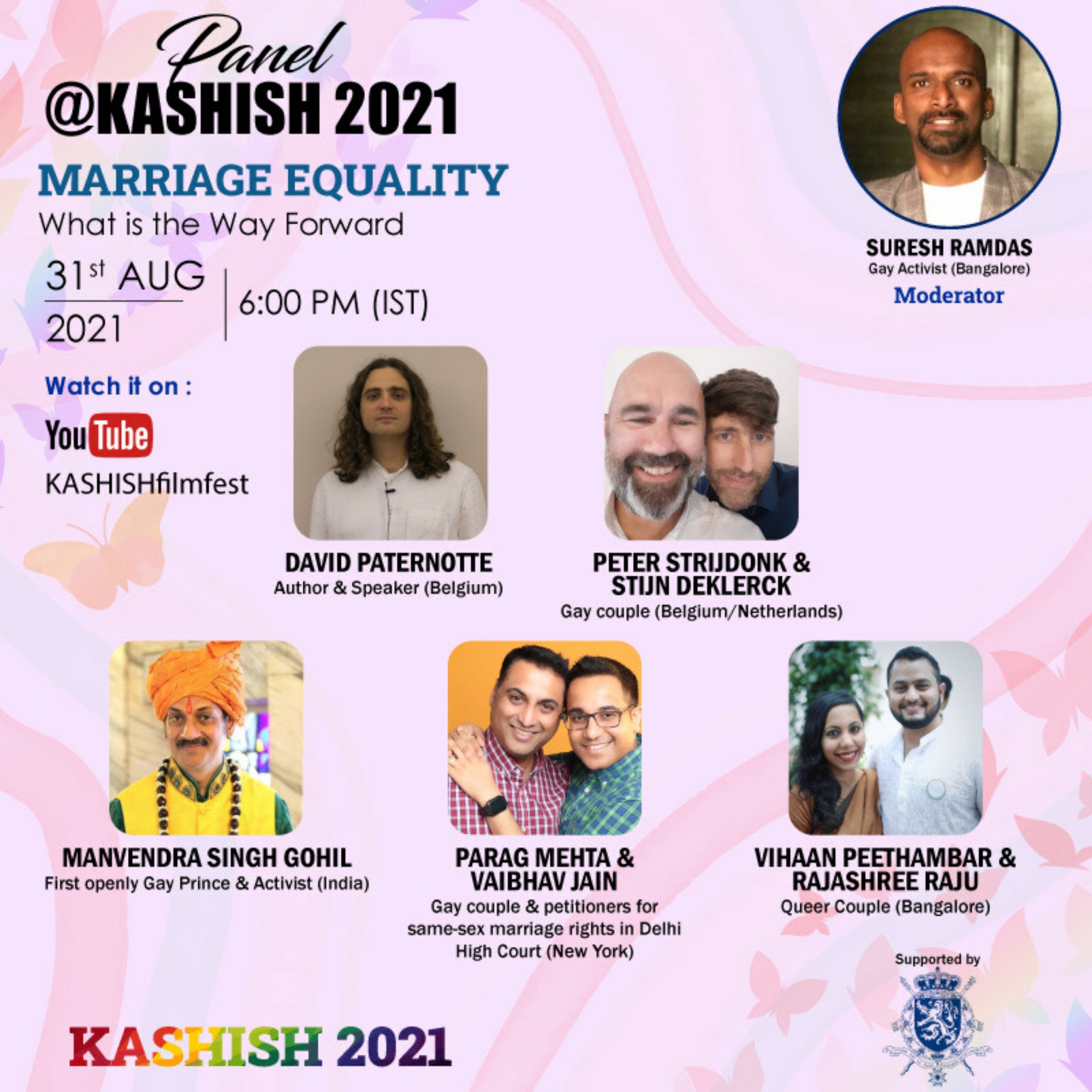
    On 31 August at 6 p.m, the panel is set to discuss ‘Marriage Equality – What is the Way Forward’. The topic is especially relevant to the current times in India when the petition for same-sex marriage rights is being heard in the Delhi high court. 

    Speakers at the panel include first openly gay prince & activist Prince Manvendra Singh Gohil, gay couple & petitioners for same-sex marriage rights in Delhi HC Parag Mehta & Vaibhav Jain, transman activist Vihaan Peethambar & his wife Rajashree Raju, gay couple from Belgium Peter Strijdonk & Stijn Deklerck, and renowned Belgian author & speaker David Paternotte. The panel is moderated by former Mr Gay India and activist Suresh Ramdas.

    “It is said that marriages are made in heaven and I’m very positive that we will see heaven in India with marriage equality getting accepted and we will definitely win and I’m very optimistic about it,” said Manvendra Singh Gohil.

    “I was thinking about how in 2015 when marriage equality came to the US, it came in the evening, there was a Supreme Court judgment and president Obama had asked the White House staff to illuminate the entire building with pride colors. So I remember going with 1000s of people gathering there and cheering and it was so exciting and I looked at Parag and I said, do you think Rashtrapati Bhavan, the presidential palace in India, would ever light up like this. And he said, you know we’ll make it happen; and that’s what we’re trying to do and we hope we succeed,” said Vaibhaj Jain partner of Parag Mehta, both of whom are plaintiffs in a landmark court case before the Delhi HC which seeks to legalise same-sex marriage for 1.4 billion people in the world’s largest democracy.

    “I think for trans people in India we view marriage like everyone else. You want to marry for companionship, you want to marry for security, for stability, but above all as a means for social acceptance from a society that does everything to suppress your rights,” said transman Vihaan Peethambar who married his partner Rajashree Raju in 2019 in Kerala.

    “No one would have expected so many countries to adopt same-sex marriage in 20 years, and now it’s about 30 countries. So, the good news is that these countries are increasingly diverse – from Argentina to Taiwan and South Africa to Belgium. So these countries have nothing in common. Which means that tomorrow if India wants to adopt same sex marriage it’s possible,” said David Paternotte, renowned author from Sweden who has written books on marriage equality.

    “I really wanted to get married and I had to ask Stijn four times basically before he said yes. For me it was a celebration of love, and the thing for me was also important because I’m much older than him and I was concerned about what will happen when I’m not there anymore, so I wanted also to have the legal status, to be equal to everybody else,” said Peter Strijdonk who met his partner Stijn Deklerck in 2005, and they got married in 2011 in Antwerp, Belgium.

    “Hoping yes I wish I can have this as well, but should I go outside India to have this or can I have this in India and now that seems to be coming into some sort of reality,” said Suresh Ramdas.

    The panel is supported by the consulate general of the Kingdom of Belgium in Mumbai. The panel can be watched at http://www.youtube.com/user/KASHISHfilmfest.

  • Indians’ paradox on Human Rights – Espouse benefits for a just society; warn of misuse by wrong elements: Ipsos Survey

    Indians’ paradox on Human Rights – Espouse benefits for a just society; warn of misuse by wrong elements: Ipsos Survey

    MUMBAI: According to a new survey by Ipsos on Human Rights, Indians are aware about the broad contours of Human Rights with the majority of them advocating the merits of them for a better living. 

    The survey shows that at least 69% Indians claim to be aware of Human Rights and view it in positive light in different ways: 8 in 10 Indians support a law on Human Rights (78%); 71% believe strongly in Human Rights, 69% believe that the law makes life positive and 74% believe it creates a fairer society. At the same time, the majority warns and believes people take unfair advantage of Human Rights (67%) and a significant number of Indians believe those benefitting from Human Rights are the undeserving – the criminals and terrorists (53%). 

    “The Law on Human Rights empowers the society, mitigating risks of injustice. Human Rights is protective and ensures fair treatment,” says Parijat Chakraborty, executive director, Ipsos Public Affairs.  

    Interestingly, from the United Nations’ Declaration of Human Rights and the fundamental rights that need to be protected, out of the total of 30 different rights, the top ones chosen by Indians were Freedom of Speech (39%), Right to Vote (31%), Right to Privacy (30%), Right to Security/ to be Safe (27%), Right to equal treatment before the law (25%), Right of children to free education (25%), Freedom of thought and religion (24%), Freedom from discrimination (such as race, colour, gender, language, religion, disability, national or social origin, or any status) (22%), Right to work, and to equal work for equal pay (22%), Right to free or low cost, healthcare (19%), Right to freedom from slavery or forced labour (16%) among others.        

  • Sundance Institute receives $5 million grant from Open Society Foundations

    Sundance Institute receives $5 million grant from Open Society Foundations

    Park City, Utah: Innovative documentary films addressing some of the most important issues facing the world today received a boost with a $5 million grant to the Sundance Institute. Christopher Stone, president of the Open Society Foundations, announced the dollar-for-dollar matching grant at the Sundance Film Festival.


    “My foundations have long supported arts and culture-especially film-as a means to build and strengthen open societies around the world,” said George Soros, Founder and Chairman of the Open Society Foundations. “This support will help bring open society issues to a wider audience.”


    The Sundance Institute’s Documentary Film Program advances nonfiction storytelling on a broad range of contemporary social issues and provides leading support for independent documentary filmmakers worldwide. 


    The Open Society Foundations in 1996 launched the Documentary Film Program, which was made part of Sundance Institute in 2002.


    “Documentary films profoundly impact our culture; they challenge the traditional role of journalism by illuminating stories that inform, inspire and connect us as members of a global community, said Robert Redford, Founder and President of Sundance Institute. “The continued support from George Soros and the Open Society Foundations speaks to our shared belief in the value and power of documentary film.” 


    Through a suite of year-round programs including direct grants to filmmakers, Labs, creative and tactical resources, and a variety of partnerships and international initiatives, the program provides a unique, global resource for contemporary independent documentary film. 


     “The Open Society Foundations have long been one of the world’s leading supporters of those defending and promoting human rights,” said Chris Stone, President of the Open Society Foundations. “We believe that film can intensify conversations on rights, justice, and social ills.”


    For nearly three decades, Sundance Institute has promoted independent storytelling to inform and inspire audiences across political, social, religious and cultural differences. Through labs, funding, special projects with key partners and the Sundance Film Festival, the Institute serves as the leading advocate for independent artists worldwide. 


     “As the landscape of non-fiction storytelling continues to evolve, independent documentary filmmakers are increasingly exploring new forms and formats.” said Keri Putnam, Executive Director of Sundance Institute. “With the support of Open Society Foundations, Sundance Institute will continue to seek out and support inventive artists whose work pushes the boundaries of non-fiction story telling and whose stories redefine existing notions of human rights.” 


    Putnam added “Sundance is also committed to providing access to platforms for artists to creatively distribute their films and inspire and engage audiences around the world.” 


    The Open Society Foundations, founded by George Soros, works in more than 100 countries to promote vibrant and tolerant democracies. The original Documentary Film Program paved the way for numerous contributions to storytelling and impact around human rights issues, seeding films that appeared globally in festivals, conferences, on public broadcasting and on cable and other outlets internationally, reaching millions of viewers and mainstreaming the importance of human rights considerations into prevailing social discourse. Its very existence helped establish the emerging primacy of documentary film in galvanizing and consolidating interest and action around key human rights issues, proving to be a model for other funds and initiatives. 

  • NHRC takes cognizance of assault on TV journalist

    NHRC takes cognizance of assault on TV journalist

    NEW DELHI: The National Human Rights Commission has taken cognizance of the criminal assault on Lucknow-based TV journalist Mohsin Haider by policemen of Lucknow police.


    Assistant Registrar (Law) has issued a notice to SSP Lucknow calling for report within six weeks. Sending a copy of this complaint to ADG, Human Rights, UP, NHRC has said that in case of default by SSP Lucknow, it may proceed to take such action it deems fit.


    According to a complaint sent by social activist Dr Nutan Thakur regarding the ‘unwarranted’ attack, she had asked for immediate action regarding criminal intimidation and criminal assault by sub inspector Ruma Yadav and constables Sunil Yadav and Siyaram Yadav of Chowk police station towards Haider and his family members.


    The three policepersons have already been suspended following the attack on Haider and harassment of his family members.

  • British-based Human Rights activist takes objections to torture scenes in ‘Dabangg2’

    British-based Human Rights activist takes objections to torture scenes in ‘Dabangg2’

    NEW DELHI: Human Rights ambassador William Nicholas Gomes has written to the Chairperson of the National Human Rights Commission in Delhi asking him to act against Arbaaz Khan for showing scenes of torture and ill-treatment in ‘Dabangg2’.

    Gomes, who is Bangladeshi journalist currently a visiting fellow at Centre for Applied Human Rights in University of York, UK, has said that torture is practiced in India as a routine and accepted as a means for investigation. Torture is not criminalised in law as a separate or special offence, and even an act of torture, duly proved, does not require the perpetrator to pay compensation to the victim. More than that “Right against torture” is not a fundamental right and also there is no specific law concerning witness protection in India.

    He says: "I believe this will encourage people to lose faith in the rule of law and criminal justice system and raise wider public support in favour of Torture and ill treatment in the custody."

    He says that the UN Human Rights Committee as early as 1997 had expressed its concern about the widespread use of torture by the law enforcement agencies in India. Similar concerns were expressed by the Committee on Elimination of Racial Discrimination in 2007 and the Committee on Economic Social and Cultural Rights in 2008.

    He has, therefore, asked the Chairman to direct Arbaaz Khan to delete these scenes from the film, which was released last Friday.